








15-day EBC with Gokyo Lake Trek


Trip Facts


EBC with Gokyo Lake Trek Overview
The 15-day journey to Everest Base Camp (EBC) with Gokyo Lake Trek combines the iconic EBC route with the pristine beauty of Gokyo Lakes. This trek is one of the most famous and delightful in the country of Nepal.
You can reach Lukla by plane and begin enjoying the captivating Sherpa settlements and tea houses. You will also walk through luxurious green mountains. This journey will also allow for the closest view of the world’s famous mountains like Everest and Ama Dablam. You will ascend Kala Patthar and Everest Base Camp for the world-famous geological sunrise view and the climber’s base camp. The trek also includes the famous Gokyo Lakes, renowned for the remarkable blue color of the water. This trek allows for two of the Sherpa’s captivating cultures and by the end of the trek, you will have cherished mountains in a warm tea house. The end of the EBC with Gokyo Lake Trek is marked by the climber’s base camp, and you will also get the opportunity to soak under the world’s heavenly sun and warm in the world’s luxurious air.
After 15 days of perseverance, you will have the opportunity to marvel at the majestic Nepal in the end, creating the perfect combination of memories and adventure. The mountains of Nepal give trekkers and climbers the opportunity to create a lifelong bond in the region.
Trip Highlights
- Visit Everest Base Camp (5,364m) and Gokyo Lakes in one trek.
- Cross the stunning Cho La Pass (5,380m).
- Summit Gokyo Ri (5,357m) and Kala Patthar (5,545m) for jaw-dropping mountain views.
- Stay in traditional Sherpa villages like Phortse, Dingboche, and Machhermo.
- Discover serene turquoise lakes in the Gokyo Valley.
- Experience vibrant culture in Namche Bazaar and visit ancient monasteries.
- Fly into and out of the legendary Lukla Airport.
Detailed 15-Day Itinerary for EBC and Gokyo Lake Trek
Your Journey, Step by Step
Trek from Phakding to Namche Bazaar (3,440m) [5-6 hrs]
After breakfast, you’ll follow the trail along the Dudh Koshi River, passing through pine forests and small villages. At Monjo, you’ll enter Sagarmatha National Park and check your permits.
From there, you’ll cross several suspension bridges, including the famous Hillary Bridge, before starting a steep uphill climb to Namche. Along the way, you may catch your first view of Mt. Everest if the weather is clear. You’ll arrive at Namche Bazaar, the main trading town of the Khumbu region, where you’ll rest for the night.
Stay overnight in Namche Bazaar.
Acclimatization Day in Namche Bazaar – Hike to Everest View Hotel (3,880m) [2-3 hrs]
Today is a rest and acclimatization day to help your body get used to the higher altitude. In the morning, you’ll go on a short uphill hike to the famous Everest View Hotel, known for its stunning views of Mt. Everest, Lhotse, Nuptse, and Ama Dablam.
After enjoying the views and a warm drink, you’ll head back to Namche Bazaar. In the afternoon, you can visit the Sherpa Museum, explore the local market, or just relax at a café. Taking it easy today helps prevent altitude sickness and prepares you for the higher trails ahead.
Stay overnight in Namche Bazaar.
Trek from Namche Bazaar to Tengboche (3,867m) [5-6 hrs]
Today’s trail offers beautiful views of Everest, Ama Dablam, and other peaks as you walk through pine and rhododendron forests. You’ll pass small villages and may see yaks along the way.
After a mix of gentle paths and uphill climbs, you’ll reach Tengboche, home to the largest monastery in the Everest region. If you arrive in time, you can attend the monk’s prayer ceremony inside the monastery.
Stay Overnight in Tengboche.
Trek from Tengboche to Dingboche (4,410m) [5-6 hrs]
You’ll walk through the peaceful Pangboche village, famous for its ancient monastery and beautiful views of Ama Dablam mountain.
The trail continues through open landscapes with stone-walled fields and alpine meadows as you climb gently to Dingboche, a quiet village surrounded by high mountains.
Stay overnight in Dingboche.
Acclimatization Day in Dingboche – Hike to Nangkartshang Peak (5,083m) [3-4 hrs]
Today is an important rest day to help your body get used to the higher altitude. You’ll take a short but steady hike up to Nangkartshang Peak, which stands at over 5,000 meters. From the top, you’ll see breathtaking views of some of the tallest mountains around, including Makalu, Island Peak, and Lhotse.
After spending time enjoying the views and taking photos, you’ll slowly walk back down to Dingboche, where you can relax and recharge.
Stay overnight in Dingboche.
Trek from Dingboche to Lobuche (4,940m) [5-6 hrs]
On day 7, you’ll start trekking past Thukla Pass at 4,830 meters, an important point on the trail. You’ll also visit the Everest Memorial Site, where climbers who lost their lives on Everest are remembered.
Along the way, enjoy stunning views of mountains like Pumori, Nuptse, and the huge Khumbu Glacier.After about 5 to 6 hours of walking, you’ll arrive in Lobuche, a small village surrounded by towering peaks.
Stay overnight in Lobuche.
Trek from Lobuche to Everest Base Camp (5,364m) – Back to Gorak Shep (5,164m) [6-7 hrs]
It’s a big day of you trek. You’ll walk along the Khumbu Glacier and reach the famous Everest Base Camp, where climbers prepare to climb the world’s highest mountain.
Enjoy incredible views of the Khumbu Icefall and the towering peaks around you. After spending time at Base Camp, you’ll hike back down to Gorak Shep, the highest village on the trail, to rest for the night.
Stay overnight in Gorak Shep.
Hike to Kala Patthar (5,545m) – Trek to Dzongla (4,830m) [6-7 hrs]
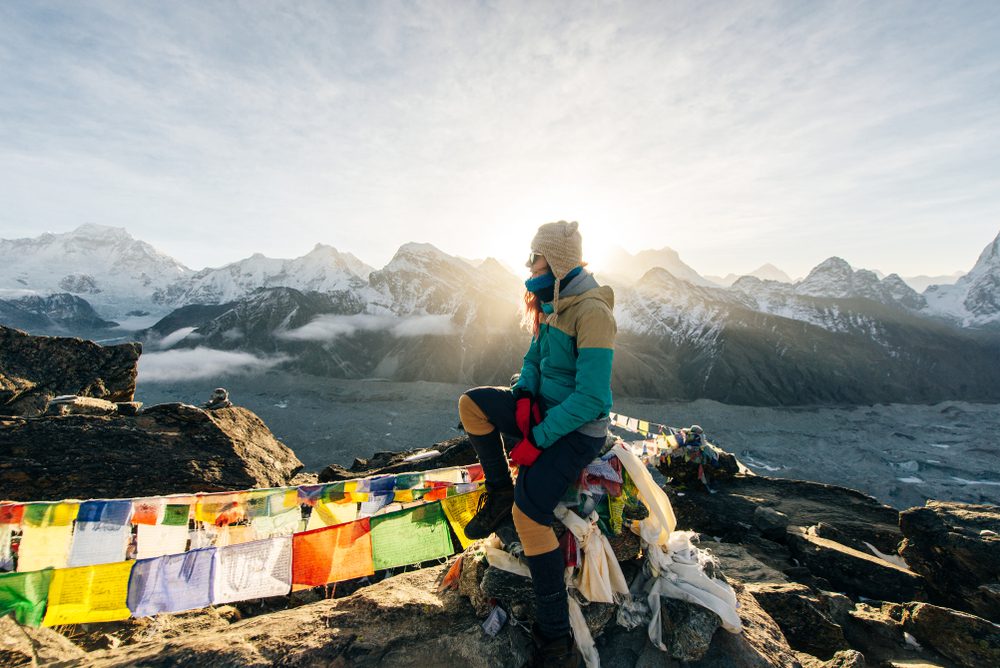
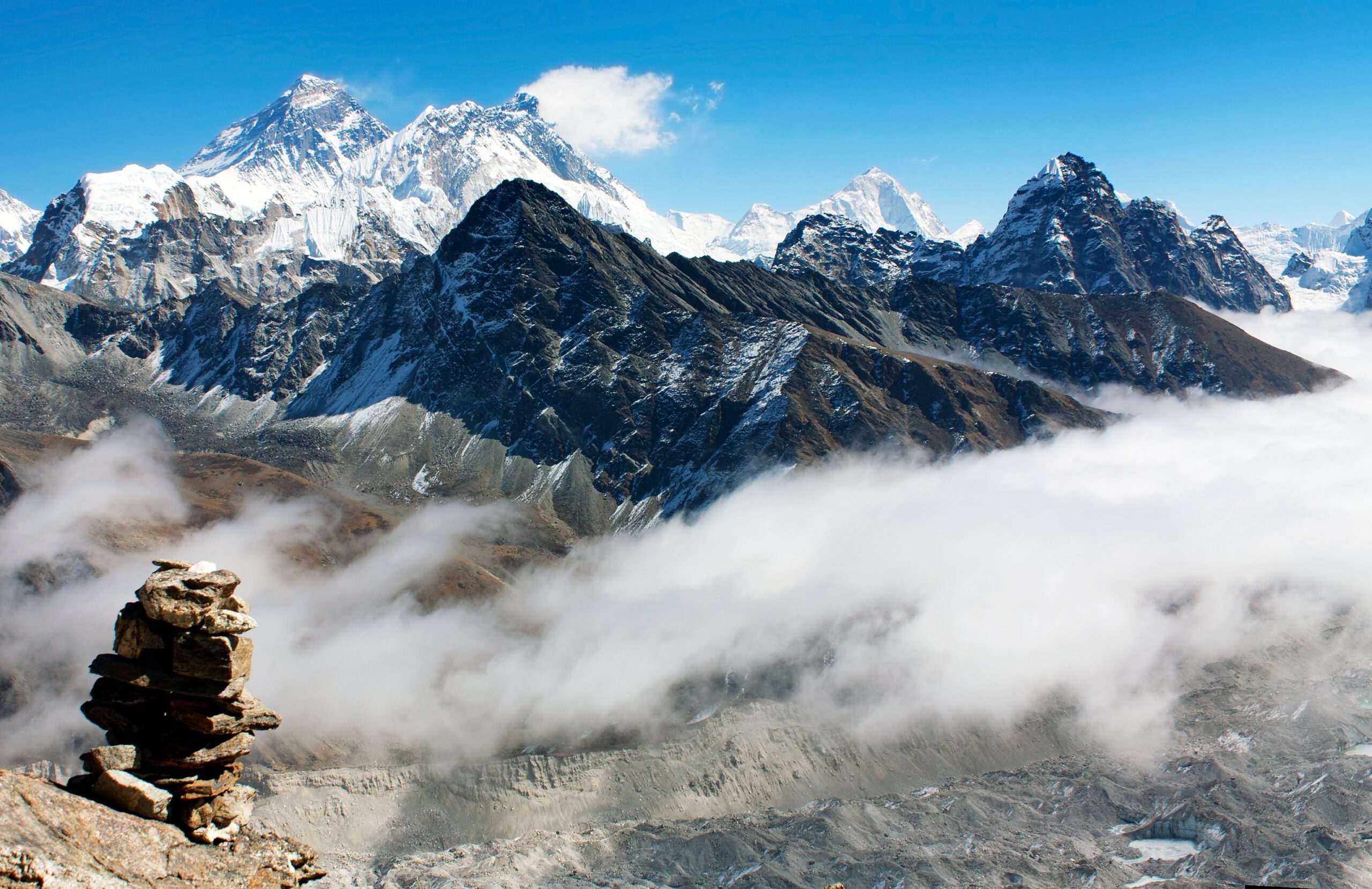
You’ll wake up early for a morning hike to Kala Patthar, the highest point on this trek and the best place to see a spectacular sunrise over Mt. Everest and nearby peaks. The panoramic views here are one of the highlights of the entire trip.
After soaking in the scenery and taking plenty of photos, you’ll head back down and continue trekking to Dzongla, a peaceful village surrounded by stunning mountain views. This stop helps you rest and prepare for the next big challenge, the Cho La Pass.
Stay overnight in Dzongla.
Cross Cho La Pass (5,420m) – Trek to Dragnag (4,700m) [6-7 hrs]
This day of the EBC Gokyo Trek is one of the toughest days of the trek. You’ll make a steep and sometimes icy climb over Cho La Pass, which stands at 5,420 meters. The climb is challenging but the views from the top are amazing.
After crossing the pass, you’ll descend to Dragnag, a small village near the beautiful Gokyo Glacier. This is a great place to rest and recover after the hard climb.
Stay overnight in Dragnag.
Trek from Dragnag to Gokyo (4,790m) [3-4 hrs]
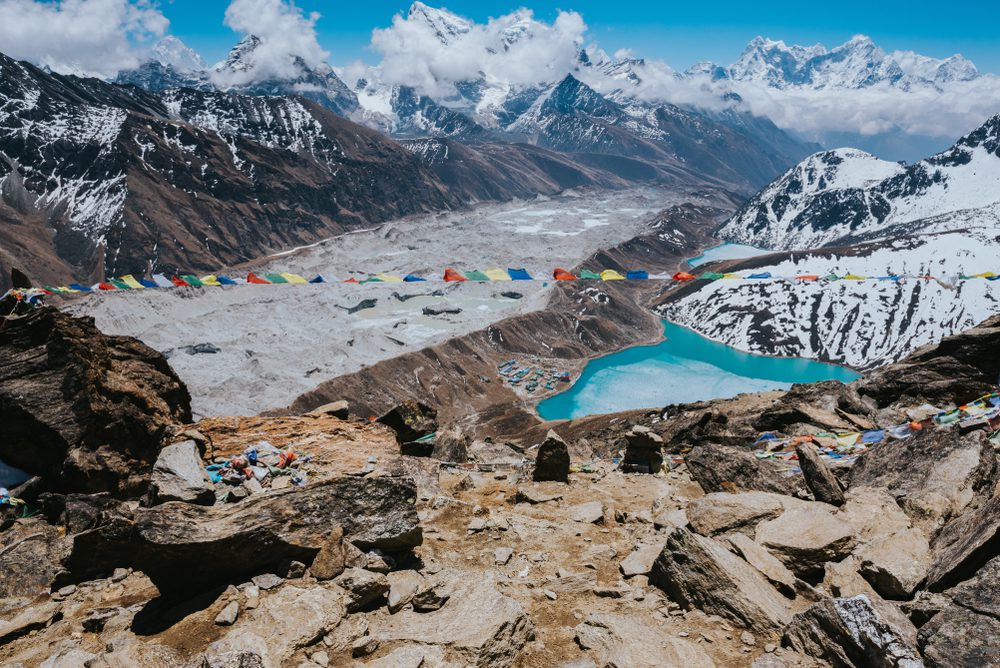
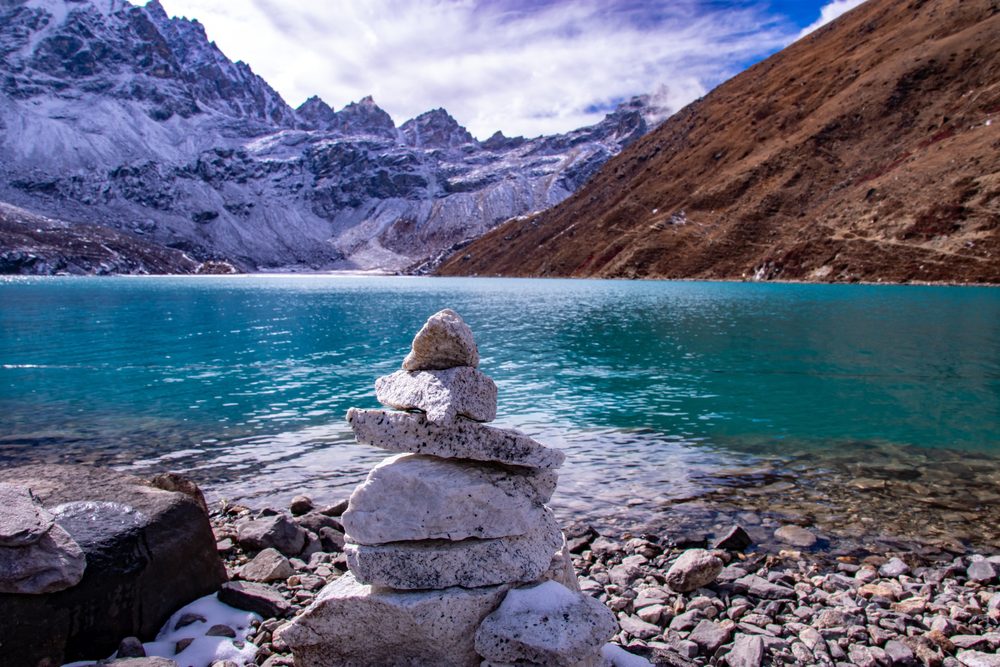
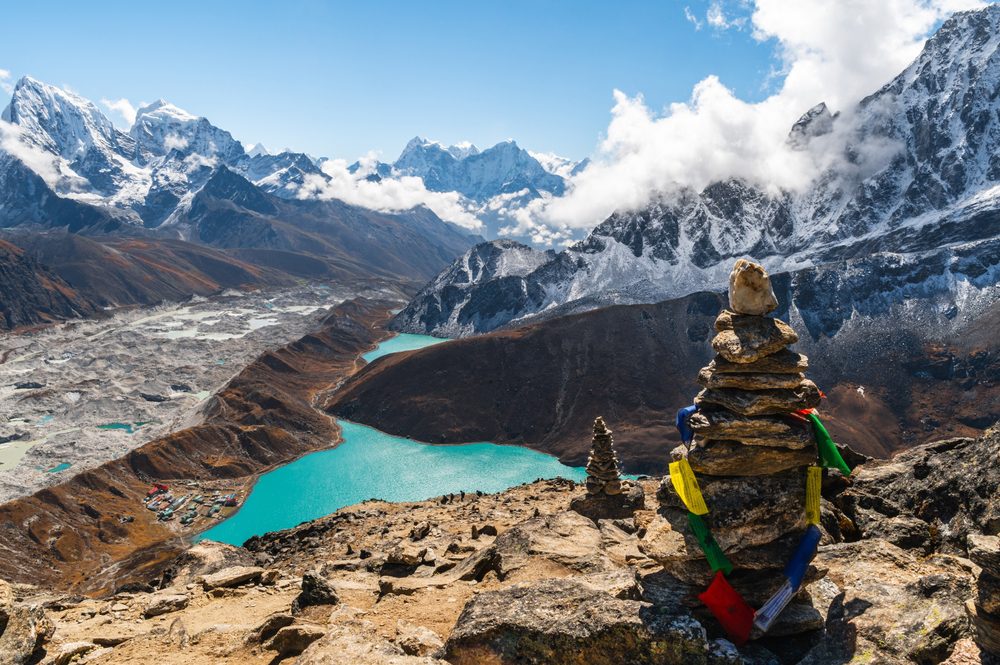
On this day, you’ll enjoy a shorter and easier hike as you trek to Gokyo village, located near the famous Gokyo Lakes, which is the highest freshwater lakes in the world. These beautiful turquoise lakes are surrounded by towering snow-capped mountains, making it a perfect spot to relax and take photos.
Once you arrive, you can explore the peaceful lakeshore, enjoy the fresh mountain air, and soak in the stunning natural beauty of the area.
Stay overnight in Gokyo.
Hike to Gokyo Ri (5,357m) – Explore Gokyo Lakes
You will start early with a hike up to Gokyo Ri, a peak that offers one of the best panoramic views of Mt. Everest, Cho Oyu, Makalu, and Lhotse. The climb takes about 2–3 hours and is well worth the stunning scenery at the top.
After returning to the village, you can spend time exploring the Gokyo Lakes and the nearby Ngozumpa Glacier, which is the largest glacier in Nepal.
Stay overnight in Gokyo.
Trek from Gokyo to Dole (4,038m) [5-6 hrs]
Today you’ll start descending from Gokyo, passing through the peaceful village of Macherma. The trail takes you through beautiful alpine meadows, which are especially colorful during spring and summer.
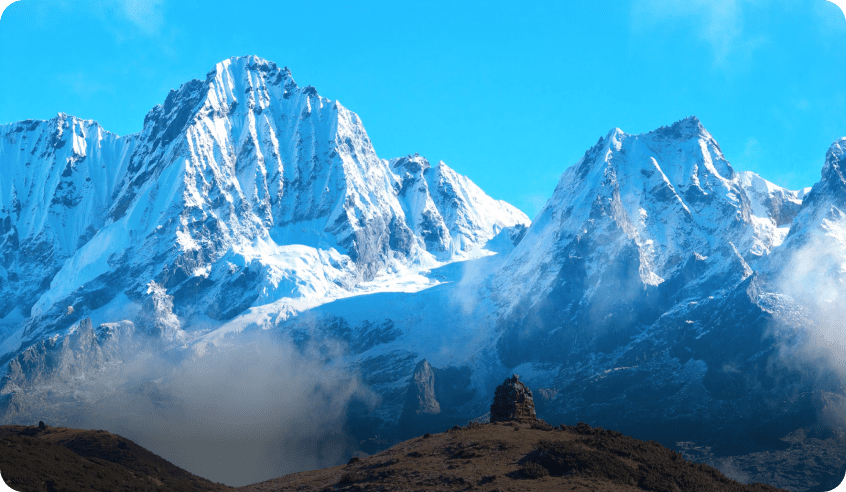
As you walk, you’ll enjoy great views of the impressive mountains Thamserku and Kangtega, standing tall against the sky. After a steady trek of about 5 to 6 hours, you’ll reach Dole, a small and quiet village where you can relax and prepare for the next day’s journey.
Stay overnight in Dole.
Trek from Dole to Namche Bazaar (3,440m) [5-6 hrs]
You’ll trek back down through Phortse Tenga and cross the Mong La Pass. The trail winds through forests and small villages, giving you a chance to enjoy the mountain scenery one last time.
You’ll arrive in Namche Bazaar in the afternoon, where you can relax, explore the shops, or enjoy a warm meal after the long trek.
Stay overnight in Namche Bazaar.
Trek from Namche Bazaar to Lukla (2,860m) [6-7 hrs]
Today you’ll finish your trek by hiking back down from Namche Bazaar to Lukla. The trail passes through Monjo and Phakding, familiar places you saw at the beginning of your journey.
You can take time to enjoy the last views of the beautiful mountains and forests along the way. When you arrive in Lukla, you can celebrate completing the trek with your team and guides an unforgettable moment.
Stay overnight in Lukla.
Fly from Lukla to Kathmandu
You’ll take a scenic flight from Lukla back to Kathmandu early in the morning depending on the weather. This short flight gives you a last chance to see the stunning Himalayan peaks from the sky.
After arriving in Kathmandu, you’ll have time to rest and recover from your trek. You can also explore the city’s lively markets, visit ancient temples, or try some local food. This is a great opportunity to relax and celebrate the amazing journey you’ve just completed.
Stay overnight in Kathmandu.
Customize this trip with help from our local travel specialist that matches your Interests.
Customize This TripEverest Base Camp with Gokyo Lake Trekking Inclusions
What’s Covered in Your Adventure
- Private car service to and from the airport.(International &domestics )
- Two nights at a standard hotel in Kathmandu with breakfast
- Three meals a day:breakfast, lunch, and dinner.
- You will be provided Trekking Lodges (Tea Houses).
- All papers that need to be done, Fees for entering Sagarmatha National Park and Khumbu Pasang Lhamu Rural Municipality.
- Kathmandu to Lukla and back to Kathmandu, or (Ramechap to Lukla, back to Kathmandu flight )with an airport transfer and airport tax within Nepal.
- A highly experienced, helpful, knowledgeable, friendly, English-speaking guide with all of his salary, food, drinks, lodging, transportation, and insurance covered.
- Setting up a service for an emergency helicopter (paid by your Travel Insurance company).
- You can rent a sleeping bag, a down jacket,(if you don't have your own) & Duffel bag provided
- Taxes and official costs paid to the government.
- Certificate of completion of the trip.
- Oxymeter to check your pulse, oxygen saturation, and heart rate twice a day (very helpful to check for signs of Altitude Mountain Sickness, or AMS). This will make sure that your trek is in the safest hands possible, no matter how experienced you are.
- Food that you will eat in Kathmandu for lunch and dinner.
- The cost of a visa to enter Nepal is $30 USD for a 15-day stay.
- Your insurance for travel and medical care.
- International airfare and Your Personal expenses
- All of the sweet desserts, like chocolate, cake, pie, and pudding.
- The tea houses have hot showers and places to charge your phone which will cost you about 2$ to 5$.
- Tip to the guide (Tipping is expected)
- A max 15kg bag is allowed in the flight to Lukla
- One porter for two people it will cost $ 320 USD
Maps
Navigate Your Journey
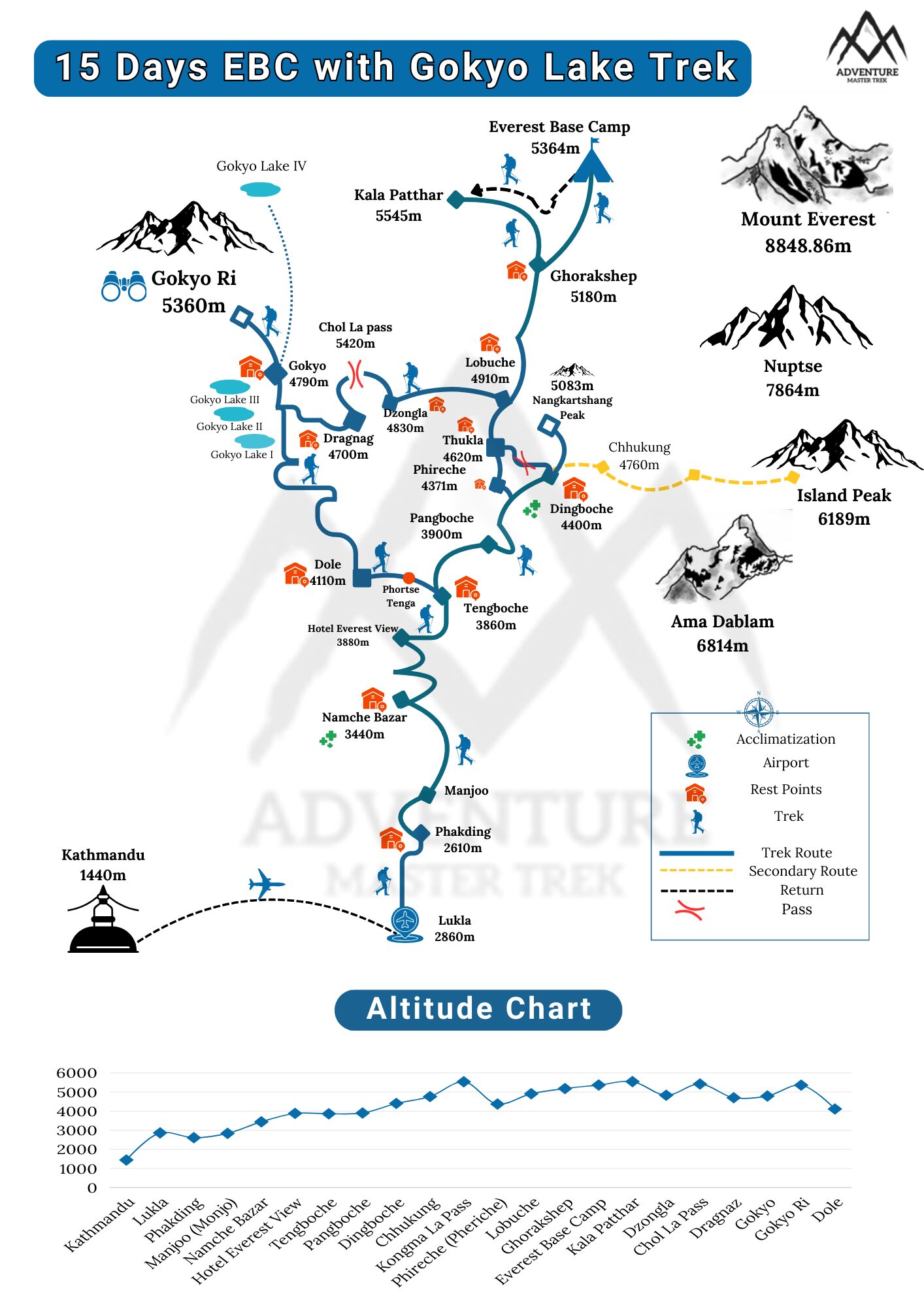
Good To Know for EBC and Gokyo Trekking
Know Before You Go
Accommodation and Acclimatization on trek to EBC with Gokyo Lake
Along the way, you’ll stay in teahouses, which are simple mountain lodges offering basic rooms, usually with twin beds and shared bathrooms. Meals are available in a common dining area, and while facilities get more basic at higher altitudes, most places are clean, cozy, and welcoming.
For acclimatization, the trek includes planned rest days typically in Namche Bazaar and Gokyo to help your body adjust to the high altitude. These days often involve light hikes to higher elevations before returning to sleep lower, which is key to avoiding altitude sickness.
Since the route reaches over 5,000 meters, going slow, staying hydrated, and following a steady itinerary is crucial for both safety and enjoyment.
How is Food and Drinking Water in EBC Gokyo Lake trekking?
Food and drinking water on the Everest Base Camp (EBC) trek with Gokyo Lake are generally reliable, though basic. Most teahouses offer a set menu with a mix of local and international dishes.
The most common meal is dal bhat, which is a traditional Nepali dish with rice, lentil soup, and vegetables, which is filling and provides good energy for trekking. You’ll also find noodles, soups, pancakes, fried rice, and even pasta or pizza at some stops. While meat is available in lower areas, it’s best to avoid it at higher altitudes since it’s often carried up without refrigeration.
For drinking water, bottled water is sold in most villages, but it gets more expensive as you go higher. A better and more eco-friendly option is to carry a reusable water bottle and use water purification tablets, filters, or UV purifiers, as tap or stream water is not safe to drink without treatment.
Electricity and Internet Services during EBC with Gokyo Lake Trek
Electricity and internet services are available along the EBC Gokyo trek, but they become more limited and expensive as you gain altitude. In most teahouses, you can charge your devices, usually for a small fee, especially at higher elevations. Power is typically supplied by solar panels or small hydroelectric systems, so charging may be slower or unavailable during bad weather or busy times.
Internet access is possible in many villages through Wi-Fi services, often provided by Everest Link or similar networks. While you can purchase Wi-Fi access cards, the connection is slow and unreliable the higher you go which is good enough for messaging, but not for video calls or streaming.
An alternative is to buy a local SIM card (like Ncell) in Kathmandu, which works in some areas early in the trek but loses signal in remote parts. Overall, it’s best to enjoy the trek with limited digital distractions and use connectivity only when necessary.
Group size for 15-day EBC and Gokyo trek
Group size for the EBC and Gokyo trek can vary depending on your preference and trekking style. Most organized treks run in small groups of 6 to 12 people, which offers a good balance between social interaction and personal attention from guides. Smaller groups are easier to manage on the trail, at teahouses, and during acclimatization, making the experience smoother and more flexible.
You can also choose to trek solo with a guide or porter, which gives you more freedom in pacing and itinerary, though traveling with at least one companion is recommended for safety in high-altitude areas.
Larger groups (over 15 people) are less common, as they can be harder to coordinate and may cause delays or crowding in teahouses. Whether solo or in a group, the key is to choose a size that fits your comfort level, allows for proper guidance, and ensures a safe, enjoyable journey.
Altitude Sickness During The Trek
Altitude sickness is a serious concern on the EBC trek via Gokyo, as the route reaches elevations above 5,000 meters. It happens when your body doesn’t adjust well to the lower oxygen levels at high altitudes.
Common symptoms include headache, nausea, dizziness, loss of appetite, and fatigue. To prevent altitude sickness, the trek includes acclimatization days usually in Namche Bazaar and Gokyo where you rest and do light hikes to help your body adapt.
The golden rule is to ascend slowly, stay hydrated, and listen to your body. Avoid alcohol, drink plenty of fluids, and don’t skip rest days. Some trekkers also take Diamox, a medication that helps with acclimatization, but it should only be used after consulting a doctor.
If symptoms get worse, the safest solution is to descend immediately to a lower altitude.
EBC via Gokyo Trek Difficulty
Difficulty of the Everest Base Camp Trek via Gokyo Lakes is rated as moderate to difficult, mainly because of the high altitude, long duration, and varied terrain. The trek doesn’t involve technical climbing, but you’ll be walking for 12–18 days, often for 5 to 7 hours a day, with steep climbs, rocky paths, and the challenging Cho La Pass crossing, which can be icy or snow-covered.
The real challenge comes from the altitude, as the trail goes above 5,000 meters, where the air has less oxygen, making even simple tasks more tiring. That’s why good physical fitness, steady pacing, and proper acclimatization are essential.
Travel Insurance
Travel insurance is essential for the Everest Base Camp & Gokyo Lakes trek due to the remote location and high-altitude risks involved. A good insurance policy should cover medical emergencies, altitude sickness treatment, helicopter evacuation, and trip cancellations. Because getting medical help in the mountains can be expensive and complicated, having insurance gives you peace of mind.
Make sure your insurance specifically includes high-altitude trekking up to at least 6,000 meters and covers emergency evacuation by helicopter, which is often the fastest way to get help if serious illness or injury occurs.
It’s best to buy travel insurance before your trip and carry a copy with you while trekking. This way, you’re protected against unexpected events and can focus on enjoying your incredible journey safely.
Money Exchange
Money exchange on the Everest Base Camp trek with Gokyo Lake is best done before you start the trek, usually in Kathmandu or Lukla. Nepalese rupees (NPR) are the local currency, and most teahouses and shops along the route accept cash only and credit cards are rarely accepted outside major towns.
You’ll find money exchange counters in Kathmandu where rates are better and services more reliable. In Lukla and some bigger villages, you can exchange small amounts, but rates may be less favorable.
It’s always a good idea to carry enough cash in smaller notes for daily expenses, tips, and emergencies. ATMs are very limited or unavailable on the trek, so plan ahead and keep your money safe throughout the journey.
Permits Required for the EBC with Gokyo Lake Trekking
If you’re planning the Everest Base Camp with Gokyo Lake trekking, there are a few important permits you’ll need. These documents help ensure your safety, support local communities, and allow access to protected areas. Here are the 3 main permits you’ll need:
TIMS Card (Trekkers’ Information Management System)
- This card keeps a record of all trekkers in the region. It helps authorities track you in case of an emergency.
- You can get it from the Nepal Tourism Board office in Kathmandu or through a trekking agency.
Sagarmatha National Park Entry Permit
- This allows you to enter Sagarmatha National Park, home to Mt. Everest and beautiful wildlife.
- You can get it in Kathmandu or at the park entrance in Monjo.
Khumbu Pasang Lhamu Rural Municipality Permit
- This is a local government permit required for all trekkers in the Khumbu (Everest) region.
- It’s available in Lukla or Monjo and replaces the older TIMS card in this region.
Trekking Equipments for EBC trek with Gokyo Trekking
General
- Backpack (40–50L)
- Sleeping bag (good for -10°C or colder)
- Trekking poles
- Headlamp with extra batteries
- Water bottles or hydration bladder
- Sunglasses (UV protection)
- Water purification tablets or filter
Upper Body
- Base layer shirts (2–3, moisture-wicking)
- Fleece or down jacket (for warmth)
- Waterproof & windproof jacket
- Sun hat or cap
- Warm hat (wool or fleece)
- Neck gaiter or buff
Torso
- Lightweight mid-layer (fleece or light down)
- Waterproof shell jacket
Lower Body
- Thermal leggings
- Trekking pants (2 pairs)
- Waterproof pants
- Underwear (quick-dry)
Hands & Feet
- Inner gloves (thin)
- Warm gloves (waterproof)
- Trekking socks (3–4 pairs)
- Warm socks (1–2 pairs)
- Trekking boots (broken-in, waterproof)
- Camp shoes or sandals
Essential Extras
- Trekking permits & passport copies
- Sunscreen (SPF 30+)
- Lip balm with SPF
- Quick-dry towel
- Snacks (energy bars, nuts)
- Power bank
Basic Medication & First Aid
- Altitude medicine (e.g., Diamox)
- Painkillers (ibuprofen or paracetamol)
- Blister pads (e.g., Compeed)
- Diarrhea medicine (e.g., Imodium)
- Band-aids & antiseptic cream
Optional Items
- Gaiters (for snow, especially in colder seasons)
- Power bank or solar charger
- Lightweight towel
- Lightweight travel pillow
- Earplugs (teahouses can be noisy)
- Journal or book
- Snacks (energy bars, chocolates, nuts)
- Ziplock bags or dry sacks (for organizing and waterproofing)
- Microspikes (for icy trails, in shoulder seasons)
Booking Policy for EBC trek with Gokyo Lake
How to Book
- To book your trek, you need to pay a deposit of 20% to 30% of the total cost.
- The rest of the payment can be made when you arrive in Kathmandu, before the trek starts.
- Once we get your deposit, we’ll send you a booking confirmation email.
Payment Options
You can pay by:
- Bank transfer
- Credit/debit card
- Cash (USD, Euro, or Nepali Rupees)
Payment details will be shared after you confirm your booking.
Changing Your Booking
- You can change your trek date by letting us know at least 15 days before the start.
- Late changes may cost extra (for example, flight or hotel changes).
Cancellation Policy for EBC trek with Gokyo Lake
Cancellation by participant
- Cancel more than 30 days before the trek start date: 80% of your deposit refunded.
- Cancel between 15 and 30 days before the trek: 50% of your deposit refunded.
- Cancel less than 15 days before the trek: no refund of your deposit.
Cancellation by Operator
- If we cancel the trek due to safety concerns, extreme weather, or government restrictions, you will get a full refund or the chance to reschedule your trek.
Leaving the Trek Early
- If you need to leave the trek early because of illness or personal reasons, refunds for unused services may not be available.
Events Beyond Our Control
- We are not responsible for cancellations or changes caused by natural disasters, political issues, pandemics, or other events outside our control.
FAQs for EBC trek with Gokyo Lake
Your Questions, Answered
Where does this trek begin and end?
The trek begins and ends in a small mountain town called Lukla. Most trekkers take a short 30-minute flight from Kathmandu to Lukla to start their journey. After completing the loop, you return to Lukla and fly back to Kathmandu.
How many days does the trek usually take?
The full trek usually takes around 15 to 18 days to complete. This includes a few days for rest and acclimatization, which are very important to help your body adjust to the high altitude.
Is the trek very difficult?
Yes, the trek is considered moderately to very challenging. It involves long days of walking, steep climbs, and hiking at high altitude. However, many people with good fitness and determination complete it successfully, even without prior trekking experience.
What is the highest point on the EBC trek?
The highest point on the EBC trek is Kala Patthar that stands at 5,545 meters (18,192 feet), which is a popular spot for watching the sunrise and getting amazing views of Mount Everest.
Why are the Gokyo Lakes special?
The Gokyo Lakes are a group of six beautiful glacial lakes located high in the Himalayas surrounded by snow-capped mountains offering a magical and spiritual experience away from the busier Everest trail.
Is it safe to cross Cho La Pass?
Cho La Pass can be tricky, especially in bad weather or if it’s icy. It’s steep and sometimes slippery, but with a local guide and proper trekking gear, it’s safe for most trekkers. Many people consider it one of the highlights of the trek.
Can beginners do this trek?
Yes, beginners can do this trek if they are physically fit, mentally prepared, and take their time. It’s helpful to train with regular walking or hiking before the trip. Having a guide and porter also makes the experience much easier and safer.
Do I need a guide and a porter?
Hiring a guide is highly recommended, especially for crossing Cho La Pass and navigating less-traveled areas like Gokyo. A porter can carry your backpack so you can focus on enjoying the trek without too much physical strain.
When is the best time to do this trek?
The best times to do EBC with Gokyo are in the spring (March to May) and autumn (September to November). These seasons offer the clearest mountain views, stable weather, and comfortable trekking temperatures.
What kind of weather can I expect?
During the day, temperatures can be cool but pleasant in the lower parts and colder in the higher parts. Nights are always cold, especially above 4,000 meters. Weather can change quickly in the mountains, so it’s important to be prepared for sun, wind, and snow.
What kind of accommodation is available on the trail?
Trekkers stay in teahouses, which are simple lodges with basic rooms, shared bathrooms, and a dining area. The rooms are small but comfortable enough, and they usually have warm blankets. Meals are served in the teahouse dining areas.
Can I charge my phone or camera during the trek?
Yes, you can charge your electronic devices at most teahouses, but they will charge a small fee. Charging points are usually available in the dining room, and it’s smart to carry a power bank or solar charger.
Will I have access to Wi-Fi on the trek?
Wi-Fi is available in most villages through paid services like Everest Link or Sky Net. However, the connection can be slow or unreliable, especially at higher altitudes.
What kind of food is available during the trek?
The most common meal is dal bhat, a Nepali dish of rice, lentils, and vegetables. Other options include noodles, fried rice, pasta, soups, eggs, pancakes, and momos (dumplings). The food is simple but tasty and energizing.
Is altitude sickness a serious concern?
Yes, altitude sickness is something to take seriously. The air gets thinner as you go higher, and your body needs time to adjust. Going slowly, drinking lots of water, and taking rest days help prevent sickness. Some trekkers also carry medicine like Diamox.
What is acclimatization and why is it important?
Acclimatization means giving your body time to get used to the high altitude. It’s important to take rest days in places like Namche Bazaar and Gokyo so your body can adjust and reduce the risk of altitude sickness.
Is it safe to drink water along the trail?
TIt’s not safe to drink untreated tap or river water. You should bring water purification tablets, a water filter, or buy bottled or boiled water. Using a refillable bottle with a filter is the best eco-friendly option.
Do I need travel insurance for this trek?
Yes, you definitely need travel insurance that covers high-altitude trekking (above 5,000 meters) and emergency helicopter evacuation. This is essential in case of serious altitude sickness or injury.
What is Gokyo Ri and should I climb it?
Gokyo Ri is a hill above the Gokyo village that offers one of the best panoramic views of Mount Everest, Cho Oyu, and other peaks. The climb is steep but short, and it’s absolutely worth it for the sunrise or sunset view.
What kind of clothing and gear should I bring?
You should bring layered clothing to stay warm, a good down jacket, a sleeping bag for cold nights, sturdy trekking boots, gloves, a hat, sunglasses, sunscreen, a headlamp, and a first aid kit. A trekking pole is also helpful.


View Our Similar Packages
Discover our top tours, loved by thousands of travelers annually. Choose the adventure that inspires you and embark on a journey tailored to your desires.

 Nepal
Nepal
 1 Days
Add Review
Reviewing for 15-day EBC with Gokyo Lake TrekRequest a Callback - 15-day EBC with Gokyo Lake Trek
Submit the form and we will be back to you shortly
Request a Callback - 15-day EBC with Gokyo Lake Trek
Submit the form and we will be back to you shortly
Narayanhiti Palace Museum

Narayanhiti Palace Museum


