










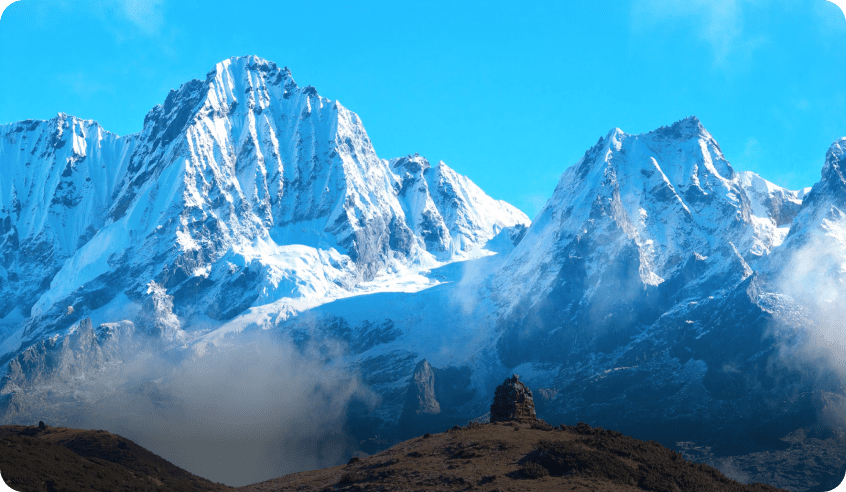
6-day Annapurna Base Camp Trek


Quick Trip Facts


6-day Annapurna Base Camp Trek Overview
The 6-day Annapurna Base Camp Trek is a perfect mixture of culture, nature, and personal fulfillment. It immerses you in a busy town-life that slips into peaceful village life, walking over hanging bridges and up through the stunning sanctuary in the peaks, all in 6 days.
It begins the busy town of Pokhara and is followed by a one to two hour journey to Nayapul (approximately 1,070 m) to initiate the trekking. In the following day or two you will also Trek through pine and rhododendron forests. You will come across several Gurung and Magar villages such as Ghandruk (2,000 m) as well as the Modi Khola river which you will trek up stream.
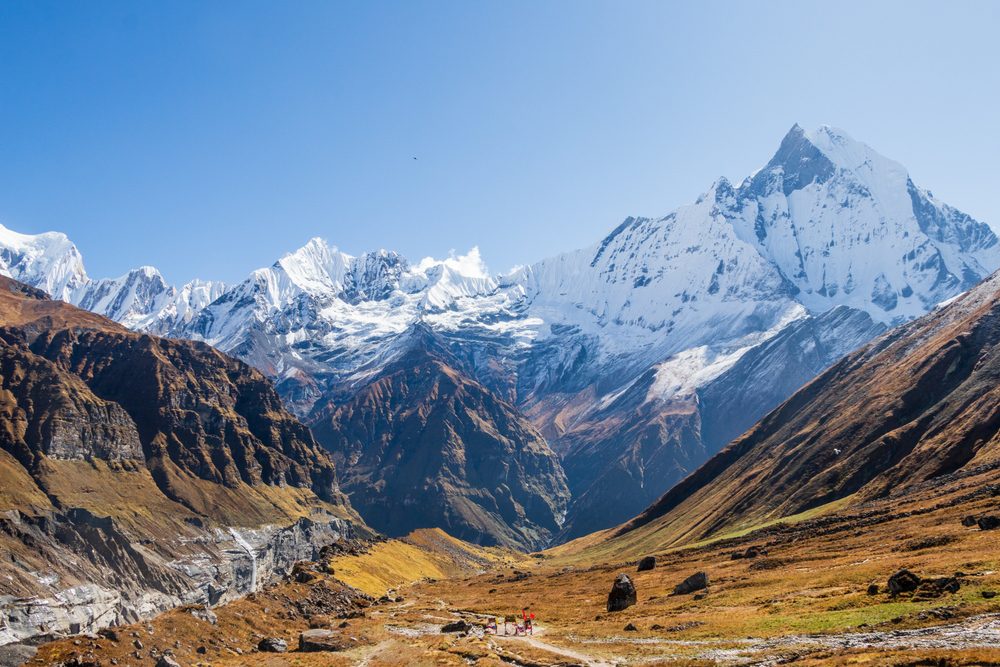
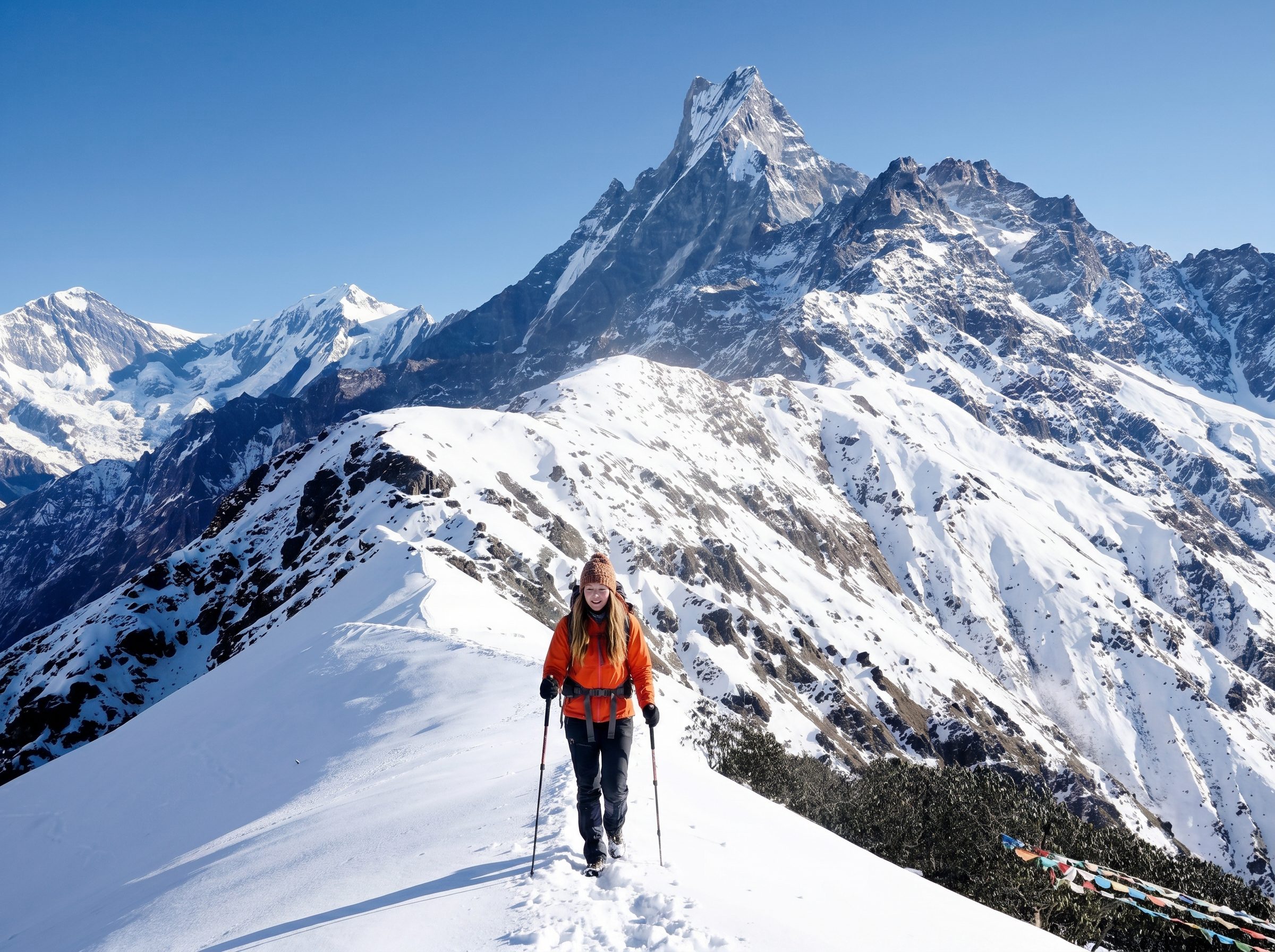
During the trekking every day brings you an exciting mix of gentle and steep climbs. At last you will meet cozy teahouses at picture-perfect Chhomrong, Bamboo, Sinuwa and Deurali. At last, on the 4th day appears the magnificent Annapurna Base Camp which gives a magical height of 4,130 m with the jagged peaks of Annapurna I, Machhapuchhre, and Gangapurna binding you away in an enchanting peace. The many trekkers after describe this experience as unbelievably wealthy.
On the way to Base Camp, you can also get to see the Machhapuchhre Base Camp, which makes your description of the necessary final rewards. This is by means of a transport to Nayapul after you have trekked down through the spectacular scenery with hot-springs near Jhinu-Danda. From Nayapul, you travel back again to Pokhara with contented wakefulness, soaking in the view and relaxing at the lakesides. The best time for this short 6-day Annapurna Base Camp Trek is from September to November and March to May, when clear skies, blooming valleys, and vibrant forests are a joy to see.
You will return to Pokhara feeling grateful after your journey through dense forests, meeting locals in mountain villages, and enjoying the beauty of the Himalayas. This experience is simple yet powerful, offering quiet beauty and a lasting impact.
Trip Highlights
- Throughout the journey to the base camp is a combination of high mountain peaks including Annapurna I, Machhapuchhre (Fishtail) and Hiunchuli with the entire journey ending with a 360 degree view where you will be at the base camp.
- Unforgettable sunrise on a little side trek to Poon Hill, with views of the Annapurna and Dhaulagiri peaks, bathed in early morning sunlight.
- Visit Gurung and Magar villages, such as Ghandruk and Chhomrong, to see their different ceremonies and way of life, as well as enjoy the friendliness and hospitality of people.
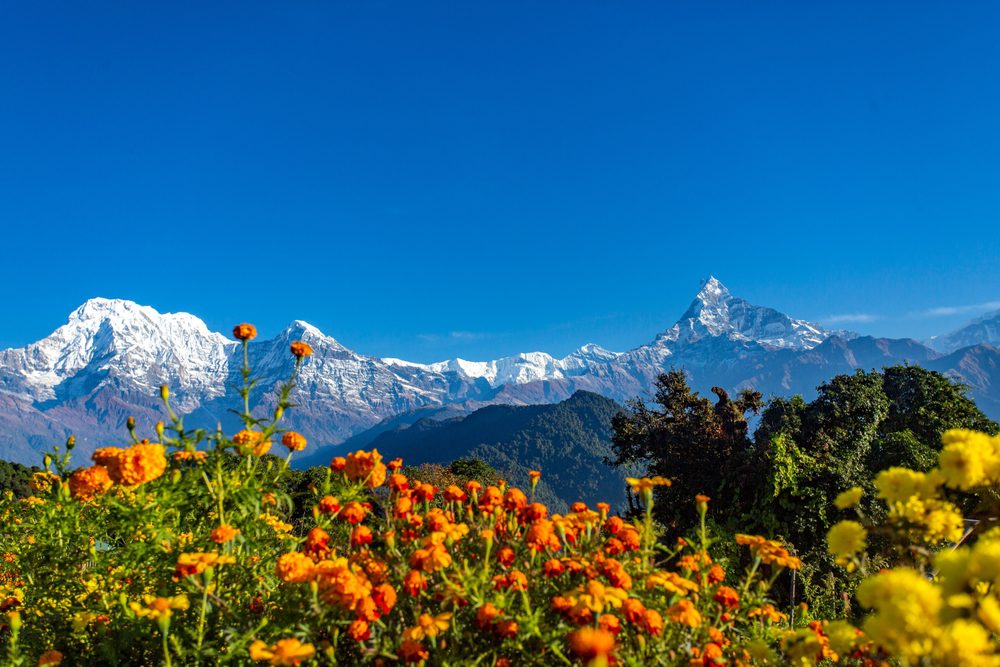
- Chance to see many different landscapes, contributing to an ever-changing and pictorial scenery, such as by alpine meadows, glacier valleys, of rich rhododendron woods.
Itinerary
Trek from Chhomrong to Himalaya (2,920m) – 6-7 hours
Today, you will trek from Chhomrong to the Himalayas. To get to the suspension bridge that spans the Chhomrong Khola, you must first descend steep stone stairs from Chhomrong. It next climbs steadily to Sinuwa (2,360m), where you may start to feel the peace of the deeper Himalayas and see more expansive views. From Sinuwa, the walk continues through lush, chilly woodlands with rhododendrons and bamboo trees. You will go past the tiny community of Bamboo (2,310m), which is a well-liked place to take a quick rest and is frequently covered in mist. The forest thickens and the surrounding area becomes more serene as you ascend higher, with the only sounds being the nearby river and birds.
You will arrive at the Himalayas (2,920m), a peaceful resting spot nestled between rocky hills and near the Modi River, after roughly 6–7 hours of hiking. The feeling of being deep in the mountains begins to take hold, and the air is clear and clean. It’s a terrific spot to unwind, eat something hot, and get ready for the day.
Stay overnight in the Himalayas.
Trek from Himalaya to Annapurna Base Camp (4,130m) via Machapuchare Base Camp (3,700m) – 6-7 hours
Day 3 is one of the most exciting parts of the trek as you head toward Annapurna Base Camp. s you make your way to Annapurna Base Camp, day three of the journey is one of the most thrilling. After reaching Deurali (3,230m), where the views start to get really breathtaking, you will start your journey via wooded paths and progressively open terrain. The woods get thinner as you ascend higher, and the mountains get closer with each stride.
You will arrive at Machapuchare Base Camp (3,700m) after a few hours, which is the ideal place to stop and take in the breathtaking views of the revered Fishtail Peak, which rises sharply against the sky. The trail then slowly ascends into an alpine valley, surrounded by snow-capped peaks.
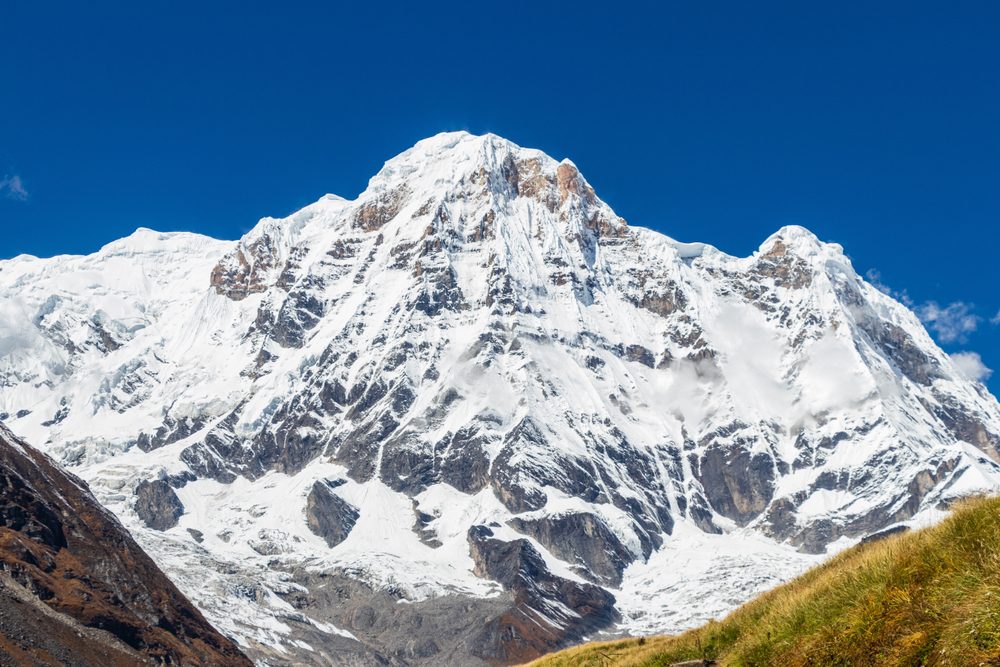
You will finally reach Annapurna Base Camp (4,130m) after roughly 6–7 hours of walking, where you will be encircled by a 360-degree view of majestic giants including Hiunchuli, Machapuchare, Annapurna I, and Annapurna South. Being in the heart of the Himalayas is an experience that will never be forgotten.
Stay overnight in Machapuchare Base Camp.
Sunrise at ABC & Trek Down to Bamboo (2,310m) – 6-7 hours
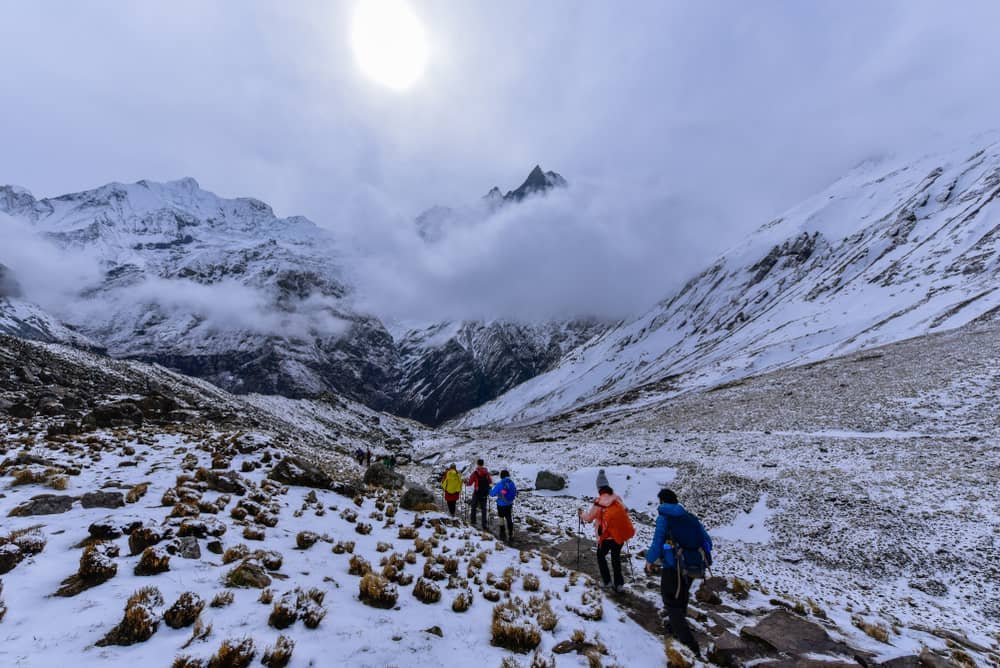
You will be rewarded for the cold climb and early wake-up on Day 4 with a stunning sunrise over the Annapurna range. You will start your descent after taking in the golden peaks at ABC (Annapurna Base Camp). You will retrace your steps past MBC (Machhapuchhre Base Camp), Deurali, and the Himalayas before reaching the serene village of Bamboo at about 2,310 meters.
The 6- to 7-hour hike provides a straightforward but incredibly fulfilling day full of mountain vistas, shifting vegetation, and the soothing cadence of descending. After arriving in Bamboo, you will check into a comfortable teahouse and spend the night there, recovering and remembering a morning spent in the Annapurna Sanctuary that will never be forgotten.
Stay overnight in Bamboo.
Trek from Bamboo to Jhinu Danda (1,780m) – 5-6 hours
You will leave Bamboo (about 2,310 m) on Day 5 and hike 8–9 km in 5–6 hours in the direction of Jhinu Danda (approximately 1,780 m). You will first ascend slightly past Sinuwa and Chhomrong through forests of oak, rhododendron, and bamboo, taking in the vistas of the valley and the clear mountain air. After that, you enter the serene village of Jhinu Danda, which is situated above the river, as the route gradually drops down near the Modi Khola.
Once you have settled into your teahouse, you can find three stone-lined hot springs beside the riverbed by walking downwards through the forest for 15 to 30 minutes. Surrounded by beautiful hills and flowing water, these warm, mineral-filled pools are ideal for calming weary muscles. After a relaxing soak, return to your teahouse for dinner, enjoy a cozy evening, and rest up for the adventures ahead.
Stay overnight in Jhinu Danda.
Trek from Jhinu Danda to Siwai (1,500m) & Drive to Pokhara – 4-5 hours
Your trip comes to an end on Day 6 with a picturesque 4- to 5-hour hike from Jhinu Danda to Siwai (or Nayapul), passing through green forests, charming villages, and terraced fields. The trail offers a leisurely descent that lets you take in the tranquil surroundings and think back on the journey. You will board a vehicle for the 1.5–2 hour drive back to Pokhara after you arrive at Siwai or Nayapul. The route offers a last look at Nepal’s natural splendor as it winds past charming riverbank towns and verdant hillsides.
You will be able to relax and celebrate your achievement once you arrive in Pokhara. The day provides the ideal opportunity to explore the lively Lakeside district, unwind by Phewa Lake, or have an amazing meal at a neighborhood eatery. Whether you decide to relax by Phewa Lake, explore the lively Lakeside neighborhood, or enjoy a delicious dinner at a neighborhood eatery, the day provides the ideal conclusion to your Annapurna journey.
Customize this trip with help from our local travel specialist that matches your Interests.
Customize This TripInclusions
- Two-night hotel in Pokhara B/B and 3-star (private room for two people)
- Pokhara to Jhinu Danda to Pokhara sharing jeep
- Six nights (with a private attached Bathroom available - standard)
- Meals, including breakfast/lunch/ dinner during the trek.
- An experienced government-licensed English-speaking guide, food, salary, and insurance.
- Water purification tablets for safe drinking, and water are provided every three hours
- ACAP (Annapurna Conservation Area permit
- All government, local taxes, and official
- Assistance in arranging rescue operations in case of health emergencies (funded by travel insurance)
- Certificate of appreciation after the successful trip
- Seasonal Fruit provided
- First aid kit box
- Siwai to Pokhara by bus
- International flight airfare
- On-arrival visa fees at Tribhuvan International Airport- (15 days - $25-30, 30 days- $40-50, and 90 days- $100-110)
- All accommodations and meals in Kathmandu, before and after the journey
- Personal expenses (shopping, snacks, big pot hot (tea, coffee) and cold drinks, hot shower, alcohol, Wi-Fi, telephone call, battery recharge fee), extra porters, etc
- Personal clothing and gear
- Travel insurance that has to cover emergency high-altitude rescue and evacuation is compulsory
- Tips for the guide
- Additional costs due to delays beyond our control. For example, landslides, weather conditions, itinerary modifications due to safety concerns, illness, change of government policies, strikes, etc.
- All the costs and expenses that are not listed
- One porter for two people max, 25kg, will cost you $140USD
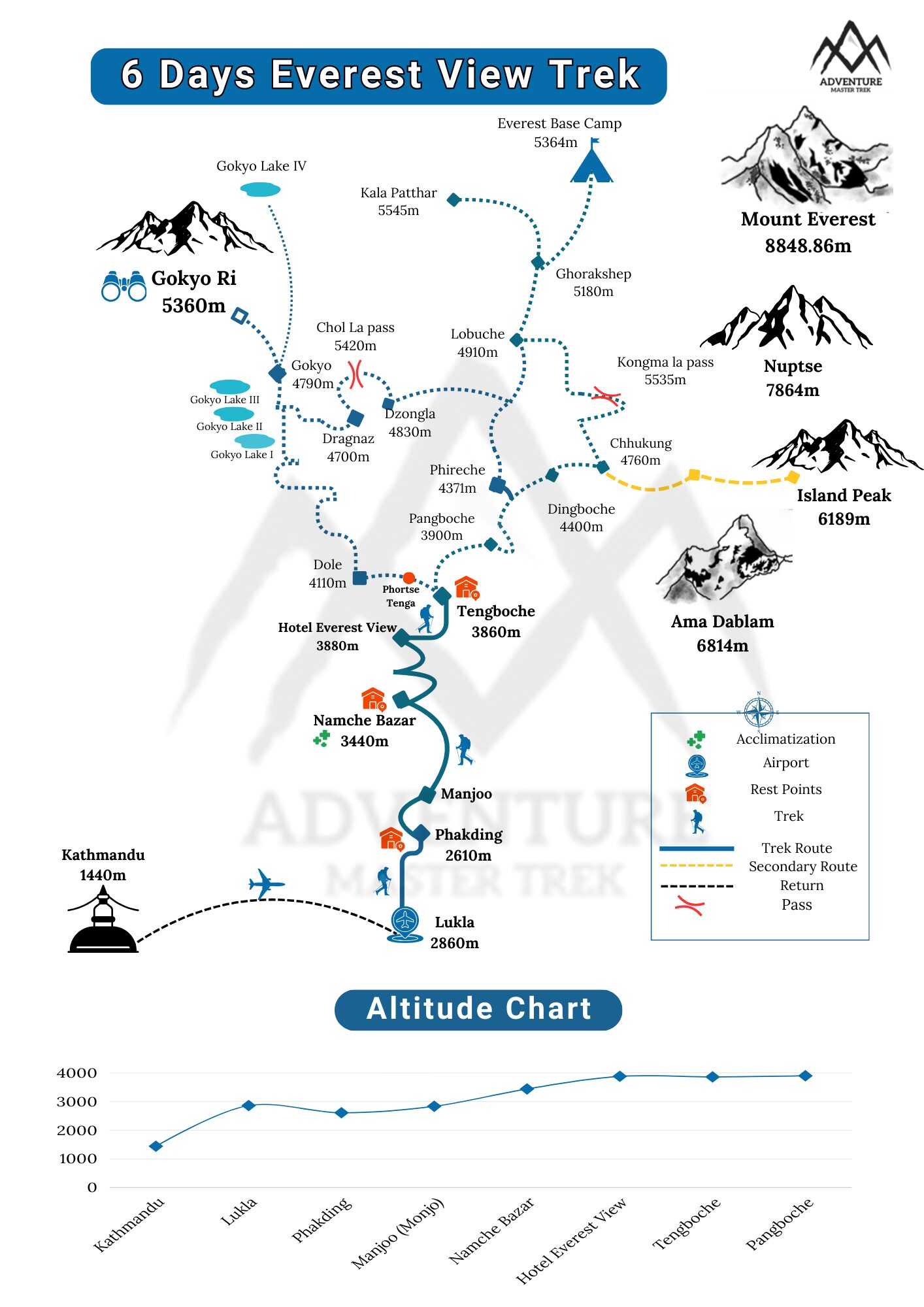
Maps
Navigate Your Journey
Good to Know
Accommodation on the Annapurna Base Camp Trek
On the Annapurna Base Camp Trek, accommodations are mostly teahouses, which are tiny, family-run lodges located along the route. After a difficult day of hiking, these simple yet comfortable teahouses provide a bed, soft blankets, and a place to rest. Many hotels have shared restrooms, and hot showers are typically offered for a small cost.
Trekkers gather in the cozy eating spaces, which include an open fire in the middle, to eat, interact, and exchange tales. The simple yet filling meals are served, with popular choices including tea, noodles, soups, and dal bhat. The facilities grow more basic as you ascend, but the friendliness doesn’t change. It is always a good idea to carry some cash, as there are no ATMs along the route, and to book ahead during peak seasons when teahouses can fill up quickly.
Electricity and Internet Service in the Annapurna Base Camp Trek
While internet and electricity are available on the Annapurna Base Camp Trek, they can be costly and limited as you ascend. Although electricity is typically solar-powered, and can only be provided during specific hours. The majority of teahouses provide it for charging phones and cameras. It’s a good idea to have a power bank on hand. There is Wi-Fi in many of the communities along the trail, but don’t anticipate fast speeds.
It’s sufficient for messaging or checking in with family, but not for streaming or surfing. Wi-Fi connectivity can be expensive in some locations, and signal strength can change, particularly during bad weather. It’s best to enjoy the trek with minimal digital distractions and use this time to truly connect with nature and fellow trekkers.
Group Size for the Annapurna Base Camp Trek
While hiring a guide or porter may provide safety and local knowledge, solo hikers often prefer their own independence and personal challenge. Since you may determine your speed and select accommodations along the way, you are advised to choose small groups of two to six people, as they are perfect for a more customized trip and offer you a flexible trip.
The trek is also possible for larger parties, but this might require more preparation, particularly at busy times of the year when teahouses fill up fast. Being a part of a guided group makes the trip pleasurable for many hikers, particularly those who are visiting the Himalayas for the first time.
Altitude Sickness in the Annapurna Base Camp Trek
As you ascend over 2,500 meters on the Annapurna Base Camp Trek, though the highest point is 4,130 meters, you should be on the lookout for altitude sickness. If you climb too quickly, you can suffer from various symptoms, including exhaustion, headache, and nausea.
To prevent such symptoms, you should avoid alcohol, walk steadily, drink plenty of water, and give your body time to acclimate. The majority of trekking routes are intended to accommodate acclimatization over time. The best course of action is to descend if symptoms worsen. A safe and pleasurable walk can be ensured by being mindful and moving slowly.
Difficulty in the Annapurna Base Camp Trek
The Annapurna Base Camp Trek is a fantastic option for both beginner and expert hikers because of its moderate level of difficulty. Technical climbing abilities are not required, but you should be ready for lengthy walking days, which last from 5-7 hours and include numerous uphill and downhill steps.
You will pass through a variety of vistas throughout the trail, including high-altitude areas, communities, and lush forests. The altitude and physical endurance are the main obstacles. Therefore, having a good level of fitness is beneficial. With the right planning, pace, and attitude, the trek is very manageable and extremely satisfying for most people.
Safety and Security in the Annapurna Base Camp Trek
The Annapurna Base Camp Trek is a popular and generally safe route, with lots of hikers using it during busy times of the year. The locals are welcoming and helpful, and the teahouses along the route have become used to receiving tourists from other countries. However, it is crucial to take some basic measures, such as staying on the main trail, avoiding nighttime trekking alone, and constantly checking the weather before leaving.
You can also employ a certified guide or porter, which can increase security, particularly in the event of unexpected events like altitude sickness. Carrying a Trekking Information Management System (TIMS) card and registering your trek with local authorities are also advised. The hike is a safe and memorable experience if you prepare and use common sense.
Travel Insurance for the Annapurna Base Camp Trek
For the Annapurna Base Camp Trek, travel insurance is essential. Risks associated with high-altitude trekking include altitude sickness, injuries, and unexpected weather conditions that may necessitate evacuation. High-altitude trekking (up to at least 4,500 meters) and emergency helicopter rescue should be covered by solid insurance coverage, just in case.
Having coverage for things like lost luggage, medical costs, and travel cancellations is also a good idea. Verify that trekking in Nepal is covered by reading the fine print. You may fully enjoy the journey with peace of mind when you have the proper insurance.
Permits for the Annapurna Base Camp Trek
A few key permits are required for the 6-day Annapurna Base Camp Trek to support local people, preserve the natural environment, and ensure trekkers’ safety. These permits help maintain the stunning routes of the Annapurna region and regulate tourism. What you’ll need is as follows:
1. Annapurna Conservation Area Permit (ACAP): This is necessary to enter the Annapurna Conservation Area, which is home to traditional communities, forests, and breathtaking alpine scenery. The cost goes toward environmental preservation, trail repair, and conservation.
2. TIMS (Trekkers’ Information Management System) Card: This card aids in tracking hikers for security and emergency situations. All treks in the Annapurna region require it, and it also helps the local hiking infrastructure.
It is simple to obtain these permits at the Nepal Tourism Board offices in Kathmandu or Pokhara, or from authorized trekking agencies. Since you will be required to present them at several checkpoints along the way, you must have them with you during the walk.
Required Documents
- 6 months validity passport
- 2-4 passport-size photos
- Nepal Visa
- Travel Insurance
- Permits and their photocopies
Trekking Equipment for the Annapurna Base Camp
It is exciting to plan a hike to Annapurna Base Camp, but having the proper gear is important. You will be trekking for several days, the terrain can be difficult, and the weather can change fast. Therefore, it’s critical to pack wisely, bringing only the essentials to ensure your comfort, safety, warmth, and dryness. This is a brief instruction to help you prepare. Here is some of a trekking list required for the Annapurna Base Camp:
General Gear
- Backpack (35–45 L with rain cover)
- Small daypack (15–20 L)
- Duffel bag
- Sleeping bag (–5 to –10 °C)
- Sleeping bag liner
- Trekking poles (foldable)
- Water bottles (2 x 1L)
- Water purification tablets or a filter
- Sunglasses (UV-protected)
- Power bank or extra batteries
- Dry bags or plastic bags
- Thermos (optional)
Upper Body
- 1 base layer top (moisture-wicking)
- 1 fleece or mid-layer jacket
- 1 down jacket
- 1 waterproof/windproof jacket
- 2 t-shirts
- 1 long-sleeve trekking shirt
Lower Body
- 1 thermal base layer (bottom)
- 1–2 trekking pants
- 1 waterproof pants
- 1 warm pants (optional)
- Shorts (optional)
Accessories
- Warm hat or beanie
- Sun hat or cap
- Neck buff or scarf
- Gloves (light + warm pair)
- Sunglasses
Footwear
- Trekking boots (broken-in)
- Sandals or Crocs
- 3 pairs of trekking socks
- Gaiters (optional)
Toiletries & Essentials
- Sunscreen (SPF 50+)
- Lip balm with SPF
- Wet wipes & tissues
- Quick-dry towel
- Toothbrush & toothpaste
- Hand sanitizer
- Toilet paper
- Menstrual items (if needed)
- Nail clippers & a small mirror
Medicines & First Aid
- Personal medicines
- Diamox (consult your doctor)
- Painkillers (e.g., Ibuprofen)
- Anti-diarrhea tablets
- Antibiotics (optional)
- Blister plasters & band-aids
- ORS (rehydration salts)
- Insect repellent
Optional Items
- Camera or GoPro
- Extra power bank
- Snacks (bars, nuts, chocolate)
- Earplugs & eye mask
- Book or travel games
Booking Policy for the Annapurna Base Camp
Advance Payment & Booking Confirmation
- Deposit: We request a 30% deposit of the total trip cost to secure your booking. You can also choose to pay the full amount in advance.
- Balance: The remaining 70% is payable upon your arrival in Kathmandu before the trek begins.
- To confirm your booking, please send us:
- Proof of deposit payment
- A clear copy/photo of your passport
- Emergency contact details and your travel insurance information
Payment Methods
Pay easily and securely using:
- Online Payment: Quick and secure through our website.
- Credit/Debit Card: We accept Visa, MasterCard, etc. (a 4% bank fee applies).
- Bank Transfer: Send directly to our account (your bank may charge fees).
- Cash or Check: Pay in person in Kathmandu if you’re already here.
Final Payment
- The remaining 70% must be paid before the trek starts in Kathmandu.
- Acceptable methods: cash, card, or bank transfer.
Booking Changes & Rescheduling
- If you need to change dates, please inform us at least 30 days prior to the trek.
- We’ll try our best to accommodate you. Additional fees may apply.
- Changes made within 30 days of the trek may incur charges.
Travel Insurance
- Travel insurance is mostly required ,and it must cover:
- Emergency helicopter evacuation,
- High‑altitude medical issues (e.g., altitude sickness),
- Lost/damaged gear, trip cancellations, or delays.
Last‑Minute Booking
- Up to 48 hours before departure, if space is available.
- Busy seasons (spring/autumn) fill up fast—booking early is highly recommended. Otherwise, availability can be limited.
Cancellation Policy for the Annapurna Base Camp
1. Cancellation by the Guest
- 30 days or more before departure: Full refund provided. No cancellation or bank charges will be applied.
- 10 to 29 days before departure: 70% refund of the total trip cost will be issued.
- 5 to 9 days before departure: 50% refund of the total trip cost will be provided.
- Less than 5 days before departure: No refund will be issued. However, you may reschedule your trip for a future date without additional charges.
- After the trek has started:
No refund will be given for any unused services due to illness, injury, or early return.
2. Cancellation by the Company
If we are forced to cancel or postpone the trek due to unexpected events such as natural disasters, political unrest, or safety concerns:
- You will receive a full refund.
- You may reschedule your trip at no extra cost to another available date.
3. Weather Delays or Flight Cancellations
In the event of weather-related delays or flight disruptions, we will:
- Do our best to reschedule or adjust your itinerary at no extra cost.
- If you choose to cancel, a 30% refund will be issued after deducting the cost of non-refundable permits, transportation, and accommodation already booked.
4. No-Show Policy
If a guest does not show up on the departure day without prior notice, no refund or credit will be given.
FAQs
Your Questions, Answered
Is ABC trek tough?
ABC trek is a moderate trek, which involves 5–7 hours of walking each day. Some sections contain steep rocky sections and noticeable altitude gains. But it is achievable.
What is the best time to visit?
The best time to visit is during the dry season, from April to October, when the weather is pleasant and ideal for outdoor activities.
What is the best time to visit?
The best time to visit is during the dry season, from April to October, when the weather is pleasant and ideal for outdoor activities.
What is the best time to visit?
The best time to visit is during the dry season, from April to October, when the weather is pleasant and ideal for outdoor activities.
What is the best time to visit?
The best time to visit is during the dry season, from April to October, when the weather is pleasant and ideal for outdoor activities.
What is the best time to visit?
The best time to visit is during the dry season, from April to October, when the weather is pleasant and ideal for outdoor activities.
What is the best time to visit?
The best time to visit is during the dry season, from April to October, when the weather is pleasant and ideal for outdoor activities.
Can I do the ABC trek as a first trek?
Yes, the ABC trek is beginner‑friendly if you train in advance and have the right guide, equipment, and physical stamina required during the trek.
When's the best time to go for the ABC trek?
The best time to go for the ABC trek is spring (March–May) and autumn (September–November), which offer clear skies, good weather, and beautiful views.
How do I start, and what permits are needed for this trek?
You begin your trek to ABC from Nayapul or Ghandruk after a drive from Pokhara. You will need an ACAP permit and a TIMS card, which can be available in Pokhara or Kathmandu.
Do I need a guide or porter?
Yes, a guide is strongly recommended for safety, navigation, and local info. A porter is handy if you’d rather not carry your pack.
Where will I sleep and eat during the ABC trek?
There are plenty of accommodations during the trek. Mainly, teahouses with simple lodges with shared rooms and bathrooms are available during the trek. Dinners are hearty (dal bhat, soup, noodles), though prices go up at higher altitudes.
What gear should I pack?
You should bring good trekking boots, layered clothes, a waterproof jacket, a down jacket, a 0 °C sleeping bag, poles, a headlamp, a water purifier, and a small first‑aid kit.
How can I prevent altitude sickness?
You can prevent the risk of altitude sickness by keeping a steady pace, drinking lots of water, and paying attention to symptoms like headaches or nausea. If things get serious, descend right away.
What is the typical cost?
The independent trekking (permits, food, lodgings) can cost you about $400–800, while guided group packages run $600–800.

Reviews
What Our Travelers Say


Based on 6 ratings
5
I just spent 5 days trekking in the Annapurna all the way up the Base Camp with a friend. The trip was all perfectly organized by Adventure Master Trek, Santosh, the owner was really helpful and patient from the very first moment. It was really an amazing experience.
I did an Annapurna Base Camp Trek by the company. The price was affordable and very transparent. The guide understood what I wanted and he was very flexible. Highly recommended for everyone!
I decided to take the ABC trek, my first ever trek, in the off season of January 2023. This trek was a changing point in my life as it taught me so many lessons about not giving up.This trek was a changing point in my life as it taught me so many lessons about not giving up. Thank you to Baikuntha, my guide, Santosh and everyone at Adventure Master Trek Pvt. Ltd. For helping me with this beautiful and life changing adventure.
This tour exceeded all my expectations! From the breathtaking scenery to the immersive cultural experiences, every moment was unforgettable. The itinerary was perfectly planned, and the support from the team made the trip seamless. Can’t wait to book my next adventure!
I had a 5-day trekking trip with guide Sital to Annapurna base camp. Adventure Master was an excellent trekking agency with good service and easy communication. Sital was an extravert and energetic guide. He knew the trekking routes well and planned everything for me perfectly in advance. I had a very enjoyable trip with Adventure Master and Sital.
It was a very satisfied trekking with Santosh sir. He was very polite , hard-working and supporting. He guided me through out my journey towards Nepal. I am planning to visit Nepal again. Thank you so much for your wonderful hospitality.
View Our Similar Packages
Discover our top tours, loved by thousands of travelers annually. Choose the adventure that inspires you and embark on a journey tailored to your desires.
Save 22%
-

-
-
-
-
- (61)

 Nepal
Nepal
 1 Days
$1400
$1800
-
-
-
-
-
- (39)
Nepal
17 Days
Price Upon Request
Save 26%
Add Review
Reviewing for 6-day Annapurna Base Camp TrekRequest a Callback - 6-day Annapurna Base Camp Trek
Submit the form and we will be back to you shortly
Request a Callback - 6-day Annapurna Base Camp Trek
Submit the form and we will be back to you shortly
Narayanhiti Palace Museum

Narayanhiti Palace Museum


