











Langtang Gosaikunda Trek – 10 Days


Trip Overview
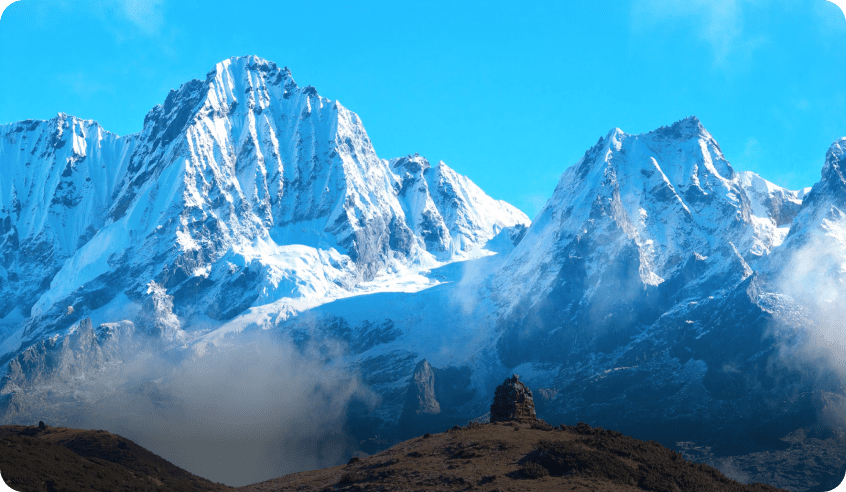
The Langtang Gosaikunda Trek is a beautiful 10-day journey that acclimatizes you to the natural and cultural beauty of Nepal without the tourist throngs on more popular routes. The trek has the perfect blend of the Langtang Valley’s breathtaking scenery and the peaceful, holy Gosaikunda lakes, and is a perfect blend of adventure and spirituality. It is close to Kathmandu, makes it a popular choice for both first-time visitors and those coming back who want a real, untouched experience.
The trek starts with a scenic ride from Kathmandu to Syabrubesi and a tiny village that is the starting point of the trek. The trek takes its way through forests, rivers, and Tamang villages. Going up, the views change too, forests give way to alpine terrain and grassy meadows with Himalayan views. Along the route, you’ll pass highlights like the peaceful Langtang Village and the serene Kyanjin Gompa. Then you will reach the Gosaikunda lakes, which lies below the mountains. These waters aren’t just beautiful, they’re deeply admired by both Hindus and Buddhists. This is making this part of the trek both visually breathtaking and spiritually meaningful.
What makes this trek truly special is its peaceful surroundings. Though the sights are spectacular and breathtaking, the walk itself is peaceful and meditative. You’ll hear the sound of rushing rivers, wind blowing over prayer flags, and gentle tracks of yaks along the path. Alone or with companions, however you hike to the Langtang Gosaikunda Trek, it’s a journey that you’ll never forget, with nature and culture, and memories that still linger long after you’ve put foot back in your home.
Trip Highlights
- Walk a quieter trail away from the crowds and enjoy a peaceful trekking experience.
- Close up to towering peaks and sparkling glaciers that feel just an arm’s reach away.
- Visit the sacred Gosaikunda Lake, a holy site for Hindus and Buddhists.
- Meet local mountain communities and see how they live in this remote region.
- Hike through green forests, open alpine fields, and yak-grazing pastures that change with every step.
Itinerary
Your Journey, Step by Step
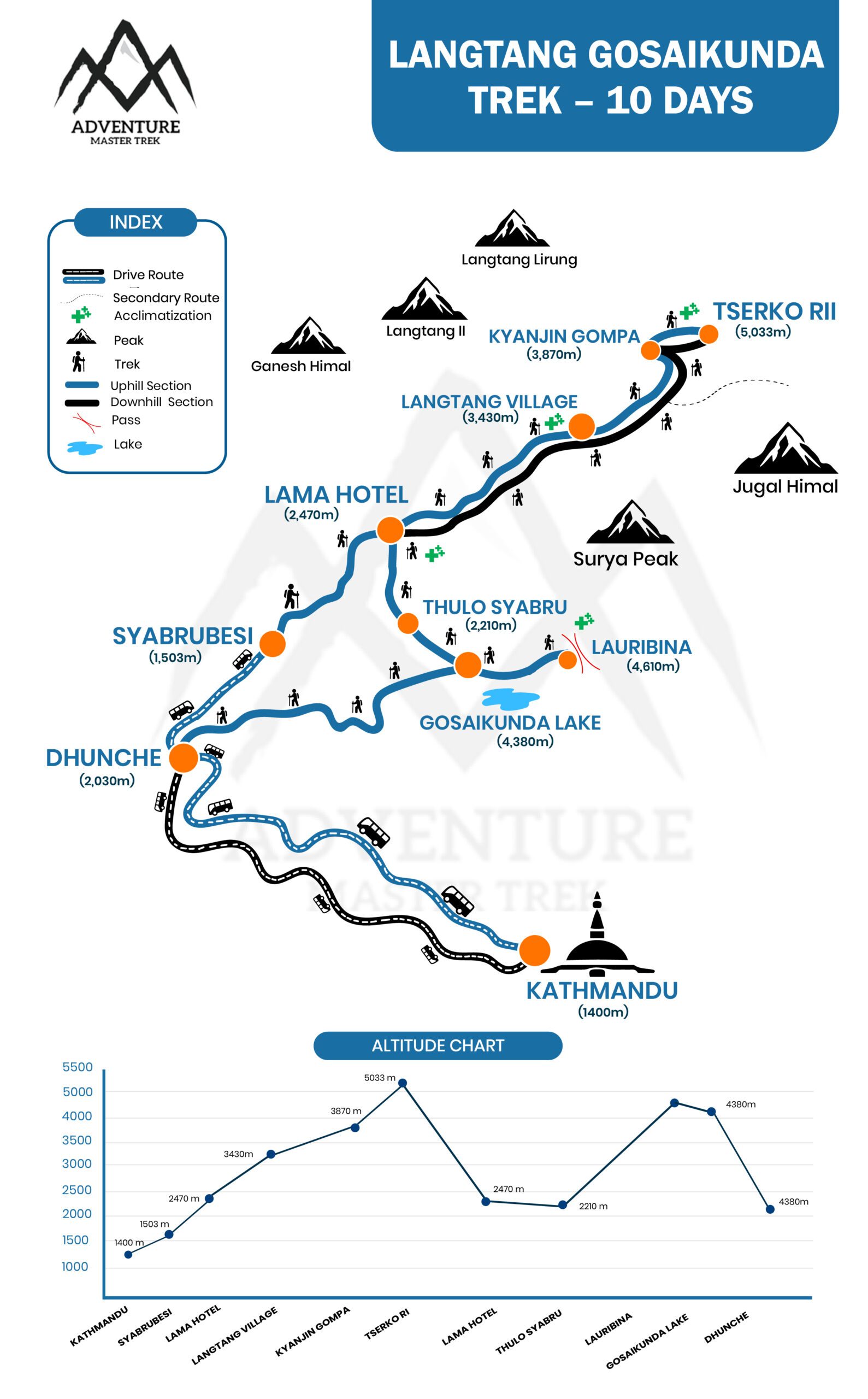
Syabrubesi to Lama Hotel (2,470m)
So the trail from Syabrubesi kicks off pretty chill, but don’t let that fool you — it’s a slow grind once you hit the forest. The path hugs the Langtang River most of the way, and the sound of rushing water is like your background music. You’ll cross a few wobbly suspension bridges (yeah, they move more than you’d like), and every now and then you’ll spot langurs swinging around or these insanely bright birds flying past. The air smells fresh, kind of earthy — the kind of scent you only get deep in the mountains. It’s a steady uphill walk, and your legs will definitely feel it, but the view and the vibe keep you going. After about six or seven hours, you roll into Lama Hotel — just a few lodges in the forest, but man, it feels like paradise when you get there.
Lama Hotel to Langtang Village (3,430m)
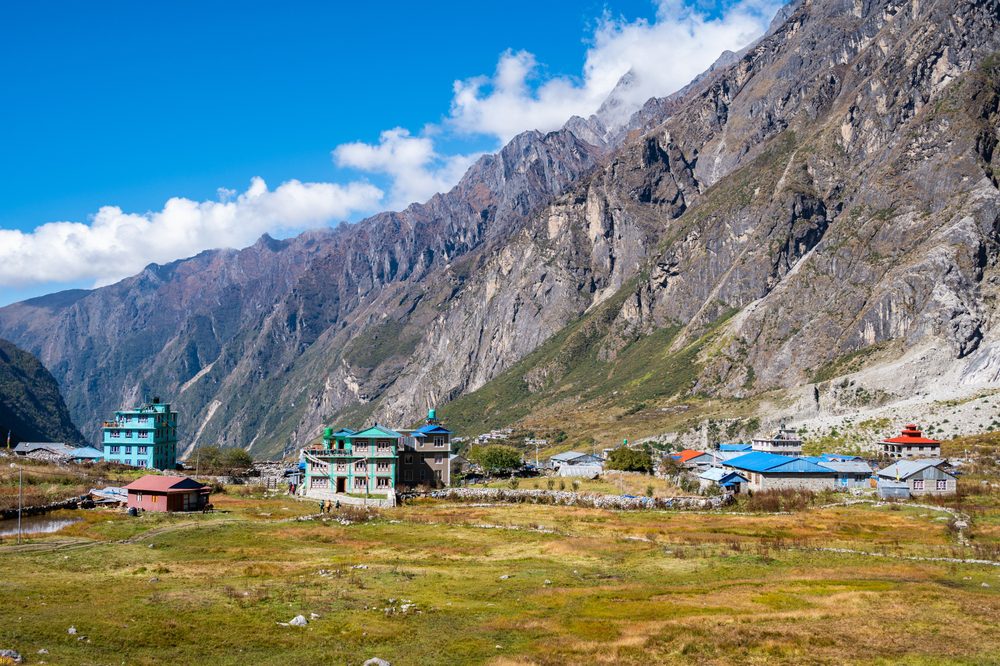
Alright, now things start getting really interesting. This part of the trail takes you deeper into the valley, and suddenly the views just explode — mountains everywhere, and it hits you all at once. As you climb, the forest thins out, and there it is: Langtang Lirung, massive at 7,227 meters, staring right at you. You’ll walk past yaks grazing lazily, spin a few prayer wheels, and see mani walls carved with Buddhist mantras — it’s like the culture is built right into the trail. The path keeps going, a steady mix of uphill and switchbacks, and your legs start to notice, but honestly, who cares when the scenery keeps dropping jaws? After five or six hours, you hit Langtang Village — quiet, beautiful, full of character, and surrounded by peaks that make you stop just to stare. Totally worth the trek.
Langtang Village to Kyanjin Gompa (3,870m)
This day’s a bit of a breather compared to the last — the walk from Langtang Village to Kyanjin Gompa is shorter, which is perfect for letting your body catch up and really soak in the scenery. In just a few hours, you find yourself in Kyanjin Gompa, a charming little village tucked right below the mountains, with a historic Buddhist monastery sitting proudly in the center. The place has this calm, peaceful energy that makes you want to just pause and take it all in. In the afternoon, there’s a couple of fun options — you can check out the local cheese factory, which is way more interesting than it sounds, or wander toward the wide-open fields of Langshisha Kharka, where the mountains feel impossibly close and the air is impossibly crisp. It’s one of those stops where you really feel the Himalayas around you.
Hike to Kyanjin Ri / Tserko Ri & Return to Lama Hotel
Wake up early for a rewarding side hike to either Kyanjin Ri (4,773m) or Tserko Ri (5,033m), both offering jaw-dropping sunrise views over Langtang Lirung, Yala Peak, and nearby glaciers. The higher you go, the more the Himalayas are seen like a white-and-blue ocean of peaks. After taking in the views, you’ll return back to Lama Hotel, an easier downhill walk that gives you time to reflect on the amazing morning.
Lama Hotel to Thulo Syabru (2,210m)
Leaving Lama Hotel, you’ll go to a place called Pairo before heading toward Thulo Syabru. This climb can be a bit challenging, but the views and the amazing atmosphere of the village make it worthwhile.
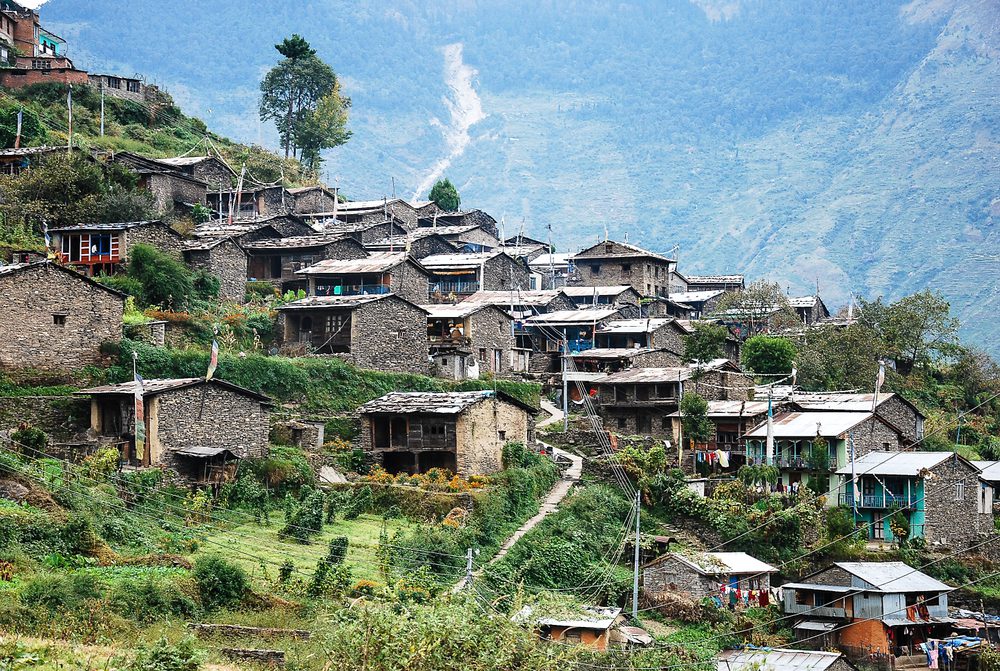
Thulo Syabru is a Tamang village on a hillside. Houses are old and colorful. People are really friendly. In the evening, you can have some homemade food and just talk to locals. It’s simple, but you really get a feel for the place.
Thulo Syabru to Lauribina (3,900m)
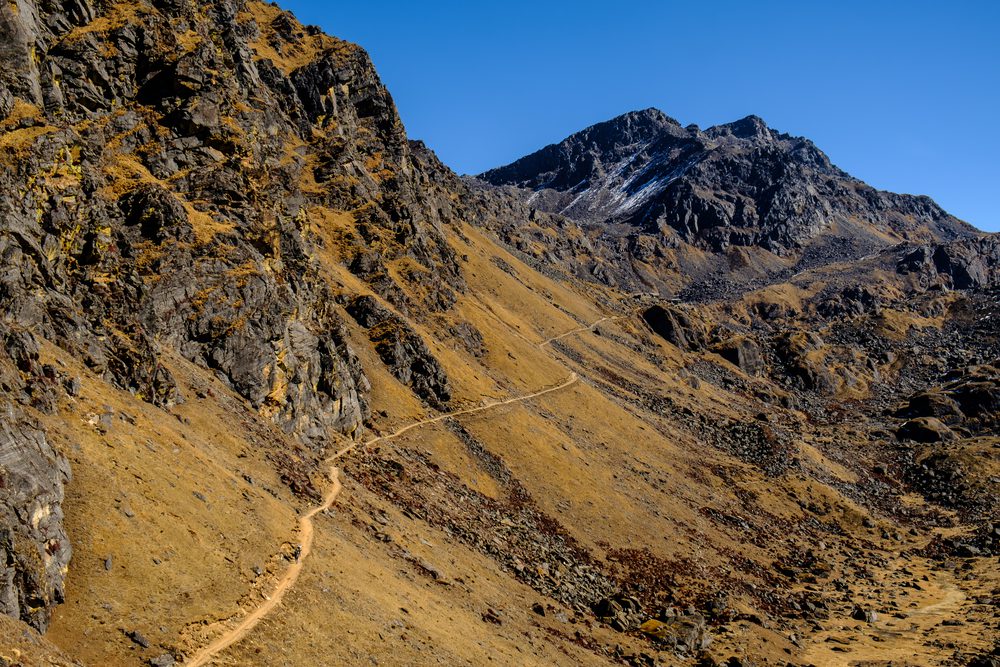
It feels like you’re walking right along the spine of the mountains. Every turn brings a new view. It feels like you’re walking along the mountains’ spine. After 6 or 7 hours, you reach Lauribina. A quiet village up high, with calm vibes and views in every direction.
Lauribina to Gosaikunda Lake (4,380m)
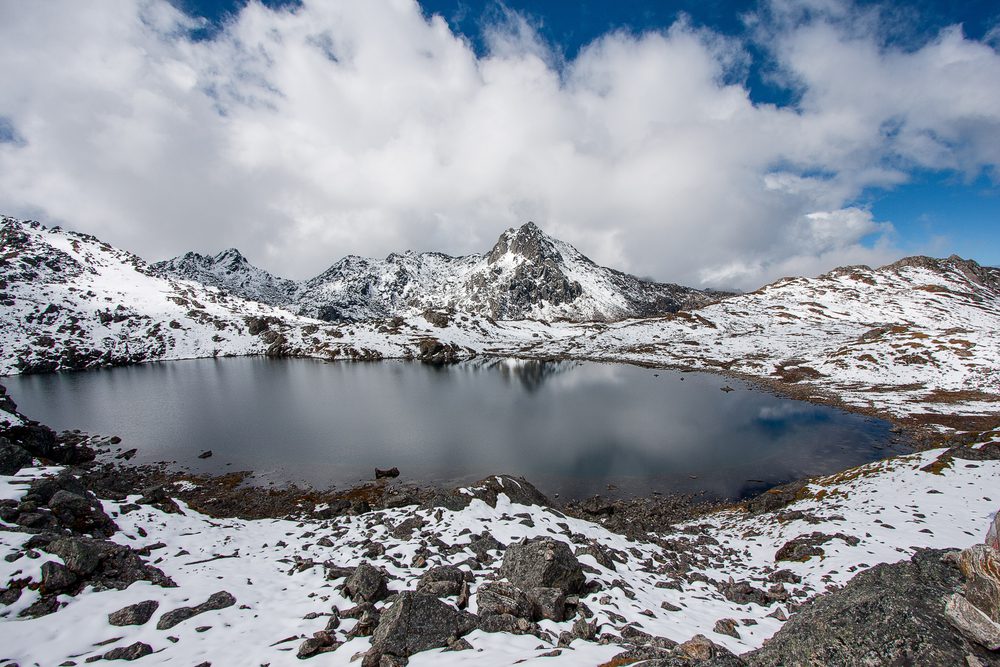
Today’s trek is shorter, but the altitude makes it tough. Still, it’s all worth it when you reach Gosaikunda—a sacred lake high up that seems almost otherworldly. Rugged mountains rise all around, and smaller lakes like Saraswati Kunda and Bhairav Kunda dot the area. It’s a spiritual spot for both Hindus and Buddhists. People say the waters have healing powers, and honestly, the calm and quiet here is something you really have to experience to believe.
Gosaikunda to Dhunche (2,030m)
The last day takes you mostly downhill. Pines all around. Rocks underfoot. Waterfalls tumbling beside the trail. You’ll pass tiny villages where life feels frozen in time. It’s a long day, 7 or 8 hours, but downhill makes it easier. The scenery keeps changing, so you barely notice the hours. By nightfall, you reach Dhunche. One last night in the mountains, and the air feels like it’s holding its breath.
Dhunche to Kathmandu
After breakfast, you’ll hop back in the jeep for the drive to Kathmandu, which takes around 6 to 7 hours. The trail gives you one last chance to take in the hills and rivers before city life takes over again. If you have time, you can swing by Tatopani Hot Springs. A soak here is the perfect way to rest your tired legs after ten days in the Himalayas.
Customize this trip with help from our local travel specialist that matches your Interests.
Customize This TripInclusions
What’s Covered in Your Adventure
- Private Transportation: Pickup and drop-off by private vehicle.
- Meals: Three meals a day (Breakfast, Lunch, and Dinner) during the trek.
- Accommodation: Trekking lodge accommodations during the trek.
- Permit: Langtang National Park entry and Trekkers’ Information Management System (TIMS) permit.
- Transportation: Local bus/jeep to Syabrubesi and back to Kathmandu.
- Guide: A highly experienced, helpful, knowledgeable, friendly, well-spoken, well-trained, government license holder guide, including his salary, food, drinks, and accommodation, as well as transport and insurance.
- A comprehensive first aid kit box will be available.
- Arrangement of emergency helicopter service (to be paid by your travel insurance company).
- Duffel bag for trekking, if needed. Government taxes and official expenses.
- Oximeter to check your pulse, oxygen saturation, and heart rate (very useful for checking Altitude Mountain Sickness (AMS) symptoms), ensuring your trek is in the safest hands possible for all levels of trekkers.
- International flight airfare.
- On-arrival visa fees at Tribhuvan International Airport (15 days – $25–$30, 30 days – $40–$50, and 90 days – $100–$110).
- All accommodations and meals in Kathmandu, before and after the journey.
- Personal expenses (shopping, snacks, boiled/bottled water, hot tea/coffee and cold drinks, hot shower, alcohol, Wi-Fi, telephone calls, battery recharge fees), extra porters, etc.
- Personal clothing and gear.
- Travel insurance that must cover emergency high-altitude rescue and evacuation (compulsory).
- Tips for the guide.
- Additional costs due to delays beyond our control (e.g., landslides, weather conditions, itinerary modifications due to safety concerns, illness, change of government policies, strikes, etc.).
- All costs and expenses not listed under "What is included in the Langtang Valley trek package."
Maps
Navigate Your Journey
Good to Know
Your Journey, Step by Step
Langtang Gosaikunda trekking Weather and Temperature
The weather on the Langtang & Gosaikunda Trek is highly varied depending on the time of year and elevation. Spring is usually warm and sunny during the day, between 10°C and 20°C, but gets chilly at night, sometimes almost to freezing level. The sky is mostly blue, though the tail-end of spring can have a light shower or two. Fall is also a popular season, with warm 8°C to 15°C days and cold nights dipping near or below 0°C. Fall has optimum mountain views because of its sunny, dry days.
Summer, also called monsoon season, is hotter and wetter. Daytime temperature reaches up to 25°C at lower elevation levels, but the rain makes the trail humid and slippery. Nights are cold, at around 10°C. In winter, the weather is quite cold, especially at higher elevations, where it will be as low as -15°C overnight. Snow is common in the upper areas, and the air is crisp but arid. Weather on the mountains, either in summer or winter, is always unpredictable. It’s always a good idea to pack layers, rain gear, and check the forecast before each day of treks to be comfortable and secure.
Ideal time to trek to Langtang Valley & Gosaikunda
Autumn (September to November)
Autumn is hands-down the best time to trek in the Langtang and Gosaikunda region. The skies are usually clear, the weather is cool and dry, and the mountain views… honestly, they’ll blow you away. Hiking feels easy and comfortable, with long days, crisp air, and visibility so sharp that every peak pops against the blue sky. Langtang Lirung and the nearby peaks look absolutely stunning — perfect for snapping those jaw-dropping photos or just standing there, staring in awe. Autumn’s a popular time, so you’ll run into other trekkers along the way, but honestly, the trails never feel crowded. There’s this awesome balance between energy and calm — you can share a laugh with people on the path, then wander off for a quiet moment surrounded by mountains. Honestly, autumn feels like the mountains are putting on a private show just for you, and every turn of the trail makes you want to pause and take it all in.
Spring (March to May)
Spring is another great time to hit the Langtang trails. It’s when the landscape bursts into color, especially with rhododendron flowers blooming all over the forest paths. The weather is warmer than in autumn, especially in lower elevations, so trekking is quite pleasant. At this season, there is a great atmosphere to the trek, birds are flying around, leaves are thick and green, and everything looks fresh. If you are an environmentally conscious person and a photographer, then spring offers you some of the most beautiful vistas you can ever imagine.
Monsoon (June to August)
Monsoon trekking is a different kind of adventure altogether. The roads are serene, the hills have a tendency to peak out of cloudy fog, and everything that is around you appears to be breathing. Yes, it rains an awful lot, and the roads get a little muddy and wobbly, but if you don’t mind that, the calmness and greenness compensate for it. Waterfalls are roaring, the air is fresh, and there’s a unique quietness in the hills. It is the ideal season to be alone, if only you are prepared for the weather.
Winter (December to February)
Winter trekking means fewer people on the trail, snow-smothered mountain views, and peaceful surroundings. The cold weather days are manageable with the right gear, and the snow-cap cover is just beautiful. Higher sections of the trail, especially around Gosaikunda and the pass, could be tough or even closed in the event of a heavy snowfall, and caution must be exercised. But if you don’t mind the cold and enjoy a quiet, peaceful experience, winter can be a surprisingly rewarding option.
Accommodation and Food on Langtang Gosaikunda Trek
Accommodation in the Langtang Gosaikunda Trek is mostly in local family-owned traditional mountain teahouses. They are basic but comfortable, with twin beds and blankets and a shared bathroom in most places. Even though the rooms are basic, the welcoming hospitality, cozy dining halls with a central wood stove fire, and mountain atmosphere make every evening a pleasant moment of the trekking experience. Most teahouses along the trail have charging spots, and some even offer Wi-Fi, though the signal can get pretty spotty once you’re higher up.
When it comes to food, you’ll be eating fresh meals cooked right in the teahouses with local ingredients. The classic go-to for trekkers is dal bhat — a hearty mix of rice, lentil soup, seasonal veggies, and pickles that keeps you fueled for the day ahead. Honestly, after a long morning of hiking, there’s nothing better than sitting down to a warm plate of dal bhat, watching the mountains, and feeling your energy come back. You’ll also find other comforting meals like:
1. Tibetan egg or jam bread.
2. Steamed momos plates (Nepali dumplings).
3. Fried vegetables or eggs with noodles or rice.
4. Hot soups like garlic soup or Thukpa.
5. Boiled potatoes with local salt and spices.
6. Breakfast porridge or pancakes.
7. Hot drinks like masala tea, ginger lemon, coffee, and butter tea.
It is simple food, but wholesome and satisfying, perfect for mountain life. Just remember, the higher you go, the less variety the menu has, but the view compensates.
Difficulty In the Langtang Gosaikunda trek
The Langtang–Gosaikunda trek isn’t the hardest trek you’ll ever do, but don’t think it’s just a stroll in the park either. It sits right in the middle — challenging enough to make you feel like you’re working for it, but totally doable if you’ve got average fitness. Most days, you’ll be walking anywhere from five to seven hours, sometimes a bit more depending on your pace and how often you stop to catch your breath—or take a million photos of the mountains. Some days involve steady climbs and long descents, especially when you’re approaching Gosaikunda or crossing Laurebina La Pass. The air does get thinner as you get higher, and that’s usually the part trekkers feel most, not exhaustion, but shortness of breath or mild headaches if you’re not acclimatizing properly.
Acclimatization and Altitude Sickness in the Trek to Langtang Gosainkunda
Acclimatization is a big deal on the Langtang–Gosaikunda trek, especially once you start heading above 4,000 meters. It’s your body slowly getting used to the thinner air and lower oxygen at high altitude. The trick to staying safe? Take it slow, give yourself plenty of rest, and drink lots of water — your body will thank you. Most trekking itineraries are smart about this, giving you extra overnight stops in towns like Kyanjin Gompa so your body can adjust gradually. Pay attention to how you’re feeling, skip the alcohol, and keep your meals balanced — all of this really helps your body adapt. Trust me, a little patience goes a long way when it comes to high-altitude trekking, and it makes the journey way more enjoyable. Slowing down and being aware of the altitude will ensure a pleasant and safe trekking experience.
To minimize altitude sickness risks and acclimate, you may follow the following measures:
- Take it slowly: Do not attempt to hurry to higher elevations. Ascend slowly and build rest days into your itinerary to enable your body to adapt naturally.
- Hydrate & nourish yourself: Drink plenty of water throughout the day, and provide your body with well-balanced, nutritious food to preserve consistent energy levels.
- Take medication: Some trekkers use high-altitude medication like Diamox to help in acclimatization, but only after consulting your doctor.
- Descend if need be: If symptoms like dizziness, nausea, or headache get worse instead of better, don’t delay, descend to a lower altitude as soon as possible.
Charge for Hot Showers and Electricity on this Trek
On the Langtang Gosaikunda Trek, the majority of teahouses and lodges have basic amenities such as electricity and hot showers, but be aware, these services typically involve an additional fee. Hot showers here aren’t free — you’ll usually pay around $3 to $5 depending on where you are. Fuel and electricity are limited in the mountains, so those small fees help cover heating the water and keeping things running.
Most teahouses do have electricity for charging phones, cameras, or other devices, but it’s usually just for a few hours in the evening. Some places even charge $1 to $3 per device, so it’s smart to plan ahead. It’s all part of the mountain adventure — a little extra effort for the comforts we take for granted back home. Expect to pay around $1 to $3 per charge in some places, and plan your usage accordingly — it’s all part of the mountain trek experience! It’s a good idea to bring a portable power bank with you, too, and always carry some local currency on hand to pay for these services, as credit card payments are rarely accepted.
Thus, when you get to have the luxury of taking a hot shower and charged gadgets, having prepared in advance for these small charges will ease your hike and stress-free.
Group size for Langtang Gosaikunda Trek
For the Langtang–Gosaikunda trek, smaller groups usually work best — anywhere from 2 to 10 people is ideal. It keeps things relaxed, makes logistics easier, and still gives you some company on the trail. If you’re after a peaceful, laid-back trek and don’t mind smaller company, traveling with 2 to 4 people works perfectly. Groups of 6 to 10 are pretty common on scheduled tours — enough for some fun camaraderie but still easy to manage.
Big groups are possible, but they can slow things down and make finding teahouse rooms a bit tricky. Whether you’re going solo, with friends, or in a small crew, Langtang welcomes all kinds of trekkers. The mountains don’t care how many of you there are — they’ll give you the same stunning views and serene trails.
Alternative Treks Around the Langtang Valley
The Langtang region is not limited to the Langtang Gosaikunda Trek alone, there are some great alternative treks in the region that offer their own charm. If you’re short on time, want to skip the crowds, or crave more cultural experiences, these treks are well worth investigating:
- Tamang Heritage Trail: A culturally rewarding trek via traditional Tamang settlements. Great for sampling local lifestyles without going to very high altitudes.
- Helambu Trek: A nice, easy trek close to Kathmandu. You get to wander through quiet forests, peek into a few monasteries, and soak up some amazing views — all without breaking a sweat.
- Langtang–Ganja La Pass Trek: A tougher, more remote trek that includes crossing a high pass (over 5,100 meters). For experienced trekkers looking for solitude and adventure.
Travel insurance for the trek to Langtang Gosainkunda
Heading to Langtang and Gosaikunda? Make sure you’ve got solid travel insurance. You’ll be trekking at high altitudes through remote mountains, where getting medical help quickly isn’t always easy. Pick a policy that covers trekking up to 5,000 meters, emergency medical care, and even helicopter evacuation — just in case. It’s one of those things you hope you never need, but you’ll be glad to have it. These kinds of policies can prove to be a lifesaver in the case of altitude sickness or other accidents during the trek.
It is also wise to take insurance that includes trip cancellations, lost baggage, and delays, as Himalayan weather can be unpredictable. When buying a policy, pay close attention to the fine print and make sure that trekking in Nepal is specifically covered, especially at higher elevations. Some insurers require an add-on for adventure activities. Carry a copy of your insurance, both digital and hard copy, on the trek; it may be required to show it in cases of emergencies or by your guide.
Safety and security for the Langtang Valley & Gosaikunda trek
Langtang Valley and Gosaikunda are pretty safe, whether you’re trekking solo or with a group. The trails are easy to follow, and the villages along the way are super welcoming — people here are genuinely friendly. That said, it’s still the Himalayas, so a little caution goes a long way. Stick to main trails, heed your guide if you have one, and don’t travel at night. To have a simple first-aid kit and knowledge of altitude sickness is always wise.
Safety-wise, the Langtang region is peaceful with minimal crime. Still, it is a good idea to protect your belongings, keep valuables in a secure daypack, and don’t leave them at teahouses. Informing someone of your itinerary and return date can also be a good idea, especially if you are solo trekking. With the right preparation and a bit of caution, the Langtang–Gosaikunda trek turns into an unforgettable and safe Himalayan adventure.
Tipping the guide and the potter
Hiking the Langtang–Gosaikunda trail? Don’t forget your guide and porter at the end. It’s not a rule, but giving a tip is a simple way to say thanks for everything they do. Guides do way more than point out the trail — they tell stories, make sure you don’t get lost, and jump in whenever the path gets tricky. And porters? They’re absolute champs, lugging your bags up steep trails, slogging through mud, rain, or whatever the mountains decide to throw their way.
Most people hand over their tips in person at the finish, maybe with a smile and a “thank you.” There’s no set number — it’s really about the thought. Even a small gesture goes a long way and shows you appreciate all the effort they’ve put in to make your trek smoother and more enjoyable.
Booking Policy for the Langtang Valley & Gosaikunda trek
We aim to make the process of scheduling your trek to Langtang and Gosaikunda as simple and stress-free as we can. Please read the following instructions to learn how to easily plan ahead and book your position:
1. Securing Your Spot
We require a 30% deposit of the entire trip cost to secure your participation. This enables us to plan ahead for permits, lodging, and guides. The remaining amount can be paid after you get to Kathmandu, prior to the start of the journey.
To finalize your reservation, kindly provide us with:
- A photo or scanned copy of your passport
- Your receipt for the deposit payment
- Insurance information and emergency contact information (if available at the time)
2. Available Payment Methods
We accept a number of simple and secure payment methods:
- Bank Transfer: The deposit can be sent to our official bank account by wire transfer. There may be bank fees.
- Visa and MasterCard are accepted forms of payment. Card transactions are subject to a 4% processing fee.
- Online Gateway: We provide a safe online payment gateway.
- Cash Payment: You can pay the remaining amount in cash at our office if you’re in Nepal.
3. Paying the Balance
After you get to Kathmandu, you can pay the remaining 70% of the trip’s cost. You can pay with a bank transfer, card, or cash. The trek cannot begin until all fees have been made.
4. Date Changes or Trip Rescheduling
We are pleased to assist you if your travel plans change. If you need to change your journey date, please notify us at least three weeks in advance. If lodging or transportation has already been reserved, changes may be subject to availability and cost a price.
5. Insurance Requirement
Travel insurance is required because the walk passes through rural locations and high altitudes. Medical care, travel delays, and emergency evacuation (including helicopter rescue) should all be covered.
6. Short-Notice Bookings
Although they are not guaranteed, reservations made less than two days prior to the start date are feasible. In the months of March through May and September through November, when trekking is most popular, lodging and transportation can quickly fill up. Booking in advance is highly recommended.
Cancellation Policy for the Langtang Valley & Gosaikunda trek
1. Cancellation by the Guest
- If you cancel more than 30 days before to departure, your deposit will be fully refunded (bank or transfer fees excluded).
- 50% of your deposit will be returned between 15 and 29 days before to departure.
- 25% of your deposit will be returned seven to fourteen days prior to departure.
- Less than seven days prior to departure: We might be able to reschedule at no additional cost, but there won’t be a deposit refund.
2. Cancellation by the Company
In the event that natural disasters, political upheaval, or other unforeseen circumstances force us to postpone the expedition, you have the following options:
- a complete repayment of all money paid
- the choice to postpone the hike at a later time at no additional expense.
3. Weather or Route Changes
We won’t give refunds if bad weather or safety concerns force us to reduce the walk or alter the route because all necessary preparations (permits, logistics, etc.) will have already been made. We will, however, make every effort to make the experience more satisfactory for you.
4. No-Show Policy
We won’t give a refund if a guest fails to show up on the day of departure without telling us.
5. Travel Insurance Required
Every participant needs to have current travel insurance that covers emergency evacuation, medical expenses, and trip cancellation. This safeguards you in the event of situations or sudden shifts.
What you gonna explore in this packageGears and Equipment (Packing List for Langtang Gosaikunda Trek)
1. General Essentials
- 25–35L daypack rain cover for daily essentials.
- 50–60L waterproof duffel bag for porters
- 3-season sleeping bag (comfort-rated to -10°C)
- Pair of adjustable trekking poles
- Two 1L water bottles (insulated ones recommended)
- Water purification system (tablets, filter, or straw)
2. Clothing – Upper Body
- 1–2 moisture-wicking thermal tops
- Warm fleece jacket or wool sweater
- Waterproof/windproof outer layer
- 2–3 quick-drying T-shirts
3. Clothing – Lower Body
- 1 pair of thermal leggings
- 2 pairs of light trekking trousers
- 1 pair of waterproof trousers
- 1 pair of shorts (optional, for hot areas)
4. Handwear
- 1 pair of lightweight gloves
- 1 pair of insulated, waterproof gloves
5. Footwear
- 4 pairs of synthetic or wool socks
- Good, waterproof hiking boots (broken in, ankle support)
- Sandals (for river crossings or camp)
6. Undergarments
- 4–5 pairs of moisture-wicking undergarments
- 2–3 sports bras (for women)
7. Medications & First Aid
- Diamox (use with doctor’s advice)
- Painkillers (paracetamol, ibuprofen)
- Band-aids, blister treatment, and antiseptic cream
ORS (oral rehydration salts) - Personal prescription medication
- Wet wipes and hand wash
8. Optional Items
- Light reading book or journal
- Cards or small travel games
- Trekking umbrella (sun or rain)
- Portable solar charger
- Toilet paper roll
FAQs
Your Questions, Answered
What is the best season to do the trek?
The best time to trek Langtang Gosaikunda is during autumn (September to November) and spring (March to May). These seasons offer clear skies, pleasant temperatures, and excellent mountain views.
How difficult is the Langtang Gosaikunda Trek?
This is considered a moderate trek. While there are some steep ascents and high-altitude sections, it is manageable for trekkers with average fitness levels and proper acclimatization.
Do I need a guide for the trek?
Hiring a guide is not mandatory for the Langtang Gosaikunda Trek, but it is highly recommended for better cultural immersion, route navigation, and overall safety in the remote and high-altitude areas.
What permits do I need for the Langtang Gosainkunda Trek?
You will need two permits:
- Langtang National Park Entry Permit
- TIMS (Trekkers’ Information Management System) Card
Note: Some itineraries that extend into the Helambu or Annapurna region may also require the ACAP (Annapurna Conservation Area Permit).
What is the highest point of this trek?
The highest point is Gosaikunda Lake, located at an altitude of 4,380 meters (14,370 feet), a sacred alpine lake surrounded by rugged Himalayan peaks.
How do I acclimate physically for the trek?
To prepare for trekking in Nepal, focus on building cardiovascular endurance and leg strength through activities like walking, hiking, jogging, or cycling. Consistency is key, and adding stair training or short hikes with a backpack helps simulate trail conditions.
What kind of accommodation will I have on the trek?
Accommodation is in local teahouses, offering basic yet comfortable rooms, often with shared toilets. You’ll get a cozy bed, warm meals, and a unique chance to connect with local culture.
Is trail food good and safe?
Yes, most teahouses offer a variety of Nepali and Western dishes, such as dal bhat, noodles, soups, pasta, and pancakes. Make sure to stick to freshly cooked meals and drink bottled or properly filtered water to stay healthy during the trek.
Can I get a mobile phone signal while trekking?
Mobile network coverage is available in most large villages along the trek, but it can be weak or unreliable in more remote areas due to limited power and infrastructure.
Is power available on the trek?
Yes, electricity is available in most teahouses, usually powered by solar or limited local grids. Charging your devices often comes with a small extra fee.
How do I avoid altitude sickness?
To prevent altitude sickness, ascend gradually, stay hydrated, eat regularly, and rest properly. You can also take Diamox or other prescribed altitude medications, consult your doctor before starting the trek.
What equipment should I carry?
Bring warm clothing, a waterproof jacket, sturdy hiking boots, trekking poles, a good-quality sleeping bag, gloves, a hat, and a daypack. Renting or buying gear in Kathmandu is also an option.
Are there hospitals along the way?
There are basic health posts in some of the larger villages, but for any serious medical emergencies, evacuation to towns like Dhunche or Kathmandu is required. Always carry travel insurance that covers high-altitude rescue.
How much does the trek cost typically?
The total trek cost ranges from $700 to $1200, depending on your choice of guide, itinerary, accommodation, food, and permits. Group treks may reduce the cost per person.
Can I trek alone, or do I have to join a group?
Yes, solo trekking is allowed in the Langtang region, but most trekkers prefer to join a group or hire a guide for added safety, navigation help, and companionship.
What animals can I expect to see trekking?
The trail passes through Langtang National Park, home to langur monkeys, Himalayan pheasants, musk deer, and occasionally the rare red panda if you’re lucky.
Are there cultural monuments to visit on this trek?
Absolutely. You’ll visit Buddhist monasteries, traditional Tamang villages, and the sacred Gosaikunda Lake, a revered pilgrimage site for both Hindus and Buddhists.
Is trekking in the Langtang region safe now after the 2015 earthquake?
Yes, trekking in Langtang is now safe. The region has recovered well, trails have been restored, and teahouses rebuilt. Just follow standard safety practices and stay updated through your trekking agency or guide.


View Our Similar Packages
Discover our top tours, loved by thousands of travelers annually. Choose the adventure that inspires you and embark on a journey tailored to your desires.
Save 36%

 8 Days
 Nepal
Nepal
Add Review
Reviewing for Langtang Gosaikunda Trek – 10 DaysRequest a Callback - Langtang Gosaikunda Trek – 10 Days
Submit the form and we will be back to you shortly
Request a Callback - Langtang Gosaikunda Trek – 10 Days
Submit the form and we will be back to you shortly
Narayanhiti Palace Museum

Narayanhiti Palace Museum


