









Amphu Lapche Pass Trek with Mera Peak Climbing


Trip Overview
Amphu Lapche Pass Trek with Mera Peak Climbing Overview
The Amphu Lapcha Pass Trek, followed by the Mera Peak ascent, is a tough but rewarding trip that blends high-altitude hiking, an easy-grade summit push, and one serious, icy pass crossing, all wrapped in Nepal’s wild, little-seen Himalayas.
Your adventure officially starts from Kathmandu, where you double-check equipment and nerves before catching an early flight to Lukla at 2,840 metres with wide sky views and great scenery. The path then passes through the quiet villages of Panggom, Nashing Dingma, and the Chalem Kharka, which sit well off the busy Everest circuit, letting you meet local people and children chasing yaks. Day by day, the climb stays gentle while the shoulders loosen. You will cross shady forests, narrow ridges, and calm river glades that quietly teach your lungs how to breathe thin air.
You’ll step into the stunning Hinku Valley, which is a tucked-away gem that offers dramatic ridges and wide skies above a ring of snowy summits. On the trail, you pause in Kothe, then Tangnag, and finally, Khare (5,100m), where you take a breather and run through quick gear drills. From Khare, you launch your bid for the top of Mera Peak (6,461m), Nepal’s tallest trekking peak.
No deep climbing background is needed, yet you’ll brush across crevassed ice while digging in crampons, ropes, and simple knots. Then, you will stand on the apex and five of Earth’s giants-Everest, Lhotse, Makalu, Cho Oyu, and Kanchenjunga. Then, you are awed to see that breathtaking scenery in front of your eyes. After descending from Mera Peak, you trek to the Amphu Lapcha pass (5,845m), which is one of the most challenging and isolated mountain passes in Nepal.
Fixed ropes, a snow wall and a 200-meter, near-vertical descent make this crossing too dangerous for anyone who isn’t fully acclimatized and strong. Beyond the pass, drop into the famed Imja Valley and re-enter the Khumbu on visits to Chhukung, Dingboche and the sacred Tengboche Monastery, where you can take a moment of tranquil reflection and enjoy stunning views of Ama Dablam. From here, you trek to Namche Bazaar (3,440m), the vibrant Sherpa ‘capital’ of the Khumbu Region and from there, you will reach Lulka, which is the end point of this amazing trek.
This amazing journey to the Amphu Lapche Pass Trek with Mera Peak gives you the thrilling and exciting trip you’ve ever wanted. Although it can be quite challenging, with proper precautions, it will be one of your most memorable journeys in Nepal. So, are you ready for this mountaineering? Let’s get started!
Trip Highlights
- Lukla, the entry point to the Everest region, is reached by scenic mountain flight.
- Explore the isolated Hinku Valley, one of Nepal’s less-visited areas.
- Nepal’s highest trekking peak, Summit Mera Peak (6,476m), provides breathtaking 360° views of the Himalayas.
- The 5,845-meter Cross Amphu Laptsa Pass is a difficult high-altitude pass with technical parts.
- See five 8000-meter peaks in the background: Everest, Lhotse, Makalu, Kanchenjunga, and Cho Oyu.
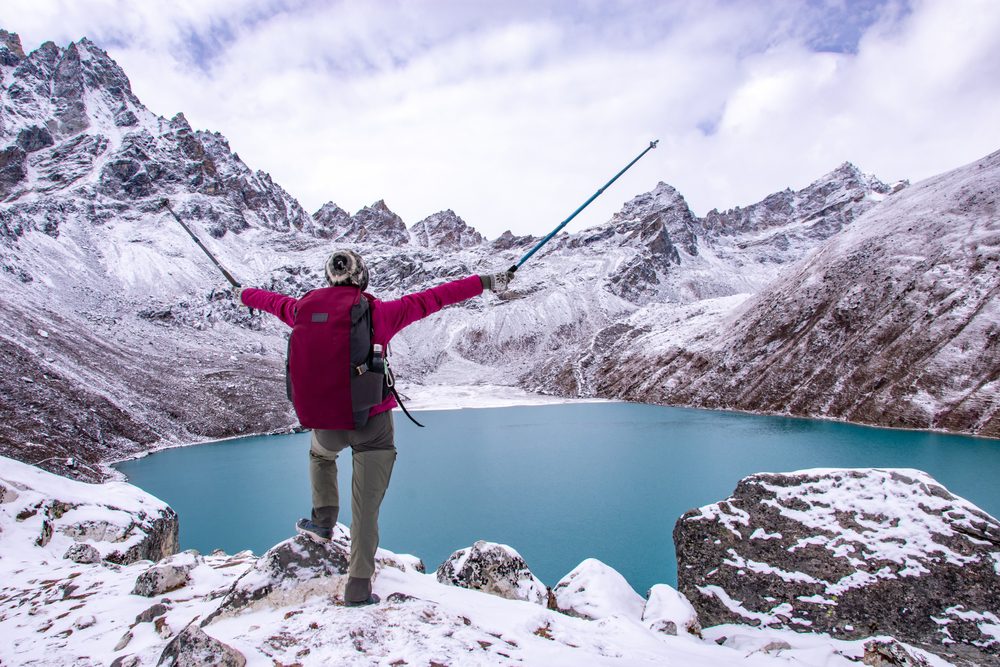
- Discover glaciers, lakes, moraines, and magnificent alpine scenery.
- Camping in isolated locations away from people
- See stunning villages such as Chukhung, Thangnak, and Khare.
- Opportunity to stay in traditional tea houses and learn about Sherpa culture.
Itinerary
The Amphu Lapcha Pass Trek is a challenging and rewarding journey in Nepal’s Everest region, offering trekkers the opportunity to experience remote valleys, high mountain passes, and stunning Himalayan vistas. An 18-day itinerary typically begins and ends in Kathmandu, with the trek commencing from Lukla. Below is a detailed day-by-day itinerary:
Fly to Lukla (2,800m) and Trek to Paiya (2,730m)
After an early breakfast, you’ll take a scenic flight from Kathmandu to Lukla, the gateway to the Everest region. This 30-minute flight offers you the most stunning views of the Himalayas and drops you right into the heart of the mountains. Upon arrival, you’ll meet your local guide and porter team, then begin your trek. The trail to Paiya is a pleasant walk through pine forests, small villages, and terraced hillsides. There are some gradual climbs and descents, giving you a good chance to get used to the terrain. After about 4 to 5 hours of trekking, you’ll reach the peaceful village of Paiya, where you’ll rest for the night in a local lodge. Your first day on the route is fantastic, allowing you to get used to the pace of the journey.
Stay overnight in the lodge in Paiya.
Trek from Paiya to Pangkongma (2,846m)
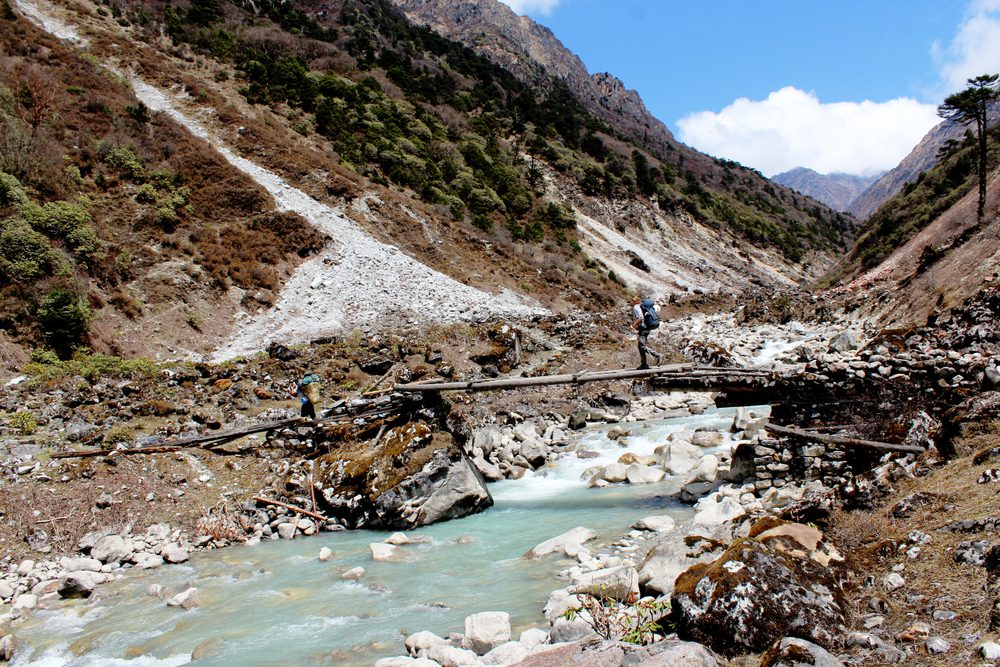
The hike today takes you farther into the lower Everest region’s less-visited regions. In Paiya, you will start your trek toward Pangkongma after breakfast. Along the way, you’ll pass numerous little rivers and charming wooden bridges as you travel through lush forests full of bamboo and rhododendron. The terrain opens up to provide stunning vistas of the nearby hills and distant snowy peaks as you ascend gradually. During your journey, you will come across a few small communities where you can see traditional village life and possibly start up a conversation with friendly residents. After about 5 to 6 hours of trekking, you’ll reach Pangkongma, which is a quiet Sherpa village with stone houses and terraced farms. Here, you’ll settle in for the night at a local guesthouse and enjoy a warm meal in a calm, welcoming setting.
Stay overnight at a guesthouse in Pangkongma.
Trek from Pangkongma to Gnashing Dingma (2,600m)
Today, you will begin by making your way gradually up to the Pang Kongma La Pass, where you will be rewarded with breathtaking vistas of the surrounding hills and your first up-close look at Mera Peak. You start your descent through dense, verdant woodlands after admiring the view. With birdsong and the crisp mountain air filling the air, the trail winds among towering trees and peaceful bamboo groves. The trek is serene, with isolated places providing additional views of snow-capped mountains. You reach the little, peaceful village of Gnashing Dingma by late afternoon, where you stay the night in a basic but comfortable hotel. You deserve a hot meal and a decent night’s sleep after a full day on the trail.
Stay overnight at a guesthouse in Gnashing Dingma.
Trek from Gnashing Dingma to Chalem Kharka (3,600m)
Today is one of the more challenging days on the trek, starting with a steep and steady climb up to the Surke La Pass. The trail winds its way higher and higher, testing your endurance, but every step is rewarded with breathtaking views of the surrounding mountains and valleys. When you finally reach the top, take some time to rest and soak in the vast, open landscape, it’s a moment that makes the hard work feel completely worthwhile. After the pass, the trail leads you down into a peaceful, forested area called Chalem Kharka. The air here is fresh and cool, and the sounds of birds and rustling leaves create a calm, relaxing atmosphere. You’ll set up camp among tall trees and open clearings, where the quiet of the forest helps you unwind after a long day. This is the perfect place to enjoy a warm meal, share stories around the campfire, and get a good night’s sleep before continuing your journey.
Stay overnight in Chalem Kharka.
Trek from Chalem Kharka to Khola Kharka (4,200m)
Day 6 takes you higher as you trek from Chalem Kharka to Khola Kharka through open alpine terrain. The forest fades away, and the trail becomes rockier with patches of low shrubs and grasses. The air feels thinner here, making the climb a bit more tiring, but the wide, sweeping views of the surrounding mountains make every step worth it. You’ll notice how peaceful and quiet the landscape becomes, with only the sound of the wind and your footsteps to accompany you. When you reach Khola Kharka, you’ll stay overnight at a local lodge. It’s a simple, welcoming place where you can warm up with a good meal, relax, and get some rest before the next part of your journey. The calm of this high-altitude spot makes it a perfect place to reflect on the trek so far and prepare for what’s coming next.
Stay overnight at a local lodge in Khola Kharka.
Trek from Khola Kharka to Kothe (3,550m)
You will begin by descending from Khola Kharka into the peaceful and beautiful Hinku Valley. The trail gently winds through open fields, scattered trees, and patches of wildflowers, offering wide views of the surrounding mountains and valleys. The fresh, cool air feels refreshing after the higher climbs, and the calm atmosphere of the valley makes the walk pleasant and relaxing. Along the way, you might see birds, butterflies, and maybe even some wildlife native to the area. As you get closer, the small settlement of Kothe comes into view, a quiet village nestled among the hills. Here, you’ll stay overnight in a simple but comfortable lodge run by friendly locals. After a long day on the trail, you can enjoy a warm meal and rest your legs. The peaceful surroundings and welcoming atmosphere make Kothe a perfect place to recharge before continuing your trek the next day.
Stay overnight at a lodge.
Trek from Kothe to Tangnag (4,360m)
Today, you will follow the Hinku Khola River as it flows steadily upstream through the valley. The trail is mostly steady with gentle climbs, winding alongside the rushing river and offering stunning views of the towering mountains around you. As you gain altitude, the air becomes cooler and thinner, and the landscape begins to change — trees start to disappear, replaced by wide grassy meadows and rocky slopes. The peaceful sounds of the river and occasional bird calls create a calming atmosphere as you walk. After several hours of trekking, you’ll reach Tangnag, a quiet summer grazing area where local herders bring their animals during the warmer months. Tangnag is a simple settlement with a few guesthouses where you can stay overnight. Here, you’ll enjoy a warm meal, rest your tired legs, and take in the calm surroundings, preparing yourself for the challenges ahead on the trail.
Stay overnight at a guesthouse in Tangnag.
Trek from Tangnag to Khare (5,100m)
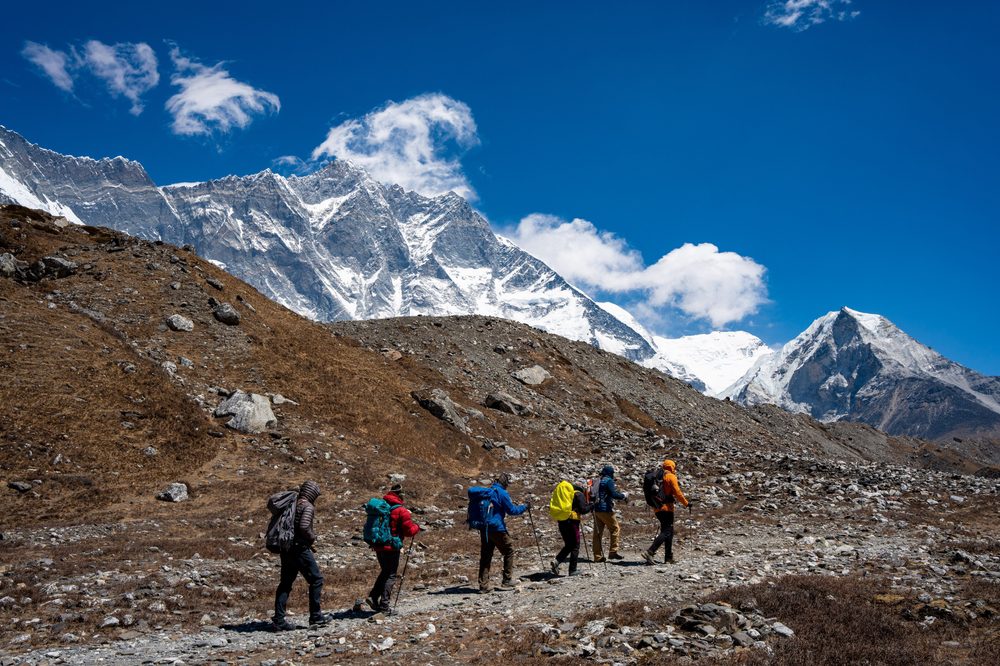
You will start a steady and gradual climb from Tangnag to Khare. The trail slowly rises, allowing you to get used to the higher altitude as you move through open, rocky terrain. The views along the way are impressive, with towering peaks all around and the valley stretching far below. Khare is a small, quiet village that serves as a base for trekkers heading toward Mera Peak. The guesthouses here are simple but comfortable, offering a chance to rest and recharge. After a long day of hiking, you can enjoy a warm meal and prepare yourself for the next stage of your journey. The peaceful atmosphere in Khare makes it a great place to relax before continuing onward.
Stay overnight at a guesthouse in Khare.
Trek from Rest and Acclimatization in Khare
Day 10 is a much-needed rest and acclimatization day spent in Khare. After several days of trekking at high altitudes, this day gives your body a chance to adjust to the thinner air, which is important before you begin the climb to Mera Peak. You can take it easy and relax at the guesthouse or choose to go on some optional short hikes nearby. These hikes help your body get used to the altitude while also letting you enjoy the stunning mountain views and quiet surroundings. During the day, you’ll also take part in pre-climbing training, where guides teach you important skills and safety tips for the upcoming ascent. In the evening, you’ll return to the guesthouse to enjoy a warm meal and rest well, preparing yourself both physically and mentally for the challenge ahead.
Stay overnight at a guesthouse.
Trek from Khare to High Camp (5,750m)
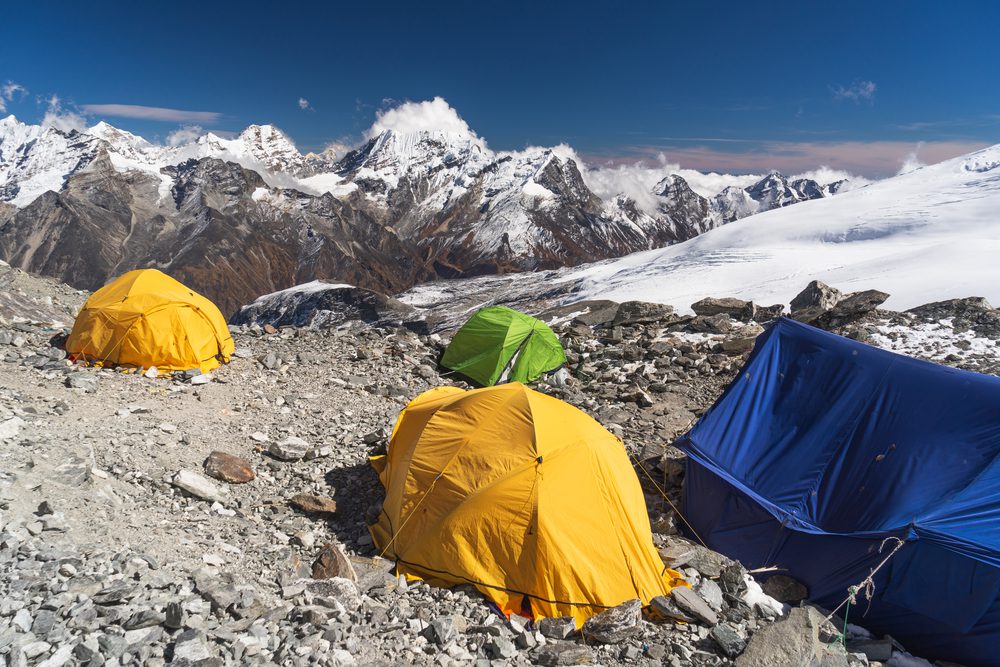
On this day, you will leave Khare and start trekking up to Mera Peak High Camp, gaining altitude as you get closer to the summit. The trail becomes steeper and more rugged, and the air feels thinner, so you’ll need to take your time and move carefully. Along the way, you’ll be surrounded by stunning views of snow-covered mountains, glaciers, and rocky valleys. Reaching High Camp is an important step in your climb, as it puts you close to the summit and allows your body to adjust to the higher altitude. Once there, you’ll set up your tents and spend the night resting, preparing yourself mentally and physically for the big climb early the next morning. The quiet and beauty of the high camp make it a special place to spend the night before the final push.
Stay overnight in tents.
Summit Mera Peak (6,461m) and descend to Base Camp
Today, you will wake up very early to begin your final push to the summit of Mera Peak, which stands at 6,461 meters. The climb is tough and requires focus and steady effort, but the reward is incredible views stretching across the Himalayan mountains. From the top, you can see snow-covered peaks, deep valleys, and the vast mountain landscape all around. After spending some time at the summit, you carefully start your descent back down to Base Camp. The journey down is long but feels easier after the hard climb up. Once you reach Base Camp, you’ll rest and spend the night in tents, giving your body time to recover and reflecting on the amazing accomplishment of reaching the summit.
Stay overnight in tents.
Contingency Day
Day 13 is a contingency day, set aside in case of any delays caused by bad weather or other unexpected challenges during the trek. This extra day gives you flexibility and helps keep the journey safe and comfortable. If the weather is poor or the trail is difficult, you might spend the night at High Camp, waiting for better conditions before moving on. Alternatively, if it feels better to descend to a lower altitude, you can do that instead to avoid any risks. Having this day built into the schedule means you won’t have to rush and can take your time, making sure you’re well-rested and ready for the next part of your trek. It’s an important day to stay flexible and safe in the mountains.
Stay overnight at High Camp.
Trek from Base Camp to Hunku Khola (4,900m)
Today, you will leave Base Camp and begin trekking through the remote and stunning Hunku Valley. The trail winds along quiet paths surrounded by towering snow-capped mountains and wide open landscapes that feel untouched by time. As you walk, you’ll notice the peacefulness of the valley, with only the sounds of nature around you, making it a special place to connect with the mountains. The air is fresh and cool, and the scenery changes with every step, offering beautiful views of glaciers and rocky slopes. You’ll spend the night camping in tents in this quiet valley, enjoying the calm and preparing yourself for the next part of the journey. It’s a perfect spot to rest your body and mind after the long trek so far.
Stay overnight in tents.
Trek from Hunku Khola to Panch Pokhari (5,350m)
You will trek from Hunku Khola up to Panch Pokhari, a beautiful and sacred area known for its group of high-altitude lakes. The trail gradually climbs through rocky paths and open mountain landscapes, surrounded by breathtaking views of snow-covered peaks and wide valleys. Panch Pokhari holds spiritual importance for the local people, and the calm lakes offer a peaceful atmosphere that feels special after days of trekking. You’ll set up camp near the lakes and spend the night in tents, enjoying the fresh, crisp mountain air and the quiet of this remote place. It’s a perfect spot to relax, reflect, and prepare for the challenging days ahead. Then we’ll trek to Panch Pokhari, a group of sacred lakes.
Stay overnight in tents.
Trek from Panch Pokhari to Amphu Lapcha Base Camp (5,600m)
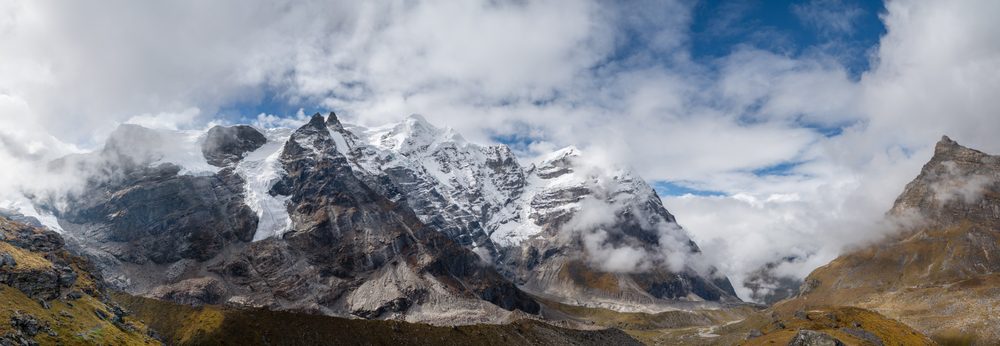
Today, you will leave Panch Pokhari and make your way toward the base camp of the Amphu Lapcha Pass. The trail becomes more rugged as you climb higher into the mountains, with rocky paths and stunning views of glaciers and towering peaks all around. The air feels cooler and the landscape more remote, giving a true sense of being deep in the wild. As you approach the base camp, you’ll see the challenging pass ahead, which you’ll cross the next day. You’ll spend the night camping in tents, surrounded by the quiet beauty of the mountains. This is an important rest stop to prepare yourself for the difficult climb and descent coming up, and the peaceful mountain setting makes it a special place to spend the evening.
Stay overnight in tents.
Cross Amphu Lapcha Pass (5,845m) and Trek to Chhukung (4,730m)
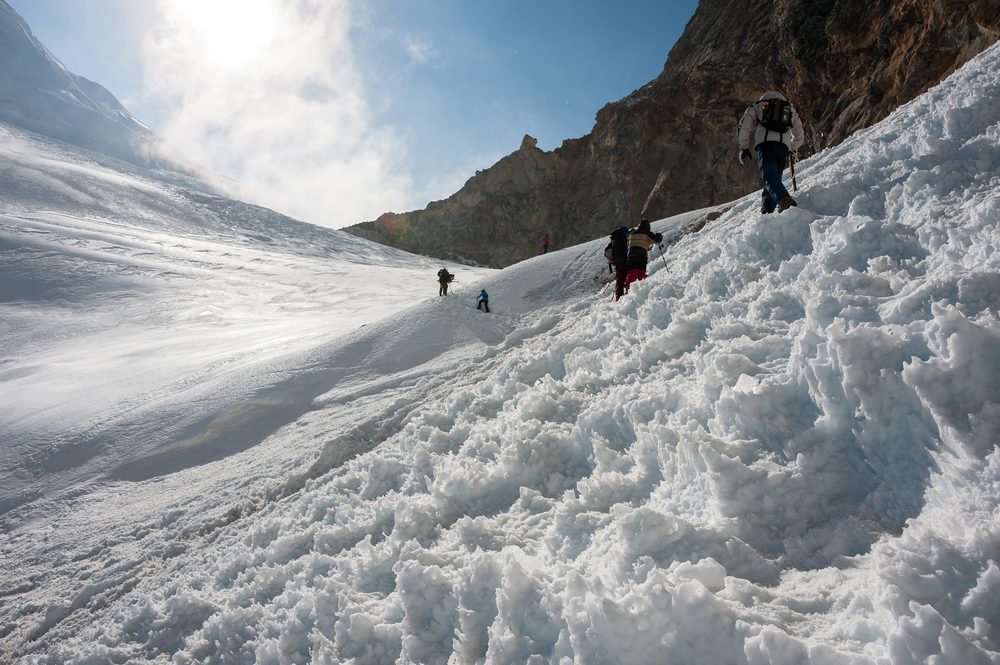
You will start very early in the morning to cross the challenging Amphu Lapcha Pass, one of the most difficult and technical parts of the trek. The climb is steep and demanding, requiring careful attention and steady steps, but the effort is rewarded with incredible views of the surrounding snow-covered peaks and glaciers. After spending some time at the top, taking in the breathtaking scenery, you begin a long descent into the Imja Valley, heading toward the village of Chhukung. The trail winds down through rocky paths and quiet landscapes, giving you a chance to relax a little after the tough climb. When you reach Chhukung, you’ll settle into a warm and cozy lodge for the night. This is a good chance to rest, recover, and prepare yourself for the next part of your adventure.
Stay overnight at a lodge in Chhukung.
Trek from Chhukung to Namche Bazaar (3440m)
Start your trek from Chhukung and make your way back toward Namche Bazaar. The trail takes you through the beautiful villages of Dingboche and Pangboche, where you can see traditional stone houses and experience the local Sherpa culture. Along the way, you’ll visit the famous Tengboche Monastery, an important spiritual center with stunning views of the surrounding mountains, including Everest on a clear day. The peaceful atmosphere of the monastery is a special highlight of the day. After spending some time there, you continue your journey down to Namche Bazaar. Once you arrive, you’ll settle into a cozy lodge where you can relax, enjoy a warm meal, and reflect on the incredible experiences of the trek so far.
Stay overnight at a lodge in Namche Bazaar.
Trek from Nambazzer to Lukla (2840m)
You start your journey from Nambazzer to Lukla, marking the final leg of your trek. The trail leads you through beautiful rhododendron forests, where in spring, the trees burst with bright pink and red flowers. As you go ahead, you will walk through this peaceful forest, which is a nice change after the higher, rocky trails. Along the way, you’ll pass through Namche Bazaar, the bustling mountain town known as the gateway to the Everest region. Here, you can stop to browse local shops, enjoy a cup of tea, and soak in the lively atmosphere. After Namche, the trail continues to gently descend, making your walk easier and more relaxing. As the day ends, you’ll reach Lukla, where you’ll spend the night in a comfortable lodge. This is a good chance to rest, reflect on your journey, and prepare for your departure from the mountains the next day.
Stay overnight at a lodge.
Customize this trip with help from our local travel specialist that matches your Interests.
Customize This TripInclusions
What’s Covered in Your Adventure
- Two nights at a standard hotel in Kathmandu with breakfast.
- Three meals a day, which include breakfast, lunch, and dinner.
- You will be provided with trekking Lodges (Tea Houses).
- All papers that need to be done, Fees for entering Sagarmatha National Park, and Khumbu Pasang Lhamu Rural Municipality.
- Kathmandu to Lukla and back to Kathmandu, or (Ramechap to Lukla, back to Kathmandu flight) with an airport transfer and airport tax within Nepal.
- A highly experienced, helpful, knowledgeable, friendly, English-speaking guide with all of his salary, food, drinks, lodging, transportation, and insurance covered.
- Setting up a service for an emergency helicopter (paid by your Travel Insurance company).
- You can rent a sleeping bag, a down jacket (if you don't have your own) & Duffel bag provided.
- Taxes and official costs are paid to the government.
- Certificate of completion of the trip.
- Oximeter to check your pulse, oxygen saturation, and heart rate twice a day (very helpful to check for signs of Altitude Mountain Sickness, or AMS). This will make sure that your trek is in the safest hands possible, no matter how experienced you are.
- Island Peak climbing permit.
- Sherpa guide for climbing with insurance.
- Whole Climbing Gear (a part of the sleeping bag and down jacket),
- Food in the climbing.
- Food that you will eat in Kathmandu for lunch and dinner.
- The cost of a visa to enter Nepal is $30 for a 15-day stay.
- Your insurance for travel and medical care.
- International airfare, your personal expenses.
- All of the alcoholic and non-alcoholic cold and hot drinks you buy on trek (along with all of the sweet desserts, like chocolate, cake, pie, and pudding).
- The tea houses have hot showers and places to charge your phone, which will cost you about 2$ to 5$.
- Tip to the guide (Tipping is expected).
- A max 15kg bag is allowed on the flight to Lukla.
- One porter for two people will cost $ 240.
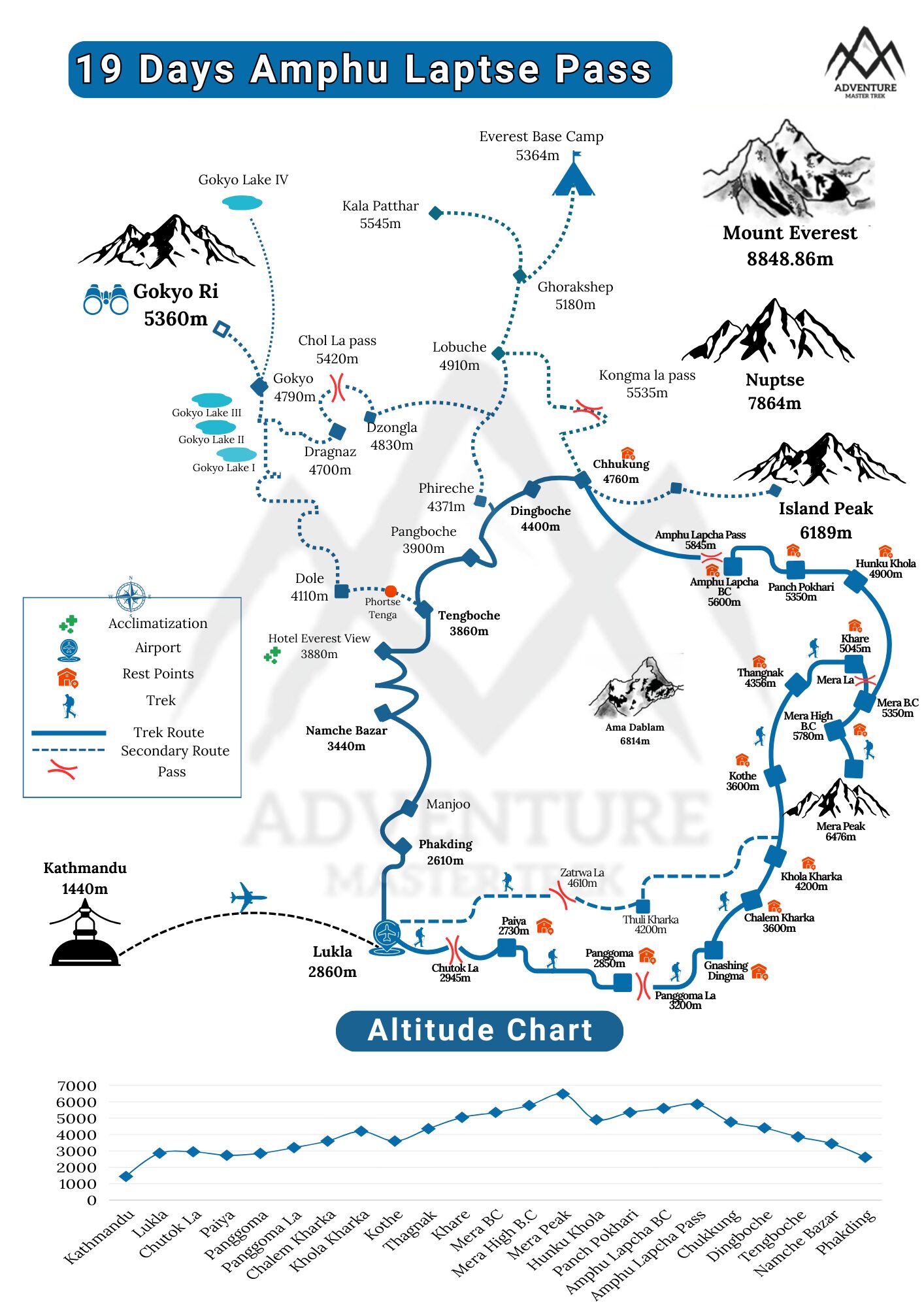
Maps
Navigate Your Journey
Good to Know
Your Journey, Step by Step
Accommodation and Acclimatization on the Amphu Lapche Pass trek with Mera Peak Climbing
When trekking the Amphu Lapcha Pass and climbing Mera Peak, hikers rest in teahouses with basic facilities at lower elevations, such as Lukla and Chhukhung. Accommodations become more basic with limited conveniences as elevation rises, usually in teahouses or tents. Climbers in Mera High Camp (5,780m) sleep in tents and eat in a shared kitchen tent.
Acclimatization is essential because of the high elevation. Particularly in Khare, the plan includes designated acclimatization days where hikers relax and practice for the climb. In addition to learning climbing methods, this training involves being familiar with climbing gear such as ice axes, crampons, and harnesses. This kind of planning improves safety and raises the possibility of a successful summit. To reduce the chance of altitude sickness, guides keep an eye on climbers’ health and modify the pace.
Food and Drinking Water on the Amphu Lapche Pass trek
Food and drinking water are available on Nepal’s Amphu Lapcha Pass trek and Mera Peak ascent, though they change depending on elevation. The foods are quite basic but filling and delicious. Noodles, momo (dumplings), eggs, and Dal Bhat (lentils and rice) are among the dishes served in teahouses in lower areas like Lukla and Kothe. The food gets simpler as you go up, focusing on high-calorie, easily digested items like rice dishes, pasta, soup, and porridge to meet high-altitude energy requirements. To lower the danger of foodborne illnesses, vegetarian options are advised.
It’s important to stay hydrated. In addition to using a reusable water bottle with a filter or purification tablets to treat water from faucets or streams, teahouses charge for boiled water. Trekkers can use personal filters, or the trekking team can boil the water at higher elevations, like Mera Peak High Camp. Because of the greater expenses and environmental concerns, buying bottled water is discouraged.
Although food and drinking water are available during the hike and ascent, it is crucial to prepare ahead of time, bring the required purification equipment, and be ready for fewer options at higher elevations.
Electricity and Internet Service in the Amphu Lapche Pass trek with Mera Peak Climbing
Electricity and internet services are limited and vary with altitude during Nepal’s Amphu Lapcha Pass trek and Mera Peak climbing.
Teahouses frequently use hydroelectric power to supply electricity in lower places like Lukla and Kothe, enabling gadget charging for a fee. Ascending, particularly above Thagnak, makes electricity less available and depends on solar panels, which could not work effectively on cloudy days. For a cost, charging is usually offered in dining areas, and it’s best to bring a power bank or portable solar charger.
NTC and Ncell offer 3G services, and mobile network coverage is present in lower locations. The signal gets weaker as you get higher, though, and after Kothe, it stops working altogether. For a charge, several teahouses provide Wi-Fi. However, the connection is frequently unstable and poor. You can buy internet cards from Everest Link or Nepal Airlink, which offer more dependable and quicker service but are location-specific and might be pricey. It’s essential to plan accordingly by carrying necessary charging equipment and being prepared for limited connectivity.
Altitude Sickness in the Amphu Lapche Pass trek with Mera Peak Climbing
Because of their high altitudes, altitude sickness is a major risk during the Amphu Lapcha Pass trek and Mera Peak climbs. Headaches, nausea, lightheadedness, exhaustion, and dyspnea are among the symptoms. It’s crucial to climb gradually, no more than 300–500 meters per day over 3,000 meters, and include rest days for acclimatization to avoid altitude sickness.
It’s also important to consume a high-calorie diet, stay hydrated by drinking three to four liters of water every day, and abstain from alcohol and tobacco. Although they should be used under a doctor’s supervision, medications such as Diamox (acetazolamide) may help in acclimation. If the symptoms of altitude sickness worsen, descend quickly.
Difficulty in the Amphu Lapche Pass trek with Mera Peak Climbing
For hikers and climbers, the Amphu Lapcha Pass trip and Mera Peak climbing in Nepal provide different challenges. At heights above 5,000 meters, this hike is quite difficult and requires expert climbing and glacier navigation. Along with the ability to handle difficult ascents and glacier crossings, it calls for skill with crampons, ropes, and ice axes. Due to the difficult and isolated terrain, it is best suited for seasoned hikers with prior climbing expertise.
Mera Peak is regarded as Nepal’s highest trekking mountain, rising 6,476 meters. Although the climb is not technical, it does require glacier walking, steep snow slopes, and the use of ice axes and crampons, two essential pieces of mountaineering gear. The two main obstacles are the high elevation and unpredictable weather. To reduce the danger of altitude sickness, climbers should be physically healthy and properly adjusted. If you follow the proper precautions, you can avoid the difficulties during the trek.
Safety and Security in the Amphu Lapche Pass trek with Mera Peak Climbing
Due to the great altitude and technical difficulties of the Amphu Lapcha Pass trip with Mera Peak ascent, safety is essential. Climbers should appropriately acclimate, stay hydrated, and be aware of symptoms such as headaches or dizziness because altitude sickness poses a serious risk. Using ropes, crampons, and ice axes is necessary for glacier trekking up the 5,845-meter Amphu Lapcha Pass.
Despite being a non-technical climb, Mera Peak includes a steep last segment that requires fixed ropes. Climbers need to be ready with the right equipment because unpredictable weather, such as snowstorms and strong winds, can make situations more difficult.
Travel insurance that covers emergency evacuation and high-altitude trekking is crucial. For safety and support, it is advised to use knowledgeable guides and Sherpas. Climbers should be in good physical condition to face the demanding nature of the hike and climb, and prior mountaineering experience is beneficial.
Group Size for the Amphu Lapche Pass trek with Mera Peak Climbing
Mera Peak climbing and the Amphu Lapcha Pass trip usually include groups of 2 to 12 people. Several trekking organizations, including Alpine Kailash Trek, AlpineTrav Treks & Expeditions, and Green Valley Nepal Treks, use this range. Depending on the route and particular trip, some agencies might be able to accommodate up to 16 participants. While bigger groups could encourage a sense of adventure and togetherness, smaller groups frequently offer a more individualized experience. In the end, the planned hiking experience and personal preferences will determine the group size.
Permits for the Amphu Lapche Pass trek and Mera Peak Climbing
To legally conduct your trekking and climbing activities in Nepal, you must have the necessary permits to visit protected regions. They help to preserve the environment and support nearby populations. Here are some of the permits required for the Amphu Lapche Pass Trek with Mera Peak Climbing:
TIMS Card (Trekkers’ Information Management System)
- You are registered as a trekker in Nepal with this card.
- It is readily available at hiking agencies or the Nepal Tourism Board in Kathmandu or Pokhara.
- It helps keep you safe when trekking and costs around $20 for individual hikers.
Sagarmatha National Park Permit
- This permission allows you to enter Sagarmatha National Park, a protected area, since you will be trekking in the Everest region.
- This permit is available for purchase in Kathmandu or at the park gate close to Monjo, right before Namche Bazaar.
- It supports conservation efforts and costs about $30.
Mera Peak Climbing Permit
- Mera Peak, which is listed as a trekking peak but needs official permission to climb, requires this specific permit.
- This permission can be obtained through your trekking company or from the Nepal Ministry of Tourism.
- It is typically organized prior to your trip and costs about $250 for climbers from other countries.
Local Area Entry Permits
- Smaller permissions are occasionally required to enter specific villages or areas that are restricted to trekkers.
- If applicable, these are typically handled by your trekking agency.
Required Document
- Valid Passport – with at least 6 months’ validity.
- Passport-Sized Photos (2–4)
- Nepal Visa
- Travel Insurance
- Flight Tickets – both international and domestic (e.g., Kathmandu to Lukla).
- Climbing Permits
- Local Area Permit
Travel Insurance for the Amphu Lapche Pass trek and Mera Peak Climbing
Climbing Mera Peak and trekking to Amphu Lapche Pass are difficult high-altitude experiences in Nepal. Having the proper travel insurance is crucial if you intend to hike the Amphu Lapche Pass and climb Mera Peak. Your insurance should cover:
High-Altitude Coverage: Since Mera Peak climbs to 6,476 meters and Amphu Lapche Pass is also a high-altitude route, make sure your trip insurance covers trekking and climbing over 5,000 meters.
Emergency Evacuation: Emergency evacuation and helicopter rescue should be covered by your insurance. This is important if you suffer from altitude sickness or are hurt in a place far from a hospital.
Trip Cancellation: Choose a plan that will refund you in the event that an illness, injury, bad weather, or political disturbance causes your trip to be canceled or postponed.
Gear Protection: Having insurance for your hiking and climbing equipment is also beneficial in case it is misplaced, broken, or stolen while traveling.
Money Exchange
Before starting the 19-day Mera Peak Climbing and Amphu Laptsa Pass trip, it is advisable to convert your money in Kathmandu. Major currencies like USD, EUR, or GBP are offered at affordable prices by a large number of authorized money exchange counters and banks in places like Thamel.
There won’t be any ATMs or exchange services beyond Lukla, so be sure to have enough Nepali Rupees (NPR) in cash to last the duration of the hike. In order to facilitate transactions in teahouses and lodges, it is advisable to bring smaller denominations, such as 100s or 500s. In Kathmandu, some larger lodgings and equipment stores may take US dollars, but Nepali Rupees are needed for everything on the path, including hot showers, food, and fees.
Packing list for the Amphu Lapche Pass trek and Mera Peak Climbing
The Mera Peak Climbing and Amphu Laptsa Pass trek is a difficult, high-altitude experience that involves glacier crossing, steep ascents, and cold temperatures. It takes place in the isolated Himalayan region. This packing list is organized by category to assist you in getting ready:
General Gear
- Backpack (rain-covered, 60–70L)
- 20–30L daypack for daily treks
- Duffel bag (often supplied by hiking organizations)
- Sleeping bag (at least -20°C)
- Liner for sleeping bags (for extra warmth)
- Extra batteries for the headlamp
- Trekking poles that can be folded up
- Water bottles combined with filters or purification tablets
- Sunglasses (UV-protected, glacier suitable)
- Thermos (optional but great for hot drinks)
- Dry bags or plastic bags for organizing gear
Upper Body Clothing
- Base layer that takes away moisture (1–2)
- A warm mid-layer or a fleece jacket
- Heavy, warm down jacket (for high camps)
- Shell jacket that is windproof and waterproof (Gore-Tex or similar)
- Light-colored wool or synthetic t-shirts (2–3)
- Trekking shirts with long sleeves (for protection from the sun and cold)
Lower Body Clothing
- Base layer of thermal/merino (2 pairs)
- Two pairs of trekking pants
- Waterproof pants, such as Gore-Tex
- Insulated trousers (for chilly evenings and summit days)
- For lower elevations, lightweight shorts (optional)
Torso & Accessories
- Hat for warmth (wool cap or beanie)
- A cap or sun hat
- Buff or neck guard (for cold, dust, or sun)
- Balaclava (on the day of the summit)
- Gloves: waterproof shell gloves, warm insulated gloves, and liner gloves
Footwear
- Waterproof, broken-in trekking boots
- Boots for mountaineering (B2 or B3, appropriate for crampons)
- Camp footwear (Crocs or sandals)
- Warm socks (4–5 pairs – mix of light and thick)
- Gaiters (to keep snow and mud out)
Climbing Gear
- Crampons that work with boots
- Ice axe
- Harness for the climb
- Protective helmet
- Carabiners (locking: 2)
- Climber (Jumar)
- A device that descends and belays
- Rope climbing (group equipment, carried by the guide)
- Gloves for a mountaineer
- Glacier goggles or climbing glasses
Essentials & Toiletries
- Sunscreen (SPF 50+)
- Lip balm with SPF
- Wet wipes and tissues
- Quick-dry towel
- Toothbrush and toothpaste
- Hand sanitizer
- Toilet paper (essential in the mountains!)
- Menstrual products (if applicable)
- Small mirror and nail clippers
Medications & First Aid
- Personal medication (prescribed)
- Diamox (for altitude sickness – consult doctor)
- Ibuprofen or paracetamol
- Antibiotics for stomach or respiratory infections
- Anti-diarrheal tablets (e.g., Imodium)
- Blister plasters (e.g,. Compeed)
- Band-aids, antiseptic cream
- ORS (oral rehydration salts)
- Insect repellent (for lower trails)
Optional Items
- Camera or GoPro + batteries
- Power bank / solar charger
- Lightweight book or journal
- Snacks (nuts, bars, chocolates)
- Earplugs and an eye mask
- Lightweight travel games/cards
- Lightweight rope or string (multi-use)
Booking Policy for the Amphu Lapche Pass trek with Mera Peak climb
1. Advance Payment & Booking Confirmation
To secure your spot for the Amphu Lapche Pass trek with Mera Peak climbing, a 30% deposit of the total trip cost is required.
You can pay the remaining balance when you arrive in Kathmandu.
If you prefer, you can also pay the full amount in advance.
To confirm your booking, please send:
- The deposit payment for the Amphu Lapche Pass trek with Mera Peak climbing
- A clear electronic copy of your passport
- Additional details such as your travel insurance information and an emergency contact
2. Payment Methods
We offer several ways to pay to make it easier for you:
- Online Payment: Use the secure payment system on our website for a safe and quick transaction.
- Debit/Credit Cards: Visa, MasterCard, and other major cards are accepted. Please note that a 4% bank service fee applies.
- Bank Transfer: You can send money directly to our bank account via wire transfer or bank transfer (transaction fees may apply).
- Cash or Check: If you are already in Kathmandu, paying by cash or check is also possible.
3. Final Payment
The remaining 70% of the trip cost must be paid before your trek starts. You can pay this balance in Kathmandu using cash, a card, or a bank transfer.
4. Booking Changes & Rescheduling
If you need to change or postpone your trek, please let us know at least 30 days in advance. We will try to adjust your dates based on availability, but extra fees may apply depending on the situation.
5. Travel Insurance
For your safety during the Amphu Lapche Pass trek and Mera Peak climb, you must have travel insurance. It should cover emergency evacuation, lost or damaged gear, medical problems at high altitude, trip cancellations, and delays.
6. Last-Minute Booking
Last-minute bookings can be accepted up to 48 hours before the trek starts, but this may not be possible during busy seasons.
We strongly recommend booking well in advance to secure your place on the Amphu Lapche Pass trek with Mera Peak climbing.
Cancellation Policy for the the Amphu Lapche Pass trek with Mera Peak climb
We understand that travel plans can change, and we aim to make our cancellation policy as fair and flexible as possible. Please read the following details carefully:
1. Cancellation by the Guest
- If a guest cancels at least 30 days before departure, they will receive a full refund (bank or transaction costs excluded).
- Ten to twenty-nine days prior to departure, thirty percent of the total trip cost will be repaid.
- Five to nine days prior to departure, 50% of the total trip cost will be reimbursed.
- Less than five days before departure: You can reschedule your trip without paying extra, but you won’t get your money back.
- Services not utilized due to illness, injury, or early return will not be reimbursed once the walk begins.
2. Cancellation by the Company
In the event that unanticipated events, such natural disasters or unstable political conditions, compel us to postpone the walk, you will receive a full refund. You can move your trip to another available date at no extra cost.
3. Weather Delays or Flight Cancellations
We will make every effort to adjust your schedule or reschedule the hike at no extra expense. If you decide to cancel due to delays, you will be refunded 30% of the total cost you have already paid for permits, transportation, and housing.
4. No-Show Policy
No payment will be given if a visitor suddenly fails to arrive on the day of departure.
5. Travel Insurance Requirement
We strongly advise you to get full travel insurance that includes coverage for evacuation, medical emergencies, high-altitude treks, and trip cancellations.
FAQs
Your Questions, Answered
Is Mera Peak difficult to climb?
The altitude makes it physically demanding, even though it’s not regarded as a very technical climb. Good fitness and some training are essential because the last part of the climb includes snow slopes and basic mountaineering.
How difficult is the Amphu Lapche Pass?
Amphu Lapche is one of the most technical passes in the Himalayas. It includes steep ice sections, fixed ropes, and glacier crossings. It’s suitable for trekkers who have some mountaineering skills or are with an experienced guide.
Do I need prior climbing experience for the Amphu Lapche Pass trek?
Having some prior experience with climbing or glacier travel is beneficial for Mera Peak and Amphu Lapche, but it’s not usually necessary if you travel with a guide who can teach you the basics. You should, however, be both mentally and physically fit.
How long is the trek?
The trek usually takes 19 days, depending on the route, acclimatization schedule, and weather. It includes trekking to Mera Peak, climbing it, and then crossing Amphu Lapche to reach the Everest region.
What’s the best time to go to the Amphu Lapche Pass Trek with Mera Peak Climbing?
The best times to go to the Amphu Lapche Pass Trek with Mera Peak Climbing are spring (March to May) and autumn (September to November) when the weather is clear, the skies are blue, and the chances of snowstorms are lower. These seasons also offer the best mountain views.
How high is Mera Peak?
Mera Peak stands at 6,476 meters (21,247 feet), making it one of the highest trekking peaks you can climb without extensive mountaineering.
How high is Amphu Lapche Pass?
Amphu Lapche Pass is 5,845 meters (19,177 feet) high and is one of the highest and most technical passes trekkers can cross in Nepal.
Is altitude sickness a risk during the Amphu Lapche Pass trek?
Yes, altitude sickness is a real risk on the Amphu Lapche Pass trek due to the high elevations. Proper acclimatization, a slow pace, and staying hydrated can help minimize the risk.
What gear do I need for Mera Peak?
You’ll need high-quality trekking and mountaineering gear, including mountaineering boots, crampons, a harness, a helmet, an ice axe, warm layers, gloves, a sleeping bag, and sunglasses for the Mera Peak climb. Most companies provide gear rental if needed.
Do I need to bring climbing equipment?
You can rent climbing equipment in Kathmandu or Lukla. Some guided trips include gear in the package. However, personal items like boots and gloves are best brought from home for comfort and fit.
How should I train for the Amphu Lapche Pass trek with the Mera Peak climb?
You should get ready by engaging in physical activity like biking, running, or hiking for the Amphu Lapche Pass trek. For a more realistic experience, combine this with strength training and backpack trekking. You should at least train three to four months in advance of your trip.
Do I need a guide?
Yes, A licensed guide is highly recommended, especially because Amphu Lapche is technical and remote. Guides also assist with navigation, safety, and logistics, which are essential in such conditions.
Is a porter included?
Most trekking packages include porters to carry your gear, allowing you to enjoy the trek with less physical stress. You’ll still carry a daypack with essentials.
What permits do I need for the Amphu Lapche Pass trek with Mera Peak climb?
You’ll need a Mera Peak climbing permit, a Makalu-Barun National Park permit, and a Khumbu Pasang Lhamu entry permit for the Amphu Lapche Pass trek. Your trekking company usually arranges all of this for you.
How much are the permits for the Amphu Lapche Pass trek with Mera Peak climb?
The permit prices for the Amphu Lapche Pass trek with Mera Peak climb depend on the season, but in general, expect to pay around $250–$350 for all required permits combined.
Do I need travel insurance?
Yes, travel insurance is a must for the Amphu Lapche Pass trek. It should cover high-altitude trekking and climbing, medical emergencies, and especially helicopter evacuation, which can be very expensive.
Where will I stay during the Amphu Lapche trek?
You’ll stay in local tea houses along the route and camp in remote areas like near Amphu Lapche and Mera Peak High Camp. Accommodations are basic but comfortable.
What kind of food is available?
Tea houses offer meals like rice, dal bhat (lentils and rice), noodles, soups, eggs, potatoes, and tea. At high altitudes or camps, meals are simpler and often prepared by a cook.
Is drinking water safe there?
You should treat all drinking water. Boiled water is available in tea houses. You can also use purification tablets or a portable water filter for safety.
Is Wi-Fi or a phone signal available during the Amphu trek?
In lower villages, you may get some mobile signal or Wi-Fi (for a charge), but once you’re higher up or crossing Amphu Lapche, there is little to no connectivity, so expect to be offline for a good portion of the trip.


View Our Similar Packages
Discover our top tours, loved by thousands of travelers annually. Choose the adventure that inspires you and embark on a journey tailored to your desires.

 Nepal
Nepal
 15 Days Days
Add Review
Reviewing for Amphu Lapche Pass Trek with Mera Peak ClimbingRequest a Callback - Amphu Lapche Pass Trek with Mera Peak Climbing
Submit the form and we will be back to you shortly
Request a Callback - Amphu Lapche Pass Trek with Mera Peak Climbing
Submit the form and we will be back to you shortly
Narayanhiti Palace Museum

Narayanhiti Palace Museum


