









How was Mt. Everest formed?
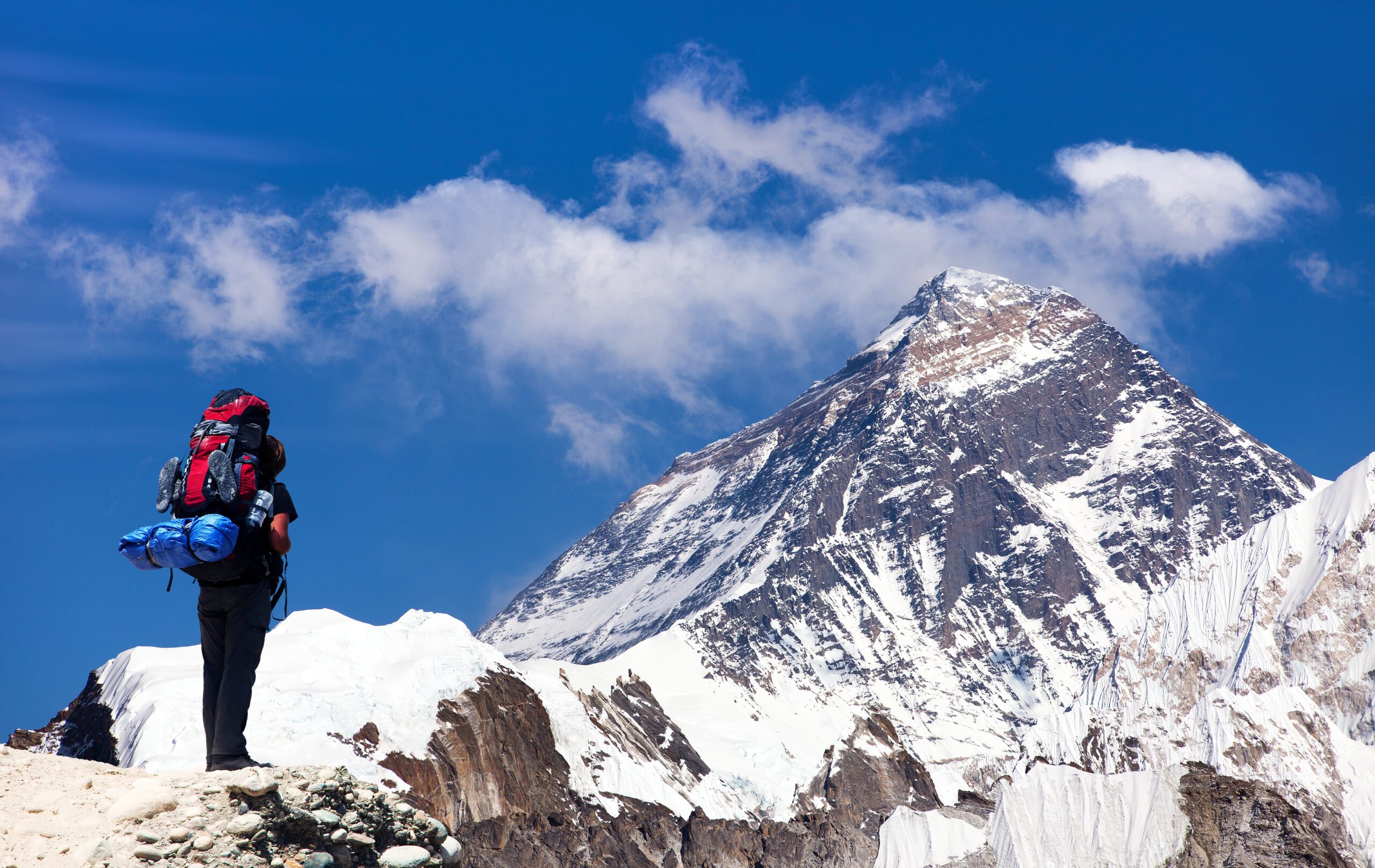
Discover how Mount Everest was formed—from ancient oceans to rising tectonic plates—in this simple, clear, and fascinating geological breakdown.
-
 Adventure Master Trek
-
3 December, 2025
-
13 mins read
-
1623 Views
-
0 Comments


Introduction: How Did Mount Everest Form? A Simple Explanation
Mount Everest is the result of millions of years of great geological activity. Between 50 and 60 million years ago, the land that now makes up the Indian subcontinent began to drift northward at a relatively fast pace. Eventually, it came into contact with the Eurasian Plate and formed a massive mountain as a result of this collision, pushing up layers of the Earth’s crust. Lifting via the movement of large tectonic plates has caused the ocean floor and sedimentary rocks that were formerly found below the water to be up to the atmosphere. Over time, this has caused the highest mountains on Earth, including Mount Everest, to rise to their current heights. As a result, Mount Everest (and any other similar mountains) continues to rise at a very slow rate (a few mm/year), while the mountainous region continues to erode.
The rock layers on Everest show how these layers were created as limestone and marine fossils formed while they were beneath the water; therefore, they demonstrate that Everest existed under the ocean at one time in Earth’s history. These processes continue today and have shaped Mount Everest into the tallest, most recognizable mountain on Earth today. The forces that create mountains, such as the collision of continents and the disappearance of oceans, are a celebration of the dynamic forces of the Earth; they indicate that the Earth’s surface is always changing at an unimaginable rate.
For adventurers and travelers, Mount Everest is the ultimate challenge. Its height, harsh climate, and beautiful scenery make Mount Everest one of the most remarkable natural wonders of the planet. The way Mount Everest was formed and how it continues to develop is evidence of the effect of Earth’s enormous forces over millions of years. It is a demonstration of the beauty that results from the changes caused by Earth’s enormous forces.
Why Everest Continues to Fascinate Scientists and Travelers
Mount Everest symbolizes the extremes of the Earth’s beauty and power. For scientists, Mount Everest represents an enormous book opening in which scientists can examine the Earth’s surface and how it has changed over millions of years and how tectonic plates have formed the mountains. For adventurers and travelers, Mount Everest is viewed as the most difficult of challenges that offers extreme climbing conditions, extreme elevation, and breathtaking scenery that no other place on Earth offers. Mount Everest has a lot to offer to anyone who wants to learn about the Earth or have an adventure at the highest peak in the world.
A Quick Overview of Mt Everest’s Geological Significance
Everest isn’t just the tallest mountain; it has also been an important geographic feature of the Earth. The rocks, layers, and fossils found on Everest will allow for studies of many components of the planet, including past geological events and the history of geological processes. For instance, at the summit of Everest is limestone and marine fossils from an ocean that once existed; thus, Everest was located in an ocean many millions of years ago. The structure of Everest also represents a compelling case of the collision of tectonic plates. More specifically, the pressure created from the collision of the Indian Plate and the Eurasian Plate has pushed the land upward and created a geological marvel known as “The Himalayas.” By studying Mount Everest, scientists are able to gain insight into mountain-building processes, crust movement, and the forces that create and evolve continents.
Although Everest may have a spectacular height and beauty, its geological importance to scientists is a fabulous attribute to researchers in understanding the daily processes of the changing Earth, as well as future and ongoing processes that will continue to shape the Earth.
What Tectonic Plates Created Mt. Everest?: The Tectonic Story Behind Mt. Everest
Approximately 200 million years ago, the Indian Plate was travelling north at an extremely fast rate to collide with the Eurasian Plate. The collision of the two plates resulted in tremendous financial pressure, which forced the uplift of the Earth’s crust. Eventually, the uplift formed the Himalayas, and Mount Everest became part of the most recently formed structure. The collision between the Indian and Eurasian plates occurred over tens of millions of years and created a tremendous amount of pressure, which will be a contributing factor in future formations.
How Plate Tectonics Created the Himalayas
While engaged in the collision of two plates, many layers of sedimentary rock that made up the ocean floor were pushed up into the atmosphere; this process created the rugged mountain ranges, steep valleys, and distinct geological features we see in the Himalayas today. The rock layers that comprise Mount Everest all record a wealth of historical data regarding Ancient Ocean Floor, Continental Drift and the enormous forces, exerted by Plate Tectonics, that continue to create mountains.
Why the Collision Is Still Happening Today
The ongoing northward movement of the Indian Plate still generates collision of both plates. As a result, Mount Everest has an ongoing growth rate of approximately 1 cm each year. Other evidence of active growth includes earthquakes, displaced rocks, and the continual movement of tectonic plates. Thus, Mount Everest remains as a dynamic representation of the ever-changing nature of our planet. Further evidence of Everest’s active growth includes earthquakes, displaced rocks, and the constant relocating of tectonic plates. Therefore, Everest serves as a living example of how vibrant and ever-evolving our Earth is.
When Was Mount Everest Formed? (Timeline Explained)
The formation of Mount Everest did not occur all at once—rather, it was the end result of millions of years of geological evolution. Mount Everest’s creation was the cumulative result of millions of years of geological processes. Mount Everest was initially made from sediment found on a sea bottom and today it is the largest mountain on Earth. It provides a real-life example of how the land continues to grow and change due to large tectonic forces influencing the production of mountains today. In examining the chronological order of the changes that created Mount Everest, we can appreciate the incredible ongoing activity of tectonic forces that created this incredible mountain range and will continue to shape it in the years to come.
- Around 450 million years ago, the area now occupied by Mount Everest was at the bottom of the Tethys Ocean, a Body of water that was formed from sand, mud, and marine sediment. This had formed various types of sedimentary rock, including limestone and shale. Additionally, the movement northward of the Indian Plate and the collision of the Indian and Eurasian Plates created the conditions for the formation of the Early Himalayan Mountains.
- Around 50-60 Million Years Ago, the Indian Plate began moving northward quickly. Also, it collided with the Eurasian Plate; this resulted in the raising of the ocean’s seabed and created a number of sedimentary rocks, creating early forms of the Himalayan Mountains.
- From 34-20 million Years ago, significant uplift events occurred along the line of the Indian plate and at this point, most of the Himalayan Mountains were elevated through processes of uplift related to plate tectonics. This immense pressure caused by the collision results in great folds that elevated the rocks into what are recognizable peaks, such as Mount Everest.
- In modern day, the collision of the Indian plate and Eurasian plate continues to happen at the same speed of 4mm/year. Because of this collision, earthquakes and tectonic activity create slight changes in the area around Mount Everest.
Did Earthquakes Change the Height of Mount Everest?
How Scientists Measure Everest’s Growth Today
Today, scientists take advantage of technology to investigate and monitor the continued growth of Mount Everest’s elevated height through GPS, Satellite imagery, and AI analysis. These technologies allow researchers to thoroughly study the altitude of Mount Everest and the associated horizontal motion related to the tectonic forces acting upon it.
GPS, Satellites & AI Mapping
The use of GPS technology, satellite imaging, and artificial intelligence in Mount Everest monitoring allows researchers to assess tire measure any horizontal change of elevation. For example, GPS devices located on the summit of Mount Everest are able to accurately measure even the slightest evidence of elevation change; in addition, the use of satellite imagery provides scientists with detailed images of the slopes, glaciers, and weather patterns affecting the mountain.
The use of AI and computer mapping technology enables researchers to develop computer models that will enable them to make predictions regarding future changes in the size of Mount Everest and to understand how mountain-building processes are created through tectonic forces.
What Recent Studies Reveal
Recent research supports the finding that Mount Everest has experienced approximately 4 millimeters of growth between the Indian Plate and the Eurasian Plate due to their ongoing collision. It shows that the relationship between the Indian Plate and the Eurasian Plate continues to evolve. A number of studies indicate that tectonic activity, together with earthquakes, landslides, and melting glaciers, can affect the mountain’s elevation for short periods.
These results clearly demonstrate that Mount Everest is not an unchanging or static landform, but instead is an actively developing mountain, thus providing scientists with a rare opportunity to examine Earth’s dynamic processes in their natural environments.
How Climate Change Is Affecting Mount Everest’s Structure
Climate change is having a tremendous impact on Mount Everest and the larger Himalayas through increased temperatures and melting glaciers. It is affecting the structural integrity of the mountain and creating instability in the surrounding area.
Melting Glaciers & Rock Stability
The glaciers on Mount Everest have been melting at an increasing rate as a result of global warming. As the glaciers melt away, they have been providing stability to the rocks that support the mountain, increasing the risk of rockfall and landslides. In addition, the melting of the permafrost is contributing to the unstablization of the slopes of the mountain that creates additional hazards for climbers.
Changing Himalayan Landscape
he melting of glaciers coming off of Mount Everest will continue to modify the shape of the valley systems, rivers, and mountain slopes until such time as the glaciers have completely melted. The result of glacier melting will leave behind a shrunken valley system, with cuts and fissures caused by the retreat of glaciers in the area, resulting in new geometric shapes creating new terrain types. The effect of climate change upon Mount Everest is much greater than just that of melting glaciers; the structure of the Himalayas will continue to be affected for many years to come.
Recent Trends & Research (2024–2025)
Recent technological developments and continuing research have produced additional information and increased accuracy regarding the height measurement of Mount Everest, the geological structure of Mount Everest, and continuing changes in Mount Everest. Current research regarding Mount Everest between the years 2024 and 2025 continues to focus on precise measurement and evaluation of the effect of the climate upon Mount Everest.
Using advanced GPS and satellite technology, Nepal and China joint surveyed Mount Everest and scientifically examined the current height of Mount Everest based upon today’s recognition of scientific data that demonstrates how the mountain has increased in height over four decades due to seismic activity and Tectonic plate movements.
The Advanced Survey Technology of drones, remote sensors, and Artificial Intelligence Mapping has allowed scientists to collect data on earthquakes, glacier melting, and landslide, thereby establishing a clear picture of how earthquakes and tectonic activity are currently influencing glacier melting and long-term stability. The above three factors are extremely important to our research; thus, continuing their study is essential.
They hope to continue collecting additional data until they reach or are highly certain about or verify that Mt. Everest is a product of tectonics. It ultimately will help prove our hypothesis for describing how glaciers melt today, based on Science today, using the data we collect through our Advanced Survey Technology. It will provide valuable new insights into Earth’s dynamic Geology.
The Himalayas vs. Other Mountain Ranges: What Makes Everest Unique?
Mount Everest is the highest mountain in the world, with a height of 8,848 m above sea level. Also, because Mount Everest is located in the Himalayas and has not suffered the effects of erosion, this mountain will continue to grow greater and greater as more geology forms and as temperatures continue to increase. It is different from other mountain ranges in the world that were formed many years ago and are now geologically very old, continually being changed and destroyed by the effects of erosion and increasing temperatures.
Another unique feature of Mount Everest and the Himalayas is that at the very summit of Mount Everest are marine fossils (among the oldest) and sedimentary rocks. All of this was created while the Himalayan region was under a most ancient oceanic sea. In addition, Mount Everest is one of the most tectonically active areas and is the most active area on Earth at this time, along with other areas of extreme weather, extreme glaciers, and very rugged terrain. All of these factors make Mount Everest one of the world’s greatest climbers’ objectives and a wonderful place to learn about Earth’s dynamic geology.
What Everest Teaches Us About Earth’s Future
Mount Everest is not only the tallest mountain on Earth; it is also a laboratory where scientists conduct research and learn more about how the Earth works, what will happen to the Earth in the future, and where it is heading.
Predicting Continental Drift Over Millions of Years
The tectonic plate movements responsible for forming Mount Everest and its neighboring mountains provide researchers with an ability to model the shifting of continents over millions of years into the future. These models show what changes the Earth will experience in the long term, and how it will result in the development of new mountain ranges.
The Himalayas as a Living, Growing Mountain Range
Mountains in the Himalayas still rise and climb higher in height due to the ongoing tectonic processes that still take place today. With the continuous formation of Mount Everest, researchers have a better understanding of how mountains are formed and how mountains change over time. Mount Everest itself is the tallest point on Earth; therefore, Mount Everest is a prime example of a “living” or growing, mountain system.
How Studying Everest Helps Us Understand Other Mountain Systems
Mount Everest contains numerous geological formations, and its geological layers and tectonic movement give a better understanding of how the ancient formations of other mountain systems evolved, through both the processes of building, destroying, and modifying within other geological formations across the Earth.
Conclusion: Everest as a Window Into Earth’s Past and Future
Mount Everest is a great illustration of how our planet is continually changing and evolving. It represents millions of years of geological movement and transformation from when it was once located below the ocean and had yet to reach its current height. Millions of years of movement and transformation of the Earth have been recorded in the mountain. Everest grows every day, with continuing tectonic plate activity on the Indian and Eurasian tectonic plates, and is also modified by melting glaciers and shifting rock. The study of Mount Everest provides insight to scientists not only into the ways that it formed but allows them to understand the general processes of mountain formation and landscape development on the Earth. Through Mount Everest, we learn about our ever-changing planet and the geology and climate that shape the world today, as well as the forces that will continue to shape the planet in the future.
Comments (0)
Write a comment- Introduction: How Did Mount Everest Form? A Simple Explanation
- Why Everest Continues to Fascinate Scientists and Travelers
- A Quick Overview of Mt Everest’s Geological Significance
- What Tectonic Plates Created Mt. Everest?: The Tectonic Story Behind Mt. Everest
- How Plate Tectonics Created the Himalayas
- Why the Collision Is Still Happening Today
- When Was Mount Everest Formed? (Timeline Explained)
- Did Earthquakes Change the Height of Mount Everest?
- How Scientists Measure Everest’s Growth Today
- GPS, Satellites & AI Mapping
- What Recent Studies Reveal
- How Climate Change Is Affecting Mount Everest’s Structure
- Melting Glaciers & Rock Stability
- Changing Himalayan Landscape
- Recent Trends & Research (2024–2025)
- The Himalayas vs. Other Mountain Ranges: What Makes Everest Unique?
- What Everest Teaches Us About Earth’s Future
- Predicting Continental Drift Over Millions of Years
- The Himalayas as a Living, Growing Mountain Range
- How Studying Everest Helps Us Understand Other Mountain Systems
- Conclusion: Everest as a Window Into Earth’s Past and Future
Read the latest Blogs & Insights
Explore our collection of articles and insights to gain in-depth travel knowledge, expert advice, and stay updated on the latest trends and tips.


No comments yet.