









Annapurna Base Camp vs Everest Base Camp: Which Trek Is Actually Better?
Compare Annapurna Base Camp vs Everest Base Camp trek on cost, difficulty, views, and duration to choose the best Himalayan adventure.
-
 Adventure Master Trek
-
9 April, 2026
-
15 mins read
-
5 Views
-
0 Comments


You’ve probably had this tab open for a while.
Maybe you’ve got two browser windows — one with ABC itineraries, one with EBC — and you keep flipping between them like they’re going to eventually tell you something different. I get it. These are two of the greatest treks on earth, and choosing between them feels oddly high-stakes for something that’s supposed to be a holiday.
Here’s the thing: both are genuinely brilliant. They’re also genuinely different. Not just in numbers — altitude, days, cost — but in feel. In what they ask of you and what they give back.
This guide doesn’t hedge. It gives you a real comparison across every factor that actually matters — the ABC vs EBC trek cost, difficulty, altitude risk, scenery, logistics — so you can stop second-guessing and just book the thing.
ABC vs EBC: Quick Side-by-Side Comparison
| Factor | Annapurna Base Camp (ABC) | Everest Base Camp (EBC) |
| Maximum Altitude | 4,130 m (13,549 ft) | 5,364 m (17,598 ft) |
| Highest Point | ABC at 4,130 m | Kala Patthar at 5,555 m |
| Trek Duration | 7–12 days | 12–16 days |
| Trail Distance | ~110 km | ~130 km |
| Difficulty | Moderate | Moderate to Challenging |
| Total Cost (Budget) | $500–$1,200 | $1,200–$2,500 |
| Starting Point | Pokhara (road or flight) | Lukla (domestic flight only) |
| Altitude Sickness Risk | Low to Moderate | Moderate to High |
| Route Type | Loop | Out-and-back |
| Best Season | Spring & Autumn | Spring & Autumn |
Numbers help. But they don’t tell the full story — so let’s go section by section.
Where Are You Actually Going? The Two Regions Explained
The Annapurna Region: Green, Wild, and Wonderfully Accessible
ABC sits inside the Annapurna Conservation Area, roughly 200 km west of Everest. You get there through Pokhara — Nepal’s lake city and adventure hub — which is a 25-minute flight or a scenic (if bumpy) 6–7 hour bus ride from Kathmandu.
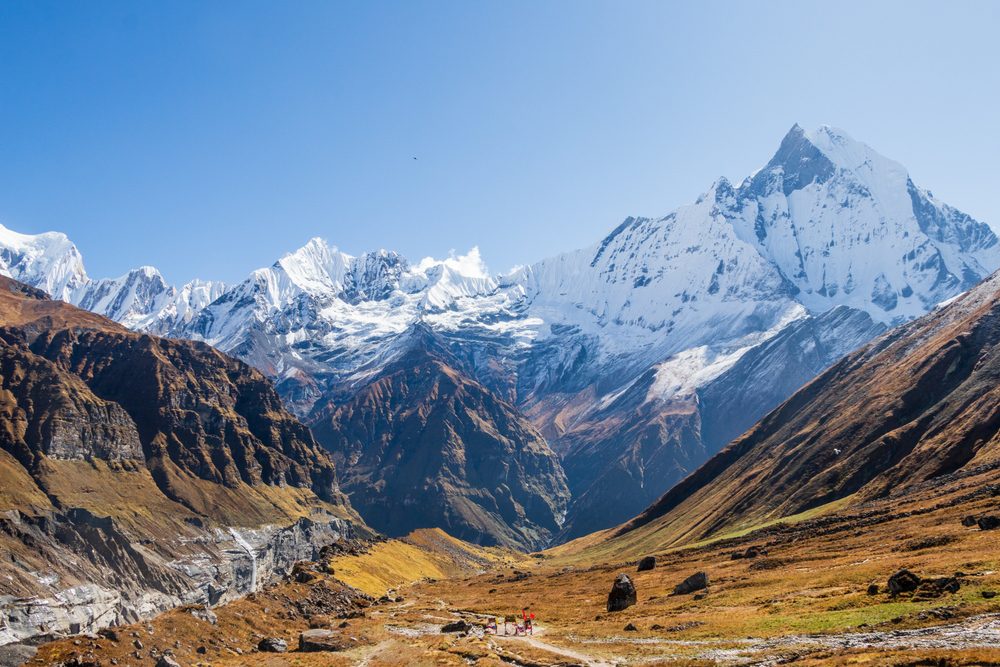
The trail starts near Nayapul and climbs through everything. Banana palms and waterfalls at the bottom. Rhododendron forests turn crimson and pink in spring. Gurung villages where kids wave from stone doorways. Bamboo groves are so dense they block out the sky. And then, after days of that, the whole world opens up into the Annapurna Sanctuary — a glacial bowl ringed by giants: Annapurna I (8,091 m), the sacred Machapuchhre Fishtail, Hiunchuli, and more.
It hits differently when you get there. The sense of being inside the mountains rather than just looking at them is hard to describe until you’ve felt it.
The Everest Region: The Most Famous Walk on Earth
The EBC trek starts with a flight into Lukla — a short, steep airstrip perched on a cliff edge at 2,860 m that most trekkers find equal parts thrilling and terrifying. From there, you walk through Khumbu, Nepal’s legendary Sherpa heartland: Namche Bazaar, Tengboche, Dingboche, Lobuche, Gorak Shep, and finally Base Camp itself at 5,364 m.
Quick note for 2026: if you’re flying from Kathmandu, many trekkers are now routing through Ramechhap airport first (about a 4–5 hour drive from Kathmandu) due to ongoing construction at Tribhuvan International. Factor that into your schedule. Helicopter transfers from Kathmandu directly to Lukla have also become popular for those who’d rather skip the drive.
Difficulty and Altitude: How Hard Are These Treks, Really?
ABC Difficulty: Don’t Call It Easy Just Because It’s Lower
ABC is rated moderate, and that rating is fair — but “moderate” can mislead people. Yes, the max altitude is 4,130 m, well within what most healthy adults can handle with proper pacing. And yes, daily walking time of 4–6 hours is manageable. But the trail doesn’t coddle you.

The climb through Chhomrong is brutal in a way that sneaks up on you. The stone staircases seem to go on forever. The section before the sanctuary at Deurali is steep, cold, and unforgiving if the weather turns. Trekkers who arrive expecting a casual forest stroll are usually humbled within the first two days.
What ABC does have going for it is a natural acclimatization profile. The elevation gain is gradual enough that most people’s bodies adjust without needing dedicated rest days. You’re unlikely to need a full acclimatization stop — which saves time and keeps the itinerary flexible.
EBC Difficulty: It’s the Altitude, Not the Steps
EBC is harder. The main reason is simple: you spend a long time very high up. The trek tops out at 5,364 m at base camp, and 5,555 m if you add the Kala Patthar summit — higher than any peak in the Alps or North America outside Alaska.
Most people walk 5–7 hours a day over 12–14 days. The trail itself isn’t technically challenging — you don’t need crampons or climbing gear. But spending 7+ nights above 3,500 m, with several above 4,000 m, is genuinely taxing on your cardiovascular system regardless of how fit you are. Built-in acclimatization days at Namche Bazaar (3,440 m) and Dingboche (4,410 m) are standard for a reason.
Altitude Sickness: The Practical Difference That Matters Most
This is the single most important factor for many people, and it deserves a direct answer.
On ABC, serious altitude sickness is uncommon. The peak altitude is relatively forgiving, and if something goes wrong, you can descend to lower ground within a few hours. Most trekkers experience mild headaches at most — nothing that rest and hydration can’t handle.
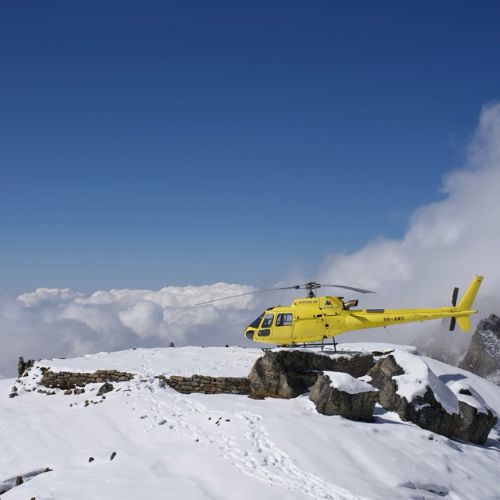
On EBC, altitude sickness is a legitimate risk you need to plan around. Emergency helicopter evacuations from the Khumbu aren’t rare events. Without travel insurance covering high-altitude rescue (you want minimum 6,000 m coverage), a helicopter out of Gorak Shep can cost more than $5,000 USD out of pocket. That’s not a scare tactic — it’s just what the numbers look like.
If altitude has been an issue for you before, or if you’re genuinely unsure how your body handles thin air, start with ABC. There’s no shame in that. It’s the smarter play.
Scenery and Trail Highlights: What You’ll Actually Remember
What Makes ABC Special
The ABC trek has a quality that’s hard to put into words until you’ve done it: variety. Real, dramatic variety. The scenery changes so completely from day to day that it barely feels like the same trail.
You start in subtropical warmth — palms, ferns, waterfalls, the sounds of birds you can’t name. You pass through Gurung farming villages that look unchanged for centuries. Then the trees thin out, the air gets crisp, and suddenly you’re walking across a high alpine plateau with nothing between you and the peaks.
The sanctuary itself is the payoff. Base camp sits inside a natural amphitheatre where you’re completely encircled by Himalayan giants. Nowhere to look that isn’t a massive, snow-covered wall of rock and ice. The sunrise on Annapurna South from the base camp tea house is genuinely one of the most beautiful experiences that trekkers describe — always in the same disbelieving tone.
Trail highlights worth knowing:
- Ghandruk — a sprawling Gurung village with wide terraced views and excellent food
- Chhomrong — pretty stone village; harder climb than it looks on the map
- Machapuchhre Base Camp (3,700 m) — the first real look at the Fishtail peak up close
- Jhinu Danda hot springs — natural hot pools that feel absurdly good on day 8 or 9 legs
- Poon Hill (optional extension) — separate sunrise viewpoint at 3,210 m; absolutely worth adding if you have the time
What Makes EBC Special
EBC has something ABC simply cannot offer: Everest. That sounds obvious, but standing at 5,364 m looking at the world’s highest mountain — with expedition tents visible and the Khumbu Icefall grinding below — is a different category of experience. Historical weight, physical achievement, and natural wonder all hit at once.
The terrain is starkly beautiful in a way that’s completely unlike ABC. You’re above the treeline for most of the high section. It’s a world of moraine, rock, ice, and sky. Raw in a way that some people find spiritual and others find almost oppressive. Usually both, at different moments.
The cultural layer adds real depth. The Khumbu is Sherpa heartland — Buddhist prayer flags at every pass, mani stone walls lining the trail, monasteries that have stood for centuries. Tengboche Monastery at 3,867 m, with Everest and Ama Dablam visible from the same frame, is one of Nepal’s most photographed places for very obvious reasons.
Highlights that stand out:
- Namche Bazaar (3,440 m) — surprisingly vibrant market town; coffee shops, gear stores, and the first real views of Everest
- Tengboche Monastery — Nepal’s most iconic high-altitude monastery; worth attending morning puja if you can
- Kala Patthar (5,555 m) — the real Everest viewpoint; base camp itself is partially blocked by moraine
- Khumbu Icefall — visible from base camp; watching it is equal parts beautiful and sobering
- Gokyo Lakes (optional extension) — turquoise glacial lakes at 4,700 m+ with panoramic ridge views from Gokyo Ri
ABC vs EBC Trek Cost: The Full Honest Breakdown
Cost is where these two treks diverge most sharply, and it’s worth understanding exactly why.
Annapurna Base Camp Trek Cost
Most trekkers spend between $500 and $1,200 USD total for a guided ABC trek. Reputable local agencies in Pokhara or Kathmandu typically offer all-inclusive packages — guide, porter, accommodation, meals, permits — in the $700–$1,200 range for 7–12 days.
Permits you’ll need:
- Annapurna Conservation Area Permit (ACAP): ~$22–25 USD
- TIMS Card: ~$15 USD
- Total permits: roughly $40–50 USD
Transportation:
- Pokhara to trailhead by bus or jeep: $5–30 USD
- Kathmandu to Pokhara: $10–15 (bus) or $70–100 (flight)
On the trail:
- Teahouse accommodation: $5–20 per night
- Meals: $20–30 per day (prices rise at altitude but not dramatically)
- Licensed guide: $30–50 per day
- Porter: $22–25 per day
Everest Base Camp Trek Cost
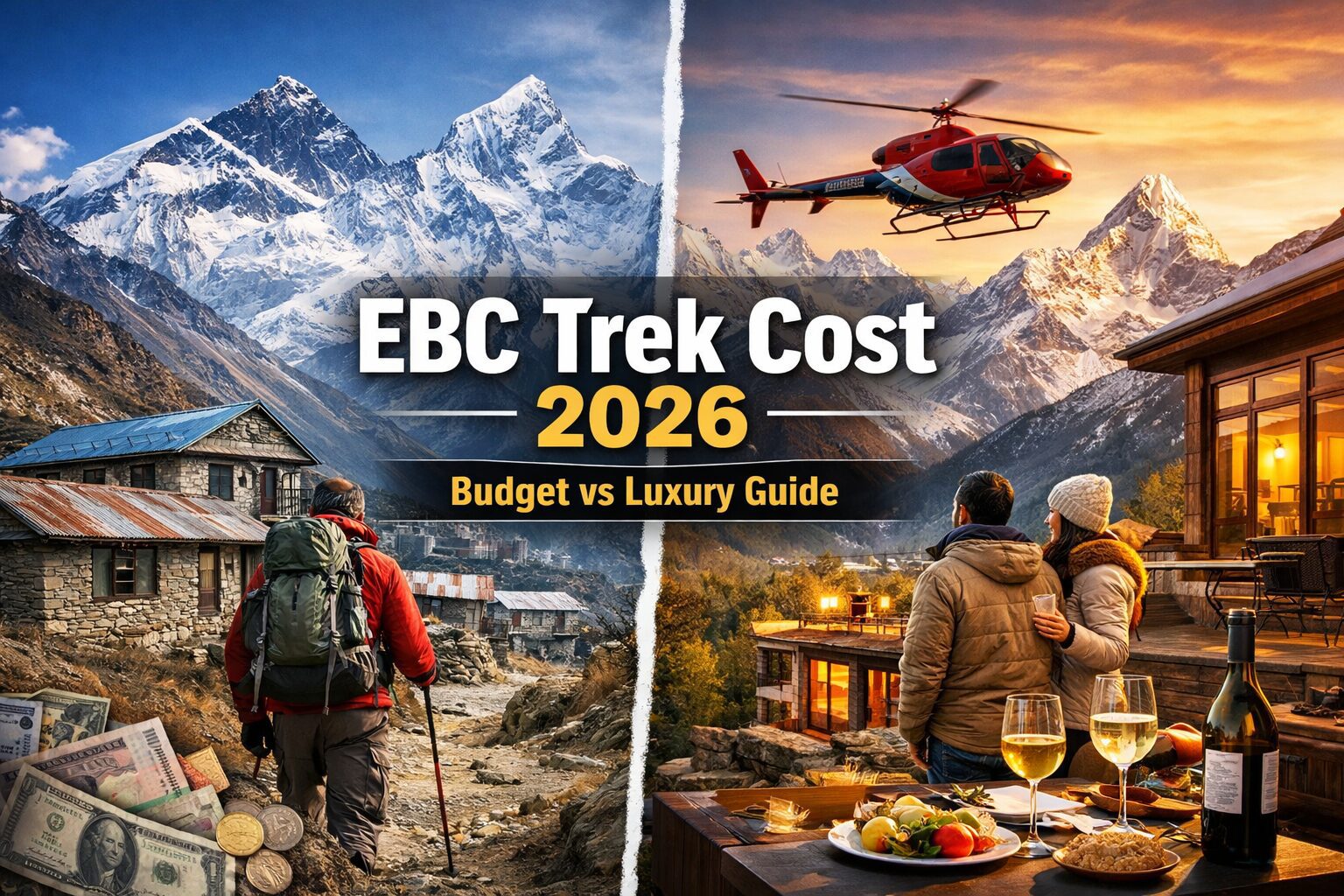
EBC costs more — sometimes considerably more. Budget packages start around $950–$1,200 if you cut corners. Standard guided packages land between $1,300 and $1,800. Anything with helicopter returns or comfortable lodges can push $3,000–$5,000.
Permits:
- Sagarmatha National Park Permit: ~$23 USD
- Khumbu Pasang Lhamu Rural Municipality Fee: ~$15 USD
- Total permits: roughly $38–50 USD (TIMS is not required for EBC)
Transportation:
- Kathmandu–Lukla round-trip flights: $400–$500 USD — this alone is the single biggest line item
- Ramechhap transfer if required: add $20–40 USD for the drive
On the trail:
- Accommodation: $10–50 per night (dramatically more expensive above Namche)
- Meals: $5–10 per dish (a basic dal bhat at Gorak Shep costs significantly more than at lower elevations)
- Guide: $25–40 per day
- Porter: $15–25 per day
Why Is EBC So Much More Expensive?
Three main reasons. The Lukla flight is unavoidable and immediately adds $400–$500 to your budget before you’ve taken a single step on the trail. Everything in the Khumbu — food, fuel, supplies — has to be flown or carried in, which inflates teahouse prices as you gain altitude. And the trek is simply longer: two extra weeks means two extra weeks of daily expenses. These costs compound fast.
For trekkers working with a real budget, ABC gives you a transformative Himalayan experience at roughly half the cost of EBC. That’s not a small thing.
Route and Logistics: Getting There Is Part of the Journey
ABC Logistics: Blessedly Straightforward
Getting to the ABC trailhead involves a bus or jeep from Pokhara. That’s it. No mountain flights, no weather-dependent airstrips, no domino effect if your plane is delayed.
This matters more than it sounds. Lukla flight cancellations due to fog, wind, or poor visibility are genuinely common. Trekkers have missed connecting international flights because they were stuck waiting in Lukla or Ramechhap for days. On the ABC route, if weather causes problems on the trail, you adjust and continue — there’s no single flight home that your whole schedule depends on.
The ABC route is also a loop, not an out-and-back. You approach from one direction and exit from another. The scenery genuinely changes throughout the trip.
EBC Logistics: Factor in the Flight
The Lukla flight is the logistical centerpiece of any EBC trip, and it deserves honest treatment. It’s a 35-minute flight into a high-altitude airport with a steep runway that ends abruptly at a wall. Most people find it memorable in the best way. Some find it genuinely frightening. Either way, it operates only in good visibility — and cancellations happen, especially in spring when morning fog is common.
Build buffer days into your Kathmandu stay. Not one day — ideally two or three. If you have a hard departure date for an international connection, a missed Lukla flight can create a real problem that no amount of goodwill from airlines will solve.
The EBC route is out-and-back. You see the same trail twice. Some trekkers love this — the return walk feels completely different when you’re going downhill and the pressure’s off. Others find it repetitive. The Gokyo Lakes extension solves this if you want a loop element.
Culture on the Trail: Two Completely Different Worlds
Gurung and Magar Villages on the ABC Route
The lower sections of the ABC trail pass through villages belonging to the Gurung and Magar communities — people with centuries of mountain-farming traditions and a well-earned reputation for warm, unpretentious hospitality. These communities are heavily represented in the Gurkha regiments, and that history is woven quietly into the villages you walk through.
The cultural texture shifts as you gain altitude — from Hindu temples and shrines at the lower villages to Buddhist prayer flags and chortens higher up. It’s a trail that reflects Nepal’s layered spiritual identity in a way that feels organic rather than staged for tourists.
Sherpa Culture on the EBC Route
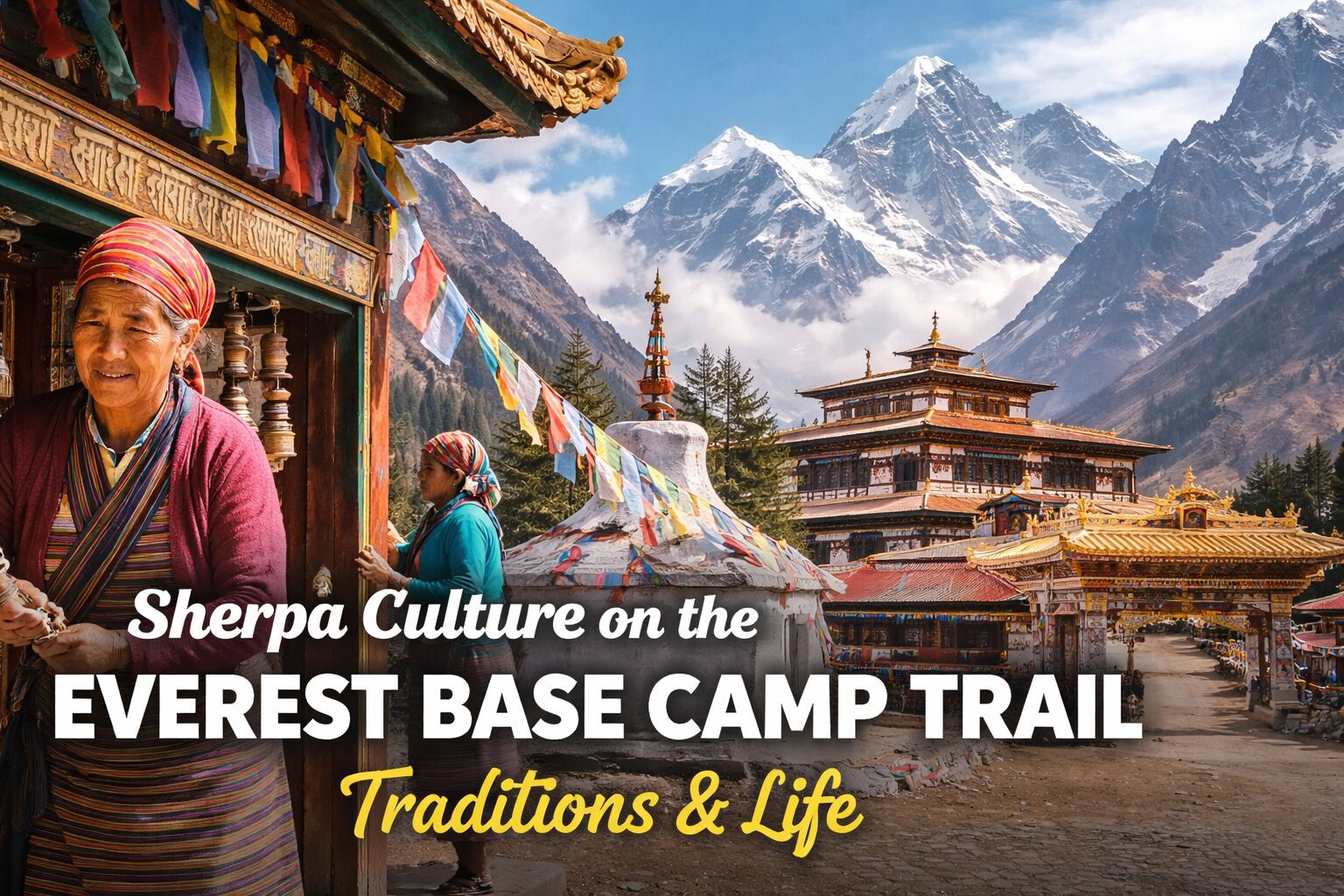
Walking through the Khumbu feels different from day one. This is the cultural heartland of the Sherpa people, and their relationship to the mountains is unlike anything else you’ll encounter in Nepal. The monasteries, mani walls, prayer wheels, and memorials to lost climbers aren’t decorative — they’re the daily spiritual infrastructure of a community that has lived in the shadow of the world’s highest peaks for generations.
Tengboche Monastery’s morning puja, with incense smoke curling through mountain light and monks chanting, is one of those experiences that stays with you well past the trek itself. Don’t rush through Namche, and don’t skip Tengboche.
Best Time to Go: ABC vs EBC Seasons
Both treks share the same two main windows, though each has its own seasonal quirks worth knowing.
Autumn (September to November) — Best for Both
Post-monsoon Nepal is as good as it gets. Clear skies, fresh air, stable temperatures, and mountain views so sharp they look digitally enhanced. October is peak month — trails are busy, but they’re busy because the conditions are genuinely excellent. November thins the crowds, gets cooler, but remains very good for both treks.
If you can go in October, go in October.
Spring (March to May) — Rhododendrons on ABC, Expeditions on EBC
Spring is the second-best window. On the ABC route, March through April is spectacular — rhododendron forests bloom across the hillsides in reds, pinks, and whites, and the lower trail sections are lush and fragrant. Temperature is warming and visibility is generally reliable.
On EBC, spring is the expedition season. Summit teams are acclimatizing and moving gear toward Everest. There’s electricity to base camp in April and May that autumn simply doesn’t have. If you want to experience the mountaineering world in full swing, spring is the time to go.
Off-Season (Winter and Monsoon) — Honest Assessment
Winter (December to February) is manageable on lower ABC sections, harder on upper ones, and seriously challenging on EBC above 4,000 m. Snowfall can close passes and make trails slippery. Temperatures at Gorak Shep drop well below -10°C at night.
Monsoon (June to August): leeches on the lower ABC trail, reduced visibility, heavy rain. Possible — people do it — but not recommended unless you’re deliberately avoiding crowds and genuinely don’t mind wet conditions.
Which Trek Is Right for You?
If You’ve Never Trekked at High Altitude Before
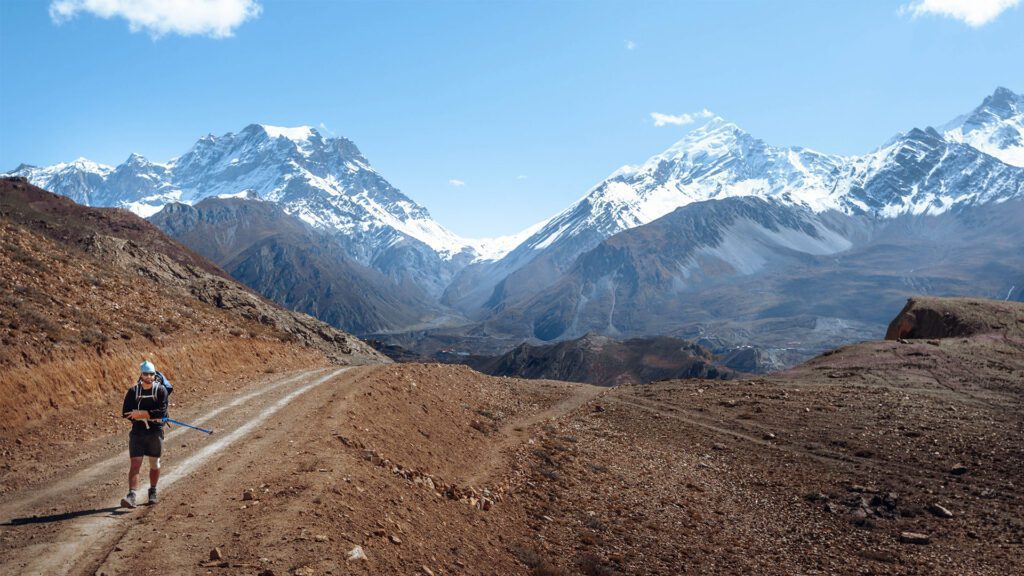
Go to ABC first. The altitude is forgiving, the logistics are simple, the trip is shorter, and the cost is significantly lower. You’ll come back knowing whether teahouse trekking at altitude is something you want more of — and for most people, the answer is a fairly emphatic yes.
ABC also functions as solid preparation for EBC. Many trekkers do ABC one year and return for EBC the next. Nepal has a habit of making that second trip happen faster than you expect.
If You’re an Experienced High-Altitude Trekker
EBC is the obvious goal if you haven’t done it — the prestige is real, the scale is unlike anything else, and standing at the foot of Everest is a one-of-a-kind experience. That said, don’t dismiss ABC. Many experienced trekkers say the sanctuary setting moved them more than they expected, and the variety of terrain makes it feel like three treks stitched into one. These are two different kinds of remarkable, not a ranking.
Nepal Trekking Rules: The Mandatory Guide Regulation
As of late 2023, solo unguided trekking is no longer legally permitted in either the Annapurna Conservation Area or the Sagarmatha (Everest) region. All foreign trekkers must hire a licensed, government-certified guide — no exceptions.
This isn’t just bureaucracy. A good local guide makes the trek substantially better — better cultural context, better navigation on confusing trail junctions, better safety decisions when weather turns bad. Most trekkers who’ve done both guided and unguided treks in Nepal say the guided experience was the better one.
Porters aren’t mandatory but hiring one makes a real difference. Your knees will thank you by day 10, and the income directly supports mountain communities in a meaningful way.
The Final Call: Annapurna or Everest?
There’s no wrong answer — but there is a right answer for you.
Pick ABC if:
- You’re new to Himalayan trekking
- Your total budget is under $1,200 all-in
- You want 7–12 days, not 14–16
- Altitude genuinely makes you nervous
- You want a loop trail with diverse, changing landscapes
- You’d like to finish in Pokhara and recover by a lakeside for a few days
Pick EBC if:
- Standing at the foot of the world’s highest mountain is on your list
- You’ve done high altitude before and handled it well
- You have 14–16 days including Kathmandu buffer days
- The Sherpa culture and mountaineering history genuinely excite you
- Budget isn’t a major constraint right now
Can’t decide? Book ABC. Come back for EBC. Nepal will be here — and after your first trek there, you will definitely come back.
Comments (0)
Write a comment- ABC vs EBC: Quick Side-by-Side Comparison
- Where Are You Actually Going? The Two Regions Explained
- The Annapurna Region: Green, Wild, and Wonderfully Accessible
- The Everest Region: The Most Famous Walk on Earth
- Difficulty and Altitude: How Hard Are These Treks, Really?
- ABC Difficulty: Don’t Call It Easy Just Because It’s Lower
- EBC Difficulty: It’s the Altitude, Not the Steps
- Altitude Sickness: The Practical Difference That Matters Most
- Scenery and Trail Highlights: What You’ll Actually Remember
- What Makes ABC Special
- What Makes EBC Special
- ABC vs EBC Trek Cost: The Full Honest Breakdown
- Annapurna Base Camp Trek Cost
- Everest Base Camp Trek Cost
- Why Is EBC So Much More Expensive?
- Route and Logistics: Getting There Is Part of the Journey
- ABC Logistics: Blessedly Straightforward
- EBC Logistics: Factor in the Flight
- Culture on the Trail: Two Completely Different Worlds
- Gurung and Magar Villages on the ABC Route
- Sherpa Culture on the EBC Route
- Best Time to Go: ABC vs EBC Seasons
- Autumn (September to November) — Best for Both
- Spring (March to May) — Rhododendrons on ABC, Expeditions on EBC
- Off-Season (Winter and Monsoon) — Honest Assessment
- Which Trek Is Right for You?
- If You’ve Never Trekked at High Altitude Before
- If You’re an Experienced High-Altitude Trekker
- Nepal Trekking Rules: The Mandatory Guide Regulation
- The Final Call: Annapurna or Everest?
Read the latest Blogs & Insights
Explore our collection of articles and insights to gain in-depth travel knowledge, expert advice, and stay updated on the latest trends and tips.


No comments yet.