









Best Travel Insurance for Everest Base Camp Trek (High-Altitude Coverage Guide 2026/2027)
Discover the best travel insurance for Everest Base Camp trekking. Compare high-altitude coverage, helicopter evacuation, medical limits, and top providers for 2026/2027.
-
 Adventure Master Trek
-
19 March, 2026
-
14 mins read
-
163 Views
-
0 Comments


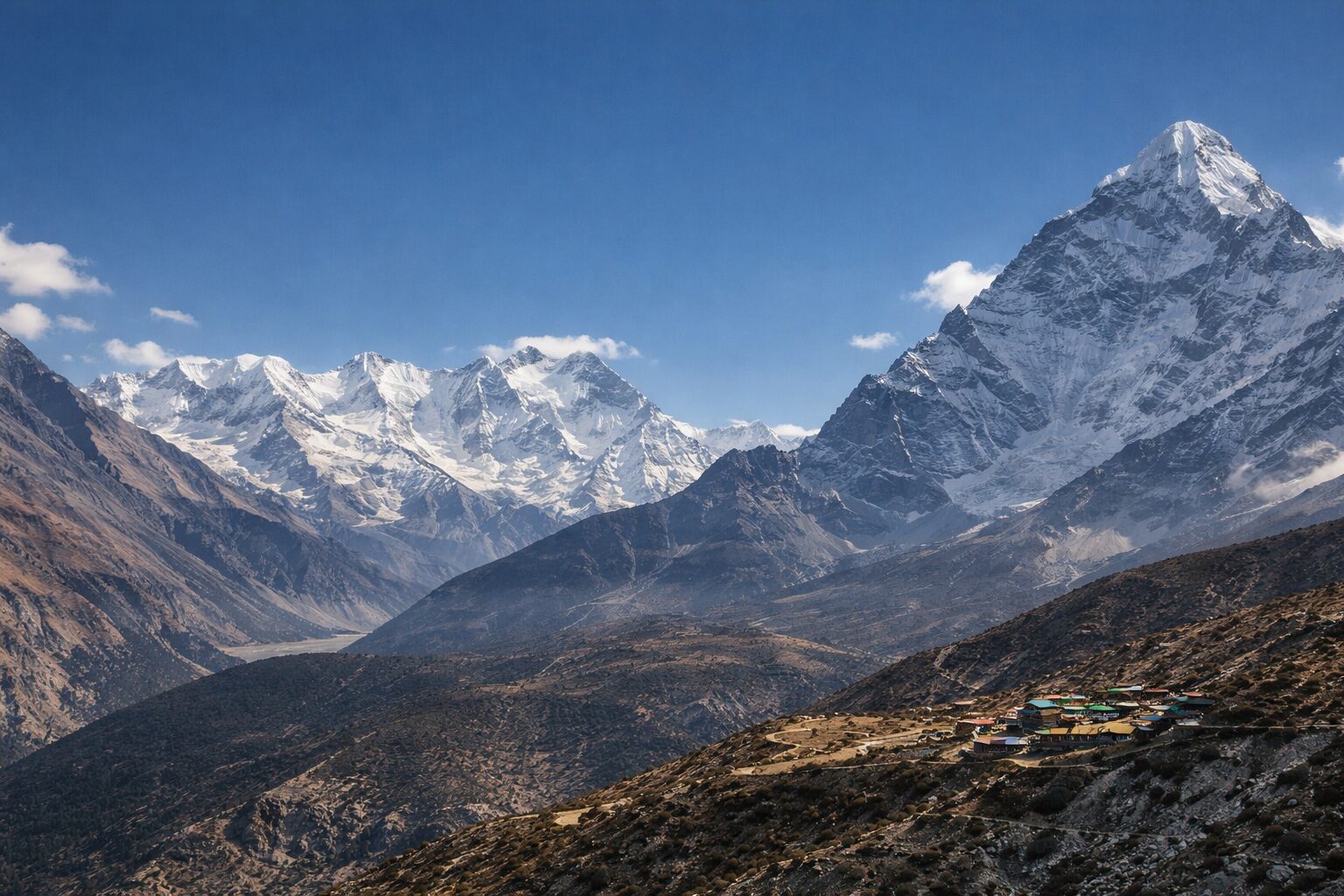
There’s a specific kind of stillness you notice somewhere around Dingboche, the air thinner than you expected, your heartbeat audible in a way it never is at sea level, the trail ahead winding upward toward a landscape that doesn’t quite feel real. The Everest Base Camp trek does something to people. It’s one of those journeys that stays with you long after your boots are back in storage.
But here’s the thing nobody really talks about when they’re showing off their Namche Bazaar photos: the insurance. Unglamorous, maybe, but it might be the single most important decision in your entire trip planning. A helicopter evacuation from Gorak Shep to Kathmandu doesn’t come cheap, somewhere in the range of $8,000 to $15,000 USD, depending on conditions. One bad night with altitude sickness and no proper coverage, and that trip of a lifetime turns into a financial nightmare that follows you home.
This guide covers what actually matters, what to look for in a policy, which providers hold up when it counts, what things cost, and the frustrating (and avoidable) mistakes that end in denied claims.
Why Standard Travel Insurance Won’t Cut It for EBC
There’s a reasonable assumption most people make: they already have travel insurance, so they’re covered. Maybe it came with a credit card, maybe it was bundled with flights, maybe it was a quick $40 purchase that felt responsible at the time. The uncomfortable reality is that for Everest Base Camp, most of those policies are essentially useless.
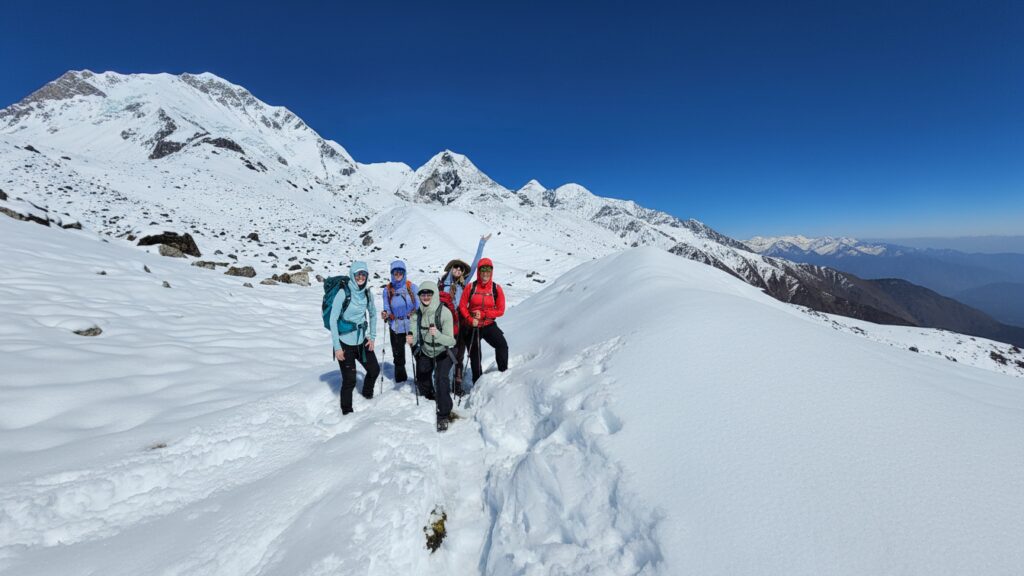
It comes down to altitude and specifically, the altitude cap buried in the fine print. Most budget– and standard-tier policies cut off at 2,000 to 3,000 meters. Everest Base Camp sits at 5,364 meters (17,598 feet). Kala Patthar, the viewpoint most trekkers add to their sunrise itinerary, reaches 5,545 meters. That means from Namche Bazaar onward, for most of the interesting, challenging part of this trek, a huge percentage of standard policies simply won’t pay out. At all.
That’s not a technicality worth shrugging off. Throughout 2024, there were documented cases of trekkers facing enormous out-of-pocket bills after their claims were denied on altitude grounds. It’s also worth noting that the Khumbu region is heavily commercialized — it sees more international trekkers than almost anywhere else in the Himalayas, which makes it fertile ground for insurers seeking reasons to deny claims.
So, before even glancing at prices or providers, the foundational rule is this: any policy worth considering must explicitly cover high-altitude trekking at a minimum of 6,000 meters. Not “adventure activities.” Not “mountain trekking.” The actual altitude, in writing.
What EBC Trek Insurance Must Actually Cover
Alright, so the policy needs to cover high altitude, understood. But that’s just the starting point. What’s worth actually thinking through is the specific coverage types that matter on this particular trek, because the Khumbu region creates a set of risks that don’t really apply to, say, a beach holiday or even to most other trekking routes.
1. High-Altitude Coverage (Minimum 6,000m)
This is the baseline. EBC is 5,364m, Kala Patthar is 5,545m A ceiling of 6,000m gives a reasonable buffer; some providers go to 6,500m, which matters if the itinerary includes Island Peak or any supplementary climbing. The wording in the policy document is what counts. Vague, broad phrases about “adventure sports” or “trekking” don’t automatically include high-altitude coverage. Read the actual document, not the marketing summary.
2. Emergency Helicopter Evacuation
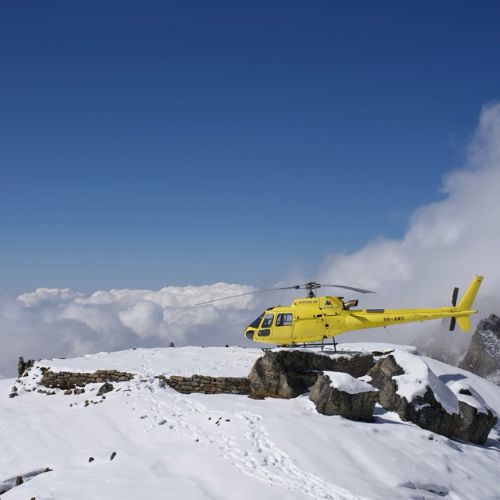
No roads exist in the Khumbu. If something goes seriously wrong above Namche Bazaar, severe altitude sickness, a bad fall, cardiac issues, a helicopter is the only fast option. Costs for evacuation from Gorak Shep to Kathmandu typically range from $8,000 to $15,000, depending on altitude, passenger load, and the weather that day. At high elevation, helicopters are pushing performance limits and charge accordingly.
Pay attention to the specific language in the policy. “Emergency evacuation” can sometimes be interpreted as ground ambulance to the nearest hospital, which, in the Khumbu, isn’t particularly useful. The policy should explicitly mention helicopter rescue from remote or mountainous terrain.
3. Altitude Sickness Treatment
Acute Mountain Sickness, HAPE (High Altitude Pulmonary Edema), and HACE (High Altitude Cerebral Edema) are genuine emergencies. HAPE and HACE, in particular, can deteriorate rapidly, not over days. The policy must explicitly cover altitude sickness treatment: oxygen therapy, medication, and emergency care. Strangely enough, some insurers classify altitude sickness as a “foreseeable” or pre-existing condition and try to exclude it. That’s worth checking specifically before purchasing.
4. Medical Expenses — And Enough of Them
Getting evacuated is one bill. What happens after is another. An ICU bed at a Kathmandu hospital runs roughly $1,000–$2,000 per day. Repatriation to Europe or North America can add $15,000–$30,000 to that. A policy with $50,000 in medical coverage might sound generous until you’re looking at a ten-day hospital stay followed by a medical flight home. Look for policies with at least $100,000 in medical expense coverage, ideally closer to $250,000 for any serious scenario. Confirm whether pre-hospitalization diagnostics and specialist fees are included they often aren’t, automatically.
5. Trip Cancellation and Interruption
Lukla Airport is notoriously unpredictable. Fog rolls in, visibility drops, flights get grounded for a day, sometimes two or three. That kind of delay can cascade quickly through an international itinerary. Trip cancellation coverage reimburses prepaid, non-refundable costs if the trek can’t happen due to illness, injury, or weather disruption. Trip interruption handles the scenario where the trek has to end early. Both are worth having.
6. Gear Coverage
A proper EBC kit, decent boots, a four-season sleeping bag, a quality down jacket, and poles represent a meaningful financial investment. Baggage and personal effects coverage of $1,000–$2,000 is a reasonable floor. Some policies include emergency gear replacement if luggage is delayed, which is unexpectedly relevant; arriving in Lukla while your bags sit in Kathmandu is a scenario that happens more than it probably should.
7. 24/7 Emergency Assistance (with Real Infrastructure)
Being put on hold at 5,200 meters is not a situation anyone wants to be in. Check whether the insurer has a genuine 24/7 emergency line with multilingual capability. More importantly, find out whether they have direct billing arrangements with Nepali hospitals and rescue operators. If they don’t, the standard process may require upfront payment, sometimes $5,000–$8,000 wired while sitting in a tea house with a headache and limited phone signal, with reimbursement to follow. That’s a workable system in theory. In practice, at altitude, under stress, it’s genuinely awful.
Top Insurance Providers for Everest Base Camp (2026/2027)
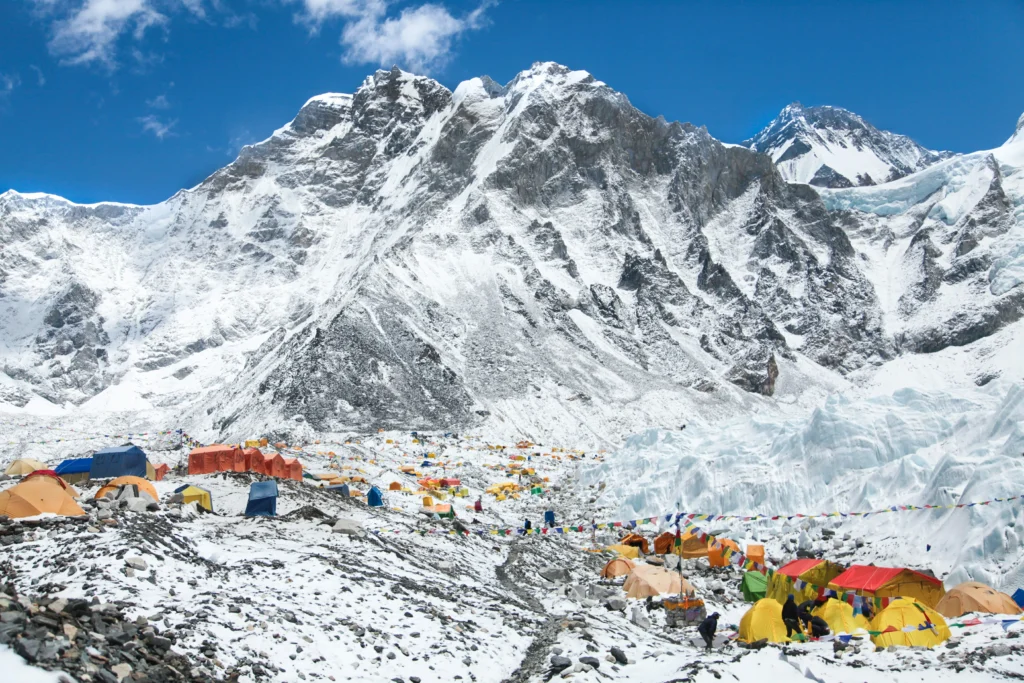
This is where things get a bit more nuanced. There’s no single “best” policy that works perfectly for everyone, nationality, age, trip length, and how risk-tolerant you are with fine print all shift the answer. What there is, though, is a shortlist of providers that have held up reasonably well in the Khumbu, specifically not just on paper but in actual rescue situations where the coordination, phone calls, and paperwork had to work under pressure.
1. World Nomads Explorer Plan — Best All-Around Option for Most Trekkers
World Nomads is probably the most recognizable name in adventure travel insurance, and for EBC, it mostly holds up with one crucial caveat. The Standard Plan caps trekking at 3,000 meters and is completely useless for this trek. The plan to buy is the Explorer Plan, which extends coverage to 6,000 meters and includes helicopter evacuation, emergency medical care, gear protection, and trip cancellation.
One thing that makes World Nomads genuinely useful: policies can be purchased after departure and extended while traveling. That flexibility matters for trekkers who plan loosely. Pricing for a 2–3 week trip typically runs $150–$300 USD, depending on nationality, age, and coverage tier.
The catch worth flagging World Nomads requires contact with their emergency assistance line before arranging a helicopter evacuation; otherwise, coverage may be significantly capped. In the Khumbu, where rescue helicopters have other priorities and won’t wait around, this prior-authorization requirement creates real logistical pressure. Save their emergency number before leaving Lukla. Have the guide save it too.
Best for: Trekkers from the US, UK, Canada, Australia, and New Zealand wanting solid all-in-one coverage.
2. Global Rescue — Best for Evacuation Reliability
Global Rescue operates differently from a traditional insurer it’s a membership-based emergency evacuation and rescue service with its own extraction teams and established relationships with Nepali rescue operators. Among experienced Himalayan trekkers and guides, it has a strong reputation specifically because it removes the “letter of guarantee” delay that plagues standard insurance claims. When Global Rescue says a helicopter is coming, the helicopter comes.
The structural limitation is that Global Rescue only covers evacuation transport from the mountain to a hospital. Medical treatment bills are out of scope. That’s why most experienced trekkers pair it with a separate medical policy, such as IMG Patriot. After price increases in 2024–2025, a short-term membership with the high-altitude add-on runs roughly $530–$550 USD. That’s not cheap. But it buys a specific kind of certainty that’s hard to put a price on when things go wrong at 5,300 meters.
Best for: Anyone who wants maximum certainty around evacuation, ideally combined with a medical-focused policy.
3. IMG Global (Patriot Plan) — Best for Medical Expense Coverage
IMG does not have the same recognition as World Nomads, yet it is commonly recommended within the trekking industry, especially regarding robust medical bill reimbursement. The Patriot plans include high-altitude trekking up to 6,000 meters, with all-inclusive hospitalization, emergency evacuation, and repatriation. Under some conditions, pre-existing condition waivers can be given. The pricing is competitive, at approximately 60-150 for a 2-3 week trip, which makes it a compelling option when combined with a Global Rescue membership for evacuation.
Best fit: Trekkers in the US; this is a perfect complement to Global Rescue for full coverage.
4. True Traveller – Ideal UK and European Trekkers.
True Traveller has been developed with adventure travellers in mind, and the policy wording is more direct and easier to understand than most, with fewer grey language terms to work around. Their Adventure and Traveller plans cover high-altitude trekking up to 6,000 meters, include helicopter evacuation, and handle the standard combination of medical expenses, trip cancellation, and personal effects. Coverage for a standard EBC duration typically runs £80–£180 GBP, which is competitive. Claims handling is generally well-regarded among UK-based travelers who’ve actually used it.
Best for: UK and European trekkers who want adventure-specific coverage without overly complex fine print.
5. SafetyWing — Best for Long-Term and Budget Travelers
SafetyWing’s subscription model makes it popular with long-term travelers and digital nomads spending extended time in Nepal. The important thing to know: standard SafetyWing policies only cover up to 4,500 meters, which falls short of EBC. The high-altitude trekking upgrade is non-optional for this route, don’t skip it.
With the upgrade, pricing is budget-friendly, around $42–$90 USD per month, depending on age and add-ons. Emergency evacuation coverage tops out at $100,000. It’s probably not the strongest standalone policy for a dedicated EBC trip, but if the trek is part of a longer Nepal or broader Asia journey, the flexible monthly structure offers decent value and convenience.
Best for: Long-term travelers combining EBC with extended regional travel; not the top pick for a standalone trek without confirming the altitude add-on.
6. ASC360 — Best for South Asian and Indian Trekkers
ASC360 (Adventure Sports Cover 360) has quietly built a solid reputation across the South Asian adventure travel market. Policies cover up to 6,000 meters, include cashless helicopter evacuation and medical hospitalization, and have a track record of actual claims being handled without excessive friction in the Khumbu. That last point matters more than any marketing language.
The cashless model is a practical advantage: rather than requiring upfront wire transfers before a rescue is authorized, ASC360 coordinates directly with operators. That removes one of the most stressful components of a mountain emergency: finding a way to pay several thousand dollars at altitude, with spotty connectivity, while someone is unwell.
Best for: Indian and South Asian trekkers; worthwhile for any trekker who values direct billing and cashless evacuation.
How Much Does EBC Insurance Actually Cost?
Prices vary based on nationality, age, trip length, and coverage level. For a 2–4 week trip, the rough ranges look like this:
- Budget ($90–$150): Entry-level or Nepal-based insurer policies with basic high-altitude coverage. Generally sufficient for the trek, though evacuation limits may be lower. Always confirm helicopter coverage is explicitly included; don’t assume.
- Mid-range ($150–$300): World Nomads Explorer, True Traveller Adventure, and comparable international all-in-one plans. Covers helicopter evacuation, medical expenses, gear, and trip cancellation. For most trekkers, this range hits the right balance.
- Premium ($400–$600+): Global Rescue with the high-altitude add-on, or expedition-level policies. The right choice for anyone who wants speed and reliability over bureaucracy in an emergency.
For a bit of context on the math: a helicopter evacuation from Gorak Shep averages around $12,000 USD. An ICU stay in Kathmandu runs $1,000–$2,000 per day. Repatriation to Europe or North America adds $15,000–$30,000. Compared to those numbers, a $200 or even $500 policy starts looking like a fairly reasonable transaction.
Mistakes That Get Claims Denied
- Buying the wrong tier. Probably the most common and most avoidable mistake. The right provider, wrong plan World Nomads Standard instead of Explorer, for instance. EBC altitudes sit above what most standard plans cover. Always check the specific altitude ceiling on the exact plan being purchased.
- Not calling before the helicopter goes. Many insurers require prior authorization for evacuations, or they’ll cap payouts significantly. In the field, where rescue helicopters operate on their own schedule, this creates real tension. Save the emergency number before leaving Lukla. Have the guide save it too. Call as soon as an emergency is apparent, not after the helicopter has already left.
- Only reading the inclusions. The exclusions section is where policies quietly undo what the summary page promises. Some policies include “trekking” but exclude anything above a specific altitude. Read both sections.
- Buying late. Some trip cancellation benefits have a purchase window that only activates if bought within a set number of days of the initial trip deposit. Buying insurance the week before departure is better than nothing, but it may leave certain protections inaccessible. Buy it when booking flights.
- Not declaring pre-existing conditions. This one can void an entire policy, not just the relevant claim. If a health condition exists and isn’t declared, and it becomes material during a claim, the insurer has grounds to reject everything. Declare fully and honestly.
Practical Things to Do Before the Trek
- Before leaving home, not the day before, but ideally the week of booking, take a screenshot of the insurance certificate and save it in at least three places: phone gallery, email drafts, and cloud storage. Send the policy number and the insurer’s 24/7 emergency contact to the trekking agency and to someone reliable at home.
- Write the emergency number on a piece of paper and put it in the top pocket of the pack. Satellite communicators and phones both run out of battery. Paper doesn’t.
- Upon arrival in Kathmandu, reputable trekking operators will require proof of valid insurance before confirming the trek. That’s a good sign; it means they take the process seriously. Carry a printed copy of the certificate alongside the digital version.
- If something goes wrong on the trail, a good Nepali guide will know the evacuation process. They’ve usually handled it before. A clear policy document makes their coordination with Kathmandu rescue operators more meaningful and faster.
Final Verdict
The EBC trek earns every bit of its reputation. The landscape above 4,000 meters is genuinely unlike anything else — the scale of it, the silence, the way Everest eventually appears above the Khumbu Glacier after days of walking. It stays with people.
The altitude is also real, the remoteness is real, and medical emergencies happen to fit, well-prepared trekkers more often than most trip reports suggest. The right insurance doesn’t change the adventure — it just means that if something goes sideways, the focus stays on recovery rather than on how to wire $12,000 from a tea house with two bars of signal.
For most international trekkers, the World Nomads Explorer Plan covers the bases well. Those who want evacuation certainty without authorization delays should seriously consider pairing it with Global Rescue. UK and European trekkers are well-served by True Traveller, and South Asian trekkers should look hard at ASC360’s cashless model.
Whatever the final choice, verify three things: altitude coverage of at least 6,000 meters, explicit inclusion of helicopter evacuation, and a 24/7 emergency line with direct billing or a clearly understood pre-authorization process. Those three elements, confirmed and documented, and the walk to Base Camp can begin with a bit more peace of mind than most people carry up there.
Comments (0)
Write a comment- Why Standard Travel Insurance Won’t Cut It for EBC
- What EBC Trek Insurance Must Actually Cover
- 1. High-Altitude Coverage (Minimum 6,000m)
- 2. Emergency Helicopter Evacuation
- 3. Altitude Sickness Treatment
- 4. Medical Expenses — And Enough of Them
- 5. Trip Cancellation and Interruption
- 6. Gear Coverage
- 7. 24/7 Emergency Assistance (with Real Infrastructure)
- Top Insurance Providers for Everest Base Camp (2026/2027)
- 1. World Nomads Explorer Plan — Best All-Around Option for Most Trekkers
- 2. Global Rescue — Best for Evacuation Reliability
- 3. IMG Global (Patriot Plan) — Best for Medical Expense Coverage
- 4. True Traveller – Ideal UK and European Trekkers.
- 5. SafetyWing — Best for Long-Term and Budget Travelers
- 6. ASC360 — Best for South Asian and Indian Trekkers
- How Much Does EBC Insurance Actually Cost?
- Mistakes That Get Claims Denied
- Practical Things to Do Before the Trek
- Final Verdict
Read the latest Blogs & Insights
Explore our collection of articles and insights to gain in-depth travel knowledge, expert advice, and stay updated on the latest trends and tips.



No comments yet.