







Festivals in Upper Mustang: Tiji, Yartung & Losar Cultural Experiences
Discover Upper Mustang festivals like Tiji, Yartung, and Losar. Explore ancient Tibetan culture, rituals, masked dances, and Himalayan traditions.
-
 Adventure Master Trek
-
20 January, 2026
-
10 mins read
-
477 Views
-
0 Comments


The thought that it is thus, in the distant parts of the Upper Mustang of Nepal, where the wind appears to cut the rock with a patience beyond most modern maps, that the festivals are still vibrant with a life which is even more primordial than most of our maps, is strangely, almost poetically, palpable. These festivals are not the tourist attractions attached to a trail guide; they are the breathing life of the communities that once constituted the sovereign Kingdom of Lo, where Tibetan Buddhism and Bon cultures blended with survival of the mountain into a cultural cocktail that is defiantly and lovingly there.
Numerous tourists come to pursue the sight of the Annapurna and Dhauligiri peaks, yet what makes the high desert so vibrant in this place is the festivals that take place here, spiritual, unpredictable and very local.
Why Festivals in Upper Mustang Are Culturally Unique?
Upper Mustang used to be closed to foreigners until the early 1990s. It was, in fact, necessary: between Tibet and the Annapurna Massif, its culture developed in isolation over centuries. It was not simply isolation that kept language and dress alive, but also an interpretation of festivals that is less performance-oriented than ritual continuity.
Festivals are amusements in most locations. They are also spiritual guardians in Upper Mustang, and they are interwoven in the seasonal farming and existence cycles. These are not posed for the cameras. They are rituals passed on orally, repeated and performed by local monks and villagers who consider them as links to cosmic harmony, weather, crops, and the well-being of the group.
Religious Foundations Behind Upper Mustang Festivals
Here, monasteries are not picturesque places. They are the hubs of the local community. The monks and lamas are ritual experts, cosmic archetypes and guardians of religious knowledge.
Most festivals, in their basic form, are prayers manifested, chants to create good circumstances in an otherwise unpleasant scene of life. The beats of festivals can also be in line with the seasonal changes, especially the planting, harvest and the start of winter. There is more than symbolism to that connection of the rhythms of nature with ritual; it is historical, practical and ingrained in the people of Mustang.
Holy cycles, ancestral adoration, and cosmological symbolism are not abstract in this case. They overlap daily weather, animal health, seasonal movement, and pilgrimage paths eroded over centuries of worship.
Big Festivals of Upper Mustang
The upper Mustang used to be the independent Kingdom of Lo, which adheres to the Tibetan lunar calendar. Dates of festivals thus differ annually and are normally set by locals in the form of lamas. The largest festivals are held in and around the walled capital of Upper Mustang, Lo Manthang, with smaller rituals being practiced locally in other villages. To the seasoned travelers a trek that is timed to coincide with these events makes the trip less of a high altitude hiking experience and more of an anthropological experience.
Tiji Festival -The Spiritual Heart of Upper Mustang
Assuming that there is at least one festival that attracts attention to it, and there is reason to think so, the Tiji Festival is that one. Tiji is celebrated once a year over three days at the place of Lo Manthang, and is usually during mid-May (in 2026, May 1416). The rhythm of Tiji is ancient, and its meaning is deep.
Tiji is a celebration of the myth of Dorje Sonnu (Dorje Jono), the God who overcame destructive forces that were thought to cause drought, pestilence, and anarchy. The festival is fundamentally a 3-act spiritual play:
- Day One: Invocation and purification. The monks are chanting, butter lamps are flickering, and the air is so filled with incense, it is almost palpable.
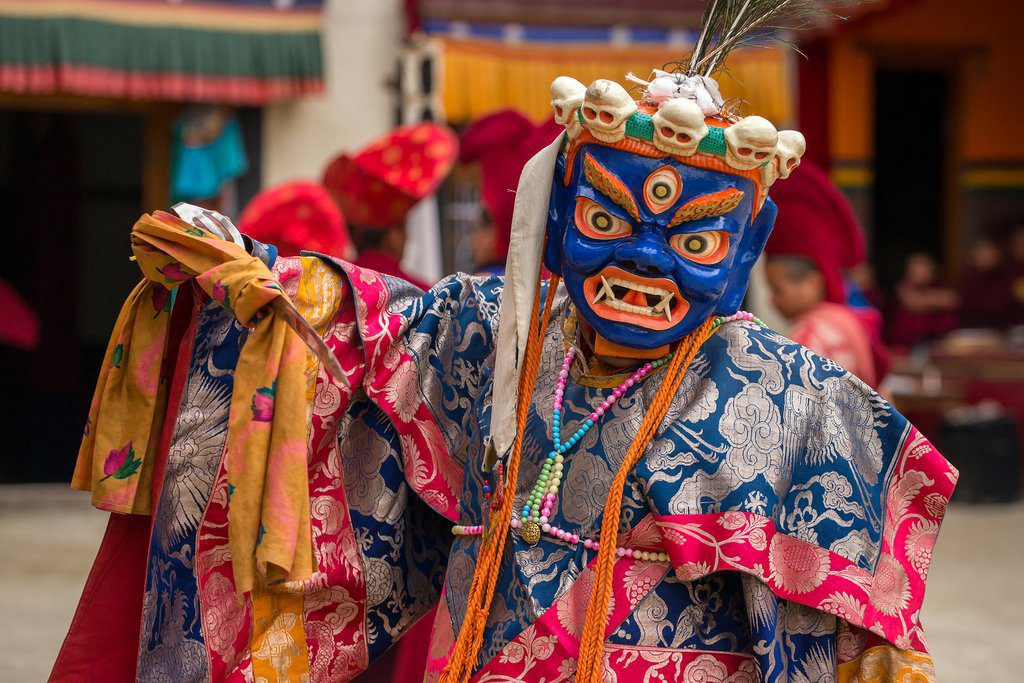
- Day Two: The mythical opposition of Dorje Sonnu against the demon is performed in the form of the Cham masked dances – every move, every gesture, every swirl of costume is full of mythical implications.
- Day Three: Confession of victory and blessings of peace, health and prosperity.
The walled-in palace square at Lo Manthang is transformed into a prayer hall, and the courtyards of the monasteries are turned into prayer fields. Thousands – villagers in their traditional chubas and tourists curious about the culture all flock to it, and even when they are amidst crowds, a feeling of ceremony is present that seems to be sacred and not an act.
At least a permit is needed: the Restricted Area Permit (approximately USD 500 during the first 10 days, USD 50 per subsequent day), an ACAP permit (approximately USD 30), and a TIMS card (approximately USD 10). This is not a solo hiking journey, as licensed agencies and guides are required. Those logistics frequently seem to be a part of entering another world that has its own beat.
Tiji has become one of the most photographed events in Upper Mustang -the whirls of costume, the flattened light of high altitude, the crude human involvement of the event make Tiji irresistible to the camera. However, seeing it with a sense of respect and not as a visual spectacle will be what determines a valuable experience.
Yartung Festival – Horse Racing and Warrior Traditions

In late August, about the full moon of the Bhadra lunar month (which is usually August 2830), the desert plains beyond Lo Manthang are vibrating with another kind of energy: Yartung.
In contrast to the spiritual agitation of Tiji, Yartung is a people’s feast in its most vivid form. Its name weakly translates to the end of harvest carried in summer, and it is a time of harvesting the barley harvest, fastening the crop together and in thankfulness.
At the heart of Yartung are:
- Races of horses – The home riders, their mounts with colored tassels and old-fashioned leathers, flying over wide expanses of level terrain, the wind blowing dust-scattered confetti.
- Archery, not Olympic perfection, not rank with tradition, in which accuracy is not sought, but rather form and concentration, which are as valuable as the points.
- Partying and music – Togetherness, the stringed instruments, laughter, and hand brews fading into the night.
It is not just the competition that makes the festival happy. It is in the meaning that there is a collision of community and landscape, history and present, all in celebration. It is a statement, on a land where cows and acreages constitute a livelihood, that life is worth celebrating, even in a landscape where one has to work hard on a daily basis.
Yartung occasionally overflows Lo Manthang and reaches places such as Muktinath, Jharkot and Ranipauwa, where revelry extends into the community, uniting communities together.
Losar- Tibetan New Year in Upper Mustang

Losar is the Tibetan New Year and comes either in February or March (lunar calendar), with a much more subdued form of celebration. It lacks the ritual drama of Tiji and the broad-open folk drama of Yartung, but its theme is close and richly rooted in regeneration.
Families clean up dust and worn-out offerings of houses, getting ready to start a new cycle. Punaluu (deep-frying) dishes such as khapse (crisp pastries in the shape of complex knots) are served in doorways much earlier than the actual date. The prayers in the monasteries echo with the hills as the sacred strands help to tie the aspirations of all homes in the larger spiritual calendar.
Losar’s magic isn’t loud. It is in the coziness of common meals, in the ringing of bells at daybreak, in the gentle sizzle of butter candles blown out at night – a group sigh after winter has struck.
Village-Level and Monastery Festivals of Mustang Upper.
Outside of the headline festivals, Mustang has small villages that do not feature in mainstream guidebooks, but nonetheless, these are significant to local identity.
- Tenpa Tsechu (Dukpa Tshechu): This festival is observed on the 10th of the 6th month of the lunar year, and it is a prayer and pilgrimage festival in honor of Guru Rinpoche (Padmasambhava) and usually celebrated around monasteries such as Luri Gompa.
- Bagcham: This is a masked dance dedicated to a protector deity, Mahakala – less of a performance than of cleansing and protection.
- Phaknyi: This is a late-summer feast, characterized by shared meals and music, but held primarily in village squares instead of palace courts.
Every settlement, Ghami, Tsarang, Chhuksang, possesses in its turn its calendar of rites, minor seasonal occasions which mark life less grievously but no less significantly.
Cham Dances, Masks, and Sacred Performances Explained
The Mustang Cham dances can be characterized as a symbolic dialogue between the bodies, costumes, cosmos and society. Warriors, gods, demons, all of them are embodied in exquisite masks, heavy brocades and gestures, which bear centuries of theological subtext.
Wrathful gods do not mean evilness in this case. They are a marker of protection, change, and spiritual equilibrium. Horns, drums, and silken ribbons are not decorative, but each is a thread that has been woven into a story of cosmic order.
When one observes a Cham, he or she watches mythology taking shape through movement. It is movement, rhythm, myth and devotion in motion.
Best Time to Visit Upper Mustang for Festivals
It is not only trekking season: spring and late summer are festival seasons.
- Spring (March-May): This is the time of Tiji, flowering rhododendrons, warm weather and clear sight.
- Late Summer (August): Yartung and harvest celebrations, and skies tend to be dramatic and washed with dust following brief monsoonal downpours.
- Winter and early spring herald Losar and less ardent monastery rites, yet cold and snow may have their way above Lo Manthang.
It is necessary to synchronize the trekking logistics, including permits, guides, acclimatization with the festival schedules. A trek can become an exploration of the culture and not a sightseeing schedule in a hurry.
Festival Calendar of Upper Mustang (Month-by-Month Overview)
- February March: Losar (Tibetan New Year) and early Monastery observances.
- May: Tiji Festival (three days of religious ceremony).
- June: Saga Dawa parades and lamp offerings.
- August- September-Yartung Festival, Phaknyi harvest festivals.
- During the year: Village deity performances, on moon days, and monastery performances.
- Weather seasons- cold weather in winter, clear skies in spring, dusty days in late summer, also influence trekking as well as festival experience.
Etiquette in Going to Festivals in Upper Mustang.
The first rule is respect: these are not theatrical performances, but rituals.
- Photography: Only take pictures by request. Certain rituals of the inner monastery are forbidden.
- Dress: Loose layers, dignified colors, muffled shoes. Splendid trekking outfits are all the better, but ceremony demands moderation, not flaunting.
- Conduct: Silence in prayer areas, forbearance in processions, respect towards elders who make tormas and pray.
- Generosity and gratitude- little gifts of tsampa or incense instead of selfies are more in line with the way locals perceive such events.
Role of Festivals in Preserving Upper Mustang’s Heritage
Festivals are cultural anchors in Mustang. They are not touristic frozen reenactments; they are dynamic, living, ongoing, and maintained practices, and are embedded within the family and the monastic community. The outside influence has been tamed with controlled tourism, which has seen the traditions fit in moderately and not be overwritten.
One prayer chant, one dance, one common meal contribute to the intangible heritage that can never be captured by a museum or photo gallery.
Upper Mustang Festivals and Responsible Tourism
Conscious travellers who visit Mustang make a contribution to its sustainability and not to its commercialisation. Guides not only guarantee that the local economies benefit but also permit and guide. Festivals generate seasonal revenues as well as assist in preserving traditions.
The preservation of these Himalayan customs is possible by backing up local crafts, not overstepping, but telling stories instead of taking them away, so that nothing thrives as a museum piece.
Don’t just read about Upper Mustang — live it with Adventure Master Treks.
Reserve your trek today and walk ancient festival paths with confidence.
Comments (0)
Write a comment- Why Festivals in Upper Mustang Are Culturally Unique?
- Religious Foundations Behind Upper Mustang Festivals
- Big Festivals of Upper Mustang
- Tiji Festival -The Spiritual Heart of Upper Mustang
- Yartung Festival – Horse Racing and Warrior Traditions
- Losar- Tibetan New Year in Upper Mustang
- Village-Level and Monastery Festivals of Mustang Upper.
- Cham Dances, Masks, and Sacred Performances Explained
- Best Time to Visit Upper Mustang for Festivals
- Festival Calendar of Upper Mustang (Month-by-Month Overview)
- Etiquette in Going to Festivals in Upper Mustang.
- Role of Festivals in Preserving Upper Mustang’s Heritage
- Upper Mustang Festivals and Responsible Tourism
Read the latest Blogs & Insights
Explore our collection of articles and insights to gain in-depth travel knowledge, expert advice, and stay updated on the latest trends and tips.



No comments yet.