









Find Your Perfect Short North ABC Trek: 5, 8 or 10 Days Itinerary Explained
Confused between 5, 8 or 10 days for the North ABC Trek? Compare routes, pace and highlights to choose the perfect adventure for your time and style.
-
 Adventure Master Trek
-
19 February, 2026
-
11 mins read
-
189 Views
-
0 Comments


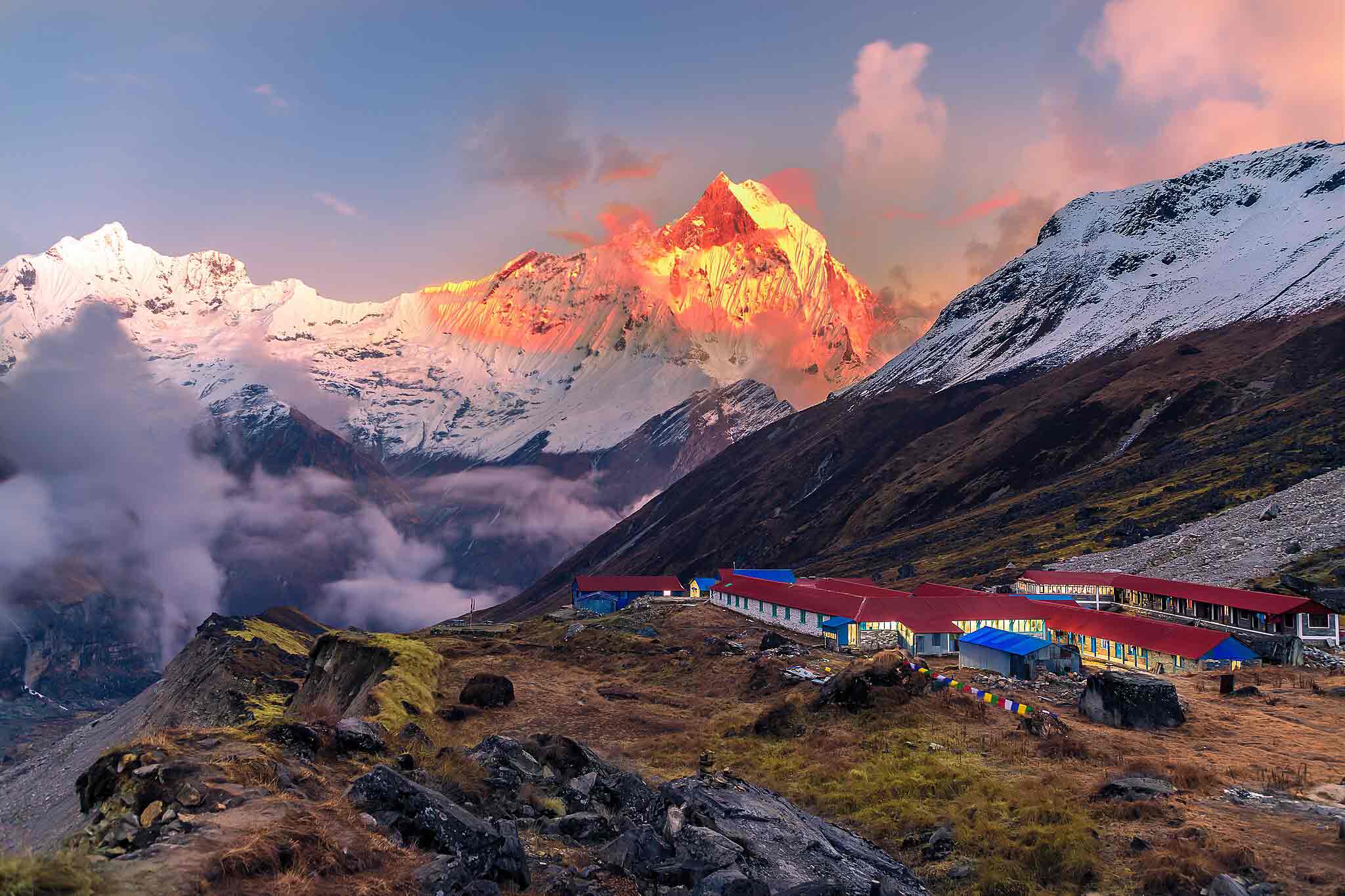
The Annapurna region is somehow magical, with mountain air, cascading waterfalls, terraced fields, and an amazing experience when North Annapurna Base Camp finally comes into view amid the clouds. However, not everyone can afford to spend 12-14 days on the classic North ABC trek. Here is where the Short North ABC Trek comes in: an adventure-touring, condensed route that lands you on ABC in 5, 8, or 10 days. Every itinerary is different in pace, intensity, and activities, and therefore settling on the right one can make the difference between your trekking experience.
We will discuss each of these three itineraries in more detail in this guide, and hopefully they will help you figure out which one best suits your schedule, fitness, and adventure style.
First, Where Exactly Is North Annapurna Base Camp?
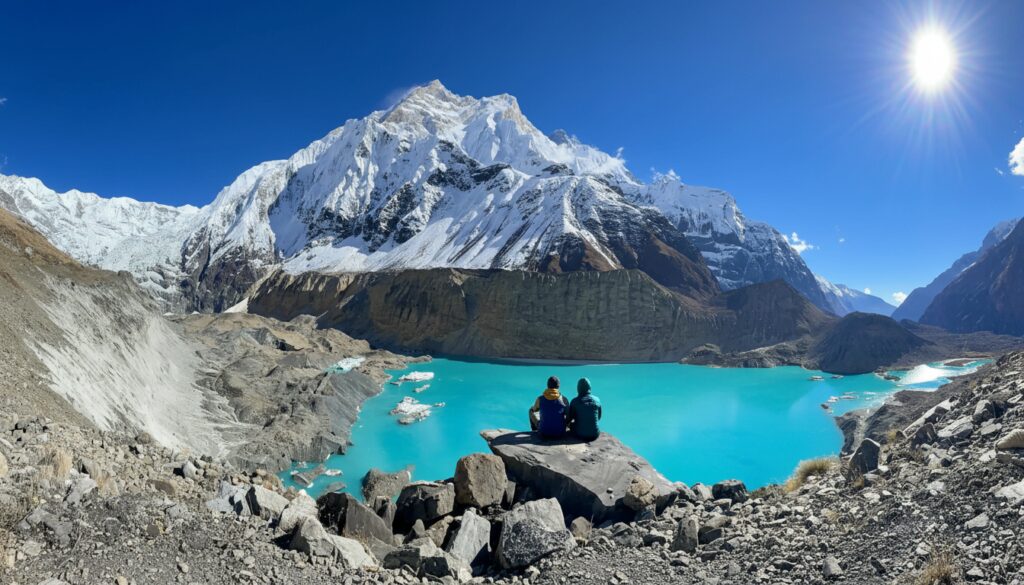
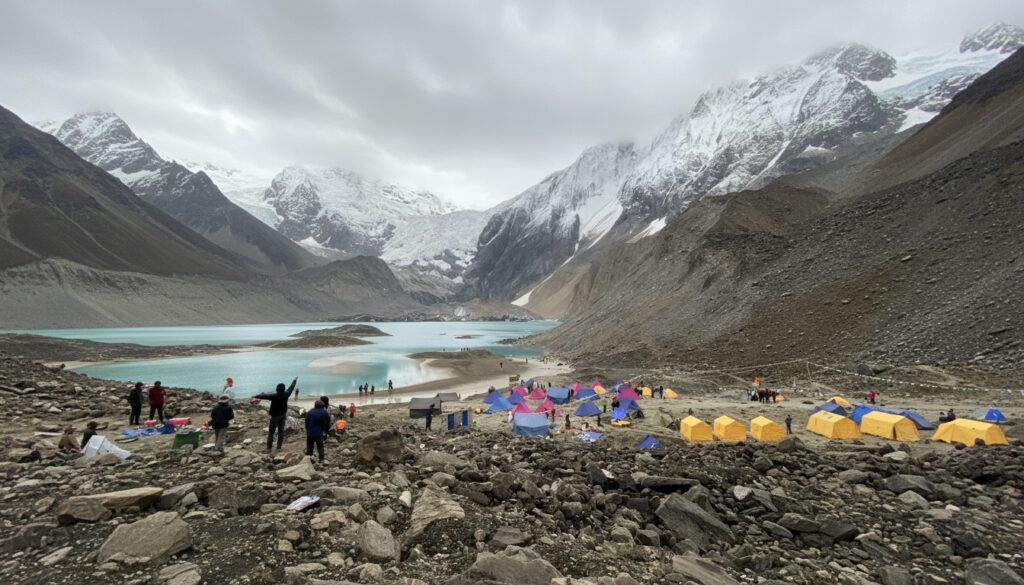
Before we dive into itineraries, it’s worth knowing what you’re actually signing up for. North ABC sits at 4,190 meters on the remote northern side of the Annapurna massif — the side that most trekkers never see. You’re essentially staring up at the north face of Annapurna I, one of the most formidable and deadly mountain faces on the planet. It’s wild, it’s raw, and it’s genuinely spectacular in a way that feels almost surreal when you’re standing there.
The route doesn’t involve domestic flights — you start your journey from Pokhara and drive into the trailhead. And because it’s on the northern side, the landscape shifts dramatically from the lush, rhododendron-heavy trails of the south. Think drier terrain, Tibetan-influenced villages, glacial basins, and a quietness that will make you feel like you’ve stumbled onto a secret corner of the Himalayas.
Now, let’s talk itineraries.
Why Choose a Short North ABC Trek?
You may well ask yourself why anyone would be interested in having a shorter version of the ABC trek. All right, life is hectic, flights are scarce, and not everyone has two weeks to make their way up the mountains. The Short North ABC Trek offers the full Himalayan experience in less time, without missing the highlights.
The time-tested ABC trek is a hiking trip through scenic villages, rich forests, and dramatic mountainous scenery. But the Short North alternative begins at a later trailhead, usually Jhinu Danda, Chhomrong, or Deurali, allowing you to skip the lower part of the trail and concentrate on the more attractive North one.
Benefits of a short trek:
- Ultra Time-saving: North ABC reached within 5-10 days.
- Pick Your Pace: Choose your own itinerary. Less crowded routes with a peaceful mountain.
- Scenic view: Have a close-up overview of Annapurna I North Face, Machhapuchhre, Nilgiri, Dhaulagiri, and Gangapurna.
- Experience: Visit traditional Magar villages like Upper Narchyang, sample local food, and enjoy teahouse hospitality.
- Extra activities: Poon Hill or sunrise, Jhinu Danda or hot springs visit.
So, we will now discuss each itinerary individually.
The 5‑Day Short North ABC Trek — For Thrill-Seekers
Intro: Does your schedule not have much time to spare, but you were looking to experience the thrill of being in North Annapurna Base Camp? Then the 5-day itinerary is the one to choose. It is swift, extreme, and ideal for physically fit, adventurous hikers who can endure extended days on the trail.
Who it’s for:
- Seasoned hikers who are not afraid of steep ascents.
- Time-constrained travelers
- Those adventurers who do not mind rushing and having a few rests.
Typical Itinerary:
- Day 1: Kathmandu → Pokhara → Tatopani → Trek to Upper Narchyang (2,140 m):
Scenic drive through river valleys and villages, followed by a gradual uphill trek through terraced fields, forests, and traditional Magar settlements.
- Day 2: Upper Narchyang → Chhotepa (2,369 m):
Steady climb through dense forests, waterfalls, and narrow valleys, leading into remote mountain terrain and peaceful natural surroundings.
- Day 3: Chhotepa → Sandhi Kharka (3,165 m):
Trail opens into alpine landscapes with grassy meadows, rugged slopes, and wide mountain views, offering a true high-altitude trekking experience.
- Day 4: Sandhi Kharka → Annapurna North Base Camp (4,190 m) → Sandhi Kharka:
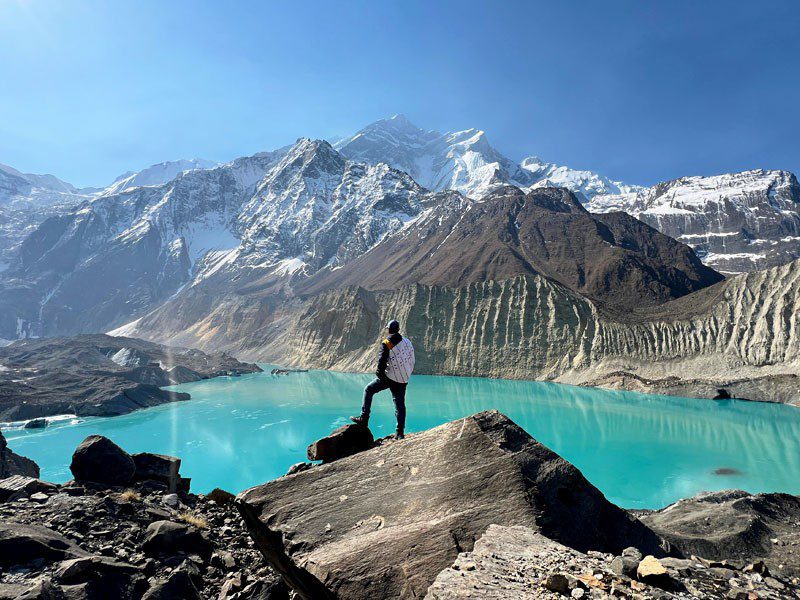
Highlight day! Trek across glacial moraines and rocky terrain to reach North ABC, surrounded by massive ice walls and dramatic Himalayan scenery.
- Day 5: Sandhi Kharka → Lete → Drive back to Pokhara:
Long downhill walk through alpine meadows and forests, followed by a scenic drive back to Pokhara along the Kali Gandaki River.
Highlights
- Reaches North Annapurna Base Camp in a remarkably short timeframe
- Intense physical challenge ideal for endurance-focused, experienced trekkers
- Dramatic, close-up views of Annapurna I’s massive north face
- Rapid transition from subtropical forests to alpine and glacial landscapes
- Far fewer trekkers compared to the busy South Annapurna trails
- Tatopani hot springs are available as a rewarding bookend before and after the trek
- Strong sense of remoteness and true wilderness immersion
Considerations
- Very rapid altitude gain from 1,243 m to 4,190 m in just three trekking days
- Significantly elevated risk of Acute Mountain Sickness due to minimal acclimatization
- Long, physically demanding trekking hours each day
- Almost no buffer time for bad weather, injury, or fatigue
- Little opportunity for cultural interaction due to the tight schedule
- Prior experience above 4,000 m is essential, not optional
- Not suitable for first-time high-altitude trekkers.
This is basically a rush across the Himalayas. Do you feel fit, like extreme hikes, and want to experience the maximum adventure within a limited time? Then this is the plan to follow.
The 8‑Day Short North ABC Trek — Balanced Adventure
The 8-day itinerary is sometimes referred to as the sweet spot. It is not too challenging, too fast or too slow, or too scenic to give you reasonable physical work. It is not too hard, too fast, too slow, or too scenic to work you too hard.
Who it’s for:
- Trekkers who want an average level of challenge.
- People who desire additional time to get used to it.
- Tourists seeking culture and sightseeing.
Typical Itinerary:
- Day 1: Kathmandu → Pokhara:
Scenic drive through river valleys, terraced hills, and rural villages to reach the beautiful lakeside city of Pokhara.
- Day 2: Pokhara → Tatopani → Trek to Upper Narchyang (2,140 m):
Drive along the Kali Gandaki River followed by a gradual uphill trek through forests, terraced farmland, and traditional Magar villages.
- Day 3: Upper Narchyang → Chhotepa (2,369 m):
Steady climb through dense forests, waterfalls, and quiet valleys, entering the remote and peaceful mountain landscape.
- Day 4: Chhotepa → Sandhi Kharka (3,165 m):
Trek into high alpine terrain with grassy meadows, rugged slopes, and wide Himalayan views, offering a true wilderness experience.
- Day 5: Sandhi Kharka → Annapurna North Base Camp (4,190 m):
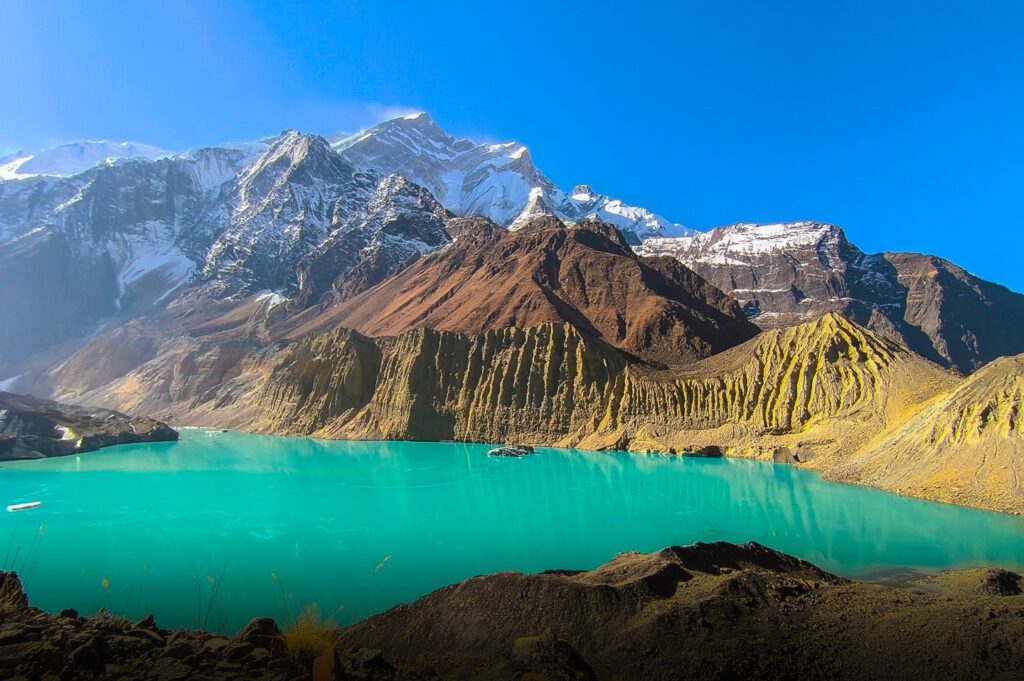
Highlight day! Trek across glacial moraines and rocky trails to reach the dramatic north face of Annapurna, surrounded by towering ice walls and glaciers.
- Day 6: Annapurna North Base Camp → Thulo Bugin (3,500 m):
Descend and traverse scenic alpine pastures, enjoying open landscapes, silence, and vast mountain views.
- Day 7: Thulo Bugin → Lete (2,010 m):
Long downhill walk from alpine meadows into forested trails, reaching the comfortable village of Lete.
- Day 8: Lete → Drive back to Pokhara:
Scenic drive along the Kali Gandaki corridor back to Pokhara, marking the end of the trekking adventure.
Highlights
- More gradual altitude progression improves both safety and comfort
- Better physical pacing than the 5-day option without sacrificing the core experience
- Scenic route through the traditional villages of Upper Narchyang and Chhotepa
- Expansive alpine meadow landscapes at Sandi Kharka
- Dramatic sunrise views over peaks including Gangapurna
- Descent after base camp reduces prolonged high-altitude exposure
- Strong balance between time efficiency and overall experience quality
Considerations
- Still physically demanding with multiple 6–7 hour trekking days
- Acclimatization is improved but not fully optimal
- Increasing weather exposure in alpine and glacier sections
- Limited time to explore and absorb the base camp environment
- Requires solid cardiovascular endurance throughout
- Best suited to trekkers with prior altitude experience above 3,500 m
The 10‑Day Short North ABC Trek — Scenic & Relaxed
The 10-day itinerary is the best choice if you are not in a rush and prefer a slow, immersive Himalayan adventure. It gives the opportunity to spend additional days acclimatizing, visiting cultural villages, and seeing highlights such as the Poon Hill sunrise.
Who it’s for:
- Novice or amateur high-altitude trekkers.
- Amateurs and culture admirers.
- People who take their time with a scenic route.
Typical Itinerary:
- Day 1: Arrival in Kathmandu (1,400 m):
Airport pickup, hotel transfer, rest, and trek briefing with guide. Explore Thamel in the evening.
- Day 2: Kathmandu → Pokhara:
Scenic drive through river valleys, terraced hills, and traditional villages to reach Pokhara.
- Day 3: Pokhara → Tatopani → Trek to Upper Narchyang (2,140 m):
Drive along the Kali Gandaki River, then trek uphill through forests, terraced fields, and Magar villages.
- Day 4: Upper Narchyang → Chhotepa (2,369 m):
Steady climb through dense forest, waterfalls, and narrow valleys into remote mountain terrain.
- Day 5: Chhotepa → Sandhi Kharka (3,165 m):
Enter alpine landscapes with grassy meadows, rugged slopes, and wide Himalayan views.
- Day 6: Sandhi Kharka → Annapurna North Base Camp (4,190 m):
Highlight day! Trek across glacial moraines and rocky terrain to reach the dramatic north face of Annapurna.
- Day 7: Annapurna North Base Camp → Sandhi Kharka:
Early morning views at base camp, followed by a relaxed descent back to Sandhi Kharka.
- Day 8: Sandhi Kharka → Thulo Bugin (3,500 m):
Walk across open alpine pastures with big mountain scenery and peaceful surroundings.
- Day 9: Thulo Bugin → Lete (2,010 m):
Long downhill trek from high alpine terrain into green forests and traditional villages.
- Day 10: Lete → Drive back to Pokhara → Kathmandu (optional):
Scenic drive along the Kali Gandaki River back to Pokhara, with optional onward travel to Kathmandu.
Highlights:
- Dedicated acclimatization day at Sandi Kharka significantly lowers altitude-related risk
- Highest completion and summit success rate of all three options
- Full exploration day at base camp for photography, glacier observation, and reflection
- Opportunity to experience both sunrise and sunset beneath Annapurna I’s north face
- Deeper cultural exchange with Tibetan-influenced mountain communities along the route
- More relaxed pace enhances overall enjoyment and mental stamina
- Greater environmental responsibility through reduced emergency evacuation risk
- The most immersive Himalayan wilderness experience of the three options
Considerations
- Requires a longer time commitment — not suitable for tight travel schedules
- Slightly higher overall cost due to additional guide, porter, and accommodation days
- Demands sustained endurance over a longer duration
- Weather unpredictability remains a factor at high altitude, regardless of pace
- Requires genuine patience and appreciation for a slower mountain rhythm
Comparing the 5, 8, and 10-Day Itineraries
Deciding the right itinerary comes down to time, fitness, and your preferred pace. Here’s a quick comparison:
| 5 Days | 8 Days | 10 Days | |
|---|---|---|---|
| Intensity | High | Moderate | Relaxed |
| Altitude Risk | High | Moderate | Low |
| Acclimatization | Minimal | Moderate | Optimal |
| Best For | Experienced high-altitude trekkers | Fit trekkers with limited time | Most trekkers |
Quick Decision Tips:
- Only a few days available? A 5-day sprint is best
- Want a mix of pace and comfort? An 8-day itinerary is ideal
- Prefer a relaxed, scenic trek? 10 days is perfect
Breaking It Down: Which Option Is Actually Right for You?
Let’s get practical for a moment. Here’s the honest, no-nonsense breakdown:
- Choose the 5-day option if: You have prior high-altitude trekking experience (4,000+ meters), your cardiovascular fitness is excellent, and your schedule genuinely cannot accommodate more time. Go in knowing the risks and be prepared to turn back if your body tells you to.
- Choose the 8-day option if: You’re a fit trekker who hikes regularly, you’ve done some multi-day treks before (even at moderate altitude), and you want a solid balance between time efficiency and safety. This is a good choice for people who are comfortable pushing themselves but don’t want to be reckless about altitude.
- Choose the 10-day option if: You want to actually enjoy this trek — not just survive it. If you want the full experience, the safe acclimatization, the cultural depth, and the highest chance of reaching base camp feeling like a human being rather than a zombie, this is your itinerary. It’s also the right choice if you’re not sure which category you fall into. When in doubt, always choose more time at altitude.
Recommendations for a Successful Short North ABC Trek.
Regardless of the path to take, the most important thing is preparation. The following things will help you make your trip more enjoyable and easier:
Permits & Documentation:
- ACAP (Annapurna Conservation Area Permit)
- TIMS card
- Available readily in Pokhara through a guide or trekking agency.
Gear:
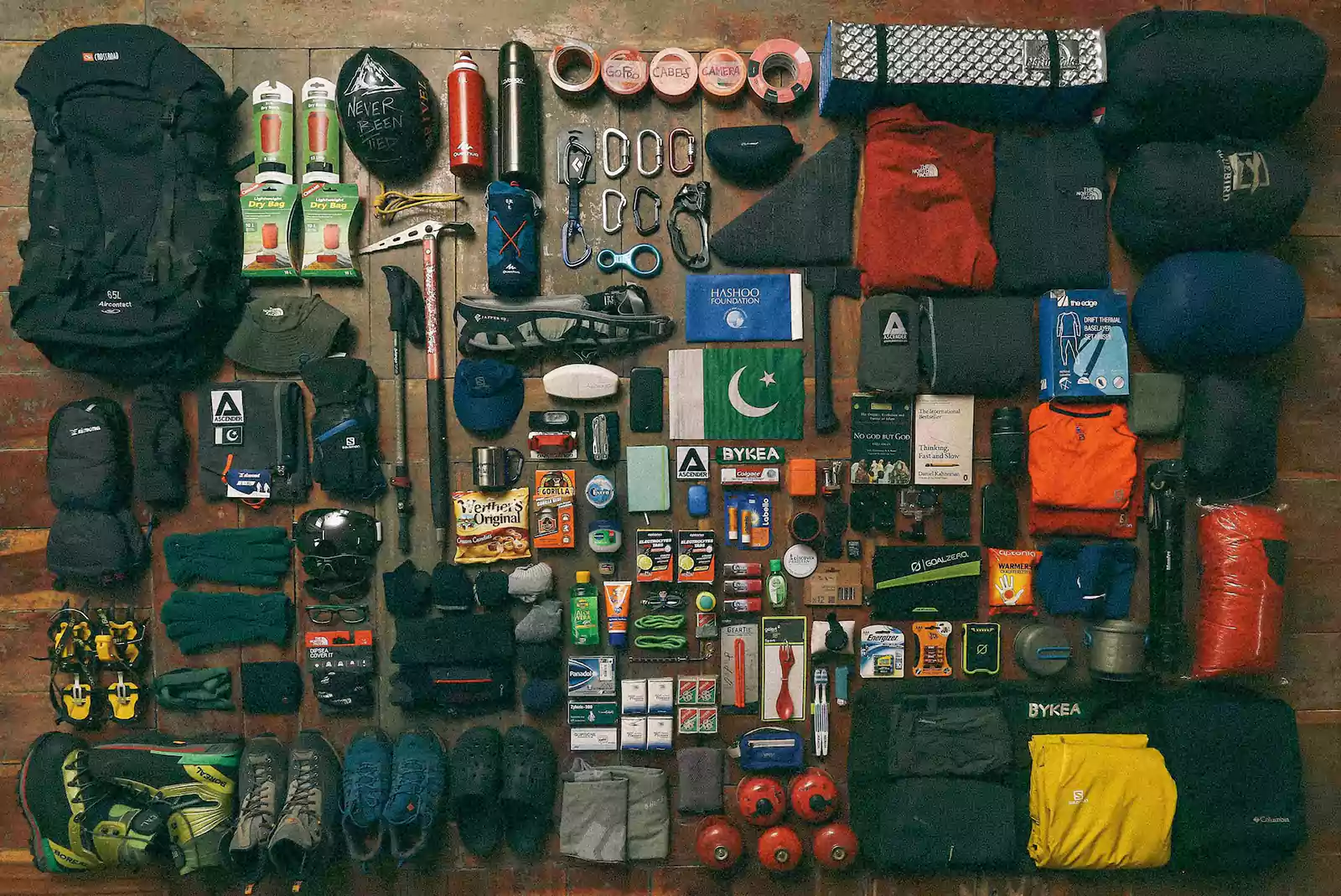
- Hiking shoes, thermos jackets, waterproof clothing.
- Trekking sticks for steep uphill/downhill.
- Headlamp, water bottles, snacks, and an electrolyte tablet.
Hydration & Nutrition:
- Consume at least 2-3 liters of water daily.
- High-energy foods consumed in teahouses: dal bhat, soups, noodles.
Acclimatization:
- Gradual climbs and taking a rest as it becomes necessary.
- Monitor headache, nausea or fatigue.
Guides & Porters:
- Useful in navigation, pace setting, and culture.
- Porters will carry the heavy luggage, allowing you to walk lightly.
Best Seasons:
- Autumn (Sept-Nov): Scattered clouds and optimum trekking season.
- Spring (Mar-May): Rhododendron flowering, fair weather.
- Winter (Dec – Feb): Cold and snow may occur.
- Monsoon (Jun-Aug): Oily roads, poor visibility.
Final Thoughts
The Short North ABC Trek makes you realize that you do not need a lifetime to experience the Himalayan adventure of a lifetime. You could be a sprinting, 5 days, and admire a natural beauty; you could enjoy a balanced trip with 8 days in the mountains; and you could take your time and have a memory that you will never forget, that you arrived at the Annapurna Base Camp.
It is up to you, depending on your fitness, schedule, and travelling style. The most important thing is to take things slowly, absorb the scenery, and enjoy the ride. Buck your boots on, stuff your curiosity, and have the Himalayas do their stuff, whatever itinerary you follow.
Comments (0)
Write a comment- First, Where Exactly Is North Annapurna Base Camp?
- Why Choose a Short North ABC Trek?
- Benefits of a short trek:
- The 5‑Day Short North ABC Trek — For Thrill-Seekers
- Who it’s for:
- Typical Itinerary:
- Highlights
- Considerations
- The 8‑Day Short North ABC Trek — Balanced Adventure
- Who it’s for:
- Typical Itinerary:
- The 10‑Day Short North ABC Trek — Scenic & Relaxed
- Typical Itinerary:
- Highlights:
- Considerations
- Comparing the 5, 8, and 10-Day Itineraries
- Breaking It Down: Which Option Is Actually Right for You?
- Recommendations for a Successful Short North ABC Trek.
- Permits & Documentation:
- Gear:
- Hydration & Nutrition:
- Acclimatization:
- Guides & Porters:
- Best Seasons:
- Final Thoughts
Read the latest Blogs & Insights
Explore our collection of articles and insights to gain in-depth travel knowledge, expert advice, and stay updated on the latest trends and tips.




No comments yet.