









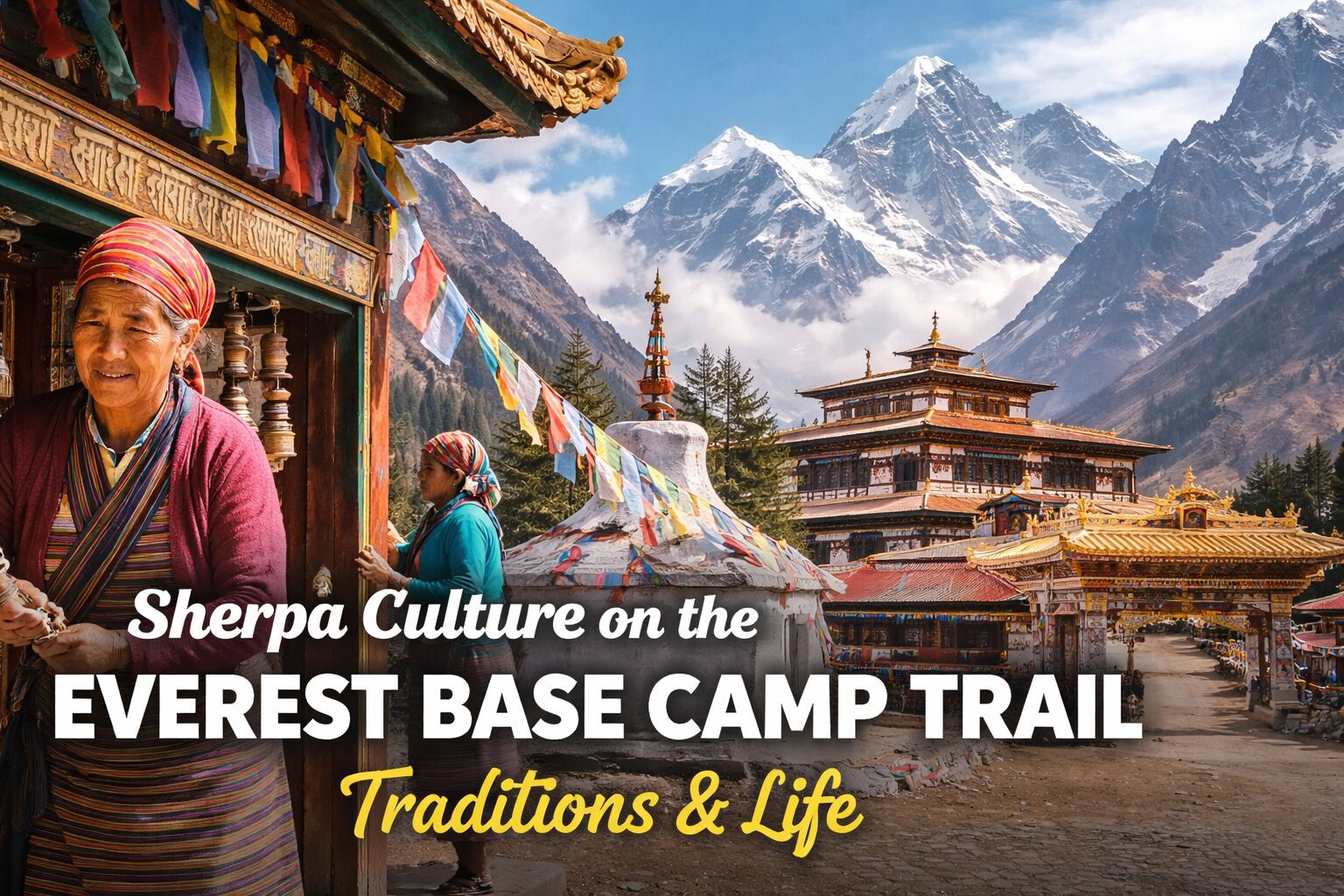
Sherpa Culture on the Everest Base Camp Trail
Explore Sherpa culture on the Everest Base Camp trail, from traditions and monasteries to daily life, hospitality, and Himalayan heritage.
-
 Adventure Master Trek
-
7 April, 2026
-
13 mins read
-
4 Views
-
0 Comments


You’re walking up a mountain. There’s a prayer flag tied to a rock. You see dozens of them. Most trekkers take a photo and move on.
That flag matters, though. Someone spent weeks carving the prayer into that stone. Someone else tied it up there and made a specific wish for their kid’s health. For their business. For their dead relative.
The wind blows that flag. Every time it moves, Sherpas believe the prayer goes out into the world.
This is what you miss if you just walk through. You’re hiking through someone’s home. Someone’s spiritual life. A culture that’s been living in these mountains for 500 years.
The Sherpas aren’t your guides. They’re people. With their own way of living, their own religion, their own beliefs about these mountains.
Who Are Sherpas?
People think “Sherpa” is a job. It’s not.
Sherpas are an ethnic group. About 150,000-200,000 of them are in the world. Most in Nepal and Tibet.
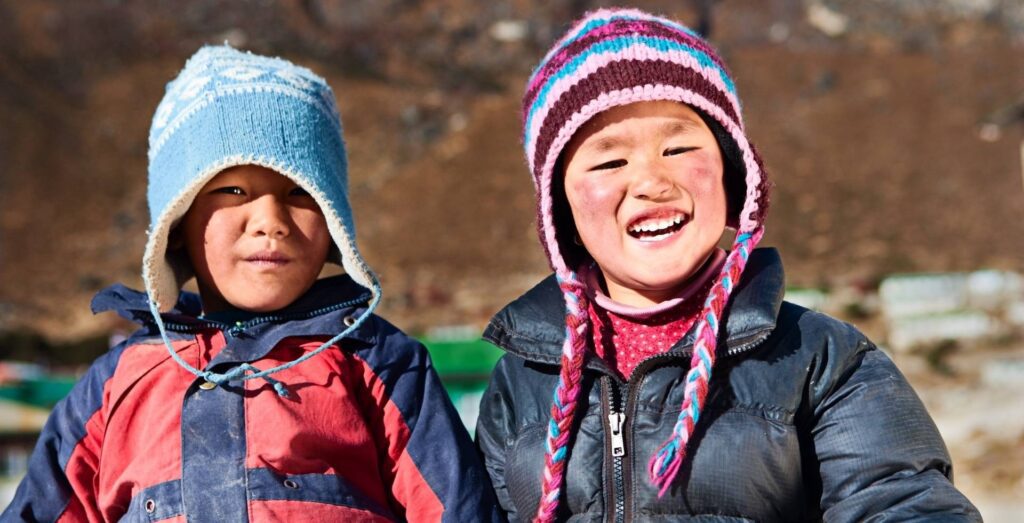
They came to the Khumbu region 500-600 years ago from Tibet. Looking for land to graze yaks. They found the valley. They stayed.
What’s crazy is how well they figured out how to live here. Not just survive—actually build a real life. They made trade routes across impossible passes. Built communities. Built monasteries. Created their own type of Buddhism.
Today, “Sherpa” means “mountain guide” to most tourists. It annoys actual Sherpas. It’s like calling every American truck driver a Texan.
When you trek here, you’re in Sherpa territory.
The Villages
Namche Bazaar
Day three of the trek. You hit Namche.
If you’ve been walking through quiet forests, Namche is chaos. Noise. People. Shops. WiFi cafes. Pizza restaurants. Banks. Bikes. A real town.
Historically, Namche was a trade hub. Tibet to the north. Nepal to the south. Yak caravans came through. People bought and sold.
Now it’s a tourism hub. Trekkers buy gear. Climbers get supplies. Sherpas run businesses.
But it’s still a Sherpa town. Families live here. Kids go to school. People speak Sherpa at home. Practice Buddhism. Have traditions. Just while running shops.
Spend a day there. Walk around. Eat at local restaurants. Watch how it works. You’ll see a community caught between traditional life and modern tourism.
Tengboche
Two days higher. You reach Tengboche Monastery at 3,860 meters.
Most trekkers take a photo and leave.
This is the spiritual center of the region. A lama named Gulu started it in 1923. It’s where Sherpa Buddhism lives visibly.
Inside, monks actually live. They chant every day. They practice Buddhism. They maintain rituals.
The prayer hall is red and gold. It smells like incense and butter lamps. Early morning or evening, you hear monks chanting in Tibetan. Dozens of voices. It’s not for tourists. It’s real.
In November and December, they have the Mani Rimdu festival. Monks do masked dances. Thousands of Sherpas come from everywhere. Religious ceremony mixed with community celebration.
Fire destroyed it in 1989. They rebuilt it exactly the same way. That tells you how important this place is.
Sit there. Listen. Don’t rush through.
Khumjung and Khunde
Off the main trail. Smaller villages. Fewer tourists.
You see how Sherpas actually live. Not for trekkers. Just living.
Families. Kids playing. Traditional houses—sloped roofs for snow, thick stone walls, decorated windows.
Yaks are being herded. Old prayer flags that are faded from years of wind, not new ones for photos. Women doing traditional craft work.
Edmund Hillary built a school here after he climbed Everest. It’s complicated—Western influence mixed with local culture.
Tengboche Monastery
The spiritual center.
A lama named Gulu founded it in 1923 on a ridge overlooking the valley. Positioned to see Ama Dablam (a sacred mountain) and positioned high enough to feel spiritually important.
The main prayer hall holds about 300 people. The whole region has 5,000 people. So this is where everyone gathers spiritually.
The Mani Rimdu festival is the biggest event. Brings thousands of Sherpas together. Buddhist teachings. Masked dances telling religious stories. Community gathering.
Buddhism here isn’t just personal spirituality. It’s the foundation of community.
Buddhism in the Khumbu
Most people imagine peaceful monks meditating quietly. Buddhism here is different.
It’s Tibetan Buddhism. Complex spiritual practices. Elaborate rituals with specific purposes. Belief that spiritual masters get reborn repeatedly and carry knowledge across lifetimes.
It’s woven into everything. Not separate from daily life.
Prayer Wheels and Mantras
Walk through a village. You see prayer wheels—cylinders carved with mantras that people spin by hand or water power. Prayer flags everywhere. People murmuring mantras while they work.
Not performance. This is how they practice Buddhism.
Spinning a prayer wheel—the belief is it releases the mantras into the world. The mantras have power. They affect consciousness. So people constantly spin wheels. You see water wheels spinning in streams. Permanent wheels in villages.
Mala beads. 108 beads on a string. People count mantras on them while walking. Meditation and practical discipline combined.
Most families have home altars. Small spaces with Buddhist images. They make butter lamp offerings. They do daily prayers.
This Buddhism is deeply engaged. It shapes how people make decisions and treat each other.
Karma Isn’t Just Philosophy
Sherpas genuinely believe that actions have consequences across multiple lifetimes. Not spiritual poetry. Practical belief that shapes behavior.
Treating people well matters. Helping a trekker isn’t just business—it’s earning good karma. How you treat porters affects your spiritual development. Your actions ripple forward through future lives.
You see this in how Sherpas interact. Hospitality is genuine. Kindness seems built in.
Mani Stones and Prayer Flags
You’ll see these constantly.
Mani Stones
Rocks carved with the mantra “Om Mani Padme Hum.” Central to Tibetan Buddhism.
Sherpas carve these over weeks. It’s meditation. Focus on the mantra. The spiritual purpose. They’re creating a sacred object that radiates spiritual power forever.
These stones accumulate in piles at monastery entrances, along trails, and at significant places. Some crude. Some are beautifully carved. Together, they create walls of accumulated spiritual practice.
When you pass them, keep them on your left. That’s showing respect.
The biggest mani wall is at Kagbeni. Thousands of stones. Each one carved by someone’s hands. Each one represents someone’s prayers. It’s genuinely moving.
Prayer Flags
Flags fluttering across the landscape. Most trekkers photograph them constantly. Most don’t understand them.
Five colors. Each means something:
- Blue = Sky, space, wisdom, and compassion.
- White = Air, clouds, purity.
- Red = Fire, strength, and energy.
- Green = Water, healing, and harmony.
- Yellow = Earth, abundance.
Together, they represent the complete Buddhist cosmology.
Mantras printed on the flags. The belief is that wind carries the prayers into the world. Every flutter sends prayers out.
Installing flags isn’t casual. When a family puts up new flags, it’s for a specific intention—the health of a family member, the success of a business, the blessing of a house, memory of someone who died.
At high passes—Cho La, Gokyo Ri, Everest Base Camp—you see incredible concentrations of flags. Sherpas come specifically to add flags for their prayers.
Flags have a lifecycle. Sun fades them. Wind tears them. Rain damages them. Not sad. The prayers are being released. A faded flag did its job.
Old flags get ceremonially removed and replaced.
How Sherpas Live
Yaks
Ask a Sherpa what animal defines their culture. They say yaks.
Massive shaggy creatures. Bred over centuries for high altitude. Thick fur. Built low for mountains. Survive on minimal vegetation. Perfect for here.
Yaks provide everything. Hair becomes textiles. Meat is eaten. Milk becomes yogurt and butter. Yak butter goes into butter tea—calories and warmth in cold mountains. Dung dries and becomes fuel.
Culturally, yaks are respected. You see yak trains on the trail constantly. Treating them well matters. It’s practical (they work better) and spiritual (it affects karma).
Many Sherpa families herd yaks. Requires knowledge passed down for generations—understanding the animals, knowing where to graze them in different seasons, managing them through brutal winters.
The relationship is intimate. Families know their yaks individually. Give them names. Protect them.
Houses
Built to survive mountains.
- Stone walls provide insulation. Carefully placed rocks. No concrete.
- Sloping roofs shed snow and rain. Steep pitches, so the snow slides off. Critical because snow weight collapses buildings.
- Small, high windows minimize heat loss. Decorated in bright colors—reds, blues, greens—Buddhist symbolism.
- Main room is everything—eating, gathering, daily activities. Usually, where cooking happens (stove provides warmth). Upper levels for sleeping.
- Home altars are standard. Buddhist images. Where they do daily prayers.
When you stay at family lodges, you’re in traditional Sherpa homes adapted for trekkers. The architecture reveals practical knowledge from centuries.
Food and Clothes
Traditional Sherpa clothing. Women wear the chuba—long, thick dress over a blouse. Men wear gho or chuba. Heavy wool dyed with natural colors. Buddhist symbolism.
Older Sherpas wear traditional clothes daily. Younger ones wear Western clothes. Gradual cultural shift. But for special occasions and religious ceremonies, traditional clothes are still worn.
Food reflects what grows at extreme altitude. Potatoes. Barley. Some vegetables. Agriculture limited by harsh winters and short seasons.
Traditional diet:
- Dal bhat (lentils and rice—you eat this constantly)
- Sherpa bread (barley or wheat flour)
- Momos (dumplings)
- Thukpa (noodle soup with yak meat)
- Butter tea (yak butter, tea, salt—calories and warmth)
High protein and fat are necessary for cold. Simple because it’s what reliably grows here.
Raksi (distilled alcohol) and chang (fermented barley beer) are produced locally. Served during celebrations. Offering guests these is a sign of welcome and respect.
When you eat with Sherpa families, you’re eating food refined over centuries to work in the mountains.
Sacred Mountains and Spiritual Life
Sherpas believe mountains are sacred. Not just a belief—it shapes how they live.
Mountains are homes of deities and protective spirits. Everest (Sagarmatha in Nepali, Chomolungma in Tibetan) is home to a protective deity.
When Sherpas climb Everest, it’s spiritual work. Not just physical. They do puja ceremonies before starting to get the mountain’s blessing and protection.
Other mountains matter spiritually too:
- Ama Dablam = Mother goddess protecting the region.
- Makalu = Sacred peak with specific spiritual meaning.
Not abstract beliefs. They shape how Sherpas interact with mountains. Certain routes are spiritually significant. Certain activities at certain times for spiritual reasons. Mountains are living, conscious entities worthy of respect.
Pujas
Puja = Buddhist prayer ceremony.
You might witness or participate if you’re with organized groups or communities conducting ceremonies.
Simple pujas = lama chanting mantras and making offerings.
Elaborate pujas = multiple monks and significant ritual.
Guides usually suggest having a puja before trekking or climbing. For blessing and protection. An optional but incredible opportunity to participate in genuine spiritual practice.
During puja, you see offerings to Buddhist deities—butter lamps, incense, food, and drink. Chanting in Tibetan. Sometimes the lama throws colored rice in specific patterns as a blessing. Creates sanctity and intention-setting. Many trekkers find it profoundly meaningful.
How to Actually Engage
Eat With Families
Most trekkers eat in teahouse dining halls. Fine. But eat some meals with families in their homes if you can.
Requires time. Requires openness. Requires genuine curiosity.
Ask your guide if you can visit their family home for a meal. Most will be happy. Better food. See how people actually live.
Attend Ceremonies
Mani Rimdu festival = late October/early November.
Attend monastery ceremonies. Dress respectfully. Be quiet. Photography might be restricted—respect those boundaries.
Even outside festival season, monasteries have daily chanting sessions. Early morning or evening. You observe genuine spiritual practice.
Ask About Flags and Stones
Visit a mani wall or prayer flag location. Ask your guide to explain them.
Ask about their own prayer flags. Ask what prayers they’ve had carved into stones. Ask what they believe happens when flags flutter.
These conversations reveal how integrated spirituality is into daily Sherpa life.
Buy From Artisans
Many communities produce traditional crafts—religious paintings, prayer wheels, mala beads, and textiles.
Buy directly from artisans, not shops.
When you buy something made by a Sherpa craftsperson, ask about the process. Ask what symbolism means. Ask how long it took. Turns a transaction into a cultural exchange.
Learn Sherpa Words
Sherpas speak Nepali, English, and their own language.
Learning a few words shows respect:
- “Tashi Delek” (hello/goodbye)
- “Dhanyabad” (thank you)
- “Nagpo chik” (black tea)
Using these words shows you see Sherpas as people with their own language and culture.
Have Real Conversations
Treat your guide as a human. Ask about their life. Ask about their family. Ask about challenges facing the community.
Real conversations matter more than rehearsed information.
The Challenges
Glaciers are melting. Water sources that Sherpa communities depend on are drying up. Traditional knowledge from centuries is becoming unreliable because seasons are shifting unpredictably.
Young Sherpas move to cities or become international guides. Traditional skills—yak herding, farming, crafts—get abandoned for profitable tourism work. Language is threatened. Younger Sherpas speak Nepali and English more than the Sherpa. Traditional ceremonies happen less because young people don’t have time to learn.
Not entirely bad. Modernization brings education and healthcare. But real cultural knowledge is lost.
Tourism brings money. Families educate kids. Communities build schools and health centers. But also creates dependence and commodifies culture. Too many trekkers damage trails. Some disrespect sacred sites. Pressure to adapt traditions to tourist preferences distorts authentic practice.
Sherpa communities navigate this thoughtfully. But it’s genuinely complex.
Why This Matters
Walking the Everest Base Camp trail, you’re traveling through someone’s home. Someone’s spiritual landscape. Someone’s community.
The trail exists because Sherpas maintained it. The lodges exist because Sherpa families chose to host travelers. The guides exist because Sherpas have knowledge about these mountains that’s irreplaceable.
Understanding Sherpa culture transforms the trek. You’re not just climbing a mountain. You’re traveling through a civilization. Encountering people with a specific way of living that works perfectly in an environment where almost nothing else survives.
This is where the real magic happens.
Notice the prayer flags. Stop at mani walls. Visit the monastery. Eat with local families. Ask questions. Listen to stories.
Pay attention to how Sherpas interact with mountains. Notice their respect. Notice their spiritual practices in daily life. Notice how they navigate between tradition and modernity.
Sherpa culture isn’t a tourist attraction. It’s a living civilization you’re privileged to visit. Approach it with genuine respect and curiosity, and it will change how you see not just mountains, but human resilience, spiritual practice, and what it means to preserve culture in a changing world.
The trek becomes more than a physical achievement. It becomes genuinely transformative.
Comments (0)
Write a comment- Who Are Sherpas?
- The Villages
- Namche Bazaar
- Tengboche
- Khumjung and Khunde
- Tengboche Monastery
- Buddhism in the Khumbu
- Prayer Wheels and Mantras
- Karma Isn’t Just Philosophy
- Mani Stones and Prayer Flags
- Mani Stones
- Prayer Flags
- How Sherpas Live
- Yaks
- Houses
- Food and Clothes
- Sacred Mountains and Spiritual Life
- Pujas
- How to Actually Engage
- Eat With Families
- Attend Ceremonies
- Ask About Flags and Stones
- Buy From Artisans
- Learn Sherpa Words
- Have Real Conversations
- The Challenges
- Why This Matters
Read the latest Blogs & Insights
Explore our collection of articles and insights to gain in-depth travel knowledge, expert advice, and stay updated on the latest trends and tips.





No comments yet.