








Gosaikunda Lake Trek – 8 Days


Quick Tour Facts


Gosaikunda Lake Trek Overview
Gosaikunda Lake Trek is a perfect blend of nature, culture, and religion, featuring stunning views and allowing visitors to explore the less-traveled routes of the Himalayas. It is renowned as one of the most beautiful mountain trips in Nepal.
Beginning in Kathmandu, one can drive all the way to Dhunche, which is the starting point of the trek. Dhunche is framed with beautiful, peaceful forests and villages, which makes the walk all the more tranquil. Along the way, visitors are greeted with the immense beauty of snow-capped mountains and the culture and lifestyle of the villagers.
One can find several smaller holy lakes surrounding Gosaikunda, which greatly adds to the beauty of the mountain and the views. The lakes and mountains around Gosaikunda are not to be missed, as they add to the tranquil nature of Nepal. The trek back to the starting point is through small villages and monasteries, which makes the trek all the more peaceful and friendly. The Gosaikunda trek’s moderate difficulty adds a certain level of challenge to immerse in the culture, nature and tranquility of Nepal’s Himalayas. The exhilarating adventure can be rounded off by sitting back in the car, relaxing all the way back to Kathmandu.
While finishing the week-long Gosaikunda trek, you are left with the memories of exquisite natural resources and local communities of Nepal. The landscape and the lakes, along with the mountains give you the view of a lifetime.
Trek Highlights
- Visit the sacred Gosaikunda Lake (4,380 meters)
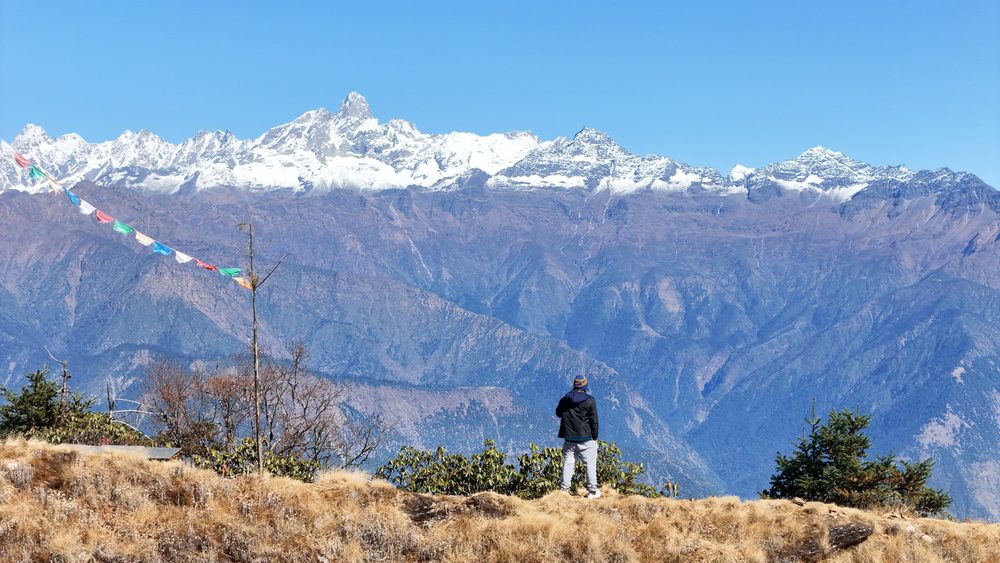
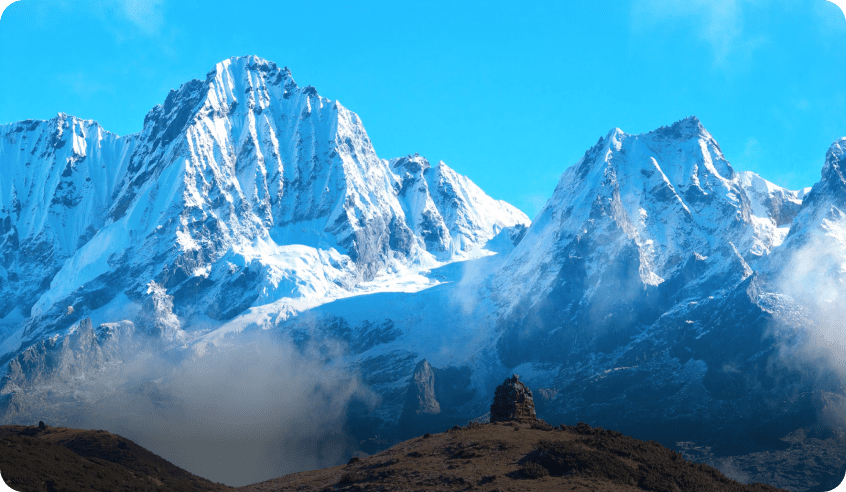
- Breathtaking views of the Langtang Himalayan range
- Rich cultural experience with Tamang and Sherpa communities
- Walk through Langtang National Park with chances to see wildlife
- Stunning sunrise and sunset views over the Himalayas
- Visit other lakes like Bhairav Kunda and Saraswati Kunda nearby
- Explore traditional teahouse villages like Chandanbari (Sing Gompa)
- Opportunity to see yaks, rhododendron forests, and local monasteries
Itinerary
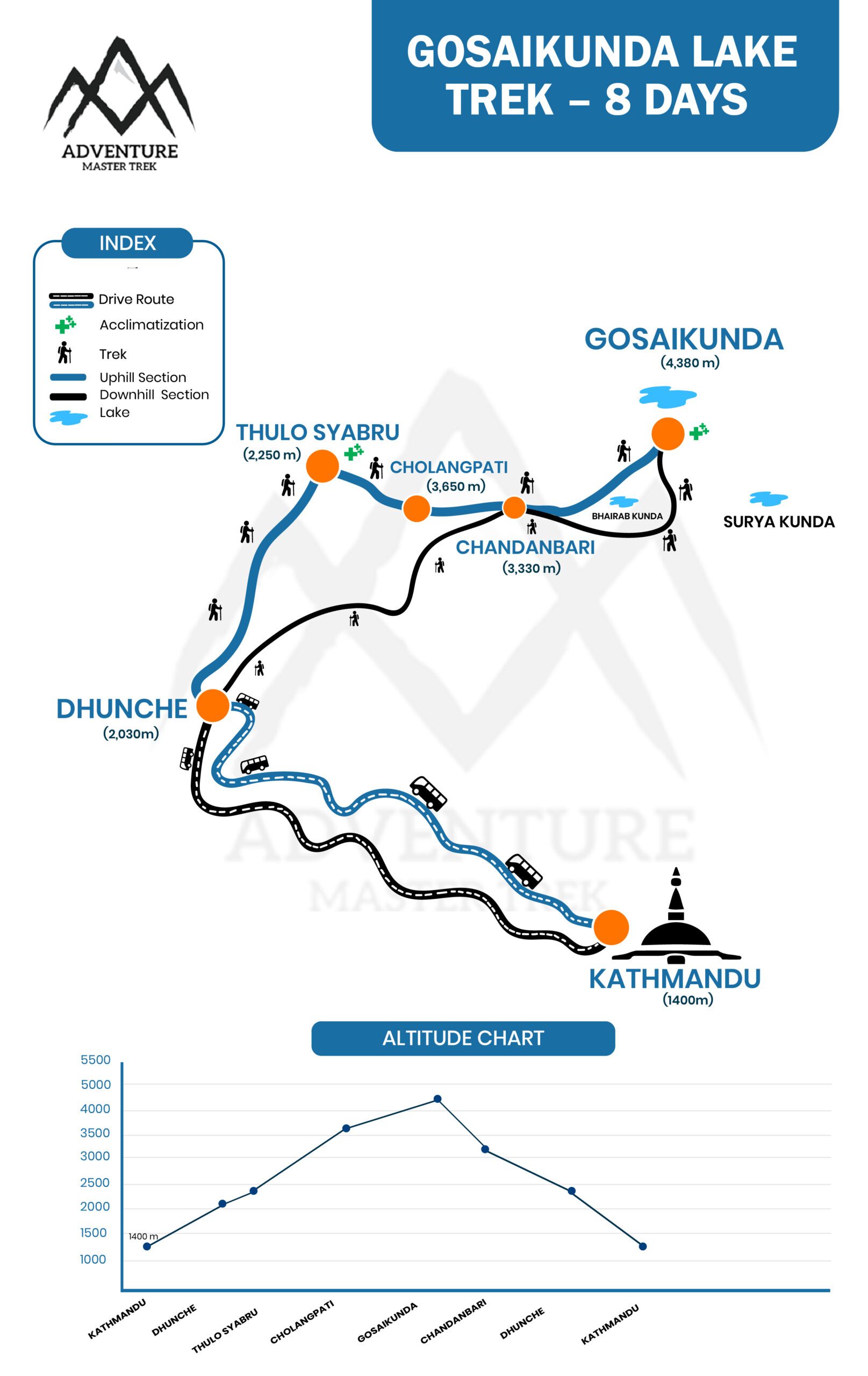
Drive from Kathmandu to Dhunche (2,030 m)
After an early breakfast, you will begin the long but scenic drive from Kathmandu to Dhunche. The journey takes around 6 to 8 hours, depending on road conditions and traffic. The road winds through hills, small towns, and terraced farmland, following the Trishuli River.
After reaching Betrawati, the road becomes rough and bumpy, so be prepared for a bit of a rugged ride. Dhunche is the center of Rasuwa district and the starting point of your trek. You’ll spend the night at a local lodge in Dhunche.
Stay overnight in Dhunche.
Trek from Dhunche to Thulo Syabru (2,250 m)
Your day begins with a gradual climb out of Dhunche, heading through forests, terraced fields, and small settlements. The trail has a mix of uphill and downhill sections and offers views of the Langtang range on clear days. You’ll walk through peaceful pine and rhododendron forests, and may come across local villagers, donkeys, or even monkeys along the way. The trail is well-marked but can be a bit rocky in places.
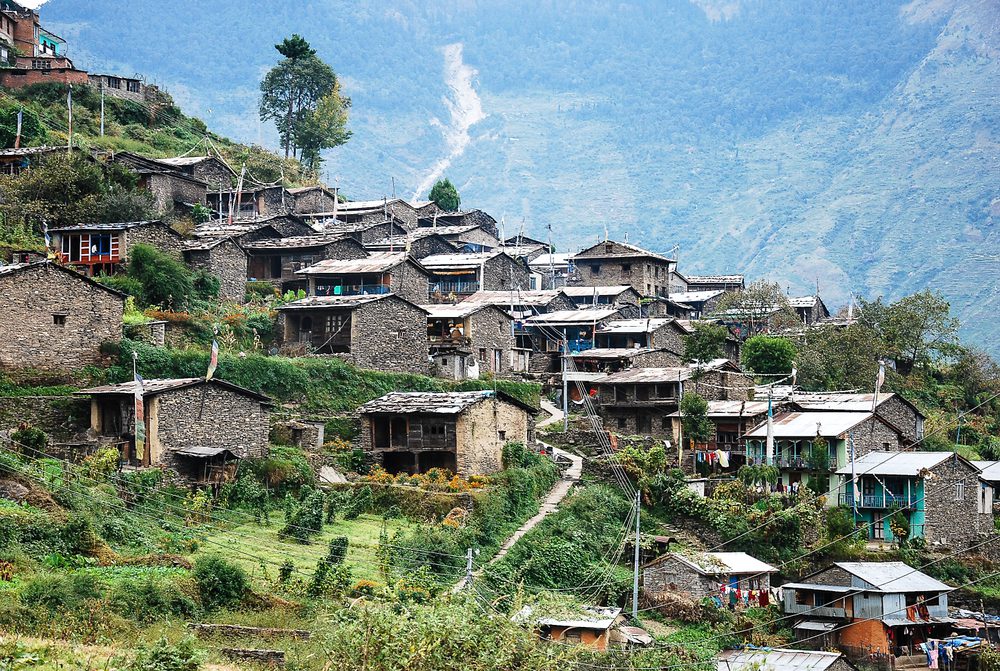
After about 5 to 6 hours of walking, you’ll reach Thulo Syabru, a charming Tamang village perched on a hillside. You’ll stay overnight at a local teahouse here.
Stay overnight in Thulo Syabru.
Trek from Thulo Syabru to Cholangpati (3,650 m)
Today’s trek is a steady uphill climb as you gain significant altitude. The trail winds through dense forests of pine, oak, and rhododendron, and as you climb higher, the air becomes cooler and the scenery more open. You’ll pass a few small tea shops and resting spots along the way. On a clear day, you’ll get great views of the Langtang Himal and Ganesh Himal ranges. The peaceful atmosphere and forest surroundings make this a quiet and beautiful section of the trek. After walking for 6 to 7 hours, you’ll reach Cholangpati, a small stop with only a few basic teahouses, located above the more popular Sing Gompa area.
Stay overnight in a simple teahouse at Cholangpati.
Trek from Cholangpati to Gosaikunda (4,380 m)
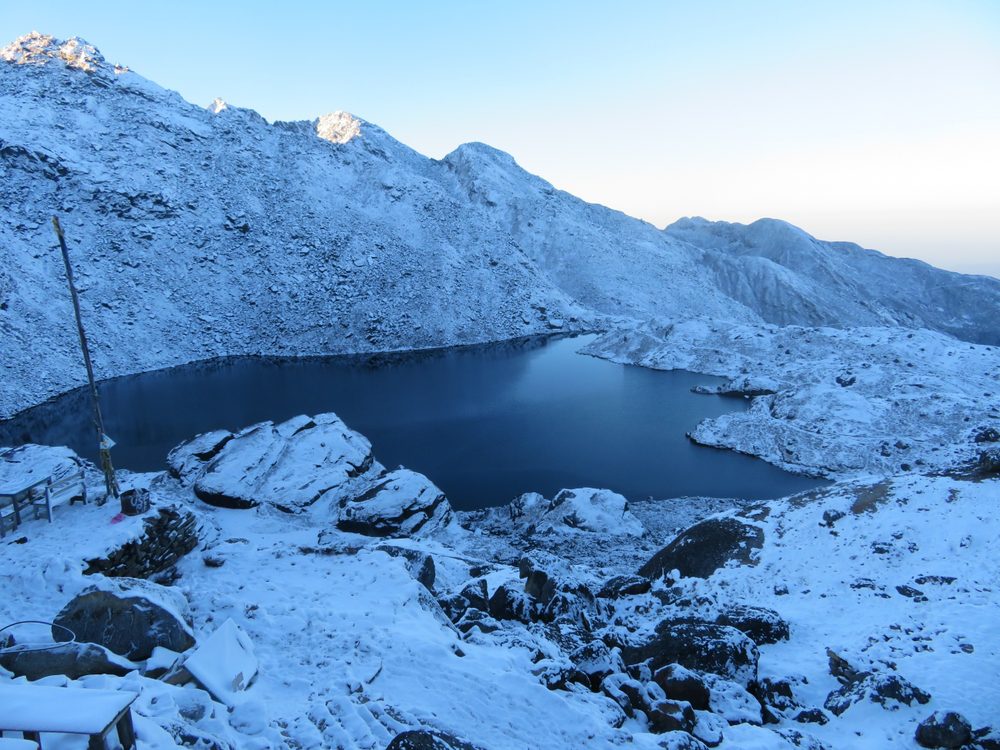
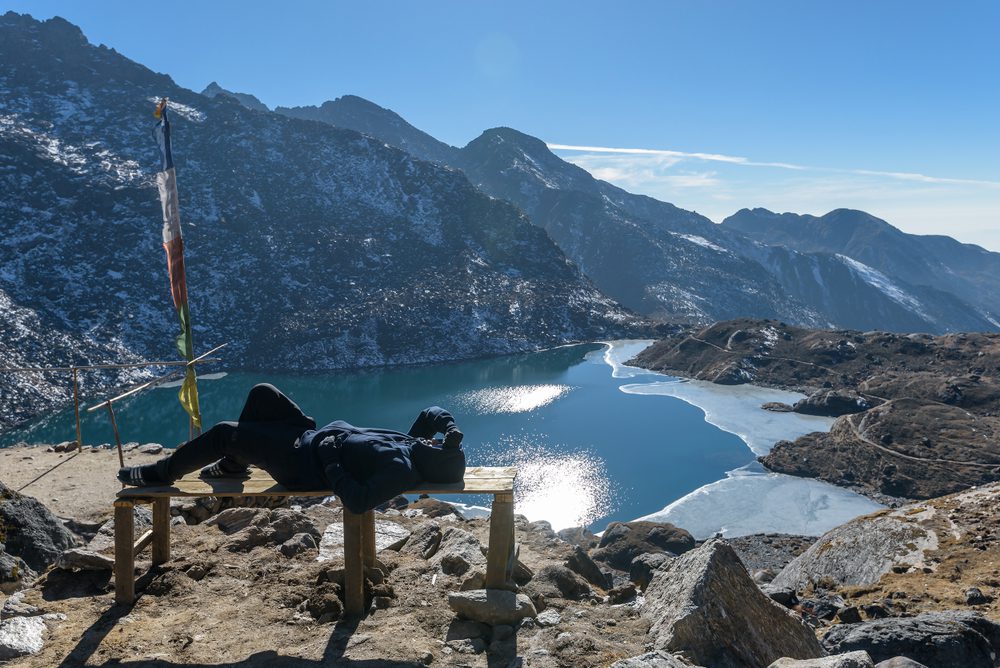
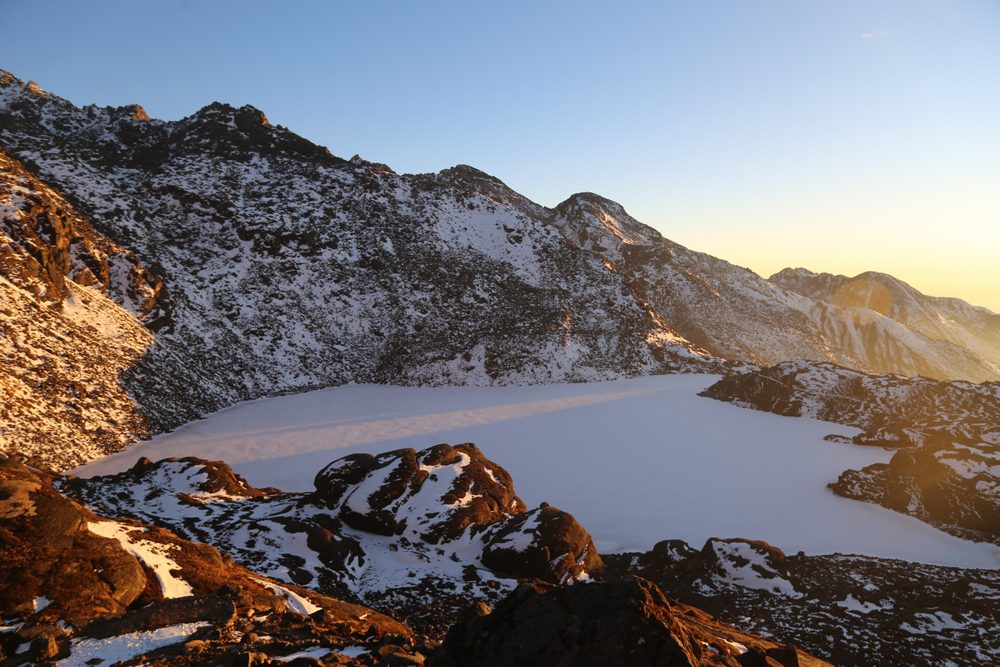
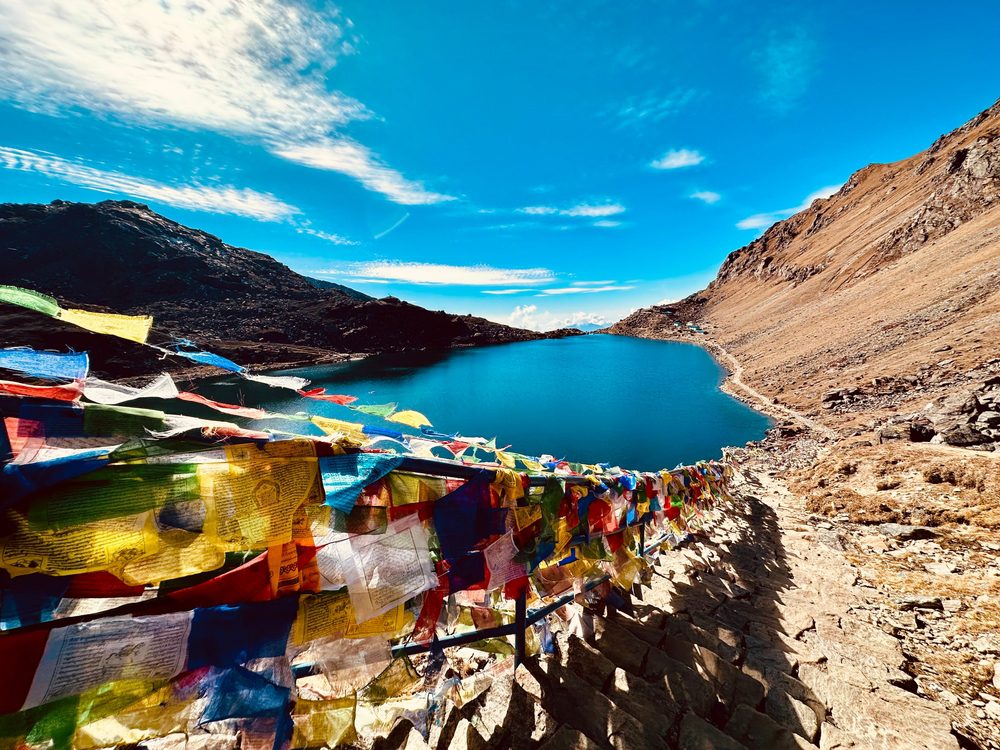
On this day of your trek to Gosaikunda,you will begin your trek from Cholangoati. The trekking trail climbs steadily and becomes steeper in some sections, so it’s important to take it slow and stay hydrated. Along the way, you’ll pass sacred high-altitude lakes like Saraswati Kunda and then Bhairab Kunda before reaching the main Gosaikunda Lake, a holy site for both Hindus and Buddhists.
On clear days, the surrounding snow-capped peaks reflect beautifully on the water. After 5 to 6 hours of trekking, you’ll arrive at Gosaikunda, where a few teahouses sit near the lake.
Stay overnight at a teahouse in Gosaikunda.
Trek from Gosaikunda to Chandanbari (Sing Gompa – 3,330 m)
Today you’ll start descending from Gosaikunda, following the same trail back down through open mountain landscapes. If the weather is clear, you’ll enjoy beautiful views of the surrounding peaks as you go. Chandanbari, also known as Sing Gompa, is a good place to rest because it’s warmer than higher up and has better facilities. You can also visit the local cheese factory nearby to see how traditional yak cheese is made. You’ll spend the night at a teahouse after this long journey.
Stay overnight in Chandanbari.
Trek from Chandanbari to Dhunche (2,030 m)
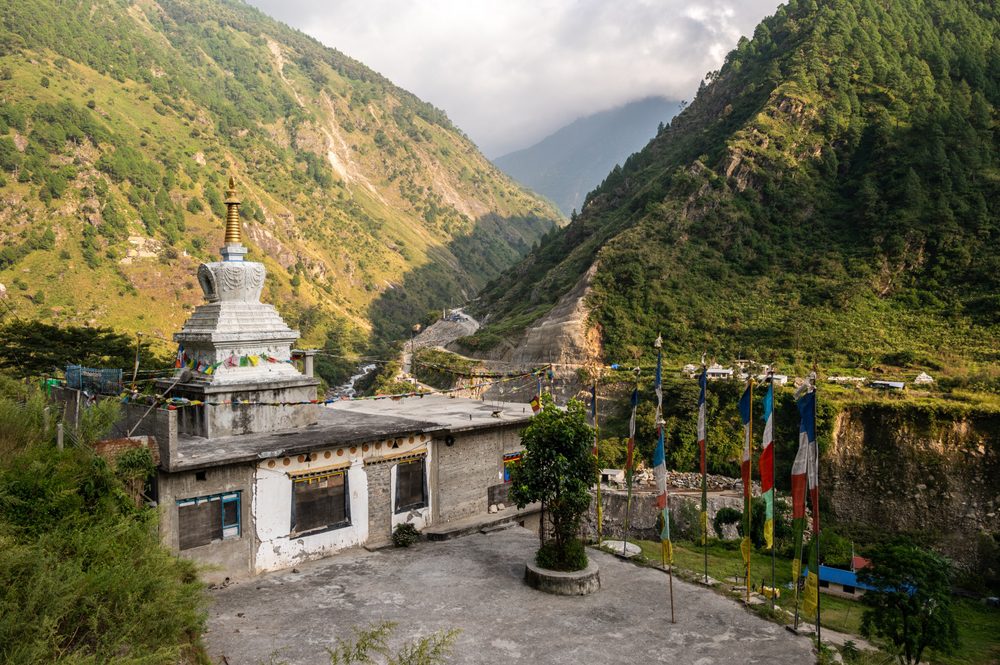
The walk on today’s trek is mostly downhill, making it a bit easier on your legs. You’ll pass through tall pine forests and peaceful villages where local people live simple, traditional lives. The trail is well-marked and quiet, giving you a chance to enjoy the fresh mountain air and beautiful scenery. If you have some extra time and energy, you can take a short side trip to visit the old monastery at Deurali, which is a calm and lovely place to explore.
After about 5 to 6 hours of walking, you will arrive in Dhunche. Here, you’ll relax and spend the night in a comfortable lodge, preparing for your trip back to Kathmandu tomorrow.
Stay overnight in Dhunche.
Drive back from Dhunche to Kathmandu
Your Gosaikunda trek ends here and you will leave Dhunche and travel back to Kathmandu by jeep or bus. The trip usually takes about 6 to 8 hours, depending on the road and traffic. Along the way, you’ll see beautiful mountains, rivers, and small villages. When you arrive in Kathmandu in the late afternoon or evening, you can rest at your hotel after the long journey. If you like, you can also go out for a nice dinner to celebrate finishing your trek. This is a great time to relax, share stories, and enjoy some good food before your trip ends.
Customize this trip with help from our local travel specialist that matches your Interests.
Customize This TripInclusions
- Airport pick-up and drop-off service in a private vehicle.
- 4 nights hotel stay in Kathmandu (twin-sharing, tourist-standard).
- All meals during the trek – breakfast, lunch, and dinner included daily.
- Teahouse accommodation on all trekking days.
- A licensed English-speaking local trekking guide.
- One porter for every two trekkers (to carry your main luggage).
- TIMS card (Trekkers’ Information Management System).
- Langtang National Park Entry Permit.
- First Aid kit carried by the guide.
- Guide and porter’s meals, accommodation, insurance, and salary.
- All government taxes and official service charges.
- Nepal entry visa fee.
- International flights to and from Nepal.
- Meals in Kathmandu (before and after the trek).
- Travel and health insurance (must cover emergency rescue).
- Private jeep (if requested instead of public transport).
- Personal porter (if not included in your package).
- Laundry, phone calls, and Wi-Fi during the trek.
- Battery charging and hot showers (extra cost in teahouses).
- Personal trekking clothes and gear.
- Drinks like bottled water, tea, coffee, soft drinks, and alcohol.
- Tips for guide and porter (optional but appreciated).
- Entry fees or donations at temples and monasteries.
- Costs from delays, bad weather, illness, or emergencies.
- Extra snacks or meals not included in the package.
- Any other personal expenses not mentioned in the package.
Maps
Navigate Your Journey
Good to Know
Accommodation for the Gosaikunda Tour
The accommodation on trek to Gosaikunda Lake is simple but comfortable. Most trekkers stay in teahouses or guesthouses along the trail. These are small, family-run lodges that offer basic rooms with twin beds, blankets, and shared bathrooms. In lower villages, you may find rooms with attached bathrooms, but as you go higher, the facilities become more basic. The rooms are usually clean, and some places offer hot showers for an extra cost. Most teahouses also have a common dining area where trekkers gather to eat, relax, and warm up around the fire.
The food is freshly prepared and often includes Nepali dishes like dal bhat, as well as simple Western meals like pasta or pancakes. While luxury is limited, the hospitality of the local people and the cozy atmosphere make the experience warm and welcoming. It’s a good idea to carry a sleeping bag for extra warmth, especially at higher altitudes.
Drinking Water during the Gosaikunda Tour
For drinking water, it’s important to stay hydrated, especially at higher altitudes. Bottled water is available in most places, but it can get more expensive as you go higher. A better option is to refill your bottle with boiled or filtered water at the teahouses, which is usually safer and more eco-friendly. You can also bring your own water purification tablets or filter bottle to clean tap or stream water along the way. This helps reduce plastic waste and keeps your trek more sustainable.
Electricity and Internet Service in Gosaikunda
Electricity and Internet Service during the Gosaikunda Tour are available, but limited as you go higher. In most villages along the trail, electricity is provided by solar or small hydro power, which is enough to charge phones, cameras, or small devices. However, you usually have to pay a small fee (about NPR 200–400 or USD 2–4) to charge each device, and charging is done in the dining or common area, not in your private room. It’s a good idea to bring a power bank to keep your devices charged during the trek.
Internet service is also available in many teahouses, but the Wi-Fi is often slow or unreliable, especially at higher altitudes. Some lodges may charge a small fee for Wi-Fi use. Mobile network coverage is available in some parts of the trail, especially with a Nepal Telecom (NTC) SIM card, which tends to have better signal in the mountains than other providers. However, the signal can be weak or disappear completely in remote or high areas. For better communication, carry a NTC SIM with data or be ready to stay offline for a few days as you enjoy the natural beauty.
Difficulty
The difficulty of the Gosaikunda trek is moderate, making it suitable for most people with a reasonable level of fitness. You’ll walk about 5 to 6 hours a day on uneven trails that include some steep uphill and downhill sections, especially as you approach the lake area. The highest point is around 4,380 meters (14,370 feet), so there is a chance of experiencing mild altitude sickness, such as headaches, dizziness, or tiredness. The trek does not require any technical climbing skills, but it does need good stamina and a steady pace.
It’s helpful to do some regular walking or light exercise before the trek to build your endurance. Taking time to rest and stay hydrated during the trek will also make it easier. With proper preparation and a positive attitude, most healthy trekkers can enjoy this rewarding journey through beautiful landscapes and cultural sites.
Altitude Sickness duing Trek to Gosaikunda
Altitude sickness can affect some trekkers on the Gosaikunda Trekking because the highest point reaches about 4,380 meters (14,370 feet). Symptoms may include headaches, dizziness, nausea, shortness of breath, and fatigue. These signs usually appear when you ascend too quickly without giving your body enough time to adjust.
To prevent altitude sickness, it’s important to climb slowly, stay well-hydrated, and rest properly. Taking breaks and avoiding alcohol or heavy meals can also help. If symptoms become severe, it’s best to descend to a lower altitude and seek medical attention if needed. Most trekkers who pace themselves and listen to their bodies complete the trek without serious problems.
Group Size for trekking Gosaikunda
Group Size for the Gosaikunda Trek can vary depending on your preference. Many trekkers choose to go in small groups of 2 to 6 people, which makes it easier to move at a comfortable pace and enjoy a more personal experience. Small groups also help with better flexibility in the itinerary and more interaction with guides and locals.
Larger groups of 8 to 12 people are also common, especially for organized tours, offering a social atmosphere and shared costs. However, bigger groups might move slower and have less freedom to adjust plans. Whether you trek alone, with friends, or in a guided group, the choice depends on what kind of experience you want.
Travel Insurance for trekking Gosaikunda
Travel Insurance is highly recommended for the Gosaikunda Trek. It helps protect you from unexpected events like illness, injury, or trip cancellations. Since the trek reaches high altitudes, having insurance that covers altitude sickness treatment, emergency evacuation, and medical expenses is especially important.
Make sure your insurance policy covers trekking activities up to at least 4,500 meters and includes helicopter rescue if needed. It’s a good idea to carry a copy of your insurance details with you during the trek. Having travel insurance gives you peace of mind, so you can focus on enjoying your adventure safely.
Money Exchange during the Gosaikunda Trek in Nepal
Money Exchange for the Gosaikunda Tour is easiest to do before you start your trek. You can exchange your currency for Nepalese Rupees (NPR) in Kathmandu or Pokhara, where rates are better and more reliable. Along the trekking route, there are few places to exchange money, and rates may be less favorable.
Most teahouses and shops accept cash only, so it’s important to carry enough NPR with you for food, accommodation, and other expenses. ATMs are available in Kathmandu and Pokhara but not on the trail. It’s best to plan your budget carefully and bring enough cash to avoid any inconvenience during the trek.
Permits Required for the the Gosaikunda Tour
To hike in the Gosaikunda area, you must acquire these permits:
TIMS Card (Trekker’s Information Management System)
Every trekker in Nepal is required to have this permit. It allows officials to monitor trekkers for safety and record keeping. The TIMS card includes your personal info, the planned trekking route, and emergency contacts.
Langtang National Park Entry Permit
Because Gosaikunda is situated within Langtang National Park, this entry permit is needed. It supports the preservation of the park’s wildlife, its natural scenery, and cultural assets.
Required Document
- Valid Passport with at least 6 months validity
- Nepal Visa (can be obtained on arrival at the airport or online before arrival)
- Trekking Permit (TIMS card – Trekkers’ Information Management System)
- Langtang National Park Permit (required for Gosaikunda trek area)
- Travel Insurance with trekking and evacuation coverage
- Copies of all important documents (passport, visa, permits, insurance)
- Emergency contact information
Trekking Equipment for the Gosaikunda Tour
Here’s a handy list of essential trekking equipment for the Gosaikunda Trek. Being well-prepared with the right gear will make your trek safer, more comfortable, and more enjoyable whether you’re facing chilly mornings, changing weather, or rugged trails. Below is a breakdown of what to pack for different parts of your body and needs during the Gosaikunda trek:
General
- Backpack (30–40 liters)
- Daypack (small bag for daily use)
- Trekking poles
- Water bottle or hydration system
- Headlamp or flashlight (with extra batteries)
- Sunglasses (UV protection)
- Sunblock and lip balm
- Trekking map or guidebook
- Passport, permits, and insurance copies
Upper Body
- Lightweight trekking shirts (quick-dry)
- Warm fleece or insulated jacket
- Waterproof and windproof jacket
- Hat or cap (for sun protection)
- Gloves (warm and lightweight)
Lower Body
- Trekking pants (light and breathable)
- Thermal leggings or long underwear
- Waterproof pants (for rain or snow)
- Comfortable trekking socks (wool or synthetic)
- Sturdy trekking boots (broken-in and waterproof)
Torso
- Thermal base layers (top and bottom)
- Warm sweater or down jacket (for cold nights)
- Buff or scarf (for dust and cold)
Medication and First Aid
- Personal medication
- Basic first aid kit (bandages, antiseptic, painkillers)
- Altitude sickness medicine (optional, consult doctor)
- Blister treatment
- Water purification tablets or filter
Essential
- Sleeping bag (rated for cold temperatures)
- Toiletries (toothbrush, toothpaste, wet wipes)
- Towel (lightweight and quick-dry)
- Plastic bags or dry sacks (to keep clothes dry)
- Snacks (energy bars, nuts, chocolates)
Optional
- Camera and extra batteries
- Power bank
- Book or journal
- Travel pillow
- Cash in small bills
Extra
- Lightweight camp shoes or sandals
- Sewing kit
- Safety whistle
- Insect repellent
Booking Policy for the Langtang Gosaikunda Tour
Booking and Confirmation
To book your Gosaikunda Tour, you usually need to provide your details and pay a deposit (often 20–30% of the total cost). Your booking is confirmed once the deposit is received. The remaining balance is typically paid before the trek starts or on arrival.
Payment Methods
Most tour operators accept payments by bank transfer, credit card, or cash. Make sure to check with your provider which options are available and if there are any extra fees.
Changes and Transfers
If you need to change your trek dates or transfer your booking to another person, inform the operator as soon as possible. Some changes may involve extra fees or depend on availability.
Travel Insurance
Travel Insurance is essential for the Langtang Gosaikunda Tour. It protects you against illness, injury, or emergencies during your trek. Make sure your insurance covers high-altitude trekking (up to 4,500 meters) and includes emergency evacuation like helicopter rescue. Having travel insurance gives you peace of mind so you can enjoy your adventure safely.
Last-Minute Booking
Last Minute Booking is possible but may be hard during busy seasons. Permits and rooms can fill up fast, and prices might be higher. It’s best to book a few weeks in advance to avoid problems.
Cancellation Policy for the Langtang Gosaikunda Trek
1.Client’s Cancellation
- Cancel more than 30 days before the trek start date, and you will receive 80% of your deposit back.
- Cancel between 15 and 30 days before the trek, and 50% of the deposit will be refunded.
- Cancel less than 15 days before the trek, and the deposit cannot be refunded.
2. Cancellation from Organizer
In rare situations like dangerous weather, safety concerns, or government restrictions, we may need to cancel the trek. In this case, you will get a full refund of all payments, or you can choose to reschedule your trek for another time.
3. Leaving the Trek Early
If you have to leave the trek early due to illness or personal reasons, refunds for any unused parts of the tour are usually not given.
4. Travel Insurance Is Important
We strongly suggest buying travel insurance that covers trip cancellations, medical emergencies, and evacuation. This protects you financially if something unexpected happens.
5. Events Beyond Our Control
We cannot be held responsible for cancellations caused by natural disasters, political issues, pandemics, or other events beyond our control.
FAQs
2. What is the best time to do the Gosaikunda tour?
The best time to trek Gosaikunda is during spring (March to May) and autumn (September to November) when the weather is clear, temperatures are comfortable, and the trails are dry.
3. How difficult is the tour?
The Gosaikunda tour is moderately difficult, which means it is suitable for people who are fairly active. You will face some steep uphill and downhill sections and need to be prepared for walking several hours a day.
4. What is the highest point on the trek?
The highest point is Gosaikunda Lake itself, which sits at around 4,380 meters (14,370 feet). This altitude means some people may feel mild effects of altitude sickness.
5. Do I need a special permit for the Gosaikunda trek?
Yes, you need two permits: the TIMS card (Trekkers’ Information Management System) and the Langtang National Park permit. These are required for your safety and park conservation.
6. Is it possible to do the trek without a guide?
Yes, it is possible to trek alone, but hiring a guide is highly recommended. Guides help with navigation, local culture, language, and can assist in emergencies.
7. What kind of accommodation is available?
Along the trail, you’ll stay in basic teahouses or guesthouses that offer simple rooms, usually with shared bathrooms and basic heating.
8. What food can I expect on the trek?
Most teahouses serve Nepali dishes like dal bhat (rice and lentils), noodles, soups, and simple snacks. Food is basic but filling, with vegetarian options available.
9. Is drinking water safe on the trail?
Tap water is not safe to drink directly. It is best to drink boiled or filtered water or use purification tablets to avoid stomach illness.
10. Can I charge my phone or camera during the trek?
Electricity is available in most teahouses but limited and usually costs extra. Bringing a power bank is a good idea to keep your devices charged.
11. Is there mobile phone coverage?
Mobile coverage is available in some villages, mainly from Nepal Telecom (NTC). However, signals can be weak or disappear in remote areas.
12. What clothes should I pack?
You should pack warm layers like fleece and down jackets, waterproof jackets, comfortable trekking boots, gloves, hats, and sunglasses for sun protection.
13. How can I prevent altitude sickness?
You can prevent altitude sickness by reducing risk, walking slowly, drinking plenty of water, resting when needed, and avoiding alcohol. Some trekkers use medicines like Diamox but always consult your doctor first.
14. Is travel insurance necessary?
Yes, having travel insurance that covers high-altitude trekking, medical emergencies, and evacuation is very important for your safety.
15. Can I book the trek last minute?
Last-minute bookings are sometimes possible but can be difficult during busy seasons. It is best for you to book at least a few weeks ahead to secure permits and accommodation.


View Our Similar Packages
Discover our top tours, loved by thousands of travelers annually. Choose the adventure that inspires you and embark on a journey tailored to your desires.
Save 36%

 8 Days
 Nepal
Nepal
Add Review
Reviewing for Gosaikunda Lake Trek – 8 DaysRequest a Callback - Gosaikunda Lake Trek – 8 Days
Submit the form and we will be back to you shortly
Request a Callback - Gosaikunda Lake Trek – 8 Days
Submit the form and we will be back to you shortly
Narayanhiti Palace Museum

Narayanhiti Palace Museum


