











Khopra Danda Trek – 8 Days


Quick Trip Facts


Khopra Danda Trek Overview
The Khopra Danda Trek is an amazing 8-day trek in Nepal’s Annapurna region for those who wish to explore less-traveled areas and enjoy breathtaking views of the Himalayas alongside diverse cultures and the region’s natural beauty.
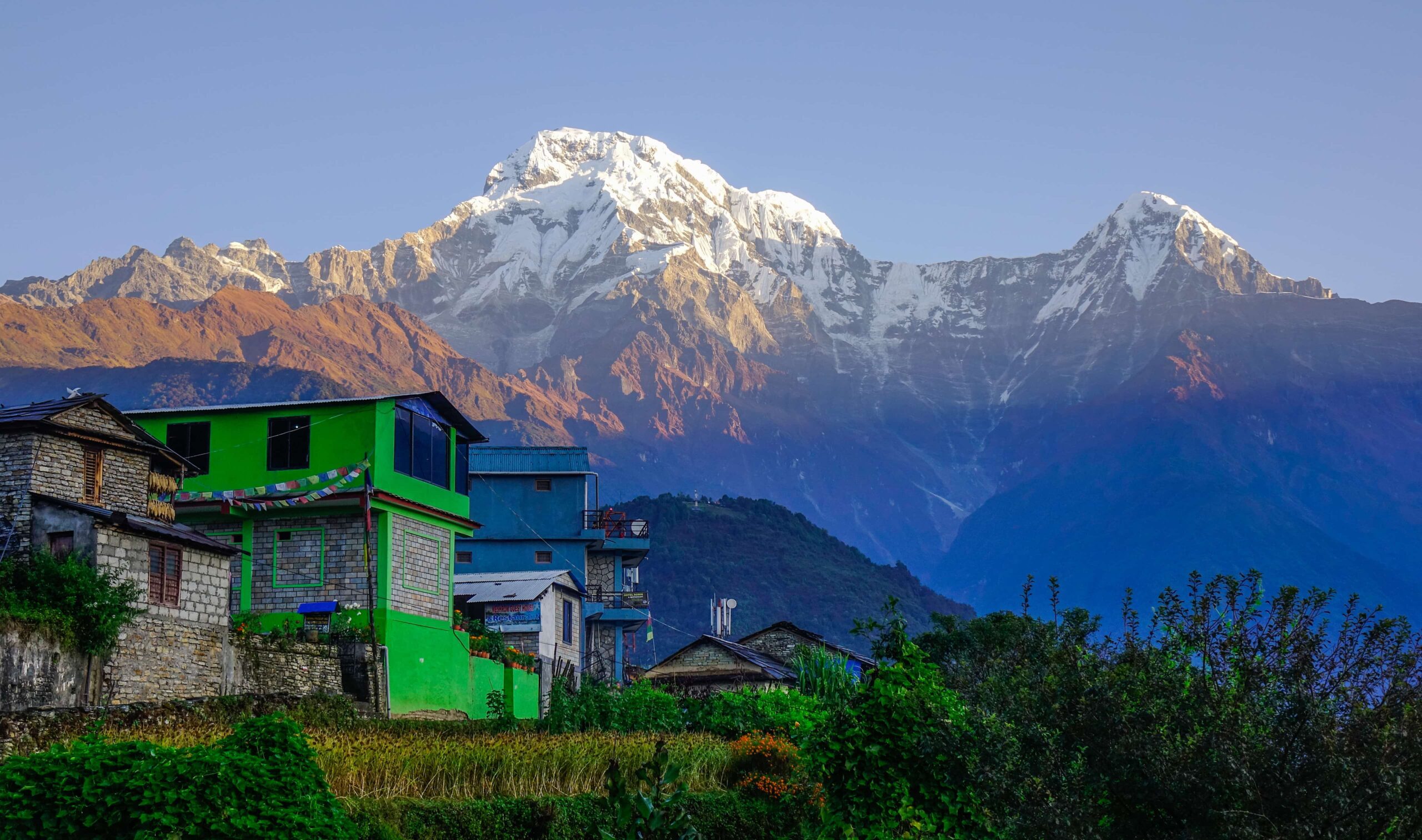
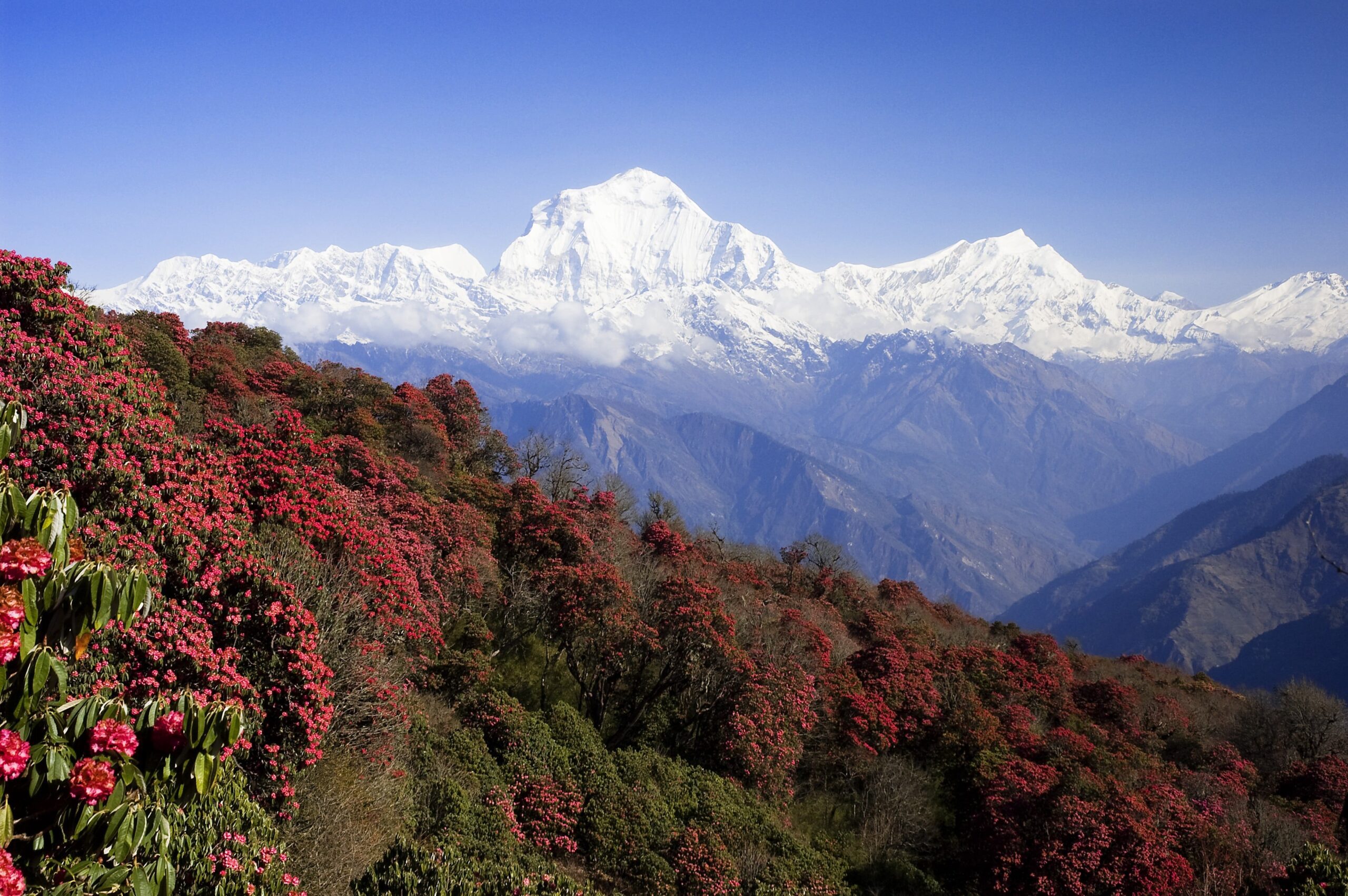
The trek starts from Nayapul after a scenic drive from Pokhara. It goes through beautiful villages such as Ghandruk, Tadapani, Bayeli Kharka and Swanta. You will enjoy staying in tea houses, eating traditional Nepali meals, and soaking in the Gurung and Magar cultures. The path leads you through green hills, open ridges, and forests, all accompanied by stunning views of Machhapuchhre (Fishtail) and Dhaulagiri mountains.
The main highlight is, however, Khopra Danda with its exceptional sunrise and sunset views of the Himalayas. For those looking for more adventure, you can trek to Khayer Lake (4500m), which is a strenuous but deeply fulfilling climb. The trek ends in Tatopani, where, after returning to Pokhara, one can enjoy the natural hot springs.
Let me conclude by saying that the Khopra Danda Trek is ideal for trekkers who have moderate fitness levels. If you wish to have the amazing experience of the breathtaking beauty of Nepal and its treasures of native culture, this one is definitely a great choice. The Himalaya hold great wonders that are little known and this trek will give you a little of that. It is full of adventure, peace, and that which touches the soul.
Trip Highlights
- Stunning sunrise and mountain views from Khopra Ridge (3,660 m)
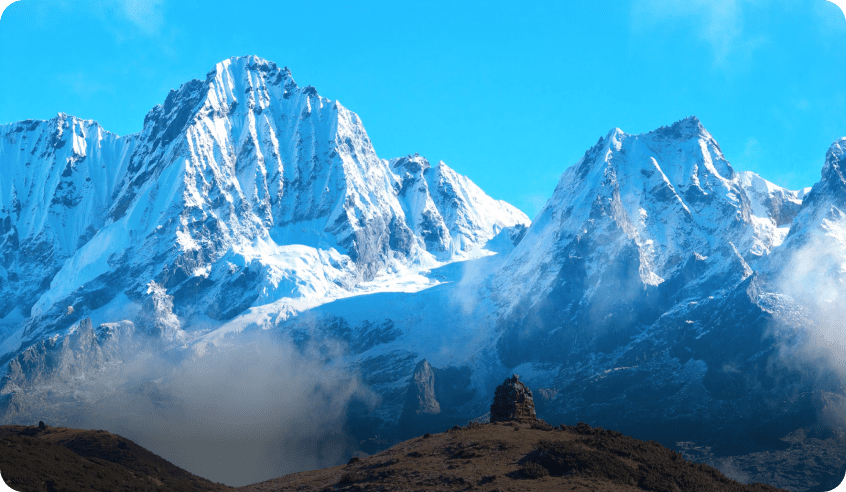
- Enjoy Panoramic views of Annapurna South, Dhaulagiri, Nilgiri, Hiunchuli, and more
- Off-the-beaten-path trek with fewer crowds than popular routes
- Visit the remote and sacred Khayar Lake (optional day hike from Khopra)
- Walk through beautiful rhododendron forests and alpine meadows
- Cultural experience in Gurung and Magar villages
- Relax in natural hot springs at Tatopani after the trek
- Perfect for nature photography and birdwatching.
Itinerary
Trek from Ghandruk to Tadapani (2,630m) – 4-5 hours
You will wake up on this morning of the trek after a solid night’s rest, and begin your trek with a small climb through thick jungles of rhododendrons and oaks. The walk is short but beautiful and you’ll be refreshed by the sounds of birds and the clean mountain air. More breathtaking vistas of Annapurna South, Hiunchuli, and Machhapuchhre may be seen peaking through the trees as you ascend higher.
You can see colorful Himalayan birds and langurs (mountain monkeys) along the route. After 4 to 5 hours of hiking, you will reach Tadapani, which is a tiny settlement situated on a hill and encircled by forest. Particularly at sunrise and sunset, the views are simply stunning. In order to prepare for the upcoming trip, you will spend the night in a cozy teahouse.
Stay overnight in Tadapani.
Trek from Tadapani to Bayeli Kharka (3,420m) – 6-7 hours
You will leave the main trail for today’s walk and enter a more tranquil and serene area of the Annapurna range. You will climb through stunning rhododendron and pine forests after leaving Tadapani, with rare clearings providing breathtaking views of the nearby hills and far-off peaks. The forest becomes less dense and the terrain becomes more open as you ascend, giving you a more alpine sense.
Because this section of the trail is less popular, you may take in the peace and quiet of the mountains. After trekking steadily for six to seven hours, you will arrive at Bayeli Kharka, a beautiful open meadow with a communal lodge.
Stay overnight in Bayeli Kharka.
Trek from Bayeli Kharka to Khopra Danda (3,660m) – 4-5 hours
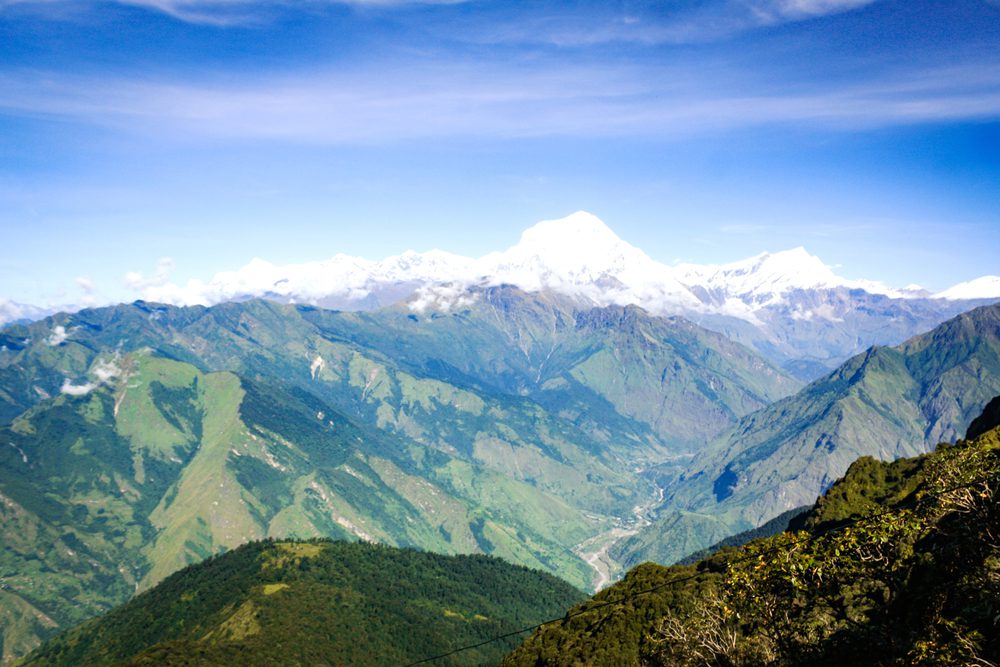
Today is one of the most exciting days of the trek as you make your way to Khopra Danda, a breathtaking ridge with panoramic views of the Himalayas. The trail gradually climbs through open alpine landscapes, offering clear views of Annapurna South, Dhaulagiri, Nilgiri, and many other snow-covered peaks. The air is cooler and fresher as you walk above the tree line, surrounded by peaceful nature and wide mountain skies.
After about 4 to 5 hours of walking, you’ll arrive at Khopra Danda, where the scenery will leave you speechless. On a clear day, you can even see deep into the Kali Gandaki Gorge, the world’s deepest gorge. The community lodge here is simple but cozy, and the sunrise and sunset views from the ridge are truly unforgettable. It’s a perfect place to relax, take photos, and soak in the beauty of the Himalayas.
Stay overnight in Khopra Danda.
Hike to Khayar Lake (4,660m) & Return to Khopra Danda – 8-9 hours (Optional but recommended)
Today, you have the option to go on a long and exciting hike to Khayar Lake, a beautiful and holy lake high in the mountains. The walk is about 8 to 9 hours round trip, so it’s a big day, but the views are amazing. As you climb higher, you’ll see tall snow-covered peaks, rocky trails, and peaceful landscapes all around you. Khayar Lake is special for locals and is a quiet, peaceful place surrounded by nature.
After spending some time at the lake, you’ll walk back to Khopra Danda for the night. If the hike feels too long, you can stay at the lodge and enjoy a relaxing day with incredible mountain views. Whether you hike or rest, this day will be a special part of your trekking journey.
Stay overnight in Khopra Danda.
Trek from Khopra Danda to Swanta Village (2,200m) – 5-6 hours
After enjoying the sunrise views at Khopra Danda, you will begin your descent toward the peaceful Swanta Village. The trail heads downhill through alpine meadows, forests, and small streams, offering a refreshing change in scenery. As you go lower, the temperature gets warmer, and the surroundings become greener. Along the way, you might see yaks grazing or hear birds singing in the forest.
After about 5 to 6 hours of walking, you’ll reach Swanta, a quiet and friendly Magar village known for its traditional houses and beautiful terraced fields. It’s a great place to experience local village life and enjoy a relaxing evening in a cozy teahouse with warm hospitality and a delicious home-cooked meal.
Stay overnight in Swanta Village.
Trek from Swanta to Ghorepani (2,860m) – 5-6 hours
Today’s trek takes you from the peaceful charm of Swanta Village to the popular mountain stop of Ghorepani. The trail begins with a gentle walk through lush forests, small streams, and terraced fields. You’ll pass through quiet countryside and may spot locals working in the fields or herding animals along the way. After crossing a suspension bridge and continuing through the forest, the path begins to climb steadily toward Ghorepani.
After about 5 to 6 hours of trekking, you’ll reach Ghorepani, a lively village nestled in the hills and surrounded by rhododendron forests. From here, you can enjoy amazing views of the Annapurna and Dhaulagiri ranges, especially during sunset. It’s also the gateway to Poon Hill, which you’ll hike to the next morning. You’ll spend the night in a comfortable teahouse, preparing for an early start and a magical sunrise hike.
Stay overnight in Ghorepani.
Sunrise at Poon Hill (3,210m) & Trek to Ulleri (2,070m), Drive to Pokhara – 5-6 hours
Your final day begins early with a short but rewarding hike to Poon Hill (3,210m), which one of the best sunrise viewpoints in Nepal. As the sun rises over the Annapurna and Dhaulagiri ranges, the snow-covered peaks glow with golden light, creating a truly unforgettable scene. After enjoying the views and taking photos, you’ll return to Ghorepani for breakfast.
From there, you will start your descent to Ulleri, passing through rhododendron forests and stone steps, with mountain views all around. The walk takes about 3 to 4 hours, and once you reach Ulleri, a vehicle will be waiting to drive you back to Pokhara (about 2 hours). You’ll arrive in Pokhara by afternoon, where you can relax and celebrate the end of a beautiful Himalayan adventure.
Customize this trip with help from our local travel specialist that matches your Interests.
Customize This TripInclusions
- Two-night hotel in Pokhara B/B
- Pokhara to Nayapul by taxi
- Three nights (with a private attached Bathroom available place - standard
- Meals including breakfast/lunch/ dinner during the trek
- An experienced, government-licensed, English-speaking guide, with food, salary, and all insurance included.
- Water purification tablets for safe drinking water are provided (each three litres)
- ACAP (Annapurna Conservation Area permit)
- All government, local taxes, and official expenses
- Assistance in arranging rescue operations in case of health emergencies (funded by travel insurance)
- Certificate of appreciation after the successful trip
- Seasonal Fruit provided
- First aid kit box
- Ghandruk to Pokhara by bus
- International flight airfare
- On-arrival visa fees at Tribhuvan International Airport- (15 days - $25-30, 30 days- $40-50, and 90 days- $100-110)
- All accommodations and meals in Kathmandu, before and after the journey
- Personal expenses (shopping, snacks, big pot hot (tea, coffee) and cold drinks, hot shower, alcohol, Wi-Fi, telephone call, battery recharge fee), extra porters, etc.
- Personal clothing and gear
- Travel insurance that has to cover emergency high-altitude rescue and evacuation is compulsory.
- Tips for the guide
- Additional costs due to delays beyond our control. For example, landslides, weather conditions, itinerary modifications due to safety concerns, illness, change of government policies, strikes, etc.
- All the costs and expenses that are not listed in
- One porter for two people max, 25kg, it will cost you $140USD
Maps
Navigate Your Journey
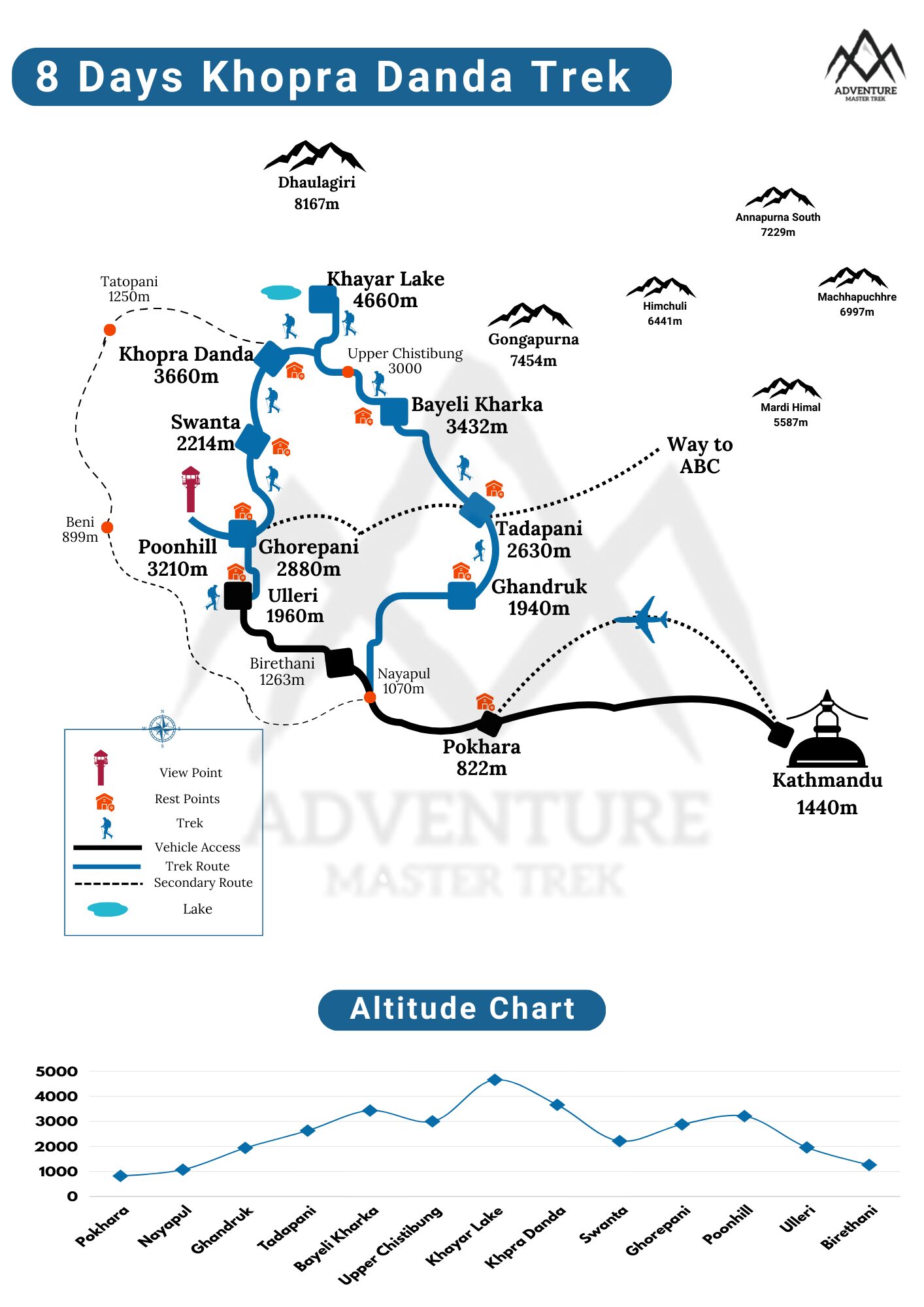
Good to Know
Accommodation in Khopra Danda Trek
On the Khopra Danda Trek, accommodation is straightforward, cozy, and filled with regional character. Local families and villagers will host you in teahouses and shared cabins. Despite their lack of luxury, these locations provide every convenience you require following an exhausting day of hiking. A cozy bed, important meals, and a kind smile are all features of the teahouses. Most of the rooms include common bathrooms, twin beds, and cozy blankets. Particularly in the lower settlements, some lodges even offer hot showers and charging stations (for a little cost).
The opportunity to stay in community-run lodges, such as Khopra Ridge, where your stay directly supports the local economy and helps fund village development, health care, and education, is what makes this trek unique. The facilities get more basic as you ascend, but the vistas become more breathtaking, particularly from the dining hall or your window.It’s a serene and remarkable experience. Despite being simple, the lodging on this walk is comfortable, clean, and closely ties to the local way of life and culture.
Food and Drinking Water Facility
Food and water are basic, fresh, and ideal for sustaining your energy levels on trek to the Khopra Danda. You will have dinner available in teahouses and lodges along the route. Although the food is basic and simple, it is very filling and enjoyable. The most popular and filling dish is Dal Bhat (rice, lentil soup, vegetables, and pickles), served hot and with unlimited refills. You’ll also find noodles, pasta, fried rice, soups, pancakes, eggs, and tea/coffee and plenty of options to keep your energy up.
It’s best to have a reusable water bottle with you for drinking. Most resorts offer safe drinking water that has been boiled or filtered (typically for a modest fee). Along the route, you can purify tap or stream water by bringing a portable filter or water purification tablets. Avoid buying plastic bottles to help keep the trail clean and support eco-friendly trekking. The food and water on the Khopra Danda Trek are simple, nutritious, and just what you need for a healthy and enjoyable journey in the mountains.
Electricity and Internet Service Availability
Electricity and internet service on the Khopra Danda Trek are available, but limited, especially as you go higher. In most villages along the trail, you’ll find solar or limited hydro power, which is usually enough to charge your phone, camera, or power bank (sometimes for a small fee). It’s a good idea to carry a portable charger just in case.
Internet service is available in some teahouses, mostly in the lower areas like Ghandruk and Tadapani, where you may find Wi-Fi (often paid). However, as you go higher, especially near Khopra Ridge, the connection becomes slow or unavailable, which is actually a great chance to unplug and enjoy the peace of the mountains. In some places, but not in others, a local SIM card with data (such as NTC or Ncell) may be useful for emergencies or simple contact. Thus, even if you have restricted access to energy and the internet, it is better to appreciate the surrounding natural beauty and be ready for a limited connection.
Group Size for Trekking to Khopra Danda
The Khopra Danda Trek is perfect for trekking in small groups of 2 to 8 people with a companion, or on your own. Smaller parties find it easier to book rooms in teahouses along the journey and have a more flexible, personalized experience. For your own safety and to support the local economy, it is recommended that you hire a local guide or porter if you are trekking alone.
For larger groups, reservations should be made in advance, especially around Khopra Ridge, where space is limited. Regardless of size, this walk provides a peaceful, scenic experience for anybody hoping to visit the Annapurna region.
Difficulty during the Trek to Khopra Danda
The Khopra Danda Trek is described as moderately difficult. Most hikers with a respectable level of fitness may complete it. The walking pace is generally gradual with lots of opportunities to rest and take in the sights, however, there are some gradual ascents along the track, particularly as you get closer to Khopra Ridge.
You will walk through forests, villages, and open ridges for four to six hours per day on largely designated pathways. It is not as difficult as some of the higher Himalayan hikes, but you should expect thinner air due to the higher altitude (up to 3,660 meters). With proper planning and procedures, the Khopra Danda Trek is a fulfilling journey that provides breathtaking vistas without being very difficult.
Altitude Sickness during the Khopra Danda Trek
Since the Khopra Danda Trek’s highest point is only 3,660 meters (12,000 feet), which is easy in comparison to other Himalayan climbs, altitude sickness is typically not a major issue. It is crucial to take your time, walk carefully, and drink enough water. If you have headaches, lightheadedness, or nausea, pay attention to your body because these symptoms may indicate minor altitude sickness.
Your body can adapt if you take your time, and you shouldn’t rush the ascent. Many lodges are close enough to allow for a speedy descent in an emergency. You may enjoy this lovely trip in safety and comfort if you pace yourself appropriately and pay attention.
Safety and Security in Khopra Danda Trek
In general, hikers can feel comfortable and secure while trekking the Khopra Danda. The locals are pleasant and welcoming, always willing to provide a hand when required, and the path is marked. Teahouses provide cozy places to sleep every night, while neighboring communities have basic medical amenities.
To prevent accidents, it is crucial to stay on the main trail, follow the guidance of your guide, if you have one. In the mountains, the weather can change rapidly, so always have the appropriate equipment on hand. Trekking may be a safe, peaceful, and memorable experience if you exercise caution and respect for the environment and local customs.
Travel Insurance for Khopra Danda Trek
A wise and crucial move to safeguard oneself during the Khopra Danda Trek is to purchase travel insurance. Trip cancellations, medical problems, accidents, and evacuations are all covered by good insurance. Having insurance that covers high-altitude trekking and helicopter rescue is strongly advised because you will be trekking in remote locations and at higher elevations.
You may rest easy knowing that there is immediate support available in case of an emergency. Verify that your coverage covers all of the activities you will engage in during the walk before you go. You may then concentrate on taking in the breathtaking scenery and incredible experience without worrying about anything.
Permits Required for Khopra Danda Trek
For the 8-day Khopra Danda Trek, a few important permits are needed to help protect the natural environment, support local communities, and keep trekkers safe. These permits help maintain the beautiful trails of the Annapurna region and ensure responsible tourism. Here’s what you’ll need:
- Annapurna Conservation Area Permit (ACAP): This permit is required to enter the Annapurna Conservation Area, which includes the Khopra Danda region. The fee helps with environmental protection, trail maintenance, and supporting conservation projects.
- TIMS (Trekkers’ Information Management System) Card: This card tracks trekkers for safety and emergency purposes. It is mandatory for all treks in the Annapurna region, including Khopra Danda, and helps improve local trekking infrastructure.
These two permits are essential for the Khopra Danda Trek. Unlike longer or more restricted treks, there are no special or additional permits required. Your trekking agency can usually help you arrange these permits before the trek or at the starting point.
Required Documents
- Valid passport
- Nepal visa (can be obtained on arrival or online)
- TIMS card (Trekkers’ Information Management System)
- Annapurna Conservation Area Permit (ACAP)
- Travel insurance with trekking and evacuation coverage
- Copies of important documents (passport, visa, insurance)
Khopra Danda Trek Trekking Equipment
A safe, comfortable, and pleasurable Khopra Danda Trek depends on having the appropriate trekking equipment. The route passes through high mountains, villages, and forests where the weather might change suddenly. You can better manage the changing temperatures, maintain your energy levels, and take in the breathtaking mountain vistas as you travel by packing the appropriate equipment. Here is some trekking equipment required for the 8-day trek of Khopra Danda:
General
- Passport & Photos: Carry your passport with a couple of photocopies and some passport-size photos for permits.
- Permits: Make sure to get your ACAP (Annapurna Conservation Area Permit) and TIMS card before starting the trek.
- Sleeping Bag: Nights can be chilly, especially at Khopra Ridge, so bring a sleeping bag that keeps you warm to about -5°C (23°F).
- Cash: Bring enough Nepali rupees, as there are no ATMs on the trail.
- Main Bag: Use a duffel or backpack for your main luggage, which can be carried by a porter if you hire one.
- Daypack: A small backpack for water, snacks, rain gear, and camera.
Upper Body
- Sunglasses: Choose ones with good UV protection to shield your eyes from strong sunlight.
- Sun Hat & Warm Hat: Bring a hat for sunny days and a warm hat for cold mornings and evenings.
- Neck Gaiter or Scarf: Helps protect your neck and face from sun, wind, or dust.
Torso
- Base Layers: Lightweight long-sleeve shirts for layering and sun protection.
- Warm Layer (Fleece or Jacket): For chilly mornings and nights.
- Light Jacket: A windbreaker or light insulated jacket is helpful if it gets cold.
- Comfortable Sweater or Hoodie: Good for relaxing in lodges.
- Rain Jacket: Essential as weather can change quickly.
Lower Body
- Trekking Pants: Comfortable, breathable pants for walking.
- Thermal Leggings: Useful for colder parts of the trek, especially early mornings.
- Shorts (Optional): For warmer lower areas.
- Comfort Clothes: Something soft to wear around the teahouses.
- Rain Pants: Useful if trekking during wet weather.
Hands
- Light Gloves: For cool mornings.
- Warm Gloves: Needed at higher elevations where it gets colder.
Footwear
- Trekking Boots: Waterproof and well-fitted boots are best.
- Socks: 2–3 pairs of wool or hiking socks to keep feet dry and warm.
- Sandals or Slippers: For relaxing your feet at lodges.
- Flip-flops: Handy for bathroom visits or quick use indoors.
Undergarments
- Quick-Dry Underwear: Keeps you dry and comfortable while hiking.
- Sports Bra (for women): Supportive and comfortable.
- Thermal Bottoms: For extra warmth during cold nights or mornings.
Medication & First Aid
- Altitude Sickness Medicine: Optional, but useful if you’re sensitive to altitude.
- Sunscreen & Lip Balm: High SPF to protect from the sun’s strong rays.
- Blister Plasters: Important to prevent or treat blisters.
- Pain Relievers: Like Paracetamol or Ibuprofen for headaches or pain.
- Cough Drops: The dry mountain air can irritate your throat.
- Antiseptic Cream: For cuts or scrapes.
Other Essentials
- Hand Sanitizer: For hygiene when water is limited.
- Water Bottle: Carry at least 2 liters; bring purification tablets or a filter.
- Toiletries: Toothbrush, toothpaste, biodegradable soap, toilet paper, and wet wipes.
- Headlamp or Flashlight: For early starts or power outages, with extra batteries.
- Quick-Dry Towel: Small and light for easy packing.
Optional Items
- Camera or Phone: Capture amazing views at Khopra Ridge and along the trail.
- Trekking Poles: Helpful for balance and easing pressure on knees.
- Snacks: Energy bars, nuts, or chocolate for extra fuel on the trail.
- Power Bank: Charging options may be limited in lodges.
- Dry Bags: Keep electronics and clothes dry if it rains.
- Notebook or Journal: To jot down your daily experiences.
- Earplugs & Eye Mask: Useful if you’re a light sleeper or sharing a room.
Cancellation Policy for Khopra Danda Trek
1. No-Cost Cancellation
Cancellations made 15 days or more before the trek start date are eligible for a full refund.
There will be no cancellation or processing fees applied during this period.
2. A Portion of the Refund
- If you cancel 7 to 14 days before the trek begins, 50% of the total trip cost will be refunded.
- No refund will be issued for cancellations made less than 7 days before the trek departure.
3. Last-Minute Changes Are Not Refundable
- No-shows, last-minute cancellations, or early exits from the trek due to personal reasons are non-refundable.
- However, we will try to assist with rescheduling your trek based on availability and associated costs.
Note:
In case of natural disruptions such as landslides, road blockages, or other unforeseen trail issues, we will discuss alternative trekking routes or rescheduling options.
Refunds will be issued for unutilized services only, if no alternative solution is possible.
FAQs
Your Questions, Answered
What are the best seasons to do the Khopra Danda trek?
The best seasons to do the Khopra Danda trek are spring (March to May) and autumn (September to November). These months offer clear skies, pleasant temperatures, and beautiful views. Early winter is also okay but colder, and the monsoon season (June-August) is generally not recommended.
How difficult is the trek?
The Khopra Danda trek is considered moderate in difficulty. It involves steady uphill and downhill walks but no technical climbing. You should be reasonably fit and prepared for some long walking days.
Do I need a special permit for the Khopra Danda trek?
Yes, you will need the Annapurna Conservation Area Permit (ACAP) and a Trekkers’ Information Management System (TIMS) card. These are usually arranged by your trekking company.
Is it possible to do the trek independently without a guide?
Yes, it is possible to do the trek independently without a guide. While some experienced trekkers do go solo, hiring a guide is highly recommended for safety, local knowledge, and supporting the local economy.
What kind of accommodation is available on the trail?
You will stay in simple teahouses and lodges along the route. The facilities are basic but comfortable, with warm meals and cozy beds.
Can I do the trek without any prior trekking experience?
Yes, if you have a reasonable level of fitness and enjoy walking for several hours a day, you can do this trek. Hiring a guide or porter can make it easier.
What should I pack for the trek?
You should pack layers of warm clothing, good hiking boots, rain gear, a hat, sunglasses, sunscreen, a water bottle, and basic toiletries. Don’t forget any personal medications and a good camera to capture the best views during the trek.
Is there mobile network or Wi-Fi along the trek?
Yes, there is a mobile network or Wifi along the trek, but it can be limited and patchy in remote areas. You can find Wi-Fi in villages in teahouses. It is best to be prepared for limited connectivity.
What about food and water?
You can buy meals in teahouses along the trail. You should always drink bottled or purified water to stay safe and avoid illness.
How do I get back after finishing the trek in Tatopani?
From Tatopani, you can take a jeep or local bus back to Pokhara, which takes about 4-5 hours.


View Our Similar Packages
Discover our top tours, loved by thousands of travelers annually. Choose the adventure that inspires you and embark on a journey tailored to your desires.

 Nepal
Nepal
 17 Days
Add Review
Reviewing for Khopra Danda Trek – 8 DaysRequest a Callback - Khopra Danda Trek – 8 Days
Submit the form and we will be back to you shortly
Request a Callback - Khopra Danda Trek – 8 Days
Submit the form and we will be back to you shortly
Narayanhiti Palace Museum

Narayanhiti Palace Museum


