







Muktinath Helicopter Tour from Pokhara/ Kathmandu


Quick Tour Facts


Muktinath Helicopter Tour Overview
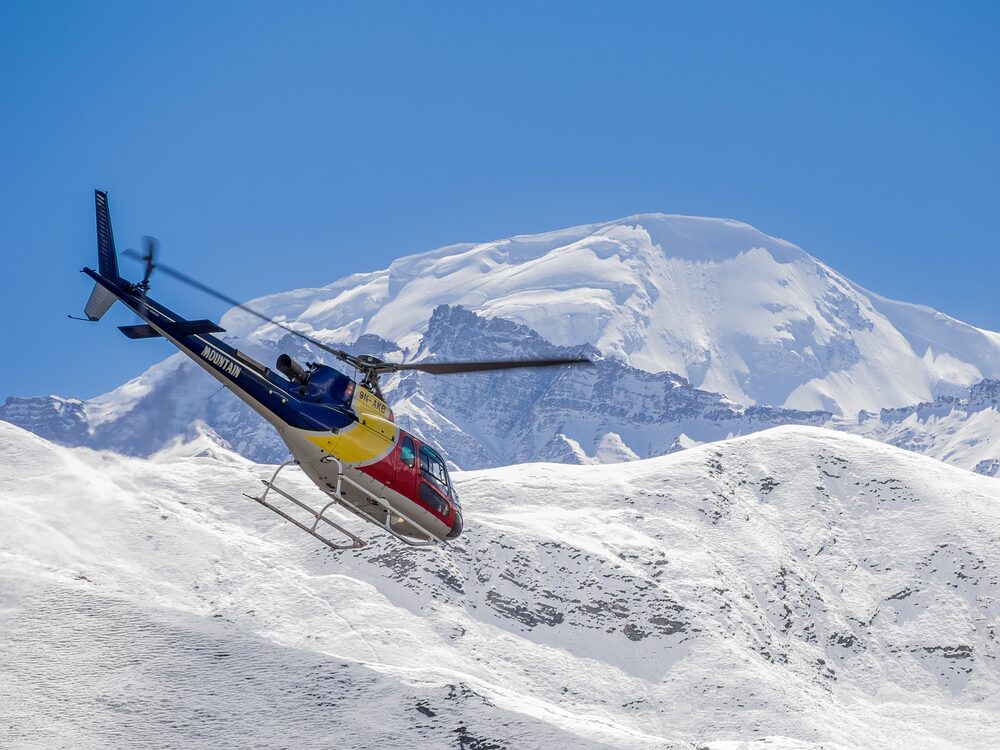
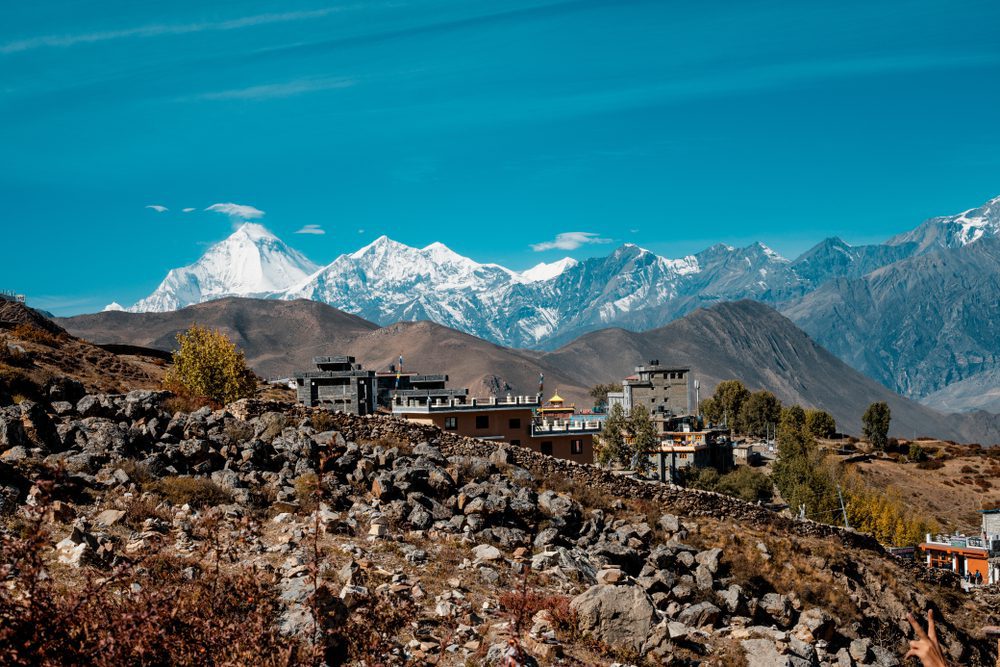
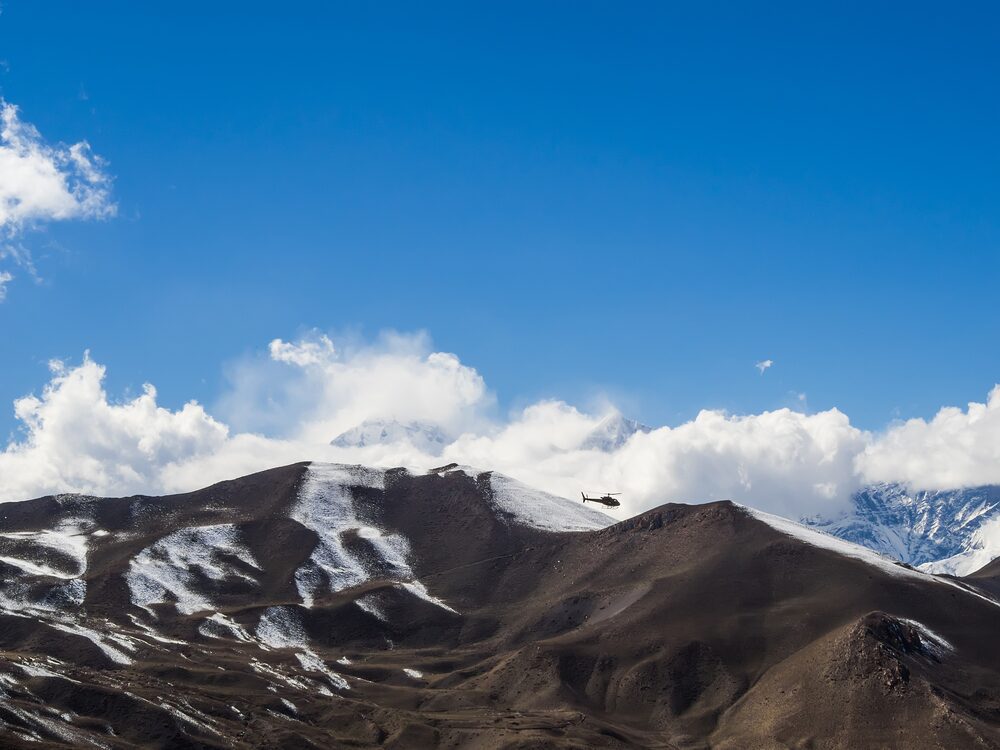
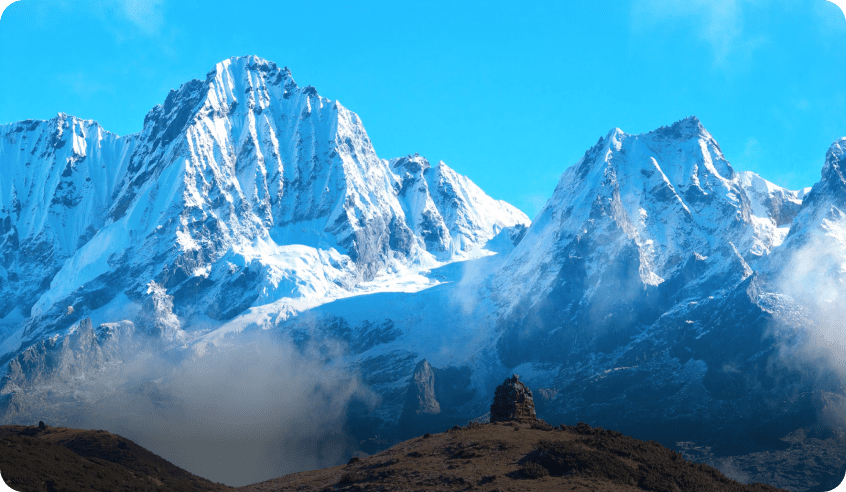
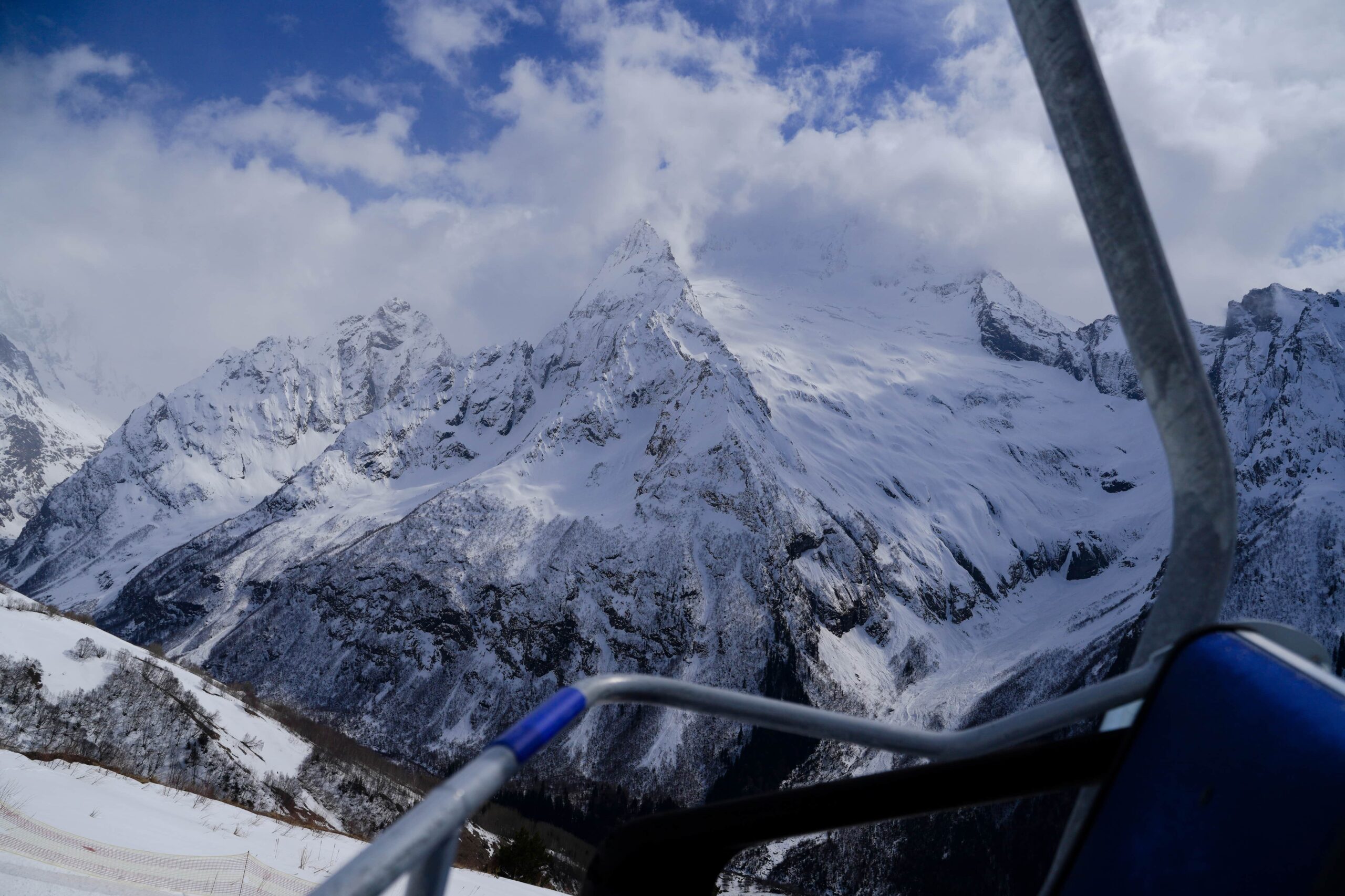
The Muktinath Helicopter Tour is the ideal quick escape to one of Nepal’s holiest pilgrimage spots, Muktinath Temple, which sits majestically at 3,800 meters in Mustang. Perfect for anyone who wants to trade a week of walking for a morning in the sky, this flight delivers the same spiritual and Himalayan wonders without the sweat. From the flight, the Annapurna and Dhaulagiri ranges unfold like living maps, cradling sapphire lakes and carved gorges that few visitors ever reach on foot.
After departing from either Pokhara or Kathmandu, you will be in Muktinath in about 2-3 hours. Then you fly home, knees never having left a comfortable seat. The tour is designed for maximum comfort, so you can travel without physical exertion, which is perfect for elderly visitors, families with kids, and pilgrims, or anyone who has a tight schedule. It changes a harder trek into a relaxing spiritual experience in the sky safe and without bumps. The flight is pleasant and peaceful as it goes over holy territory.
The helicopter flight goes over remote villages, rivers, and deep gorges while showing you how people live among the Himalayas. If you are someone who wants a small and quick spiritual journey without long treks and physical exertion, this one is perfect for you. Travelers can click wonderful photographs that really show unique perspectives of the panoramic aerial views of snow-capped peaks and hidden valleys few travelers have seen.
Travelers will have the opportunity to have spiritual moments at Muktinath well before lunch while experiencing the beauty of the Himalayas mixed with culture and adventure, all in a laid-back short trip. If they want, they can go for the optional short walks or horse rides near the temple to enhance the experience without exhausting energy. The entire flight showcases the culture and lifestyle of Himalayan villages, which makes it a very rare chance to see the kingdom of the gods from the sky. If you don’t have a lot of time, are physically unable to hike a long distance, or are on a tight schedule, you can still enjoy the beauty of Mustang and the spirituality of Muktinath.
To put it simply, the Muktinath Helicopter Tour is secure, effective, and spiritually rich. It is the safest and most amazing air tour to explore monasteries, stupas, and ancient trails. You float over the kingdom of the gods, walk in the hush of the holy, and land again, all before lunch. For those who want Himalayan grandeur, cultural depth, and skyward adventure, all wrapped in plush cabin light, this flight is the answer.
Tour Highlights
- Scenic helicopter ride over the Himalayas
- Visit the sacred Muktinath Temple (3,800 m)
- Experience spiritual peace in a holy pilgrimage site
- Breathtaking views of Annapurna and Dhaulagiri ranges
- Fly over deep valleys, rivers, and mountain villages
- See Himalayan vultures, snowcocks and other alpine species
- Watch mountain streams and small waterfalls from the air.
- See sacred high altitude lakes like Dhumba Lake.
- Glimpse the Lo Manthang walled city from above.
- Visit Kagbeni Village, which is a gateway to Upper Mustang.
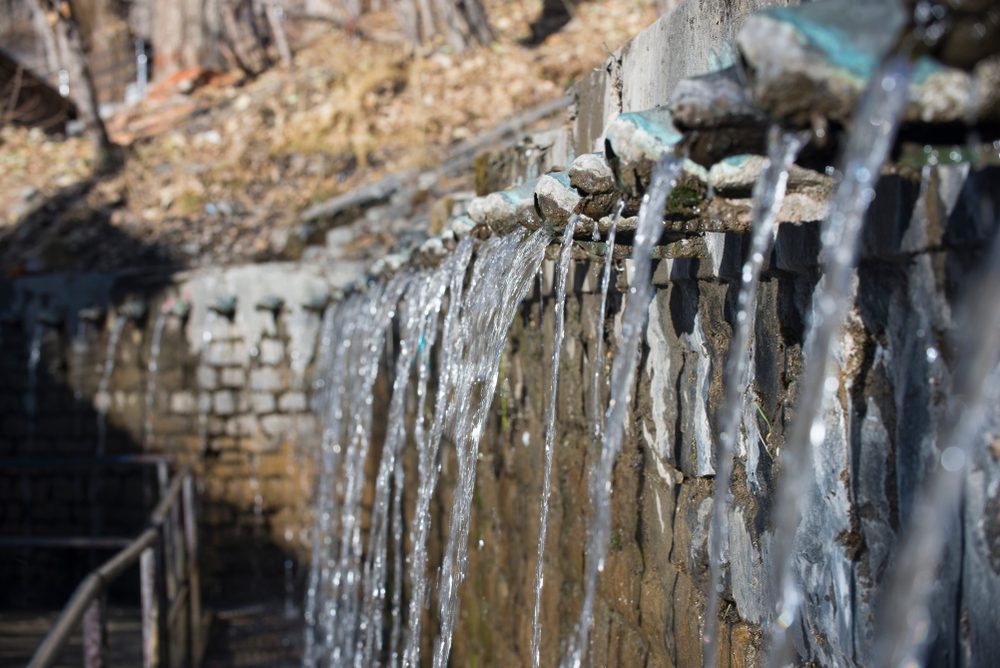
- Get to see 108 water spouts and eternal flame at Muktinath
- Explore the traditional and cultural Tibetan-style villages and monasteries.
- Go for short walk or an optional horse ride from landing point to the temple
- Stunning aerial views of Mustang, Kali Gandaki Gorge, and snow-capped peak
Itinerary
Muktinath Helicopter Tour Pokhara
Starting at 7:00 AM, you will be picked up comfortably from your accommodation and taken to the airport to start your Muktinath Helicopter Tour from Pokhara. You can travel to the admired Muktinath Temple at 7:25 AM by taking a beautiful helicopter ride that will take you far above the stunning Annapurna region and provide you with breathtaking views. You’ll reach the temple by 8:10 AM, where you’ll have time to look around, say prayers, and take in the serene spiritual environment in breathtaking mountain views. In just a few short hours, you will finish up a magnificent and significant tour by flying back to Pokhara at roughly 9:30 AM after taking in this once-in-a-lifetime event.
Short Review
07:00 — Hotel Pickup and Transfer to Pokhara Airport
Your Muktinath Helicopter Tour begins with a punctual and comfortable hotel pickup at 7:00 AM, where our representative will be waiting in the lobby to escort you to a private vehicle for a smooth and relaxed transfer to Pokhara Airport. The drive to the airport takes approximately 15–20 minutes depending on your hotel location, and upon arrival your guide will assist with all check-in formalities, safety briefings, weight checks, and boarding preparations to ensure a seamless and stress-free departure. It is recommended to have a light breakfast before pickup as the early morning departure is timed specifically to take advantage of the clearest skies and most stable flying conditions of the day before afternoon winds and cloud cover build up over the Mustang highlands.
07:25 — Helicopter Departure from Pokhara
At 7:25 AM the helicopter lifts off from Pokhara Airport and immediately begins climbing above the stunning Pokhara valley, offering passengers an immediate and breathtaking bird’s-eye view of Phewa Lake shimmering in the early morning light far below with the full Annapurna range rising dramatically on the northern horizon. The helicopter heads north over the deeply forested Annapurna foothills, crossing above terraced hillsides, cascading waterfalls, and remote mountain villages before entering the dramatic upper Kali Gandaki corridor, the world’s deepest gorge flanked on both sides by the towering 8,000m giants of Annapurna and Dhaulagiri. The relatively short 45-minute flight from Pokhara means the scenery transitions rapidly and dramatically from lush subtropical greenery to the stark, wind-sculpted arid desert landscape of the Mustang plateau, a geographical transformation that is one of the most visually striking aspects of the entire tour and best appreciated from the air. Sitting on the right side of the helicopter is strongly recommended for the clearest and most unobstructed views of the Annapurna massif and the Nilgiri peaks as you head toward Muktinath.
08:10 — Arrival at Muktinath Temple (3,800m)
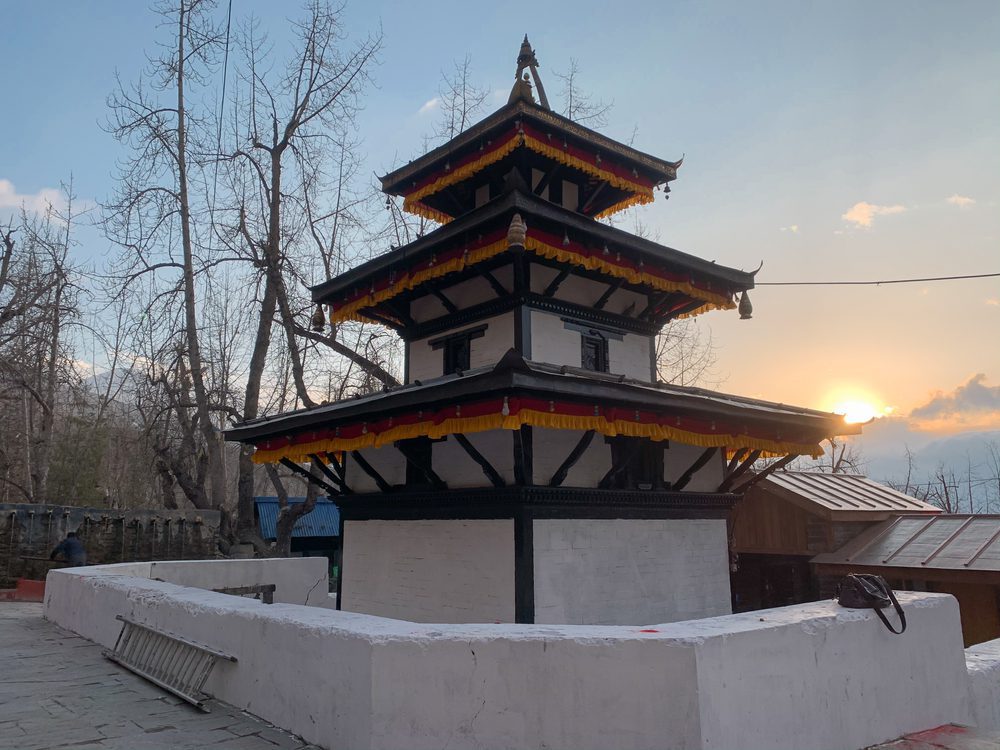
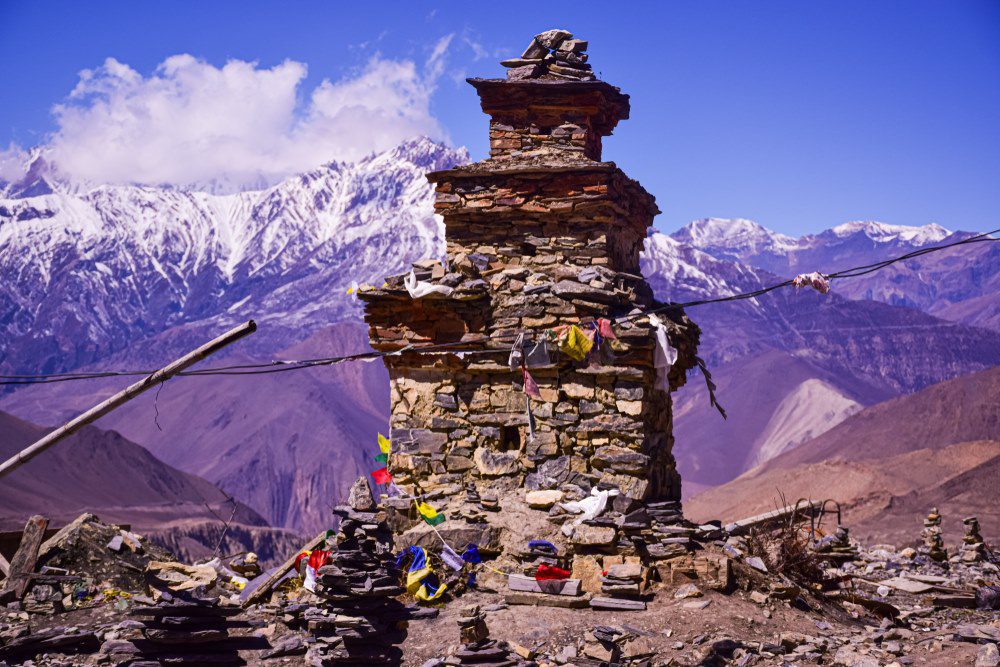
The helicopter touches down at the Muktinath helipad at approximately 8:10 AM, and stepping out onto the sacred grounds at 3,800m the first sensations are the crisp thin mountain air, the panoramic views of the Thorong La massif and Nilgiri rising all around, and the profound sense of peace and spiritual presence that pervades this ancient and revered pilgrimage site. Your guide escorts you from the helipad up to the main temple complex, a gentle 10-minute walk through sacred grounds lined with colorful prayer flags, ancient chortens, and intricately carved mani walls, passing devout pilgrims who have traveled for days or weeks on foot to reach the same destination you have arrived at in under an hour by air. The temple complex is home to the sacred 108 water spouts flowing continuously with ice-cold glacial water, the miraculous eternal flame burning where fire and water meet in a phenomenon revered as a divine miracle by both Hindu and Buddhist pilgrims, the main Vishnu temple richly decorated with ancient murals and offerings, and the Buddhist monastery of Jwala Mai where butter lamps burn day and night in quiet devotion. You will have up to 1 hour to explore the entire complex at your own pace, offer prayers, participate in ceremonies, collect sacred water from the spouts as a blessing for family and loved ones at home, and absorb the deeply moving spiritual and cultural atmosphere of one of the most sacred high-altitude pilgrimage destinations in the entire Himalayan world.
09:30 — Helicopter Departure from Muktinath
After a deeply fulfilling and memorable visit to the temple complex, your guide escorts you back down to the helipad at approximately 9:30 AM for the return flight to Pokhara. The morning sun is now fully risen and casting warm golden light across the snow-covered peaks and the vast Mustang plateau, creating an entirely different and equally breathtaking aerial perspective on the return journey as the one you experienced on the way out. The helicopter retraces the route south over the Kali Gandaki Gorge, past the towering faces of Dhaulagiri and Annapurna, and back over the green Annapurna foothills before descending gracefully into the Pokhara valley with the glittering surface of Phewa Lake and the city spread out below.
10:15 — Arrival Back in Pokhara
The helicopter touches down at Pokhara Airport at approximately 10:15 AM, bringing one of the most spiritually meaningful and scenically spectacular morning tours available anywhere in Nepal to a wonderfully satisfying close. A private vehicle will be waiting to transfer you back to your hotel, leaving you with the rest of the day completely free to enjoy Pokhara at your leisure, reflect on the extraordinary experience of the morning, and celebrate having visited one of the most sacred and remote pilgrimage destinations in the entire Himalayan region before most people have even finished breakfast.
Customize this trip with help from our local travel specialist that matches your Interests.
Customize This TripInclusions
- Airport transportation in accordance with the schedule (pickup and drop facility)
- Car Insurance
- Flying via helicopter to the shrine of Muktinath
- Service fee
- Entrance fees and required permits (only on private charter)
- Annapurna Conservation Area Project Permit (ACAP).
- Airport Taxes.
- Accommodations and Advice.
- Fees for Nepal entrance visas
- Costs brought on by strikes, elections, and other natural disasters.
- Individual Health Insurance
- Rescue and medical costs
- Food and additional hotel nights in Pokhara and Kathmandu
- Any type of beverage, including coffee, tea, hot water, etc.
Maps
Good to Know
Group Size & Flight Type for the Muktinath Helicopter Tour
Comfort and enjoyment during a helicopter tour mostly depend on the type and size of the group selected for the tour. Both of them influence seating, flexibility, privacy, and the ability to enjoy the spectacular Himalayan views to the fullest. Knowing the alternatives assists travelers to maximize their travel to Muktinath.
| Departure | Passengers | Approx. Cost (per person) | Notes |
| Kathmandu | 1 | $4,500 – 5,200 | Private flight, flexible schedule |
| Kathmandu | 2 | $2,250 – 2,600 | Shared or private pricing |
| Kathmandu | 3 | $1,500 – 1,700 | Shared per person cost |
| Kathmandu | 4–5 | $1,100 – 1,300 | Cheapest per person for group |
| Pokhara | 1 | $2,400 – 3,200 | Private flight, scenic route |
| Pokhara | 2 | $1,200 – 1,600 | Shared flight cost per person |
| Pokhara | 3 | $800 – 1,070 | Shared per person |
| Pokhara | 4–5 | $600 – 800 | Lowest cost per person |
Group Size for the Muktinath Helicopter tour
Helicopters involved in the tour normally carry 1-4-5 passengers per flight. Smaller groups guarantee the provision of more space, relaxed atmosphere and individualised service, which makes it suitable for the solo traveler, couple or small family or friends. The small environment enables the passengers to move freely, have a clear view, and be guided with keen attention from the crew, and this adds to the spiritual and scenic experiences in their traveling process.
Private vs Sharing Flights for the Muktinath Helicopter Tour
Muktinath tours are mostly recommended by private flights due to their flexibility, comfort, and convenience. Customers can book flights as they wish, have a personal space on the plane, and enjoy a more comfortable ride. On the other hand, compared to shared flights, flights with fewer availabilities are less flexible in departure times and are less predictable, especially during high pilgrimage seasons. The experience provided by private flights is smoother and more personalized, particularly for people who desire to enjoy both sightseeing and spiritual experience maximally.
Muktinath as an Elementary Place
Muktinath is regarded as one of the 5 sacred sites on planet earth, as it has both sacred water and sacred fire. The pilgrims’ rituals are performed at the 108 water spouts, which purify sins, and at the eternal flame (Agni Kund), which represents spiritual energy and liberation. In a helicopter, the tourist also has a unique aerial view of these natural and sacred features, which gives them a chance to realize the great spiritual importance of the location, and also enables them to see the entire Himalayan scenery in its full picture.
Deep Exploration Details of the Muktinath Helicopter Tour
The tour usually includes visits to areas near Jomsom and Kagbeni, where visitors can observe traditional Hindu practices and rituals. The passengers are provided with views of the Annapurna, Dhaulagiri, and Nilgiri ranges, which combine nature, culture, and spirituality. Through travelers visiting these locations by air (helicopter), they reach remote places that would be difficult to reach by road, and this is an effective and highly enriching experience that is filled with adventure, pilgrimage and sightseeing.
Popularity of Muktinath Darsan
Mukhinath is also a spiritual, cultural and natural wonder, which attracts pilgrims and travelers not only in Nepal but in other parts of the world. Its religious importance and Himalayan location, elevated by its high altitude, make it a unique destination of its own.
Religious Significance of the Muktinath Helicopter Tour
The temple is sacred to both Hindus and Buddhists due to its 108 water spouts and the eternal flame. Pilgrims are of the opinion that going to Muktinath cleanses sins, blesses people and provides moksha (liberation). The site has spiritual significance, attracting thousands of devotees annually, making Muktinath one of the most important pilgrimage sites in Nepal.
Unique Features of the Muktinath Helicopter Tour
Muktinath is one of those places that are a hybrid of Hindu and Buddhist cultures, as manifested in their rituals, temple design, and spiritual life. It is located at 3,710 meters above sea level and offers visitors spiritual enrichment and magnificent Himalayan views. Helicopter tours offer a full view of the temple complex and the surrounding mountainous terrain, a view that cannot be fully appreciated on the ground.
Pilgrimage Experience of the Muktinath Helicopter Tour
During a pilgrimage, worshipers take ritual baths at the 108 spouts and walk around the temple and the sacred places around it. This experience is amplified by the helicopter tour, which offers aerial views of the temple, sacred water features, and surrounding peaks, and is a blend of spirituality, culture, and the magnificent beauty of nature. It is what makes Muktinath Darsan a valuable experience for pilgrims and travellers who want to experience the Himalayas in a meaningful way.
Food during the Heli Tour to Muktinath
Since the Muktinath Helicopter Tour is usually a one-day trip, there’s no need for overnight accommodation. Most passengers return to Pokhara or Kathmandu on the same day, but if arrangements are made to spend some time around the Muktinath section or Jomsom, it is possible to find simple but comfortable tea houses and lodges that furnish small but comfortable rooms, hot blankets, and a very moderate price.
The food is the usual standard of dishes to be found in the best teahouses near temples and in the villages nearby. These are simple but warm and satisfactory in nature and are also most satisfactory and appetizing, particularly in the cold mountain air. Should you wonder if your time will be better spent in some other locality, the configuration of the Muktinath section is such that it is one of the best sections in the world for these heliotours, especially if you expect to take the will be best to have breakfast before taking the flight and to provide for some light lunch or warm drink in some place route. It is advisable to have breakfast before the return flight back to the city with Heliotour and to bring along a light lunch or warm drink for the journey.
Cost for the Muktinath Heli Tour
In 2025, the price of the Muktinath Helicopter tour varies with the departure point and the size of the group. From Pokhara a place in a group flight costs about USD 650 per person and a place in a private flight (at a total cost of about USD 3,200 for not more than 5 persons).
From Kathmandu, a shared flight ranges from USD 700 to 900 per person, and a private flight costs around USD 5,000 total (USD 1,100–1,250 per person for a full group). Sharing the helicopter lowers the cost, making group travel more affordable and popular.
Weight limit for the Muktinath Heli Tour
For reasons of safety, the Muktinath Helicopter tour has an allowable total weight limit of about 450 to 500 kilograms. This weight includes the total weight of all passengers, their baggage, and the fuel. This means the number of passengers on each flight can change depending on how much everyone weighs and the amount of gear they carry.
The tour operator carefully balances the weight of the helicopter before takeoff to make the flight safe and comfortable. If the group is overweight, a few of the seats will not be available, so at the time of booking reservations, it is necessary to advise the operator of each person’s weight, giving an accurate measure.
Things to know about Heli Tour to Muktinath Temple
Restrictions of Age: Generally manufacturers of the tours recommend an age limit of 5 years for persons. Older persons and small children should first see a physician before making reservations.
Health Conditions: Persons having any disease of the heart, lungs or any other vital organ should see a physician before taking a high-altitude flight.
Pregnancy: For safety and for the effect of altitude, pregnant women are not generally recommended to take the helicopter tour.
Weight Restrictions: For safety and balance, each person may be subjected to a weight limit of 100 to 110 kg.
Baggage: Only small baggage will be permitted, normally not exceeding 5 kg in weight per person, for the purpose of observing the weight restriction on the helicopter.
Alcoholic Beverages and Smoking: Passengers should be warned not to take alcoholic drinks before the flight, and that on the helicopter, smoking is not permitted.
Safety Regulations: Passengers are cautioned to observe all safety regulations given by the crew and pilots during the flight. Foreign visitors require two permits
No Pets: Animals or pets are not permitted aboard the helicopter.
Permits Required for the Muktinath Helicopter Tour
Foreign visitors require two permits for a helicopter tour to Muktinath. These are necessary because the temple is located in the Annapurna region, which is a protected area:
Obtaining the correct permits is an essential and mandatory part of planning the Upper Mustang Helicopter Tour, as the region remains one of Nepal’s most strictly regulated restricted areas requiring full government authorisation before any visit is permitted. The Upper Mustang Restricted Area Permit costs USD 500 per person and must be issued through a government-registered Nepal trekking company, with a minimum of two persons required to obtain the permit. The Annapurna Conservation Area Project permit costs an additional USD 30 per person, and an additional Restricted Area Helicopter Landing Permit costing USD 265 per person is also mandatory, with bookings needing to be made at least 15 days before the flight date. Travelers should plan to be in Kathmandu for at least 5 days before the tour to allow sufficient time to process all required permits through the Ministry of Culture, Civil Aviation, and the Department of Immigration.
Simple Packing List for Muktinath Helicopter Tour
You don’t need to bring much because the Muktinath Helicopter Tour is typically only a day trip. It is wise to be ready, though, as high altitude weather can be windy and cold. Here are some simple packing lists for the tour:
- Warm jacket or windbreaker (it’s cold at Muktinath)
- Comfortable shoes (for walking around the temple)
- Sunglasses (strong sunlight at high altitude)
- Woollen hat or cap
- Gloves (optional but useful in colder months)
- Water bottle
- Light snacks (like energy bars)
- Sunscreen
- Camera or phone (for photos)
- Passport or ID
- Any personal medicine
Are you looking for other helicopter tours in the region?
1. Upper Mustang Helicopter Tour — 1 Day
A breathtaking one-day helicopter tour over the ancient forbidden kingdom of Upper Mustang, flying over dramatic eroded canyons, cave monasteries, and the walled city of Lo Manthang, offering an extraordinary glimpse into one of Nepal’s most remote and culturally preserved Himalayan landscapes.
2. Annapurna Base Camp Helicopter Tour — 1 Day
A spectacular one-day helicopter tour landing directly at Annapurna Base Camp at 4,130m, surrounded by the magnificent amphitheater of Annapurna I, Machapuchare, and Hiunchuli, offering one of the most awe-inspiring mountain panoramas in the entire Himalayan range without the multi-day trek.
3. Mardi Himal Base Camp Landing Tour — 1 Day
A thrilling one-day helicopter tour landing at the remote and less-visited Mardi Himal Base Camp, offering stunning close-up views of Machapuchare, Annapurna South, and the surrounding Annapurna massif in one of the quietest and most unspoiled corners of the entire region.
4. Upper Mustang and Damodar Kunda Helicopter Tour — 1 Day
A remarkable one-day combined helicopter tour covering the ancient cultural landscapes of Upper Mustang and the sacred high-altitude Damodar Kunda lakes, one of Hinduism’s most revered pilgrimage sites sitting above 5,000m in the remote Trans-Himalayan terrain.
5. Gosaikunda Helicopter Tour — 1 Day
A stunning one-day helicopter tour to the sacred Gosaikunda Lake at 4,380m in the Langtang region, a deeply revered Hindu and Buddhist pilgrimage site surrounded by snow-capped peaks and considered one of the most spiritually significant high-altitude lakes in all of Nepal.
6. Pathibhara Helicopter Tour — 1 Day
A deeply spiritual one-day helicopter tour to the famous Pathibhara Devi Temple at 3,794m in the Taplejung district of eastern Nepal, one of the most sacred and widely visited Hindu shrines in the country, perched dramatically on a high ridge with sweeping views of Kanchenjunga and the eastern Himalayan range.
FAQs
What is the best time to take the Muktinath helicopter tour?
The best seasons are spring (March–May) and autumn (September–November). These months provide clear skies, stable weather, and excellent visibility of the Himalayan peaks. Winter is less crowded and serene, while summer (monsoon season) is less ideal due to clouds and rain.
Is the tour better from Kathmandu or Pokhara?
Both Kathmandu and Pokhara serve as starting points. Kathmandu offers easier access for international travelers and faster flights, while Pokhara provides scenic flight paths over the Annapurna and Dhaulagiri ranges. Pokhara may take slightly longer but offers unique aerial views of lakes and valleys.
Do the helicopters land at Jomsom and Kagbeni?
Yes, the tour includes brief stops at Jomsom and Kagbeni, allowing passengers to observe local rituals, enjoy short walks, and take photos. These stops also serve as refueling points before continuing to Muktinath.
How long is the landing at Muktinath?
The helicopter typically lands for 30 45 minutes, enough to explore the temple, perform rituals, and take photographs. Pilgrims can perform the traditional ritual bath under the 108 water spouts and visit the eternal flame (Agni Kund).
How long is the flight from Kathmandu and Pokhara?
- From Kathmandu: approximately 1 hour 15 minutes to 1 hour 30 minutes one way.
- From Pokhara: approximately 1 hour 45 minutes to 2 hours one way. Flight durations may vary depending on weather conditions and stops at Jomsom and Kagbeni.
Can you see Mount Everest from Muktinath?
On clear days, travelers can spot several Himalayan giants, but Mount Everest is generally not visible on the direct flight path to Muktinath. Other peaks such as Annapurna, Dhaulagiri, Nilgiri, and Machapuchare (Fishtail) are prominently visible.
Which mountains can be seen during the tour?
Passengers can enjoy aerial views of Annapurna I, Dhaulagiri, Nilgiri, Machapuchare, and surrounding peaks. Depending on weather and season, some lower Himalayan peaks and valleys along the Kali Gandaki Gorge may also be visible.
What is the minimum and maximum group size for the tour?
The helicopter can accommodate 1 to 4–5 passengers per flight. Smaller groups ensure a more relaxed and private experience, while private flights are recommended for maximum comfort and flexibility.
Are private flights recommended over sharing flights?
Yes, private flights are highly recommended. They allow travelers to choose departure times, enjoy personal attention, and avoid the restrictions of sharing flights. Sharing flights are limited and may not always be available, especially during peak seasons.
What are the safety measures during the helicopter tour?
The helicopters are fully equipped and maintained according to international aviation standards. Pilots are experienced in high-altitude flying, and passengers receive safety briefings before departure. Life vests, first aid kits, and oxygen supply are available on board.
Can I perform Muktinath rituals during the tour?
Yes, the landing at Muktinath allows enough time for pilgrims to perform ritual baths at the 108 water spouts, light offerings at the Agni Kund, and circumambulate the temple, completing the spiritual experience in a short but meaningful visit.
What is the best way to prepare for the altitude?
Travelers should stay hydrated, avoid heavy meals before flying, and take it easy during the tour. Those prone to altitude sickness may carry medication or consult a doctor. The helicopter tour reduces the need for long road travel, making high-altitude access much easier.
Is the tour suitable for solo travelers or families?
Yes, the tour is suitable for solo travelers, couples, families, and small groups. Private flights are especially recommended for families or solo travelers who prefer personalized attention and flexible schedules.
Are there any additional costs or hidden charges?
No, the tour package includes all helicopter costs, landing fees, and refueling stops. Booking guarantees no hidden charges, secure payment options, and the flexibility to reserve and pay later. Travelers can expect 100% transparency and service excellence from a team experienced since 2009.
How long does the helicopter tour take?
The helicopter tour takes about 1.5 to 2 hours from Pokhara and 3 to 4 hours from Kathmandu that includes ground time at Muktinath.
Is the Muktinath helicopter tour safe?
Yes, the Muktinath helicopter tour is very safe. As the flights are operated by licensed pilots and only run in good weather, you can easily complete the tour at ease
What is the maximum group size?
Most helicopters operating the Muktinath tour accommodate a maximum of 5 passengers per flight, and for private charters the entire helicopter is exclusively yours for the duration of the tour, while joining group options are available during peak season where individual seats are shared among travelers to reduce the per-person cost.
How are the weather conditions?
Weather conditions play a critical role in helicopter operations to Muktinath, with autumn from September to November offering the clearest skies and most stable flying conditions, and spring from March to May being equally reliable with pleasant temperatures and excellent visibility. The Mustang region benefits from a natural rain shadow effect that keeps it remarkably dry even during the monsoon season, making June to August a surprisingly viable window for the tour, while winter months from December to February are flyable on clear days but carry a higher risk of delays due to snowfall and cold temperatures.
What type of helicopter is used for high-altitude flights?
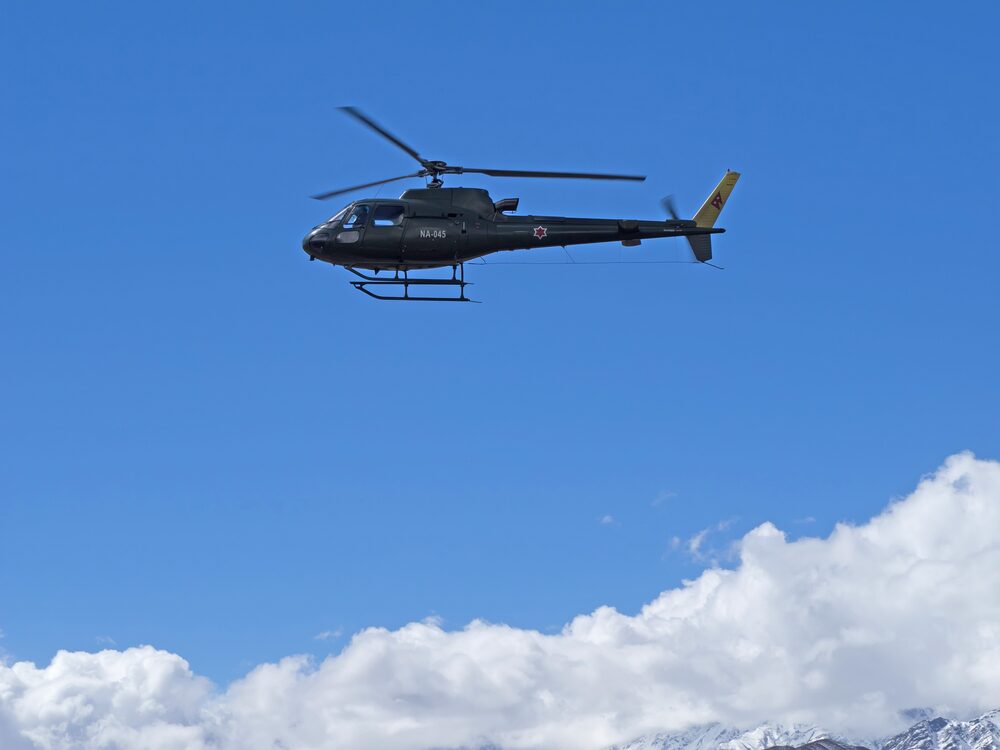
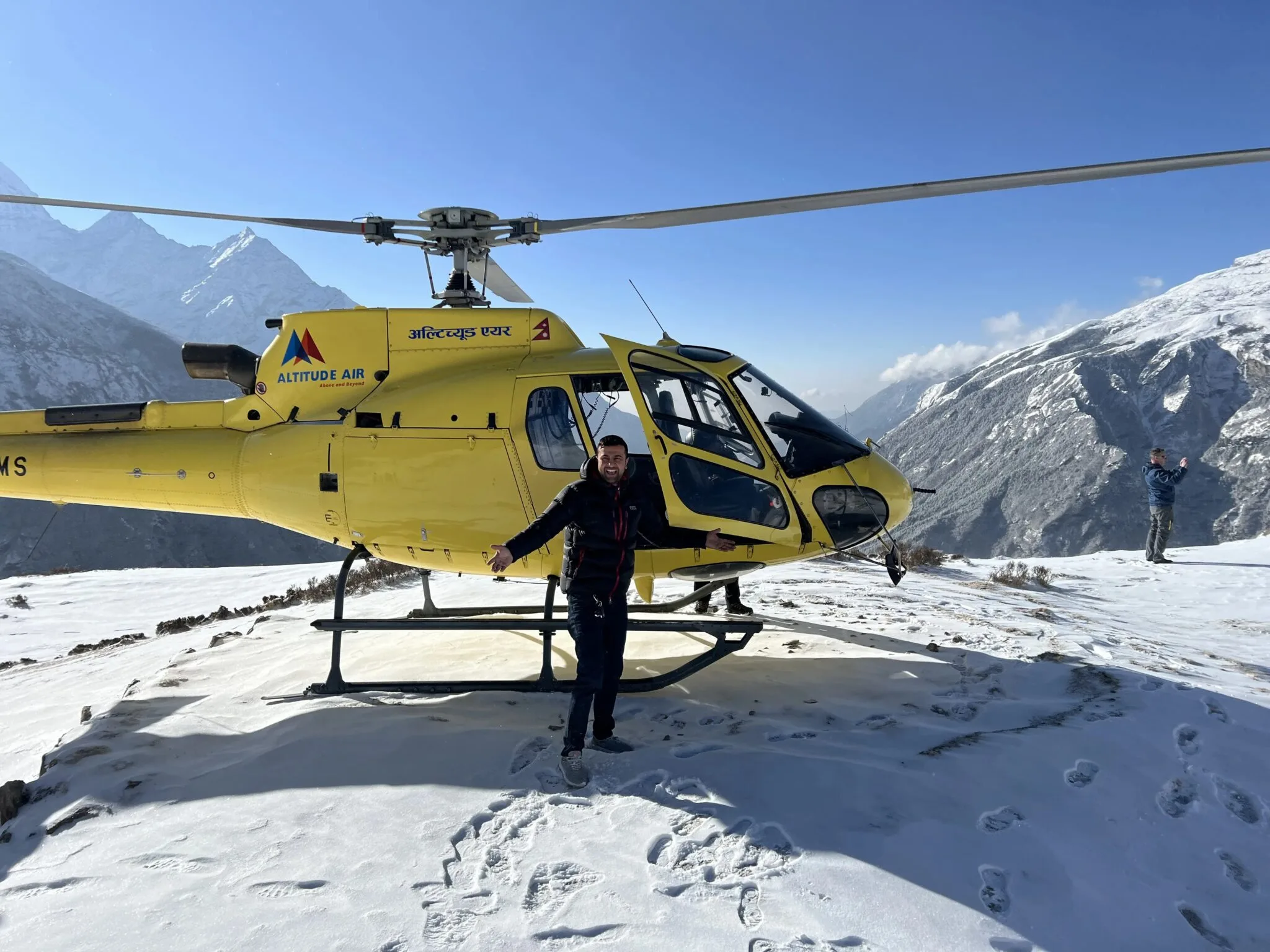
The most commonly used helicopters for high-altitude tours in Nepal are the Airbus H125 and Bell 407, both of which are specifically designed and certified for extreme high-altitude operations and are widely regarded as the most reliable and capable single-engine helicopters available for mountain flying in the world. These aircraft are regularly maintained to the highest international safety standards and are operated exclusively by pilots with extensive high-altitude Himalayan flying experience.
Does the pilot explain the tour during the flight?
Yes, most experienced pilots and accompanying guides provide commentary throughout the flight, pointing out significant peaks, landmarks, and geographical features along the route, and your guide on the ground at Muktinath will provide detailed explanations of the temple complex, its religious significance, and the cultural traditions associated with each sacred site within the complex.
How much deposit is required to book?
A deposit of approximately 20–30% of the total tour cost is typically required at the time of booking to confirm your reservation, with the remaining balance payable before the day of departure, and most reputable operators accept payment by bank transfer, credit card, or cash in both USD and Nepali rupees.
What can affect the flight schedule?
The most common factors affecting helicopter flight schedules to Muktinath include adverse weather conditions such as low cloud cover, strong winds, heavy snowfall, and poor visibility, as well as technical maintenance requirements, air traffic control directives, and unexpected changes in mountain weather that can develop rapidly even on otherwise clear days. Early morning departures are always prioritized to minimize the impact of these factors, as conditions are consistently most stable and predictable in the first hours of the day.
What should I wear for the tour?
Dressing in warm and comfortable layers is strongly recommended as temperatures at Muktinath at 3,800m can be significantly colder than in Kathmandu or Pokhara, particularly in the early morning hours when the tour operates. Essential items include a warm down jacket, thermal base layers, a fleece mid-layer, comfortable trekking trousers, sturdy walking shoes or light trekking boots, warm gloves, a hat, and sunglasses, as the high-altitude sun at Muktinath is extremely intense even on cold days and UV protection is important.
What is the temperature at Muktinath Temple?
Temperatures at Muktinath Temple at 3,800m vary significantly by season, ranging from a pleasant 10–15°C during the warmest months of summer to -10°C or below during the coldest winter months, with the early morning hours when the tour operates typically being the coldest part of the day regardless of season, making warm layered clothing essential for all visitors throughout the year.
How much does water cost at Muktinath?
The sacred water flowing from the 108 spouts at Muktinath Temple is completely free and freely available to all pilgrims and visitors as a divine blessing, and many pilgrims collect the holy water in bottles to carry home as a sacred offering for family members who could not make the pilgrimage themselves, making it one of the most freely given and spiritually generous gifts of the entire temple complex.
Can people bathe at Muktinath?
Yes, bathing under the 108 sacred water spouts at Muktinath is not only permitted but is in fact one of the most important and deeply meaningful rituals of the entire pilgrimage, with devout Hindu pilgrims traditionally moving along the entire semicircular row of spouts and allowing the ice-cold glacial water to flow over their head and body as an act of purification, devotion, and spiritual cleansing believed to wash away the sins of many lifetimes and bring the soul closer to liberation. Visitors are warmly welcomed to participate in this sacred ritual regardless of religious background, though the water is extremely cold at 3,800m and light waterproof clothing or a change of clothes is strongly recommended for those who wish to bathe fully under all 108 spouts.

Reviews
What Our Travelers Say


Based on 3 ratings
5




This tour exceeded all my expectations! From the breathtaking scenery to the immersive cultural experiences, every moment was unforgettable. The itinerary was perfectly planned, and the support from the team made the trip seamless. Can’t wait to book my next adventure!
View Our Similar Packages
Discover our top tours, loved by thousands of travelers annually. Choose the adventure that inspires you and embark on a journey tailored to your desires.

 Nepal
Nepal
 1 Days
Add Review
Reviewing for Muktinath Helicopter Tour from Pokhara/ KathmanduRequest a Callback - Muktinath Helicopter Tour from Pokhara/ Kathmandu
Submit the form and we will be back to you shortly
Request a Callback - Muktinath Helicopter Tour from Pokhara/ Kathmandu
Submit the form and we will be back to you shortly
Narayanhiti Palace Museum

Narayanhiti Palace Museum


