









Everest Base Camp Trek Distance Explained
Everest Base Camp Trek Distance Explained: total kilometers, daily walking distance, route breakdown and tips to plan your EBC trek in Nepal plus route.
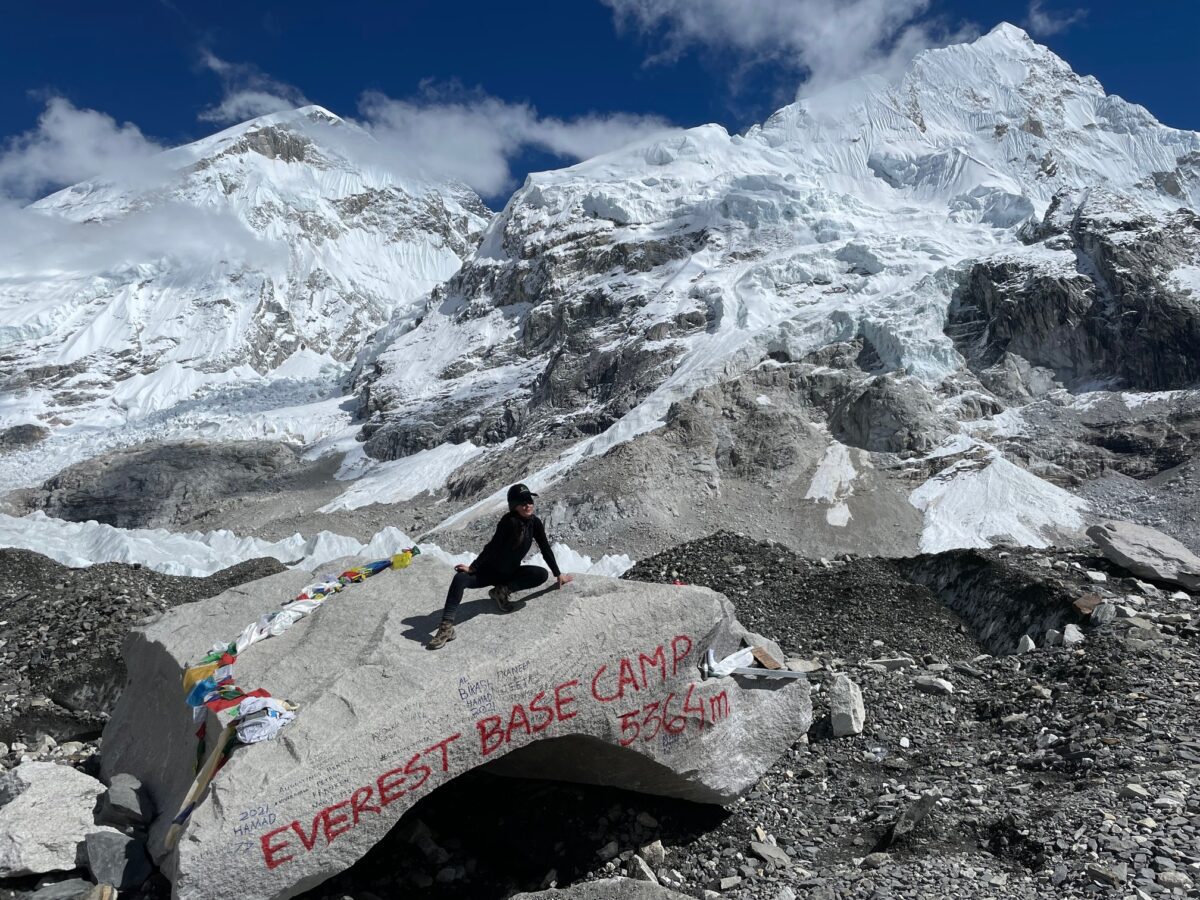
-
 Adventure Master Trek
-
16 April, 2026
-
9 mins read
-
758 Views
-
0 Comments


The Everest Base Camp trek sits on almost every serious trekker’s bucket list, and for good reason. Walking through the Khumbu region of Nepal, breathing thinner and thinner air as the world’s tallest mountain grows larger on the horizon, is genuinely one of the most rewarding physical experiences a person can have. Before lacing up your boots, though, you need a clear picture of what the distance actually involves, because the numbers on paper and the reality underfoot are two very different things.
How Far Is the Everest Base Camp Trek in Total?
Most people are surprised when they hear the actual figure. The one-way trekking distance from Lukla to Everest Base Camp is approximately 65 kilometers. The full round trip, walking from Lukla to Base Camp and back to Lukla, comes to around 130 kilometers. Add the Kala Patthar ascent, which most trekkers do, and the total pushes closer to 140 or 145 kilometers.
Now, before those numbers either alarm or reassure you, understand this: the EBC route is not flat. Not even close. The trail drops deep into river gorges, climbs back out, crosses glacial moraine, and weaves through terrain that turns a modest 10-kilometer day into a full six or seven hours of sustained effort. Raw distance is almost meaningless here without altitude context.
Total Distance from Kathmandu to Everest Base Camp
The journey begins in Kathmandu, and the total distance depends on how you count it.
The flight from Kathmandu to Lukla covers roughly 140 kilometers through the air and takes around 35 to 45 minutes. You land at Tenzing-Hillary Airport at 2,860 meters, one of the most dramatic airstrips anywhere on the planet. From Lukla, everything happens on foot. The 65 kilometers between Lukla and Base Camp gain 2,504 meters of net altitude, climbing from 2,860 meters at the airstrip to 5,364 meters at Base Camp itself.
A growing number of trekkers now fly from Ramechhap’s Manthali Airport rather than Kathmandu’s Tribhuvan Airport, which eases congestion significantly. That adds a four to five-hour drive of roughly 130 kilometers from Kathmandu before you even board the Lukla flight. Worth factoring into your overall travel plan.
Everest Base Camp Trek Distance Day by Day
The standard itinerary runs 12 to 14 days, built around two mandatory acclimatization stops. Here is how the distance and altitude break down across a typical 12-day schedule.
Lukla to Phakding covers 8.4 kilometers, dropping gently alongside the Dudh Koshi river to 2,610 meters. The first day is short on purpose. Your body starts responding to altitude the moment you land, even at relatively modest elevations, and the gentle start lets you find your pace and settle your nerves.
Phakding to Namche Bazaar is 10.6 kilometers, and the first genuinely hard day. The trail gains nearly 800 meters in the final stretch, and the famous Hillary Suspension Bridge crossing, swinging high above the river gorge, tends to linger in the memory long after the trek is finished. You arrive at Namche Bazaar at 3,440 meters.
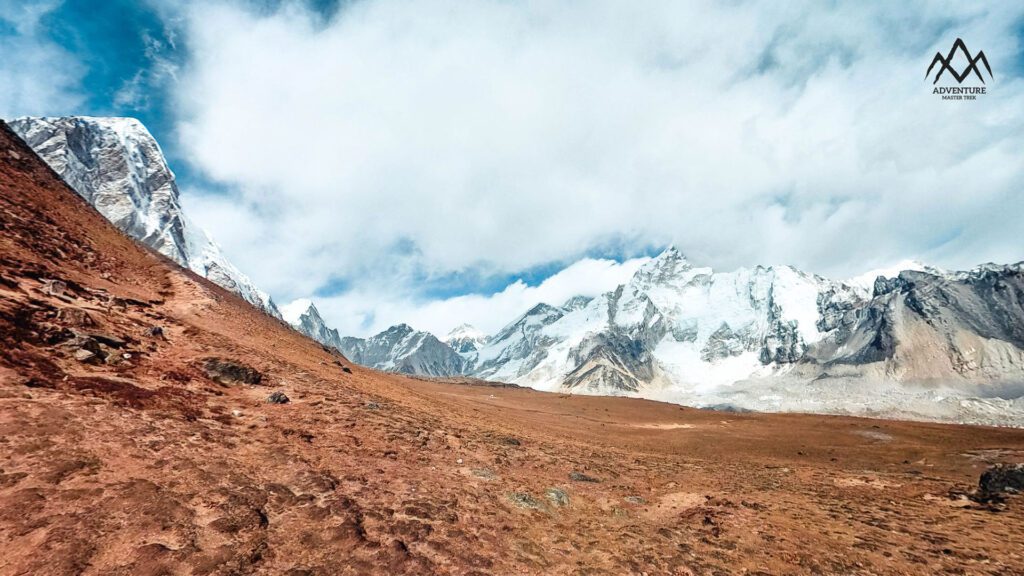
Acclimatization at Namche Bazaar involves around 4 kilometers of hiking to the viewpoint above town. The classic protocol here is to hike up to a higher elevation during the day and sleep back at Namche altitude. Your body adjusts. Your appetite returns. This rest day is not optional.
Namche Bazaar to Tengboche covers 10 kilometers and climbs to 3,860 meters. The trail descends sharply before rising again to the ridge where Tengboche Monastery sits against a backdrop of Ama Dablam and the distant white pyramid of Everest. Few views on the entire trek match this one.
Tengboche to Dingboche is 11.2 kilometers, finishing at 4,360 meters. The upper Khumbu feels different up here. Fewer trees, wider valleys carved by ancient glaciers, and a quality of light and silence that is hard to describe from sea level.
Acclimatization at Dingboche means roughly 5 kilometers of uphill hiking to Nagarjun Hill or into the Chhukung Valley. This second rest day is arguably the most medically important stop on the entire trek. The altitude jump from Tengboche to Dingboche is substantial, and skipping the acclimatization here is one of the most common reasons trekkers turn around short of Base Camp.
Dingboche to Lobuche covers 8 kilometers and ends at 4,940 meters. Shorter in distance, but the altitude makes itself known on every step. The trail passes the Thukla Memorial, a ridge scattered with stone cairns commemorating climbers lost on Everest over the decades.
Lobuche to Gorak Shep is just 4.5 kilometers, finishing at 5,164 meters. On paper, that looks trivial. In practice, it takes most trekkers three to four hours. Crossing the Khumbu Glacier moraine on loose, uneven rock at nearly 5,000 meters is slow, careful work.
Gorak Shep to Everest Base Camp and Kala Patthar covers approximately 13 kilometers in total and reaches 5,545 meters at Kala Patthar’s summit. Most itineraries push to Base Camp in the morning, return to Gorak Shep for a rest and lunch, then climb Kala Patthar in the late afternoon for the panoramic views that most people associate with the trek. This is the hardest day.
Gorak Shep to Pheriche on the return covers 14 kilometers and descends to 4,240 meters. Something almost miraculous happens on descent days. The oxygen thickens noticeably, the pace picks up, and the mood across the trail lifts in a way that feels collective.
Pheriche to Namche Bazaar covers 16 kilometers back down to 3,440 meters, rolling up ground that took three full days to climb on the way in.
Namche Bazaar to Lukla is the final 18 kilometers, the longest distance day of the entire trek, and ends back at 2,860 meters. Most trekkers complete it in seven to eight hours. There is usually a celebration dinner in Lukla that evening.
Everest Base Camp km Per Day: What to Actually Expect
Across active trekking days, you will walk between 8 and 18 kilometers. Average that out across the full itinerary, including rest days, and the figure settles around 7 to 9 kilometers per day. That sounds gentle until you factor in altitude, trail surface, and cumulative fatigue.
The return legs tend to be the longest distance days because the altitude restriction is lifted and the body moves more freely downhill. Distances that would swallow nine or ten hours near Base Camp get covered in five to six hours on descent. The body remembers efficiency once oxygen is available again.
Everest Base Camp Altitude Profile and Elevation Gain
The EBC altitude profile is not a smooth ramp. The trail repeatedly loses significant altitude before climbing again, which means the cumulative elevation gain far exceeds the net gain from Lukla to Base Camp.
From Lukla to Namche, the 19-kilometer segment gains 580 meters. Namche to Tengboche adds 420 meters over 10 kilometers. Tengboche to Dingboche climbs 500 meters across 11.2 kilometers. Dingboche to Lobuche adds another 580 meters over 8 kilometers. Lobuche to Gorak Shep gains 224 meters across 4.5 kilometers. The final walk from Gorak Shep to Base Camp adds 200 meters over 3.5 kilometers. Gorak Shep to Kala Patthar is steep, gaining 381 meters in just 1.5 kilometers.
Total net gain from Lukla to Base Camp sits at 2,504 meters. Cumulative gain, including all the descents and re-ascents along the way, reaches 4,500 to 5,000 meters of total upward movement on the one-way journey alone.
Walking Distance to Everest Base Camp from Gorak Shep
The final stretch from Gorak Shep to Base Camp is 3.5 to 4 kilometers one way and takes two to three hours. There is no formal path for much of it. The trail crosses glacial moraine, scrambles over boulders, and requires attention on every step. Many trekkers describe it as one of the most mentally draining segments precisely because it looks short on the map.
The full Gorak Shep circuit, visiting EBC and then ascending Kala Patthar and returning, covers around 13 kilometers with 581 meters of cumulative gain. Plan for eight to ten hours on the mountain that day.
Why the Distance Feels Much Harder Than the Numbers Suggest
At the Everest Base Camp altitude, roughly 53 percent of sea-level oxygen is available to your lungs. Tasks that feel effortless at home require conscious, deliberate effort up here. A 10-minute rest stop every 30 minutes of walking is standard, not a sign of weakness.
The trail surface between Lobuche and Base Camp is almost entirely glacial moraine. Loose boulders, unstable rock fields, and a complete absence of a marked path slow progress to a fraction of normal trail speed. On top of that, by the time you are walking toward Base Camp on Day 8 or 9, your body has already covered 50-plus kilometers at altitude. The sleep disruption, reduced appetite, and accumulated muscle fatigue all compound in ways that no amount of sea-level training can fully prepare you for.
Training for the EBC Trek Distance
The goal of training for Everest Base Camp is not to build the ability to walk one very long day. The goal is to walk moderate distances on consecutive days, in boots, with a loaded pack, without accumulating enough damage to slow you down by Day 7.
Back-to-back hiking days of 12 to 15 kilometers are more useful preparation than occasional long solo efforts. If flat terrain is all that is available, stair climbing with a loaded 8 to 10 kilogram pack for 60 to 90 minutes replicates the sustained uphill effort better than almost anything else. Build a weekly walking distance to 40 or 50 kilometers over three to four months before departure.
Pay particular attention to descents. The 14 to 18-kilometer return days are hard on knees and hips in a way that surprises many trekkers who trained well for uphill effort but neglected the downhill load. Wall sits, lunges, and downhill trail running all help. Knee problems on the return leg are one of the most common reasons trekkers need assistance on the lower Khumbu trail.
The Distance in Perspective
130 kilometers round trip. 65 kilometers one way. 4,500 meters of cumulative ascent. Those are the numbers, and they are worth knowing before you commit to the journey.
What the numbers cannot hold is the specific quality of cold air at 5,000 meters before sunrise, or the way the Khumbu Glacier groans and shifts underfoot on the walk to Base Camp, or the particular silence of a Himalayan valley when the wind drops and every trekker on the trail seems to hold their breath at the same moment. The distance is a framework. The experience is the thing itself.
Train properly, respect the acclimatization schedule, hire a licensed guide, and take the trail one deliberate step at a time. Base Camp arrives eventually for almost everyone who prepares honestly and listens to the mountain.
Comments (0)
Write a comment- How Far Is the Everest Base Camp Trek in Total?
- Total Distance from Kathmandu to Everest Base Camp
- Everest Base Camp Trek Distance Day by Day
- Everest Base Camp km Per Day: What to Actually Expect
- Everest Base Camp Altitude Profile and Elevation Gain
- Walking Distance to Everest Base Camp from Gorak Shep
- Why the Distance Feels Much Harder Than the Numbers Suggest
- Training for the EBC Trek Distance
- The Distance in Perspective
Read the latest Blogs & Insights
Explore our collection of articles and insights to gain in-depth travel knowledge, expert advice, and stay updated on the latest trends and tips.


No comments yet.