









Everest Base Camp Trek vs Everest Helicopter Tour: Which One Is Right for You?
Compare Everest Base Camp Trek vs Everest Helicopter Tour. Discover costs, time, difficulty, and views to choose the perfect Everest experience for you now
-
 Adventure Master Trek
-
14 April, 2026
-
14 mins read
-
1100 Views
-
0 Comments


Let me be straight with you: almost everyone who dreams about Everest faces the same question. You’ve got limited time and money. You’ve got vacation days to spend wisely. And you’ve got this burning desire to actually see the world’s highest mountain instead of just staring at it in pictures.
So you hit Google. You start comparing options. And quickly, you realize there are basically two ways to make this happen: walk for two weeks or fly in a helicopter for a few hours. Both cost money. Both take time. Both promise to change your life. But they’re completely, totally different experiences.
The question isn’t which one is objectively better. That’s not how this works. The real question is: which one is better for you, right now, with your specific situation, your fitness level, your job, your budget, and what you actually want from Everest?
Let’s figure that out.
The Everest Base Camp Trek: The Long Version
You want to know what it actually feels like? Consider setting your alarm for 6 AM in a small lodge that’s basically just walls and a bed. Your feet hurt from yesterday’s hiking. Your legs are sore in ways you didn’t know were possible. The toilet is downstairs and it’s freezing cold outside.
You’re not having regrets exactly, but you’re definitely not waking up refreshed like you do at a four-star hotel back home.
Then you walk downstairs. Someone hands you hot tea. There’s someone from Germany eating breakfast with someone from Brazil. They’re talking about yesterday’s pass like they just summited Everest itself (they didn’t—it was just a steep hill). And somehow, that tea tastes better than any coffee you’ve ever had.
This is what the Everest Base Camp trek actually is.
What the Trek Looks Like Day by Day
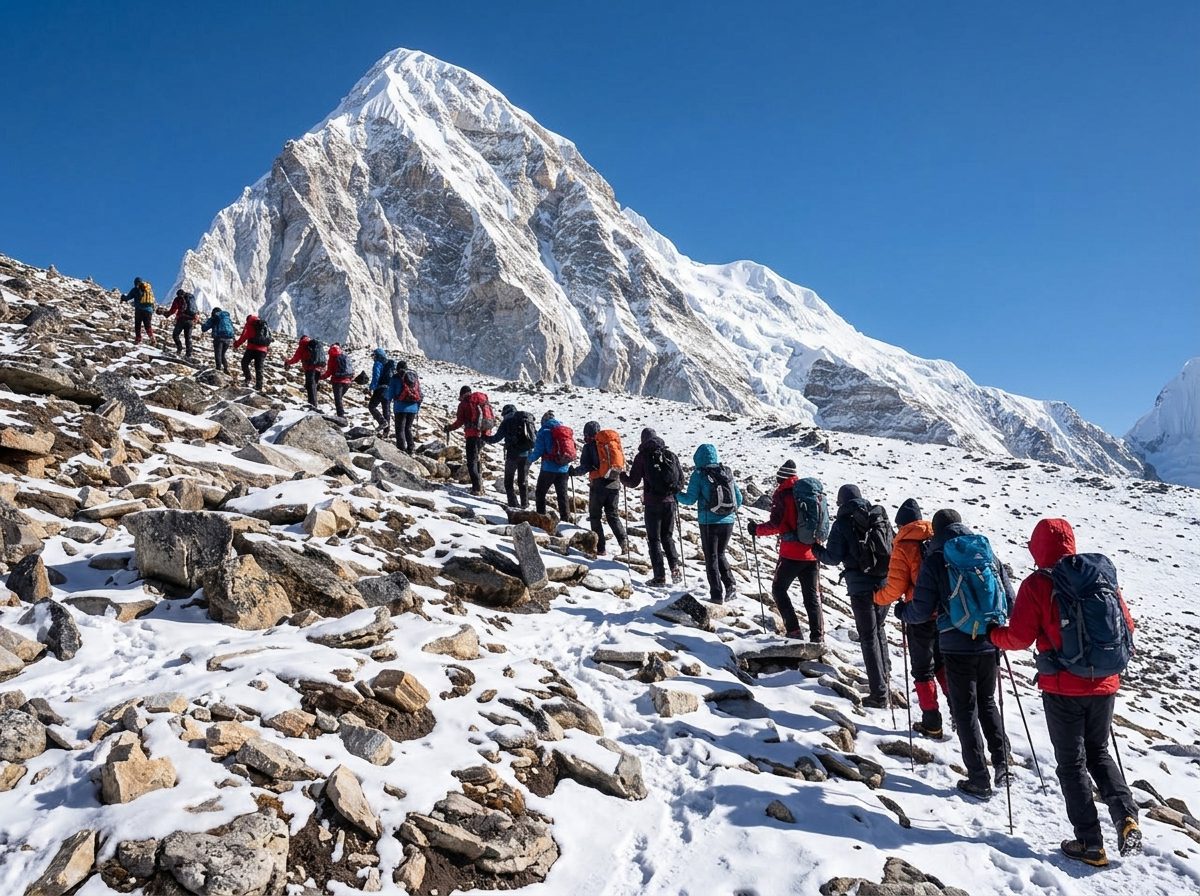
The trek isn’t complicated. You walk every day. You sleep in teahouses. You eat the same food over and over. Sounds simple, right? It’s not.
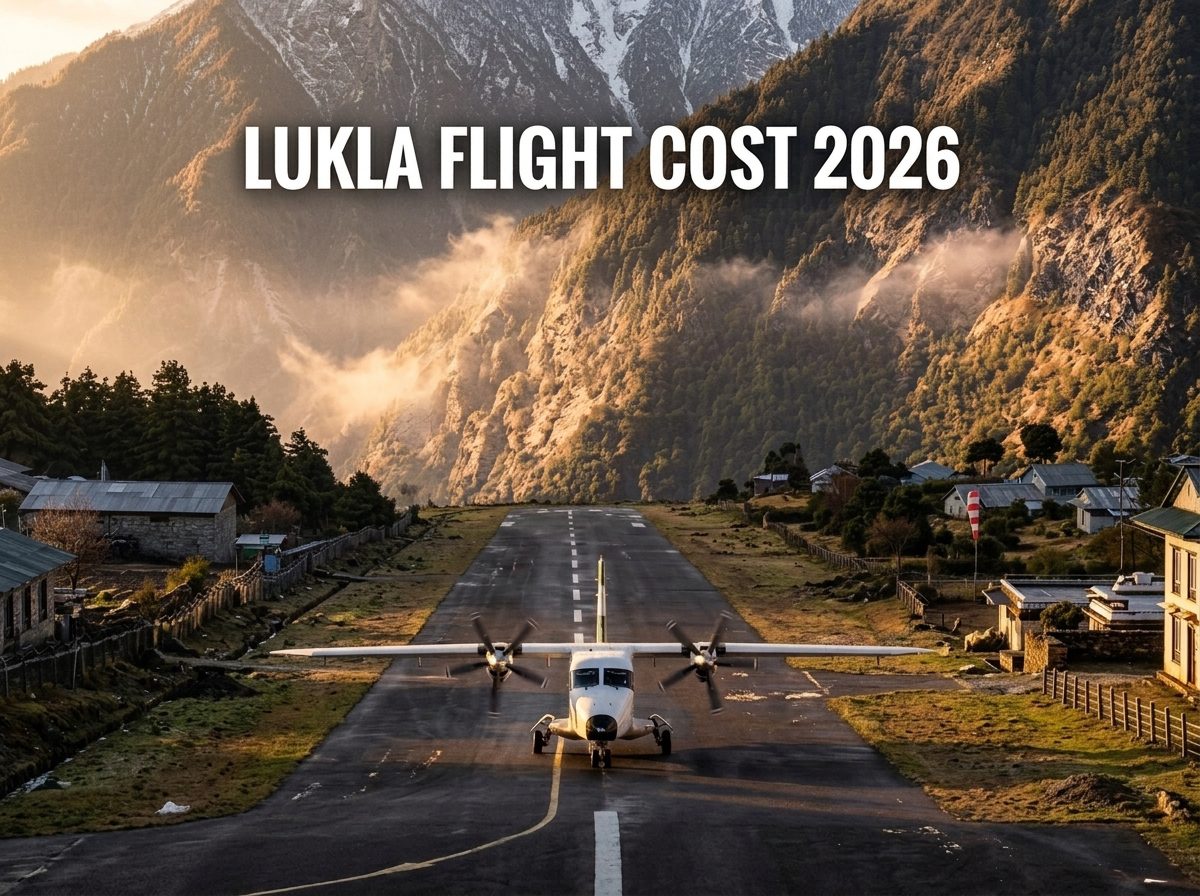
- Days 1-3: You fly into Lukla, an airport that’s basically a mountain landing strip. The landing is intense enough that some people grip the armrests like they’re holding on for their lives. The actual trekking starts easy. You’re fresh. Your legs work. You think, “This is fine. I can totally do this.”
- Days 4-6: Here’s where reality hits. Your legs hurt. Your feet have blisters. There’s still so much trek left. You pass through Namche Bazaar, this busy little town full of climbers and trekkers and Sherpa guides. It’s cool, but you’re tired. You start wondering if you’re actually tough enough for this. Spoiler alert: you are, but you don’t know that yet.
- Days 7-9: Something weird happens. You stop complaining as much. Your body figures out the rhythm. You’re walking uphill and it doesn’t feel as impossible. You meet your guide’s family. You understand why these mountains are so important to the people who live here. You start getting it.
- Days 10-12: You reach the higher camps. It gets quiet. There are fewer trekkers. The air gets thinner. You notice you’re thinking differently—more clearly, somehow. Even though you’re breathing harder, your mind feels sharper. You see Everest from different angles now. Each camp gives you a new perspective.
- Day 13-14: You finally reach Base Camp. It’s not as dramatic as you imagined. It’s anticlimactic in the best way possible. It’s just a pile of rocks at 5,364 meters with prayer flags and a lodge. But you got here by putting one foot in front of the other for two weeks straight. And that means everything.
Most people cry here. Not because of the view. Because of what they just did.
Let’s Talk About the Pain
The trek is hard. Not life-threatening hard, but genuinely difficult. Your legs will hurt. Your feet will develop blisters. You’ll be tired in a way you’ve never been tired before. You’ll wake up some mornings and think, “I don’t know if I can do this today.“
The altitude is the real enemy, not the distance. Your body is working with half the oxygen it normally has. You get winded walking from your room to breakfast. You sleep badly because your body is stressed. Some people get headaches. Some get nausea. A few have to turn back.
But here’s the thing nobody tells you: most people who are reasonably fit can do this. You don’t need to be a runner or a gym rat. You need to prepare seriously for 6–8 weeks before you go. You need to walk a lot. You need to hike with a weighted backpack. You need to climb stairs. You need to do it consistently.
And then you need to trust that your body can adapt, because it actually will.
What It Actually Costs
You’re looking at $800–1,500 for the trek itself. That’s accommodations, food, a professional guide, and a porter to carry your heavy stuff. Add flights from Kathmandu to Lukla (around $150 round trip), however you get to Kathmandu from your home (varies wildly), and maybe some gear rental, and you’re looking at $1,200–2,500 total.
Is that expensive? Sure. But break it down: it’s roughly $100–200 per day for one of the most incredible experiences on earth. That’s cheaper than a decent hotel in New York City. And the money goes straight to the local economy. Your guide’s family. The lodge owner. The porter who’s carrying your backpack. It’s real, tangible support for real people.
Why This Actually Matters
The biggest thing the trek gives you that nothing else can is the earned feeling. You didn’t buy your way to a view. You walked there. Every step, every difficult day, every moment you wanted to quit but kept going—that’s all you.
You meet people from everywhere. Some of them become real friends. You spend two weeks eating meals with the same guide, and they tell you stories about what it’s like to grow up in these mountains. You stay in teahouses run by families who’ve been hosting trekkers for decades. You see how these communities actually work, not as a tourist—as someone who stayed, who struggled, who was part of the experience.
And something shifts in how you see yourself. You find out you’re capable of way more than you thought. You find out that discomfort isn’t the end of the world. You find out that real achievement takes time and effort—and it’s worth it.
That stuff doesn’t happen in four hours in a helicopter.
The Helicopter Tour: The Quick Version
Now imagine this different scenario: You wake up in Kathmandu. You have breakfast in your hotel. A driver picks you up and takes you to a small airport. Within 30 minutes, you’re in a helicopter.
Then everything happens very fast.
You go from normal air pressure to places where humans aren’t supposed to stay very long. Mountains you’ve only seen in pictures suddenly appear all around you. Your photographer friend is losing their mind because these shots are insane. The door is open (on some flights) and you’re seeing things that most humans never see. Your adrenaline is completely maxed out.
Three hours later, you’re back in Kathmandu having lunch and telling everyone about it.
This is the helicopter tour.
What It Actually Feels Like
It’s different from the trek in almost every way. There’s no suffering. No blisters. No days where you want to quit. It’s pure adrenaline and wonder compressed into a small amount of time.
The helicopter flight takes you from 1,300 meters (where Kathmandu is) to 5,500+ meters (near Everest) in basically no time. Your ears pop. Your head may feel funny. Some people get motion sick. But most people are too amazed to notice discomfort.
You actually get to see Everest. Not as a distant white triangle. As an enormous, impossible mountain that dominates everything around it. You see Lhotse, Makalu, and a dozen other famous peaks all at once. You get a perspective on just how massive the Himalayan range actually is.
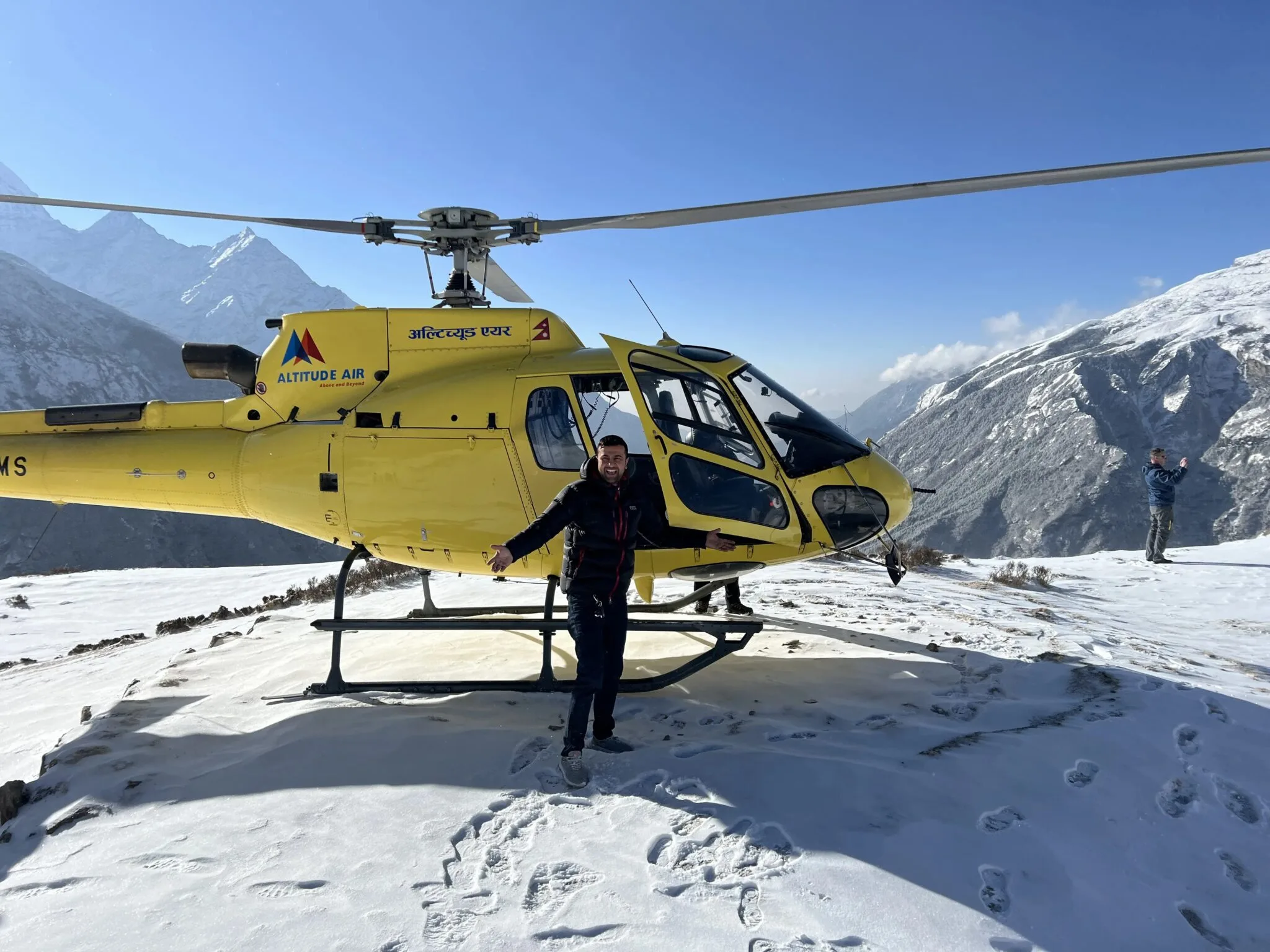
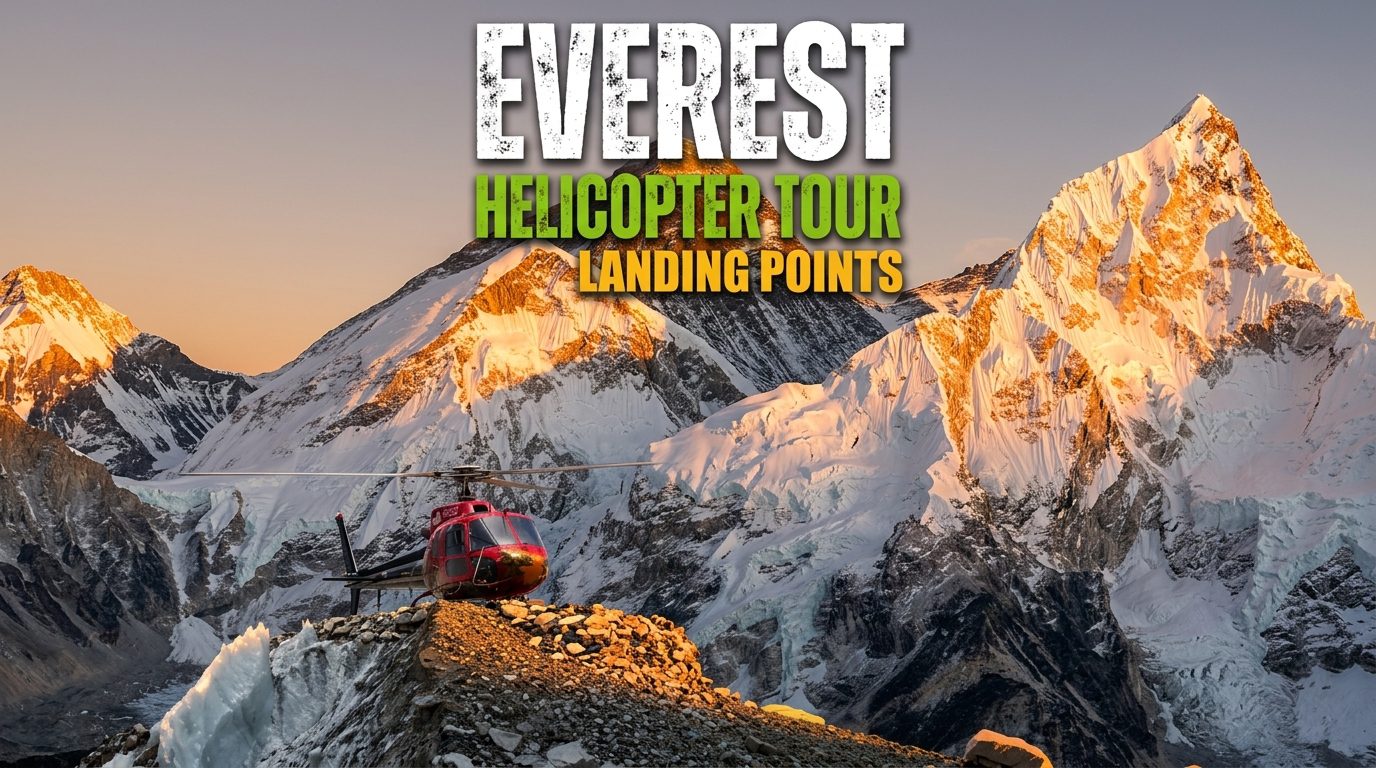
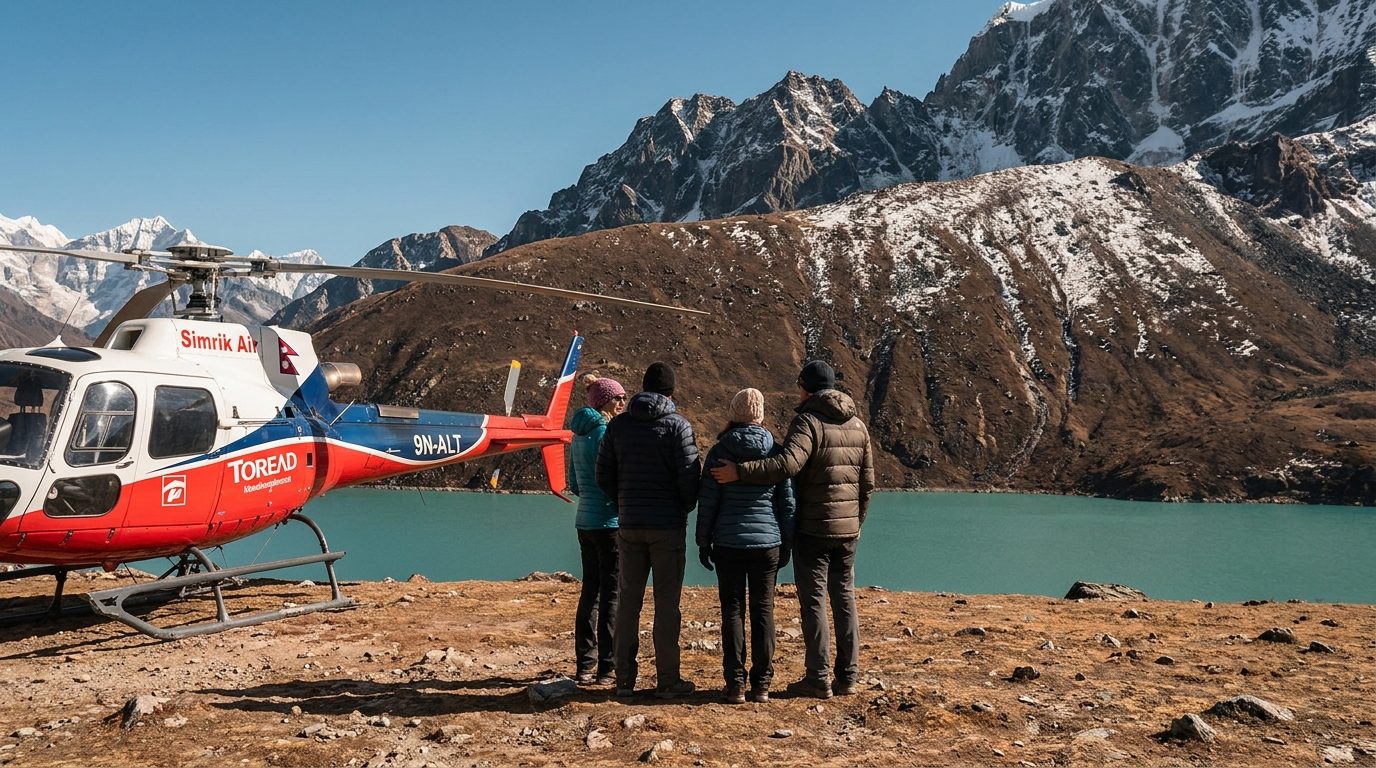
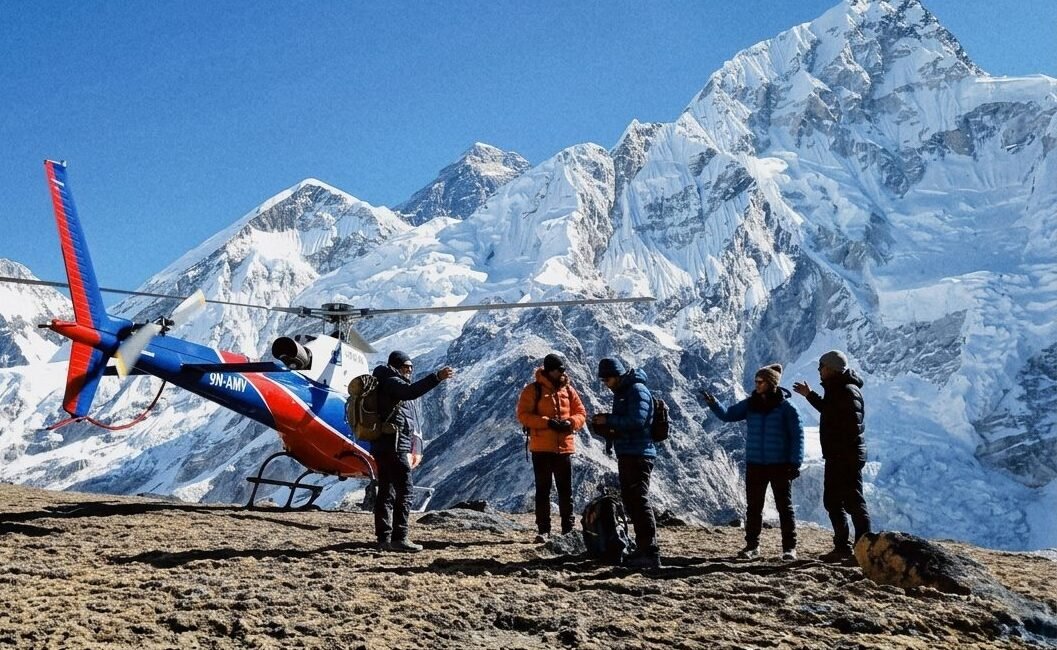
Some operators land near Base Camp, which is insane. You actually touch down at Everest Base Camp from a helicopter. You’re standing in the same place that the trek takes you to, but you got there in 3 hours instead of 14 days.
The Physical Reality
This is simple: it’s not physically hard at all. You sit in a seat. You look out a window. You try not to cry because the views are incredible. That’s literally it.
The altitude doesn’t have time to wreck you because you’re not there long enough. You’ll feel it—breathing feels harder, your head might feel light—but serious altitude sickness doesn’t develop in the time you’re up there.
Motion sickness is the real potential problem. Some people are fine. Some people get dizzy. Take ginger pills or anti-nausea medication before you go if you know you’re prone to it.
The Cost Factor
$2,500–4,500 a persona. It’s expensive. That’s 2-3 times more than the trek, for a few hours instead of two weeks.
Sometimes you can split costs with other people if you’re sharing a helicopter, which brings it down. But it’s still pricey.
The money goes to the helicopter company, mostly. A bit goes to pilots and crew. Not much circulates to local communities the way trek money does.
Is it worth the money? That depends entirely on your situation.
Why You Might Actually Choose This
Time. That’s the biggest reason. If you have 3 days in Nepal instead of 3 weeks, the helicopter is the only realistic option.
Your body. If you have joint problems, heart issues, or anything that makes trekking unsafe, the helicopter lets you see Everest anyway.
Photography. Door-open helicopter flights give you photos you literally cannot get any other way. If you’re serious about photography, this is the way.
Certainty. On the trek, you can get weather that prevents good views. On a helicopter, you’re either flying through clear air or the flight gets canceled. You see Everest or you don’t. It’s not this gradual thing that builds over two weeks.
The adrenaline rush. Let’s be honest: flying in a helicopter toward the world’s highest mountain is genuinely cool. Some people just want that feeling, and the helicopter delivers it perfectly.
Head-to-Head Comparison: Trek vs Helicopter
| Aspect | Trek | Helicopter |
| How Long | 12-14 days | 3-4 hours |
| Cost | $1,200-2,500 | $2,500-4,500 |
| Physical Effort | High (5-6 hours hiking daily) | None (sitting) |
| Altitude Challenge | Big (your body has to adapt) | Mild (too brief to matter much) |
| Emotional Connection | Deep (earned through struggle) | Quick and intense |
| Need to Prepare | Yes (6-8 weeks training) | No (just show up) |
| Meet Local People | Constantly | Not really |
| Time Off Work Needed | 2+ weeks | 1-2 days |
| Weather Issues | Trek happens regardless | Flight might cancel |
| Sense of Achievement | Huge | More like adrenaline |
| Photography | Good variety | Spectacular quality |
| Money Helps Local Community | Yes, directly | Not really |
| View of Everest | Multiple perspectives over time | One amazing dramatic view |
| Risk of Injury | Low (if you prepare) | Almost none |
| Requires Fitness | Yes | No |
The trek is about the journey. The helicopter is about the destination. Both are valid. Both are amazing. They’re just completely different.
So Which One Should You Actually Do?
This is where it gets personal.
Choose the Trek If…
- You actually have time. This is non-negotiable. Don’t try to cram a trek into a week. You’ll miss the point and probably hate yourself. But if you have 2-3 weeks and can make it work, do the trek. It’s worth every single day.
- You want to prove something to yourself. Maybe you want to know if you can really do hard things. Maybe you’ve been comfortable for too long and you want to shake that up. The trek will absolutely do that. You’ll come home different.
- You care about the people who live here. If the idea of directly supporting a Sherpa guide’s family, a teahouse owner’s business, and local communities matters to you, the trek is where your money goes. It’s not some abstract donation. It’s real people you’ll actually meet.
- You’re actually healthy enough for it. If your doctor says it’s fine, and you prepare properly, you can do this. Don’t psych yourself out. Prepare seriously, trust your guide, and your body will surprise you.
- You want to disconnect. No WiFi. No emails. No phone notifications. Just mountains and people and food and walking. If that sounds amazing, the trek is for you.
- You like spontaneity and meeting people. Trekking attracts interesting people from everywhere. You’ll have conversations you never planned on. You’ll hear stories. You’ll make real friends. Some of my best friendships started on treks.
Choose the Helicopter If…
- You only have a few days. This is legitimate. You can’t force a trek into 3 days of vacation. But you can do a helicopter tour and actually see Everest. That’s worth something.
- Your body can’t handle trekking. Bad knees. Heart issues. Chronic pain. Any number of things can make trekking dangerous. The helicopter lets you see Everest safely anyway.
- You want incredible photos. If photography is your thing, the helicopter is unbeatable. The shots you’ll get are insane.
- You’re not sure if you can do the trek. If you’re genuinely worried about your fitness or your mental toughness, the helicopter removes all doubt. You will see Everest.
- Time is your most valuable resource. Some people are genuinely busy. A helicopter tour takes a day. A trek takes weeks. If you value your time that highly, spend the extra money and get those weeks back.
- You want the adrenaline rush without the suffering. This is totally valid. Some people want the experience without the pain. The helicopter delivers that. It’s fun, exciting, and done.
The Honest Truth About Both
Trek Reality Check
Your legs will hurt. A lot. You’ll have days where you wonder why you’re doing this. The altitude messes with you in ways you can’t predict. Some people get sick. Some people feel amazing the whole time. You won’t know until you get there.
The food gets repetitive. You eat rice and lentils basically every single day. It’s good, but it’s the same thing. Bring snacks you actually like.
Bad weather happens. You might trek in rain or snow. You’ll be wet and cold and miserable sometimes.
You’ll cry at Base Camp. Just accept this now. Bring tissues. It’s not a weakness. It’s the release of two weeks of pushing yourself.
The experience will change how you see yourself. You’ll come home different. Not necessarily in a dramatic way, but in a real way. You’ll know you can do hard things. That’s powerful.
Helicopter Reality Check
If the weather is bad, your flight gets canceled. Sometimes you reschedule, and it works out. Sometimes you leave Nepal, never having seen Everest. This is the risk.
The experience is so brief that it feels unreal afterward. You’ll replay it in your head for months, wondering if it actually happened.
The altitude hits you fast, and it feels weird. You might get a headache. Your equilibrium might feel off. It passes, but it’s uncomfortable at the moment.
Motion sickness is possible. Not everyone gets it, but some people do.
The view is absolutely incredible, but you only get a few hours with it. There’s something about multiple perspectives over time that changes understanding. You get one perspective from the helicopter.
What Actually Matters
The trek supports real people—guides, porters, teahouse owners, their families. The money circulates in mountain communities. That’s not nothing.
The helicopter has a carbon footprint for the fuel burned. If climate matters to you, that’s a consideration.
Both experiences will be memorable. Both will give you stories. Both will matter. The question is which one matches who you are and what you need right now.
Make Your Decision
You’re not choosing between good and bad. You’re choosing between two completely different good things.
The trek says, “I’m willing to struggle for something real. I want to earn this. I want connection and transformation.”
The helicopter says: “I want the experience with minimal time and effort. I want to see the mountain quickly and get back to my life.”
Both are honest. Both are valid. Both are good reasons.
The only bad choice is not going at all.
So pick one. Prepare for it. Show up. And go meet the mountain.
Ready to Make It Happen
Whether you’re trekking or flying, Nepal Vision Treks has done this thousands of times. We know what works. We know how to keep you safe. We know how to make it unforgettable.
If you want to trek, we’ll prepare you. We’ll match you with a guide who’s actually good. We’ll adjust the pace to match your fitness. We’ll make sure you get there safely.
If you want to fly, we’ll book the best operators. We’ll time it right. We’ll make sure you get the experience you came for.
Either way, the mountains are waiting. What are you going to do about it?
Comments (0)
Write a comment- The Everest Base Camp Trek: The Long Version
- What the Trek Looks Like Day by Day
- Let’s Talk About the Pain
- What It Actually Costs
- Why This Actually Matters
- The Helicopter Tour: The Quick Version
- What It Actually Feels Like
- The Physical Reality
- The Cost Factor
- Why You Might Actually Choose This
- Head-to-Head Comparison: Trek vs Helicopter
- So Which One Should You Actually Do?
- Choose the Trek If…
- Choose the Helicopter If…
- The Honest Truth About Both
- Trek Reality Check
- Helicopter Reality Check
- What Actually Matters
- Make Your Decision
- Ready to Make It Happen
Read the latest Blogs & Insights
Explore our collection of articles and insights to gain in-depth travel knowledge, expert advice, and stay updated on the latest trends and tips.


No comments yet.