









Solo Trek to Tsum Valley — Is It Actually Possible Now? Here’s the Truth Nobody Is Telling You
Let me be straight with you. For years, if you showed up at a trekking agency in Kathmandu and said “I want to do Tsum Valley solo,” they looked at you like you’d asked to fly to the moon. The law was clear: restricted areas like Tsum Valley required a minimum of two foreign trekkers […]
-
 Santosh Sir
-
13 May, 2026
-
12 mins read
-
955 Views
-
0 Comments


Let me be straight with you.
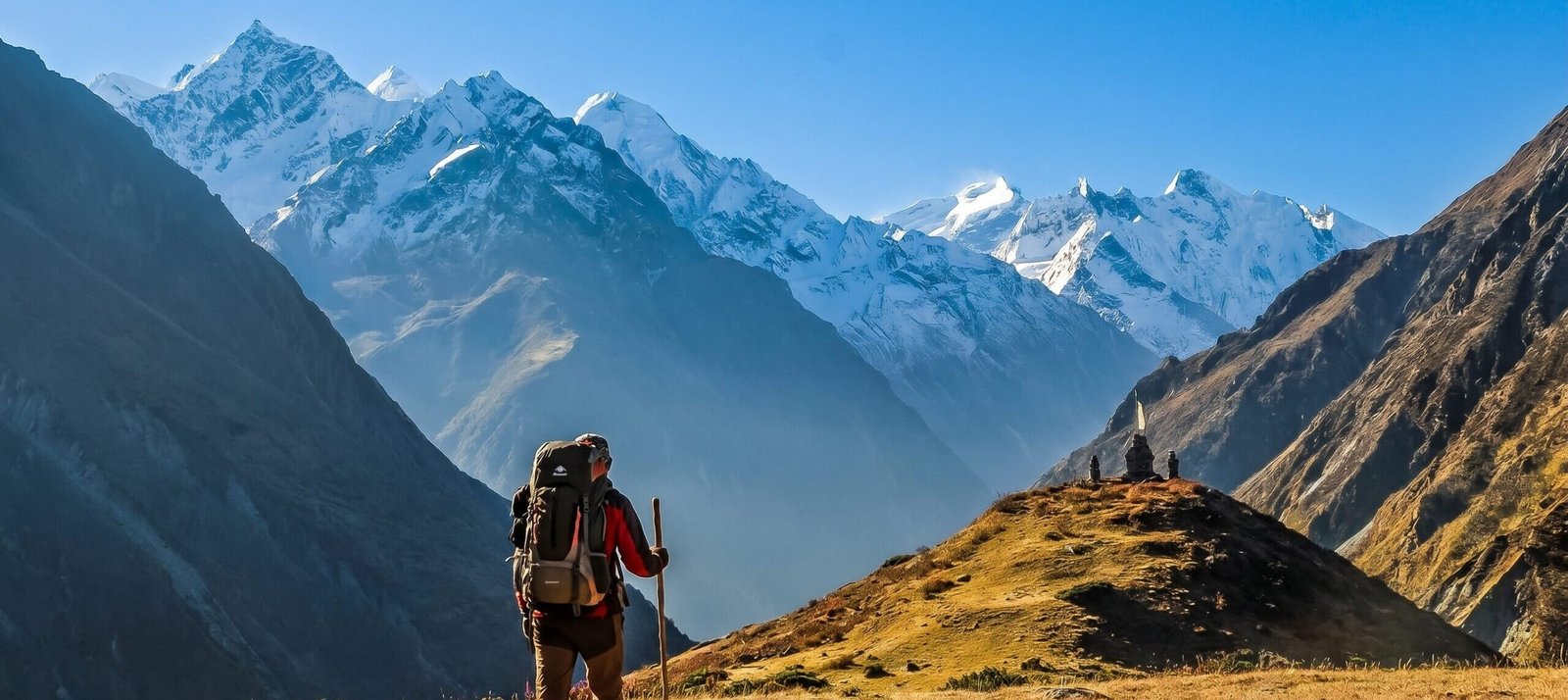
For years, if you showed up at a trekking agency in Kathmandu and said “I want to do Tsum Valley solo,” they looked at you like you’d asked to fly to the moon. The law was clear: restricted areas like Tsum Valley required a minimum of two foreign trekkers on one permit. No exceptions. You couldn’t even argue your way past it. If you were a solo traveler, you either found a stranger to pair up with, paid double for a permit under a ghost name (which was illegal and risky), or you simply scratched Tsum Valley off your list.
That has changed. And for solo travelers who’ve been watching Nepal’s restricted areas from a distance, this is genuinely big news.
What Changed and When
On March 22, 2026, Nepal’s Department of Immigration officially removed the two-person minimum requirement for restricted area permits. The Trekking Agencies’ Association of Nepal (TAAN) pushed for this change, and the government agreed — partly for the sake of travelers, and partly because the old rule was quietly strangling tourism revenue in these remote zones.
Solo foreign trekkers can now apply for restricted area permits individually, without needing to find a second trekking partner. This change applies to Upper Mustang, Manaslu, Kanchenjunga, Dolpo, Tsum Valley, and Nar-Phu.
The rule of a minimum of 2+ people mandatory for trekking in restricted areas was limiting tourists, and that was impacting the economy of the industry as well. Plus, it was hindering the industry growth.
So yes — if you are a solo traveler, you can now get a permit for Tsum Valley in your name alone. No partner required.
But here’s what you need to understand before you pack your bag.
“Solo” Does Not Mean “Alone” — Know the Difference
This is where a lot of people get confused, and I want to be very clear about this.
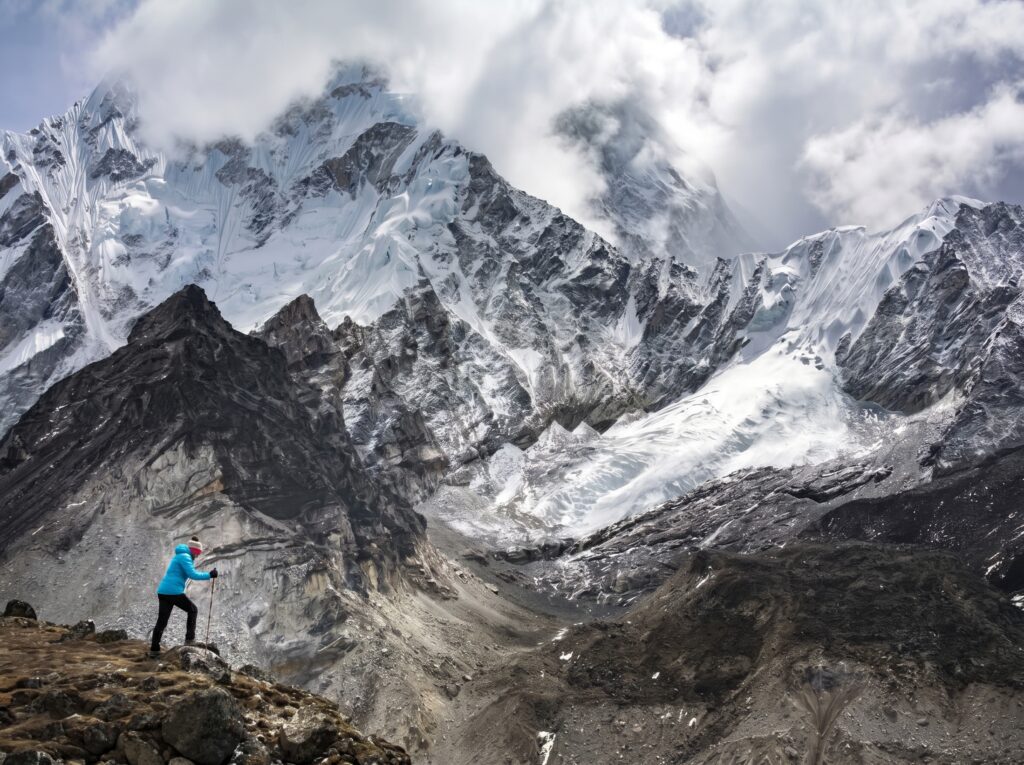
A solo permit is provided to single individuals, but you can’t trek completely alone in the restricted areas. You will not be alone on the trail; there will be a guide with you throughout the trek. A fully independent adventure won’t be permitted — the main meaning of solo travel is going as an individual, but the plan and itinerary will be made by others.
“Solo” refers to the permit application, not unaccompanied trekking. A licensed guide and a TAAN-registered agency are still legally mandatory in all restricted areas — this has not changed.
So what has actually changed is this: you no longer need to be part of a group of two or more to obtain the restricted area permit. You can walk into a registered agency, pay your permit fees, hire a licensed guide, and head into Tsum Valley as a solo traveler — one person, one guide. That’s the new reality.
If you were hoping to walk into Tsum Valley with a backpack and no guide, that is still not permitted. All foreign nationals trekking in Nepal’s national parks and conservation areas must be accompanied by a licensed guide from a TAAN-registered trekking agency. Attempting to trek without a registered guide on regulated trails can result in immediate removal from the route, monetary fines, or blacklisting from future trekking permits.
What Is Tsum Valley — And Why You’d Even Want to Go There
Before we get into permits and costs, let’s talk about why Tsum Valley deserves your attention in the first place.
Tsum Valley sits in the northern part of Gorkha district, tucked inside the Manaslu Conservation Area. It shares a border with Tibet. The valley was closed to outsiders until 2008 — which means it missed decades of the commercial trekking boom that transformed places like Everest and Annapurna into semi-industrialized trail corridors.
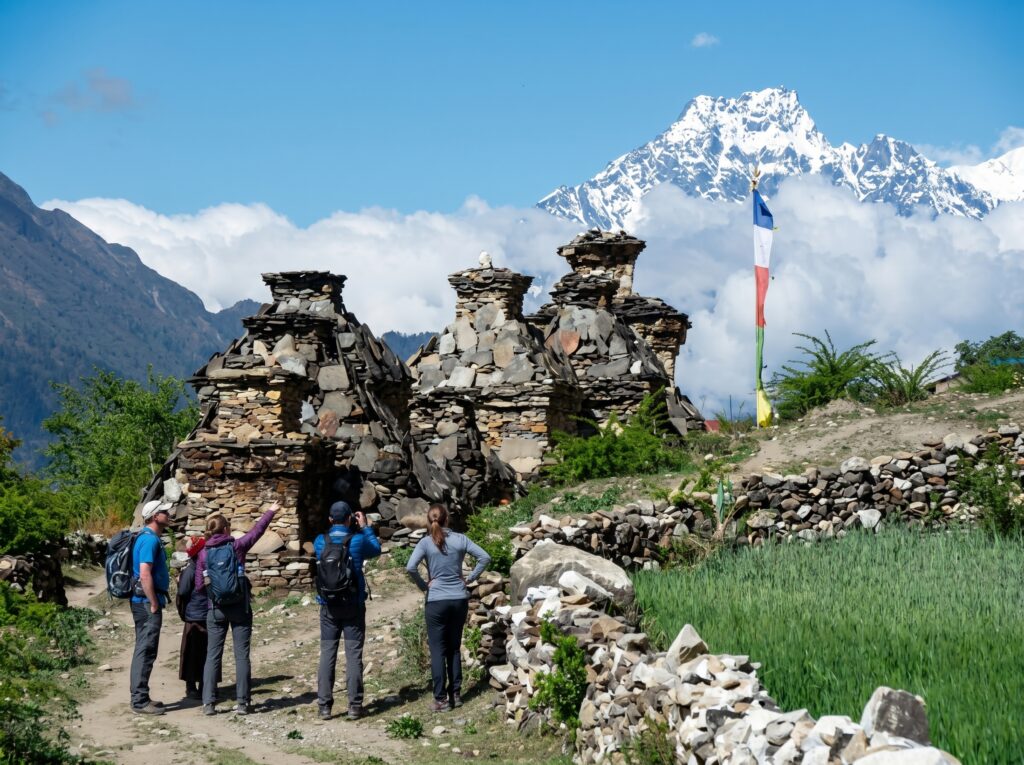
Tsum Valley is an entirely different world from the popular trails at Everest and Annapurna. You walk through timeless villages, meet the warm-hearted Tsumbas — Tibetan descendants — and engage in a culture based on Tibetan Buddhism. You walk by ancient monasteries, Mu Gompa, DhephuDoma, Gumba Lungdang, along with nunneries, colorful chortens, and prayer flags along the way.
The valley itself is regarded as a sacred beyul, or hidden land, believed to have been blessed by Guru Rinpoche (Padmasambhava) during his travels through the Himalayas. This belief has shaped local traditions for centuries, promoting values of compassion, harmony, and respect for all living beings.
The Tsumba people — the inhabitants of this valley — are of Tibetan origin. They speak their own dialect, follow their own customs, and live a life shaped more by the rhythms of Buddhist practice than by anything happening in Kathmandu. Animal slaughter is prohibited in the area. Polyandry — a woman marrying more than one man — is still practiced in some villages. You are genuinely walking into a different world.
The highlight for most trekkers is Mu Gompa, the largest monastery in the valley, sitting at 3,700 meters. Mu Gompa lies on the highest and remotest part of the Tsum Valley. Inside, you’ll find religious books including Kangyur, a life-sized statue of Avalokiteshvara, and images of Guru Padmasambhava and Tara. From Mu Gompa, you can see panoramic views of the Tara Himal range, Kipu Himal, Ganesh Himal, Churke Himal, and Shringi Himal.
Along the route you’ll also pass through Rachen Gompa, a nunnery built in 1905; the sacred Milarepa Piren Phu Cave (Pigeon Cave), where the Tibetan saint Milarepa is said to have meditated; and a string of villages — Chumling, Chhokangparo, Nile — each one more remote and more atmospheric than the last.
Away from crowded trails, the Tsum Valley Trek draws those wanting something different. Not about extreme heights, this journey leans into village life, ancient customs, through quiet paths. Instead of tough climbs, it gives steady walking alongside rich traditions.
The Permits You’ll Need — Don’t Get This Wrong
Tsum Valley requires more paperwork than most Nepal treks. If you’re combining it with the Manaslu Circuit (which many people do), the permit list is long. Here is what you need:
1. Manaslu Restricted Area Permit (RAP) This is the big one. It costs USD 100 per person during peak season (roughly October–November and March–May) and USD 75 in the off-season. This covers the Manaslu Circuit section of your trek.
2. Tsum Valley Restricted Area Permit Separate from the Manaslu RAP. The Tsum Valley permit costs USD 40 per week during peak season and USD 30 per week in the off-season. If you’re spending 7–10 days in Tsum Valley, you may need to pay for two weeks.
3. Manaslu Conservation Area Permit (MCAP) Required for entering the conservation area.
4. Annapurna Conservation Area Permit (ACAP) If your route passes through the Annapurna Conservation Area (it does if you exit via Dharapani), you need this too.
5. Manaslu and Tsum Valley Local Area Entry Permit This new trekking permit was introduced in September 2024. Apart from the Special/Restricted Area Permit, Annapurna Conservation Area Entry Permit, Manaslu Conservation Area Entry Permit, and Tsum Valley Additional Entry Permit, there is now another Manaslu Local Area Entry Permit, which was introduced by the local area government in September 2024. You can get this at the checkpoint located at Jagat nearby Philim.
That makes five separate permits if you’re doing Tsum Valley with the Manaslu Circuit. Your registered trekking agency will handle all of these on your behalf — you cannot walk into a government office and get the restricted area permits yourself. These permits can only be obtained from the Department of Immigration in Kathmandu, through an authorized trekking agency.
The Route: What the Trek Actually Looks Like
The Tsum Valley Trek typically starts at Soti Khola or Machha Khola, reached by a roughly 8–9 hour drive from Kathmandu via Arughat. From there, you follow the Budhi Gandaki River northeast through lowland jungle and subtropical forest, gaining altitude slowly.
The trail passes through Jagat (1,340m), then Lokpa (2,440m), where you leave the Manaslu Circuit route and turn northeast into the Syar Khola valley — this is the entrance to Tsum.
From Lokpa the valley changes character fast. Villages get quieter. Mani walls appear. The architecture shifts toward Tibetan stone construction. You pass through Chumling in lower Tsum, then climb to Chhokangparo (3,031m), the gateway to upper Tsum.
Chhokangparo marks a transition point in the Tsum Valley, where landscapes become more open, air thinner, and Tibetan cultural influence even stronger. Its central location makes it a natural stopping point for acclimatization and exploration.
From Chhokangparo the trail pushes north through villages like Leru, Ngakyu, and Lar, past the Milarepa Cave near Burji, to Nile (3,360m) — the last village heading north. From Nile, a half-day walk brings you to Mu Gompa at 3,700m.
The trek to Mu Gompa takes about 2.5 — 3 hours from Nile, around 5km. You’ll walk closer to the Tibetan border on a sloped uphill path along the river, with mani walls, stupas, and prayer flags. You may also spot wildlife including Himalayan Tahr, blue sheep, yak, Danphe (Nepal’s national bird), vulture, and eagle species.
Most trekkers spend two nights at Mu Gompa — one for the main monastery exploration, and one for a day hike toward the base of Pika Himal (4,865m), from where you can see the Tibetan plateau. Then you retrace your steps south, usually covering ground faster on the descent.
The total trek — Tsum Valley standalone, not combined with Manaslu — runs roughly 14–18 days depending on your pace and acclimatization stops.
Teahouses, Food, and What to Expect on the Trail
You will stay in simple but cozy teahouses, hike through stunning terrain, and enjoy peaceful overnights in villages like Chumling, Chhokangparo, Nile, and Gumba Lungdang.
The teahouse infrastructure in Tsum Valley is improving, but it’s not at the level of Everest or Annapurna. In the lower sections — from Soti Khola to Lokpa — the lodges are fairly standard. Once you enter Tsum Valley proper, the lodges become smaller and more basic. At Mu Gompa and Rachen Gompa, you can sometimes stay in monastery guesthouses, which is a genuinely special experience.
Basic food such as dal bhat, porridge, muesli, tsampa porridge (prepared from wheat and barley) are available at higher elevations. Shared rooms without attached bathrooms and a simple heating system are available. There is no Wi-Fi, but there is electricity, and a bucket shower is possible.
Higher up, the menu shrinks. Carry energy snacks, a good sleeping bag (rated to at least -10°C), and don’t expect anything resembling a hot shower above Chhokangparo.
Trail Conditions in 2026 — One Important Note
Cyclone Montha in October 2025 left landslide damage on sections between Jagat and Prok, particularly near active road construction zones. The route is fully open and trekkers are moving through normally, but some sections between Nyak and Gap remain narrow with loose material underfoot. A licensed guide familiar with current conditions is genuinely useful here — not just a bureaucratic requirement.
This is worth keeping in mind. The guide requirement in Tsum Valley isn’t just a government box-ticking exercise. The terrain is remote, the valley is close to the Tibetan border, and trail conditions can shift. A guide who knows the current state of the path between Jagat and Lokpa is an actual asset.
The Honest Answer to “Can I Solo Trek Tsum Valley?”
Yes — with a very specific definition of “solo.”
You can go as a single individual without needing to find another foreign trekker to share your permit. That barrier is gone as of March 2026. But you will have a licensed Nepali guide walking with you the entire time, and your permit must be arranged through a TAAN-registered agency. The permit system, the checkpoints, the guide requirement — all of that remains fully in place and is actively enforced.
If you’re a solo traveler who simply wants to experience one of Nepal’s most extraordinary hidden valleys without being bundled into a group tour with strangers, the new rule is genuinely liberating. You set your own pace. You have your own guide. You’re not waiting for anyone. That is real solo travel.
If you wanted to walk into Tsum Valley with a map and no support, Nepal is not that place — not in restricted areas, not in 2026.
Best Time to Go
Spring (March to May) and Autumn (October to November) are the gold standard windows. Autumn gives you the clearest skies after the monsoon, with golden light on the ridgelines and festival energy in the villages. Spring brings rhododendrons lower down and warmer temperatures.
Chilly weather keeps many away during December through February. Above places such as Mu Gompa, snow piles up. Heavy rains arrive between June and August, making paths wet and tough underfoot, with landslide danger rising as soil loosens on steep slopes.
A Place Worth the Complexity
Tsum Valley is not the easiest trek to organize. The permits are more expensive and more numerous than anywhere else in Nepal. The logistics take planning. And you cannot simply wing it independently.
But what you get in return is a valley that is still, genuinely, itself. Despite the increasing number of trekkers in recent years, Chhokangparo has managed to retain its traditional way of life without becoming commercialized. Visitors are often greeted warmly, offered tea, and welcomed into homes or teahouses with genuine kindness.
That’s rarer than you’d think in the Himalayas these days. Most of the famous trails have long since tipped into a kind of themed version of themselves — teahouse menus with pizza and espresso, lodges competing on Wi-Fi speed, the same Instagram viewpoints photographed ten thousand times. Tsum Valley is not that. Not yet.
The new solo permit rule means one less reason to put this place off. If you’ve been waiting for the right moment, 2026 is a very reasonable time to go.
Comments (0)
Write a comment- What Changed and When
- “Solo” Does Not Mean “Alone” — Know the Difference
- What Is Tsum Valley — And Why You’d Even Want to Go There
- The Permits You’ll Need — Don’t Get This Wrong
- The Route: What the Trek Actually Looks Like
- Teahouses, Food, and What to Expect on the Trail
- Trail Conditions in 2026 — One Important Note
- The Honest Answer to “Can I Solo Trek Tsum Valley?”
- Best Time to Go
- A Place Worth the Complexity
Read the latest Blogs & Insights
Explore our collection of articles and insights to gain in-depth travel knowledge, expert advice, and stay updated on the latest trends and tips.


No comments yet.