









How Difficult Is the Kanchenjunga Trek? Fitness and Preparation Tips
Learn how difficult the Kanchenjunga Trek is with fitness tips, training advice, altitude prep, gear guidance, and planning for a safer trek this year.
-
 Adventure Master Trek
-
21 April, 2026
-
13 mins read
-
1046 Views
-
0 Comments


Kanchenjunga does not get the same headlines as Everest Base Camp or the Annapurna Circuit. That relative anonymity is part of what makes it so appealing to experienced trekkers who want something rawer, more remote, and genuinely untouched by the infrastructure that now lines the Khumbu corridor. But the obscurity also means far less information circulates about what the trek actually demands physically, and that gap in knowledge catches people underprepared more often than it should.
So here is an honest assessment of how difficult the Kanchenjunga trek really is, what your body needs to handle it, and how to prepare properly before you ever set foot on the trail.
What Kind of Trek Are We Actually Talking About?
Before getting into fitness specifics, it helps to understand what Kanchenjunga is as a trekking experience versus something like Everest Base Camp or the Annapurna Base Camp route.
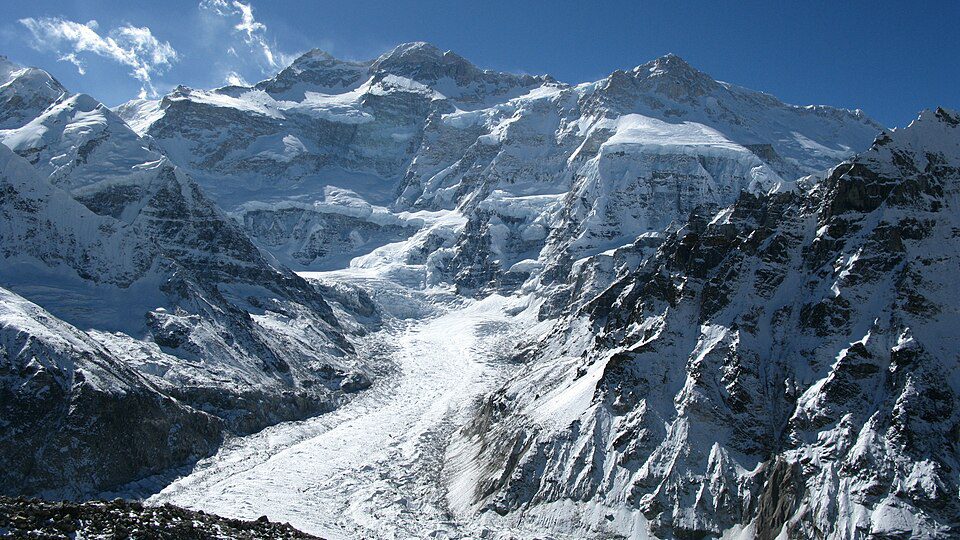
The Kanchenjunga trek sits in the far eastern corner of Nepal, bordering both Tibet and the Indian state of Sikkim. The standard full circuit, which visits both the north and south base camps of Kanchenjunga, the world’s third highest mountain at 8,586 meters, covers somewhere between 180 and 220 kilometers depending on the specific route and side trips taken. Most trekkers complete the circuit in 20 to 24 days.
The northern base camp, Pang Pema, sits at 5,143 meters. The southern base camp, Oktang, reaches 4,730 meters. The high passes connecting the two sides of the mountain, most notably the Sele La pass at around 4,290 meters and the Mirgin La at 4,663 meters, are genuinely demanding crossings that require steady legs and solid acclimatization.
There are no roads into the trekking area beyond the end points. There are no helicopter rescue services on standby as there are in the Khumbu. Tea houses exist but are sparse and basic, especially on the northern circuit. Trekkers carry more personal equipment than they would on a commercial Everest route, and the trail itself is less maintained, less marked, and more technically demanding underfoot.
All of this combines to make Kanchenjunga one of the hardest treks in Nepal by almost any measure. Not technically difficult in the mountaineering sense, but demanding in terms of sustained distance, altitude, remoteness, and the physical and mental resilience required to complete it without turning back.
How Difficult Is the Kanchenjunga Trek? An Honest Rating
Most trekking agencies classify Kanchenjunga as strenuous to very strenuous. That classification is accurate and not inflated for marketing purposes.
The difficulty comes from several compounding factors rather than any single extreme element.
Duration is the first challenge. Three weeks of consecutive daily hiking at altitude is a fundamentally different physical undertaking from a 12-day trek. The cumulative fatigue that builds across 20-plus days affects sleep quality, appetite, motivation, and physical recovery in ways that shorter treks simply do not replicate. Trekkers who complete Everest Base Camp comfortably sometimes underestimate Kanchenjunga because the daily distances look comparable on paper. What the paper does not show is what those distances feel like on Day 18 when the body is running a significant caloric deficit and sleeping poorly at 4,000 meters.
Remoteness adds genuine psychological weight. On the Annapurna or Khumbu routes, a bad day means a teahouse with warm food, fellow trekkers, and a phone signal within reach. On Kanchenjunga, a bad day can mean camping in a high valley with no other trekking party in sight, limited food options, and communication that depends entirely on a satellite device. The psychological demand of true remoteness is real and often underestimated by people who have only trekked on busier Himalayan routes.
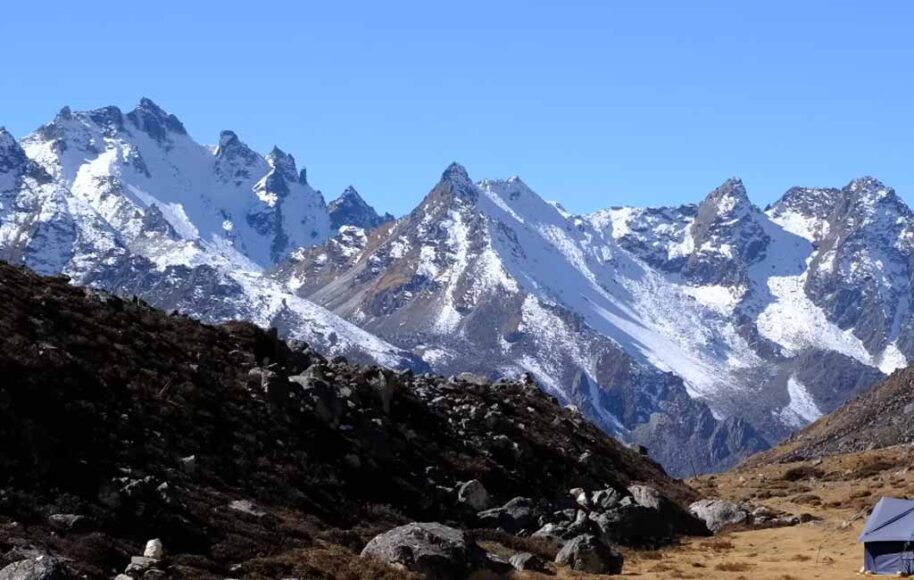
Trail conditions are considerably more variable than on the main commercial routes. Landslides affect the lower sections during and after the monsoon season. River crossings that look trivial on a map can become genuinely dangerous after rainfall. Above the tree line, the path is often marked only by cairns and the tracks of the handful of trekking parties who passed through that season. Route finding becomes a skill rather than an afterthought.
Altitude is sustained at a higher average elevation for a longer period than most comparable treks. The acclimatization schedule needs to be taken seriously across the full three-week period, not just in the early days.
The Altitude Profile: What Your Body Faces
The Kanchenjunga circuit does not hit extreme altitude in a single dramatic push the way Everest Base Camp does. Instead, the altitude is sustained and cumulative, which in some ways is more demanding on the body’s acclimatization response.
The trek begins from either Taplejung in the east, at roughly 1,820 meters, or Sekathum at around 1,660 meters. From there the trail climbs steadily through rhododendron forest and remote Sherpa and Rai villages into higher and higher terrain.
The northern approach to Pang Pema base camp reaches 5,143 meters after passing through Ghunsa, at 3,595 meters, and Khangpachen at 4,050 meters. The southern approach to Oktang base camp at 4,730 meters climbs through Tseram at 3,870 meters and Ramche at 4,580 meters.
Crossing between the north and south circuits involves high passes that demand a full day of effort at altitude, often on loose scree or snow, depending on season. The Mirgin La crossing at 4,663 meters is the most consistently challenging.
Total cumulative ascent across the full circuit runs to approximately 12,000 to 14,000 meters. That figure is significantly higher than the Everest Base Camp trek and reflects the constant up-and-down nature of a route that crosses multiple valley systems and high ridgelines over three weeks.
Who Should Attempt the Kanchenjunga Trek?
Kanchenjunga is not appropriate for first-time Himalayan trekkers. That is not a gatekeeping statement, it is practical advice rooted in what the route actually asks of you.
The ideal candidate for the Kanchenjunga circuit has completed at least one other multi-week high-altitude trek in Nepal or a comparable mountain environment. Everest Base Camp, the Annapurna Circuit, or the Manaslu Circuit all provide relevant preparation at a comparable altitude range and duration, though none quite matches Kanchenjunga’s remoteness.
Beyond prior experience, the ideal Kanchenjunga trekker is genuinely comfortable with uncertainty and basic conditions. Teahouses on the Kanchenjunga route are far more rustic than those on the Khumbu corridor. Hot showers are rare above the lower villages. Menus become increasingly limited as you gain elevation, and the nutritional quality of food available at high camps is modest. Trekkers who find these conditions deeply uncomfortable on shorter routes will struggle significantly across three weeks here.
Strong mental resilience matters as much as physical fitness on this trek. There will be days when the weather closes in, the trail is harder than expected, and Base Camp still feels impossibly far away. The ability to manage that experience without catastrophizing is a genuine skill that experienced mountain trekkers develop over time.
Fitness Requirements for the Kanchenjunga Trek
The fitness required for Kanchenjunga sits above what most people would consider standard hiking fitness, though it falls well short of anything approaching mountaineering conditioning.
The core physical demand is cardiovascular endurance across sustained moderate effort over consecutive days. The Kanchenjunga route is not about explosive power or technical climbing ability. The trail rewards trekkers who can maintain a steady pace across six to eight hours of walking day after day without accumulating excessive damage to joints and connective tissue.
Upper body strength matters less than many people expect. Lower body endurance, particularly the ability to absorb repeated downhill loading across the knees, hips, and ankles, is where undertrained trekkers typically show weakness.
Lung capacity and cardiovascular baseline become critical above 4,000 meters. At Pang Pema base camp at 5,143 meters, roughly 55 percent of sea-level oxygen is available. Any cardiovascular inefficiency becomes amplified at that altitude. Trekkers with strong aerobic fitness generally acclimatize more smoothly and recover more effectively overnight at high camps.
Flexibility and mobility, particularly in the hips and ankles, help significantly on terrain that involves scrambling, boulder hopping, and uneven footing. Static flexibility is less important than functional mobility through a full range of movement.
Preparation Tips: Building the Fitness Base
Starting a structured preparation program at least four to six months before the trek gives the body enough time to genuinely adapt rather than simply building fatigue. Here is what that preparation should prioritize.
- Build your weekly walking distance progressively. Start at whatever current baseline feels sustainable and aim to reach 50 to 60 kilometers per week by the final four weeks before departure. This total should be spread across four or five sessions rather than concentrated in weekend-only efforts. Consistent daily movement trains the connective tissue and joint structures that long-distance hiking stresses in ways that gym training simply does not replicate.
- Train specifically for consecutive days. The most underrated preparation element for any multi-week trek is back-to-back hiking days. Two consecutive days of 15 to 20 kilometers with a loaded pack is more relevant preparation than a single 30-kilometer day followed by recovery. Your body needs to learn how to function on imperfect overnight recovery, which is exactly what it will face for three weeks at altitude.
- Load the pack from early in training. Walking with a 7 to 10 kilogram daypack changes everything about your gait, posture, and energy expenditure. Many trekkers train in light footwear and carry nothing, then discover on Day 2 that a loaded pack at altitude creates specific pressure on the hips, lower back, and knees that no amount of unloaded walking prepares them for.
- Prioritize descent conditioning. The Kanchenjunga circuit involves enormous amounts of downhill terrain. Every major ascent is followed by a corresponding descent, and with 14,000 meters of cumulative elevation gain across the circuit comes roughly the same volume of descent. Eccentric loading exercises including walking lunges, step-downs, and downhill running build the quad and knee resilience that makes those descent days manageable rather than crippling.
- Incorporate stair climbing regularly. For trekkers in urban environments without access to hills, sustained stair climbing with a loaded pack is one of the most effective training tools available. Forty-five to sixty minutes of continuous stair climbing at a moderate pace replicates the cardiovascular demand and muscular loading of sustained Himalayan ascent better than flat running, cycling, or gym-based cardio.
- Do not neglect cardiovascular base training. Swimming, cycling, rowing, and running all build the aerobic foundation that altitude trekking draws on. Two to three dedicated cardiovascular sessions per week alongside hiking training builds the engine that the trail will run on for three weeks. Sustained moderate intensity effort for 45 to 90 minutes develops the aerobic efficiency that matters most at altitude.
Acclimatization Strategy for Kanchenjunga
The acclimatization challenge on Kanchenjunga is different from a trek like Everest Base Camp, where the altitude arc is relatively well-defined and the rest days at Namche and Dingboche are universally understood. On the Kanchenjunga circuit, the altitude profile is more variable and the acclimatization schedule requires active attention and flexibility.
The standard advice to climb high and sleep low applies throughout the trek. On days approaching key elevation thresholds, particularly the approach to Ghunsa and above, plan short acclimatization hikes to elevations above your sleeping point before returning to camp. Do not push through altitude-related headaches or nausea in the hope they will resolve by morning. They frequently do not.
Hydration is more difficult to maintain on Kanchenjunga than on commercially managed routes, where water sources and purification options are well established. Carry reliable purification equipment and drink consistently throughout each walking day, aiming for three to four liters minimum above 3,500 meters.
Diamox, the commonly prescribed altitude medication, is worth discussing with a physician before departure. Many trekkers on extended remote routes use it prophylactically from around 3,000 meters upward. Understand both its benefits and its side effects before relying on it at altitude far from medical assistance.
Gear Preparation Specific to Kanchenjunga
The gear requirements for Kanchenjunga exceed what most Himalayan teahouse treks demand, and this affects both preparation and the physical load carried.
A four-season sleeping bag rated to at least negative 20 degrees Celsius is appropriate for high camps and pass crossings. Teahouse blankets at altitude on the Kanchenjunga route are thin, often damp, and insufficient for cold nights above 4,000 meters.
Trekking poles are not optional here. The terrain on the high passes and the sustained descent days make poles essential for knee protection and balance. Train with the poles you intend to use on the trek, not with different ones borrowed at the last minute.
Footwear should be broken in over a minimum of 200 kilometers of hiking before departure. Blisters and hotspots that are manageable nuisances on a 12-day trek become serious problems on a 22-day remote circuit where skin has no chance to recover properly between days.
Layering for a genuine range of temperatures matters more on Kanchenjunga than on shorter treks. The temperature difference between the lower subtropical valley sections at 1,600 meters and the high pass crossings above 4,500 meters can exceed 30 degrees Celsius. Carrying the right layers without overloading the pack requires careful thought and honest assessment of what you will actually use versus what provides psychological comfort.
Mental Preparation: The Part People Skip
Physical fitness gets all the attention in trek preparation conversations, and the mental side is consistently underestimated. Three weeks in a remote mountain environment with limited communication, basic living conditions, days of genuine physical discomfort, and the constant psychological pressure of high altitude demands a specific kind of mental toughness.
Developing familiarity with discomfort through training is more useful than trying to simulate the specific conditions of the trek. Cold-weather camping, multi-day backpacking trips with limited amenities, and deliberately training in wet or uncomfortable conditions all build the adaptive capacity that the trail will test.
Managing expectations realistically is equally important. The Kanchenjunga circuit is hard. Some days will be genuinely unpleasant. The view from Pang Pema of the north face of Kanchenjunga on a clear morning, however, is one of the most extraordinary sights available to a non-technical mountain traveler anywhere on earth. The difficulty and the reward are not separate things on this trek. They are the same thing.
Final Thoughts
The Kanchenjunga trek is among the most demanding multi-day treks available to non-technical trekkers anywhere in Nepal. The combination of sustained duration, genuine remoteness, complex altitude profile, and variable trail conditions places it firmly in the strenuous category, and that assessment should be taken seriously rather than treated as a challenge to disprove.
For trekkers who prepare honestly and approach the mountain with respect, Kanchenjunga offers something that few other routes in the world can match: three weeks of true wilderness travel through one of the least visited and most spectacular landscapes on the planet, culminating in base camp views of the third-highest mountain on earth.
Prepare for four to six months. Train on consecutive days with a loaded pack. Respect the acclimatization schedule without exception. Hire a licensed guide from a reputable agency. And give yourself enough time on the mountain to let it unfold at the pace it actually demands.
Comments (0)
Write a comment- What Kind of Trek Are We Actually Talking About?
- How Difficult Is the Kanchenjunga Trek? An Honest Rating
- The Altitude Profile: What Your Body Faces
- Who Should Attempt the Kanchenjunga Trek?
- Fitness Requirements for the Kanchenjunga Trek
- Preparation Tips: Building the Fitness Base
- Acclimatization Strategy for Kanchenjunga
- Gear Preparation Specific to Kanchenjunga
- Mental Preparation: The Part People Skip
- Final Thoughts
Read the latest Blogs & Insights
Explore our collection of articles and insights to gain in-depth travel knowledge, expert advice, and stay updated on the latest trends and tips.


No comments yet.