









Nar Phu Valley: Nepal’s Last Living Time Capsule
Explore Nar Phu Valley Trek, Nepal's hidden time capsule with ancient villages, wild landscapes, Tibetan culture, and epic Himalayan trails.
-
 Adventure Master Trek
-
28 April, 2026
-
14 mins read
-
1034 Views
-
0 Comments


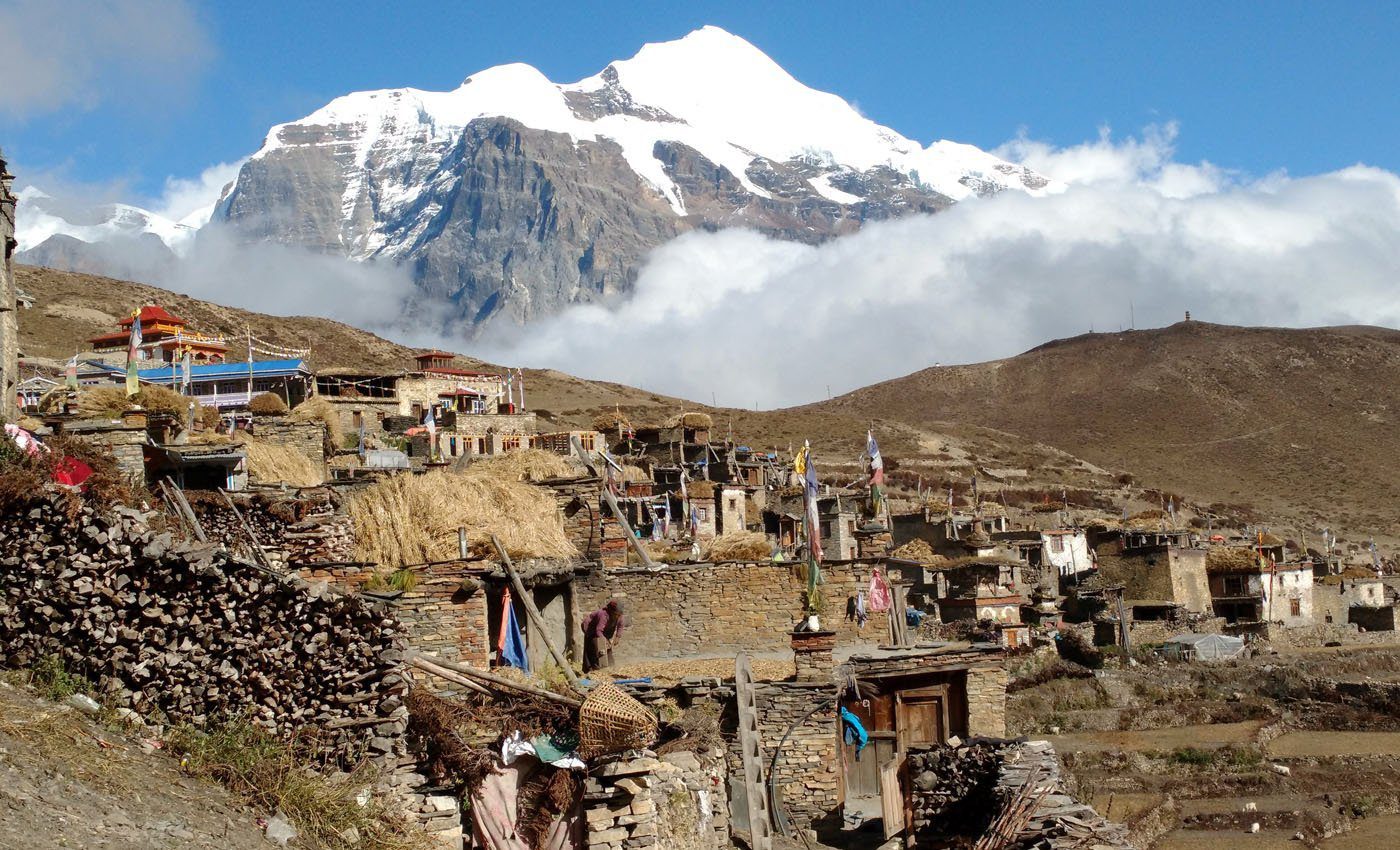
There are places in this world where time seems to have paused not dramatically, not for a tourist camera, but quietly and absolutely. Nar Phu Valley, tucked deep inside Nepal’s Annapurna region, is one such place. Perched within a dramatic amphitheater of rust-red cliffs and snow-capped Himalayan giants, it holds two villages Nar and Phu that together form one of the most extraordinary surviving examples of ancient Tibetan highland culture anywhere on earth. To visit Nar Phu is not merely to trek through stunning scenery. It is to step into a world shaped by a thousand years of isolation, warrior heritage, Buddhist devotion, and extraordinary human endurance.
This is the story of what makes Nar Phu Valley unlike anywhere else on the planet: its people, its history, its architecture, and the layered spiritual culture that continues to pulse at its heart.
What Is Nar Phu Valley and Why Does It Matter?
There are places in this world where time seems to have paused not dramatically, not for a tourist camera, but quietly and absolutely. Nar Phu Valley, tucked deep inside Nepal’s Annapurna region, is one such place.
Perched within a dramatic amphitheater of rust-red cliffs and snow-capped Himalayan giants, it holds two villages Nar and Phu that together form one of the most extraordinary surviving examples of ancient Tibetan highland culture anywhere on earth.
To visit Nar Phu is not merely to trek through stunning scenery. It is to step into a world shaped by a thousand years of isolation, warrior heritage, Buddhist devotion, and extraordinary human endurance.
Where Is Nar Phu Valley? Location & Geography
Nar Phu Valley lies in the Manang District of northern Nepal, close to the Tibetan border, branching off from the popular Annapurna Circuit at the village of Koto. It is flanked by some of the most formidable peaks in the Himalayan range:
- Pisang Peak
- Kang Guru
- Gangapurna
- Manaslu
The two principal villages, Nar and Phu, sit at elevations of roughly 4,100 to 4,200 metres above sea level. The surrounding terrain narrow canyon gorges, river crossings, barren cliffs, and scree-covered ridgelines made the valley all but impenetrable for most of history.
This geography was not a curse. It was a shield.
How Was Nar Phu Valley “Discovered”?
Because of its near-total inaccessibility, Nar Phu remained unknown to the outside world for centuries even to Nepal’s own government.
According to local accounts, it was residents of Chame, a downstream village on the Annapurna Circuit, who first alerted authorities after noticing oddly cut clothing floating down the Nar Khola river. A government investigation followed, and officials discovered entire villages thriving in the mountains communities that had been living there, largely undetected, for generations.
Nepal opened the area to tourists in 1992, though it wasn’t practically accessible for trekking until around 2003. Even today, Nar Phu remains a restricted area requiring a special permit and licensed guide to enter and visitor numbers remain gloriously small.
That long isolation is the key to everything that makes Nar Phu remarkable. While other Himalayan valleys absorbed outside influences and gradually blended into wider Nepalese or global culture, Nar Phu evolved in a kind of cultural amber. The traditions that exist here today are not performed for tourists. They were not revived for heritage tourism. They simply never stopped.
The Khampa Heritage: Descendants of Warriors
The people of Nar and Phu trace their origins to the Kham province of eastern Tibet. The Khampas proud, fierce, independent were among the most formidable peoples of the Tibetan plateau, legendary for their horsemanship, warrior codes, and fierce resistance to outside domination.
When political upheaval and Chinese expansion put pressure on Tibet, groups of Khampa warriors and their families fled southward, crossing the high Himalayan passes into Nepal’s northern borderlands. Some of these communities settled in Nar Phu Valley, finding the rugged terrain familiar and the natural barriers reassuring.
They brought everything with them their language, their religion, their architecture, their agricultural and pastoral traditions.
The Khampa Resistance
After the Chinese takeover of Tibet in 1950, some Khampa groups in Nepal continued armed resistance operations against Chinese forces in Tibet. Nar Phu’s remote terrain made it a tactically useful base. Ruins of fortified Khampa settlements makeshift bunkers and defensive structures can still be seen along the trail today.
These remnants are sobering reminders that this landscape was not only a place of spiritual practice, but also of desperate resistance and geopolitical upheaval.
What survived this long journey and these painful centuries is a community of around 800 people who speak their own distinct language, practice a syncretic blend of ancient religion and Tibetan Buddhism, and live at altitudes that most of the world’s population would find impossible to endure.
The Nar-Phu Language: A World in Its Own Words
One of the most remarkable and most endangered aspects of Nar Phu culture is its language.
The Nar-Phu dialect is a Tibeto-Burman tongue belonging to the Tamangic language group. It is spoken natively by only around 800 people in the villages of Nar and Phu, making it one of Nepal’s most critically endangered languages. The Language Commission of Nepal has placed Nar-Phu among eight minority languages at acute risk of extinction.
The language is heavily influenced by classical Tibetan far more than by Nepali, which only entered the valley relatively recently. Interestingly, there are phonological and lexical differences between the dialects of Nar and Phu, even though the two villages are separated by only a few hours’ walk.
Why the Language Is Disappearing
As young people migrate to cities like Pokhara and Kathmandu for education and economic opportunity, Nepali and English replace the Nar-Phu dialect in daily life. The elderly still speak it at home; children increasingly do not.
Linguists have flagged this community as a priority. It is possible that within a generation or two, this ancient tongue — which carries within it specialized vocabulary for yak herding, altitude farming, Buddhist ritual, and trans-Himalayan trade — may fall silent forever.
To hear Nar-Phu spoken on a trekking visit, even without understanding it, is to encounter something extraordinary: a living linguistic world that most of the planet doesn’t know exists.
Architecture of the High Himalayas: Stone, Mud, and Centuries
The built environment of Nar and Phu is unlike anything you will encounter in Nepal’s more frequently visited regions.
Traditional Houses
The traditional houses of both villages are constructed from locally quarried stone and packed mud compact, low-slung structures with flat roofs designed to withstand the crushing weight of winter snow and ferocious high-altitude winds. The flat roofs serve as outdoor workspaces in summer, used for drying grains, storing equipment, and social gathering.
The walls are deliberately thick, providing insulation against temperatures that plunge well below freezing in winter. White-washed exteriors, often accented with ochre or red bands near the roofline, are accented by carved wooden window frames with geometric patterns.
Inside, the kitchen is the heart of the home as it must be in any environment where staying warm is a matter of survival.
In Phu, the houses are stacked dramatically along the ridge, giving the village an almost vertical quality when viewed from below. In Nar, the layout is slightly more dispersed, set in a broader valley with more generous sunlight.
The Kani: Gateway to Sacred Space
Visitors entering Phu Village pass through a kani a traditional arched gateway constructed from white and red-painted stone. This is not merely an architectural feature; it is a spiritual threshold, marking the transition from the profane space of the trail into the sanctified space of the village. Often adorned with religious murals, mantras, and protective symbols, the kani is a core part of Tibetan Buddhist spatial tradition.
The Dzong Fortresses
Perhaps the most dramatic architectural heritage of Nar Phu are the ruins of the fortified citadels known as dzongs — perched on hilltops and cliff edges above the villages. Originally built as defensive positions, these ruins carry a long Tibetan architectural lineage. Standing beneath them, you can still feel the strategic intelligence of their positioning: the way they command the gorges, the way they would have made any uninvited approach profoundly difficult.
Mani Walls: Stone Scriptures in the Landscape
Threading through the valleys, lining the approaches to villages and monasteries, are the mani walls — long rows of flat stones carved by hand with sacred Buddhist mantras, most commonly Om Mani Padme Hum.
In Nar Phu, the mani walls are particularly extensive and old, many worn smooth by centuries of wind and touch. Travelers are expected to pass mani walls with the wall on their right — a physical embodiment of Buddhist circumambulation. These walls function as sacred texts made physical, turning the act of walking itself into a spiritual practice.
Religion and Ritual: Where Bon Meets Buddha
The spiritual life of Nar Phu represents a living synthesis of two ancient religious traditions.
The Bon Foundation
The Bon religion predates Buddhism in Tibet by thousands of years. It is an animistic and shamanistic tradition that understands the world as inhabited by spirits of mountains, rivers, rocks, and weather which must be respected and kept in balance with human life.
Although the Khampas of Nar Phu eventually adopted Buddhism as their primary faith, the Bon substratum never fully disappeared. Instead, it blended into Buddhist practice in ways that are sometimes conscious and sometimes simply habitual. This blending is particularly intact in Nar Phu, where long isolation preserved syncretic practices that elsewhere were ironed out by more doctrinally orthodox influences.
Nyingma and Kagyu Buddhism
The Buddhism practiced in Nar Phu belongs primarily to the Nyingma and Kagyu schools of Tibetan Buddhism. The Nyingma school is the oldest Tibetan Buddhist tradition, tracing its lineage to Guru Rinpoche (Padmasambhava). The Kagyu school places particular emphasis on meditation and the direct transmission of wisdom from teacher to student.
Throughout the valley, the symbols of this faith are omnipresent: prayer flags strung between rooftops, prayer wheels spinning beside monastery doors, and chortens standing sentinel at village entrances.
Tashi Lhakhang Monastery and the Ancient Gompas
The crown jewel of Nar Phu’s religious heritage is Tashi Lhakhang Monastery, located on a hillside opposite Phu Village. Believed to be among the oldest functioning Buddhist monasteries in the region estimates of its age range from 300 to over 700 years old it is believed to have been consecrated by Guru Rinpoche himself.
Nar Village is home to three monasteries of the Nyingmapa sect. Below Nar, the Nar Phedi Monastery is operated by a small community of nuns one of the very few nunneries in Nepal’s high-altitude restricted regions and trekkers can spend the night at the monastery’s guesthouse, sharing the daily rhythm of prayers and communal life.
Festivals and the Sacred Calendar
The religious calendar of Nar Phu follows the Tibetan lunar cycle:
- Losar (Tibetan New Year): family gatherings, ritual offerings, traditional meals, and ceremonies reinforcing community bonds across the long, cold winter.
- Mani Rimdu: a Buddhist festival of masked dances and monastic performances that enacts the defeat of negativity and the triumph of the dharma.
These are not performances. They are practices deeply functional, deeply felt.
Daily Life at 4,000 Metres: A Remarkable Ordinary Existence
Seasons, Crops, and Survival
The growing season at these altitudes is brutally short. The people of Nar and Phu have adapted by cultivating the hardiest crops: barley, buckwheat, and potatoes all capable of maturing quickly under intense Himalayan sunlight. Barley is the dietary cornerstone: ground into tsampa flour and mixed with hot salted butter tea into a dense, energy-rich dough.
The warming months also bring Yarsagumba the caterpillar fungus extraordinarily valuable in traditional Tibetan medicine and Chinese markets. During the collecting season in late spring, much of the community moves to high-altitude meadows to harvest it, and the income it generates has become a significant economic supplement.
The Yak Economy
No single element is more central to life in Nar Phu than the yak. These animals — adapted to high altitudes through millions of years of evolution — are simultaneously the community’s transport, food source, clothing provider, and fuel supply:
- Yak milk is drunk, churned into butter, and fermented into cheese
- Yak wool is spun by hand and woven into thick, warm blankets and garments
- Dried yak dung is the primary fuel for cooking and heating
- Yaks themselves serve as pack animals across passes no vehicle could navigate
During winter, more than 70 percent of the population descends to central Nepal, trading wool blankets, yak-fiber ropes, medicinal herbs, and goat hides for grain, chili, and other necessities. This centuries-old trade network connects Nar Phu to the wider Nepalese world while preserving its distinct identity.
Craft Traditions
Walking through Phu village, you are likely to encounter women spinning yak wool, grinding mustard seeds for oil, or weaving textiles on handlooms. These are not demonstration crafts; they are the actual productive labor of daily life. The textiles produced in Nar and Phu — heavy, durable, and made for extreme weather — represent a tradition passed down from mother to daughter over generations.
What Makes Nar Phu Valley Unique: The Convergence of Rarities
Many places in Nepal offer mountain scenery, Buddhist heritage, or remote cultural encounters. What makes Nar Phu Valley singular is the convergence of so many different kinds of rarity in a single, still-living community:
- A valley hidden by geography so effectively that Nepal’s government didn’t fully document it until the 20th century
- Khampa warrior heritage preserved in ruins and oral tradition
- A pre-Buddhist Bon substratum unusually intact and unusually old
- Nyingma and Kagyu Buddhist synthesis still actively practiced
- Dzong ruins, ancient gompas, mani walls, and traditional stone houses forming a physical archive of Himalayan civilization
- The critically endangered Nar-Phu language, spoken nowhere else on earth
- One of the highest concentrations of snow leopards on the planet
Perhaps most significantly, Nar Phu is a place preserved not by deliberate cultural management, but simply by its own momentum. The traditions continue because the people who hold them are still there. This is not a museum. It is a community.
Threats Facing Nar Phu Valley
For all its remarkable preservation, Nar Phu Valley is not invulnerable.
Climate change is altering the hydrological patterns on which the valley’s agriculture and pastoralism depend. Glaciers are retreating, snowfall patterns are shifting, and the predictability on which ancient agricultural calendars relied is fraying.
Young people are leaving. As education and economic opportunities draw the next generation to Kathmandu, Pokhara, and beyond, the social fabric that sustains the culture thins. The Nar-Phu language loses speakers with every family that relocates.
Carefully managed trekking tourism has provided some economic incentive for the community to remain invested in its own heritage. The restricted-area permit system limits visitor numbers, preventing the mass tourism that has transformed other Himalayan valleys. But tourism is not a preservation strategy on its own — it is, at best, a supplement to the deeper question of whether the people of Nar and Phu will find the conditions that allow them to choose to stay.
Practical Information: Trekking to Nar Phu Valley
- Permit required: Yes — a restricted area permit plus the Annapurna Conservation Area Permit (ACAP)
- Guide required: Yes — a licensed guide is mandatory
- Entry point: Village of Koto on the Annapurna Circuit
- Best season: Spring (March–May) and autumn (September–November)
- Altitude: Villages at approximately 4,100–4,200 m above sea level
- Duration: Typically 10–14 days as part of a larger Annapurna Circuit or standalone Nar Phu loop
- Accommodation: Basic teahouses in Nar and Phu; overnight at Nar Phedi Monastery is possible
- Visitor numbers: Among the lowest of any trekking region in Nepal
A Living Lesson in Human Possibility
Standing in Phu Village at dusk, watching prayer flags whip in the wind above stone houses that have sheltered families for centuries, with the shadows of Himalayan peaks deepening across the valley floor, it is easy to feel something that is difficult to name: a recognition, perhaps, that human culture is more various and more durable than our ordinary experience suggests.
The people of Nar Phu built a civilization at altitudes where most of the world cannot even breathe comfortably. They carried their language, their religion, and their art over some of the highest mountain passes on earth and kept them alive for a thousand years in one of the most geographically demanding environments our planet offers. They blended ancient Bon animism with Tibetan Buddhist philosophy into a living spiritual practice that still finds meaning in a carved stone, a fluttering flag, a shared bowl of butter tea.
Nar Phu Valley is not simply a destination. It is a testament to what human communities can preserve when given the right conditions — and a reminder of what is lost when those conditions disappear.
If you visit, go with reverence. Go slowly. Go knowing that what you are witnessing is irreplaceable, extraordinary, and alive — but only just.
Comments (0)
Write a comment- What Is Nar Phu Valley and Why Does It Matter?
- Where Is Nar Phu Valley? Location & Geography
- How Was Nar Phu Valley “Discovered”?
- The Khampa Heritage: Descendants of Warriors
- The Khampa Resistance
- The Nar-Phu Language: A World in Its Own Words
- Why the Language Is Disappearing
- Architecture of the High Himalayas: Stone, Mud, and Centuries
- Traditional Houses
- The Kani: Gateway to Sacred Space
- The Dzong Fortresses
- Mani Walls: Stone Scriptures in the Landscape
- Religion and Ritual: Where Bon Meets Buddha
- The Bon Foundation
- Nyingma and Kagyu Buddhism
- Tashi Lhakhang Monastery and the Ancient Gompas
- Festivals and the Sacred Calendar
- Daily Life at 4,000 Metres: A Remarkable Ordinary Existence
- Seasons, Crops, and Survival
- The Yak Economy
- Craft Traditions
- What Makes Nar Phu Valley Unique: The Convergence of Rarities
- Threats Facing Nar Phu Valley
- Practical Information: Trekking to Nar Phu Valley
- A Living Lesson in Human Possibility
Read the latest Blogs & Insights
Explore our collection of articles and insights to gain in-depth travel knowledge, expert advice, and stay updated on the latest trends and tips.





No comments yet.