









How Difficult Is the Annapurna Base Camp Trek? Route, Altitude and Tips
Annapurna Base Camp comes up in almost every conversation about first Himalayan treks, and that makes sense. The route is accessible, the infrastructure is solid compared to more remote Nepalese destinations, and the payoff at 4,130 meters inside the Sanctuary is genuinely extraordinary. But accessible does not mean easy, and the number of trekkers who […]
-
 Santosh Sir
-
19 May, 2026
-
13 mins read
-
671 Views
-
0 Comments


Annapurna Base Camp comes up in almost every conversation about first Himalayan treks, and that makes sense. The route is accessible, the infrastructure is solid compared to more remote Nepalese destinations, and the payoff at 4,130 meters inside the Sanctuary is genuinely extraordinary. But accessible does not mean easy, and the number of trekkers who arrive underprepared and turn around below Deurali every season tells its own story. Before committing to this trek, it is worth understanding exactly what the difficulty involves, what the altitude does to the body, and how to prepare in a way that actually works.
How Difficult Is the Annapurna Base Camp Trek?
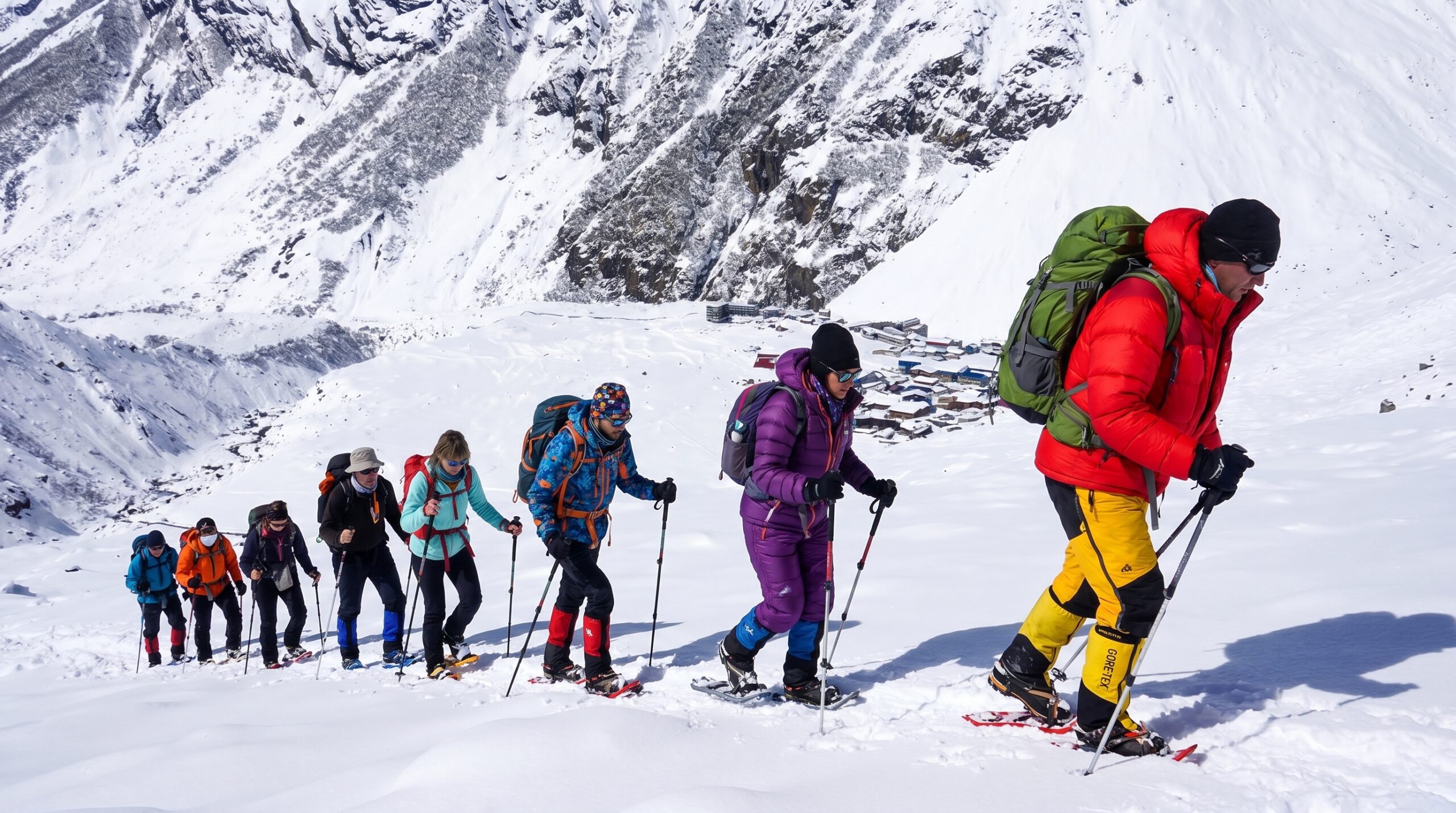
The honest classification for ABC sits at moderate to moderately strenuous. That places it above a casual walking holiday and well below a technical mountaineering objective. For trekkers with no prior Himalayan experience, it represents a genuine physical challenge that rewards specific preparation rather than general fitness assumptions.
The difficulty does not come from any single dramatic obstacle. There are no high passes, no glacier crossings, no technical terrain requiring specialist skills. The challenge accumulates across the combined weight of consecutive days of walking at increasing altitude, specific trail sections that are steep and relentless, cold temperatures at higher elevations, and the physiological reality of operating above 3,500 meters with meaningfully less oxygen available to the body.
Most trekkers with a reasonable fitness baseline and four to five months of honest preparation complete the route without major problems. Most trekkers who arrive assuming everyday fitness is sufficient struggle significantly by the second half of the trek.
The Route: What the Trail Actually Looks Like
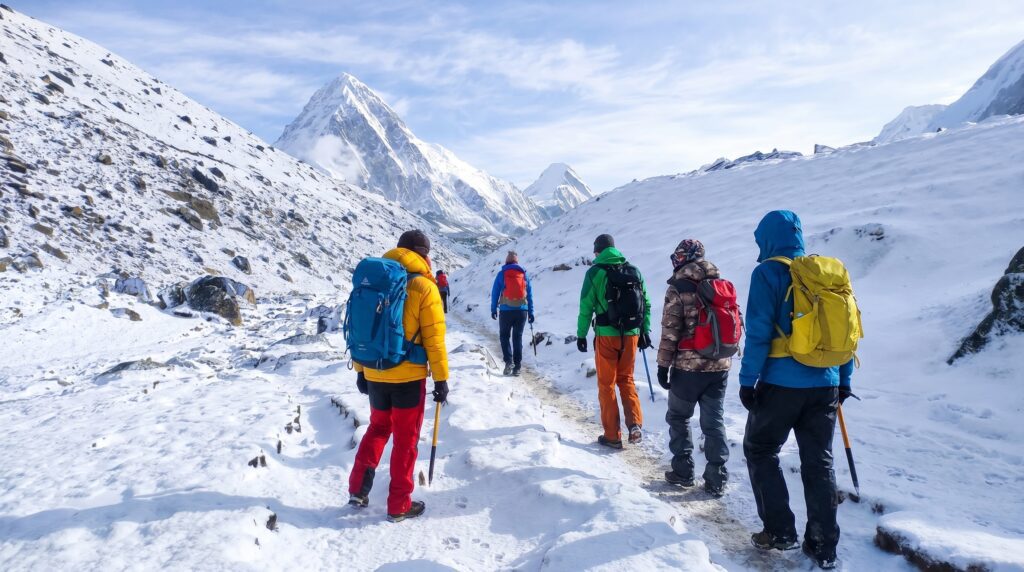
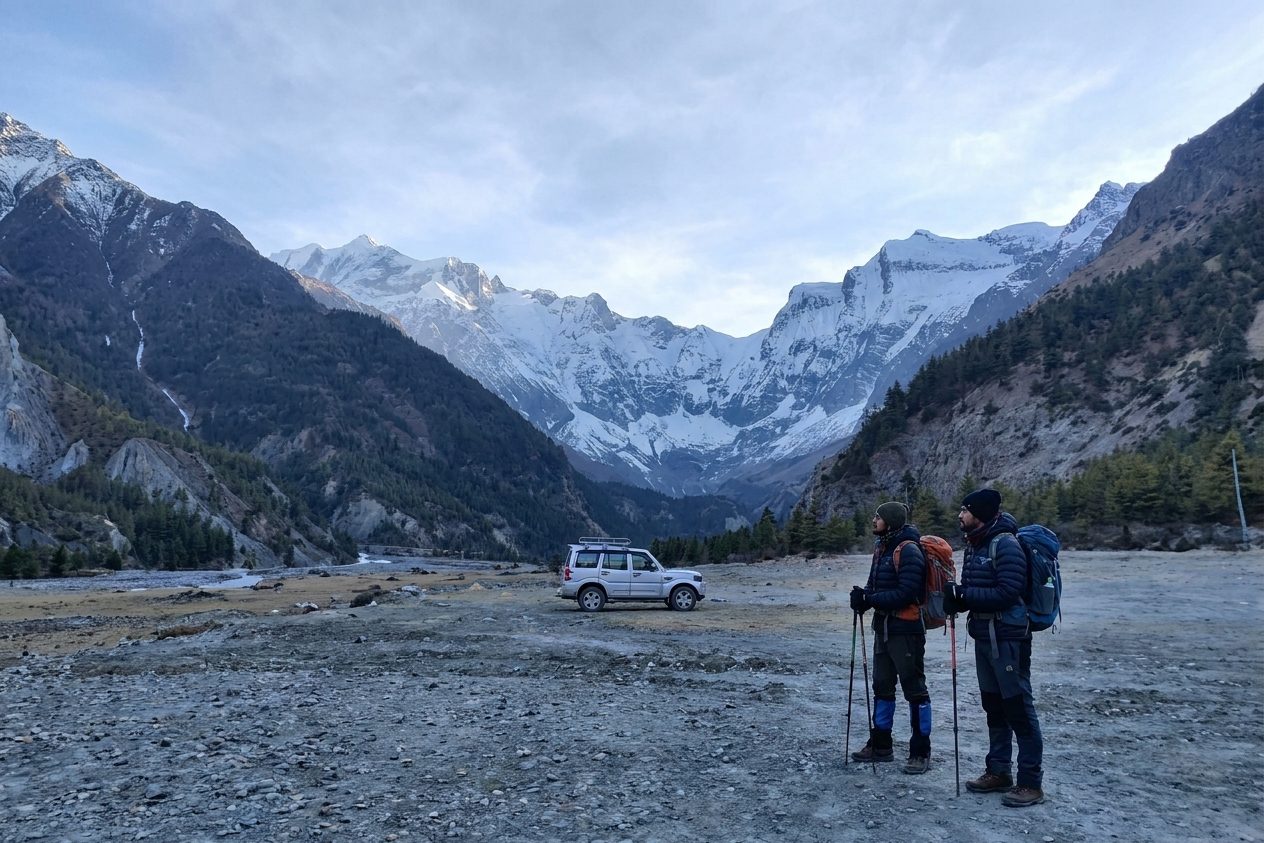
The ABC trek begins at Nayapul, reached by a roughly two-hour drive from Pokhara. From there, the trail follows the Modi Khola river valley northward, climbing gradually through increasingly dramatic terrain until the gorge opens into the glacial Sanctuary at the top.
The lower sections below Ghorepani move through terraced farmland, dense rhododendron forest, and traditional Gurung villages. This part of the trail is lush, green, and relatively forgiving in terms of gradient, though the sustained stone staircase climb from Tikhedhunga to Ghorepani, involving roughly 3,000 steps, is a rude introduction to what the route asks of the legs.
The middle section between Ghorepani and Chhomrong involves more rolling terrain with significant descent and re-ascent. Chhomrong at 2,170 meters is the last proper village before the trail enters the gorge proper. Above Chhomrong the character of the trek changes. The valley narrows, the forest transitions from rhododendron and oak to bamboo and then to sparse alpine scrub, and the mountains begin appearing above the ridgeline in ways that feel suddenly, genuinely enormous.
The gorge section between Sinuwa and Deurali is where many trekkers first encounter real difficulty. The trail is steep in both directions, the terrain is frequently wet from the moisture that collects in the narrow gorge, and the section from Himalaya village upward to Deurali at 3,230 meters pushes into altitude territory where the body begins working noticeably harder for the same output.
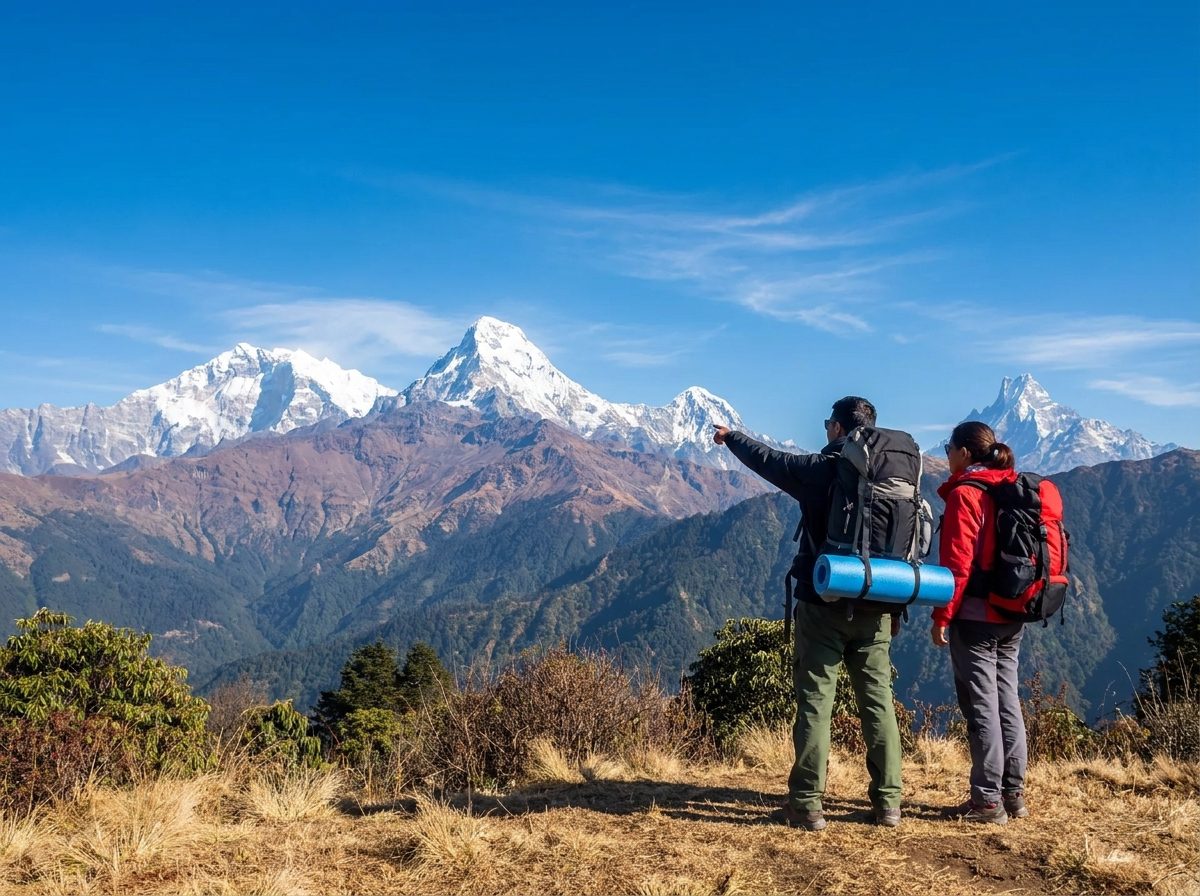
Above Deurali, the trail opens dramatically. Machhapuchhre Base Camp at 3,700 meters sits on a wide moraine shelf with the first clear views of the fish-tail peak that gives it the name Machhapuchhre. The final stretch from MBC to Annapurna Base Camp at 4,130 meters crosses open glacial terrain with the full Sanctuary wall becoming visible as the basin opens up. Most trekkers describe this final approach as one of the most affecting moments of the entire route.
The return to Nayapul follows broadly the same path, with most trekkers completing the descent in three to four days compared to the seven to eight active walking days on the ascent.
Annapurna Base Camp Altitude: What the Numbers Mean
The altitude profile of ABC is considerably more forgiving than that of Everest Base Camp at 5,364 meters or any route crossing major Himalayan passes above 5,000 meters. That relative forgivingness is one of the reasons ABC works as a first Himalayan trek for many people. But 4,130 meters is still genuinely high, and the body responds to it in ways that cannot be entirely predicted in advance or fully prevented through fitness alone.
At 4,130 meters, roughly 61 percent of sea-level oxygen is available. That reduction is enough to slow walking pace, disrupt sleep quality, reduce appetite, and produce headache symptoms in susceptible trekkers. Above 3,500 meters the body’s acclimatization response becomes the dominant variable in daily performance, and this is a physiological process with its own timeline that pace and determination cannot override.
The altitude sections that demand the most attention are the jump from Deurali at 3,230 meters to Machhapuchhre Base Camp at 3,700 meters, and then the final push to ABC at 4,130 meters. Gaining 900 meters of altitude in the final day of ascent after seven or eight days of trekking, when the body is already running a caloric deficit and sleeping less efficiently than at sea level, is where altitude sickness most commonly announces itself on this route.
The typical symptoms appearing at these elevations are headache, disturbed sleep, reduced appetite, and general fatigue beyond what the day’s walking would normally produce. Mild versions of these are normal and manageable. The warning signs requiring descent without delay are loss of coordination or balance, confusion or disorientation, a wet, persistent cough, and extreme fatigue that overnight rest does not improve. Any of these symptoms appearing requires going down immediately. Altitude emergencies do not stabilize at the same elevation and worsen faster than most trekkers expect.
The Hardest Sections of the Annapurna Base Camp Trek
Understanding which specific sections are hardest helps with both preparation and pacing decisions on the trail.
- Tikhedhunga to Ghorepani is the most demanding day in the lower half of the trek. The stone staircase climbs to Ulleri and then the ascent to Ghorepani at 2,860 meters gains roughly 1,320 meters of elevation across a relatively short horizontal distance. The sustained step-climbing with a loaded pack catches even fit trekkers off guard on what is only the second day of the route, before the legs have fully adapted to trail walking.
- The gorge section from Sinuwa through to Deurali is consistently underestimated. The trail descends and re-ascends multiple times through narrow forest terrain that is wet, steep, and energy-draining across two to three consecutive days. By the time Deurali is reached, most trekkers have already covered the majority of the cumulative elevation gain of the entire route.
- The final approach from Machhapuchhre Base Camp to ABC is the shortest hard section but the one that feels most difficult because altitude is at its highest and the body is at its most fatigued. The open moraine terrain is not technically demanding but the physical output required to maintain even a slow pace at 4,000 meters after eight days of trekking is considerable.
- The descent days returning through the gorge surprise many trekkers who expect the return to feel easy. The stone staircase sections load the knees and quads in a way that deteriorates quickly in undertrained legs. Several of the worst knee injuries on the ABC route happen on the descent rather than the ascent.
Fitness Tips: How to Prepare Properly
Preparation for ABC should begin four to five months before departure. The goal is not to build the ability to walk one very long day. The goal is to walk moderate distances on consecutive days with a loaded pack without accumulating enough physical damage to slow everything down by the second week.
- Build weekly walking distance progressively. Start at a comfortable current baseline and work toward 45 to 55 kilometers per week across four to five sessions by the final month before departure. Spreading the distance across multiple shorter sessions builds connective tissue and joint resilience far more effectively than occasional long weekend walks.
- Train on consecutive days. Back-to-back hiking days of 12 to 15 kilometers with a loaded pack of 6 to 8 kilograms is the single most useful preparation available. The body needs to learn how to function on imperfect overnight recovery, which is exactly what the trek demands for nearly two weeks at altitude.
- Stair climbing is non-negotiable. The Ulleri staircase on Day 2 and the sustained gorge climbs require specific preparation that flat walking does not provide. Sustained loaded stair climbing for 45 to 60 minutes three times per week throughout the preparation period is the most direct simulation available to trekkers without access to real hills.
- Train for descent specifically. Walking lunges, box step-downs, and deliberate downhill running build the eccentric quad and knee strength that absorbs impact across the long descent days. Neglecting descent conditioning is the most common preparation mistake on this route.
- Build cardiovascular base fitness. Swimming, cycling, rowing, and running all develop the aerobic efficiency that matters significantly above 3,500 meters. Two to three dedicated cardiovascular sessions per week, alongside walking training builds the engine that the altitude will draw heavily on.
- Load the pack from early in training. Walking with a 6 to 8-kilogram pack from the beginning of preparation reveals the hip, lower back, and knee pressure points that need addressing before the trail reveals them on Day 3.
Acclimatization Tips That Actually Work
The acclimatization strategy for ABC is built into a sensible itinerary, but understanding the principles helps trekkers make good decisions on the trail rather than just following a schedule mechanically.
The climb high, sleep low principle applies throughout the route. On days approaching key altitude thresholds, hiking briefly to a higher elevation before returning to the night’s sleeping altitude accelerates the acclimatization response. This is standard practice at Ghorepani and particularly valuable at Chhomrong before entering the upper gorge.
Hydration is the most consistently underestimated acclimatization factor. Three to four liters of water per day above 2,500 meters is the appropriate target. Dehydration at altitude amplifies every symptom of altitude sickness and slows the acclimatization response measurably. Carrying a reliable water filter or purification tablets reduces dependence on expensive bottled water in the upper sections.
Alcohol above 3,000 meters suppresses the respiratory drive that powers acclimatization and consistently produces worse symptoms the morning after consumption. The impulse to celebrate in teahouses with other trekkers is understandable. The physiological cost the following day is predictable and well-documented.
Sleeping at Machhapuchhre Base Camp at 3,700 meters on the ascent rather than pushing straight to ABC in a single day from Deurali is strongly recommended. The extra night at MBC altitude gives the body an additional acclimatization cycle before the final 430 meters to base camp, and the morning views from MBC before the clouds build are worth the extra night independently of the acclimatization benefit.
Essential Gear for the Annapurna Base Camp Trek
Footwear is the most consequential gear decision. Waterproof hiking boots with ankle support, broken in across at least 150 to 200 kilometers of walking before departure, are essential. The lower trail sections between Nayapul and the gorge are frequently wet and muddy, and blisters beginning on Day 2 become serious problems by Day 8. Attempting the trek in trail runners without extensive prior experience in comparable terrain is a common mistake with painful consequences.
A sleeping bag rated to negative 10 degrees Celsius is appropriate for the upper sections. Teahouse blankets exist throughout the route, but above the gorge, they are often insufficient for cold nights in shoulder season months.
Trekking poles make a meaningful difference on the Ulleri ascent and across all of the descent sections. Using the poles intended for the trek through training builds the movement patterns that make them genuinely useful on the trail.
A layering system handles the thermal range of the route more effectively than any single heavy garment. A moisture-wicking base layer, fleece mid-layer, waterproof shell, and down jacket for high-elevation evenings covers the full temperature range from Nayapul at 1,070 meters to base camp at 4,130 meters, a spread that can exceed 25 degrees Celsius across a single day.
Rain gear is essential regardless of season. The gorge sections collect moisture at almost any time of year, and arriving cold and wet at a high-elevation teahouse after a long day drains physical and mental reserves in ways that compound across multiple consecutive days.
Best Season for the Annapurna Base Camp Trek
October and November deliver the clearest skies and most settled weather. October particularly sees extended high-pressure periods that produce the unobstructed base camp views that define most photographs of the Sanctuary. The trade-off is a busy trail through peak weeks.
March and April offer rhododendron forests in bloom below Ghorepani that are genuinely spectacular. The trail is considerably quieter than in autumn, and the weather is generally stable, though afternoon cloud buildup at base camp is more common. Spring is underrated for trekkers who want quality mountain time without October crowds.
December through February brings cold conditions and potential snow on the upper sections, with some teahouse closures above Deurali. These months are not appropriate for first-time Himalayan trekkers.
The monsoon months from June through early September make the lower forest sections extremely slippery, bring leeches through lower elevation terrain, and produce cloud cover that frequently obscures the Sanctuary. ABC during the active monsoon season is not recommended for beginners.
Practical Tips Before Starting
Hiring a licensed local guide is strongly recommended, even though guides are not legally required. A good guide handles navigation, monitors acclimatization, communicates with teahouse owners in Nepali, and provides cultural context that transforms the trek from a physical challenge into something considerably richer. Guide rates run roughly 25 to 35 US dollars per day.
Hiring a local porter is equally encouraged. Carrying a heavy main pack through the Ulleri staircase on the second day exhausts the body before the route has properly begun. Porter costs run around 20 to 25 US dollars per day for loads up to 25 kilograms.
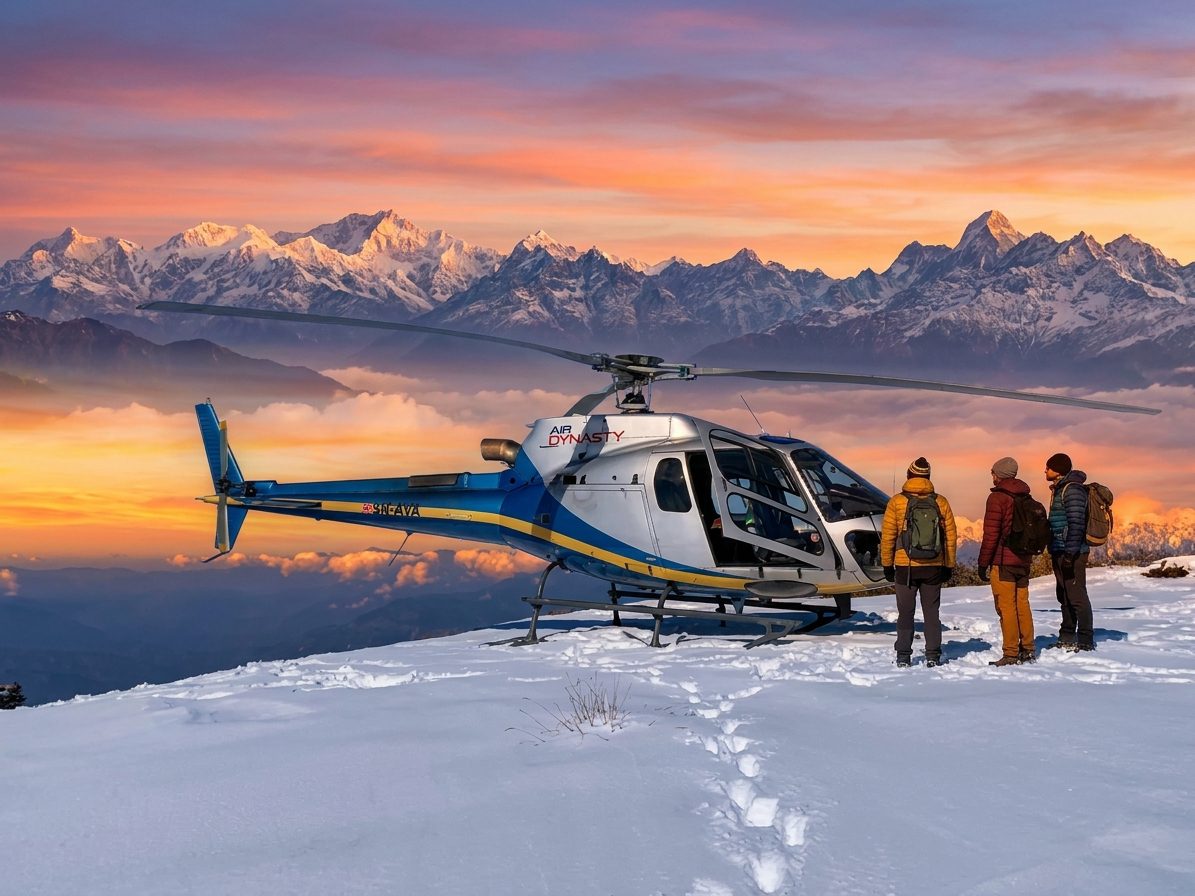
Travel insurance covering high-altitude trekking to at least 5,000 meters and helicopter evacuation needs to be verified specifically in the policy document. Helicopter evacuation from the Sanctuary without appropriate insurance coverage is expensive enough to create serious financial problems for unprepared trekkers.
Permits, including the Annapurna Conservation Area Permit and TIMS card are obtained in Kathmandu or Pokhara before the trek begins. Carrying multiple passport-sized photographs and copies of the main passport pages speeds up the permit process considerably.
Final Thoughts
The Annapurna Base Camp trek earns its reputation as one of the finest beginner Himalayan routes because the difficulty and the reward are genuinely proportional. The Sanctuary at 4,130 meters, ringed by some of the tallest mountains on earth, is an experience that justifies the effort required to reach it.
That effort is real. The preparation needs to be honest. Four to five months of progressive training with back-to-back hiking days and loaded pack work, specific stair climbing and descent conditioning, a sensible acclimatization schedule, a licensed guide, a porter, and a buffer day at the end of the itinerary. That combination gets trekkers to base camp far more reliably than enthusiasm alone.
The Annapurna Sanctuary has been forming for millions of years. A few months of proper preparation is a small price for the privilege of standing inside it.
Comments (0)
Write a comment- How Difficult Is the Annapurna Base Camp Trek?
- The Route: What the Trail Actually Looks Like
- Annapurna Base Camp Altitude: What the Numbers Mean
- The Hardest Sections of the Annapurna Base Camp Trek
- Fitness Tips: How to Prepare Properly
- Acclimatization Tips That Actually Work
- Essential Gear for the Annapurna Base Camp Trek
- Best Season for the Annapurna Base Camp Trek
- Practical Tips Before Starting
- Final Thoughts
Read the latest Blogs & Insights
Explore our collection of articles and insights to gain in-depth travel knowledge, expert advice, and stay updated on the latest trends and tips.




No comments yet.