









Why Mardi Himal Trek Is the Best Short Trek in Nepal Right Now
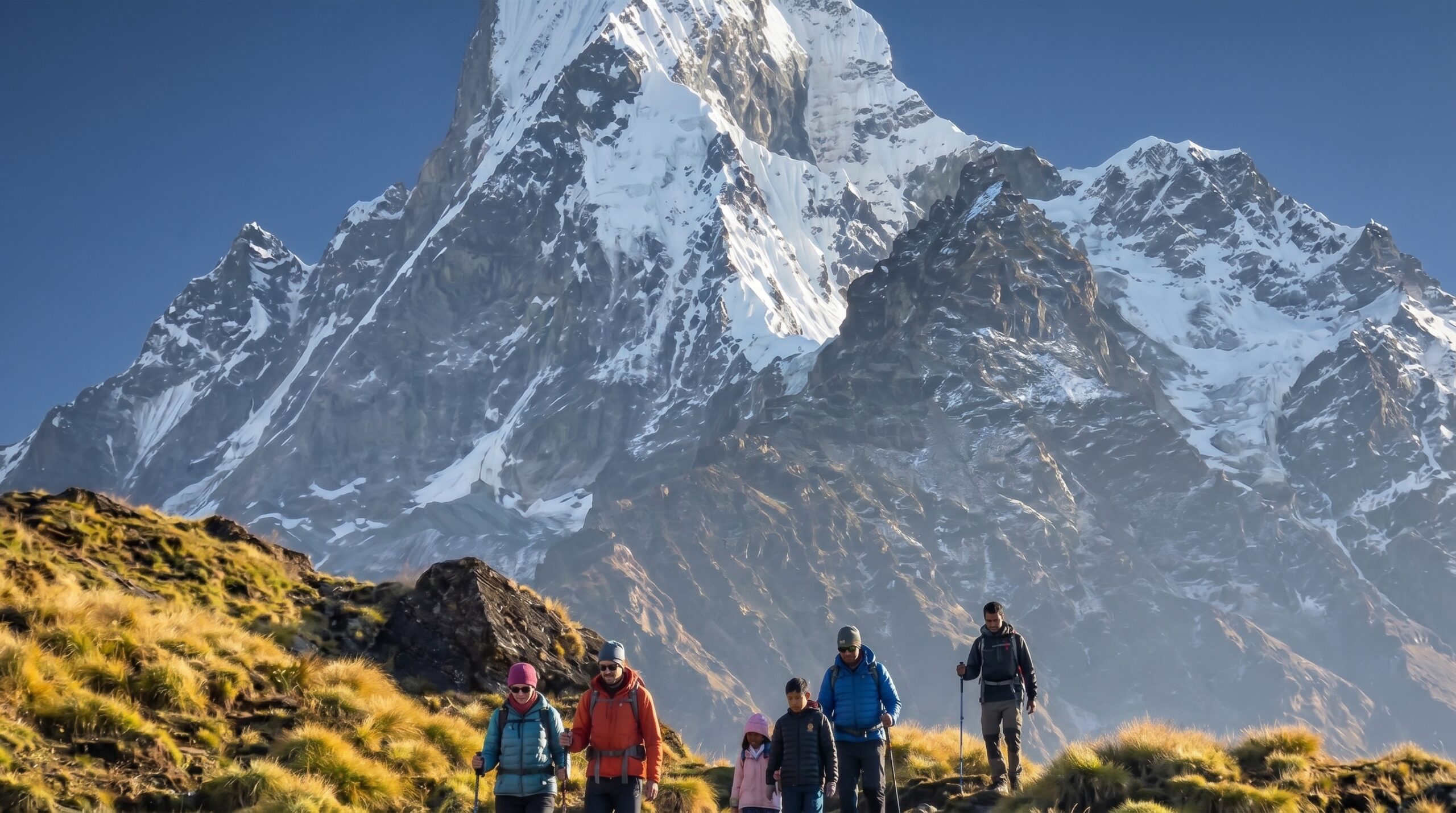
There’s a moment somewhere around 4,200 metres, when the trail opens up and you’re standing on a ridge that feels like the roof of everything — Machapuchare filling the sky to your left, the Annapurna massif blazing white in front of you, and below, a sea of pine forest dropping into valleys you can’t quite […]
-
 Santosh Sir
-
20 May, 2026
-
9 mins read
-
651 Views
-
0 Comments


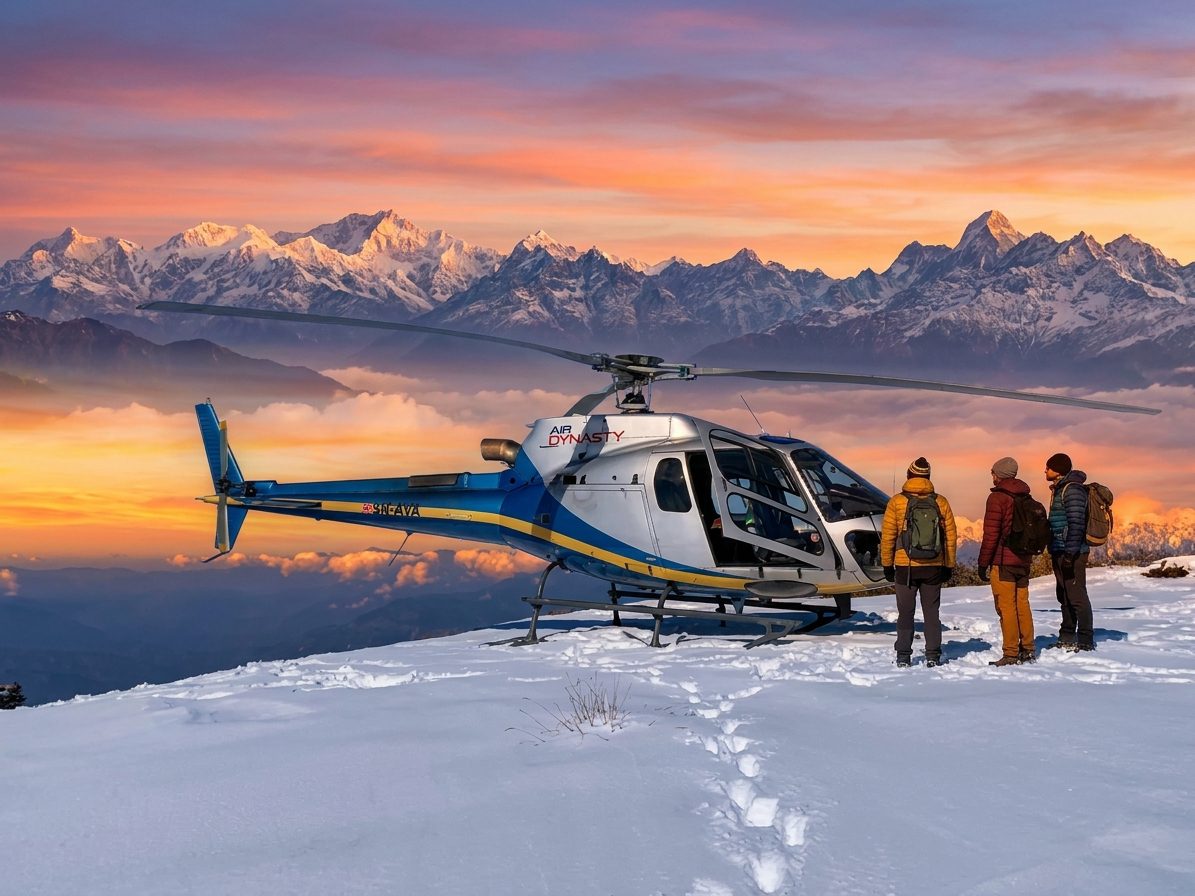
There’s a moment somewhere around 4,200 metres, when the trail opens up and you’re standing on a ridge that feels like the roof of everything — Machapuchare filling the sky to your left, the Annapurna massif blazing white in front of you, and below, a sea of pine forest dropping into valleys you can’t quite see the bottom of. No one is selling you instant noodles here. No tea house is blasting Nepali pop at 6 AM. It’s just you, the wind, and a mountain so close you feel like you could reach out and press your palm against its flank.
That ridge is why Mardi Himal has quietly become the best short trek in Nepal — not because some travel magazine said so, but because it earns it. Every day of it.
The Annapurna Circuit Ruined a Generation of Trekkers. Mardi Himal Fixes That.
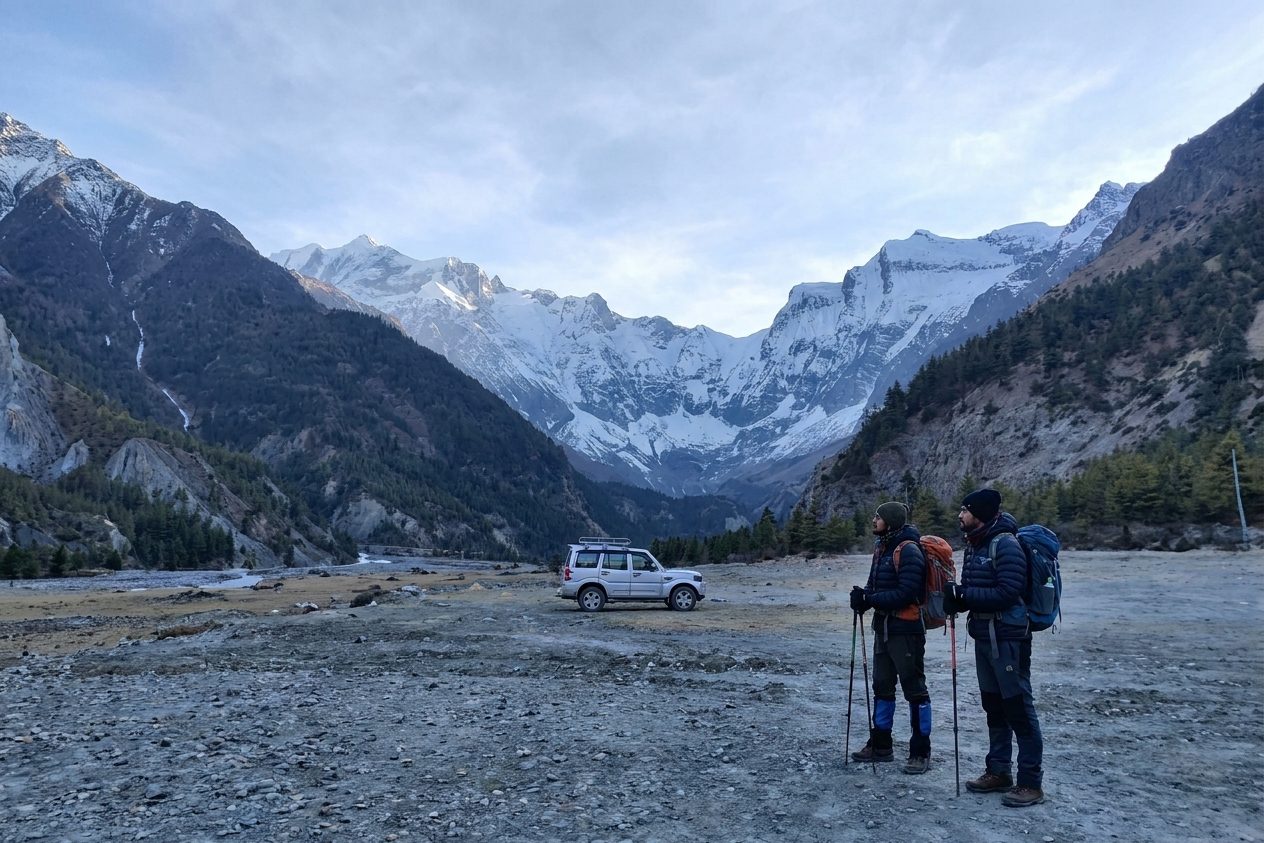
Let’s be direct. The classic Annapurna Circuit — once one of the greatest walks on earth — is not what it used to be. Roads have eaten the lower sections whole. Jeeps now do in four bone-grinding hours what trekkers used to spend three days walking. The Thorong La pass is still breathtaking, but the approach through Chame and Pisang often feels like trekking through a construction site.
Even the Annapurna Base Camp trail, which remains genuinely beautiful, has become so heavily trafficked that during the October–November peak, the teahouses in Chomrong and Deurali resemble airport transit lounges more than Himalayan villages.
Mardi Himal sits in the same region — tucked between Annapurna Base Camp and the Fishtail massif — but it receives a fraction of the footfall. The route was officially opened to trekkers only in 2012, which means it still has a rawness to it. The infrastructure exists — enough teahouses to keep you comfortable — but the circus hasn’t arrived yet.
When you’re on the Mardi Himal ridge at sunset watching the light turn Machapuchare from white to amber to deep rose, you are almost certainly one of the few dozen people in the world seeing exactly that view at that exact moment. On the Annapurna Base Camp trail, you’d be watching the same light show with three hundred others, queued to get the shot.
That distinction matters more than it sounds.
The Route: What Actually Happens Each Day
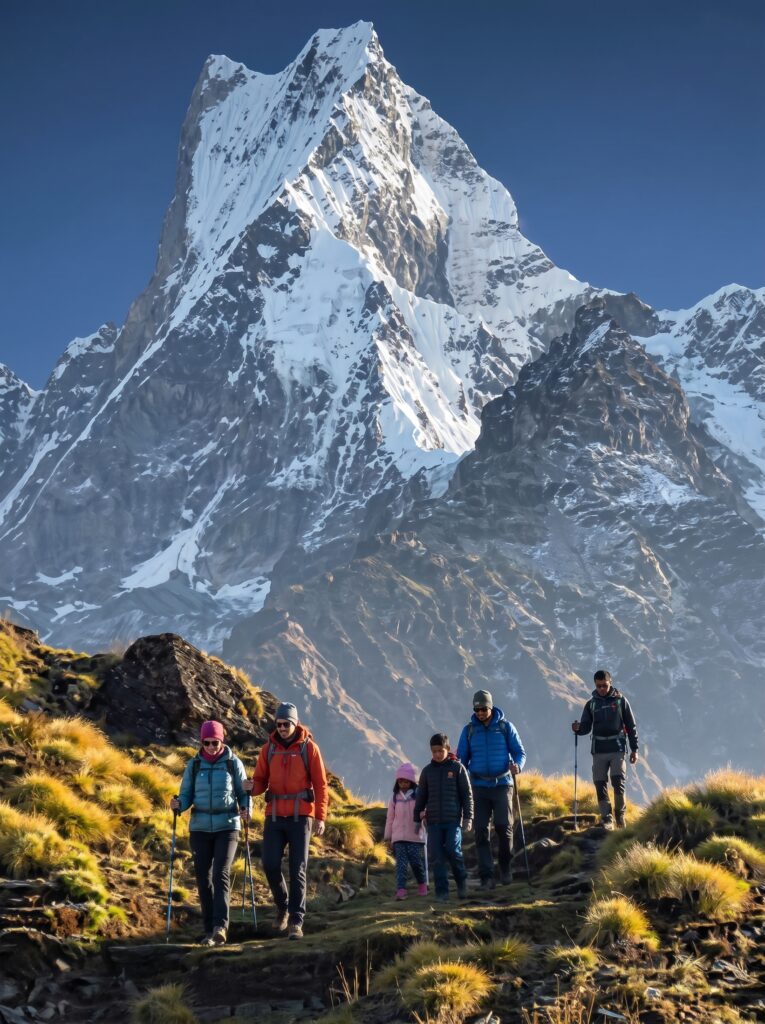
The standard Mardi Himal Trek takes five to seven days and starts from Pokhara — either by taxi or a short drive to Kande, from where you climb through Australian Camp (one of Nepal’s most underrated viewpoints) before entering deep forest toward Pothana. Most trekkers then push through Forest Camp, Low Camp, High Camp, and finally the viewpoint at around 4,500 metres before descending toward Siding and looping back to Pokhara.
What the itinerary descriptions don’t fully capture is the character of each section.
The lower forest — rhododendron, oak, moss — is genuinely enchanting. In late March and early April, the rhododendrons are in bloom and the trail looks like something from a Himalayan fairy tale: tunnels of red and pink flowers with the snow peaks visible through gaps between branches. Even outside the bloom season, this forest section carries a specific kind of quiet that feels earned rather than just absent of noise.
As you gain altitude toward Forest Camp and Low Camp, the vegetation shifts. The forest thins. The views start arriving in pieces — a gap in the trees, a ridge opening, and suddenly Mardi Himal’s pyramid is right there, much closer than you expected. It’s an unusually intimate mountain relationship for a trek of this length.
High Camp, around 3,583 metres, is the overnight staging point for the viewpoint push. The teahouses here are basic and the nights are genuinely cold, even in October. This is not a complaint. The cold keeps the crowds thin. Trekkers who aren’t serious tend to turn around at Low Camp. The ones who reach High Camp and then crawl out at 5 AM to make the viewpoint push — those are the people you want around you at altitude. There’s a shared seriousness, a quiet camaraderie.
The morning push from High Camp to the viewpoint is the hardest section: steep, loose in places, and fully exposed. But the payoff is everything the Mardi Himal reputation promises. Machapuchare from this angle looks almost impossibly tall. You are looking at it nearly eye-to-eye with its lower reaches, while its summit still towers hundreds of metres above. The Annapurna South face stretches away to your right. Below, the Modi Khola valley is still in shadow.
Why Five Days Is the Sweet Spot for Working Trekkers
Nepal trekking culture has a mismatch problem. Most of its famous trails were designed for people with three weeks to spare. The Everest Base Camp trek is two weeks minimum if you’re doing it properly. The full Annapurna Circuit with roads is still ten days or more if you walk the worthwhile sections. Langtang is a week at minimum.
Mardi Himal fits into five days from Pokhara to Pokhara. That’s a long weekend plus two days of leave. For people with jobs, families, or limited annual leave, this is transformative. It means that a genuine high-altitude Himalayan experience — not a viewpoint day hike, not a one-night camping trip, but a real mountain trek with altitude gain, ridge walking, and the full psychological weight of being somewhere genuinely remote — is achievable without sacrificing two weeks of your life.
The logistics are also mercifully simple. You fly Kathmandu to Pokhara (30 minutes) or take a six-hour tourist bus. The trek starts and ends in Pokhara. No internal flights, no complicated permit administration beyond the Annapurna Conservation Area Permit and the TIMS card, both of which you can sort in Pokhara in under an hour.
If anything, Mardi Himal is underappreciated precisely because it sounds too easy. People assume that if it’s only five days, it can’t be serious trekking. That assumption is wrong. The cumulative elevation gain is substantial, High Camp is genuinely cold, and the final ridge section demands physical confidence. This isn’t a nature walk. It’s just a nature walk that doesn’t steal your entire annual leave.
The Teahouse Situation: Honest Assessment
Mardi Himal teahouses are basic by Everest Base Camp standards but comfortable by any reasonable standard. Expect dal bhat that’s actually hot, single rooms with thin mattresses and thicker blankets than you think you’ll need, and limited charging options at High Camp — bring a power bank.
The food at High Camp is limited: dal bhat, noodles, eggs in various configurations, occasional pasta. Nobody is operating a café here. That’s fine. After a day at altitude, dal bhat tastes like the best meal you’ve ever had.
What the teahouses do exceptionally well is the one thing that matters most: they exist at the right intervals. You’re never pushing more than five or six hours between rest points. The teahouse families are, without exception, warm. There’s a family at High Camp — the husband handles the kitchen, his wife manages the rooms — who have been running their lodge for years, who remember return trekkers, who will tell you exactly what the weather is going to do tomorrow based on the way the clouds were sitting on the Annapurna ridge at dusk. That kind of knowledge is worth more than any weather app.
The Descent to Siding: The Section Everyone Forgets to Mention
Most blog posts about Mardi Himal end at the viewpoint and then wave vaguely at the descent. The descent to Siding village deserves its own paragraph.
After turning around from the viewpoint, many trekkers descend the same way they came — back through High Camp, Low Camp, Forest Camp, and down to Kande. That’s perfectly fine and perfectly unremarkable.
The more interesting option is descending toward Siding — a traditional Gurung village that sits below the trek’s main corridor and sees almost no tourist traffic. The descent through the forest to Siding is steep and requires careful footing, but it deposits you in a village that feels genuinely untouched. There are chickens in the street, old women weaving outside wooden houses, children who are curious but not performatively so. From Siding, a jeep or local transport takes you back toward Pokhara through the Modi Khola valley.
Do the Siding descent if you’re capable of it. It reframes the whole trek — you end not on the tourist circuit but in Nepal that the tourist circuit keeps promising to show you and rarely does.
The Honest Caveats
No honest writing about this trek omits the challenges.
The weather window is real. Mardi Himal is best from mid-October to late November, and again in March to early May. Outside these windows, the monsoon makes the trail a mudslide in progress, and post-winter snow can close the upper sections entirely. Plan around the windows.
The ridge gets windy. Genuinely, ferociously windy. Not “wear an extra layer” windy — “unable to stand upright” windy during bad days. If you arrive at High Camp and the wind is howling, you may not make the viewpoint the next morning. This is not a failure of planning. It’s the mountain.
Altitude affects people unpredictably. High Camp at 3,583 metres and the viewpoint at 4,500 metres are real altitude. Most people acclimatize fine given the gradual ascent, but trekkers who rush — flying Kathmandu to Pokhara, driving to Kande, and pushing hard to Forest Camp on day one — sometimes hit a wall. Let the body adjust.
The trail markings are inconsistent. Unlike the Annapurna Base Camp trail, which is so well-trodden you could follow it blindfolded, the Mardi Himal route has sections where the path forks without clear signage. Go with a guide if you’re not confident in your navigation. The guides from Pokhara who specialize in this trek are excellent, genuinely know the terrain, and charge reasonable rates.
Why Now Is the Moment
Mardi Himal won’t stay this quiet forever. Nepal’s trekking infrastructure is expanding. The Annapurna region is increasingly connected. As word spreads — and it is spreading — the trail will attract more trekkers, more teahouses will open, and the character will slowly shift.
The five-year window in which Mardi Himal is genuinely off the main circuit but not so remote as to be inaccessible — that window is open right now. Walk it while it still feels like a discovery rather than a destination.
There is a version of Nepal trekking that everyone goes home and talks about for years. The version where something surprised you — where you turned a corner and the mountain was right there, closer than seemed possible, and the only sound was your own breathing and the wind moving across a ridge that had no business being so beautiful.
That experience lives on in Mardi Himal. Go find it.
Comments (0)
Write a comment- The Annapurna Circuit Ruined a Generation of Trekkers. Mardi Himal Fixes That.
- The Route: What Actually Happens Each Day
- Why Five Days Is the Sweet Spot for Working Trekkers
- The Teahouse Situation: Honest Assessment
- The Descent to Siding: The Section Everyone Forgets to Mention
- The Honest Caveats
- Why Now Is the Moment
Read the latest Blogs & Insights
Explore our collection of articles and insights to gain in-depth travel knowledge, expert advice, and stay updated on the latest trends and tips.




No comments yet.