








EBC with Lobuche Peak Climbing


Quick Trip Facts


EBC with Lobuche Peak Climbing Overview
The Everest Base Camp (EBC) with Lobuche peak climbing will take you on the most unforgettable adventure in the Himalayas of Nepal. This 19-day adventure starts with a flight from Kathmandu to Lukla and then a trek to Sherpa villages such as Phakding, Namche Bazaar, and Dingboche. Rest/acclimatization days are factored into the itinerary to ensure a proper ascent to higher altitudes.
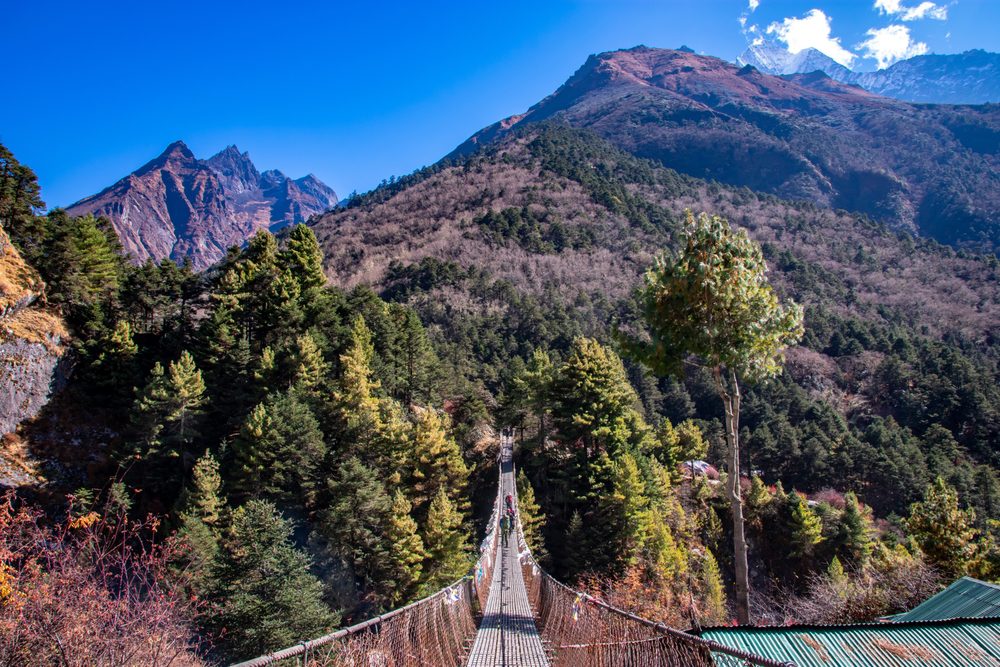
The trip starts with a flight from Kathmandu to Lukla and a stunning trek through Sherpa villages, green forests, and across suspension bridges over the Dudh Koshi river. You can stop along the way, including Namche Bazaar, Tengboche, Dingboche, and Lobuche, offering grand views of Ama Dablam, Lhotse, and the mighty Everest. Rest days are included in the itinerary to assist with acclimatisation, ensuring everyone’s enjoyment and well-being.
Climbers spend the day becoming acclimated to the altitude at Lobuche before the Lobuche East Peak ascent. To make this climb, you must gradually walk up to Lobuche Base Camp and then scale a strenuous climb to the High Camp. Climbers then make a pre-dawn summit bid, slogging across rocky slopes and icy snow fields. The views from the summit are awesome panoramas of the surrounding peaks and glaciers, and it gives you the feeling that you are on top of the world. You can return to Kathmandu from a 30-45 minute flight from Lukla. Even after returning from this thrilling journey, you cannot forget the insane memories that you have created by the achievement of this trek.
EBC trek with Lobuche Peak climbing is also for trekkers looking to step out of their comfort zone and learn about the Sherpa culture and the natural beauty of the Khumbu region. With sufficient preparation and the right guidance, the Everest Base Camp (EBC) trek with Lobuche Peak climb is a journey of a lifetime that combines thrill, beauty, and accomplishment.
Trip Highlights
- A scenic mountain flight from Kathmandu to Lukla.
- Explore stunning Sherpa settlements such as Tengboche and Namche Bazaar.
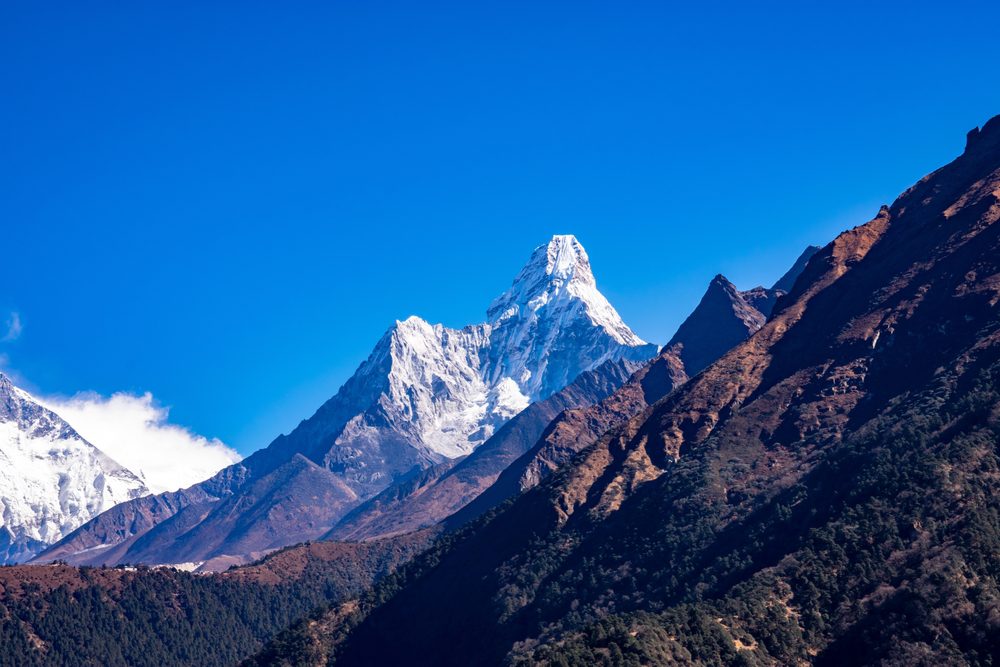
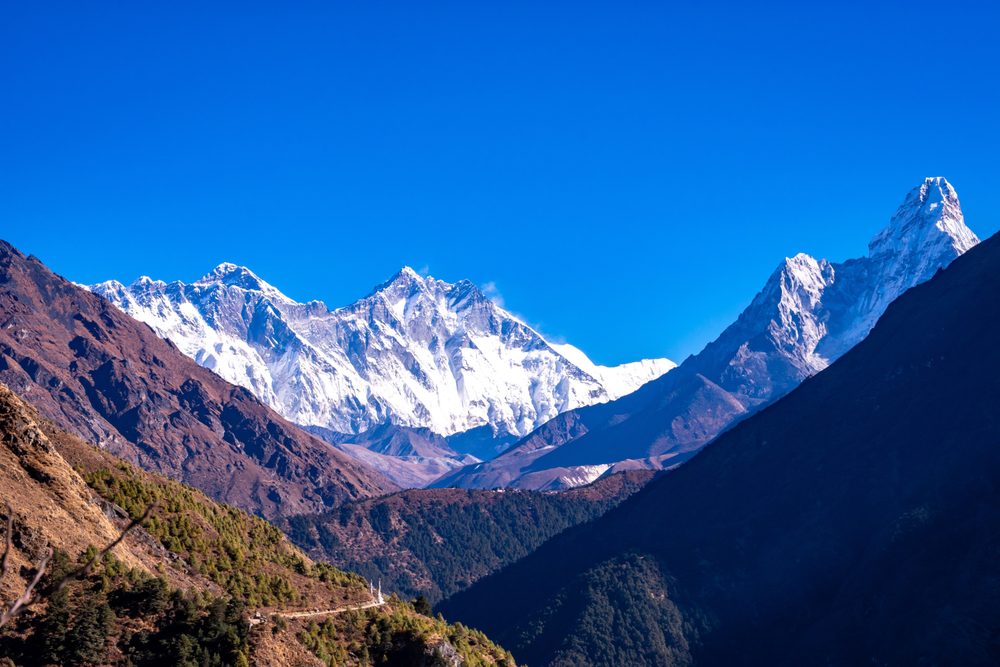
- See the magnificent vistas of Ama Dablam, Lhotse, and the world’s highest peak, Mount Everest.
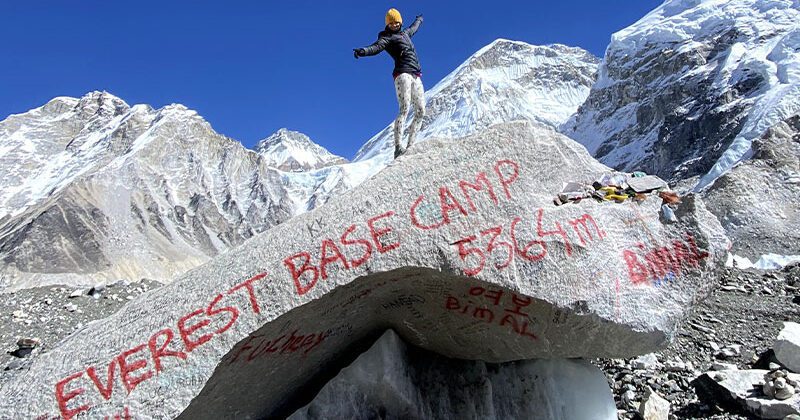
- A trip to the 5,364-meter Everest Base Camp
- Hike in the morning to Kala Patthar (5,545m) for expansive views of Everest
- Climbing Lobuche East Peak (6,119m) – a non-technical but challenging climb.
- Experience the UNESCO World Heritage Site Sagarmatha National Park.
- Explore and immerse yourself in culture through Buddhist monasteries and prayer flag-lined pathways
- Amazing feeling of accomplishment after reaching the Himalayan peak and Everest Base Camp.
Itinerary
Arrival in Kathmandu
Your journey truly starts today when you board an early flight (around 35 to 40 minutes) from Kathmandu to Lukla. The flight lands at one of the most thrilling airports in the world and offers stunning views of the Himalayan range. You will meet your guides and porters in Lukla, make any last-minute gear changes, and begin hiking after a quick breakfast or tea.
It takes three to four hours to complete the fairly easy trek to Phakding, which descends gradually through Sherpa communities and pine trees. You will cross a few suspension bridges, stroll alongside the Dudh Koshi River, and see Buddhist prayer wheels, chortens, and mantra-carved mani stones. You should move gently and drink lots of water on this first day as your body starts to acclimate gradually. Your journey can begin gently because Phakding is a little lower in elevation than Lukla. After trekking few hours, you will reach Phakding, which is a neighborhood teahouse that offers warm meals and a comfortable place to sleep for the night.
Stay overnight in Phakding.
Day 3: Trek from Phakding to Namche Bazaar (3,440m)
You will start your trek from Phakding to Namche Bazaar after a hearty breakfast in Phakding. The hike today is more difficult but rewarding because it follows the Dudh Koshi River. It also crosses a number of high-suspension bridges, including the well-known Hillary Bridge. The trail winds through small settlements, thick forests, and checkpoints at Monjo and Jorsalle, where permits are obtained before into Sagarmatha National Park.
After lunch at Jorsalle, the trail starts a difficult ascent to Namche Bazaar, which might take 6 to 7 hours from Phakding. Although the last climb is challenging, it provides your first views of Mount Everest, if the weather permits. After some hours of trek, you will reach Namche Bazaar, which is a bustling Sherpa town with various shops, bakeries, cafes, and equipment stores. It is a perfect spot to rest and get used to life, and it is also a gateway to the Khumbu region. As the elevation rises, take it slowly, stay hydrated, and pay attention to your body.
Stay overnight in Namche Bazaar.
Acclimatization Day in Namche Bazaar
Today is an important day for relaxation and acclimatization in order to lower your risk of altitude sickness and help your body acclimate to the higher elevation of 3,440 meters. You can choose to travel a short distance to the Everest View Hotel, which has breathtaking panoramic views of Mount Everest, Lhotse, Nuptse, and Ama Dablam. This is a great way to experience greater elevation without having to sleep there.
It takes roughly two to three hours to complete the moderate hike. Back in Namche, you can visit the Everest Photo Gallery to view well-known climbing adventures and motivational tales. You can also explore the Sherpa Culture Museum to discover more about the customs, way of life, and history of the locals. In order to prepare your body for the more difficult days ahead, this day is also excellent for relaxing, being properly hydrated, and arranging your equipment.
Stay Overnight in Namche Bazaar.
Trek from Namche Bazaar to Tengboche (3,850m)
You will start your trek from Namche Bazaar to Tengboche. Today, you will go through beautiful rhododendron and pine forests, which burst into color during springtime. You can enjoy breathtaking views of towering peaks like Ama Dablam, Thamserku, and Kangtega. The trail gradually climbs, and you’ll feel the fresh mountain air as you approach Tengboche.
It is a peaceful village famous for its Tengboche Monastery, which is the largest monastery in the Everest region. This sacred place is an important spiritual center for the Sherpa people, where you can observe traditional Buddhist rituals and prayer ceremonies if the timing is right. The monastery’s stunning location offers incredible views of the surrounding mountains, making it a highlight of the trek. You can spend some time exploring the monastery and the village before settling in for the night at a cozy teahouse in Tengboche.
Stay overnight in Tengboche.
Trek from Tengboche to Dingboche (4,360m)
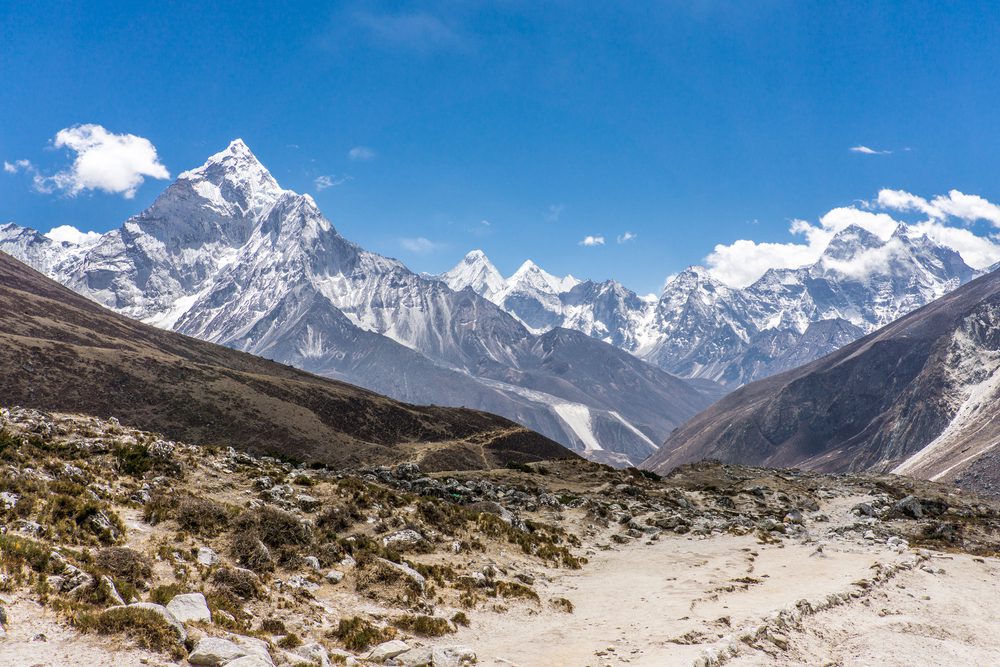
Today, you will start your trek from Tengboche to Dingboche after having a hearty breakfast in Tengboche. As you go ahead, the trek continues deeper into the breathtaking Khumbu Valley, with stunning views of Ama Dablam, one of the most beautiful and iconic peaks in the region. As you leave the dense forests behind, the landscape opens up into alpine meadows and rugged terrain. The trail gradually climbs, and you’ll notice the air getting thinner as you approach the village of Dingboche, sitting at about 4,360 meters.
Dingboche is famous for its agricultural terraces and stone-walled fields, where Sherpa farmers grow barley, potatoes, and vegetables despite the harsh conditions. This village is a popular spot to rest and acclimatize before moving higher, so take the time to relax, hydrate well, and enjoy the peaceful mountain surroundings.
Stay overnight in Dingboche.
Acclimatization Day in Dingboche
Today is an important rest and acclimatization day to help your body adjust to the thinner air at 4,360 meters and prevent altitude sickness. You have the option to take a gentle hike up to Nagarjun Hill or explore the nearby Chukhung Valley. Both place offers stunning panoramic views of towering peaks like Island Peak, Lhotse, and Ama Dablam.
These hikes are designed to help your body adapt by gaining some altitude during the day but returning to sleep lower in Dingboche, which is essential for safe trekking. Besides hiking, use this day to rest well, drink plenty of fluids, eat nutritious meals, and prepare mentally for the more demanding days ahead. Taking it slow today will help ensure a successful and enjoyable climb.
Stay overnight in Dingboche.
Trek from Dingboche to Lobuche (4,940m)
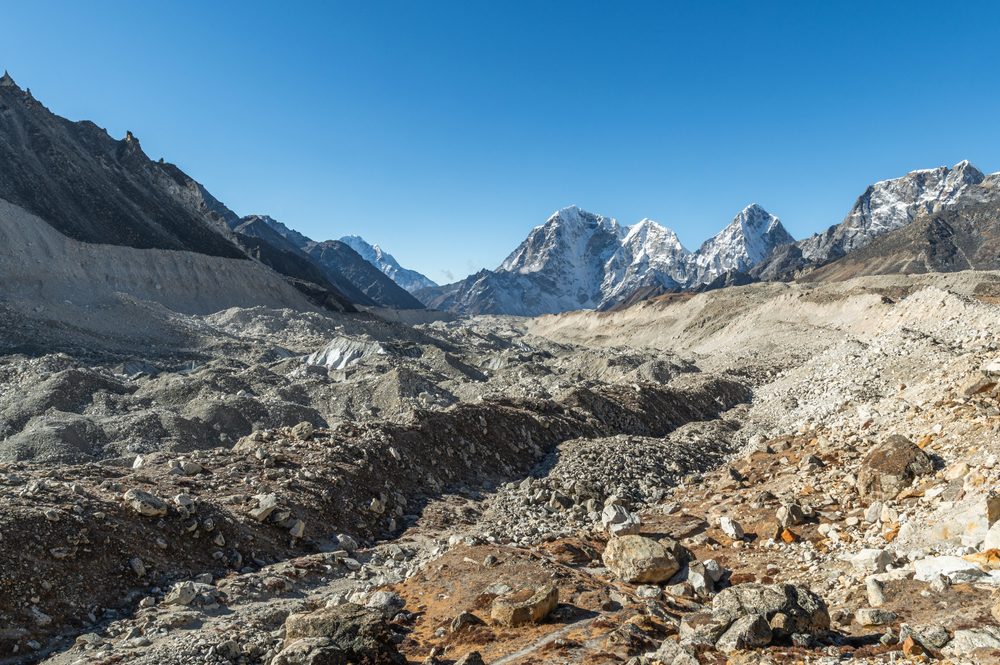
Start your day with a lovely breakfast in Dingboche. You will trek to Lobuche today. As you go ahead, the trek takes you higher into the Himalayas as you head toward Lobuche, walking alongside the Khumbu Glacier. The trail climbs steadily and becomes more rugged as you pass through Dughla (Thukla), where you will stop for a short rest. Just above Dughla, you will visit the moving memorial site dedicated to climbers who lost their lives on Everest and other peaks in the region.
It’s a quiet and emotional spot with panoramic views of Pumori, Nuptse, and other surrounding mountains. The trek from Dingboche to Lobuche takes about 5–6 hours, so pace yourself, stay hydrated and be aware of the altitude. As you reach Lobuche, the landscape becomes more barren and dramatic.
Stay overnight at a teahouse in Lobuche.
Trek to Gorakshep (5,125m) and Visit Everest Base Camp (5,364m)
Today is one of the most exciting and rewarding days of the trek in the whole trip. You’ll start your 7-8 hours trek with a gradual but challenging hike to Gorakshep, the last village before Everest Base Camp, following a rocky and glacial trail with stunning views of Pumori, Everest, and the Khumbu Icefall. After a short rest and lunch at Gorakshep, you will continue your round-trip hike to Everest Base Camp (5,364m), which is the iconic spot where climbers begin their summit expeditions. Though you won’t see the summit from here, standing at the base of the world’s highest mountain is a once-in-a-lifetime experience.
After reaching there, you can take photos and soak yourself in the atmosphere before returning to trek back to Gorakshep for the night. You can relax and take a rest in the peaceful village today.
Stay overnight in Gorakshep.
Hike to Kala Patthar (5,545m) and Return to Lobuche
Today is the day when you’ll hike to Kala Patthar. You will wake up early before dawn for a tough but rewarding hike to Kala Patthar, the best viewpoint for panoramic sunrise views of Mount Everest, Nuptse, and the Khumbu Glacier. At 5,545 meters, it’s the highest point on the trek and can be cold and windy, so dress warmly and pace yourself. The climb will take you around 2–3 hours, but the golden light on Everest at sunrise is truly unforgettable.
After spending some time at the top, you’ll carefully descend back to Gorakshep for breakfast, then continue trekking back down to Lobuche for the night. This descent helps you with acclimatization as you prepare for the climb to Lobuche Peak.
Overnight stay in a teahouse in Lobuche.
Trek from Lobuche to Lobuche High Camp (5,400m)
Today, you will start your journey from Lobuche to the Lobuche High Camp. You’ll leave the main trekking trail and begin a steady ascent to Lobuche High Camp, located at around 5,400 meters. The trek is short but challenging, taking 3–4 hours, with steeper, rockier terrain and increasing altitude.
Upon reaching High Camp, you’ll set up camp and begin final preparations for the summit including a safety briefing, gear check, and basic climbing techniques practice with your guide. Rest is important today, so eat well, hydrate and try to stay warm and relaxed. The air is thinner here, so avoid overexertion.
Stay overnight in tents at Lobuche High Camp.
Summit Lobuche Peak (6,119m) and Return to High Camp
Today is the most challenging and rewarding day of your journey. You’ll begin your summit push in the early morning hours, typically around 1–3 AM. It can take 8–10 hours to complete the trek today, so pacing, hydration, and mental focus are key. You will require using headlamps and full alpine gear for the Lobuche Peak climb.
The climb involves snow, ice, and rock sections, and you will use ropes, crampons, and an ice axe with guidance from your climbing Sherpa. As you ascend, the views get more spectacular, and reaching the summit of Lobuche East (6,119m) rewards you with incredible panoramas of Everest, Lhotse, Nuptse, Ama Dablam, and the Khumbu Glacier.
After immersing yourself in the moment and taking photos, you’ll carefully descend back to High Camp, where you’ll rest and recover.
Stay overnight in tents at High Camp.
Contingency Day
This is a reserved contingency day, built into the itinerary to allow flexibility in case of bad weather, health issues, or unexpected delays during the Lobuche Peak summit trek. In high-altitude mountaineering, conditions can change rapidly, so having this extra day ensures a safe and successful climb without rushing. If summit day was postponed due to poor weather on Day 12, you will make another attempt today, depending on the team’s condition and the weather forecast.
If you’ve already summited, the day can be used for rest, recovery, or descending to a lower altitude like Lobuche or even Pheriche, depending on how the group feels. This is essential for safety and increases the overall success rate of the expedition. You can stay either at High Camp or a lower village, based on the progress and the decision of the guide.
Trek from High Camp to Pangboche (3,985m)
After completing the climb, today you begin your descent back to lower altitudes, which helps with recovery and oxygen adjustment. You’ll return from High Camp, passing through Lobuche and Pheriche, before arriving at the peaceful village of Pangboche.
The trail is easier going downhill, but can still be tough on the knees, so take it slow and use trekking poles if needed. As you descend, you’ll feel the air getting thicker and warmer, and your energy returning. Pangboche is a lovely Sherpa village known for its ancient monastery and views of Ama Dablam.
Stay overnight in a teahouse in Pangboche.
Trek from Pangboche to Namche Bazaar
After breakfast in Pangboche, you will continue your steady descent back to Namche Bazaar, following the familiar trails through forests, rivers, and Sherpa villages. The trail offers beautiful views of Ama Dablam and the surrounding peaks, along with plenty of peaceful stretches where you can reflect on your successful journey. As you pass through Tengboche, you may stop briefly at the monastery again before continuing downhill through lush rhododendron and pine forests. The descent, while easier on the lungs, can be hard on the knees, so take your time and use trekking poles if needed.
After about 5–6 hours, you will arrive back in Namche, where the lower altitude feels noticeably more comfortable. This evening is perfect for celebrating your summit achievement with your team, enjoying a hearty meal, and relaxing in one of Namche’s cozy teahouses or bakeries. You can also use this time to shop for souvenirs, recharge your devices or thank your guides and porters.
Overnight stay in Namche Bazaar.
Trek from Namche Bazaar to Lukla
Today is your final trekking day of your journey to EBC with Lobuche Peak. Today marks your final day of trekking as you make your way back to Lukla, retracing the familiar path through Monjo, Phakding, and along the Dudh Koshi River. The trail includes some steep descents and final uphill sections, so take it slow and steady. The trek takes around 6–7 hours, passing through suspension bridges, pine forests, and Sherpa villages one last time.
As you reach Lukla, there’s a sense of pride and relief, but this is the perfect time to reflect on your achievements, from reaching Everest Base Camp to summiting Lobuche Peak. In the evening, you can celebrate with your team, thank your porters and guides, and enjoy a well-earned rest in a teahouse in Lukla.
Stay overnight in Lukla.
Flight from Lukla to Kathmandu
After an early breakfast, you’ll head to Lukla Airport for your scenic morning flight back to Kathmandu, which takes around 35–40 minutes, offering you one last beautiful view of the Himalayas. Upon arrival, you will be transferred to your hotel, where you can rest, enjoy a hot shower and finally relax after completing your incredible trek and climb.
The rest of the day is free for you to explore the city, shop for souvenirs, or revisit local attractions like Thamel, Durbar Square, or the Garden of Dreams. It is also a great time to celebrate your success, connect with fellow trekkers, or enjoy a farewell dinner.
Stay overnight at your hotel in Kathmandu.
Customize this trip with help from our local travel specialist that matches your Interests.
Customize This TripInclusions
- Private car service to and from the airport.
- Two nights at a standard hotel in Kathmandu with breakfast
- Three meals a day, which include breakfast, lunch, and dinner.
- You will be provided with trekking Lodges (Tea Houses).
- All papers that need to be done, Fees for entering Sagarmatha National Park, and Khumbu Pasang Lhamu Rural Municipality.
- Kathmandu to Lukla and back to Kathmandu, or (Ramechap to Lukla, back to Kathmandu flight) with an airport transfer and airport tax within Nepal.
- A highly experienced, helpful, knowledgeable, friendly, English-speaking guide with all of his salary, food, drinks, lodging, transportation, and insurance covered.
- Setting up a service for an emergency helicopter (paid by your Travel Insurance company).
- You can rent a sleeping bag, a down jacket (if you don't have your own) & Duffel bag provided.
- Taxes and official costs are paid to the government.
- Certificate of completion of the trip.
- Oximeter to check your pulse, oxygen saturation, and heart rate twice a day (very helpful to check for signs of Altitude Mountain Sickness, or AMS). This will make sure that your trek is in the safest hands possible, no matter how experienced you are.
- Island Peak climbing permit
- Sherpa guide for climbing with insurance
- Whole Climbing Gear (a part of the sleeping bag and down jacket)
- Food in the climbing
- Food that you will eat in Kathmandu for lunch and dinner.
- The cost of a visa to enter Nepal is $30 for a 15-day stay.
- Your insurance for travel and medical care.
- International airfare, your personal expenses.
- All of the alcoholic and non-alcoholic cold and hot drinks you buy on trek (along with all of the sweet desserts, like chocolate, cake, pie, and pudding).
- The tea houses have hot showers and places to charge your phone, which will cost you about 2$ to 5$.
- Tip to the guide (Tipping is expected)
- A max 15kg bag is allowed on the flight to Lukla.
- One porter for two people will cost $ 240.
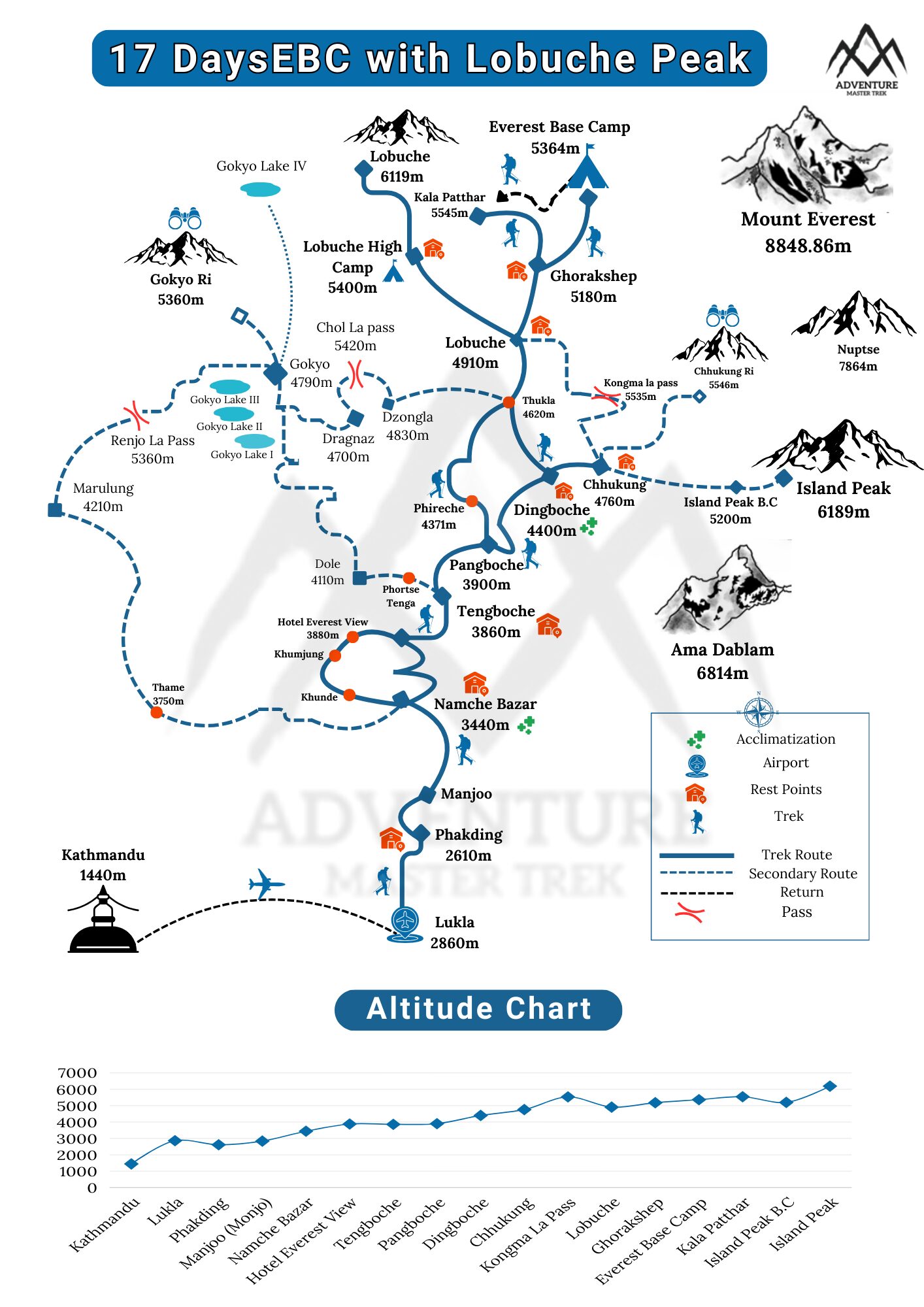
Maps
Good to Know
Accommodation and Acclimatization on EBC with Lobuche Peak Climbing
Accommodation on the EBc trek with Lobuche Peak is quite simple but adjustable. There are typically teahouses available, which are small mountain lodges that provide a bed, blanket, and basic meals, and are the majority of lodging options along the Everest Base Camp path. You can get simple rooms with twin beds and shared bathrooms, and the dining area has heating.
Prices increase as you go up, and teahouses are more basic. You will remain at a tent-based high camp, which is more exposed, colder, and rougher, both before and after your summit climb on Lobuche Peak. Your guide or hiking agency typically arranges for tents, sleeping mats, and cooking equipment.
Acclimatization is a critical part of your successful and safe trip to EBC with the Lobuche Peak climb. In order to help your body acclimate to the altitude, your itinerary should include at least two rest days, usually at Namche Bazaar (3,440m) and Dingboche (4,410m). To prevent altitude sickness, it’s crucial to hike carefully, drink enough water, and pay attention to your body.
In addition to improving your health, proper acclimatization increases your chances of reaching Lobuche Peak safely.
Food and Drinking Water in EBC with Lobuche Peak Climbing
The food options in EBC with Lobuche Peak Climbing are quite simple but filling. Teahouses along the EBC trail serve basic, fresh food that is high in carbohydrates to keep you going. Noodles, pasta, potatoes, soups, eggs, and dal bhat (rice, lentils, and vegetables) are typical dishes. Although meat can be found in various locations, it is not advised to purchase it outside of Namche Bazaar because it is not always fresh.
At higher elevations, snacks like tea, chocolate bars, and biscuits are more costly but more accessible. The trek’s chef team prepares the meals for the Lobuche Peak climb, which are often simple but sufficient (soups, rice, and high-energy items).
Hydrating your body is the most crucial part of the EBC trek. You can either purchase bottled water (which costs more at higher elevations) or purify tap or river water with purification pills, a filter, or a UV purifier to save money and lessen plastic waste. It’s important to stay hydrated. To help avoid altitude sickness, try to consume 3–4 liters each day. Always keep a hydration bladder or your water bottles with you.
Electricity and Internet Facility
From Everest Base Camp to Gorak Shep, most teahouses along the Everest Base Camp trail have electricity, but it can be limited in some places.. Power is typically provided by solar panels, which can be restricted, particularly at higher elevations.
The majority of lodges allow you to charge your phone, camera, or power bank, although normally at an additional cost (between $2 and $5 per device, depending on the location). A fully charged power bank and extra batteries are a smart idea to have on hand. You should also bring a universal adapter since plug types can vary.
Many teahouses have internet connectivity, but the higher you go, the less reliable it is. Some location offers prepaid internet cards with restricted data, and Wi-Fi is available for a cost. Mobile networks such as Ncell and NTC can operate in the lower regions of the path. So, you should use the internet sparingly when needed and be ready for restricted access.
Before starting a walk, it can be beneficial for hikers to download offline maps, guidebooks, or translation apps. Inform your loved ones that you might not be able to communicate for a few days, particularly if you are climbing Lobuche Peak, where internet and electricity are typically unavailable.
EBC with Lobuche Peak Altitude Sickness Possibility
Altitude sickness is a common issue during the Everest Base Camp (EBC) journey and the Lobuche Peak ascent because of the high elevations involved. Lobuche Peak reaches 6,119 meters (20,075 feet), and the hike to EBC reaches 5,364 meters (17,598 feet).
As you ascend to higher altitudes, oxygen levels decrease, which causes symptoms like fatigue, headache, nausea, and dizziness. To prevent the risk of altitude sickness, you should follow major precautions, such as ascending carefully, taking rest days, staying hydrated, avoiding alcohol, and following correct acclimatization.
All of these are important in preventing altitude sickness. Medicines like Diamox might be helpful, and in situations where medical care and descent might be necessary. If symptoms of altitude sickness arise, always let your guide know. They will help you immediately and come up with a plan to prevent your altitude sickness.
Difficulty in Climbing Lobuche Peak
The Everest Base Camp (EBC) trek with Lobuche Peak climbing is a challenging adventure that combines high-altitude trekking with technical mountaineering. The actual EBC journey is moderately challenging, with lengthy trekking days, rough terrain, and high altitudes that result in thin air. With its lengthy walking days, rough paths, and thin air at high altitudes, the EBC trip is a relatively challenging experience.
Using mountaineering equipment such as ropes, crampons, and ice axes is necessary to climb Lobuche Peak, which adds a more difficult challenge. You must have strong mental stamina, fundamental climbing abilities, and physical conditioning to complete the EBC trek. Sometimes, changes in the weather can make the trip more challenging due to freezing temperatures.
These difficulties can be overlooked if you follow proper precautions. Enough acclimatization, a good guide, and prior training are required for a safe and smooth trekking experience on EBC.
Safety and Security During Lobuche Peak Climbing
With the Everest Base Camp (EBC) trip and the Lobuche Peak climb, safety and security are crucial due to the high elevations, cold temperatures, and difficult terrain. It’s crucial to travel with a qualified guide and an experienced group that is familiar with the route and equipped to handle any emergencies if you want to stay safe.
To prevent altitude sickness, you must properly acclimate, and your itinerary should include rest days to aid with your body’s adjustment. For the Lobuche peak climb in particular, you must use high-quality equipment and dress appropriately to avoid risk.
It is important to get travel insurance that covers high-altitude trekking and climbing since helicopter rescue services are available in case of major illness or accident. It ensures you have an enjoyable trek to Everest Base Camp.
Group Size in EBC with Lobuche Peak Climbing
Typically, groups of 2 to 12 individuals can go on the Everest Base Camp (EBC) trek with Lobuche Peak climbing. Smaller groups (2–6) offer a more personalized experience, while larger groups (up to 12) can be more cost-effective. Larger groups can be more enjoyable and social, but smaller groups are easier to oversee and get more individualized attention from guides.
A certified guide leads each group, and porters and assistant guides are typically available to assist with bag carrying. There is typically one climbing guide for every two or three climbers because safety is a top priority during the Lobuche Peak ascent. The speed, expense, and management of permits and hotels during the journey can all be affected by the size of the group.
Permits in EBC with Lobuche Peak Climbing
To trek to Everest Base Camp and climb Lobuche Peak, you need several permits to enter protected areas and legally climb the peak. These permits help manage trekking safety, protect the environment, and support local communities. Your trekking agency usually takes care of arranging them for you. Here are some permit required for you trek to EBC:
- The Trekkers’ Information Management System, or TIMS Card: In Nepal, this card keeps track of hikers and guarantees their safety. All hikers in well-known locations, such as Everest Base Camp, must have it.
- Sagarmatha National Park Permit: This permit is required because the EBC hike goes through Sagarmatha National Park. It helps with the preservation of the local fauna and ecosystem.
- Lobuche Peak Climb Permit: The Ministry of Tourism in Nepal has granted you this special permit, which enables you to ascend Lobuche Peak lawfully. It needs to be obtained just before the climb and is different from trekking permits.
- Entry Permits for Local Areas: Additional permits are needed to enter some areas of the route, such as the Solukhumbu region or specific settlements. Local communities are supported by these.
Required Documents
- Passport (valid for at least 6 months)
- Visa for Nepal (obtained on arrival or in advance)
- Travel insurance details (including emergency and high-altitude coverage)
- Flight tickets (for Kathmandu and return)
- Climbing medical certificate (sometimes required for Lobuche Peak)
Travel Insurance for EBC trek with Lobuche Peak Climb
It is important to have the appropriate travel insurance before climbing Lobuche Peak and trekking to Everest Base Camp. Protecting yourself from unexpected events such as altitude sickness, accidents, or emergencies. The region is remote, high-altitude, and physically demanding, so insurance should cover:
- High-altitude coverage: Trekking and climbing over 5,000 meters must be covered by insurance since EBC is around 5,364m and Lobuche Peak is over 6,100m. You need a policy that focuses on and covers trekking and climbing at these heights.
- Emergency evacuation: Provides coverage for expensive helicopter rescues from isolated locations if you become seriously ill or are hurt, due to accidents or altitude sickness.
- Trip Cancellation: If you have to postpone or cancel your vacation because of illness, injury, disasters, unrest in politics, or other circumstances, your insurance should cover a refund
- Equipment loss or damage: Provides coverage for the replacement of necessary equipment.
- Mountaineering: Activities involving climbing, such as Lobuche Peak, must be covered.
Money Exchange
Money exchange is an important part of planning for the Everest Base Camp (EBC) trek with Lobuche Peak climbing. It’s best to exchange your money into Nepali Rupees (NPR) in Kathmandu before starting the trek, as exchange services are limited or unavailable in the mountain areas. ATMs are available in Kathmandu and sometimes in Namche Bazaar, but they may not always work or have enough cash.
Most teahouses and shops along the trail do not accept cards or foreign currency, so it’s important to carry enough Nepali cash for food, drinks, hot showers, tips, and other personal expenses. Bring small bills for easier transactions, and keep your money in a safe, waterproof pouch.
Trekking Equipment in EBC with Lobuche Peak Climbing
Climbing Lobuche Peak and trekking to Everest Base Camp together is an amazing experience that tests your strength and courage. To be safe, comfortable, and savor every second of this incredible ride, the right equipment and planning are crucial. Here are some of the trekking equipment required for the EBC trek with Lobuche Peak climb:
General
- Backpack (50–65L)
- Daypack (20–30L)
- Duffle bag (for porters)
- Sleeping bag (rated -15°C to -20°C)
- Sleeping bag liner
- Headlamp + extra batteries
- Trekking poles
Upper Body
- Moisture-wicking base layer (2)
- Fleece jacket or pullover
- Insulated down jacket (heavyweight for Lobuche)
- Waterproof shell jacket (Gore-Tex or similar)
- Light windproof jacket
Torso (Mid & Base Layers)
- Thermal base layers (2–3 sets)
- Mid-layer fleece or soft shell
- Insulated vest (optional)
Lower Body
- Trekking pants (2 pairs)
- Fleece or softshell pants (for cold)
- Waterproof shell pants
- Thermal base layer bottoms (2 pairs)
- Climbing pants (for the Lobuche summit)
Footwear
- Hiking boots (well broken-in)
- Mountaineering boots (B2/B3 for Lobuche)
- Camp shoes/sandals
- Trekking socks (4–5 pairs)
- Wool/summit socks (2–3 pairs)
- Gaiters (for snow)
Medications & First Aid
- Personal medications
- Diamox (for altitude sickness)
- Painkillers (Ibuprofen/Paracetamol)
- Blister kit (Compeed/moleskine)
- Bandages, tape, and antiseptic cream
- Rehydration salts
- Antiseptic wipes
Other Essentials
- Sunglasses (UV protection)
- Glacier glasses (for summit day)
- Sunscreen & lip balm (SPF 50+)
- Water bottles (2L total) or hydration system
- Water purification (tablets or filter)
- Personal toiletries
- Quick-dry towel
- Power bank & charging cables
- Passport & permits
Optional
- Lightweight crampons (usually required for Lobuche)
- Ice axe (check with guide)
- Harness, carabiners, helmet (if not provided)
- Camera/GoPro
- Energy bars/snacks
- Lightweight book or journal
Booking Policy on the EBC trek with the Lobuche Peak climb
1. Advance Payment & Booking Confirmation
A 30% deposit of the entire trip cost is needed in order to secure your place for the trip.
When you arrive in Kathmandu, you can pay the remaining balance.
Paying the entire amount in advance is an additional choice.
To finalize the reservation, you need to send:
- The cost of the reservation for the EBC trek with Lobuche Peak Climbing.
- An electronic copy of your passport
- Additional data is required, including travel insurance details or an emergency contact.
2. Payment Methods
To make your climb to EBC with Lobuche Peak Climbing more convenient, we offer a number of payment options:
- Online Payment: To make a safe online payment, use the payment gateway on our website.
- Debit/Credit Cards: There is a 4% bank service fee. However, Visa, MasterCard, and other debit/credit cards are accepted. Send funds directly to our bank account with a bank transfer or wire transfer (transaction fee).
- Cash or Check: If you’re in Kathmandu, you can choose to pay with cash or a check.
3. Final Payment
Before the departure, the remaining 70% of the trip cost must be paid. When you arrive for your trek, you can pay with cash, a card, or a bank transfer.
4. Booking Modifications & Rescheduling
- Please give us at least 30 days’ notice if you must change or delay the date of your trek.
- Depending on the circumstances, date adjustments may be done upon availability and at additional fees.
5. Travel Insurance Requirement
For each trekker to have complete coverage during the EBC trek, they must obtain travel insurance that covers evacuation, lost equipment, high-altitude medical emergencies, trip cancellations, and delays.
6. Last-Minute Booking
The option for last-minute booking is available, but you can make a booking up to 48 hours before departure for the trek. It may not be available during the peak months. If you want the booking for the EBC trek, it is highly recommended to book in advance for availability.
Cancellation Policy for the EBC trek with the Lobuche Peak climb
1. Canceling More Than 30 Days in Advance
We will give you a complete refund if you choose to cancel your trip more than 30 days before the planned start date. However, please be aware that the refunded amount will be reduced by any bank fees or transaction processing costs.
2. Canceling Between 15 and 30 Days Before Start
You will receive a 50% refund of the entire package price if you cancel between 15 and 30 days prior to the start of the trip. The remainder is used for administrative and non-recoverable transportation expenses.
3. Canceling Within 15 Days of the Trek
Regretfully, we are unable to issue refunds if the cancellation takes place less than 15 days before to departure. By that time, important plans like permits, lodging, and guide services have already been completed and paid for.
4. Not Showing Up or Leaving Early
No refunds will be given if you do not show up at the start location or decide to quit the expedition before it is over, regardless of the cause, including personal issues, illness, or accident. This is due to the fact that the area that has been set aside for you cannot be moved at that time.
5. Cancellations Made by the Company
You will have two choices in the unusual event that the trek has to be canceled because of uncontrolled events like natural disasters, severe weather, or political unrest:
- A full return of the money paid
- an opportunity to postpone the same journey to a later time without facing additional fees.
FAQs
Your Questions, Answered
2. How difficult is the EBC trek with the Lobuche Peak climb?
The EBC trek with the Lobuche Peak climb is a moderate to challenging trek. The trek requires good fitness, basic mountaineering skills, and good acclimatization.
3. How long does the entire EBC trip take?
The entire EBC trip usually takes 17 days, including trekking, acclimatization, and the Lobuche Peak climb
4. Do I need previous climbing experience for the EBC trek?
It is usually not needed, but basic mountaineering knowledge can be quite helpful. However, many climbs are guided, which supports your learning.
5. What permits are required for the EBC trek with Lobuche Peak Climbing?
You need a TIMS card, a Sagarmatha National Park permit, a Lobuche Peak climbing permit, and sometimes local area permits for the EBC trek with Lobuche Peak Climbing.
6. Is altitude sickness common during the EBC trek?
Yes, altitude sickness is common during the EBc trek, but it can be avoided by proper acclimatization, hydration, and slow trekking.
7. What kind of accommodation is available on the EBC trek with Lobuche Peak?
The accommodation available on the EBC trek is mostly teahouses, which offer simple rooms with shared bathrooms. For the Lobuche Peak climb, camping is done.
8. How is the food on the trail to the EBC trek?
The food on the EBC trek is basic but filling. The food includes dal bhat, noodles, soups, and snacks. You should avoid meat at higher altitudes.
9. Is drinking water safe?
Use water purification tablets, filters, or UV purifiers; bottled water is available but costly.
10. How reliable is internet access during the EBC trek?
Wi-Fi is available in many teahouses during the EBC trek, but it can be slow and expensive. Mobile network coverage is patchy.
11. What gear should I bring to the EBC trek with the Lobuche Peak climb?
You should bring warm clothing, sturdy trekking boots, a sleeping bag, a headlamp, trekking poles, and climbing gear if climbing Lobuche Peak for the EBC trek.
12. Do I need travel insurance?
Yes, insurance with high-altitude trekking, medical evacuation, and altitude sickness coverage is essential.
13. How physically fit do I need to be to do the EBC trek?
Good fitness is important to do the EBC trek. Regular cardio and strength training before the trip helps a lot.
14. Can I hire porters or guides?
Yes, hiring guides and porters is common and recommended for safety and comfort.
15. How do I get to Lukla?
You can get to Lukla by a short flight from Kathmandu. Flights are weather-dependent and can be delayed.
16. How do I stay warm at night?
You should bring a warm sleeping bag and layers; many teahouses provide blankets, but not heating in the rooms.
17. How do I prevent altitude sickness?
You can prevent altitude sickness by climbing slowly, drinking plenty of water, resting on acclimatization days, and listening to your body.
18. Is tipping expected?
Yes, tipping guides, porters, and cooks at the end is customary and appreciated.
19. What should I pack for the Lobuche Peak climb?
You should pack technical climbing gear, crampons, an ice axe, a helmet, a harness, warm clothing, and a good sleeping bag for the Lobuche Peak climb.
20. What’s the best way to prepare for the EBC trek?
The best way to prepare for the EBc trek is to train physically, research the trek, pack wisely, and choose a reliable trekking company.


View Our Similar Packages
Discover our top tours, loved by thousands of travelers annually. Choose the adventure that inspires you and embark on a journey tailored to your desires.
Save 18%

 Nepal
Nepal
 14 Days
Add Review
Reviewing for EBC with Lobuche Peak ClimbingRequest a Callback - EBC with Lobuche Peak Climbing
Submit the form and we will be back to you shortly
Request a Callback - EBC with Lobuche Peak Climbing
Submit the form and we will be back to you shortly
Narayanhiti Palace Museum

Narayanhiti Palace Museum


