








Gokyo Lake Helicopter Trek – 7 Days


Trip Facts

Gokyo Lake Helicopter Trek Overview
The seven-day Gokyo Lake Helicopter Trek gives you a quick, yet unforgettable, peek at the Everest region without needing weeks on the trail.
Your journey kicks off in Kathmandu with a scenic helicopter hop to Lukla, skipping the long bus slog and several exhausting walks just to reach the real footpath. When you reach Lukla, you will pass through quiet villages, shady pine woods, and iconic swaying bridges that dangle over roiling rivers. As you progress upward, lively Sherpa hubs like Namche Bazaar greet you, making for an ideal resting place to acclimatize before the breathtaking Gokyo Lakes.
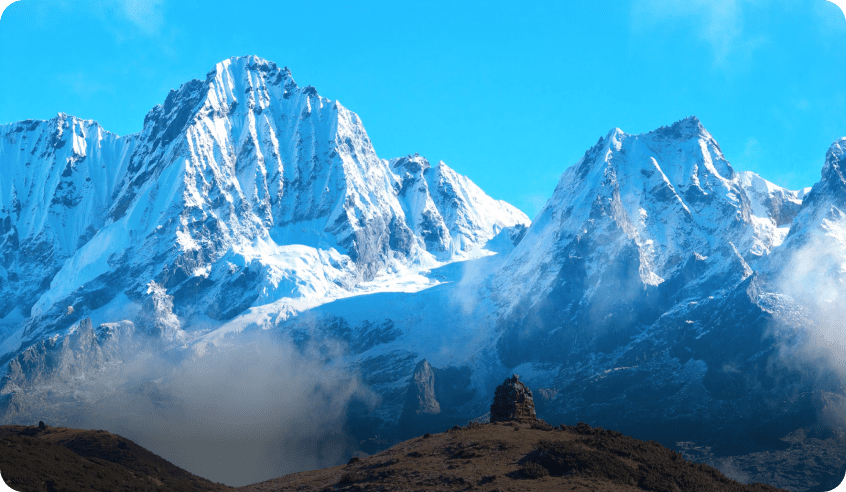
The true wonders of the trip can be experienced at the breathtaking blue Gokyo Lakes, where you stand among the highest peaks in the world. After that, it is a short hike up Gokyo Ri which is like a natural terrace from where one can see Everest, Lhotse, Makalu, and Cho Oyu all at once in one sweeping and absolutely stunning view.
It’s a tough climb, yet the scene waiting at the top erases every bead of sweat. Each night, you settle into small lodge rooms, taste simple Sherpa traditional foods, and experience the deep local life of the people residing there.
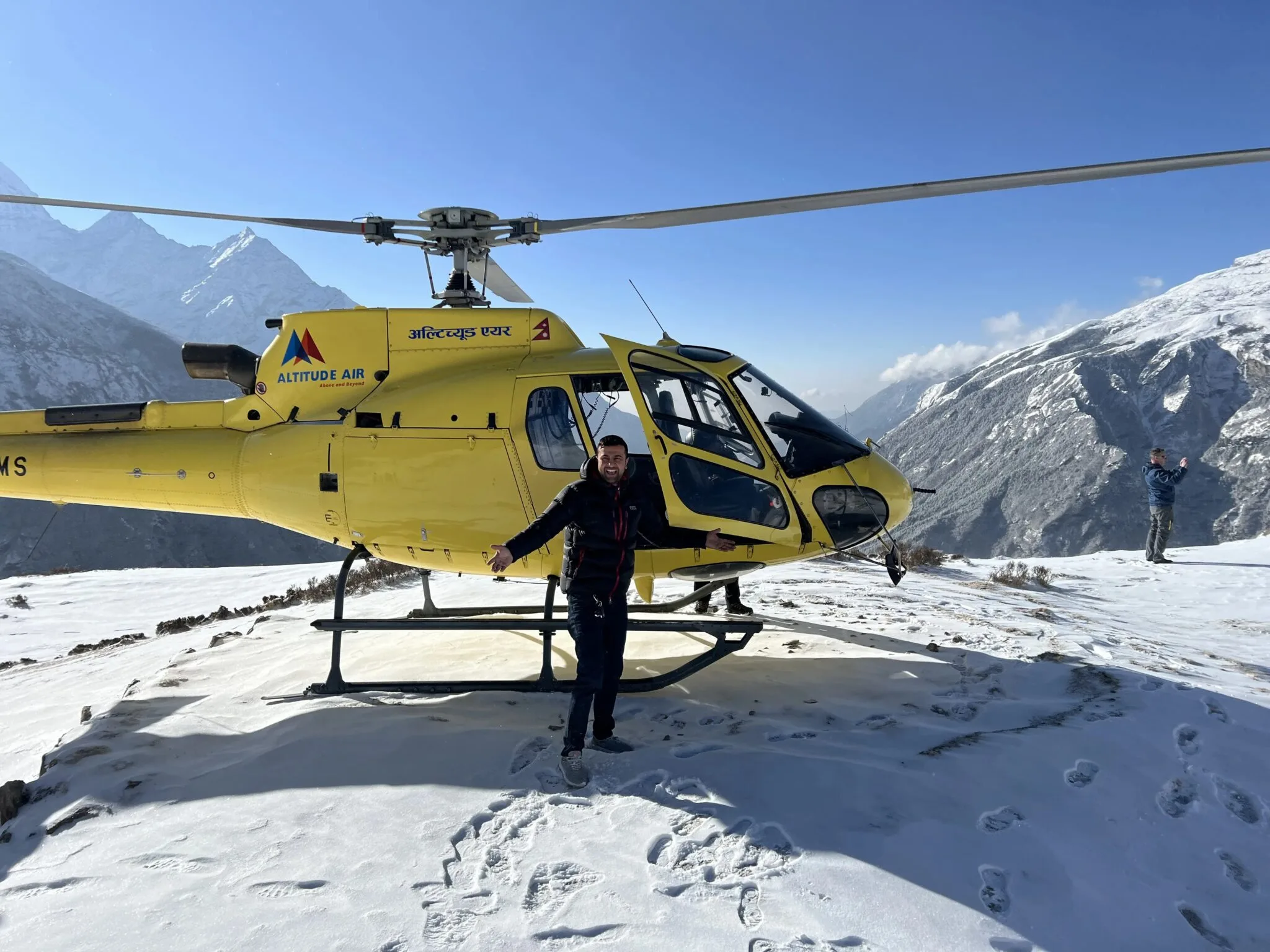
After trekking is finished, a helicopter whisks you from Gokyo straight back to Kathmandu, the sky spinning above a glittering sea of peaks you’ll never forget. Even after this amazing journey ends, it will leave you with unforgettable memories you have created throughout the trek. So, are you guys ready for the short but fantastic journey with us? Then, let’s start!
Trip Highlights
- A once-in-a-lifetime helicopter trip over the Himalayas and Everest.
- Discover the enchanting Gokyo Lakes, which are turquoise-blue.
- For breathtaking views of the mountains before sunrise, ascend Gokyo Ri (4,790m).
- See Everest, Lhotse, Makalu, and Cho Oyu, four of the tallest peaks in the world.
- Enjoy the friendliness of the mountains while staying in quaint Sherpa teahouses.
- Hike through rhododendron trees and serene mountain valleys.
- Explore the UNESCO-listed beauty that is Sagarmatha National Park on foot.
- Take a pleasant helicopter ride back to Kathmandu instead of the difficult walk.
Itinerary
Your Journey, Step by Step
Helicopter flight to Lukla — Trek to Phakding (2,610m)
Your adventure really begins today. After an early breakfast, you board a flight bound for one of the most exciting airstrips in the world at Lukla (2,846 m). The flight is short, taking approximately 30–35 minutes but with great views of the Himalayas. Landing at Lukla, you connect with the rest of the trek crew, and after a short breather, you set foot on a trail for the first time, beginning your day on the trek.
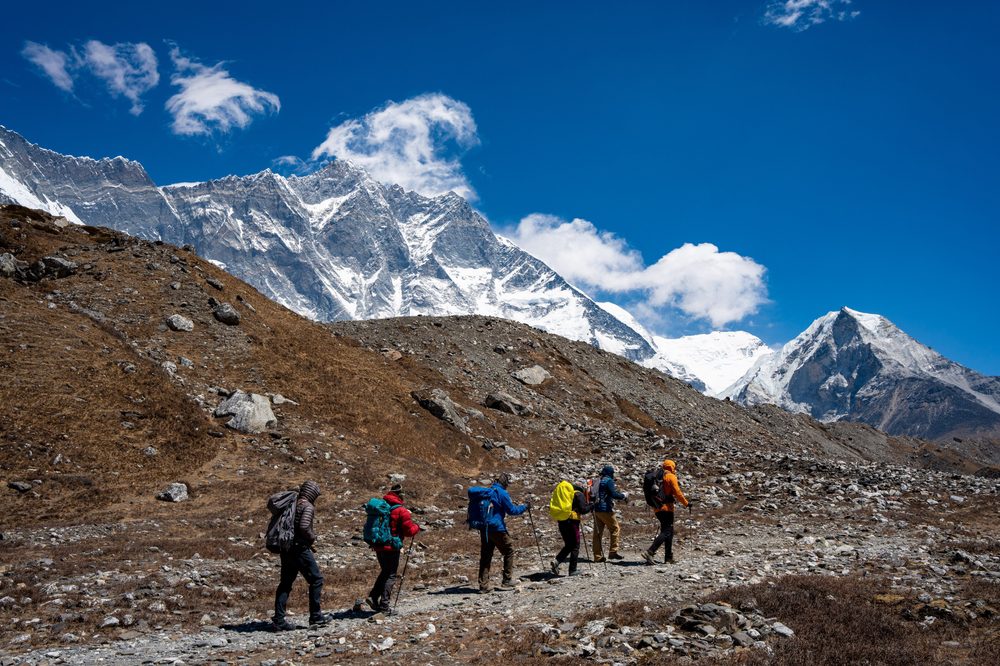
It’s an easy half-day hike of about 3-4 hours as you lose altitude and descend to the riverside village of Phakding (2,610 m). The walk is through Sherpa hamlets, across suspension bridges and down the Dudh Koshi River valley. Lovely introduction to the trek and a good body acclimatization to the altitude. You stay the night at Phakding in a warm teahouse with a view of your first Himalayas.
Stay overnight at the teahouse in Phakding.
Trek from Phakding to Namche Bazaar (3,440m)
One of the most stunning and fulfilling portions of the trip is the trek today. You’ll visit several tiny mountain communities, stroll through peaceful pine forests, and follow the Dudh Koshi River. As you go ahead, you will pass over a few thrilling suspension bridges, such as the well-known Hillary Bridge, which offers breathtaking views while hanging high above the river.
The trail gradually climbs, and the final part before reaching Namche is a steep uphill section, but it’s worth it. As you approach Namche Bazaar, the largest village in the Everest region, you might catch your first glimpse of Mount Everest on a clear day. Then, finally, you will reach
Namche which is a lively Sherpa town with great food, coffee shops, gear stores, and even bakeries. Your acclimatization begins today, allowing your body to acclimate to the greater altitude, and you will spend the night in this comfortable lodge. Rest soundly and take in the atmosphere of the mountains.
Stay overnight in Namche.
Trek to Dole or Machhermo (approx. 4,200m)
Today, you will start your trek from Namche to Dole and make your way deeper into the mountains. As you go ahead, the air becomes thinner and cooler as you ascend, and the scenery shifts from pine forests to open hills and alpine views. You will go by tiny communities like Dole and, if the weather permits, you will be able to take in breathtaking views of Cho Oyu, the sixth-highest mountain in the world.
One of the most breathtaking and satisfying of the entire trek. It’s a steady ascent so the pace is relaxed with ample opportunity to acclimatize. Depending on your speed, you will either spend the night in Dole, or Machhermo at a local mountain lodge, resting, dining, and enjoying the solitude of the high-altitude surrounds ahead of entering deeper into the Himalayas.
You will leave Dole/Machhermo to trek to Gokyo Lakes (4,790m).
Trek to Gokyo Lakes (4,790m)
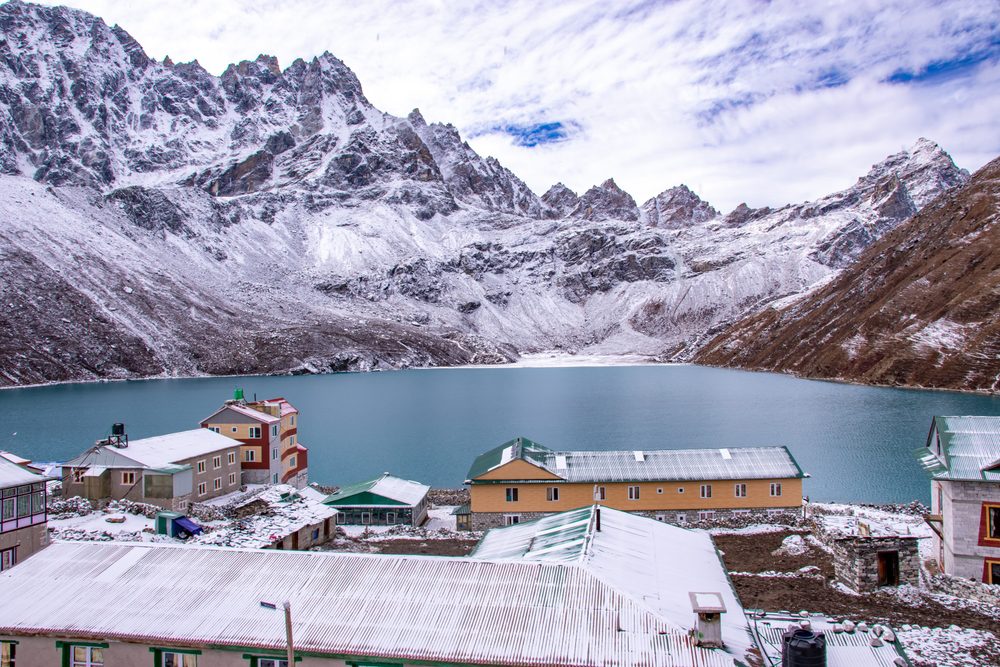
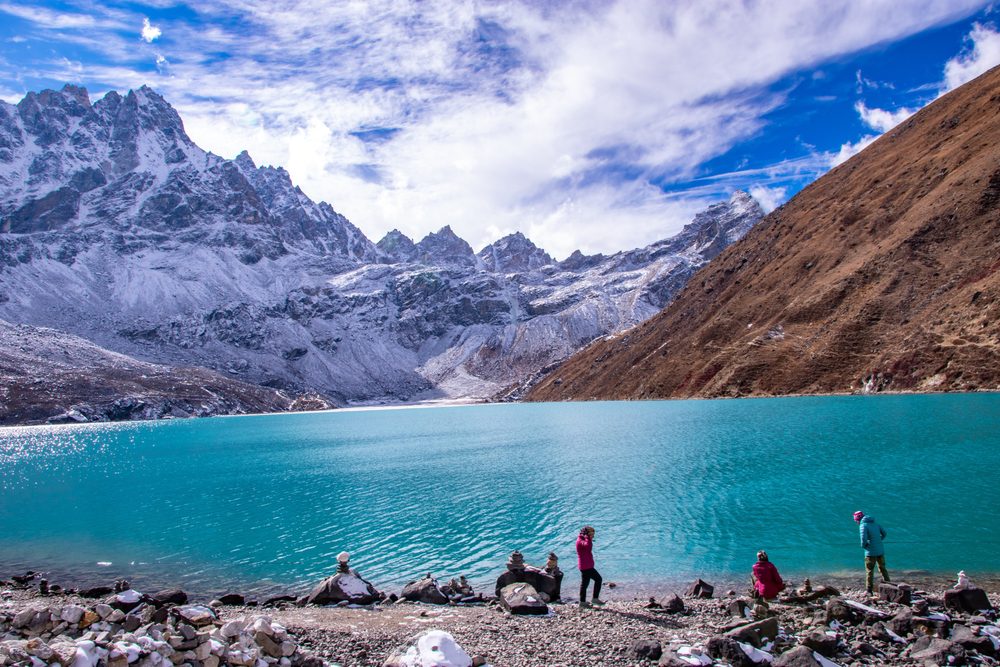
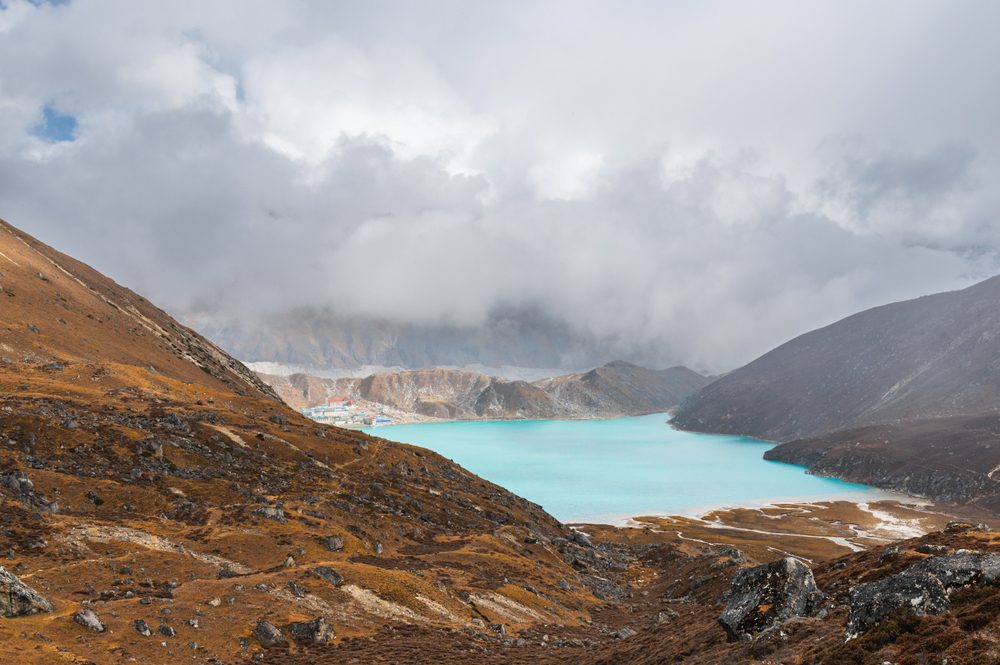
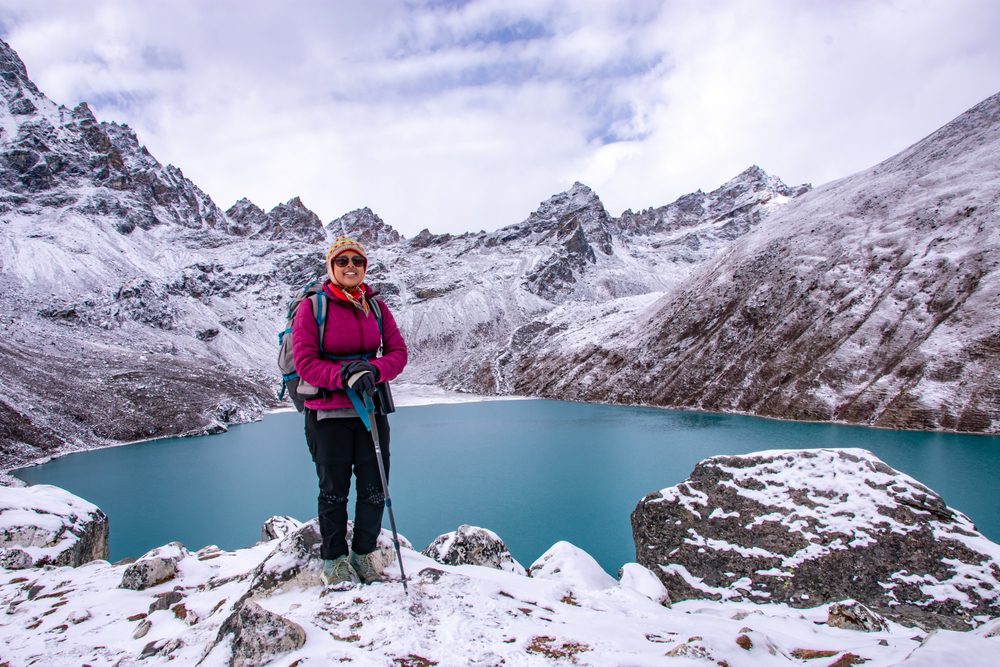
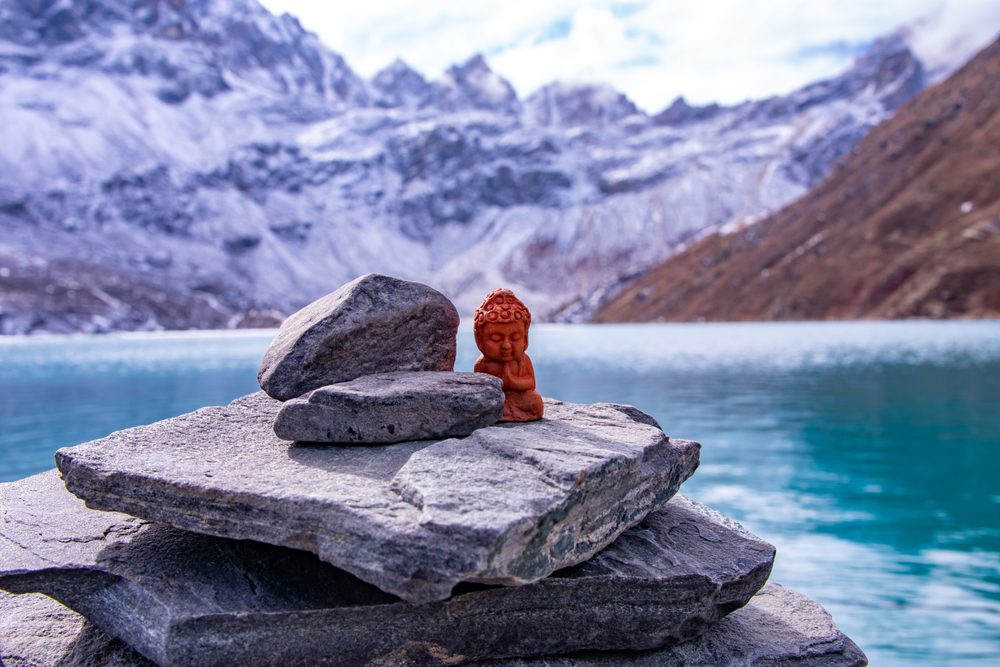
Today you will trek to Gokyo Lakes (4,790m), the highest freshwater lake in the world. Jagged mountains, cute stone farms, mighty valleys and artifacts of nature of seemingly endless beauty—you will soon close in on these unrevealed jewels of the high Himalayas. The turquoise blue water of Gokyo Lake surrounded by snow-clad peaks gives it an epic appearance that seems something out of a vivid dream.
Once in Gokyo village, you will settle into your own lodge for the night but if you are feeling sprightly, wander up to the peak of Gokyo Ri (5,357m) from where you will have dramatic 360 degree sights of four of the planet’s highest mountains. Everest, Lhotse, Makalu and Cho Oyu in sight; you will have made the arduous climb of this whole trek. Whatever you decide to do, be it scale the slope or lounge lakeside in peaceful solitude, this is sure to be a highlight. Then finally to bed in your Gokyo lakes lodge.
Stay overnight at the lodge.
Trek to Gokyo RI
After having some breakfast at Dole, you will be off on foot to Machhermo, which will take 4 to 5 hours. You will walk steadily above the tree line and be greeted by wide views of the valley and manufactures, snow-covered peaks, and grazing yaks on the way. After passing a tiny little settlement called Lhabarma, you will little settle for simple tea huts in Luza, then stop and regain your breath, allowing time to soak up the quiet of the mountains.
As you make your way up to Machhermo, your lungs will tell you that the air is thinning out, and you must walk slowly and drink water. Machhermo is a simple village with simple tea huts and good views of the beheld Cho Oyu in the distance, and you must admit to yourself that life at home can wait a little longer. It will be sleep time soon and tomorrow will take us over the mountaintop to Gokyo, where we can look down deliciously, high over our heads before.
Stay overnight in Gokyo village.
Helicopter flight from Gokyo to Kathmandu via Lukla stop (sharing with other people)
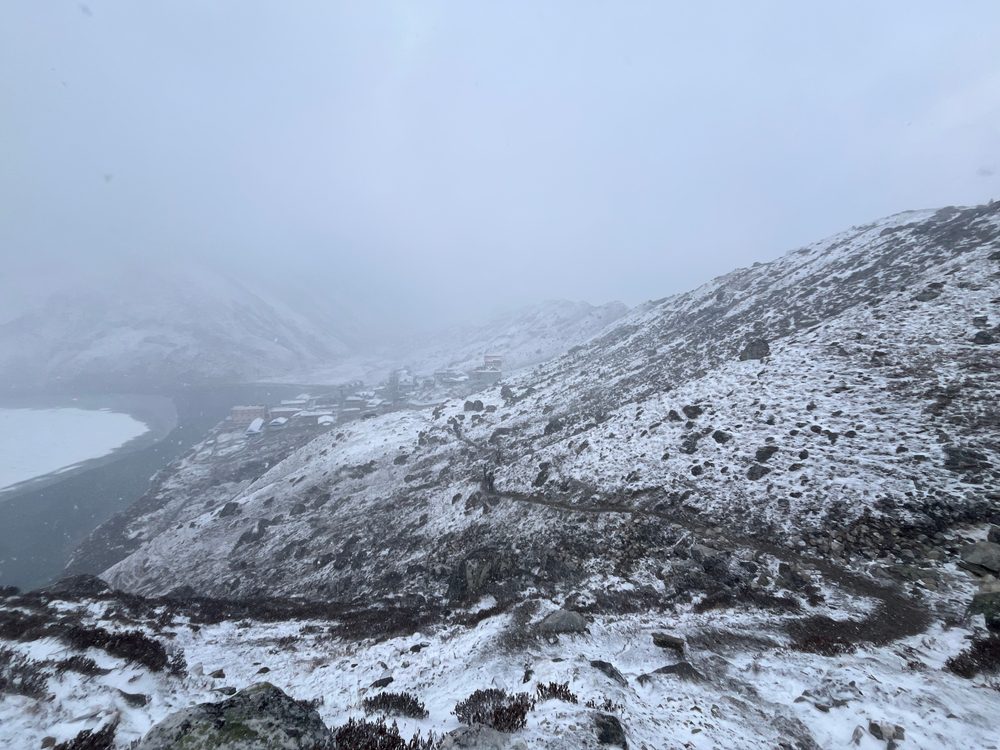
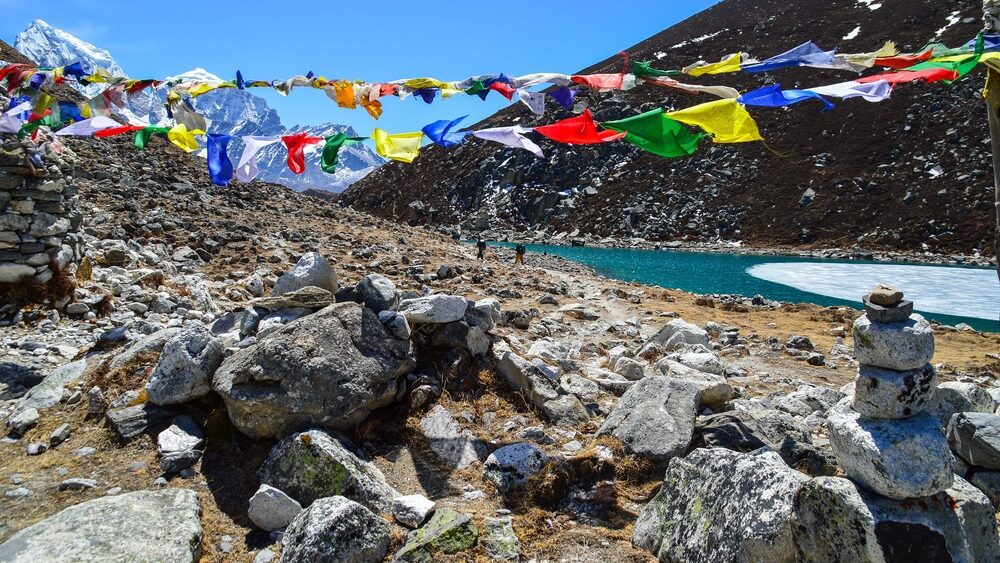
With a fairly decent tea in your belly, come the morning up and off to explore high flagged ridges for 4 to 5 hours and drink in the best sights of Cho Oyu and friends. Crossing small streams and skipping over rocks on side hills, you will be striding past some beautiful glacial valleys. Just before you get to Gokyo, you will drop down for the first Gokyo Lake and see a sheet of dark blue reflecting skies and mountains. Over there is the village, just beside the third lake, Dudh Pokhari, set close against a backdrop of snowy peaks. It really is beautiful and peaceful and gorgeous and there will be reams of stuff deposited in the cells of your memory
Once you land, you’ll either be transferred to your hotel for some well-deserved rest or head to the airport for your departure, depending on your travel plans. It’s a relaxing finish to a once-in-a-lifetime trek. You can take an early morning flight for the departure or stay the night at the hotel in Kathmandu.
Customize this trip with help from our local travel specialist that matches your Interests.
Customize This TripInclusions
What’s Covered in Your Adventure
- Helicopter flights from Kathmandu to Lukla and Gokyo to Kathmandu.
- Domestic airport transfers.
- 2–3 nights in Kathmandu with breakfast (standard 3-star or better on request).
- Teahouse accommodation during trek (twin-sharing), Namche and Gokyo is a luxury lodge.
- All meals during the trek (breakfast, lunch, dinner) .
- English-speaking certified guide.
- TIMS card and Sagarmatha National Park Permit.
- Porter service (1 per 2 trekkers).
- A first aid kit and oxygen are carried by the guide.
- Government taxes and service charges.
- International airfare and Nepal visa fee.
- Travel insurance (must cover high altitude + heli rescue).
- Personal trekking gear and clothing.
- Tips for guides/porters/pilots.
- Extra snacks, drinks (tea/coffee/alcohol), hot showers.
- Extra hotel nights or services in Kathmandu if plans change.
- Internet, charging, Wi-Fi in the mountains.
Maps
Navigate Your Journey
Good to Know
Your Journey, Step by Step
Accommodation on the Gokyo Helicopter Trek
Accommodation on the Gokyo Helicopter Trek is mostly in local teahouses along the trail. These are simple but cozy mountain lodges run by local families. Typically, you will be housed in a twin-sharing room with simple bedding, blankets, and a communal bathroom. There are a few more comfortable teahouses in lower settlements, such as Namche Bazaar, with electricity, hot baths, and even Wi-Fi, which cost a small fee. Although the amenities get more basic as you ascend, as in Gokyo village, they are still clean and warm enough for a restful night’s sleep. You will stay at a cozy hotel with all the latest conveniences in Kathmandu. Although the accommodations are basic overall, they are more than sufficient to keep you warm, nourished, and rested during the hike.
Food and Drinking Water on the Gokyo Lake Helicopter Trek
You will have the majority of your meals at the nearby teahouses along the Gokyo Lake Helicopter Trek. The freshly prepared, simple yet filling meals at these mountain hotels are ideal for boosting your energy levels while walking. Dal Bhat, a classic Nepali dish of rice, lentils, and veggies, is often included on the menu along with dishes like noodles, pasta, fried rice, potatoes, soups, pancakes, and eggs. In addition, most teahouses serve coffee, tea, and hot chocolate. Since fresh meat is difficult to transport in the mountains, the majority of the food is vegetarian, yet it is delicious and nutritious. Typically, you will have breakfast and dinner at your lodge and lunch somewhere on the path.
You can purchase bottled water for drinking at most stations, although the cost rises as you go up. It’s advisable to bring a reusable bottle and use a water filter, a SteriPen, or purification tablets to clean the water from nearby water taps in order to save waste and money. Most trekkers use boiled or filtered water, which is available at teahouses for a small fee. It’s simple to stay hydrated and fed when you prepare properly, and it’s a part of the whole Himalayan experience.
Electricity and Internet Services in the Gokyo Heli Trek
Electricity and internet are available on the Gokyo Lake Helicopter Trek, but it’s essential to be aware that both get less reliable and more costly as altitude increases. The majority of teahouses in lower districts like Lukla and Namche Bazaar have regular electricity and even provide charging stations in your dining area or room. Higher elevations, such as Dole or Gokyo, typically have solar-powered or tiny generator-powered energy. You will probably be paid a small fee to charge your phone, camera, or power bank, which ranges from $2 to $5, depending on the location and gadget.
Some teahouses have internet access through the Everest Link or AirLink system, which can be purchased as a code or prepaid card. It works fairly well in Namche and sometimes even in Gokyo, but it’s usually slow and not suitable for video calls or large downloads. There are areas of the trek where mobile network coverage (Ncell or NTC) is available, particularly in Namche, but it often fades as you ascend. Therefore, even if you can occasionally stay in touch, it’s better to inform friends and family that you will be basically offline throughout the walk so that you can focus on taking in the scenery. It is strongly advised to download any necessary files (such as maps, books, or playlists) before your trek, bring a fully charged power bank, and use a headlamp.
Group Size for the Gokyo Lake Helicopter Trek
The Gokyo Heli Trek usually takes place in small groups, with 2 to 12 participants. We operate with small group sizes by choice. We find this makes the experience much more personal, flexible, and above all fun! Our guide will be able to give each hiker more attention, while you won’t feel lost in a sea of strangers. In the mountains, it’s easier to go at an appropriate pace and stay safe. We can also reserve the trek for your party or even just you, for something a little more private.
Overall, our small group offer is designed for the best trekking experience, with owners, a guide and support staff all there to help you every step of the way.
Safety and Security for the Gokyo Heli Trek
To help you feel safe and secure throughout your Gokyo Lake Helicopter Trek, we take safety and security very seriously. You will walk with an expert, qualified hiking guide who is well trained in the route, the weather, and how to deal with altitude problems. The walk takes a well-trodden path frequented by others, with friendly locals, and your teahouse is secure. Your guide will be trained in first aid and altitude awareness, while helicopter evacuation is available should an emergency arise. It is safe and easy as long as you follow your guide’s advice, move steadily, and have good travel insurance. Even if it’s your first visit to the Himalayas, you’ll be well taken care of!
Altitude Sickness for the Heli Trek to Gokyo Lake
As always, be mindful of altitude sickness on the heli trek to Gokyo Lake, as you will be confidently reaching high places such as Gokyo Ri at 4800m (15700 feet). When your body requires a wee bit of time to adapt to the fact that there isn’t as much oxygen to breathe in high up there. A headache, dizziness, feeling sick and nauseous and possibly vomiting, tiredness or fatigue, difficulty sleeping etc, can occur. You can perhaps avoid it by moving slowly, drinking plenty water, and taking regular breaks in the hike in moderation. Your guide will be alert to signs of altitude sickness, and you should descend at once – or if symptoms severe, make haste downwards. Most trekkers feel perfectly ok if you take things easy and don’t hurry. Furthermore, it is prudent to have decent travel insurance that covers altitude sickness, other potentially serious illnesses or injuries, and theft of belongings, loss or damage.
Difficulty in the Gokyo Lake Helicopter Tour
The Gokyo Heli Trek is normally a moderate hiking trek—a little difficult mainly for the altitude as opposed to steep scree or technically tricky—you do not have to be an experienced mountaineer at all. However, you should be in good general shape with the stamina to roam hither and thither on mountain trails for five to six hours a day. It is very important indeed that you make it to Gokyo Ri, via the serrated glacial moraine, at 4,790m.
The air is thin up there and you may quickly become more fatigued and puffing and panting should you go too fast. The good news is that it is much easier indeed to get back beyond Gokyo in a chopper. And this is a neat walk even for first-time ramblers just be careful, drink loads of water, and pay attention to your guide. You will need to get a few legal permits to enjoy the heli tour to Gokyo Lake. The Nepali government wants these to regulate tourism, preserve the ecology, and help you if you come a cropper in the mountains.
Permits for the Gokyo Lake Heli Tour
Few legal permits are essential to be a part of the heli tour to Gokyo Lake. Those are demanded by the Nepali government to keep tourism in control, preserve the ecosystem, and ensure your safety while hiking. Following are the permits required for the Gokyo heli trek:
1. Sagarmatha National Park Permit: To arrive at the Everest (Khumbu) region, one first requires a Sagarmatha National Park Permit so that the park remains intact. This permit can be acquired in Kathmandu at the Tourism Board office or the local Monjo Park entrance gate on the trail.
2. Khumbu Pasang Lhamu Rural Municipality Permit: A Khumbu Pasang Lhamu Rural Municipality Permit must be obtained to hike up the Khumbu region. This is handed out at the Lukla permission office while you land or commence with the trek.
Required Documents
- Passport (with a minimum 6-month validity period)
- Passport-size pictures (two copies)
- Photocopy of your passport
- Details of your Travel Insurance
- Tickets for domestic and International flights
- Certificate of Vaccination (if need by local regulations)
Money Exchange for the Gokyo Lake Heli Tour
Prior to commencing on the helicopter tour to Gokyo Lake, it is better to exchange your money in Kathmandu. There are many ATMs and money exchanges in the city at relatively cheap prices. It becomes hard to find places to exchange your currency once you enter the highlands mainly Lukla and Namche and furthermore, the rates are lower. You will need Nepali rupees to cover the extra cost expenses on the trail like drinks, snacks, wifi and charging. To make the walk a bit easier and cause no stress, make sure you have enough small-note cash on hand before you leave Kathmandu.
Travel insurance for the Gokyo Heli Tour
The short heli tour to Gokyo Lake is an unforgettable journey through the Himalayas with high-altitude trails and a scenic helicopter return. To make sure you’re safe and stress-free, you’ll need travel insurance that covers specific things related to this kind of trek. Here’s what your insurance should include:
High-Altitude Health Insurance: Make sure your insurance covers trekking up to 5,000 meters, as you’ll be hiking to high places like Gokyo Ri (4,790m).
Trip Cancellation and Interruption: Choose a plan that will refund you if your trip is canceled or delayed due to sickness, injury, bad weather, or other unexpected issues like political strikes.
Baggage and Gear Protection: Your insurance should also cover the loss, theft, or damage of your personal trekking gear or luggage during the trip.
Packing List for Short Heli Tour to Gokyo Lake
The key to enjoying your heli tour to Gokyo Lake is packing wisely. You will need to pack clothing and equipment that will keep you warm, dry, and comfortable because you will be trekking to high altitudes and returning by helicopter.
General Trekking Gear
- Big backpack (60–70L) for your main stuff
- Small day bag (20–30L) for daily use
- Sleeping bag (–15°C to –20°C) – nights are cold in Gokyo
- Liner for sleeping bag – adds warmth and keeps it clean
- Duffel bag (usually provided by your trekking agency)
- Trekking poles – really helpful for balance
- Water bottles + water purifier (tablets or filter)
- Headlamp + spare batteries – useful for dark lodges or early hikes
- Sunglasses with UV protection
- Dry bags or ziplocks – keep things dry and organized
- Optional thermos – great for warm drinks
Upper Body
- 2–3 quick-dry base layer tops
- Warm fleece or jacket
- Thick down jacket – needed for cold mornings and evenings
- Rain/windproof outer jacket
- A couple of light t-shirts
- Long sleeves for sun and cold protection
Lower Body
- 2 pairs of warm thermal bottoms
- 2–3 pairs of trekking pants
- Waterproof pants for bad weather
- Warm trousers or insulated pants for nights
- Shorts (optional) for lower, warmer areas
Accessories for Head & Hands
- Warm hat or beanie
- Sun cap or wide-brim hat
- Neck buff/scarf for wind and sun
- Light gloves + warm waterproof gloves
Footwear
- Waterproof trekking boots – broken-in
- Sandals or slippers for evenings at the lodge
- 4–5 pairs of warm trekking socks
- Gaiters (optional, for snow or dust)
Toiletries
- Sunscreen (SPF 50+) and lip balm with SPF
- Toothbrush, toothpaste
- Wet wipes and hand sanitizer
- Quick-dry towel
- Toilet paper (not always available in lodges)
- Menstrual products (if needed)
- Basic grooming items (mirror, clippers)
Basic First Aid & Health
- Personal medicine
- Altitude pills (Diamox) – ask your doctor first
- Painkillers (e.g., ibuprofen)
- Anti-diarrhea tablets
- Band-aids and blister pads
- Antibiotic cream
- Oral rehydration salts (ORS)
- Bug spray (for warmer areas)
Extras (Optional but Useful)
- Camera or GoPro
- Power bank or solar charger
- Snacks (nuts, energy bars, chocolate)
- Book, journal, or cards for free time
- Earplugs and an eye mask – good for sleeping in busy lodges
Booking Policy for Everest Gokyo Heli Tour
1. Advance Payment & Booking Confirmation
To book your place on the 7-day Gokyo Lake Heli Tour, we ask for a 30% deposit of the total trip price. If you prefer, you can pay the full amount in advance. The remaining balance can be paid once you arrive in Kathmandu. To confirm your booking, please send us:
- Proof of your deposit payment
- A clear copy or photo of your passport
- Your emergency contact details and travel insurance information
2. Payment Methods
We want paying to be easy and secure for you. You can choose from:
- Online Payment: Pay safely and quickly through our website.
- Credit/Debit Cards: We accept Visa, MasterCard, and most major cards (a 4% bank fee applies).
- Bank Transfer: Transfer money directly to our bank account (your bank may charge fees).
- Cash or Check: If you are already in Kathmandu, you can pay us in cash or by check.
3. Final Payment
The remaining 70% of your trek cost should be paid before the trek starts. You can pay this in Kathmandu by cash, card, or bank transfer.
4. Booking Changes & Rescheduling
If you need to change your trek dates or reschedule, please tell us at least 30 days before your trip. We will try to accommodate you, but extra fees may apply depending on the situation.
5. Travel Insurance
Having travel insurance is very important for this trek. Your insurance should cover emergency helicopter evacuation, medical problems caused by high altitude, lost or damaged gear, and trip cancellations or delays.
6. Last-Minute Booking
We can accept last-minute bookings up to 48 hours before the trek begins. However, during busy seasons like spring and autumn, it may be difficult. So, it’s best to book early to secure your spot, as helicopters and lodges get booked quickly.
Cancellation Policy for Everest Gokyo Heli Tour
1. Cancellation is free up to 14 days prior to departure.
Up to 14 days before to the start date, you can cancel your tour and get a complete refund. No questions were made.
2. 7–13 days prior to departure, a partial refund
50% of the total fee will be refunded if you cancel between seven and thirteen days before to departure.
3. Within six days of departure, there is no refund.
There will be no refund for cancellations made six days or fewer prior to the tour. This includes:
- Absence of attendance
- Last-minute cancellations
- Early departure from the tour for personal reasons
- Weather-Related Cancellations or Delays
If bad weather prevents helicopter flights: Depending on availability, we will attempt to reschedule or modify the itinerary.
FAQs
Your Questions, Answered
Do I need prior trekking experience?
No climbing skills are required for the heli tour to Gokyo Lake. As long as you’re comfortable walking for 5–6 hours a day on mountain trails, you’ll be fine even if this is your first trek.
Will I need to climb a mountain?
Climbing Gokyo Ri (5,357 m) is optional. It’s a steep ascent, but if you do climb it, you’ll get spectacular panoramic views. You can feel free to skip it if you’d prefer to take it easy.
Is altitude sickness a concern during the trek?
Yes, altitude sickness can be a concern during the trek since you’ll be above 4,000 m. It is recommended to take it slow, drink plenty of water, and pay attention to any symptoms. Your guide will keep an eye on you and help if you feel sick.
What kind of accommodation will we stay in during the Gokyo Lake trek?
You’ll stay in simple, friendly teahouses or lodges in villages along the trail during the Gokyo Lake trek. These offer cozy shared rooms or private rooms with hearty meals and hot drinks.
Where will we fly with the helicopter?
You’ll take a helicopter from Kathmandu to Lukla at the start and then from Gokyo back to Kathmandu, with a fuel stop in Lukla. Flights offer amazing aerial views.
Can I see Mount Everest on this trek?
Yes, you’ll get great views of Everest, Lhotse, Makalu, and Cho Oyu, especially from Gokyo Ri and during the Gokyo Lake helicopter flight trek.
What’s the best season for the Gokyo Lake trip?
The best seasons for the Gokyo Lake Helicopter trip are Spring (March–May) and Autumn (September–November). During these times, the skies are clear, the trails are dry, and the flight conditions are good.
How much should I pack?
You should pack light but warm. You can bring layers, thermals, a down jacket, waterproof outerwear, gloves, sturdy boots, and a daypack to carry your daily necessities.
Will I have access to food and water?
Yes. You’ll eat in the teahouses except for meals like rice, noodles, soups, pancakes, and eggs. Bottled water is sold, but it’s better to bring a purification system to refill tap water.
Can I charge my phone?
Yes, most lodges offer a charging solar generator for about $2–5 per charge, especially in the higher villages. Bring a power bank if you want to avoid charging fees or shortages.
Is the Wi‑Fi reliable?
Basic Wi‑Fi is available in places like Lukla and Namche, but it’s slow and may not work well at higher elevations. It’s best not to rely on it for work or calls.
Will I get a mobile phone signal?
There’s a mobile signal (Ncell/NTC) in lower areas, like Namche, but it disappears higher up, so prepare for limited connectivity.
What safety measures are in place?
You will trek with a licensed and experienced guide who is trained in altitude health and first aid. Helicopter evacuation is a backup if there’s an emergency.
What permits do we need for the Gokyo Lake Helicopter Trek?
You’ll need a Sagarmatha National Park Permit and a Khumbu Rural Municipality Permit for the Gokyo Lake Helicopter trek. These are typically arranged by your trekking agency before you start.
Is travel insurance mandatory?
Yes, your policy must cover high-altitude emergency medical care, helicopter evacuation, and trip interruptions like cancellations or weather delays due to the nature of this trek.
What is the group size?
Groups are small, usually 2 to 12 people, keeping the experience nice and personal. You can also get a private trek if you prefer.
What should I do about money?
You should bring sufficient Nepali rupees from Kathmandu. ATMs and exchange services exist in Lukla and Namche, but not in remote areas. Keep extra in small bills for small purchases.
What happens if the weather prevents the helicopter flight?
If the weather prevents the helicopter flight, it may be delayed or rescheduled due to poor weather. If that happens, we’ll either fly on the next clear day or adjust the route, sometimes flying from Lukla instead.
Can I trek solo?
Yes, solo trekkers are welcome. You’ll still have a guide, and if you wish, we can match you with other trekkers or just book a private trek for you.


View Our Similar Packages
Discover our top tours, loved by thousands of travelers annually. Choose the adventure that inspires you and embark on a journey tailored to your desires.

 Nepal
Nepal
 1 Days
Add Review
Reviewing for Gokyo Lake Helicopter Trek – 7 DaysRequest a Callback - Gokyo Lake Helicopter Trek – 7 Days
Submit the form and we will be back to you shortly
Request a Callback - Gokyo Lake Helicopter Trek – 7 Days
Submit the form and we will be back to you shortly
Narayanhiti Palace Museum

Narayanhiti Palace Museum


