









North Annapurna Base Camp Trek 12 Days


Trip Facts


Complete Overview of North ABC
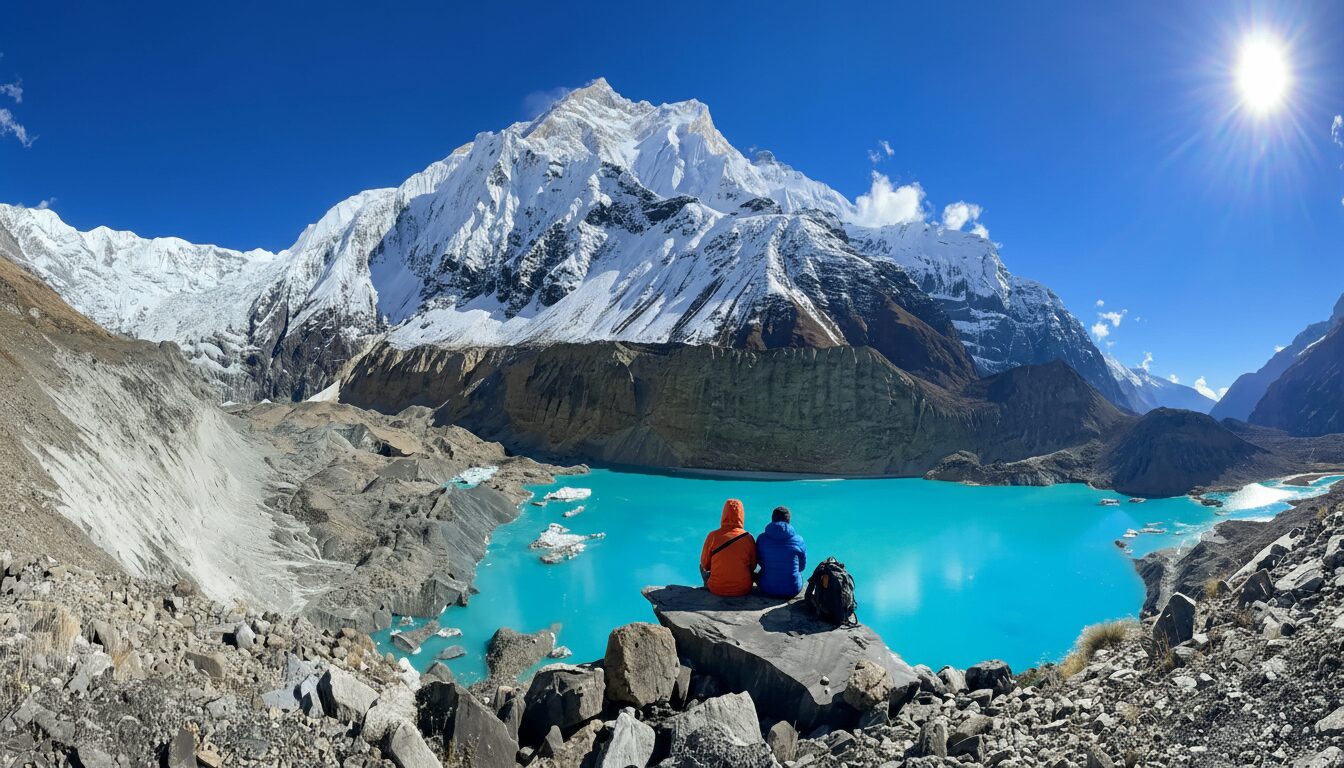
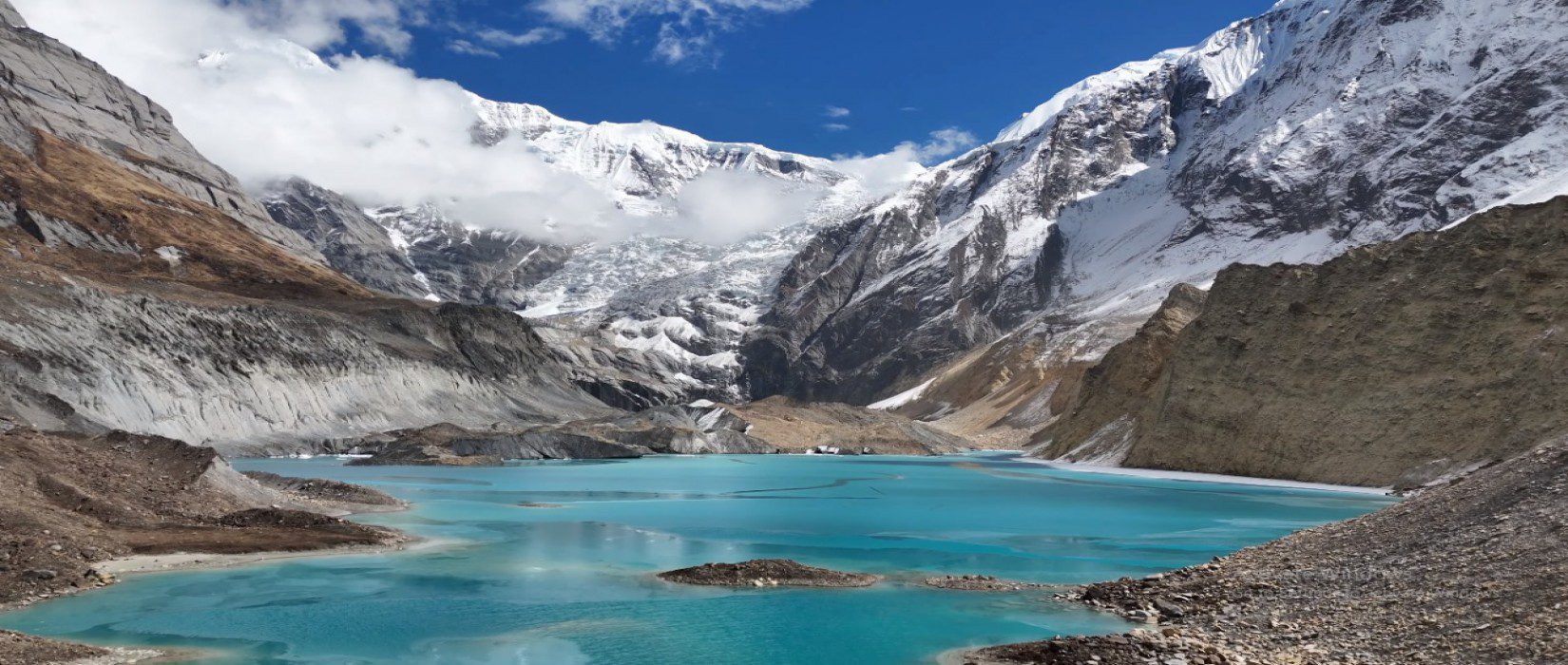
The North Annapurna Base Camp Trek takes you into one of Nepal’s most pristine areas—the Nepali Himalaya. It is ideal for anyone who enjoys discovering unspoiled regions of the world and trekking along remote trails. Being surrounded by the incredible scenery of the Himalayas will give you the peaceful and achievable climb you seek. The trek takes you along the northern face of Annapurna I (8,091 meters), the tenth-highest mountain in the world and the first of only fourteen mountains over eight thousand meters to be climbed. It leads you through stunning, gigantic, and enormous glacial areas with ice walls and peaceful alpine environments that are enchanting every step of the way.
Your trek may last between 12 and 15 days based on the route you take and how fast you walk. During this period, you will hike several hours daily over rocky mountain paths, covering great distances through remote areas of the Himalayas, such as the North Annapurna Base Camp (at 4,190 m). This area requires proper acclimatization, as well as good physical fitness, in order to reach such great heights. Trekking here is also best suited for those looking for adventure and exploration of areas that still have some degree of isolation from modern tourism.
Because of the remote location of this trek, facilities will be limited (and you may need to camp along some sections), but that is part of the allure of an authentic trekking experience where you will be surrounded by untouched nature at its best in the Himalayas. An equally rewarding aspect of this trek is that you will interact with local people from the surrounding communities and gain a better understanding of how they live and continue to live. Their daily lives use old-fashioned methods that have been passed down through the generations.
The North Base Camp is not nearly as well-travelled as the regular Annapurna Base Camp trek. It is very popular with trekkers, but also difficult since the North Base Camp route is stressful and difficult to navigate in a large crowd. On the trails, you’ll find many small, hidden villages like Upper Narchyang, the working village of Sandhi Kharka, and the incredible high-elevation meadows of Thulo Bugin. Throughout the trip, you will experience the culture of the high-altitude communities you will meet along the way, as well as the everyday lives of the people living high in the Himalayas.
The North Base Camp trek is a fully immersive experience that will allow you to explore the remote and rugged terrain of the Nepalese Himalayas. You can take part in many local cultural activities and see the stunning sights of the extremely high mountains of the Himalayas. It will be a great opportunity for you to gain incredible experiences through discovering Nepal’s most beautiful and untouched area, the North Base Camp region. With stunning views, quiet hours of exploring nature, and the thrill of being in the most remote areas of Nepal, you will enjoy this journey a lot!
Are you ready to explore Nepal’s most hidden regions? North Base Camp is waiting for you. It might be a little tough, but you will be rewarded for your hard work with lifelong memories and experiences.
Trip Highlights for North ABC Trek
- Observe the classics of rural living, as demonstrated by the Magar community, and many of the same types of life experiences that exist today in this area.
- Experience breathtaking vistas of glaciers, alpine meadows, and waterfalls, along with multiple high-mountain valleys.
- View the Annapurna North Base Camp at an elevation of 4,190 m.
- Marvel at the majestic Himalayan peaks such as Annapurna I, Mount Nilgiri, Tilicho Peak, and all the surrounding peaks.
- Trek through one of Nepal’s most remote and sparsely populated areas to experience tranquility, seclusion, and the beauty of nature.
- From the lush forest and river valleys to the alpine meadows and glacial landscapes, there are a variety of landscapes for visitors to explore.
- Visit traditional Mountain Villages and participate in farming activities. Experience the different aspects of local culture.
- Trek moderately to challenging terrain that includes several high-altitude passes and rugged trails, testing the skills of trekkers as they cross over the Himalayas.
- Witness the seasonal beauty of Nepal which includes the spring bloom of the rhododendron and the clear autumn skies with unobstructed views of the Himalayan Mountains.
- Combine the wilderness experience with adventure, culture, and stunning scenery to create lasting memories.
- Experience the sunrise and sunset view of Dhaulagiri at 8089 meters.
- Rich biodiversity with forests, waterfalls, and high-altitude flora and fauna
- Less crowded compared to other treks with true wilderness
- Feel close to nature staying in the tent with the constant water flowing noise and swooshing sound of the wind.
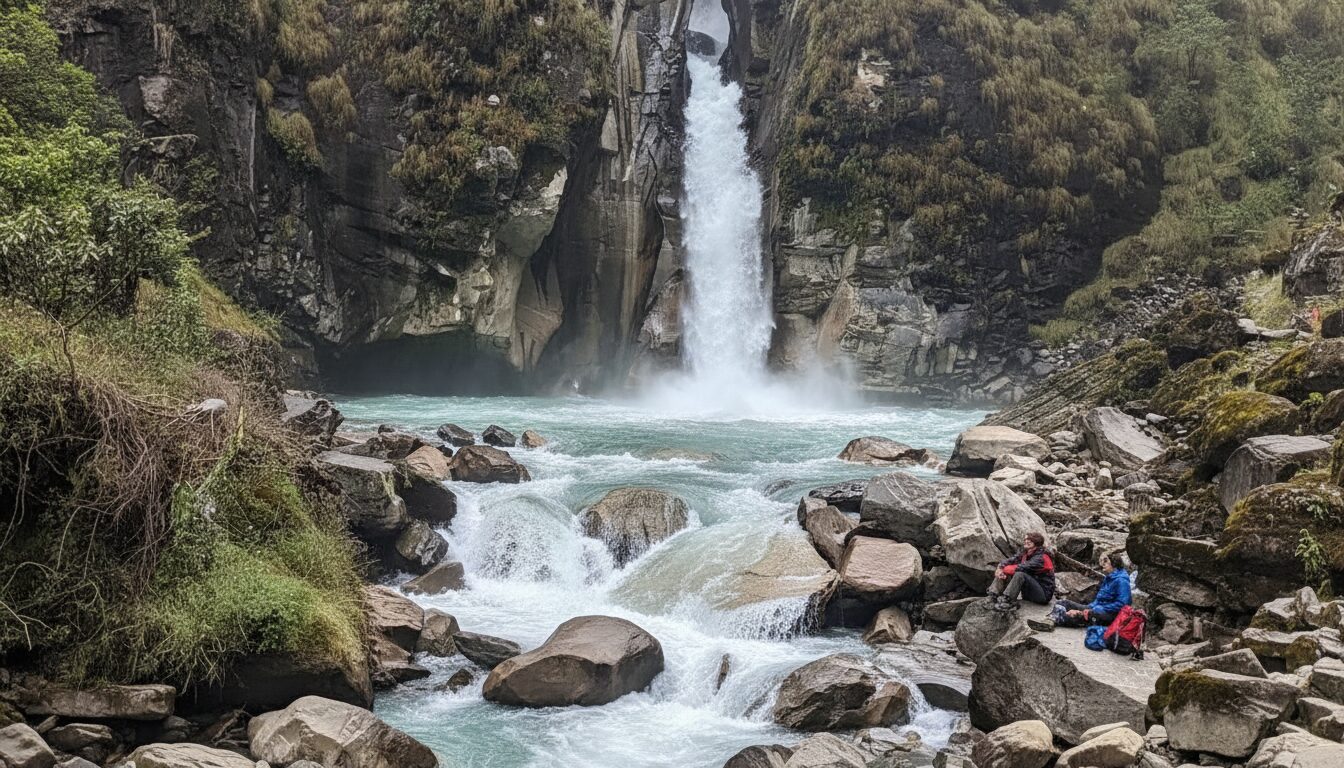
- Witness the beautiful waterfall, Phutphute Jharna, along the trail.
- Can rest in Tatopani (Natural hot springs) near the Kali Gandaki area, perfect for relaxing muscles before or after tough trekking days.
Why Travel With Us
Choosing Adventure Master Treks for your North Annapurna Base Camp journey means experiencing a trek that is safe, seamless, and unforgettable. We specialize in restricted and remote treks, offering expert guidance through trails that few have explored.
- A guide and porter team with high experience and security for a smooth trek.
- Complete on-location services of camping logistics, meals, and emergency preparedness.
- Sustainable and responsible trekking activities that can benefit locals and maintain culture.
- Customized trekking at your speed, taste and inclination.
- Arrange all trekking, transportation, and managing permits.
- Dwelling on giving you a chance to have fun on the adventure and the Himalayan beauty without stressing.
- Known to be of good service and satisfaction to the client, and make your trek something to remember.
Itinerary
Your Journey, Step by Step
Drive from Kathmandu (1400 m/4593 ft) to Pokhara (822 m/2696 ft)
After breakfast, you will drive to Pokhara by a luxurious tourist bus. Pokhara is a stunning lakeside city situated at the foot of the Annapurna mountain range. You will travel through river valleys, terraced hillsides, and picturesque villages, giving you a close-up view of rural Nepalese life.
Upon arriving in Pokhara, you will see the beautiful reflection of Machapuchare (Fishtail Peak) in the calm waters of Phewa Lake. This evening, you can take advantage of the opportunity to walk along the lake and prepare for your trek. You can find peace and confidence in your upcoming journey into the region’s mountain ranges.
- Driving Time: 6–7 hours
- Overnight: Hotel in Pokhara
Drive from Pokhara (822 m/2696 ft) to Tatopani (1243 m/4078 ft), then Trek to Upper Narchyang (2140 m/7020 ft)
You will continue driving along the Kali Gandaki River past Beni to the town of Tatopani, famous for its hot springs. You will begin your trek by ascending gradually to Tatopani, where you will experience terraced agriculture, forests and villages as you ascend.
Upper Narchyang is a traditional Magar settlement, located among green hills and cascading waterfalls. The village provides a unique opportunity to experience traditional local culture and excellent hospitality. You are now entering into the trekking experience, and the welcoming smiles of the community will give you a sense of belonging.
- Drive: 4–5 hours
- Trek: 3–4 hours
- Overnight: Teahouse in Upper Narchyang
Trek from Upper Narchyang (2140 m) to Chhotepa (2369 m/7772 ft)
Today, you will trek from Upper Narchyang to Chhotepa after having some delicious breakfast at the teahouse. As you begin, the route gradually rises through thick forests, multiple waterfalls, and narrow valley systems.
As you travel higher, the air becomes cooler, and the surroundings become quieter. This peaceful route introduces you to the remoteness of the North Annapurna region. After walking for hours, you will finally reach Chhotepa. Chhotepa is a small seasonal camp with limited accommodations but beautiful outdoor scenery. During your trek, the area is quiet, the air is fresh, and you will be greeted with the sounds of nature all around you, making for a very tranquil experience!
You will not find any lodge from here. The teahouses you visit along the trail only provide basic normal quality tents to spend the night. You must have to carry the tents from Pokhara, if you want good material tents.
Trek from Chhotepa (2369 m/7772 ft) to Sandhi Kharka (3165 m/10,383 ft)
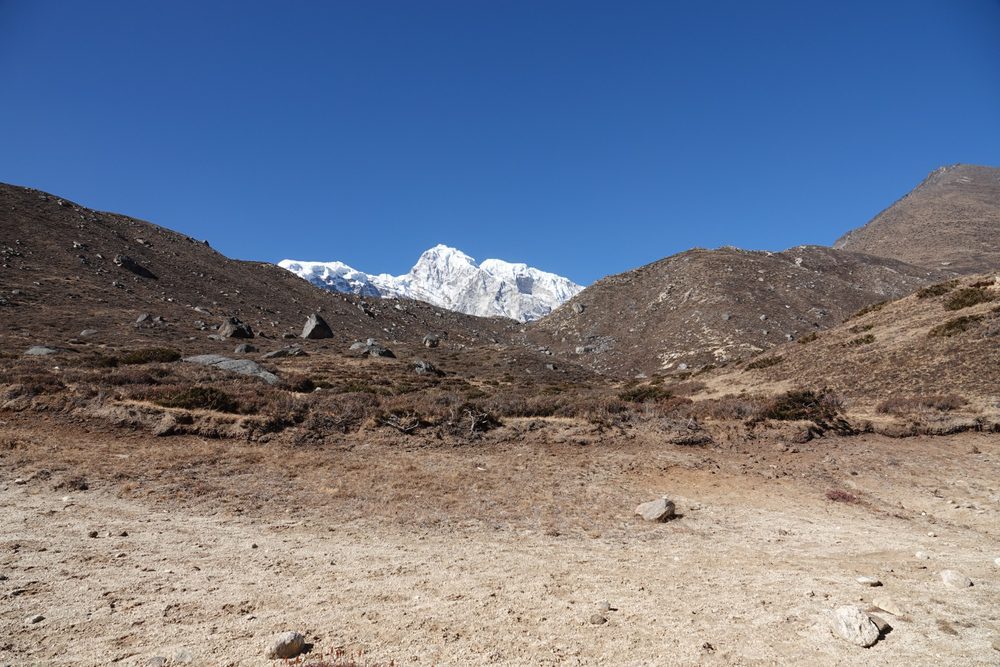
Today’s section of your trek will take you into the high mountains with no trees and only open mountainside or grassy meadows. The slopes of the various surrounding peaks are steep and rugged, and provide an environment similar to true wilderness.
Sandhi Kharka, which is an expansive alpine pasture used by local herders in the summer months, will have some of the most breathtaking views of the Himalayas. The site of yaks grazing, the radiant clouds drifting across the jagged peaks, and the realization of how hard you worked to reach such a spectacular point will create a moment that may bring you to tears.
- Trek Duration: 5–6 hours
- Overnight: Basic lodge or tented camp
Trek from Sandhi Kharka (3165 m/10,383 ft) to Annapurna North Base Camp (4190 m/13,746 ft)
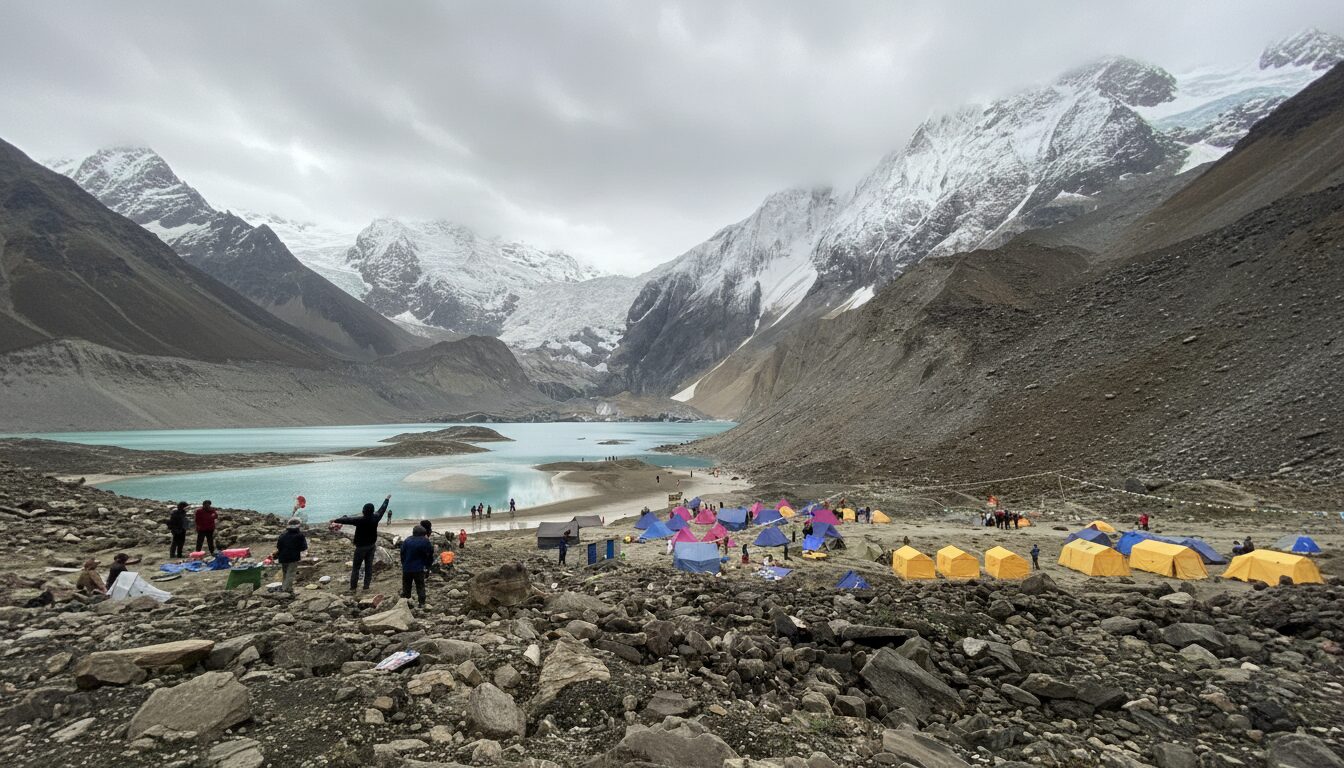
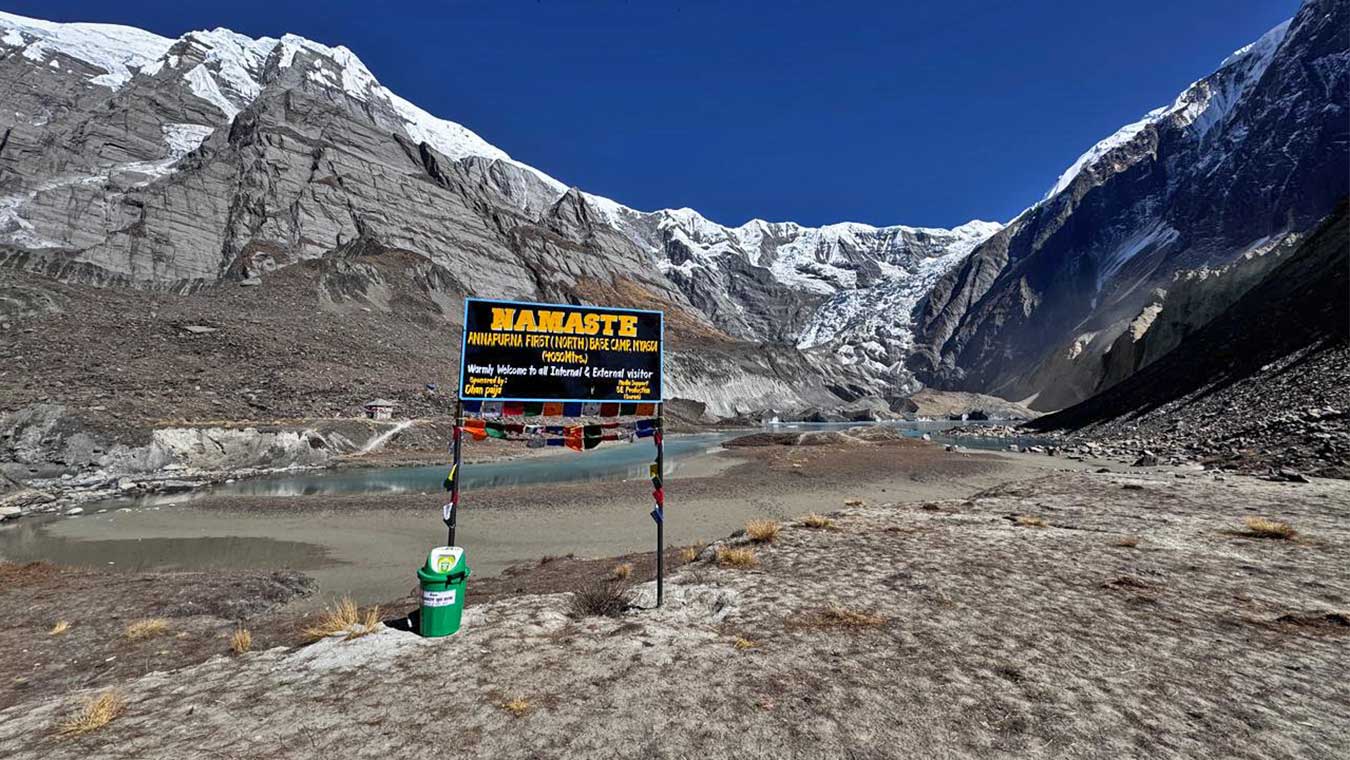
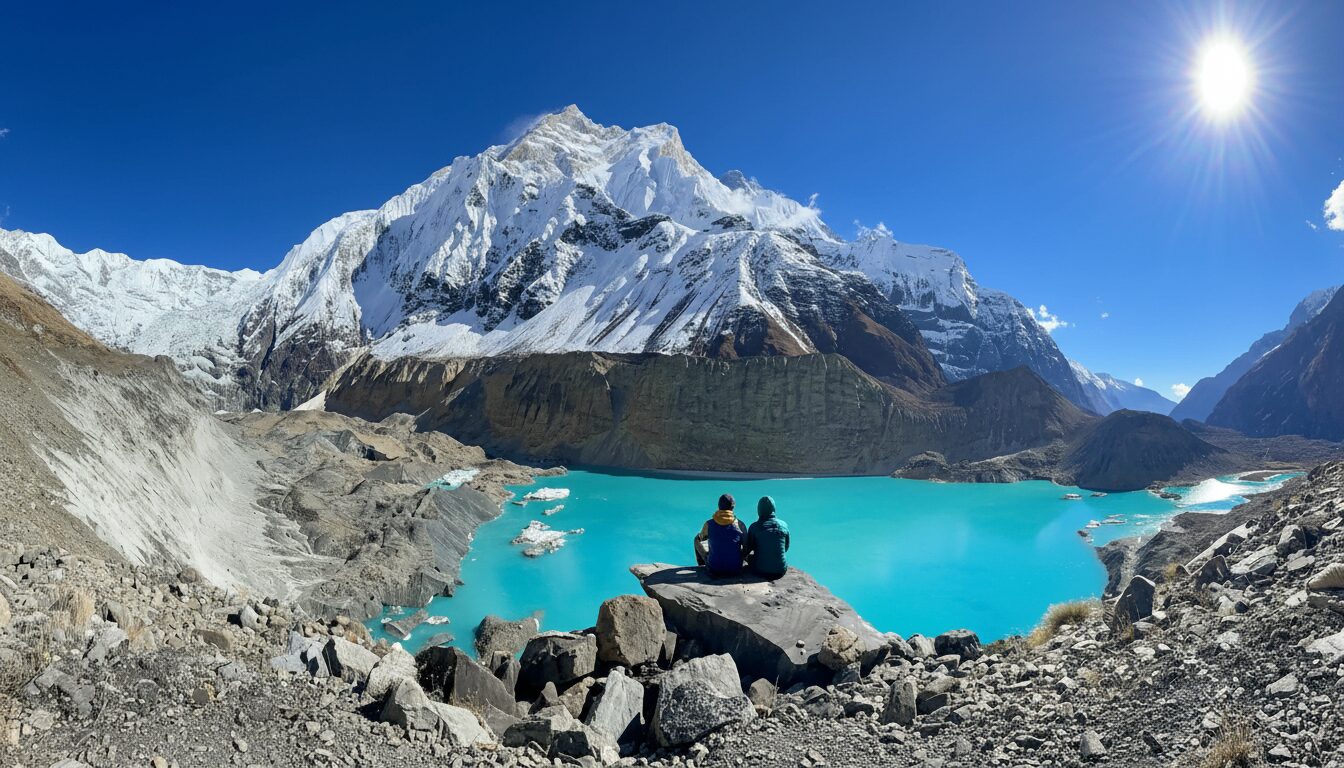
Finally, today is the day to trek to North Annapurna Base Camp. It is the most rewarding and spectacular day of the trekking experience. The trail crosses glacial moraines and rugged ground as you approach the north face of Annapurna I.
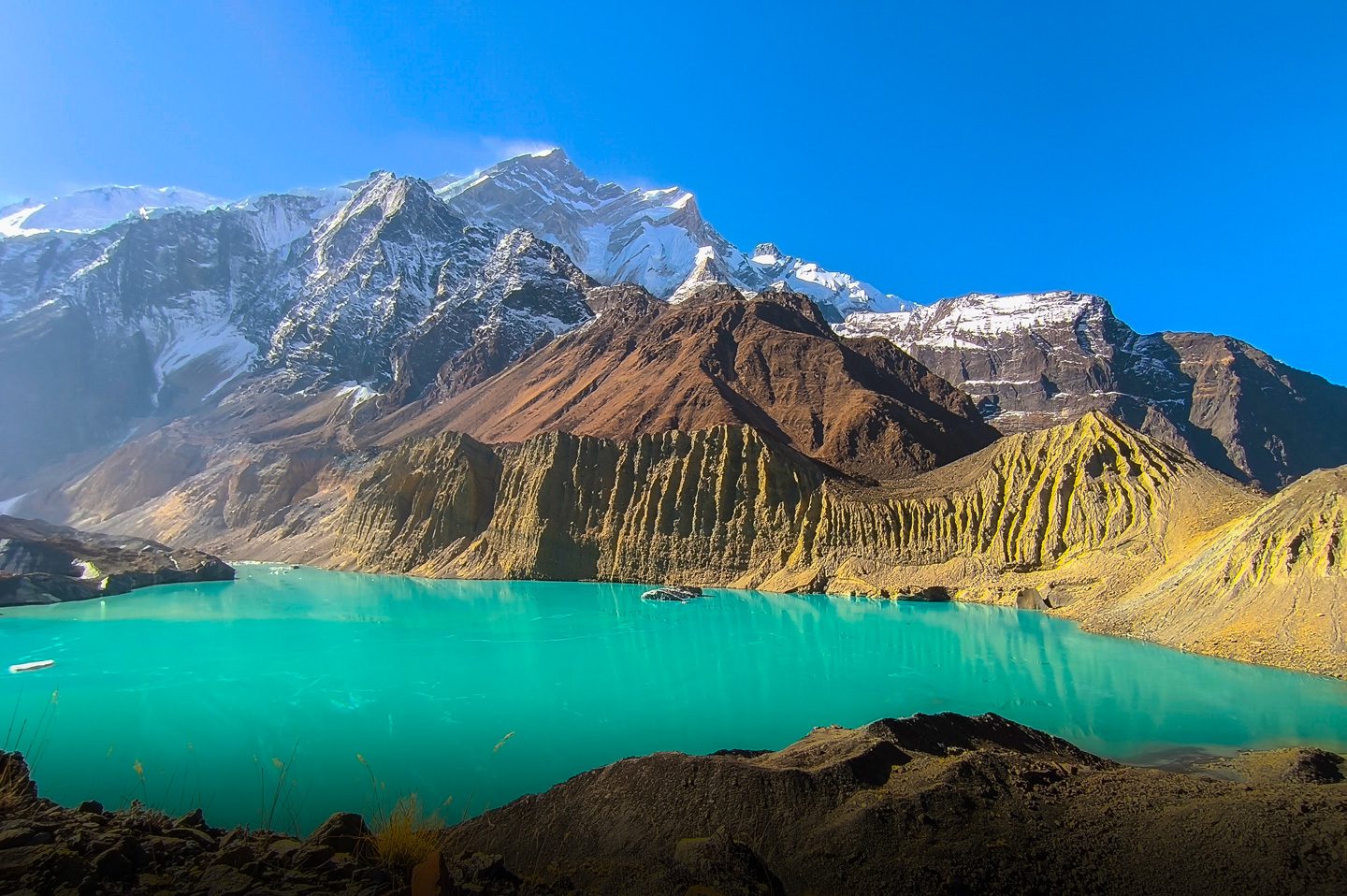
When you arrive at the Annapurna North Base Camp, you will be completely surrounded by the vertical ice walls, glaciers, and steep cliffs of the mountain surrounding you. It is a wild, calm, and unforgettable experience. It is a true experience of being in the Himalayan wilderness. Standing here will have a great effect on your development of creativity, passion, and a strong connection to nature.
- Trek Duration: 4–5 hours
- Overnight: Basic camp near Base Camp
Trek from Annapurna North Base Camp (4190 m/13,746 ft) to Sandhi Kharka (3165 m/10,383 ft)
Today, we wake you up early for our trek from Annapurna North Base Camp. The sunrise at Annapurna North Base Camp provides a breathtaking moment in time. When the sun rises, take a moment to look at the enormous ice mountains before your eyes; the view will take your breath away. Please stay warm and enjoy your experience.
After your breakfast, we will descend to meet with Sandhi Kharka. You may choose to take your time walking down, as the majority of your previous physical exertions and mental preparation have been accomplished. You can feel free to capture memories through photography and observe how fresh the mountain air is as you explore the area at a slow, relaxed pace.
During this time, you will be welcomed to the warm comfort of basic lodging at Sandhi Kharka or a rustic camping setting offering you comfort.
- Walking time: 4–5 hours
- Overnight: Basic lodge or camp
Trek from Sandhi Kharka (3165 m/10,383 ft) to Thulo Bugin (3500 m/11,482 ft)
Today is all about space, silence, and big mountain views. After breakfast, we will take a calm climb up wide-open grassy meadows where Yaks are free to graze; do not be shocked if you have to share the path with them!
When we arrive at Thulo Bugin, it will truly feel like you have been transported to the most remote location in the best way possible. This area causes all who venture here to enter a more relaxed state (to breathe deeply) and simply be in the moment and enjoy the scenery; we will reach Thulo Bugin quite early in the day and have plenty of time to decompress and enjoy our surroundings.
- Walking time: 5–6 hours
- Overnight: Camp or basic lodge
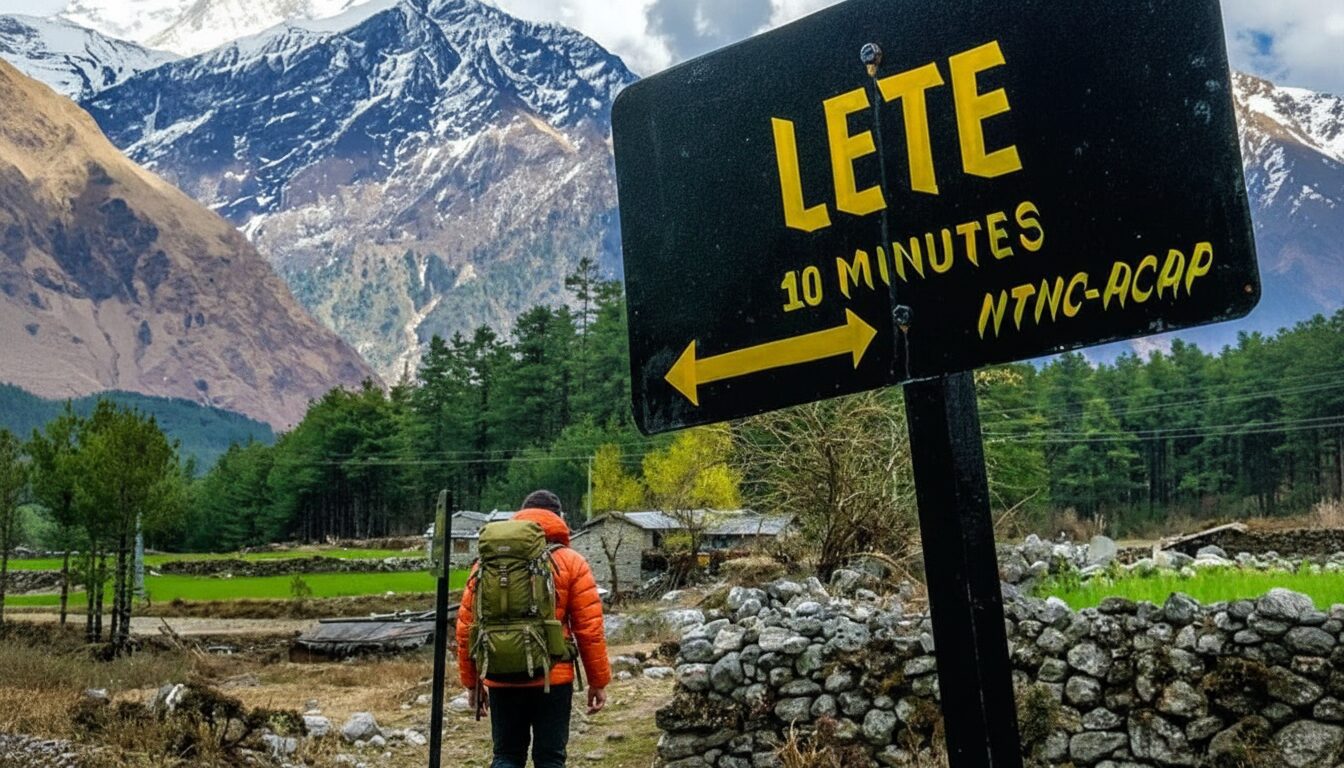
Trek from Thulo Bugin (3500 m/11,482 ft) to Lete (2010 m/6594 ft)
Today, we start trading the snow-capped mountains for the greenery of a forest. While the length of this day is longer, it is mostly downhill, with a change in scenery. It is a very enjoyable and interesting trek. The previous snow-capped mountains change into softer, more inviting areas with trees, and eventually the temperature increases and the air becomes warmer with every step down.
When you reach Lete, you will find great relief. The altitude is very comfortable, the people are friendly, and there are warm tea houses. You will have a hot meal, a good laugh and enjoy a solid night of sleep here.
- Walking time: 6–7 hours
- Overnight: Teahouse in Lete
Drive from Lete (2010 m/6594 ft) to Pokhara (822 m/2696 ft)
There will be no trekking today. You will simply sit back and enjoy the ride. We will be driving back to Pokhara while following the Kali Gandaki River, and you will be able to watch as the white-capped mountains change back into rolling hills.
Once arriving in Pokhara, we encourage you to treat yourself with hot showers, clean clothes, Lakeside Cafes and perhaps some sort of drink to enjoy with others; after all, you have earned it.
Although the North ABC trek ends here today, as our itinerary can be flexible as per your needs, you can extend your stay and explore the beauty of Pokhara if you want.
- Driving time: 6–7 hours
- Overnight: Hotel in Pokhara
Drive from Pokhara (822 m/2696 ft) to Kathmandu (1400 m/4593 ft)
As soon as we finish breakfast, we will take a bus back to Kathmandu. Take some time to review all the pictures you took throughout this trip. Think about all the things that have contributed to your success on the journey and how much you have learned from the experience.
You will have the rest of the evening to enjoy in Kathmandu. There will be plenty of opportunities for last-minute shopping, to get something nice to eat or just relax and unwind from your long trek. You’ll have the choice of how to spend your free time.
- Driving time: 6–7 hours
- Overnight: Hotel in Kathmandu
Final Departure or Onward for Next Destination
After breakfast, we will either drop you off at the airport or assist you in planning for your next adventure. No matter whether your destination is back home or on to another travel adventure, either way, you have taken part in a once-in-a-lifetime trek to the North Face of Annapurna; be proud of achieving such an adventure!
Customize this trip with help from our local travel specialist that matches your Interests.
Customize This TripInclusions
What’s Covered in Your Adventure
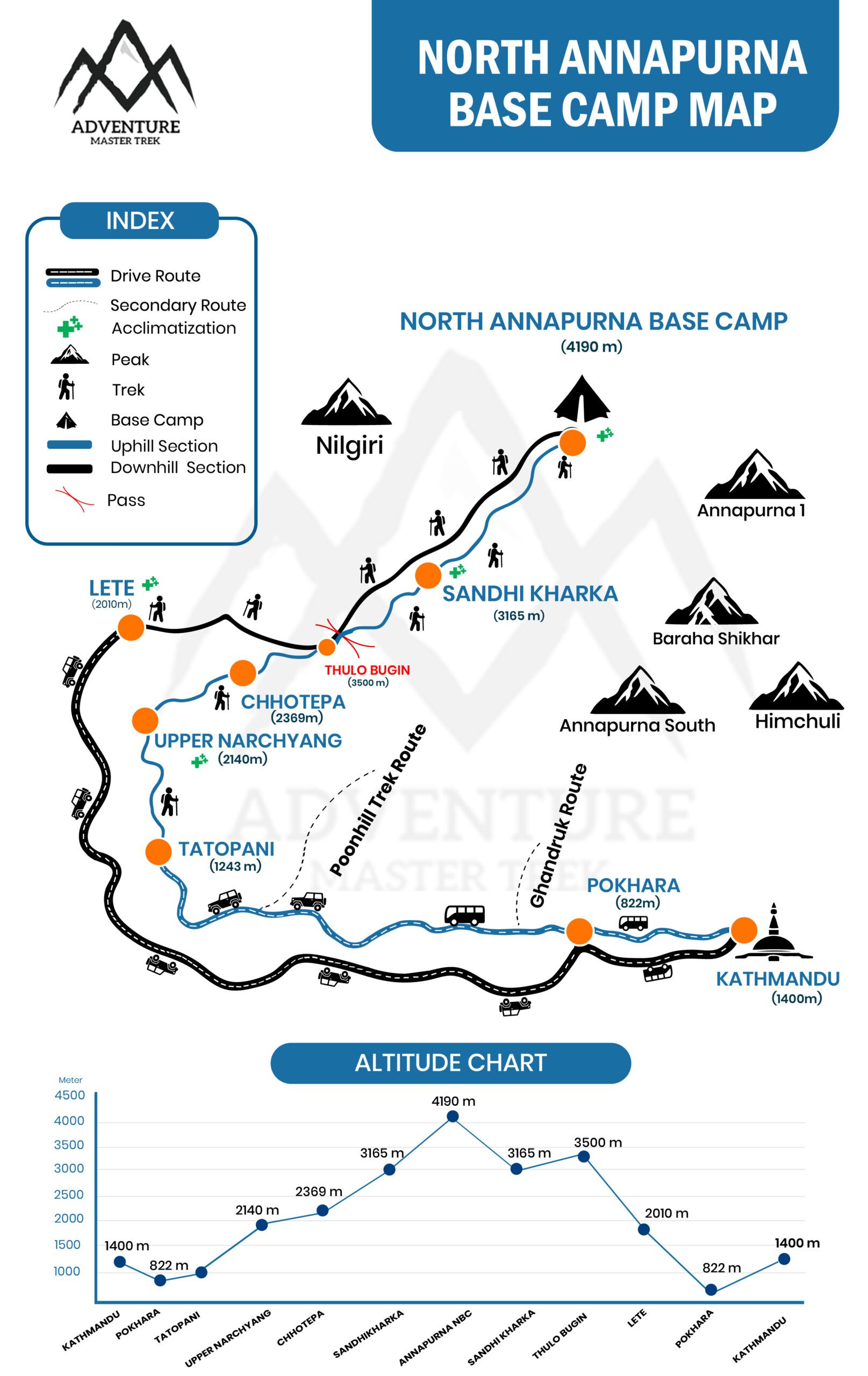
Maps
Navigate Your Journey
Good to Know
Your Journey, Step by Step
Accommodation and Lodging on the North ABC
The North ABC trek has easy accommodations that are local and involved in the adventure. It is not the case with popular trekking routes, though this area is rather distant and therefore the infrastructure is rather simple, which makes it special as well.
Teahouse Stay
The North ABC trek has a very limited number of teahouse accommodations because the area is very remote. The teahouse stay will be limited to one night as the trekkers proceed with the trek, and normally in one of the villages where they can find some basic amenities like a bed, a shared bathroom and a simple meal. The short teahouse stay provides the trekkers with an opportunity to learn about the local people, be hosted in the traditional Himalayan way and sleep in a more traditional environment before moving on to more isolated parts of the trek.
Above the Narchyang village or Humkhola and Lete there are no reliable commercial teahouses or lodges. The trails are simple and straightforward but with less places to rest. However you can find small stone built resting platforms along the trails.
Talking about the night, there are no other options than spending the night in the tents above Narchyang village or Humkhola and Lete. There are no teahouses from here and also the supplements they provide might not be warm enough, so it is better to carry extra from the town.
Camping Accommodation
During most of the journey, lodging will be offered in the form of well-arranged camping. This is because the majority of the route that the North ABC follows lacks teahouses or lodges, and camping enables the trekkers to proceed along the path in safety and comfort.
We have a complete camping system consisting of large sleeping tents, eating tents, toilet tents when necessary, warm sleeping bags and mats in case of cold weather, even at high altitude. Our trekking kitchen staff prepares fresh meals, which keep the trek hygienic and nutritionally sound.
Camping is also an element of an entirely wilderness experience, where trekkers can get up early in the morning with panoramic views of the Annapurna and Dhaulagiri ranges, have their quiet time under the stars, and get to experience the tranquillity of a remote Himalayan setting. It offers the convenience of taking the trek at his/her own speed, provides security with the guides and other support staff around, and it also has a level of comfort that makes trekking in this limited area possible and fun.
In the North ABC trek, the local teahouses provide the basic tents to sleep most of the days. But, if you are not satisfied with the quality, you might not be able to contact someone and ask for a better one as the mobile network only works till Gurase Dada. So, packing the tents as per your requirement from Pokhara or Kathmandu will be good
Food and Drinking Water on the North ABC
The food on the North Annapurna Base Camp (ABC) Trek is fresh, hearty, and simply prepared. That’s because the food is prepared for you by the lodges or camps where you stay during the trek, and it consists mostly of familiar and local dishes such as Dal Bhat (rice, lentils, and vegetables), noodles, fried rice, pasta, soup, eggs, pancakes, chapati, and potatoes.
There are hot drinks like tea and coffee available for purchase throughout the day to keep you warm. While you may have fewer choices at higher elevations, you will always be able to count on the availability of hot, nutritious meals to help maintain your energy throughout the day.
As for drinking water, there are natural springs and river sources available for your use along the trail. While it is very easy to fill your water bottle from these sources, it is best to use a water purifier, filter, or purification tablets so that you can be assured that the water you are drinking is safe to drink.
Besides being safer, using a water treatment system is cheaper than buying bottled water, and it is more environmentally friendly. Many lodges offer hot water for purchase as well. This will help you stay warm and hydrated during the trek.
Transportation Options for the North Annapurna Base Camp Trek
To start the trip to the North Annapurna Base Camp, trekkers travel between Kathmandu and Pokhara in a luxury tourist bus, which is comfortable, safe, and scenic and takes about 6–8 hours.
Trekkers will have the option of traveling in a private jeep from Pokhara to Tatopani for $140 US dollars (up to 7 people total). Private jeep transportation is the fastest and most convenient method of travel for groups compared to public transportation.
On the return journey from Lete-Pokhara, local bus transportation is available for about $10 USD per person. Local buses are an economical choice but are slower and less comfortable than private jeeps. Alternatively, private jeeps are available for $150 USD (up to 7 people total) and are a much more comfortable, flexible, and faster travel choice.
The final decision whether to use a bus or a jeep depends on the traveler. A bus is the most budget-friendly option, and is best for solo travelers or small group sizes. A jeep will be the best choice for someone who is looking for speed, comfort, and convenience when traveling with larger group sizes.
The super luxury tourist bus is available from Kathmandu (KTM) to Pokhara (PKR), for a luxury tourist bus costs 15$ per person for one way and vice versa.
If you want to travel by flights, the Kathmandu (KTM) to Pokhara ( PKR) flight price will cost you $100 USD in the season and $90 during the off season. The flights operate everyday and will be arranged by the company.
Electricity and Internet Availability on the North ABC
You’ll be making a remote trekking route in the North ABC Region of Nepal, with electricity and internet access quite limited. It’s one of the unique things about trekking in this area, where you can be ‘offline’ and fully immersed in nature.
In the lower villages, you’ll find that some have solar power facilities or small hydroelectric generators, and you’ll usually be able to charge your cellphone or cameras for a nominal fee. However, if you plan on trekking higher up into the mountains, you may find that there are few options available for charging your electronic devices, so we strongly recommend bringing along a power bank.
While it’s possible to find Wi-Fi connectivity within these regions, the reliability varies greatly. The only cellphone service that may be available is in the lower elevations. The service disappears as you gain elevation. Therefore, upon completing your hike, you’ll have a chance to disconnect from all things digital and reconnect with nature. Many trekkers report that disconnecting from technology was one of the best parts of their trekking experience.
Charging, Wi-Fi, and Network Cost & Availability on the Annapurna Base Camp (North ABC) Route
| Place | Altitude | Charging Availability & Cost | Wi-Fi Availability & Cost | Mobile Network (Preferred SIM) |
| Kathmandu | 1,400 m | Easily available, usually free at hotels | Good, usually free | Ncell & NTC both excellent |
| Pokhara | 822 m | Easily available, free at hotels | Good, free at most hotels/cafes | Ncell & NTC both excellent |
| Upper Narchyang | 2,140 m | Limited sockets, NPR 100–200 | Very limited or none | NTC stronger, Ncell weak |
| Chhotepa | 2,369 m | Very limited (solar), NPR 200–300 | Not available | NTC weak or no signal |
| Sandhi Kharka | 3,165 m | Solar charging only, NPR 300–400 | Not available | No reliable signal |
| North Annapurna Base Camp | 4,190 m | Very limited (solar/generator), NPR 400–500+ | Not available | No signal |
| Sandhi Kharka | 3,165 m | Solar charging, NPR 300–400 | Not available | No signal |
| Thulo Bugin | 3,500 m | Very limited (camp-based), NPR 300–400 | Not available | No signal |
| Lete | 2,010 m | Available, NPR 150–200 | NTC works, Ncell limited |
NTC Mobile Data Packages (Useful for Trekkers)
| Package Type | Data Allowance | Validity | Approximate Cost | Suitable For |
| Daily Data Pack | 1–2 GB | 1 day | NPR 50–100 | Short use in Kathmandu or Pokhara |
| Weekly Data Pack | 5–10 GB | 7 days | NPR 200–300 | Trekking up to Upper Narchyang / Lete |
| Monthly Data Pack | 20–30 GB | 28–30 days | NPR 500–700 | Full trip including travel days |
| Voice + Data Combo | Limited data + call minutes | 7–28 days | NPR 300–600 | Calls and light internet use |
On the North Annapurna Base Camp trek, there isn’t much electricity or internet access, and it gets worse as you go higher into the mountains. Charging is mostly available and often free in Kathmandu and Pokhara throughout the hotel or cafe. In smaller villages like Lete and Upper Narchyang, you can charge your phone at a very reasonable price. Other than these things, electricity comes mostly from solar power starting from Sandhi Kharka to North ABC, which makes charging slower and more expensive. Wi-Fi is mostly only available in towns and smaller settlements, so you shouldn’t depend on it during the main trekking days. You can take a weekly Data Plan of Nepal Telecom (NTC) which works better than Ncell for mobile connectivity. Although It has a weak signal up to mid-altitude areas, but there is no reliable network in the higher camps. People who go trekking should definitely bring power banks and plan for times when they won’t have access to the internet.
Altitude Sickness on the North ABC
The North ABC Trek takes you above 4,000 meters, so altitude sickness can occur. Slight discomforts such as headache, fatigue, difficulty in breathing, etc., are common. Slow pace of walking, adequate fluid intake, a balanced diet, and rest will help your body get accustomed to these changes. Avoid alcohol and tobacco, and be mindful of your body’s needs.
Your guide knows how to assess whether you may have altitude illness and what measures should be taken (whether to rest or go down), and to help you acclimatize by visiting a well-constructed main lodge. Follow a steady pace and listen to your body, and you’ll be both safe and able to enjoy the beautiful views from the high-altitude North ABC trek.
Recommended Group Size for the North ABC
The North ABC trek is generally conducted in small groups of 2 to 10 trekkers. This group size enables us to provide better flexibility and allow more options when traveling in the remote areas of North ABC. Solo trekkers are also accepted. If you want a place in a group, we can work with you to make it happen for you.
A licensed guide and porter will make the trek easier, safer, and enjoyable. Being in an isolated area, having a licensed guide and porter makes a substantial difference in the overall safety, comfort, and enjoyment of any trek through a remote area.
This is the detailed price breakdown for group sharing trek of North ABC. A trekker can select this initial journey point to be either from Kathmandu or Pokhara
| Number of people | From Kathmandu | From Pokhara |
| 1 Pax | $950 | $700 |
| 2 / 3 pax | $790 | $590 |
| 3 / 6 pax | $700 | $500 |
| 6 / 10 pax | $650 | $450 |
Difficulty Level of the North Annapurna Base Camp Trek
The trek to the North Annapurna Base Camp is considered moderate to moderately difficult. The trek does not have any technical aspects; however, it does require good physical fitness and strong leg muscles, along with a supportive and positive attitude, to be able to complete the entire length of the trails. Since there are very few facilities at the higher elevations on the trail, during the trek, the trails tend to be steep/long in length and be in a very remote area.
If you’ve previously trekked before and feel comfortable walking for five to seven hours daily, the North ABC trek will not only be challenging; it will be both challenging and rewarding.
Travel Insurance for the North ABC
Insurance is extremely essential when planning this trek, as there are high risks associated with trekking at high elevations (sickness, injury, and unpredictable weather changes). When purchasing your insurance, make sure to make sure it covers helicopter rescue, emergency medical services, and any trekking above 4,000 m. Helicopter rides are expensive, and medical help is hard to get in remote areas. Buy your insurance before coming to Nepal. Keep a copy with you and note emergency contacts. It’s a small step for a big piece of mind.
Why Adventure Master Trek Don’t Rush Rescue?
Adventure Master Trek believes that evacuation is not a way of profiting, but should be considered as a last resort. The safety, health, and well-being of our clients are our primary concern, and that begins with preventative measures rather than evacuative measures. Unlike some other companies that may use helicopter evacuations unnecessarily, we will only encourage responsible trekking practices and ethical treatment of the mountain tourism.
The guides from our company are incredibly knowledgeable about altitude sickness and the process of acclimatization in the mountains. Every day of the trek, the guide keeps track of the client’s health, the amount of oxygen, and is aware of other factors that relate to their overall well-being.
The guide will educate clients on what to be aware of at altitude, as well as how to keep hydrated, pace themselves properly, use breathing techniques, and recognize signs of early onset of Acute Mountain Sickness (AMS).
Our company is committed to developing treks with days planned for acclimatization, gradual gain of altitude over time, and realistic walking hours each day to allow the body to adjust at a natural pace.
Rescue will only be initiated when medically necessary and unavoidable. Our company does not push clients into costly evacuations, nor does it promote rescue for financial gain. Our focus is to protect clients financially and physically, while supporting the integrity of Himalayan trekking.
At Adventure Master Trek, we define service as professionalism, integrity, and supportive care for all clients. Adventure Master Trek’s goal is not only to complete a hiking trip; it is to ensure that each client is successful in their journey and reaches their destination in a safe, confident, and responsible manner.
Safety and Security Guidelines for the North Annapurna Base Camp Trek
The North ABC Trek is considered safe when following a licensed guide and using a porter for equipment transport. The trekking routes are well-marked, and the nearest teahouse or village won’t be too far away. As always, follow the advice of your guide and be mindful of slippery paths or steep ascents on the trek. Make sure you walk slowly and take frequent breaks, and drink plenty of water to help prevent altitude sickness.
Keep your passport and copies of your travel insurance safe. You’ll likely find the majority of trekkers and locals to be very friendly and helpful, and by the time dinner is served, you may just find you have made new friends sitting around the fire and sharing stories of your adventures.
Average Daily Costs for the North Annapurna Base Camp Trek
Cash is often the primary method of payment along the North ABC Trek. Very few teahouses or lodges accept credit cards; most accept cash only. Therefore, it’s always best to have enough Nepali Rupees for meals, tea and coffee, charging fees, and small extras during your trek.
The average daily expenses on the North ABC Trek will be approximately $15–25 per day depending on what you purchase during your trek.Clients can expect some minor additional costs outside of meals and lodging. Costs for showers at tea houses or lodges can run $2–$3 a shower. Charging a phone or camera will generally cost $2–$3 per item. International calls can be made for $1–$3 per minute, and tea houses do not typically provide high-speed internet or Wi-Fi, so internet access through the tea house will generally cost clients $2–$5 per hour.These costs are optional but useful for staying connected, and carrying enough cash is essential as ATMs are only available in Pokhara. ATMs are very limited and mostly only in Pokhara, so plan ahead and bring enough cash for the remote sections of the trek. Think of it as part of the adventure as counting bills while sipping tea with a view!
These costs are optional but useful for staying connected, and carrying enough cash is essential as ATMs are only available in Pokhara. ATMs are very limited and mostly only in Pokhara, so plan ahead and bring enough cash for the remote sections of the trek.
Cost of Popular Treks in the Annapurna Region
The Annapurna region is one of the most popular trekking areas within Nepal, with a variety of popular destinations ranging from shorter excursions at Mardi Himal Base Camp to much longer trips such as the Annapurna Circuit. All trekkers, from beginner to experienced, can enjoy beautiful mountain views, diverse landscapes and glimpses into local culture while trekking in this region.
The Annapurna Base Camp trek has a duration of between six and nine days, with a price of between 400 and 800 USD that includes the cost of a guide, porter, accommodation and meals; this makes it a great choice for anyone wanting to take a short scenic trek, with magnificent views of Annapurna I.
The Annapurna Circuit trek lasts between twelve and eighteen days, with he cost being between 1,000 and 1,500 USD for the entire trip. It includes high mountain passes, several small, remote villages along the way, as well as varied landscapes, giving you the full experience of trekking in the Himalayas.
The Manaslu Circuit trek is generally completed in about fourteen to sixteen days, and is typically less travelled (hence the crowd factor is lower) and a bit more difficult in terms of terrain and altitude, with costs between 1,000 and 1,300 USD; this trek is recommended for trekkers who are looking for a remote trail and a higher altitude challenge.
The Mardi Himal Base Camp trek is around four to five days, and the typical cost is between 400 and 600 USD. Though short in duration, it has spectacular views of Annapurna South, Machapuchare, and many other peaks in the surrounding area for those who have limited time.
Trekking Permits and Fees for the North ABC
In order to hike to the North Annapurna Base Camp, there are two permits you will need to have prior to beginning your journey. Permits provide security for the environment, enhance the quality of life of communities, and improve the safety of trekkers.
1. Annapurna Conservation Area Permit: As the name suggests, the Annapurna Conservation Area Permit allows you entry into the Annapurna Conservation Area. A fee is charged for this permit, and the funds derived from it are used for wildlife conservation and trail maintenance, along with preserving the beauty of the Annapurna region.
2. Trekkers’ Information Management System (TIMS): A TIMS card records the location of trekkers for safety purposes in case of an emergency. In addition, the TIMS records the treks taken by trekkers on the Annapurna trail, a critical aspect for safety in remote areas.
Both permits are available easily, and it is best to have both permits available and procured before commencing your trek.
Complete Gear List for the North Annapurna Base Camp Trek
Having the right gear can make your trek safer, easier, and more enjoyable. Here’s what to pack:
General Essentials:
- Passport & a few photos for permits
- ACAP & TIMS permits
- Warm sleeping bag (rentable in Pokhara or Kathmandu)
- Cash in Nepali rupees (no ATMs on the trail)
- Duffel bag (your porter will carry this)
- Daypack for water, snacks, and personal items
Upper Body:
- Sunglasses with UV protection
- Sun cap for daytime, warm hat for mornings
- Neck gaiter or buff for dust and wind
Torso:
- 2 quick-dry trekking shirts
- Fleece or wool layer for evenings
- Puffy jacket for higher altitudes
- Rain jacket or windbreaker
Lower Body:
- 2 pairs of trekking pants
- Thermal leggings for cold nights
- Rain pants
- Pajamas/track pants for lodge comfort
Hands & Feet:
- Thin gloves for mild cold
- Warm gloves for higher altitudes
- 3–4 pairs of trekking socks
- Sturdy hiking boots with ankle support
- Slip-on shoes for lodges
Undergarments & Sleepwear:
- 4–5 pairs quick-dry underwear
- Sports bra or comfortable support
- Extra base-layer bottoms (optional for cold nights)
Medicine & First Aid:
- Altitude tablets (consult your doctor)
- Sunscreen & lip balm
- Basic painkillers, cold medicine, stomach tablets
- Band-aids, antiseptic wipes, blister tape
- Any personal prescription medication
Other Essentials:
- Hand sanitizer & tissue packs
- Water bottle or hydration bladder + water purifierqwasaZ
- Small toiletries
- Headlamp/torch + spare batteries
- Trekking poles
- Power bank
- Waterproof pouch/dry bag
- Snacks, notebook, eye mask, earplugs, small lock, tape/string for emergencies
Camping Gear
- Sleeping Tents: The sleeping tents are spacious and can be used in any weather, and are suitable for 2 or 3 people to sleep comfortably. With tough flooring to avoid cold and damp.
- Sleeping Bags and Mats: Sleep bags of good quality, insulated and fit to use in the sub-zero temperature and foam mats to be added to provide additional comfort and warmth.
- Dining Tent: This is a large tent that has tables and chairs, and where the meals are taken, and where the trekkers are made comfortable to eat even during the extreme weather conditions.
- Toilet Tent: Temporary tents that are installed at the chosen campsites to provide some privacy and hygiene in the trek.
- Kitchen Supplies: Entire system encompassing stoves, cooking utensils, and storage in case of fresh, hot meals every day.
- Support Gear: Tents and spare equipment to assist and manage in case of an emergency, and first aid supplies.
Top Multi-Day Treks to Explore in the Annapurna Region
Nepal’s Annapurna region has many options for long-distance trekking, from quick trips to more difficult long-distance routes. All trekkers, both novice and seasoned, will find beautiful views of the Himalayas, exposure to local culture, and wonderful experiences on all the treks available here. Following is a summary of some popular treks for 2026:
5 Days North ABC Trek
The North ABC trek which comprises a 5 days itinerary is a balanced journey that blends with culture, nature, and local experiences. The travelers can explore the Himalayas of the northern region, from the scenic landscapes and the historic landmarks, towns and the authentic cuisine of the Magar Community. This 5 days North ABC itinerary is designed to explore the moments, allowing the time to enjoy guided visits independently with your own relaxed pace. Perfect for the first time visitors, the trek includes good accommodations, and friendly locals. The beautiful nature, mountains, lakes and social trials make the trip easy and enjoyable.
7 Days North ABC
The North ABC trek over the 7 days, will take you to the beautiful scenery, local culture and heritage and the authentic lifestyle of the Magar Community. The landscapes and the gorges along the trails are breathtaking. Enjoying each day with the scenic beauty of the mountains and the rivers, travelling in our own pace, trying the authentic foods with the locals and their friendly hospitality will make your 7 days North ABC trek a memorable one.
6-Day Annapurna Base Camp Trek
The Annapurna Base Camp trek provides trekkers with a six-day trek option that offers a scenic experience for those looking for a shorter trek. Trekkers on this route will pass through remote villages and picturesque alpine meadows, with Annapurna I as a backdrop, before arriving at the North Base Camp at 4190 meters. This route is a good option for trekkers who want a compact Himalayan experience without a long trek.
10-Day Manaslu Circuit Trek
The Manaslu Circuit trekking route is a moderately difficult trek that offers a less-crowded experience than most of the other trekking routes through the Himalayas. During this ten-day trek, you will pass through many traditional villages, lush tropical forests, and high mountain passes that provide spectacular views of Manaslu and the surrounding peaks. Adventure seekers will enjoy this trek for its authentic Himalayan experience as well as its outdoor opportunities.
18-Day Manaslu & Tsum Valley Trek
This eighteen-day trek combines the Manaslu Circuit and Tsum Valley into one, thus providing trekkers with an in-depth cultural experience. You will see many large illuminated Buddhist monasteries, small traditional villages, and pristine landscapes. This trek allows for cultural and adventure experiences as well as solitude.
22-Day Manaslu & Annapurna Circuit Trek
Serious trekkers will appreciate the length of this trek because it combines both the Manaslu Circuit and the Annapurna Circuit routes into one trekking track. The duration and distance of this route provide trekkers with the opportunity for extensive outdoor adventures and exploration of the remote mountain ranges.
10-day Trek to Annapurna Base Camp
The classic trek to ABC will last 10 days with breathtaking views of Annapurna South, Machapuchare, and other peaks surrounding this region-and if you like to run, this is an ideal £`7 fashion. The ABC Trek is the perfect option if you are looking to combine the comfort of a remote trek with the beauty of the Himalayas into one amazing experience.
6 Days ABC Trek
The ABC Trek is a shorter trek for Annapurna Region that is of a duration of six days and provides access to the area around ABC. The ABC trek will provide a chance to visit remote villages and enjoy sweeping views of the mountain peaks and the high-altitude meadows of the Annapurnas. In fact, if you have a limited amount of time available for your adventure, the six-day ABC trek is the way to go.
4 Days Ghorepani & Poon Hill Trek
The Ghorepani and Poon Hill Trek is a four-day trek to Poon Hill, where you can expect a picturesque view of the Himalayas. The trek provides many opportunities to see the traditional Gurung village, enjoy the lush rhododendron forests, and take in the scenic views during this short but rewarding trek to the Himalayas.
Booking Policy for North ABC
Booking your North ABC trek is simple and flexible.
1. Reserve Your Spot:
A 30% deposit secures your place. Send us:
Deposit confirmation
Passport copy
Insurance info & emergency contact
2. Payment:
Pay the rest in Pokhara/Kathmandu or online. Credit cards accepted (4% bank fee).
3. Final Payment:
The remaining 70% is due before the trek begins.
4. Changing Dates:
Need to reschedule? Let us know 30 days in advance. Extra costs may apply for helicopter or hotel changes.
5. Travel Insurance:
Mandatory! Must cover medical emergencies, helicopter rescue, and high-altitude trekking.
6. Last-Minute Booking:
Bookings up to 48 hours before departure are possible. But during spring and autumn, spots fill fast. Early booking is recommended.
Why Choose Adventure Master Trek for Your Next Trek
The Adventure Master Trek offers many great benefits when you book your Annapurna Base Camp trip. When you book with Adventure Master Trek, you will receive a 15% discount on your second or subsequent booking and an instant 10% discount for groups of six or more.
Additionally, you will receive an airport pickup and drop-off service, an ABC trekking map with details on the route, an Adventure Master T-shirt and duffel bag, and secure luggage storage during your trek, along with a free water bottle. If you recommend a friend to Adventure Master Trek, you will receive an additional 15% discount. These benefits will not only make your trek easy and enjoyable, but they will also add to the overall experience.
Cancellation Policy for North ABC
Cancellation Policy for North ABC
If You Cancel:
- 30+ days before: Full refund
- Before 15 days: 50% refunded
- 5 days: 30% refunded
- Less than 5 days: Postpone, no refund
If We Cancel:
Natural disasters or government restrictions? Full refund or reschedule at no extra cost.
Weather Delays:
Sometimes plans change due to the weather. After covering permits, transport, and lodging, 30% of the cost is refunded if canceled.
No-Show:
No credit for missed departures.
Tip: Always carry full travel insurance covering evacuation, medical emergencies, and trip cancellation.
FAQs
Your Questions, Answered
How fast can we complete the North ABC Trek?
The shorter version trek is typically completed by most individuals in five to seven days based on pace and personal acclimatizing and scenic viewing times.
What are the starting point and ending point of the North ABC trek?
The trek typically begins at Pokhara, and trailheads are Ghandruk, Kimche or Nayapul,depending on the route. The journey concludes in Pokhara after going down either by the same route or a different one, like the Poon Hill loop.
What type of accommodation will be available during the trek?
You will stay mostly well arranged camps along the way, as North ABC trek has very limited teahouse being a remotely new trail. After a certain point above humkhola or lete you will start your start enyoing camping in wilderness.
What is the distance covered by the trek?
The overall distance covered during the trek has been put at about 80-100 kilometres per round trip with an average of 5-7 hours of walking each day, which is on a mixed terrain.
What is the highest altitude of the trek?
The summit of the trek is the North Annapurna Base Camp perspective with approximate altitude of 4,200 meters, which has panoramic views of Annapurna I, Hiunchuli, Gangapurna and the glaciers around the area.
What permits do I need for North ABC trekking?
North ABC trekking will require two permits to be obtained before departing: ACAP and TIMS. These permits serve two purposes: to protect the natural environment and the safety of trekkers.
Is altitude sickness a concern during this trek?
While it is a possibility, altitude sickness can be prevented by crossing over 4,000 metres. Most trekkers, when they walk slowly, drink plenty of fluids and take frequent breaks from walking, do not experience altitude sickness.
What should I bring on the North ABC trek?
Bring a quality sleeping bag, power bank, water filter, suitable trekking boots, warm clothes and snacks to enjoy as you hike. Pack lightly but do not forget the essentials.
Are there electric power and Wi-Fi access available during the Trek?
There will be electricity to charge your phone and use your laptop for a small fee at tea houses along the trail. However, at higher elevations, there may not be services of WiFi as it is a very remote region than it would be at the lower elevations.
Can I drink tap water on a hike?
No! Tap water should not be consumed without safe methods of boiling or purifying the water before use.
When is the best time of year to hike North ABC?
The best time to hike to North ABC is during the Spring (March–May) and Fall (Septembe–November).. During those two seasons, the weather is usually mild, the fields are green and most importantly, the skies are generally clear.
How long does it take to do the trek?
The trek can be completed in 5-6 days but will involve a rapid pace compared to 10-12 days, which is a better duration for acclimatization, resting and appreciating the views.
What kind of accommodation can be offered?
The accommodation is mostly camping as it is a very new trail. We will stay at a teahouse for a day, where simple rooms are provided with shared bathrooms. Lower villages like Ghandruk are more equipped, whereas at higher altitudes we need camping.
What is trail food?
Teahouses offer dishes like dal bhat, momos, noodles, thukpa, pancakes and eggs. There is a large selection of vegetarian meals that are tailored to trekking energy needs.
Can a beginner hike North Base Camp?
Yes, if a beginner has at least average physical capability and hikes at an appropriate rate with a knowledgeable guide and adequate rest times they can experience the North Base Camp Trek as their first exposure to high elevation trekking.
What level of fitness do I need to achieve to hike the North ABC Trek?
The trek requires moderate fitness. You typically hike for 4-6 hours each day, therefore you would benefit from walking or jogging prior to your hike.
Are there shops or other places to buy snacks on the North ABC Trek?
Yes, you can find tea, snacks, instant soups and energy bars at the majority of the teahouses and villages along the way to North Base Camp. However, be prepared for prices to be higher at higher altitudes.
Can I charge my cell phone or camera along the North ABC Trek?
Yes, most teahouses along the North ABC Trek have charging stations for a small fee of $2-3.00 per device for charging.
Is the North ABC Trek crowded?
The North ABC Trek offers fewer crowds than the main Annapurna Base Camp Trek, and therefore you can enjoy a more peaceful hiking environment, less cluttered mountain views, and quiet villages.
Does this trek package also includes flight from Kathmandu to Pokhara and a return flight to Kathmandu?
No. The North Annapurna Base Camp trek package does not comprise round-trip domestic flights between Kathmandu and Pokhara. The average flight time on either side is around 25-30 minutes, which would save a lot of time commuting in the case of road transport.
How many bags can we carry on Kathmandu-Pokhara flights?
The domestic flights have an average number of 15 kg of checked luggage and 5 kg of hand carry. Additional charges can be charged on this excess baggage, but these could be booked beforehand in case of trekking equipment.
If solo trek possible or solo permit?
Yes, solo trekking is possible. However, there is no mobile network or proper lodges, and the availability of the good tents are limited, so it is not safe to travel solo in the North ABC trek.
Is group joining possible?
Yes, group joining is possible in the North ABC trek.
Does the company provide a first aid box?
No, the company does not provide any first aid box. You can get your essential first aid supplements in nearby clinics in Pokhara.
How long is the drive from Pokhara to the starting point in Tatopani?
The drive from Pokhara ends at Tatopani. This will take you 4 hours from jeep and about 6-8 hours if you travel by bus depending upon the road condition and the stops. From Tatopani, you will start your trek for Upper Narchyang, which will take you 3-4 hours.
Where is the North ABC trek ?
The North ABC trek is located in the northern region of the Annapurna range. Located within the Manang and Mustang districts, the trek offers views of the Annapurna and Nilgiri mountain ranges.

Reviews
What Our Travelers Say


Based on 4 ratings
5




An incredible experience from start to finish. The trail felt wild and peaceful, with roaring rivers and hidden waterfalls along the way. Standing at North Annapurna Base Camp, surrounded by towering ice walls and open sky, was a moment I’ll never forget. The guides were knowledgeable, supportive, and always attentive, making the entire trek comfortable despite its remote nature.
This trek was raw, challenging, and deeply rewarding. The quiet trails, dramatic valleys, and constant sound of waterfalls made it unlike any other trek I’ve done. Reaching North ABC and seeing Annapurna’s north face up close was absolutely breathtaking. The crew’s professionalism and care, especially during cold nights and unpredictable weather, made the experience truly exceptional.
View Our Similar Packages
Discover our top tours, loved by thousands of travelers annually. Choose the adventure that inspires you and embark on a journey tailored to your desires.

-

-
-
-
-
- (41)
 Nepal
Nepal
 6 Days
Price Upon Request
Save 22%
-
-
-
-
-
- (39)
Nepal
17 Days
Price Upon Request
Add Review
Reviewing for North Annapurna Base Camp Trek 12 DaysRequest a Callback - North Annapurna Base Camp Trek 12 Days
Submit the form and we will be back to you shortly
Request a Callback - North Annapurna Base Camp Trek 12 Days
Submit the form and we will be back to you shortly
Narayanhiti Palace Museum

Narayanhiti Palace Museum


