









Mardi Himal Trek 2026: Cost, Itinerary, and Hidden Route Guide
Plan your Mardi Himal Trek 2026 with cost, itinerary, permits, best season, and hidden route tips for an unforgettable Nepal adventure trek.
-
 Adventure Master Trek
-
23 April, 2026
-
13 mins read
-
1041 Views
-
0 Comments


Most people planning a trek in the Annapurna region default to the Annapurna Base Camp route or the Annapurna Circuit. Both are excellent. Both are also well walked, well documented, and increasingly well trafficked during peak season. Mardi Himal sits quietly to the east of the main Annapurna massif, offering something genuinely different: a shorter route, dramatically fewer trekkers, and a high camp experience at 4,500 meters with views of Machhapuchhre and the Annapurna South face that most visitors to the region never see. For 2026, this is the trek worth knowing about.
Mardi Himal Trek Overview
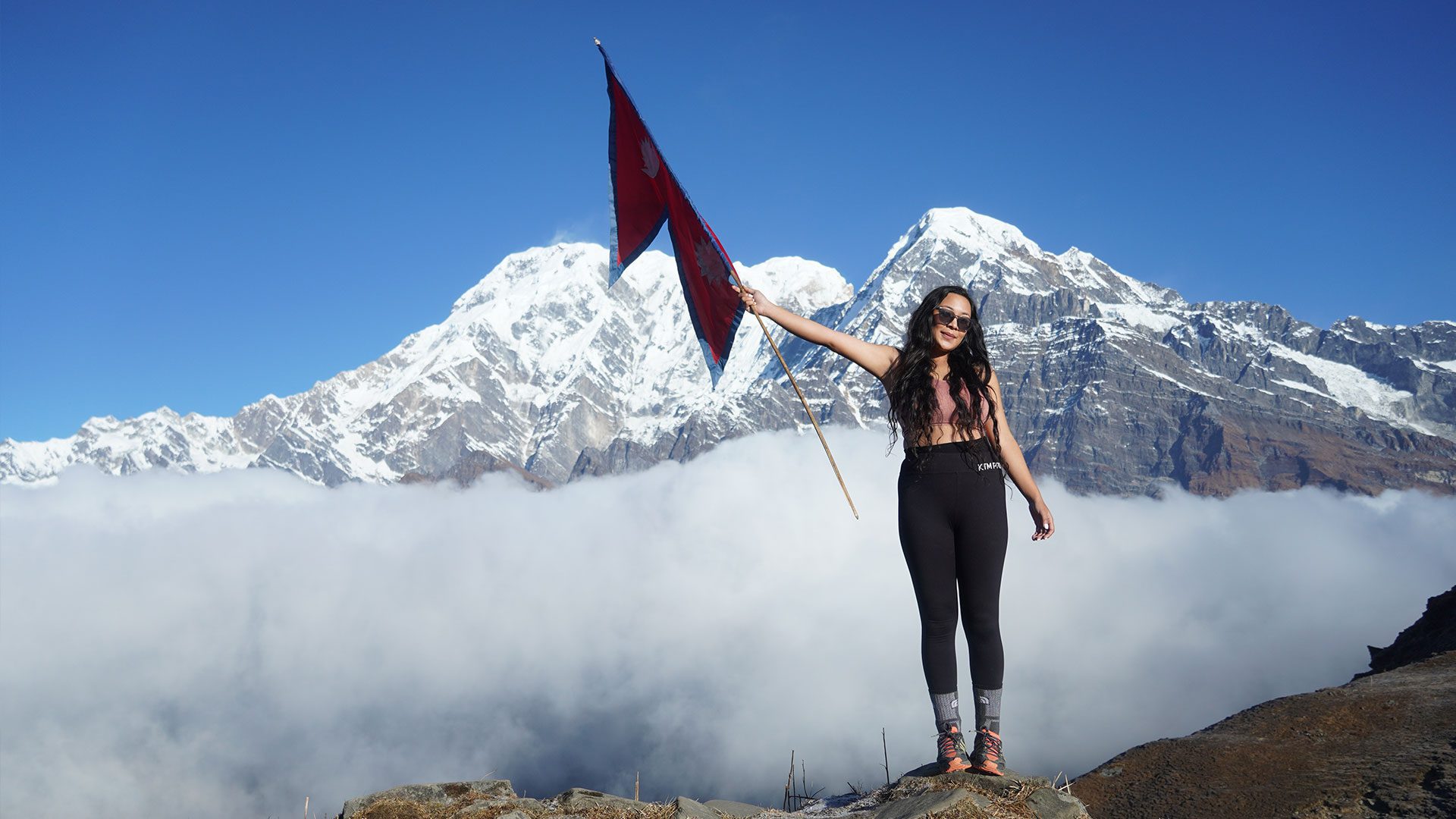
Mardi Himal is a peak in the Annapurna Conservation Area, standing at 5,587 meters. The trekking route to Mardi Himal Base Camp at 4,500 meters follows a long forested ridge east of the Modi Khola valley, gaining altitude steadily through rhododendron and oak forest before breaking out onto an open high ridge with unobstructed views across to Machhapuchhre, Annapurna South, Hiunchuli, and on clear days the main Annapurna summit itself.

The route remained largely off the radar for years, even as ABC and the Circuit became household names in trekking circles. Official trail development came relatively recently, and the teahouse infrastructure is still growing rather than established. That combination of official recognition and limited crowd pressure makes 2026 a genuinely good moment to do this trek before the infrastructure catches up and brings the visitor numbers with it.
The standard route runs from Pokhara through Kande or Phedi up to the Forest Camp, High Camp, and Mardi Himal Base Camp before descending either back the way the ascent came or via the Siding village variation that drops into the lowlands south of the main ridge. Round trip distance runs approximately 50 to 60 kilometers, depending on the route variation chosen.
Mardi Himal Trek Difficulty
The Mardi Himal trek sits in the moderate range, comparable to the lower and middle sections of the ABC route but with a higher maximum altitude at the base camp and a trail that is considerably less developed and less clearly marked in the upper sections.
The forest sections between Deurali and Forest Camp are steep in places and the trail requires some attention to stay on the correct path. Above Forest Camp at around 2,600 meters the ridge opens and the gradient eases, but the altitude increases steadily toward High Camp at 3,580 meters and then the final push to base camp at 4,500 meters.
That final altitude figure is worth taking seriously. Mardi Himal Base Camp sits 370 meters higher than Annapurna Base Camp, which means the altitude challenge is meaningfully greater despite the route being shorter in overall distance and duration. Trekkers who have completed ABC and found the altitude manageable will generally handle Mardi Himal without major problems. For complete beginners, the base camp altitude requires the same respect and acclimatization approach as any route above 4,000 meters.
The trail above High Camp to base camp crosses open terrain with some exposed sections where the path is marked by cairns rather than a clear worn trail. In early spring or late autumn, when snow is present on the upper ridge, these sections require additional care and appropriate footwear.
Mardi Himal Trek Cost in 2026
The cost of the Mardi Himal trek is one of the genuine advantages it holds over the more commercial Annapurna routes. Fewer trekkers means more competitive teahouse pricing, shorter distances mean lower porter costs, and the overall duration of five to seven days keeps the total expenditure manageable.
- Permits are the first cost to account for. The Annapurna Conservation Area Permit costs approximately 3,000 Nepalese Rupees for foreign nationals. The TIMS card costs an additional fee on top. Both are obtained in Kathmandu at the Nepal Tourism Board or in Pokhara before the trek begins. These figures are reviewed periodically, so confirming current rates with a registered agency before departure is sensible.
- Teahouse accommodation along the Mardi Himal route runs roughly 500 to 800 Nepalese Rupees per night for a basic room. The understanding on most teahouse routes in Nepal is that accommodation costs are subsidized by meal purchases, so eating dinner and breakfast at the teahouse where you sleep is both the norm and the economically appropriate approach.
- Meals at teahouses along the route cost between 400 and 900 Nepalese Rupees per dish, depending on elevation and the complexity of the menu. Dal bhat, the standard Nepali meal of lentil soup, rice, and vegetable curry, is universally available, filling, and typically comes with unlimited refills. Above Forest Camp the menu options narrow and prices climb, which is standard practice on all Himalayan routes above a certain elevation.
Total budget estimates for the trek itself, excluding flights to Nepal and internal transport to Pokhara, break down roughly as follows. A budget trekker carrying their own pack, eating dal bhat, and managing accommodation carefully can complete the route for approximately 50 to 70 US dollars per day. A trekker with a guide and porter, eating varied meals and staying in the better teahouse options, should budget 100 to 150 US dollars per day. A fully organized package through a registered agency covering all logistics from Pokhara will typically run 600 to 900 US dollars total for a five to seven-day trek.
Mardi Himal Trek Itinerary: The Standard Route
The standard Mardi Himal itinerary runs five to seven days, depending on pace, acclimatization needs, and whether the Siding descent variation is included. Here is how the route unfolds across a typical six-day schedule.
The first day covers the drive from Pokhara to Kande at around 1,770 meters, followed by a walk through Australian Camp to Pothana at 1,890 meters. The terrain is easy, the views of the Annapurna range across the valley are already impressive, and the day functions as a gentle introduction before the route begins climbing seriously.
The second day climbs from Pothana through dense rhododendron forest to Deurali at 2,100 meters and then continues to Forest Camp at approximately 2,600 meters. The forest on this section is among the finest on any short Himalayan route, thick with rhododendron species that are spectacular in bloom during March and April. The trail requires attention in places as the markings are inconsistent.
The third day climbs from Forest Camp to Low Camp at 3,050 meters and then continues to High Camp at 3,580 meters. The forest gives way progressively to open scrub and then the long open ridge that defines the upper section of the Mardi Himal trail. The views opening up across to Machhapuchhre and back down the Modi Khola valley are where the trek begins, delivering on its considerable visual promise.
The fourth day is the summit day push to Mardi Himal Base Camp at 4,500 meters and back to High Camp or Low Camp, depending on energy levels and conditions. The trail from High Camp to base camp is the most demanding section of the route. The path is marked by cairns across open rocky terrain and some exposed ridge walking. Clear weather makes the navigation straightforward. Cloud or snow changes the calculation. The views from base camp on a clear morning are among the finest available to any non-technical trekker in the Annapurna region.
The fifth day descends from High Camp or Low Camp back to Forest Camp or continues all the way to Siding village at around 1,750 meters via the alternative descent route. The Siding variation is strongly recommended as it avoids retracing the ascent entirely and passes through traditional Gurung village terrain that contrasts beautifully with the high ridge walking of the upper route.
The sixth day covers the walk from Siding to the road connection back to Pokhara, either by local vehicle or a short walk to the nearest transport point. Most trekkers are back in Pokhara by midday, which allows a comfortable afternoon of recovery before onward travel.
The Hidden Route: Mardi Himal Variations Worth Knowing
The standard Kande to Mardi Himal Base Camp route is the version most agency itineraries follow. Several variations exist that most trekking websites do not cover, and these are where the genuinely hidden character of the Mardi Himal trek lives.
- The Lwang Ghalel approach enters the Mardi Himal ridge from the south via Lwang Ghalel village rather than the standard Kande trailhead. This variation adds a day to the overall route and passes through a community-based tourism area that sees a fraction of the visitors that the main trail receives. The village homestay program here is one of the most authentic accommodation experiences available in the Annapurna region and offers an entirely different introduction to the route than the standard teahouse start.
- The Sidhing to Ghachok exit extends the Siding descent variation further south and west through Ghachok village before reaching the road back to Pokhara. This adds four to five kilometers of additional walking through traditional Gurung settlements with exceptional views back up to the Annapurna range. Almost no commercial itineraries include this section.
- The combined Mardi Himal and ABC approach connects the Mardi Himal ridge with the ABC route via a high traversing path that drops from the Mardi Himal ridge into the Modi Khola gorge. This connection is genuinely off the standard tourist map and requires a guide with specific local knowledge of the route. The combined circuit takes 14 to 16 days and gives experienced trekkers access to two of the finest viewpoints in the Annapurna region in a single continuous journey.
- The winter route between December and February follows the lower forest sections of the ridge while the upper sections above High Camp carry snow. A small number of trekkers use this period to experience the forest sections in snow conditions with essentially zero other trekking parties on the trail. The base camp push is not appropriate in winter without snow and ice experience, but High Camp at 3,580 meters is reachable and offers winter ridge views that are extraordinary on clear days.
Altitude and Acclimatization on Mardi Himal
The altitude at Mardi Himal Base Camp at 4,500 meters is the most significant physiological challenge the route presents. At that elevation, roughly 59 percent of sea-level oxygen is available, which is meaningfully less than at Annapurna Base Camp and enough to produce real altitude symptoms in susceptible trekkers who ascend without adequate acclimatization time.
The standard five-to-six-day itinerary is designed to provide sufficient acclimatization time for most healthy adults, but the pace matters. The jump from High Camp at 3,580 meters to base camp at 4,500 meters on summit day is a significant gain that should be approached with a slow steady pace and an honest assessment of how the body is responding above 4,000 meters.
Common altitude symptoms on the upper ridge include headache, reduced appetite, broken sleep at High Camp, and fatigue beyond what the day’s walking would normally produce. These are manageable with rest and consistent hydration. The warning signs requiring immediate descent are loss of coordination, confusion, a wet, persistent cough, and extreme fatigue that rest does not improve.
Drinking three to four liters of water per day above 3,000 meters is the most consistently effective acclimatization support available. Avoiding alcohol above that threshold and maintaining a pace that allows conversation without breathlessness are the two behavioral choices that most reliably support good altitude performance.
Best Season for the Mardi Himal Trek in 2026
October and November deliver the clearest conditions on the upper ridge and the best visibility at base camp. The post-monsoon atmosphere is clean, and the high-pressure periods that settle over the Himalayas in October, in particular, produce the unobstructed Machhapuchhre and Annapurna views that define the experience at the top of the route.
March and April are the finest months for the forest sections below High Camp. The rhododendron bloom between Forest Camp and the upper ridge during this period is extraordinary and represents one of the finest natural spectacles available on any short Himalayan trek. Weather at the top is generally stable with occasional afternoon cloud buildup.
December through February keep the upper ridge sections in snow and cold conditions not appropriate for trekkers without relevant cold-weather and snow experience. The forest sections remain accessible and beautiful in these months for trekkers who understand the limitations.
June through September encompasses the monsoon. The forest sections become slippery and leech-populated, the upper ridge is frequently obscured, and the route is not recommended for most trekkers during active monsoon months.
Practical Tips for the Mardi Himal Trek
- Hire a local guide, particularly for the upper sections above Forest Camp. The trail markings become inconsistent above the tree line, and the consequences of losing the path on the exposed upper ridge in cloud are serious. A guide with genuine local knowledge of the Mardi Himal route is worth considerably more than the daily cost suggests.
- Book teahouses in advance during peak season. The limited number of teahouses on the route means October trekkers who arrive without reservations sometimes find High Camp fully occupied. A registered agency or a guide with teahouse contacts can arrange this before departure.
- Carry more cash than expected. ATMs in Pokhara are the last reliable cash access point before the trek begins. Teahouses on the Mardi Himal route do not accept cards, and the remote nature of the route means there are no opportunities to resupply cash above Kande.
- Allow an extra day in the itinerary. The summit day to Mardi Himal Base Camp is weather dependent and clouds frequently build by midday on the upper ridge even in good season. Building a spare day at High Camp allows a second attempt if the first summit day produces poor visibility.
- Pack for genuine cold at High Camp. Temperatures at 3,580 meters drop sharply after dark, even in October, and the teahouse facilities at High Camp are basic. A sleeping bag rated to negative 10 degrees Celsius, a down jacket, and thermal base layers are appropriate for nights at this elevation.
Final Thoughts
Mardi Himal in 2026 occupies a specific and valuable position in the Nepal trekking landscape. Long enough to feel like a genuine Himalayan experience, short enough to fit a limited holiday window, high enough to deliver real altitude rewards, and quiet enough that the trail still has the character of somewhere genuinely discovered rather than consumed.
The cost is manageable, the route is accessible to trekkers with reasonable fitness and honest preparation, and the views from the base camp ridge on a clear morning are as fine as anything the Annapurna region offers. The hidden variations add depth for trekkers who want to go beyond the standard circuit and find the parts of this landscape that most visitors never reach.
Prepare properly, hire a guide who knows the upper ridge, carry enough cash, and build a weather day into the schedule. Mardi Himal rewards the trekkers who approach it on its own terms.
Comments (0)
Write a comment- Mardi Himal Trek Overview
- Mardi Himal Trek Difficulty
- Mardi Himal Trek Cost in 2026
- Mardi Himal Trek Itinerary: The Standard Route
- The Hidden Route: Mardi Himal Variations Worth Knowing
- Altitude and Acclimatization on Mardi Himal
- Best Season for the Mardi Himal Trek in 2026
- Practical Tips for the Mardi Himal Trek
- Final Thoughts
Read the latest Blogs & Insights
Explore our collection of articles and insights to gain in-depth travel knowledge, expert advice, and stay updated on the latest trends and tips.




No comments yet.