








Everest Base Camp Helicopter Tour with Landing at Kala Patthar & Gokyo Lake: The Ultimate Guide
Experience the Everest Base Camp helicopter tour with Kala Patthar landing and Gokyo Lake views. Cost, itinerary, best time, tips for Nepal trip. today now
-
 Adventure Master Trek
-
5 May, 2026
-
14 mins read
-
985 Views
-
0 Comments


The roof of the world, from above, no trekking boots required.
There are a few experiences on this planet that can genuinely leave you speechless. Standing at the edge of the highest mountain range on earth, with the wind in your face and glaciers glittering below, is one of them. The Everest Base Camp Helicopter Tour with landings at Kala Patthar and Gokyo Lake is not just a flight; it is a front-row seat to the grandest theatre nature has ever staged. Whether you are short on time, unable to trek at high altitude, or simply want to combine ultimate luxury with raw Himalayan adventure, this helicopter tour is one of the most extraordinary things you can do in Nepal.
This guide covers everything you need to know: what to expect, where you go, when to book, how much it costs, and why this particular combination of Everest Base Camp, Kala Patthar, and Gokyo Lake is considered the gold standard of Himalayan aerial experiences.
What Is the Everest Base Camp Helicopter Tour?
The Everest Base Camp Helicopter Tour is a high-altitude scenic flight that takes you from Kathmandu deep into the Khumbu region of Nepal, the legendary terrain surrounding the world’s tallest mountain, Mount Everest (8,848 metres). Unlike the classic Everest Base Camp trek, a physically demanding 12 to 14-day journey on foot, the helicopter tour compresses the highlights of this iconic region into a single magnificent day, or a few days if you opt for a longer itinerary that includes short treks around Namche Bazaar.
The most comprehensive version of this tour combines three legendary destinations: Everest Base Camp itself, the iconic Kala Patthar viewpoint, and the pristine emerald waters of Gokyo Lake. Together, these three stops offer a complete portrait of the Everest region: its human drama, geological wonders, and breathtaking natural beauty.
Tours can be done as a private charter (ideal for small groups or couples) or as a shared group-joining flight. Private charters offer a helicopter to yourself or your group of up to five passengers, flexible timings, and personalised routing. Group-joining tours are more affordable and still offer most of the same highlights.
The Flight from Kathmandu: Where the Adventure Begins
Your adventure begins well before you even reach the mountains. Most tours depart from the domestic terminal at Tribhuvan International Airport in Kathmandu, or from a dedicated helipad in Bhaktapur, depending on the operator. Departures are scheduled for the very early morning — usually between 6:00 and 7:00 AM — and for good reason. The Himalayan atmosphere is most stable and clear in the morning, before valley winds, thermal turbulence, and rising cloud layers reduce visibility. Early flights mean golden light on the peaks, still air, and the best possible photographic conditions.
As the helicopter lifts off and banks eastward, the urban sprawl of the Kathmandu Valley gradually gives way to rolling green hills, deep river gorges, and terraced farmland. Within minutes, the landscape transforms. The horizon fills with white. Snow-capped ridgelines appear, then peaks, then the unmistakable serrated silhouette of the Himalayan range in its full glory.
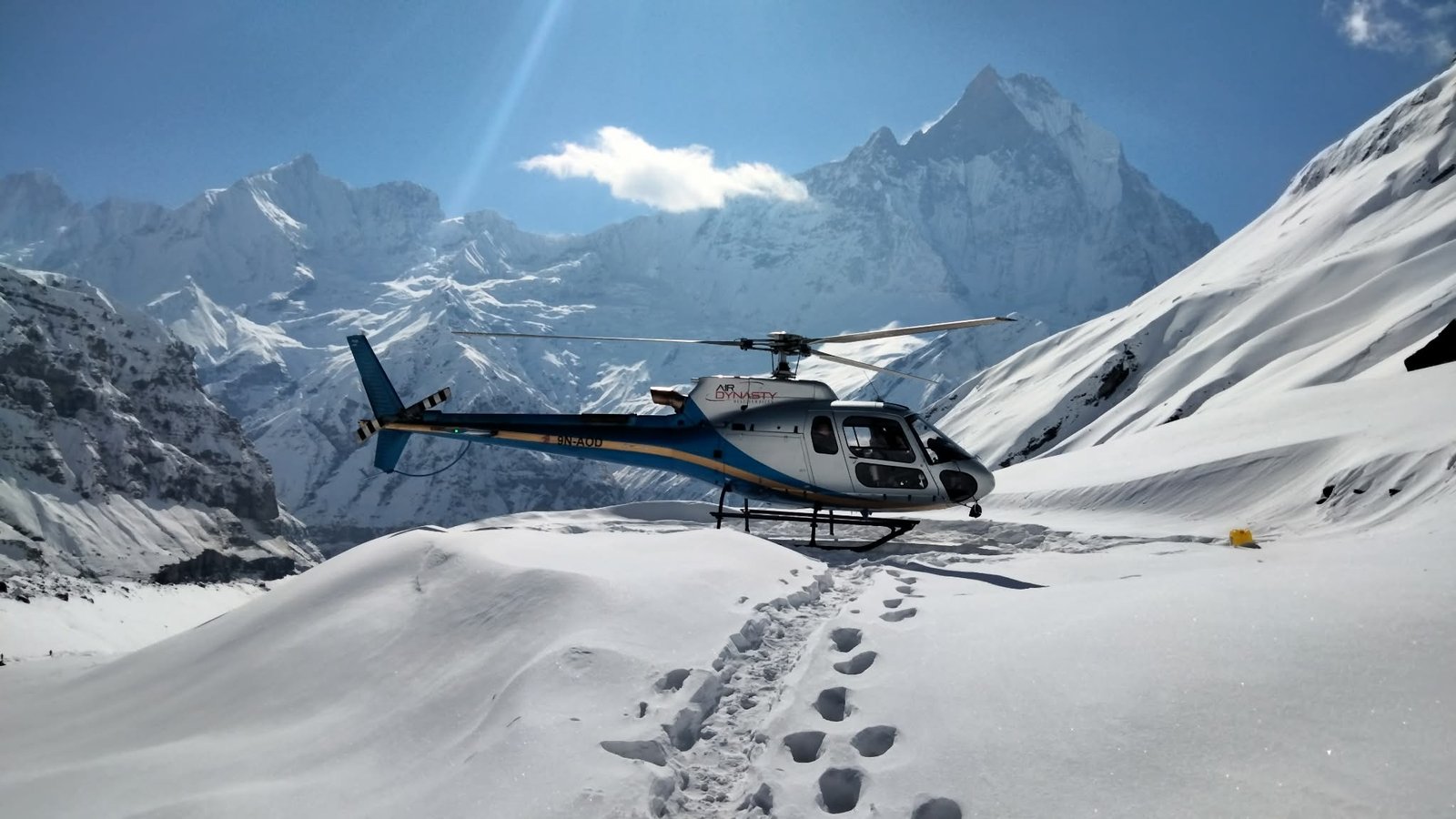
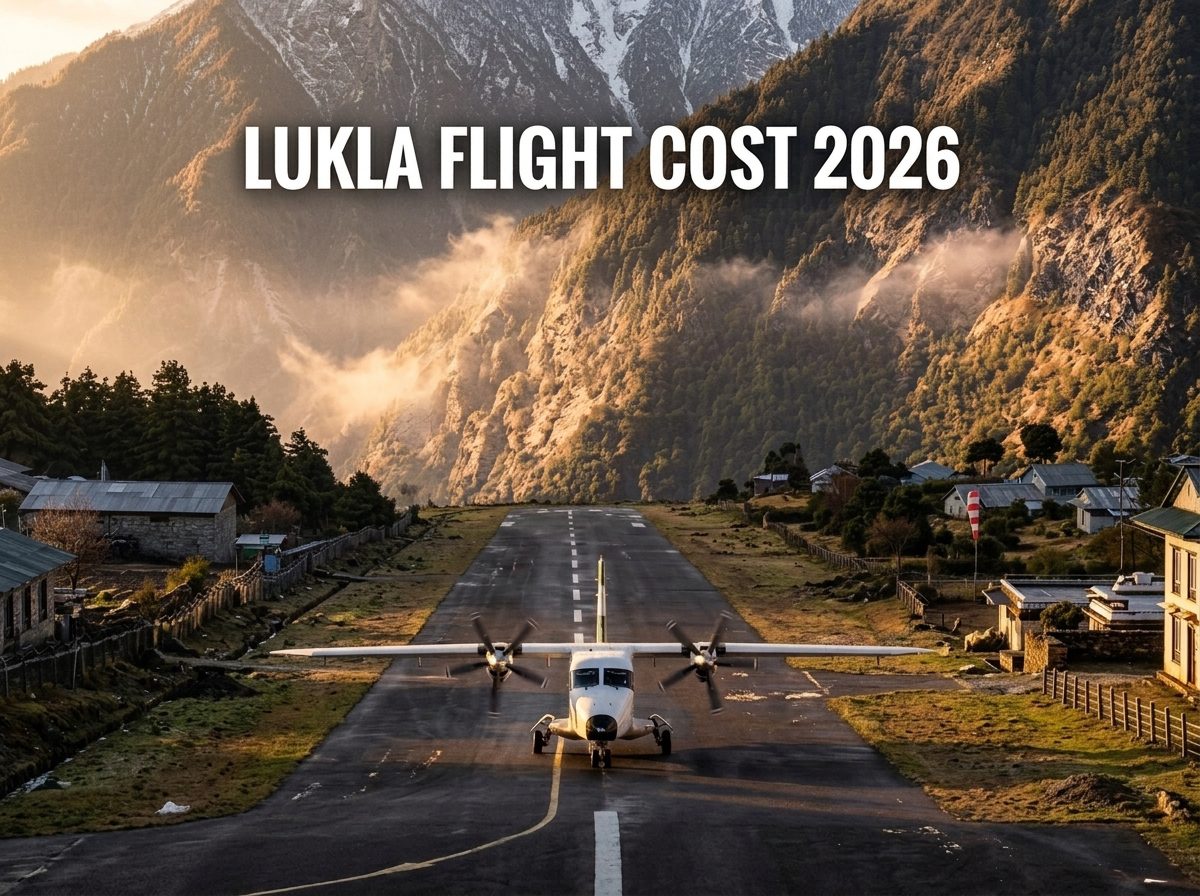
Flying at altitudes between 4,500 and 6,000 metres, you pass over famous landmarks that trekkers spend days walking through. Lukla — home to the thrilling Tenzing-Hillary Airport — appears below, its short runway perched dramatically on a cliff edge. The Sherpa capital of Namche Bazaar reveals itself as a horseshoe of colourful buildings clinging to a steep hillside. Tengboche Monastery, the sacred Buddhist monastery at 3,867 metres surrounded by rhododendron forests, glides past your window. Peaks like Ama Dablam, Lhotse, Cho Oyu, and Nuptse rise into view one after another, each one extraordinary, each one dwarfed by what comes next.
Everest Base Camp: Where Legends Are Made
The emotional centrepiece of the tour is the flight over Everest Base Camp, where mountaineering dreams begin and, for the world’s elite climbers, the real battle for the summit begins. Sitting at an elevation of 5,364 metres (17,598 feet) at the foot of the Khumbu Icefall, Everest Base Camp is one of the most famous addresses in the world.
From above, the scale is humbling. Hundreds of colourful expedition tents dot the moraine of the Khumbu Glacier. The icefall itself is a churning, constantly shifting river of ice that tumbles down from the Western Cwm above. Crevasses open like wounds across the glacier surface. Above it all, the Lhotse face rises in a sheer wall of blue ice and dark rock, and higher still, the plume of windblown snow streaming off the summit of Everest itself tells you the jet stream is alive and moving at the top of the world.
For many passengers, flying over Everest Base Camp is a deeply emotional moment. Those who have spent years dreaming of this place, reading about Hillary and Tenzing, about Messner and Bonington, about the thousands of climbers who have tried and the many who never came back, find the reality of seeing it from the air both overwhelming and deeply moving.
Even those with no particular mountaineering background are struck by the sheer audacity of the place: the idea that human beings would come to this remote frozen wilderness, at this extreme altitude, and attempt to climb higher still.
The helicopter typically flies directly above or alongside Everest Base Camp, giving all passengers clear views from every window, before turning toward the most famous viewpoint in the entire Himalaya.
Kala Patthar: The World’s Most Dramatic Balcony
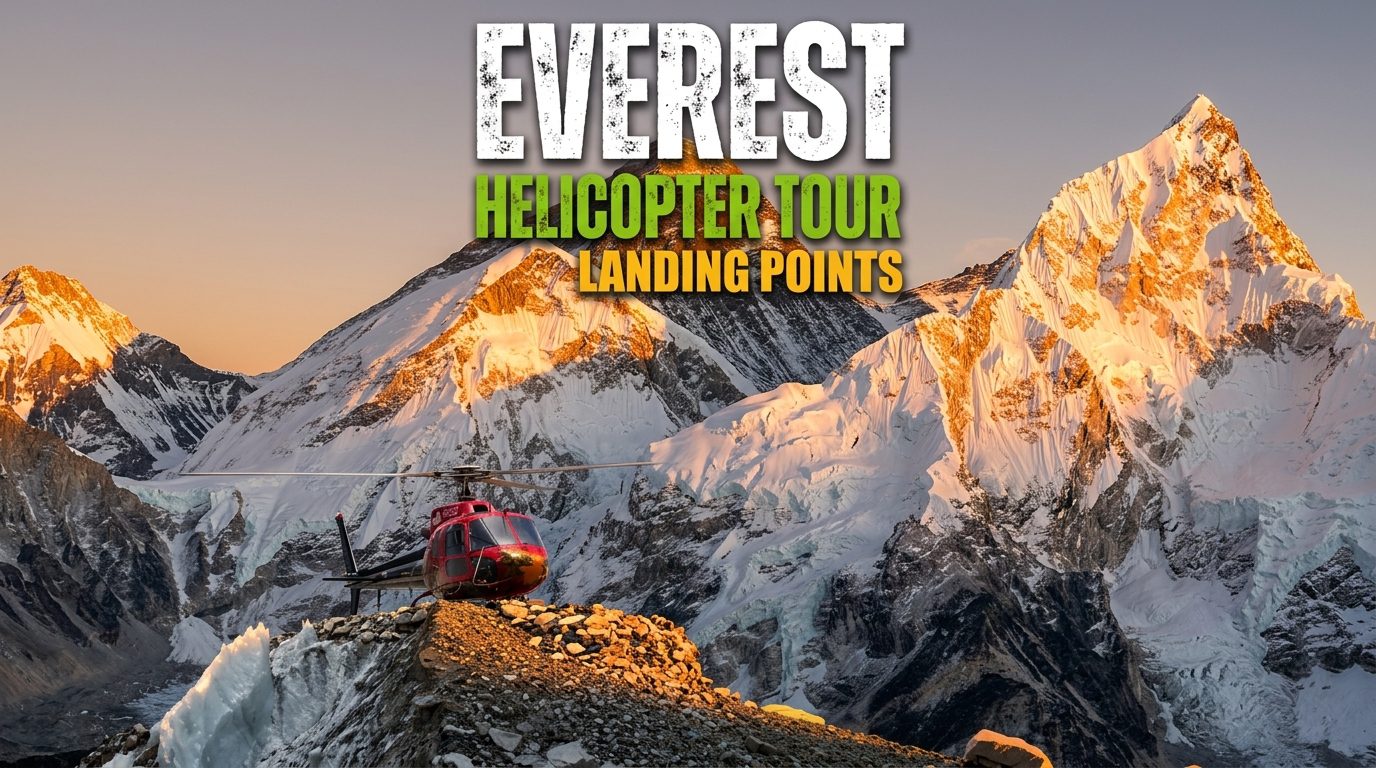
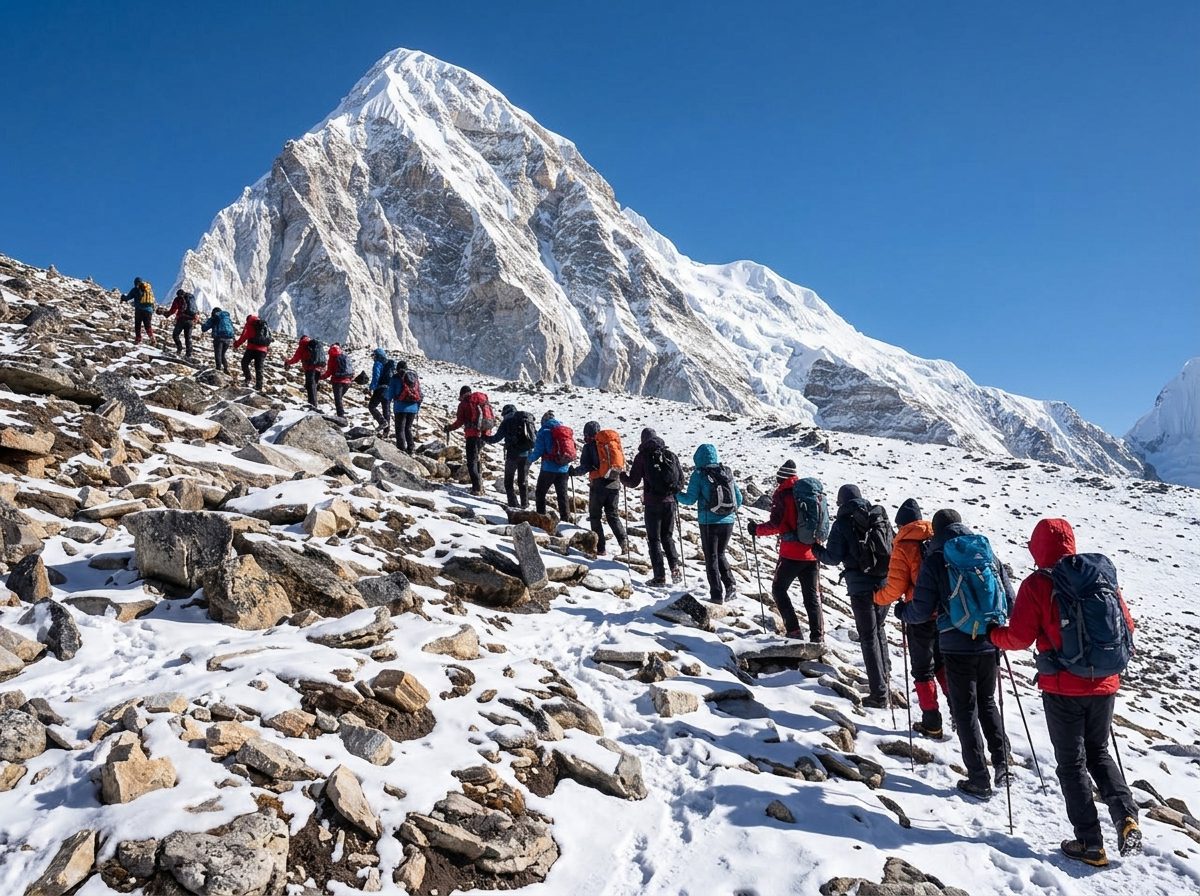
If Everest Base Camp is the soul of the tour, Kala Patthar is its climax. Rising to 5,643 metres (18,514 feet) above sea level, Kala Patthar, which translates from Nepali as “Black Rock” — is widely considered the finest viewpoint for Mount Everest in the entire world. And the helicopter lands right on top of it.
What makes Kala Patthar so special is its position. From Everest Base Camp itself, you cannot actually see the summit of Everest because the mountain’s lower slopes block the view. But from Kala Patthar, which sits on a ridge across the valley, the entire Everest massif is laid out before you in unobstructed 360-degree magnificence. Mount Everest (8,848m), Lhotse (8,516m), Nuptse (7,861m), Changtse (7,583m), and Pumori (7,161m) surround you on all sides. The Khumbu Glacier sprawls below. The Khumbu Icefall is visible in all its chaotic, terrifying beauty.
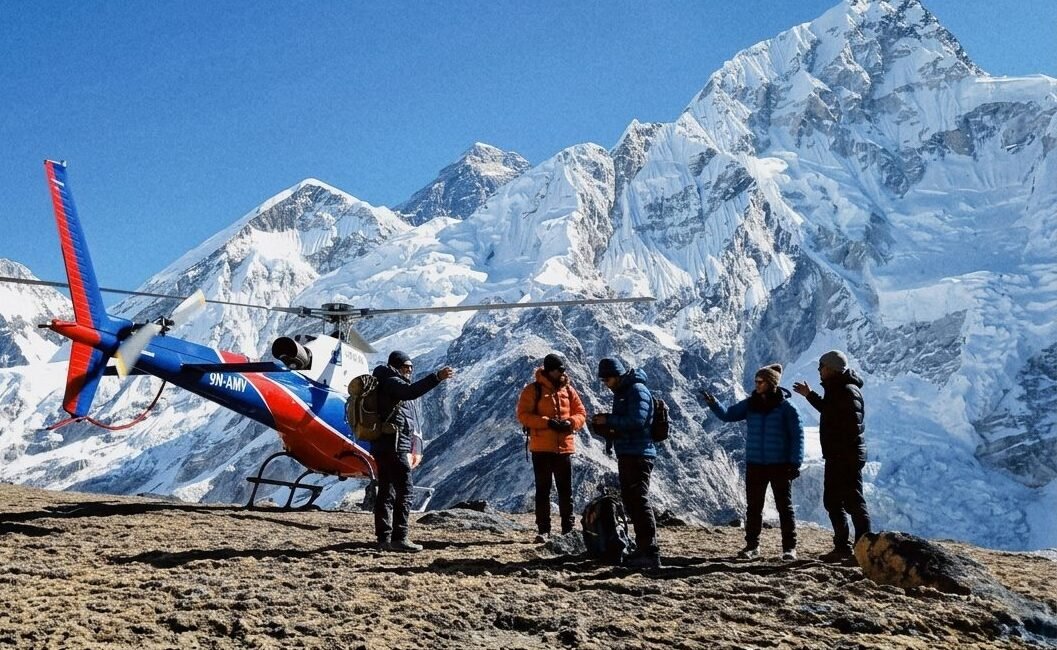
Landings at Kala Patthar are brief, typically between 5 and 15 minutes, because the extreme altitude makes extended stays inadvisable without proper acclimatisation. The air at 5,643 metres contains roughly half the oxygen of sea level. Experienced pilots, who are trained to the highest international standards for high-altitude mountain flying, carefully monitor conditions and passenger wellbeing throughout. Oxygen is available on board if needed. Despite the brevity of the stop, travellers consistently describe these few minutes on the summit of Kala Patthar as among the most powerful of their lives.
The best time for a Kala Patthar landing is during early morning flights in spring (March to May) and autumn (September to November), when the sky is clear, the light is golden, and the atmosphere is calm. During these seasons, the view from this extraordinary vantage point, with the sun catching the ice of Everest’s summit ridge, is simply beyond description.
Gokyo Lake: The Himalaya’s Turquoise Jewel
If Kala Patthar delivers drama, Gokyo Lake delivers something altogether different: serenity, colour, and a kind of otherworldly beauty that feels almost impossible at such an altitude.
The Gokyo Lakes are a system of six high-altitude freshwater lakes nestled in the Gokyo Valley on the western side of the Everest region. Sitting at elevations ranging from 4,700 to 5,000 metres within Sagarmatha National Park, they constitute the world’s highest freshwater lake system and have been designated as a Ramsar site, a wetland of international importance. The lakes are sacred to both Hindus and Buddhists, who regard them as holy waters, and they serve as a vital refuge for migratory birds making the extraordinary trans-Himalayan journey twice annually.
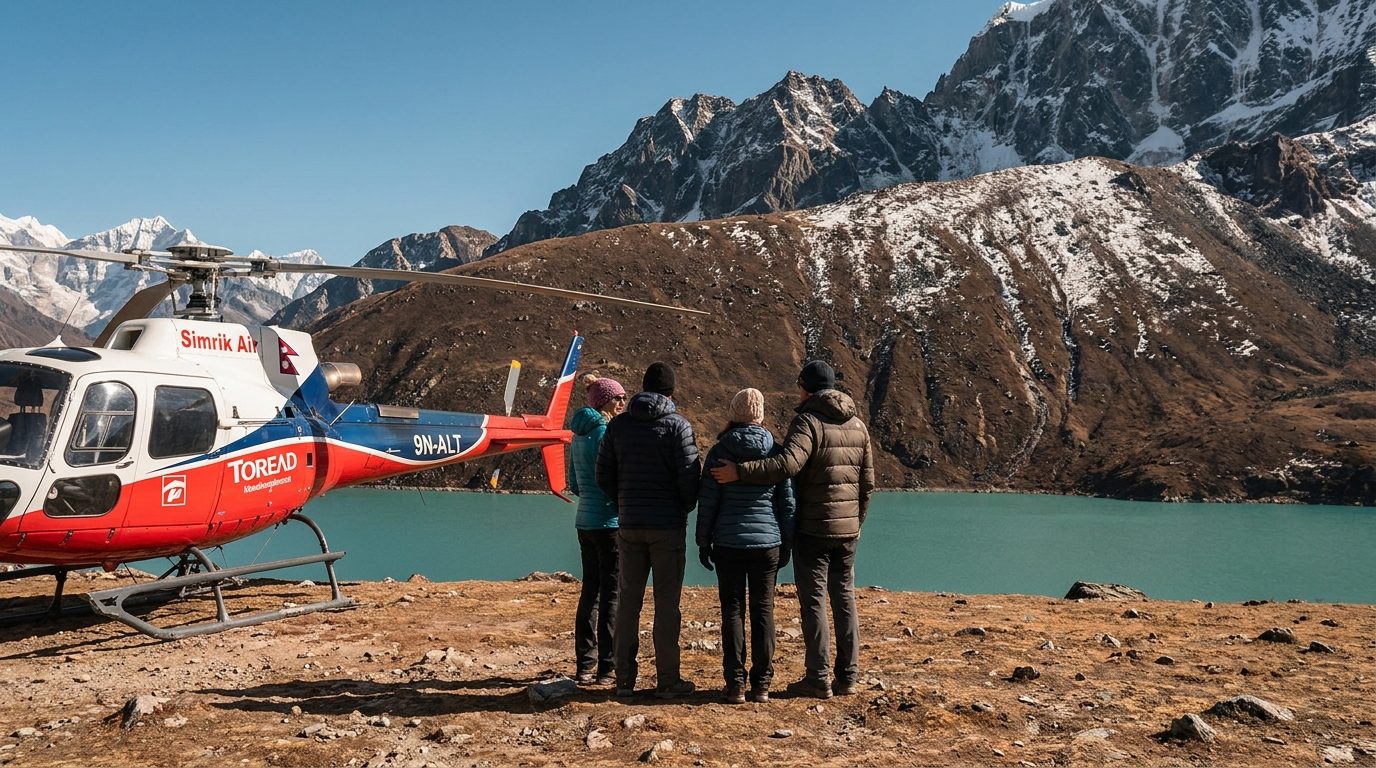
The most famous of the six is the third lake, Dudh Pokhari, which sits at an elevation of around 4,750 metres and beside which the small, remote village of Gokyo perches — one of the highest permanent settlements on earth. When you approach by helicopter, the first thing that strikes you is the colour. Against the raw grey and brown of the surrounding moraine and the white of the glaciers above, the lakes burn with an intense turquoise-emerald hue that seems almost artificial in its vividness. The Ngozumpa Glacier, the largest glacier in the Himalaya, flows down beside the valley, its crevassed surface dwarfing everything nearby.
The helicopter typically lands at Gokyo for around 10 to 15 minutes, giving you time to step out onto the lakeshore, breathe the thin but pure mountain air, and simply stand in the presence of something remarkable. The silence here is absolute, broken only by the wind off the glacier and the occasional call of a bird. The peaks visible from Gokyo are equally spectacular: Cho Oyu (8,188m, the sixth-highest mountain on earth), Gyachung Kang, and on clear days, the distinctive pyramid of Everest itself.
Many travellers describe the Gokyo stop as an unexpected highlight, a moment of stillness and natural beauty that provides the perfect counterpoint to the adrenaline of Kala Patthar and the spectacle of Everest Base Camp.
Hotel Everest View: Breakfast at 3,880 Metres
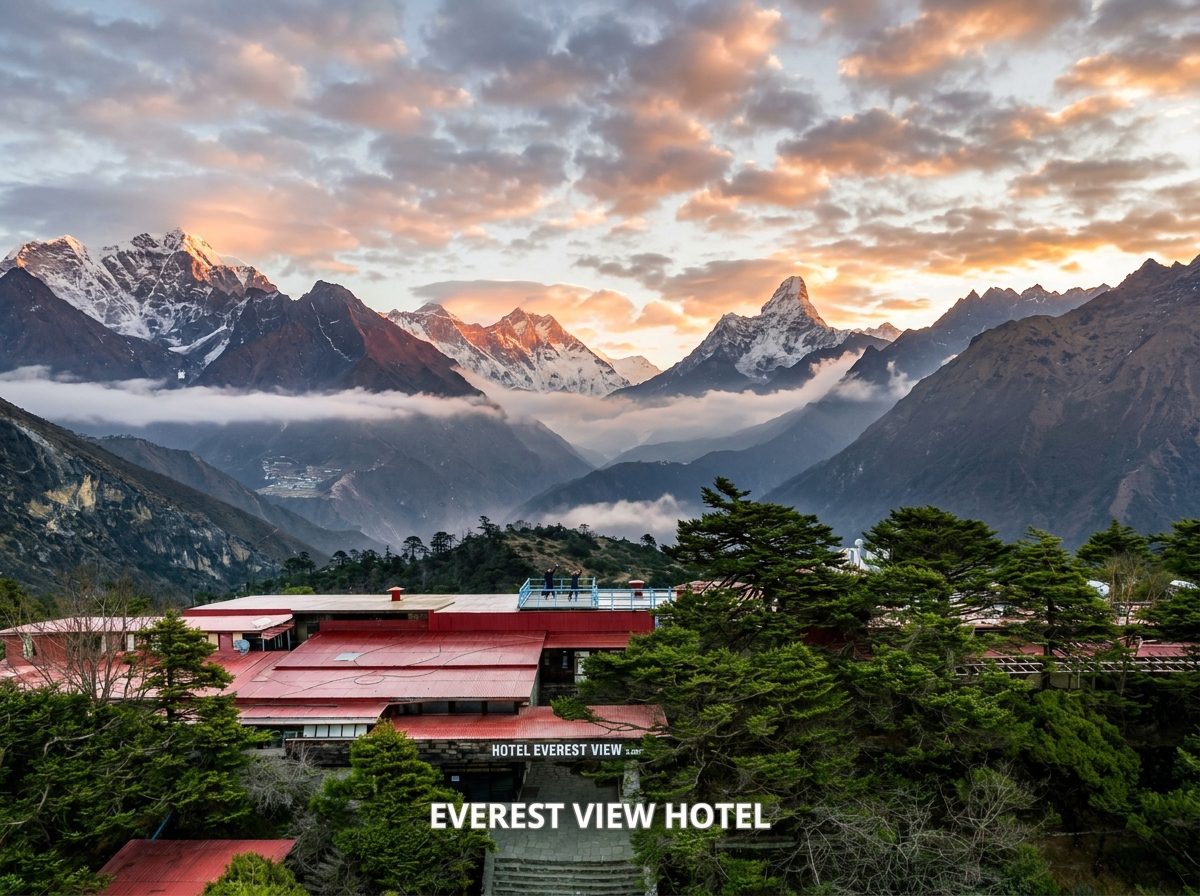
A signature stop on many Everest helicopter tour itineraries is the Hotel Everest View at Syangboche, just above Namche Bazaar at an altitude of 3,880 metres. This extraordinary hotel, one of the highest hotels in the world, offers guests a warm breakfast with panoramic mountain views that include Everest, Lhotse, Ama Dablam, Thamserku, and dozens of other peaks.
Landing at Hotel Everest View midway through the tour provides a welcome chance to warm up, refuel with a hot meal or tea, and spend time on the terrace photographing the mountains in the clear morning light before the helicopter continues its journey. Many operators include this breakfast stop as part of their standard itinerary, and it consistently ranks as one of the most enjoyable moments of the entire experience.
The Route in Full: What to Expect Hour by Hour
While exact timings vary by operator and weather, a typical one-day Everest Base Camp helicopter tour with Kala Patthar and Gokyo Lake landing follows roughly this sequence:
- Early morning: Hotel pick-up and transfer to the helipad or domestic airport terminal. Safety briefing with your pilot.
- Departure: Lift-off from Kathmandu heading east. Scenic flight over the Kathmandu Valley, green hills of eastern Nepal, and into the high Himalaya. Fly over Lukla and Namche Bazaar.
- Mid-morning: Flyover of Everest Base Camp and the Khumbu Glacier and Icefall. This is typically done from the air, giving all passengers exceptional views without landing.
- Kala Patthar landing: The helicopter sets down at 5,643 metres for a 5 to 15-minute stop. Step outside, take photographs, and absorb the greatest mountain panorama on earth.
- Hotel Everest View: Descend to Syangboche for breakfast at Hotel Everest View, with unobstructed views of the Everest massif. Approximately 45 minutes to one hour.
- Gokyo Lake landing: Fly west into the Gokyo Valley for a landing beside the turquoise third lake. Explore the lakeshore for 10 to 15 minutes.
- Return to Kathmandu: Stop at Lukla for helicopter refuelling, then direct flight back to Kathmandu. Arrive back at your hotel by early afternoon.
The total duration of the tour from departure to return is approximately four to five hours, making it comfortably complete as a one-day experience.
Best Time to Go
The ideal seasons for this helicopter tour are spring (March to May) and autumn (September to November). Both offer stable weather, clear skies, and the best mountain visibility. Spring has the additional appeal of rhododendron forests in bloom across the lower Khumbu hills, while autumn delivers crisp, post-monsoon clarity that often produces the sharpest mountain views of the year.
The monsoon season (June to August) brings heavy cloud cover, rain, and frequent flight cancellations, making it the least reliable period for the tour. Winter (December to February) is possible on clear days but brings very cold temperatures and more unpredictable weather windows, particularly for Kala Patthar landings.
Regardless of season, all flights are operated subject to real-time weather and aviation safety assessments by the pilot. If conditions deteriorate, experienced operators will delay, reroute, or reschedule rather than compromise passenger safety.
Cost and Booking
Pricing varies depending on whether you choose a group-joining or private charter tour, and on which stops are included.
- Group-joining tours (shared helicopter, typically 4 to 5 passengers) with an Everest Base Camp overfly, and Kala Patthar landing generally cost in the range of USD 1,300 to 1,400 per person.
- Private charter tours covering Everest Base Camp, Kala Patthar, and Gokyo Lake as a full package typically run from USD 5,500 to USD 8,500 per helicopter, accommodating up to five passengers. Divided among a group, this can represent excellent value for an experience of this calibre.
- Most operators include hotel transfers, the pilot’s services, fuel, all landing fees, and a breakfast stop at Hotel Everest View. Some include travel insurance support, oxygen on board, and a trip certificate.
- Booking in advance is strongly recommended, particularly for the spring season when demand is highest and daily flight slots are limited. Some operators now offer early-bird discounts for 2025 and 2026 departures.
Is This Tour Suitable for Everyone?
One of the great virtues of the helicopter tour is its accessibility. Because you spend only a few minutes at extreme altitude — and those minutes are carefully managed by your pilot — the risk of serious altitude sickness is minimal. Mild symptoms such as a slight headache or dizziness may be felt at Kala Patthar, but oxygen is readily available on board.
The tour is suitable for people of all ages, including older travellers, those with mobility limitations, and children (typically above the age of three). Those with pre-existing heart or respiratory conditions should consult a doctor before booking. Weight limits apply to all helicopter tours for safety reasons, and passengers should check their operator’s specific requirements at the time of booking.
Why This Tour, Why Now
Nepal’s helicopter tourism sector has matured enormously in recent years. Aircraft are modern, pilots are among the most experienced high-altitude aviators in the world, and safety standards are carefully regulated. The combination of Everest Base Camp, Kala Patthar, and Gokyo Lake in a single itinerary represents the most complete aerial experience available in the Khumbu region — three utterly different but equally magnificent destinations, each offering something the others cannot.
Kala Patthar gives you the mountain panorama. Everest Base Camp gives you the human story of ambition and survival. Gokyo Lake gives you colour, serenity, and the quiet wonder of the world’s highest freshwater ecosystem. Together, they offer a portrait of the Everest region that no single destination can provide on its own.
For those who cannot commit to a two-week trek, or who want to experience the Himalaya in a way that combines luxury, safety, and breathtaking access, the Everest Base Camp Helicopter Tour with Kala Patthar and Gokyo Lake landings is, quite simply, the finest mountain experience on earth.
Final Thoughts: A Morning in the Sky Above the World
There is a particular kind of silence you experience when the helicopter engine shuts down and you step out onto the ridge at Kala Patthar, 5,643 metres above sea level, with the summit of Everest filling your entire field of vision. It is not the silence of emptiness. It is the silence of scale — the quiet that comes when you are confronted with something so much larger than yourself that the ordinary noise of life simply falls away.
This tour will not make you a mountaineer. It will not give you the deep satisfaction of having earned every metre of altitude with your own legs over days of trekking. But it will give you something extraordinary and rare: the genuine experience of being in the presence of the highest mountains on earth, of standing beside the turquoise waters of Gokyo at the edge of the world’s greatest glacier, of watching Everest emerge from cloud as your helicopter banks and turns above the Khumbu Icefall.
Nepal is a country that rewards those who seek it out with open hearts. The Everest Base Camp Helicopter Tour with landings at Kala Patthar and Gokyo Lake is one of the finest ways to see it.
Book early, fly at dawn, and bring your camera. The mountains have been waiting.
Comments (0)
Write a comment- What Is the Everest Base Camp Helicopter Tour?
- The Flight from Kathmandu: Where the Adventure Begins
- Everest Base Camp: Where Legends Are Made
- Kala Patthar: The World’s Most Dramatic Balcony
- Gokyo Lake: The Himalaya’s Turquoise Jewel
- Hotel Everest View: Breakfast at 3,880 Metres
- The Route in Full: What to Expect Hour by Hour
- Best Time to Go
- Cost and Booking
- Is This Tour Suitable for Everyone?
- Why This Tour, Why Now
- Final Thoughts: A Morning in the Sky Above the World
Read the latest Blogs & Insights
Explore our collection of articles and insights to gain in-depth travel knowledge, expert advice, and stay updated on the latest trends and tips.


No comments yet.