









Best Trekking Destinations in the World for High Himalayas: A Complete Winter Guide
The Himalayas stretch across five nations — Nepal, India, Bhutan, Pakistan, and China (Tibet) — forming the most dramatic mountain range on Earth. Every year, hundreds of thousands of adventurers lace up their boots and step into these towering landscapes, drawn by the promise of soaring peaks, ancient monasteries, and trails that test body and […]
-
 Santosh Sir
-
16 May, 2026
-
13 mins read
-
711 Views
-
0 Comments


The Himalayas stretch across five nations — Nepal, India, Bhutan, Pakistan, and China (Tibet) — forming the most dramatic mountain range on Earth. Every year, hundreds of thousands of adventurers lace up their boots and step into these towering landscapes, drawn by the promise of soaring peaks, ancient monasteries, and trails that test body and soul alike.
But here’s what most travel blogs won’t tell you: winter is arguably the best-kept secret in Himalayan trekking.
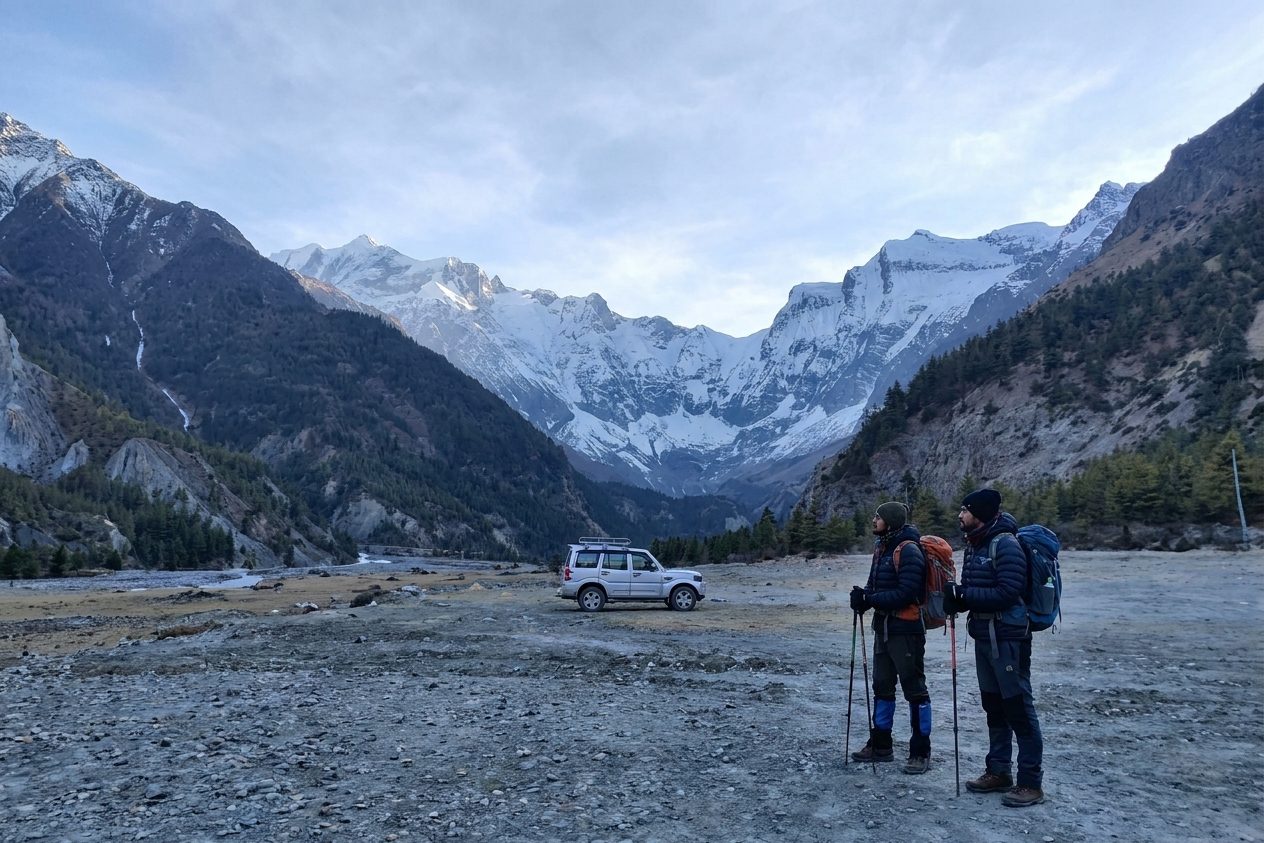
When the October crowds thin out and temperatures drop, something magical happens. The air turns crystal clear. The mountains reveal themselves in jaw-dropping detail. The teahouses feel warmer, more intimate. The trails grow quieter, and you find yourself walking through a world that feels entirely your own.
This guide covers the best trekking destinations in the world for the High Himalayas — with special focus on the countries and specific trails that shine brightest in winter and snowfall season (December through February). Nepal leads the list for good reason, but the full picture spans an extraordinary range of landscapes, cultures, and challenges.

Why Winter Is the Best-Kept Secret for Himalayan Trekking
Before diving into destinations, let’s address the elephant in the room: most mainstream trekking guides warn you away from winter. And for some high-altitude routes, that caution is valid. However, for a surprising number of trails across the Himalayan belt, winter offers conditions that are genuinely superior to peak season.
Here’s why savvy trekkers are choosing winter:
Crystal-clear skies. The monsoon is long gone. Haze and cloud cover, which routinely obscure mountain views during October’s busy season, are almost non-existent. The visibility in December and January can be extraordinary — you see peaks you wouldn’t spot in autumn.
Empty trails. Everest Base Camp in October resembles a highway. The same trail in January is a meditation walk. If solitude is part of your trekking dream, winter delivers it.
Lower costs. Teahouses, permits, and guides often cost significantly less in the off-season. Your money goes further.
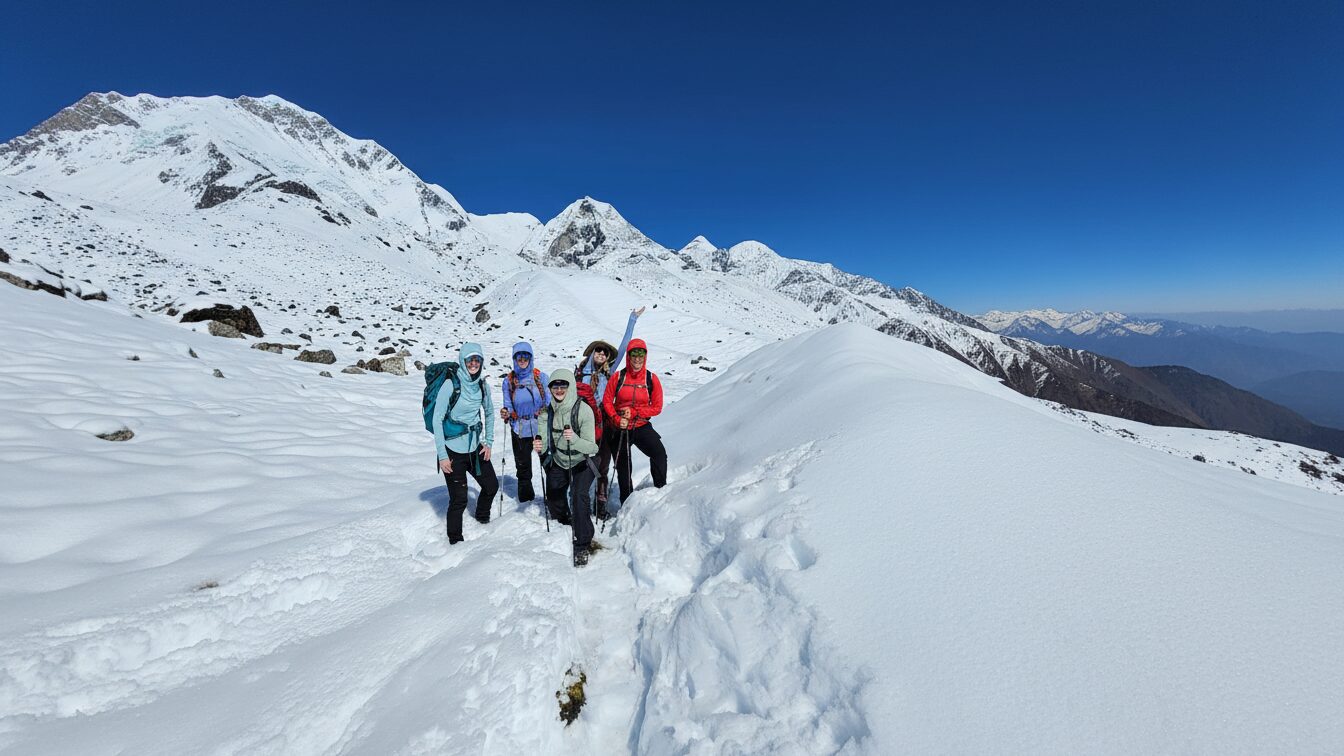
Snow-draped landscapes. There is simply no substitute for the visual drama of snow-covered rhododendron forests, frozen lakes reflecting white peaks, and boot-crunching trails through untouched powder.
The trade-off? You need proper gear, physical preparation, and smart route selection. This guide helps you do exactly that.
1. Nepal — The World’s Undisputed Trekking Capital in Winter
Nepal is the starting point for any honest conversation about Himalayan trekking. Home to eight of the world’s fourteen 8,000-metre peaks — including Mount Everest — Nepal offers a depth and variety of trekking experiences unmatched anywhere on Earth. And in winter, much of it becomes accessible on terms that are both quieter and more visually rewarding than peak season.
The Himalayas in Nepal occupy roughly 15% of the country’s total area. Because these high ranges act as a protective barrier against cold Arctic air, the lower and mid-altitude valleys remain remarkably trekable through winter. Winter skies across Nepal’s trekking corridors are famously clear and stable, with almost no rainfall — perfect conditions for long days on the trail.
Best Winter Treks in Nepal
Ghorepani Poon Hill Trek — Best for Beginners in Winter
Altitude: 3,210 m | Duration: 4–5 days | Difficulty: Easy to Moderate
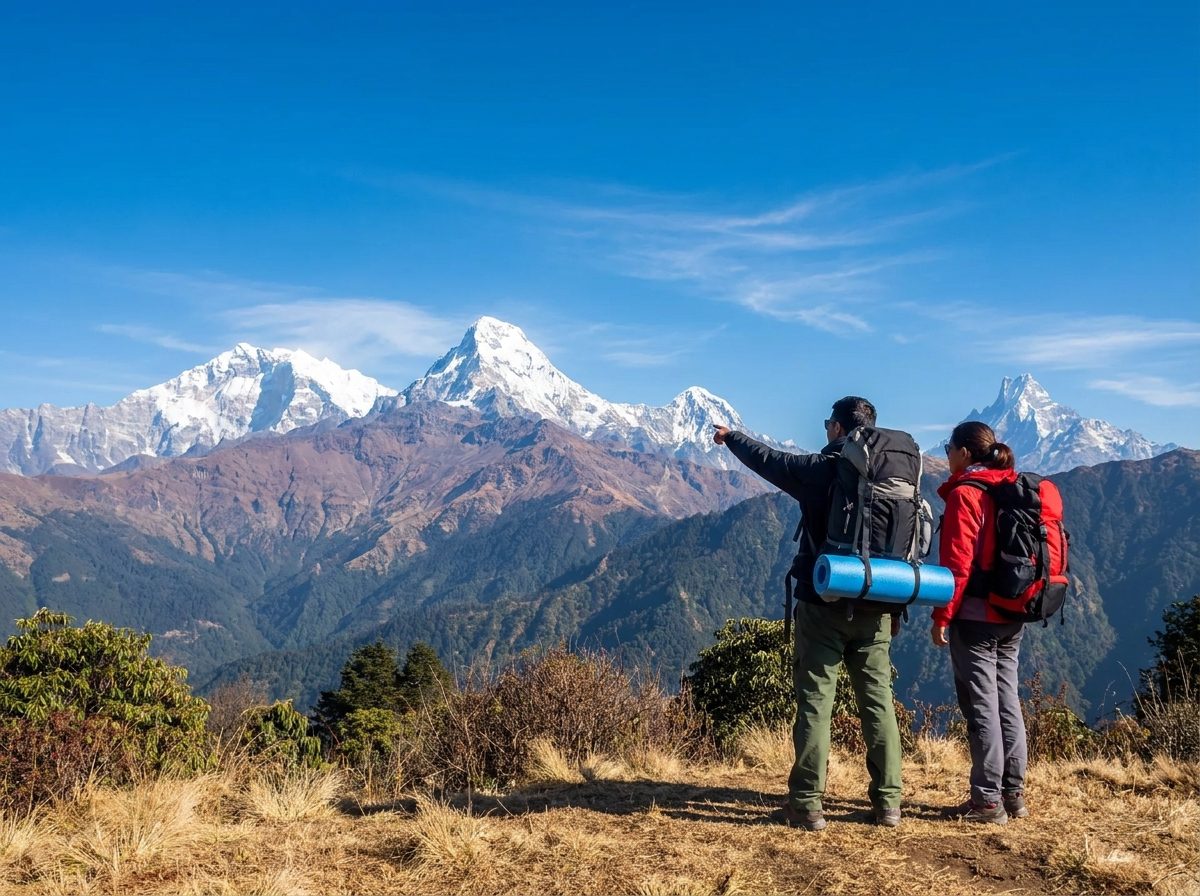
The Ghorepani Poon Hill trek is the undisputed champion of winter trekking in Nepal for those new to high-altitude hiking. At a maximum elevation of just 3,210 metres, it sidesteps the most brutal altitude challenges while still delivering panoramic views of the Annapurna Massif — including Annapurna I (8,091m), Annapurna South, Hiunchuli, Machapuchare (the iconic Fishtail peak), and Dhaulagiri.
In winter, the trails at higher sections get dusted with snow, creating a photogenic white-blanket landscape that looks straight out of a calendar. The viewpoint at Poon Hill is one of the finest sunrise platforms in the Himalayas — and in the crystal-clear air of winter, the mountain panorama is breathtaking. This is suitable for almost every fitness level, and the well-developed teahouse network means comfortable nights along the way.
Why visit in winter: Clear skies, snow-covered rhododendron forests, short crowds, and easy access from Pokhara make this the perfect winter introduction to Nepal trekking.
Annapurna Base Camp Trek — Best for Dramatic Winter Scenery
Altitude: 4,130 m | Duration: 10–12 days | Difficulty: Moderate
The Annapurna Base Camp (ABC) trek takes you into the heart of the Annapurna Sanctuary — a natural amphitheatre surrounded by twelve peaks over 6,000 metres, including the formidable Annapurna I (the tenth-highest mountain in the world). The approach winds through diverse terrain: lush rhododendron forests give way to terraced fields, remote Gurung and Magar villages, and ultimately the stark, snow-ringed bowl of the Sanctuary itself.
Winter at Annapurna Base Camp is a completely different experience from the autumn rush. The silence at the Sanctuary in January is profound. The mountains — Annapurna I, Machapuchare, and Hiunchuli towering around you — are draped in fresh snow, and the light is extraordinary. This is a moderate trek, though trekkers should be prepared for cold nights at higher elevation and possible snow on the upper trail sections.
Why visit in winter: The Sanctuary in snow is one of the most visually dramatic settings in the entire Himalayan range. Fewer crowds mean more intimate mountain moments.
Everest Base Camp Trek — The World’s Most Famous Winter Trek
Altitude: 5,364 m | Duration: 14–16 days | Difficulty: Challenging
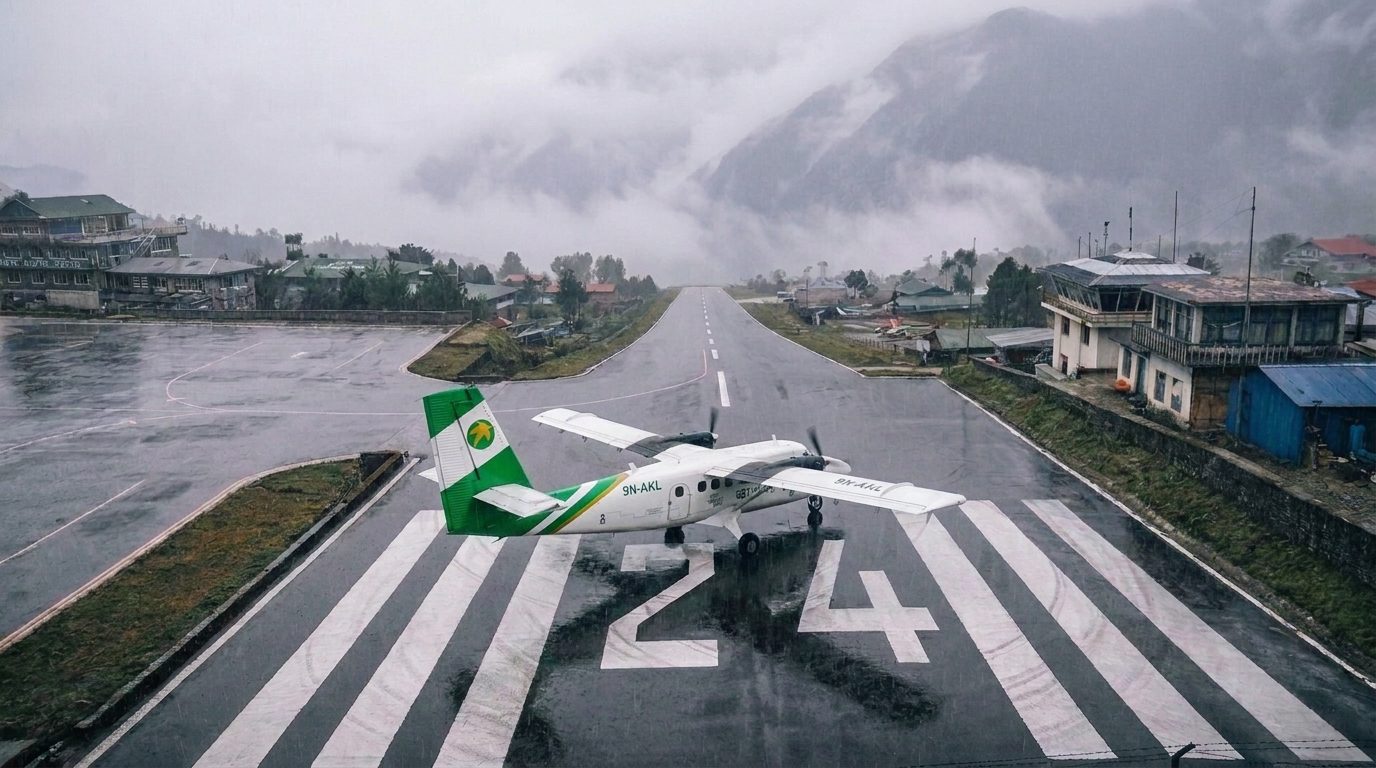
The Everest Base Camp trek is arguably the most iconic trekking route on the planet. Beginning with a thrilling flight to Lukla (one of the world’s most dramatic airstrips), the trail passes through Namche Bazaar — the bustling Sherpa capital — before threading through Buddhist monasteries at Tengboche, across glacial moraines, and ultimately to the rock-and-ice sprawl of Base Camp beneath the Southwest Face of Everest.
In winter, the trek is serious business. High-altitude sections can see temperatures drop well below freezing, and acclimatisation demands careful planning. However, for experienced and well-prepared trekkers, a winter Everest Base Camp experience is extraordinary. The mountain views from Kala Patthar (5,545 m) — the classic viewpoint for Everest — are often cleaner and more dramatic in winter than in autumn.
The Sherpa villages, Buddhist monasteries, and the raw grandeur of the Khumbu region are no less compelling in January than October — and far less crowded.
Why visit in winter: For serious trekkers, the combination of uncrowded trails, exceptional mountain clarity, and the raw challenge of cold-weather high-altitude trekking makes this a bucket-list winter adventure.
Langtang Valley Trek — Best Hidden Winter Gem in Nepal
Altitude: 3,870 m | Duration: 7–10 days | Difficulty: Moderate
Langtang is one of Nepal’s most underrated trekking regions, sitting just north of Kathmandu near the Tibetan border. The valley offers spectacular views of Langtang Lirung (7,227 m) and Ganesh Himal, combined with the rich Tamang culture and a genuine sense of remoteness. Winter brings reliable snowfall at higher elevations and the trails remain manageable at valley level. This is an excellent choice for trekkers who want classic Himalayan scenery without the Annapurna or Everest crowds.
Manaslu Circuit Trek — Best Advanced Winter Trek in Nepal
Altitude: 5,106 m (Larkya La Pass) | Duration: 14–18 days | Difficulty: Challenging
The Manaslu Circuit is Nepal’s best answer for trekkers looking beyond the main routes. Circling the world’s eighth-highest mountain through remote villages, dense forests, and high passes, this is a trek that delivers an intensity of solitude and scenery that rivals anything on the classic routes. The Larkya La Pass, the highest point of the circuit, requires careful winter planning — it can be deep in snow — but the reward is a wilderness experience of the highest order.
Nepal in Winter: Key Facts
- Best winter treks for beginners: Ghorepani Poon Hill, Langtang Valley
- Best for dramatic scenery: Annapurna Base Camp, Everest Base Camp
- Weather: Crystal clear skies, stable conditions at lower elevations, extreme cold above 4,000m
- Permits needed: TIMS Card, National Park Entry Permits (vary by region)
- Winter season: December to February
2. India (Indian Himalayas) — The Adventurer’s Winter Playground
India’s contribution to Himalayan trekking is enormous and wildly diverse — stretching from the snowy Garhwal Himalayas of Uttarakhand to the frozen river canyons of Ladakh in the far north. For winter trekking specifically, India offers some of the most unique and challenging experiences in the world.
Chadar Trek, Ladakh The World’s Most Extreme Winter Trek
Altitude: 3,390 m | Distance: ~105 km | Duration: 9–12 days | Difficulty: Extreme
The Chadar Trek is unlike anything else in Himalayan trekking. When the Zanskar River freezes solid each January and February, it creates a natural highway — a “chadar” (sheet) of ice — running through some of the deepest, most dramatic gorges in the world. Trekkers walk across this frozen river for days, navigating deep canyons and towering cliffs, with temperatures that can plummet below -30°C.
This is winter trekking at its most raw and uncompromising. The experience of walking on a frozen river, surrounded by walls of ice and rock, is one that leaves every trekker permanently changed. It is one of the most surreal and exhilarating trekking experiences on the planet — and it is only possible in the depths of winter.
Why it’s special: The Chadar Trek is 100% a winter-only experience. There is no summer version. This is a trek that winter itself creates.
Kedarkantha Trek ⭐ Best Winter Summit Trek in India
Altitude: 3,810 m | Duration: 5–6 days | Difficulty: Easy to Moderate
Kedarkantha is considered by many experienced trekkers to be the finest winter trek in the Indian Himalayas. Located in the Garhwal range of Uttarakhand, the trail winds through dense forests of oak and pine before opening onto alpine meadows deep in snow. The summit rewards trekkers with a full 360-degree panorama of the surrounding peaks — Swargarohini, Bandarpunch, Black Peak, and Draupadi Ka Danda — all draped in winter white.
The trek is graded easy to moderate, making it accessible to first-time winter trekkers with a reasonable base fitness level. The final climb to the summit is the most challenging section, but the reward — standing on the roof of the winter Garhwal Himalayas — is extraordinary.
Brahmatal Trek — A Frozen Lake Masterpiece
Altitude: 3,733 m | Duration: 6 days | Difficulty: Moderate
The Brahmatal trek leads to a high-altitude lake sitting in the shadow of Mount Trishul. The entire trail passes through centuries-old oak and rhododendron forests that, in winter, are transformed into snow-laden corridors of extraordinary beauty. The lake itself, partially frozen and surrounded by white peaks, is one of the most photogenic winter destinations in the Indian Himalayas.
Kuari Pass Trek — Lord Curzon’s Winter Trail
Altitude: 4,425 m | Duration: 8 days | Difficulty: Moderate
Originally explored by the British Viceroy Lord Curzon and still sometimes called the “Lord Curzon Trail,” the Kuari Pass trek is one of the great classic routes of the Garhwal Himalayas. Winter brings deep snow, but also extraordinary views: at the pass, trekkers look out over Mount Kamet, Chaukhamba, Trishul, and Nanda Devi — India’s highest summit. The descent passes through Auli, one of India’s premier ski resorts.
India’s Winter Trekking Highlights
- Most extreme: Chadar Trek (Ladakh) — only possible in January–February
- Most accessible: Kedarkantha, Brahmatal, Nag Tibba
- Best views: Kuari Pass, Dayara Bugyal
- Winter season: December to February for Uttarakhand; January–February specifically for Chadar
3. Bhutan — The Kingdom of Silence in Winter
Bhutan is the world’s last true Himalayan kingdom, and it approaches tourism on its own terms — deliberately limited visitor numbers, a high-value low-impact philosophy, and a trekking scene that remains wild and uncrowded by any global standard. In winter, Bhutan transforms into something genuinely magical.
Between December and February, the high valleys and rugged mountains of Bhutan are blanketed in snow, rivers run partly frozen, and the skies are crisp and strikingly clear. Popular areas like Phobjikha Valley and Bumthang become tranquil, photogenic scenes straight from a fairy tale. Because Bhutan never has mass tourism, the winter beauty here is experienced in near-total solitude.
Snowman Trek — The World’s Hardest Trek
Altitude: Crosses 11 passes above 4,500 m, including 5 over 5,000 m | Duration: 25 days | Distance: ~217 miles (350 km) | Difficulty: Extreme
Bhutan’s Snowman Trek is considered by many experts to be the hardest and most remote trekking route on Earth. It follows the spine of the Bhutanese Himalaya from Paro to Trongsa, crossing through the almost mythical kingdom of Lunana — one of the most isolated inhabited valleys on the planet. The views along the route take in Jomolhari, the unclimbed Gangkar Puensum (the world’s highest unclimbed peak), and vast glacial valleys.
Only a small fraction of trekkers who attempt the Snowman Trek actually complete it. Weather, altitude, and sheer distance defeat the majority. The best season is autumn (September–October), but for the truly extreme winter adventurer, certain sections can be attempted in the cold months with expert local guide support.
Jomolhari Trek — Bhutan’s Best All-Round Trek
Altitude: ~4,900 m at highest camp | Duration: 8–12 days | Difficulty: Challenging
The Jomolhari Trek is widely considered Bhutan’s finest all-round trekking experience — combining exceptional mountain scenery (the sacred peak of Jomolhari at 7,326 m dominates the skyline), remote Buddhist villages, wildlife encounters, and a genuine sense of adventure. The winter version offers the added drama of snow-covered trails and the possibility of spotting the elusive snow leopard in the high terrain.
Why Bhutan in winter: Fewer tourists (already low by global standards), snow-blanketed landscapes, lower costs, and the extraordinary cultural experience of winter festivals like the Druk Wangyel Tshechu at Dochula Pass make Bhutan a compelling winter trekking destination.
4. Pakistan — Karakoram’s Winter Frontier
Pakistan’s northern mountain regions — Gilgit-Baltistan, the Karakoram, and the Hindu Kush — contain some of the most dramatic high-altitude terrain on Earth, including K2 (8,611 m), the world’s second-highest and widely considered most dangerous mountain. The prime trekking season here runs through summer (June–September), with the legendary K2 Base Camp trek drawing experienced mountaineers from around the world.
Winter in Pakistan’s high mountains is extremely harsh and not suitable for most trekkers. However, the lower-altitude valleys of Hunza and Swat offer mild winter walking and cultural exploration, with spectacular views of snow-wrapped peaks. For experienced alpinists, the winter Karakoram is a frontier unlike any other on Earth.
5. Tibet (China) — The Roof of the World
Tibet’s high plateau sits at an average elevation of 4,500 metres — the highest region on Earth. The most famous approach to the Himalayan giants from the Tibetan side includes the trek to Everest Base Camp from the north (the Tibet side), reaching the renowned Rongbuk Monastery, the world’s highest monastery, with unobstructed views of Everest’s North Face.
Winter in Tibet is exceptionally harsh — temperatures can fall to -40°C on the plateau — and permits for independent trekking are tightly controlled by Chinese authorities. However, for adventurers willing to navigate the logistics, the winter silence of the Tibetan plateau, with its vast frozen lakes and snow-wrapped monasteries, offers an otherworldly trekking experience in the right hands.
Final Word: Why Nepal Remains the #1 Winter Trekking Destination in the Himalayas
Every country in the Himalayan arc offers something extraordinary. India’s Chadar Trek is unlike anything else on Earth. Bhutan’s remoteness is incomparable. Pakistan’s Karakoram is raw and magnificent. But Nepal sits at the top of the list for winter trekking, and with good reason.
The combination of world-class trail infrastructure — well-maintained teahouse networks, reliable permit systems, and a deep culture of guiding excellence — means Nepal is accessible and enjoyable for trekkers at virtually every experience level, even in the challenging winter months. The diversity of options — from the gentle snows of Poon Hill to the extreme altitude of Everest Base Camp — means there is a Nepal winter trek for everyone.
And then there is the Himalayan landscape itself. Eight of the world’s fourteen highest mountains rise from Nepali soil. In winter, with the air scrubbed clean and the peaks white and gleaming, those mountains are simply incomparable.
Comments (0)
Write a comment- Why Winter Is the Best-Kept Secret for Himalayan Trekking
- 1. Nepal — The World’s Undisputed Trekking Capital in Winter
- Nepal in Winter: Key Facts
- 2. India (Indian Himalayas) — The Adventurer’s Winter Playground
- Chadar Trek, Ladakh The World’s Most Extreme Winter Trek
- India’s Winter Trekking Highlights
- 3. Bhutan — The Kingdom of Silence in Winter
- Snowman Trek — The World’s Hardest Trek
- Jomolhari Trek — Bhutan’s Best All-Round Trek
- 4. Pakistan — Karakoram’s Winter Frontier
- 5. Tibet (China) — The Roof of the World
- Final Word: Why Nepal Remains the #1 Winter Trekking Destination in the Himalayas
Read the latest Blogs & Insights
Explore our collection of articles and insights to gain in-depth travel knowledge, expert advice, and stay updated on the latest trends and tips.




No comments yet.