









Manaslu Circuit Trek vs Everest Base Camp: Which Is Easier?
Compare the Manaslu Circuit and Everest Base Camp treks to discover which is easier for your experience level. Learn about trail difficulty, altitude, walking days, permits, costs, and who each trek is best suited for before planning your Himalayan adventure.
-
 Adventure Master Trek
-
1 July, 2026
-
11 mins read
-
643 Views
-
0 Comments


Every year, thousands of trekkers land in Kathmandu with two weeks in their pocket and one impossible question: Manaslu Circuit or Everest Base Camp? Both are bucket-list treks. Both go high. Both will change the way you think about mountains. But choosing between them without the right information is like flipping a coin on a decision that took you years to make.
This guide doesn’t give you a coin flip. It gives you a real comparison — route by route, day by day, altitude, culture, crowds, permits, and cost — so you walk away knowing exactly which trek belongs on your boots.
What Type of Trekker Are You: Achievement or Journey?
Before comparing trails, distances, and teahouse menus, you need to answer one honest question about yourself — because it decides everything that follows.
Are you chasing the achievement? The famous sign, the prayer flags, the photograph at a place the whole world recognizes? Or are you chasing the journey — the slow immersion into a world that feels genuinely foreign, where the mountain is a backdrop to something deeper?
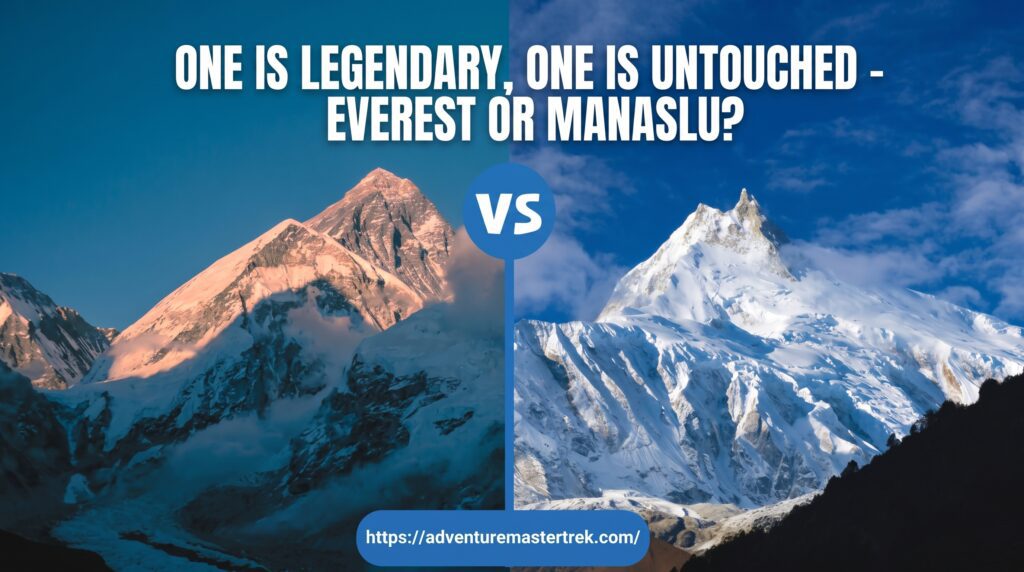
Everest Base Camp is the achievement trek. There is an unambiguous endpoint at 5,364 metres. There is a sign. There are prayer flags. “Everest Base Camp” lands differently in conversation than any other answer you could give about where you’ve been. That weight is real, and there’s no shame in wanting it.
Manaslu Circuit is the journey trek. There’s no single famous endpoint. The climax — Larkya La pass at 5,160 metres — is a crossing, not a destination. The reward is fourteen days of walking through one of Nepal’s most remote valleys, through villages that see a fraction of the footfall of the Khumbu, through a Tibetan Buddhist culture that hasn’t been flattened by decades of mass tourism. You come home and people look slightly blank when you name it. Somehow, that’s part of the satisfaction.
Know which type you are before you read another word.
Route Overview: Everest Base Camp vs Manaslu Circuit
Understanding the full shape of each route — how long it takes, where it goes, and what the trail actually feels like underfoot — is the foundation of any honest comparison between these two treks.
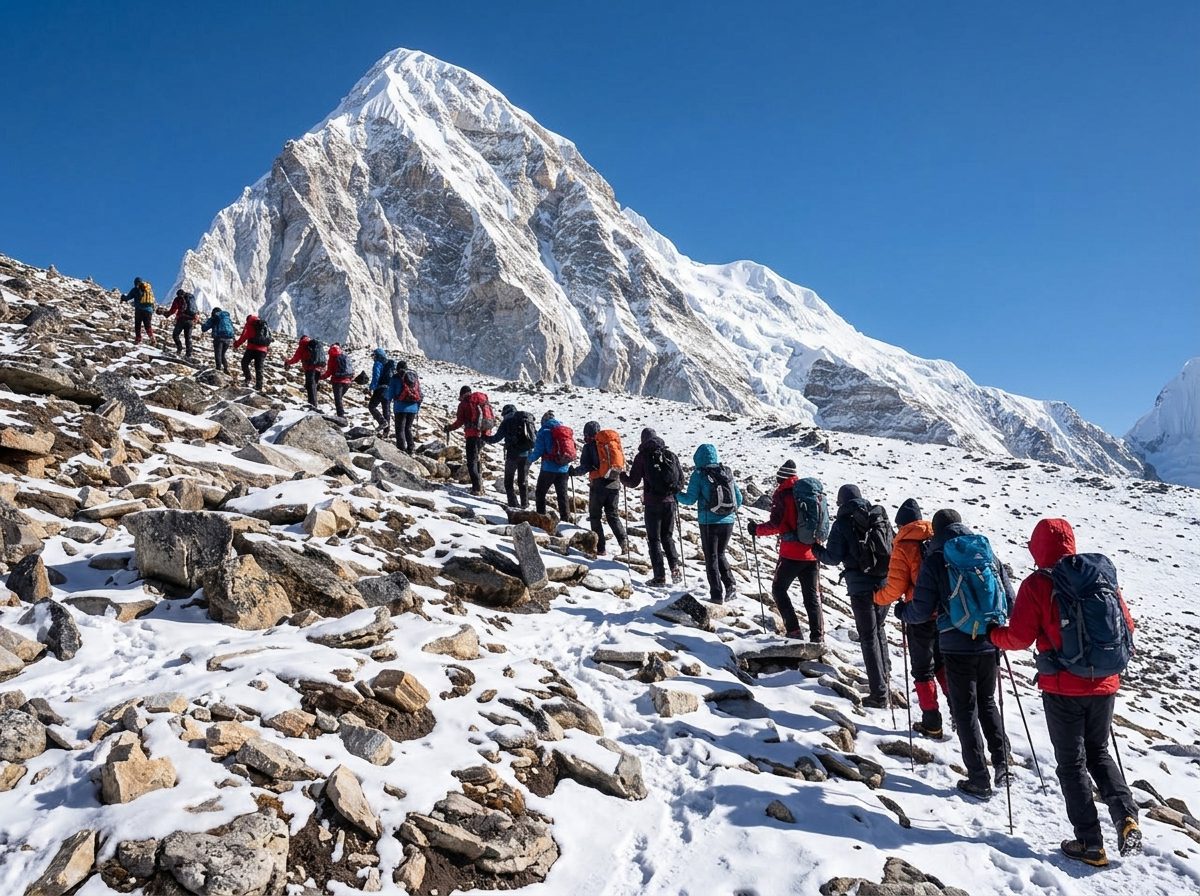
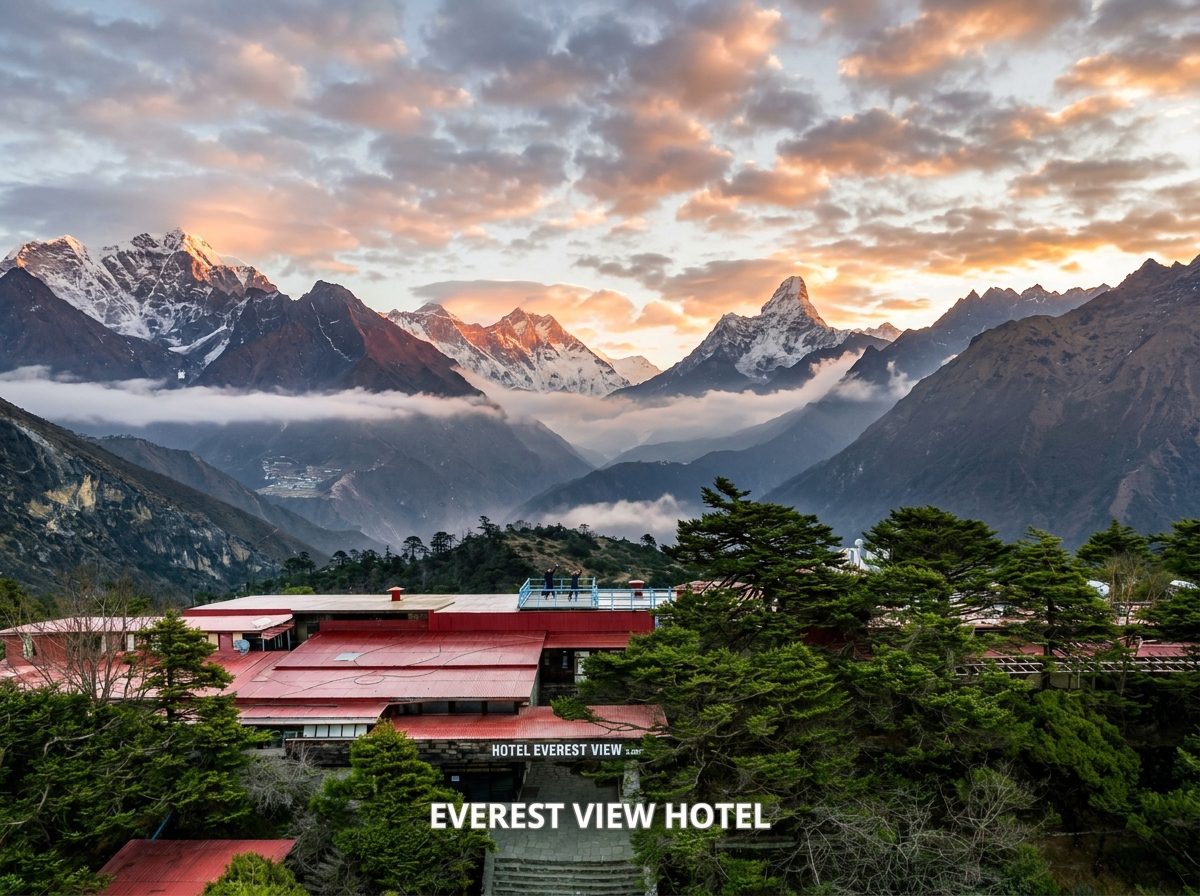
Everest Base Camp is a thirteen-to-fourteen-day trek (done properly, with acclimatization) that follows the Dudh Kosi river valley from Lukla through Namche Bazaar, Tengboche, Dingboche, Lobuche, and finally Gorak Shep and Base Camp. Most trekkers extend to Kala Patthar — the viewpoint at 5,545 metres that actually shows you Everest’s summit, which Base Camp itself does not. The return is largely the same route in reverse.
The trail is one of the most developed trekking corridors on earth. Namche Bazaar has espresso machines, gear shops, and bakeries. Teahouses throughout the Khumbu offer hot showers, multiple charging ports, and menus that run to pasta and apple pie. This is not roughing it below 4,500 metres. Above Dingboche, the environment turns genuinely harsh — cold, dry, oxygen-thin — and the final push to Kala Patthar demands real physical effort at altitude.
Manaslu Circuit is a fourteen-to-eighteen-day loop that begins and ends near Arughat or Soti Khola, reached from Kathmandu by a six-to-eight-hour bus or jeep ride. The route climbs the Budhi Gandaki valley through increasingly remote villages — Jagat, Deng, Namrung, Samagaon, Samdo — before crossing Larkya La at 5,160 metres and descending through Bimthang to the finish.
Above Namrung, the trail enters genuine wilderness. Teahouses are simple — dal bhat, eggs, wooden bunks, yak-wool blankets. The path involves scrambling, suspension bridges over fast rivers, and significant elevation change across the full loop. The Larkya La crossing begins before dawn from high camp, climbs steeply to the pass, and demands a long exposed descent before the afternoon weather closes in. It is the hardest thing most recreational trekkers will ever voluntarily do.
Altitude Profile: How High, How Hard, How Dangerous
Altitude is the single most important practical variable in any Himalayan trek, and the differences between these two routes are more nuanced than their headline numbers suggest.
Everest Base Camp reaches 5,364 metres at the camp and 5,545 metres at Kala Patthar. The standard itinerary builds mandatory acclimatization days at Namche Bazaar (3,440 m) and Dingboche (4,410 m) — these are non-negotiable, not schedule options. The altitude profile is extensively studied and the Khumbu’s teahouse owners are experienced at recognizing acute mountain sickness. If you’re struggling, someone will tell you before you make it worse.
Manaslu Circuit peaks at Larkya La pass, 5,160 metres — technically lower than Kala Patthar, but the crossing demands sustained effort at that altitude across many hours, not a summit push and descent. Acclimatization happens at Samdo (3,860 m) and the Dharamsala high camp (4,460 m) in the days before the crossing.
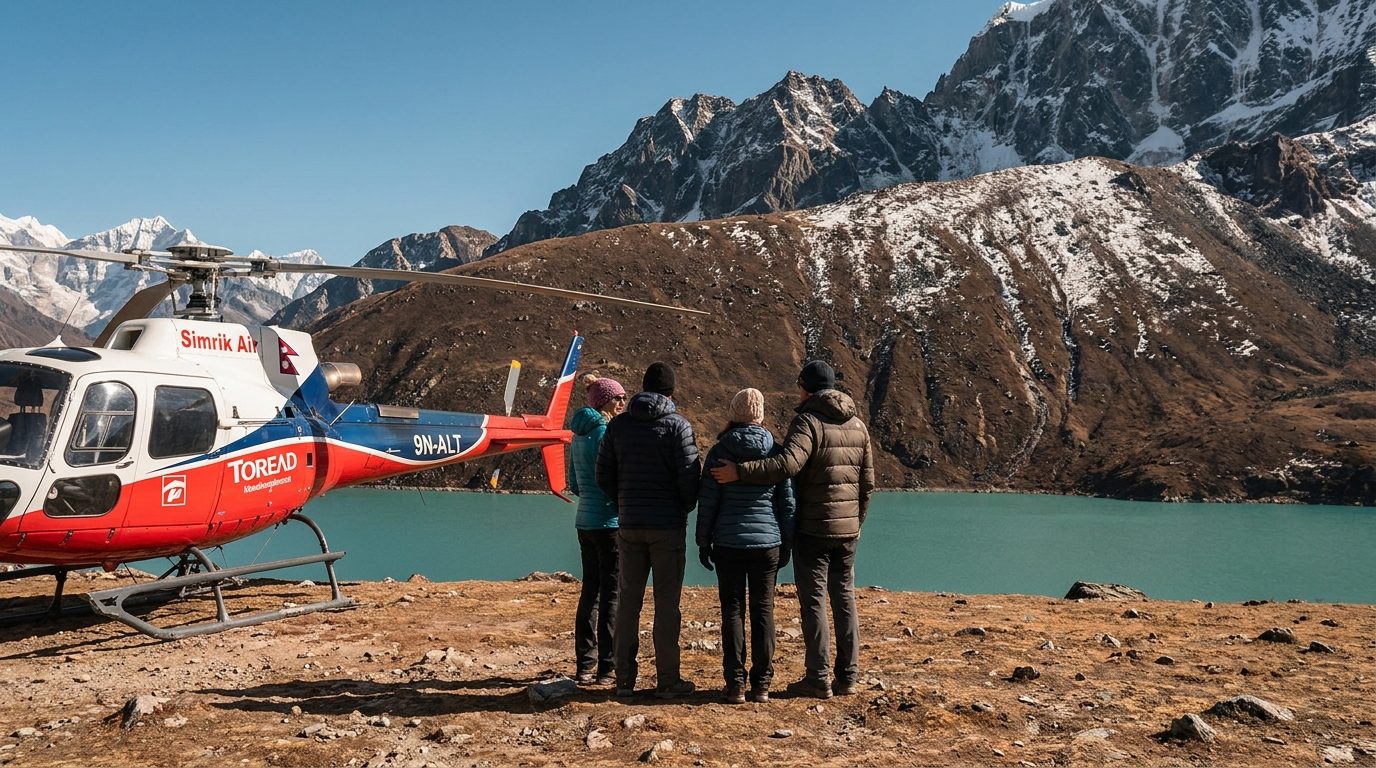
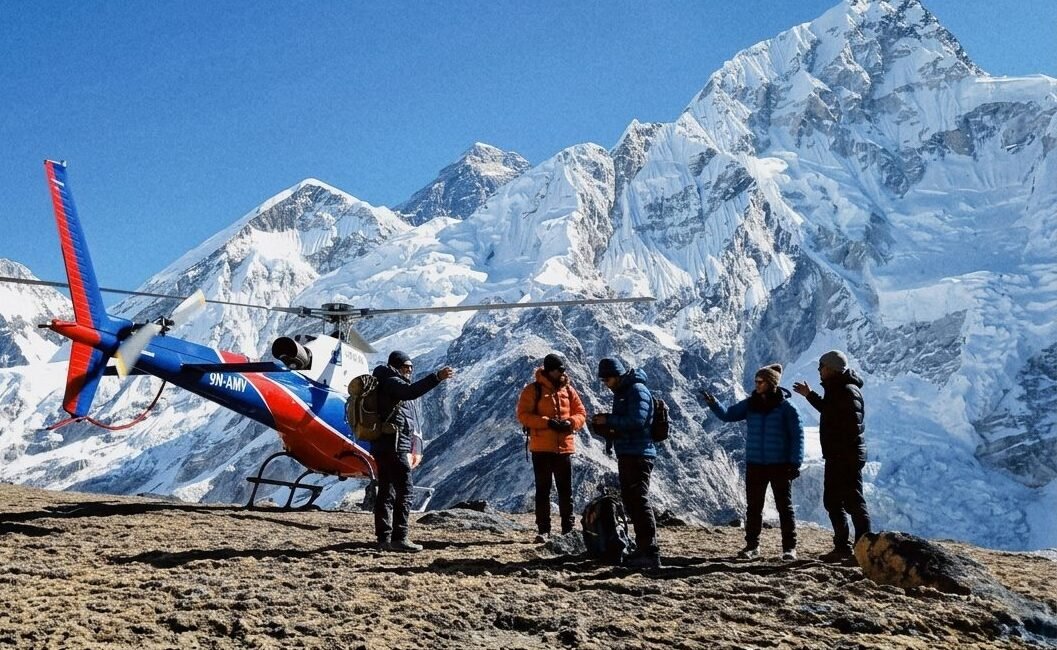
The critical difference is what happens if things go wrong. On EBC, evacuation infrastructure is well-established and helicopter rescue from the Khumbu is a regular occurrence. On the upper Manaslu Circuit above Samagaon, you are genuinely remote. If altitude sickness strikes seriously near Larkya La, the situation is complicated. This isn’t a reason to avoid Manaslu — it’s a reason to go with a qualified guide, take the acclimatization days seriously, and understand your own body’s history at altitude.
Neither trek requires technical climbing skill. Both require cardiovascular fitness, strong knees, and the mental resilience to keep moving when your body is working at 70% of its sea-level capacity.
Cultural Immersion: Sherpa Country vs Tibetan Buddhist Heartland
Culture is where these two treks diverge most dramatically — and it’s the factor most comparison guides treat as an afterthought when it should be near the top of every decision.
The Khumbu — the region through which EBC passes — is Sherpa country. The Sherpa people have a rich, specific, living culture: the monastery at Tengboche is one of the most important religious sites in the Himalayas, the mani walls and prayer wheels mark every trail, the festivals of Dumje and Mani Rimdu are extraordinary if your timing is right. But the Khumbu has also hosted the world for sixty-plus years. Namche functions as a mountain city. The cultural experience is real, but it is mediated — the Sherpa communities are expert hosts, and the relationship between trekker and local has been shaped by generations of tourism.
The upper Manaslu valley is a different world entirely. The route passes through villages of the Nubri and Tsum people — Tibetan Buddhist communities that were only opened to foreign trekkers in 1992 and that still receive a fraction of the visitors the Khumbu sees annually. Samagaon, at 3,530 metres, operates largely as it has for generations. The monastery above the village is ancient and in active use, not preserved for visitors. The houses are stone. The economy is yak-based. The people are hospitable in the specific way of communities that don’t process thousands of foreign strangers every year — curious, genuine, unhurried.
The Tibetan Buddhist culture in the Manaslu region has remained relatively intact because the valley’s physical isolation delayed the full arrival of the 21st century. Spending time there carries a particular weight. You are somewhere that is genuinely itself, not a version of itself shaped by tourism.
If cultural depth matters to your decision, Manaslu doesn’t compete with EBC — it wins outright.
Crowd Levels and Trail Solitude: What to Realistically Expect
One of the most searched questions about both these treks is how crowded they actually are — and the honest answer is more nuanced than most articles let on.
Everest Base Camp in October is one of the most congested outdoor trekking experiences available anywhere on earth. Namche Bazaar during peak season processes hundreds of trekkers daily. Teahouse reservations at Dingboche and Lobuche are not optional — they are necessary. The trail between Lukla and Namche is, in stretches, a moving queue. This isn’t a damning indictment; the landscape absorbs crowds and the infrastructure handles them. But if solitude is what you’re after, EBC in October delivers the opposite.
The shoulder seasons — late September and early November — are meaningfully quieter. If your dates have flexibility, this matters.
Manaslu Circuit in peak season carries a fraction of EBC’s traffic. Above Namrung, a typical day might put you in contact with a handful of other trekking groups. On Larkya La crossing day, you may share the pass with twenty people. Teahouses have rooms. The trail doesn’t feel like following someone else’s itinerary.
The solitude isn’t because Manaslu is unknown — it’s growing in popularity steadily — but because the logistics filter out casual interest. The mandatory guide requirement, the remote approach, the restricted area permit, and the longer time commitment mean that trekkers on the Manaslu Circuit are self-selected: people who specifically want to be there, not people who defaulted to the nearest famous option.
Permits, Costs and Logistics: The Full Breakdown
Getting your paperwork and budget right before departure saves real money and avoids significant stress — and the two treks have very different administrative requirements.
Everest Base Camp permits are straightforward: a Sagarmatha National Park entry permit (approximately $30 USD) and a TIMS card (around $20 USD). Both are obtainable in Kathmandu or Namche. The primary logistical cost is the Kathmandu–Lukla flight, which runs $150–$200 USD each way and is subject to weather delays — sometimes significant ones. No guide is legally required, though hiring one adds safety and local knowledge. The infrastructure throughout the Khumbu is so well-developed that you can organize an EBC trek two weeks before arriving in Nepal and be adequately prepared.
Manaslu Circuit permits are considerably more complex. The Restricted Area Permit — required because the route passes near the Tibet border — costs approximately $100 USD per week and mandates that all trekkers travel with a registered, licensed guide. You also need the Manaslu Conservation Area Permit and the Annapurna Conservation Area Permit for the lower section of the circuit. A qualified guide runs $25–35 USD per day plus accommodation and food.
The approach from Kathmandu — a six-to-eight-hour bus or jeep ride to Arughat or Soti Khola — is long, rough, and not comfortable. It is also, for many trekkers, an absorbing introduction to rural Nepal. Budget accordingly.
Total costs for a self-organized EBC trek with a guide run approximately $1,200–$1,800 USD for the trek portion. Manaslu Circuit, with mandatory guide, permits, and longer duration, typically runs $1,800–$2,500 USD. Neither figure includes international flights or Kathmandu accommodation.
Best Season to Trek: Timing Each Route Correctly
Timing your trek correctly is not a minor logistical detail — it is the difference between the trek of your life and a miserable slog through cloud, mud, or snow.
Both the Everest Base Camp and Manaslu Circuit share the same two primary windows: mid-October to late November and mid-March to mid-May. These windows represent the periods when monsoon rains have either not yet arrived or have finished, the mountain views are clear, the trails are dry, and the high passes are crossable.
The October–November window is the most popular for both routes. The skies are clear after the monsoon, the visibility is extraordinary, and the air is cool but not yet genuinely cold at lower altitudes. Peak October brings the highest crowds on EBC. If you can target the first two weeks of November, you trade some crowd density for colder temperatures — a reasonable exchange.
The March–May window is particularly beautiful on the Manaslu Circuit because the lower valley rhododendrons are in full bloom through April. EBC in spring carries its own energy — this is when Everest climbing expeditions are active, and the mountain above Base Camp is alive with movement. For some trekkers, seeing the climbing activity up close is a bonus. For others, it adds a commercial quality they didn’t expect.
Winter (December–February) is possible for experienced, well-equipped trekkers on EBC but brutal on Manaslu — the Larkya La crossing in deep winter is a different and significantly more dangerous undertaking. Monsoon season (June–September) closes both routes to all practical purposes.
The Honest Verdict: Which Trek Should You Actually Choose?
After weighing all the variables — altitude, culture, crowds, logistics, cost, and trail character — the choice comes down to two clear profiles.
Choose Everest Base Camp if: this is your first serious high-altitude trek and you want well-supported infrastructure; you have twelve to fourteen days available; you want the specific, named, universally recognized achievement of reaching the base of the world’s highest mountain; the Sherpa culture of the Khumbu interests you; or you want the flexibility of planning without a mandatory guide requirement.
Choose Manaslu Circuit if: you have done at least one high-altitude trek and know your body’s response to altitude; you have fourteen to eighteen days available; you want a complete loop rather than an out-and-back route; genuine cultural immersion in a still-remote region matters more to you than a famous endpoint; you want trail solitude rather than trail company; or you want the Larkya La crossing as the hardest voluntary physical challenge you’ve accepted.
The one thing worth saying plainly: these treks do not substitute for each other. They answer completely different questions. EBC answers “can I reach the base of the world’s highest mountain?” Manaslu answers “what does it feel like to walk through a world that hasn’t finished becoming familiar with outsiders?”
Both questions are worth asking. The work is figuring out which one is yours.
Comments (0)
Write a comment- What Type of Trekker Are You: Achievement or Journey?
- Route Overview: Everest Base Camp vs Manaslu Circuit
- Altitude Profile: How High, How Hard, How Dangerous
- Cultural Immersion: Sherpa Country vs Tibetan Buddhist Heartland
- Crowd Levels and Trail Solitude: What to Realistically Expect
- Permits, Costs and Logistics: The Full Breakdown
- Best Season to Trek: Timing Each Route Correctly
- The Honest Verdict: Which Trek Should You Actually Choose?
Read the latest Blogs & Insights
Explore our collection of articles and insights to gain in-depth travel knowledge, expert advice, and stay updated on the latest trends and tips.


No comments yet.