









How Hard Is the Everest Heli Tour, Actually? (And Do You Need to Be Fit for It?)
This is the question I get more than any other when I’m helping people plan a Nepal trip. Usually it comes from someone caught between two thoughts: “I know I’ll never make it to Everest Base Camp on foot” and “I still really want to see that mountain up close.” Somewhere in that gap sits […]
-
 Adventure Master Trek
-
10 July, 2026
-
10 mins read
-
589 Views
-
0 Comments


This is the question I get more than any other when I’m helping people plan a Nepal trip. Usually it comes from someone caught between two thoughts: “I know I’ll never make it to Everest Base Camp on foot” and “I still really want to see that mountain up close.” Somewhere in that gap sits the helicopter tour — and right behind it comes the follow-up question: does my 68-year-old dad need to start training? What about my niece, the one who gets winded walking up two flights of stairs?
Short answer: No. This is one of the easiest ways on earth to get close to an 8,000-meter peak. No gym prep, no boots to break in, no months of hiking beforehand. But “easy” isn’t the same as “nothing to think about.” Altitude does its own thing to your body no matter how fit you are, and there are a handful of practical realities — weight limits, weather, a bit of health screening — worth knowing before you hand over your credit card. Let’s walk through what the day actually looks like, and who it’s really for.

What You’re Actually Signing Up For
Strip away the marketing and the Everest Heli Tour (sometimes called the Everest Base Camp Helicopter Tour) is a scenic flight out of Kathmandu into the Khumbu — Everest, Lhotse, Nuptse, Ama Dablam, the whole lineup — that trades two weeks of walking for a few hours in the air.
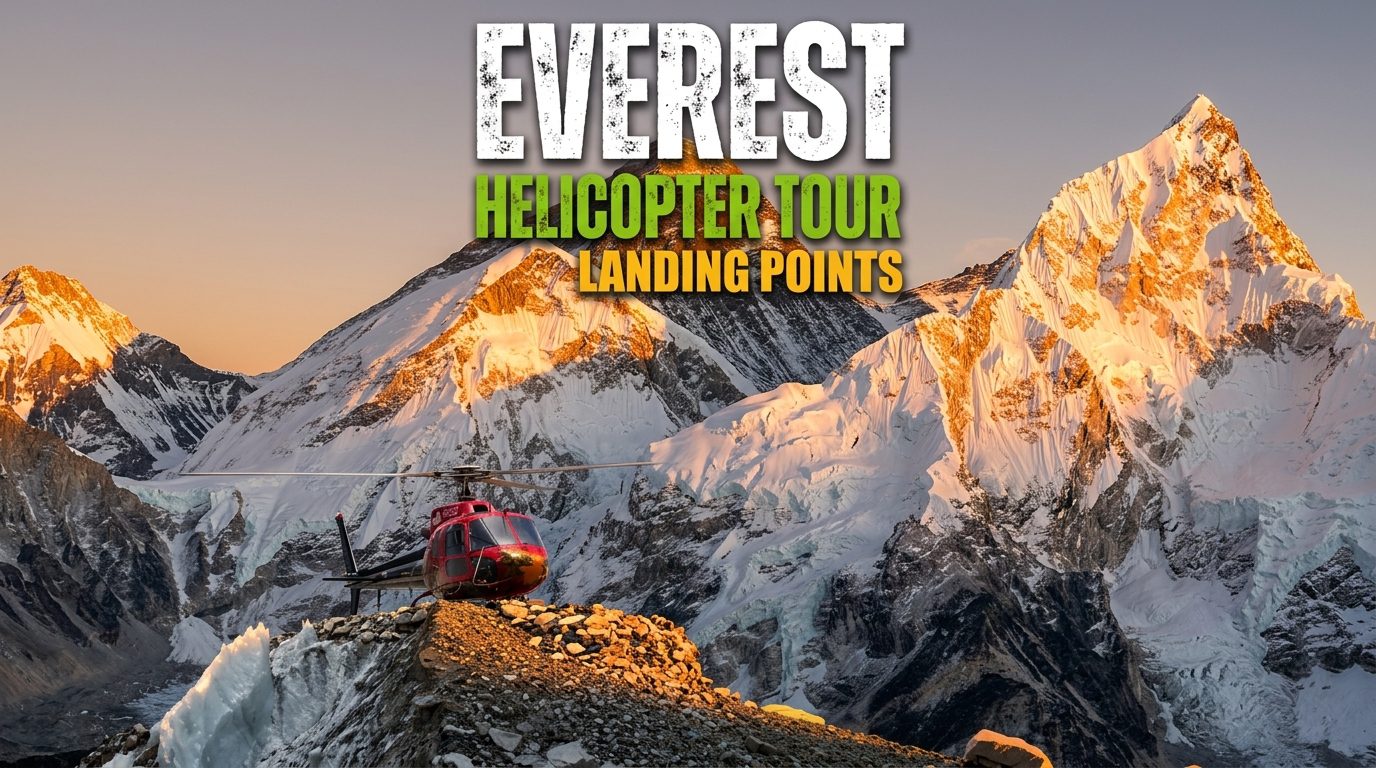
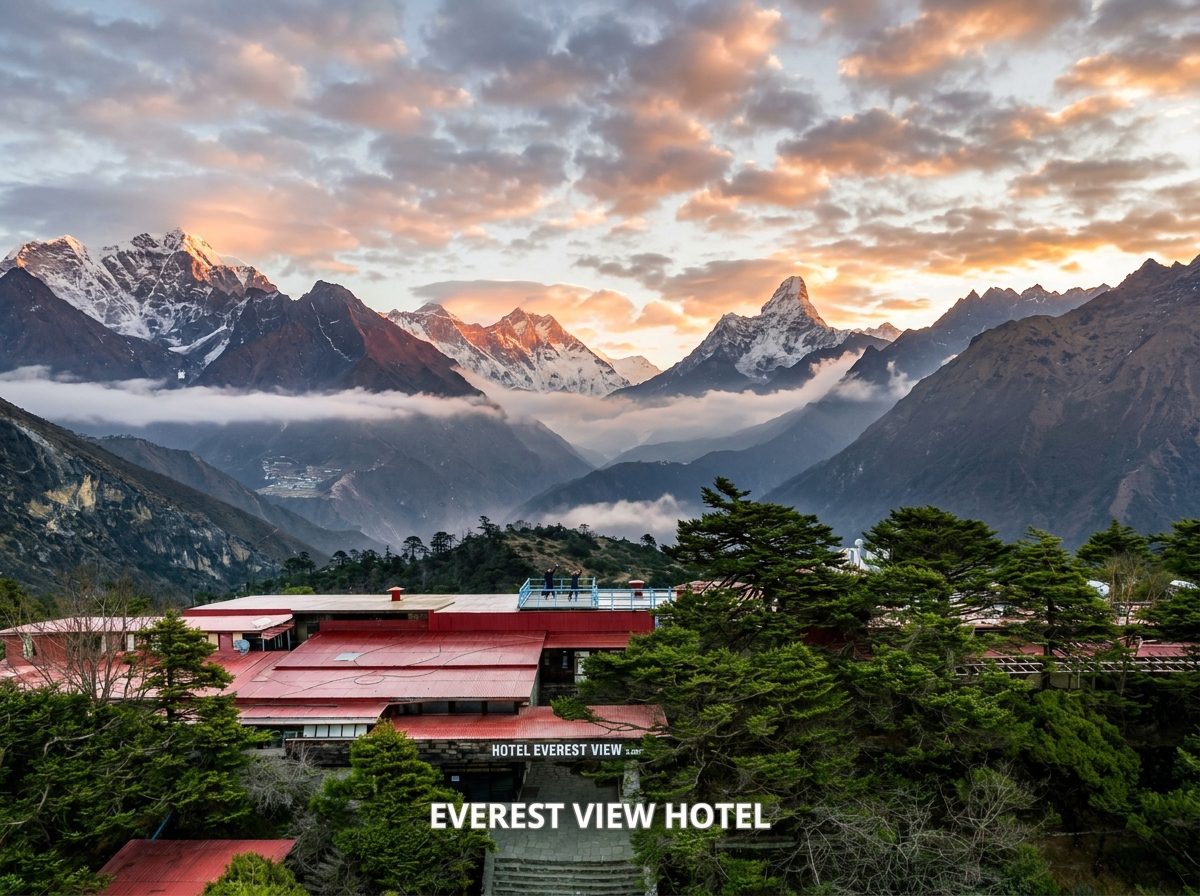
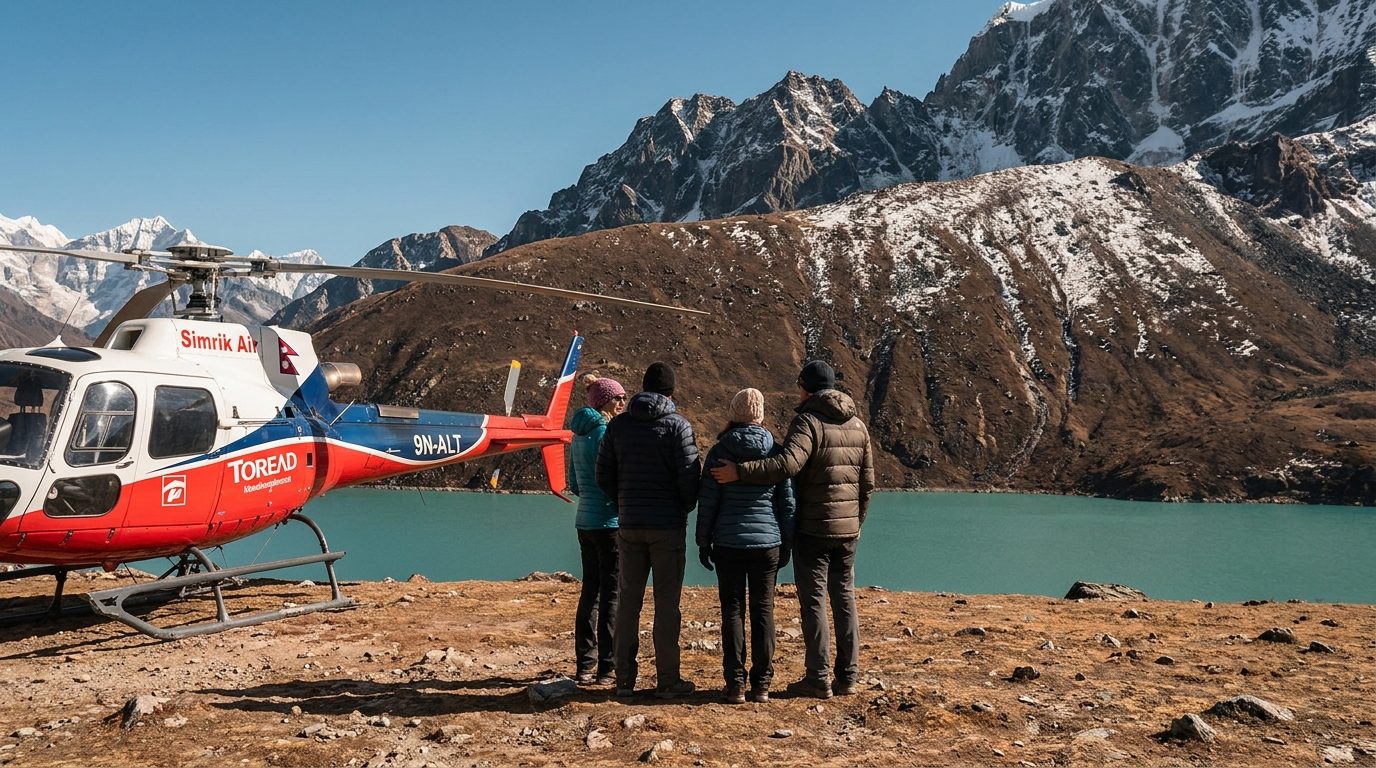
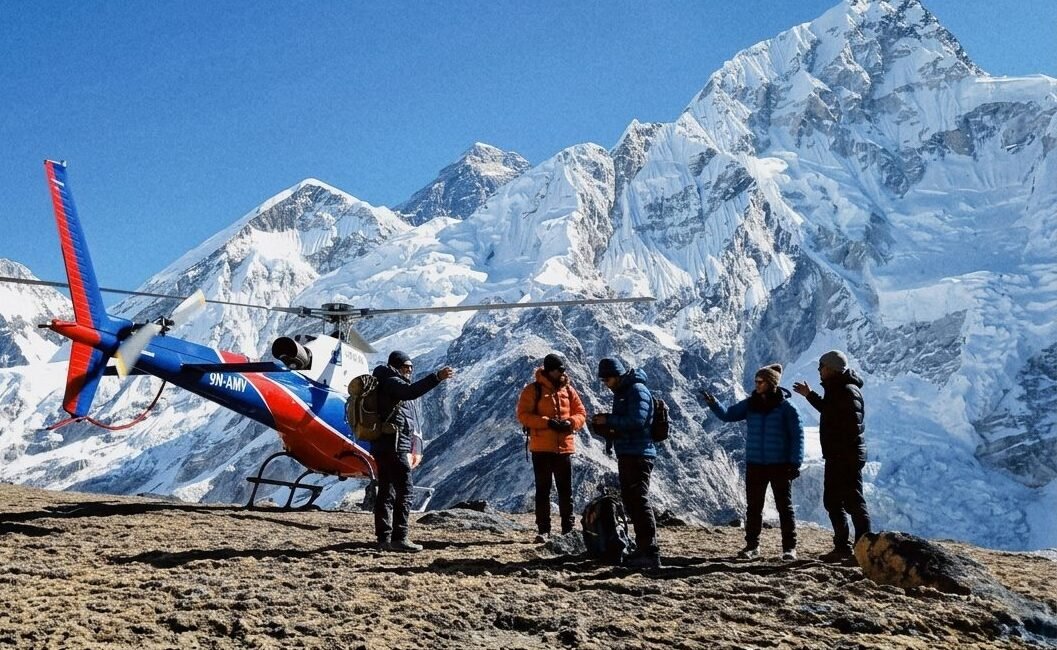
Here’s roughly how the morning unfolds. You leave Tribhuvan International Airport and fly over the foothills toward the Khumbu region, with a quick refueling stop in Lukla along the way. From there the helicopter climbs toward the high-altitude landing point — usually Kala Patthar at 5,545 meters, or somewhere near Everest Base Camp around 5,364 meters. On the way back, most tours touch down at Syangboche for breakfast at the Everest View Hotel (3,880–3,962 m), one of the highest hotels on the planet, with Everest, Lhotse, and Ama Dablam sitting right there in front of you while you eat. Then it’s back to Kathmandu, usually before lunch. The whole round trip runs about 4–5 hours.
Worth knowing there are two versions of this: a flyover, which never actually lands at high altitude, and a landing tour, which sets down briefly at Kala Patthar or near Base Camp before the breakfast stop.
So How Hard Is It, Compared to Trekking?
There’s barely a comparison. The classic EBC trek is 12–14 days of steep climbs, suspension bridges, and sleeping progressively higher each night so your body has time to adjust. It demands real conditioning, a lot of patience, and a tolerance for basic teahouse living.
The heli tour skips almost all of that. You’re seated for most of the flight, and the only time you’re on your feet at altitude is during short stops — 10 to 30 minutes at Kala Patthar or Base Camp, closer to an hour at the Everest View Hotel for breakfast and sometime if you lucky enough you get to stay few more hours because of busy air traffic. No switchbacks, no pack on your back, no week of gradual acclimatization.
That said, three things do shape how the day actually feels, and none of them are about your fitness level.
Altitude does the work, not your legs. You go from Kathmandu’s 1,400 meters to over 5,500 meters at Kala Patthar in a few hours — an elevation gain trekkers usually spread across a week or more of acclimatization hiking. Your body experiences that gain almost instantly instead, so a bit of lightheadedness, a mild headache, or shortness of breath is possible even though you haven’t physically exerted yourself at all. This is really the whole ballgame here: it’s not strenuous, but it is physiologically demanding, and that has everything to do with oxygen availability and nothing to do with how many miles you can run.
Weather and flying conditions are genuinely technical. Mountain weather in the Everest region turns on a dime, and helicopters up at these altitudes are dealing with real challenges — thinner air affects rotor performance, and landing zones like Kala Patthar are uneven and rocky, which takes precise piloting. Delays and last-minute rerouting happen often enough that you should expect them as part of the experience, not treat them as something going wrong. It’s really a reflection of how seriously Nepal’s mountain pilots take this — they are CAAN-certified specifically for high-altitude flying.
Weight limits are strict, and they’re not about you personally. Thin air reduces a helicopter’s lift performance, so operators cap combined passenger weight at roughly 480–500 kg per flight, shared across a maximum of five people. At stops like Pheriche or Syangboche, groups sometimes get split into smaller shuttle flights to stay within safe limits. It’s a logistics thing, not a fitness test, but it’s worth knowing ahead of time — especially if you’re booking as a larger group or bringing extra luggage.
Do You Actually Need to Be Fit?
Not really, no. Most operators list the fitness requirement for this tour as “N/A,” and that’s not just a sales line — anyone in reasonably good general health can do this, regardless of age or athletic background. That’s a big part of why it’s caught on with such a wide range of travelers: seniors who always wanted to see Everest but were never going to trek there, families with young kids who want to share the moment without the physical grind, people with limited mobility who’d otherwise be shut out of the Khumbu entirely, travelers with just a day or two in Kathmandu, and even trekkers who walked in but would rather fly out than retrace two weeks of trail.
There’s no training plan, no boots to break in, no endurance test waiting at 5,000 meters. You’ll spend most of the flight sitting down, taking in views that other people spend two exhausting weeks earning on foot.
Where “Fitness” and “Health” Stop Meaning the Same Thing
This is the part people tend to gloss over. Fitness isn’t the deciding factor here — general health is, and the two aren’t the same thing. Jumping from Kathmandu to 5,500 meters in a couple of hours means your heart and lungs have to handle a sudden drop in oxygen availability, even if it only lasts a few minutes outside the cabin.
A few groups genuinely should talk to a doctor first: anyone with a heart condition (arrhythmias, past cardiac events, that kind of thing), people with asthma, bronchitis, or COPD, anyone who’s had altitude sickness on a previous trip, pregnant travelers, and anyone on medication that affects blood pressure, oxygen saturation, or hydration. None of this automatically rules you out — it just means a five-minute conversation with your doctor beforehand is worth having.
Altitude Sickness Is the Real Thing to Plan Around
Because this is a fast ascent rather than a gradual one, altitude sickness — not fitness — is what’s actually worth preparing for. A few things help: stay well hydrated in the days before and during the tour, skip the alcohol, and don’t eat a heavy meal right before flying. Go easy on caffeine too, since it doesn’t help with dehydration at altitude. If you’re worried about how you’ll handle the elevation, ask your doctor about Diamox (acetazolamide) ahead of time — some people use it preventively, but it needs actual medical guidance, not guesswork. And if you feel dizzy, nauseated, or short of breath, say something to the crew right away. They’re trained for exactly this, and most helicopters carry supplemental oxygen on board. Layer up properly, too — base layer, mid layer, windproof shell — because Kala Patthar and Base Camp run noticeably colder than Kathmandu, even in the same season.
In practice, most people feel nothing worse than a mild headache or a bit of lightheadedness, if that. The exposure at extreme altitude is short enough that there’s rarely time for much else to develop.
What the Day Actually Looks Like, Start to Finish
Tours fly out early, since mountain weather tends to be calmest before midday. Before boarding, your weight (and sometimes your luggage) gets recorded to keep the flight within safe limits, followed by a quick safety briefing — how to get in and out of the helicopter, always from the front and never the tail, since the engines often keep running during high-altitude stops. Then comes the flight itself, over Namche Bazaar, past Ama Dablam, above the Khumbu Icefall, climbing toward the highest point of the day. The stop at Kala Patthar or Base Camp is brief, partly because of the altitude and partly because helicopters don’t idle up there for long. Breakfast at the Everest View Hotel is the one genuinely relaxed stretch of the morning — 45 minutes to an hour with Everest, Lhotse, and Ama Dablam right there in front of you. Then it’s back to Kathmandu, usually by late morning.
Nothing in that sequence involves a climb, a long walk, or carrying gear. The most physical moment of the whole day is stepping from the helicopter onto a viewpoint or a hotel terrace.
Heli Tour vs. Trekking, Side by Side
| Heli Tour | Trekking to EBC | |
| Duration | 4–5 hours | 12–14 days |
| Fitness required | Minimal to none | High |
| Acclimatization | Not required (rapid ascent) | Required (gradual, over days) |
| Good for seniors/kids | Yes | Limited |
| Where you sleep | Back in Kathmandu that night | Multiple nights in teahouses |
| Main risk | Altitude effects, weather delays | Physical exhaustion, altitude sickness, injury |
| What you come away with | A scenic, comfortable close-up | A deeply physical, personal experience |
Neither is objectively better — they’re built for different priorities. If you want Everest up close without weeks of prep, the heli tour gets you there efficiently. If the walk itself, and the villages along the way, matter as much to you as the mountain does, trekking is still the fuller experience.
How to Actually Prepare
You’re not training for this, so put your prep energy somewhere more useful. Book with a licensed, CAAN-certified operator that has experienced high-altitude pilots and a solid safety record. Pack like it’s genuinely cold no matter what Kathmandu’s weather is doing, because Kala Patthar and Base Camp are a different climate entirely. Bring sunglasses and strong sunscreen — UV at altitude is no joke. Get travel insurance that covers medical evacuation; it’s not always required, but given how remote this is, skipping it is a bad trade. Leave some slack in your schedule for delays, since mountain weather doesn’t care about your itinerary, especially during shoulder season. And if you can pick your season, spring (March–May) and autumn (September–December) tend to give the clearest skies, though flights run year-round.
The Bottom Line
This is about as low-effort as high-altitude adventure gets. No training, no trekking background, no age cutoff. It hands people who’d otherwise never get close to Everest — families, seniors, anyone with limited mobility or limited time — an actual shot at seeing it up close.
Just don’t mistake “easy” for “nothing to plan for.” Your body is still climbing to over 5,000 meters in a matter of hours, even if your legs never do the work. Weather, weight limits, and your own health history matter more here than fitness ever will.
If you’re generally healthy, you’re good to go. Check in with a doctor if you’ve got a heart or lung condition, dress for the cold, pick a solid operator, and expect the odd delay. Do that, and you’ll be standing under the world’s tallest mountain before lunch — no training, no blisters, and no two weeks lost to it.
Comments (0)
Write a comment- What You’re Actually Signing Up For
- So How Hard Is It, Compared to Trekking?
- Do You Actually Need to Be Fit?
- Where “Fitness” and “Health” Stop Meaning the Same Thing
- Altitude Sickness Is the Real Thing to Plan Around
- What the Day Actually Looks Like, Start to Finish
- Heli Tour vs. Trekking, Side by Side
- How to Actually Prepare
- The Bottom Line
Read the latest Blogs & Insights
Explore our collection of articles and insights to gain in-depth travel knowledge, expert advice, and stay updated on the latest trends and tips.


No comments yet.