









Everest View Hotel Overnight Tour: Sleeping Above the Clouds in the Shadow of the World’s Highest Peak
Spend a night at the iconic Everest View Hotel, the world's highest luxury hotel. Wake up to breathtaking views of Mount Everest, enjoy Sherpa hospitality, and explore helicopter and trekking options for an unforgettable Himalayan getaway.
-
 Adventure Master Trek
-
7 August, 2026
-
11 mins read
-
445 Views
-
0 Comments


There are very few places on earth where you can wake up, roll over in bed, and see Mount Everest through your window without having lifted a single ice axe. Hotel Everest View, perched on a ridge above Syangboche in the Khumbu region, is one of them. An overnight stay here has become one of the most sought-after short getaways in Nepal — a way to experience the grandeur of the Himalayas without committing to weeks of high-altitude trekking.
This guide, brought to you by Adventure Master Treks, walks you through everything you need to know about the Everest View Hotel overnight tour: what makes the hotel so unique, how to get there, what a typical itinerary looks like, what to expect once you arrive, and how to plan the trip properly so it lives up to the postcard.
What Makes Hotel Everest View So Special
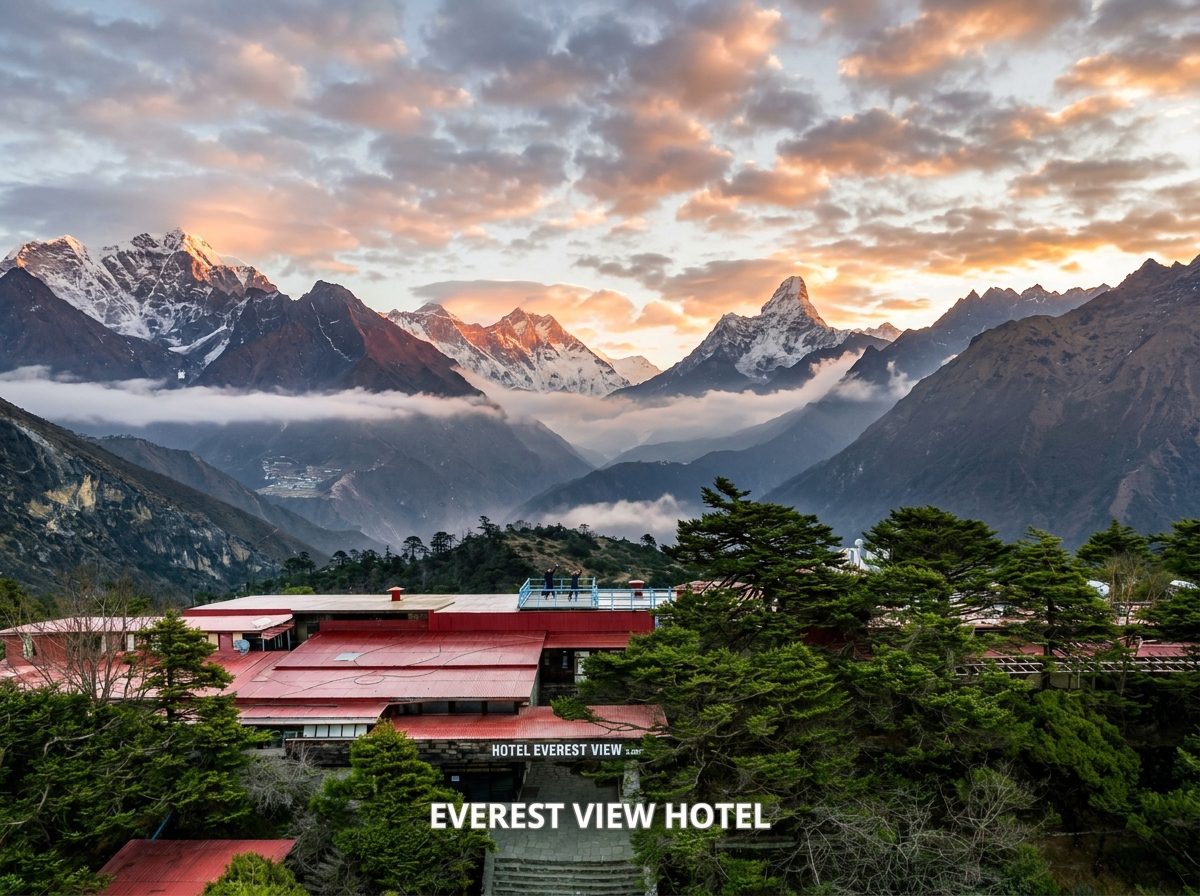
Hotel Everest View isn’t just scenic — it holds the Guinness World Record for the highest-placed hotel on the planet, sitting at roughly 3,880 meters (about 12,730 feet) above sea level on Syangboche Hill. It opened its doors back in 1971, the vision of a Japanese developer who wanted to bring high-altitude luxury to a region previously reserved for hardened mountaineers and Sherpa traders. Local labor and materials were used throughout construction, and the small scale of the building — just a dozen rooms — was intentional, keeping the footprint light on a fragile mountain ridge.
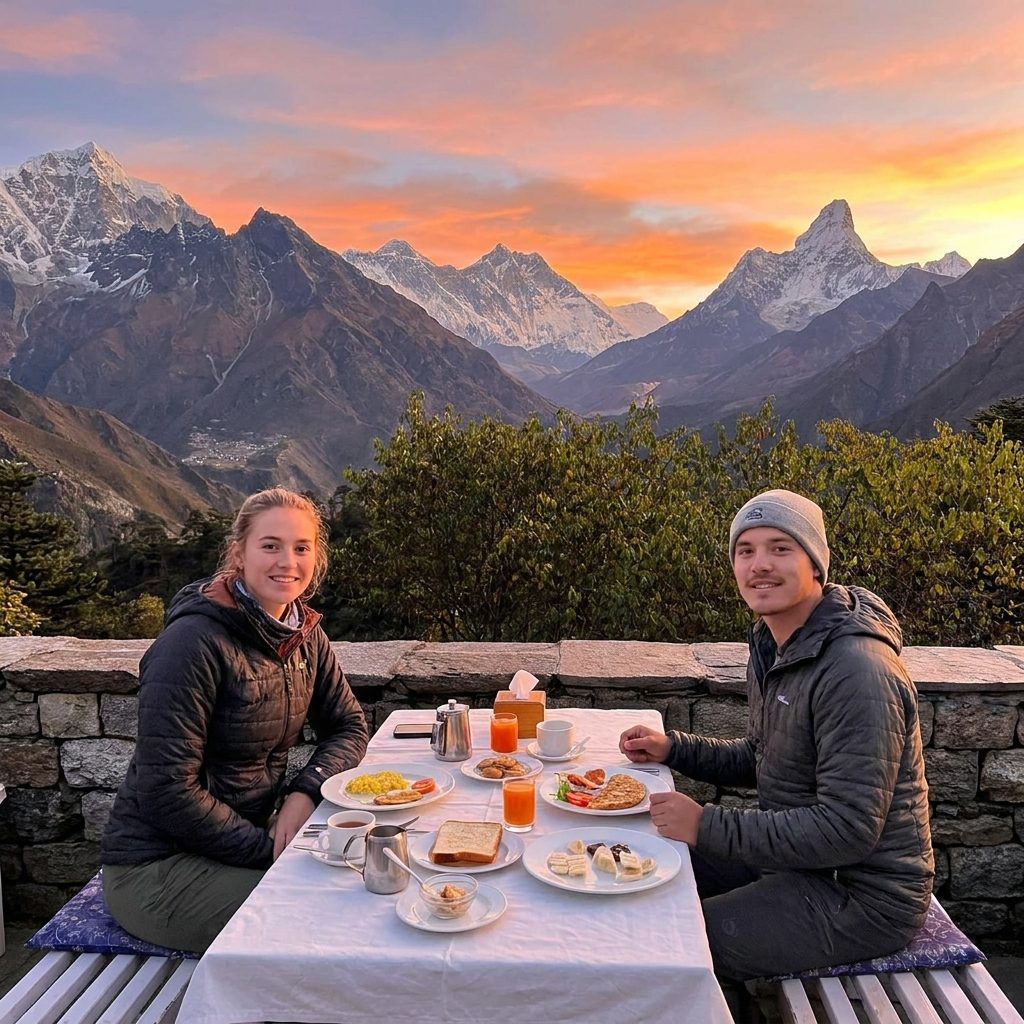
What sets the hotel apart isn’t opulence in the conventional five-star sense. It’s the setting. Every room is oriented so that guests wake up facing the mountains rather than a hallway or courtyard. From the terrace and dining room, an uninterrupted panorama unfolds: Everest itself rising in the distance, flanked by Lhotse, Nuptse, Ama Dablam, and Thamserku. On a clear morning, the first light hits these summits in shades of pink and gold before the valley below has even woken up — a sight seasoned trekkers describe as one of the finest sunrises in the entire Himalaya.
The hotel sits within Sagarmatha National Park, a UNESCO World Heritage Site, which means the surrounding forest, wildlife, and Sherpa villages are protected and largely unchanged from decades past.
Where It Is and Why the Location Matters
Syangboche is a small plateau just above Namche Bazaar, the unofficial capital of the Sherpa homeland and the last major trading hub before trekkers head deeper into the Khumbu toward Everest Base Camp. Namche itself sits at around3,440 meters, and the climb up to Syangboche and the hotel adds a few hundred more meters of elevation — enough to offer a wider, unobstructed view of the high peaks that Namche’s surrounding ridgelines otherwise block.
This positioning is what makes the hotel such a popular add-on for trekkers doing the classic acclimatization hike out of Namche. Rather than simply walking up to a viewpoint and back down, guests can turn that short excursion into an overnight experience, trading a teahouse bed in Namche for a night with a direct mountain view.
How to Reach the Hotel: Trekking vs. Helicopter
There are two realistic ways to reach Hotel Everest View, and the right one depends on your budget, timeline, and appetite for walking at altitude.
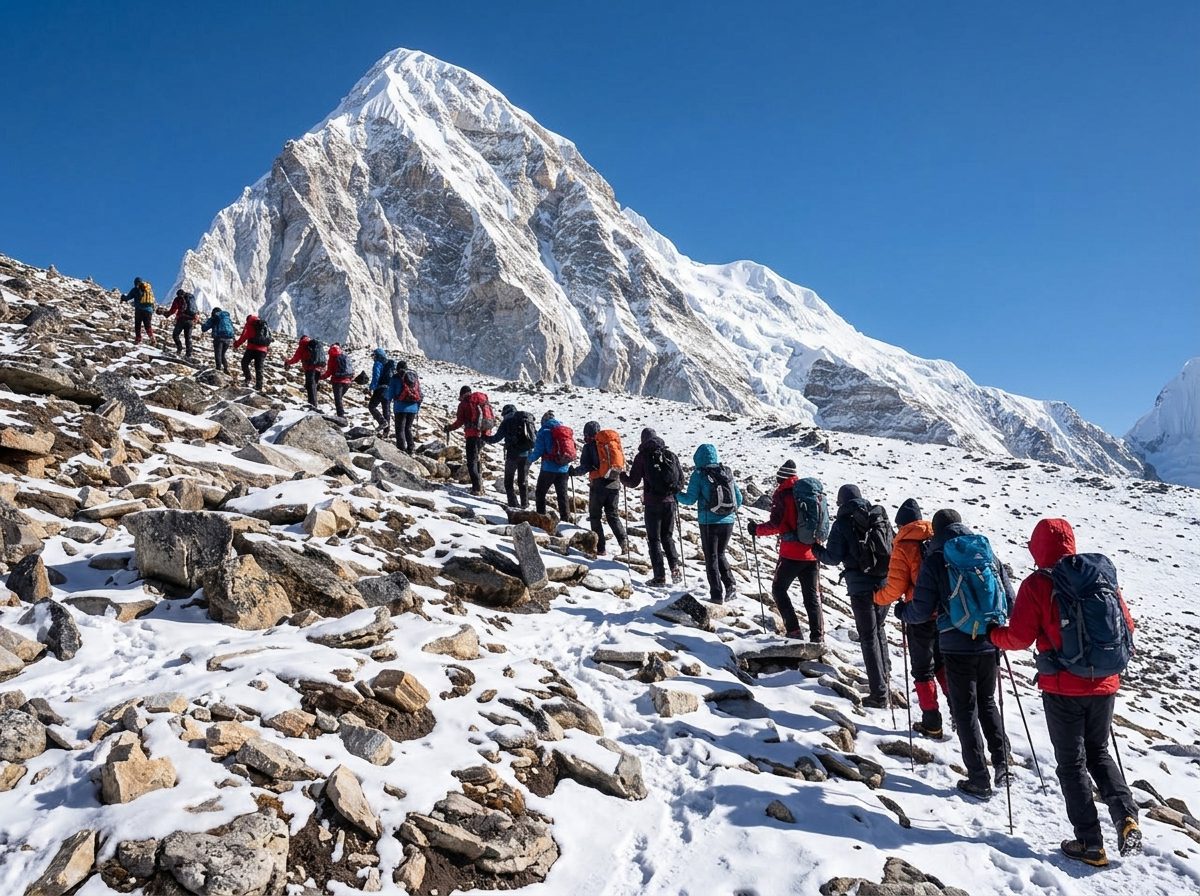
By trek (the classic route). Most visitors arrive as part of a broader Everest region trek. The standard sequence looks like this: fly from Kathmandu to Lukla’s Tenzing–Hillary Airport, trek to Phakding on day one, continue to Namche Bazaar on day two (a demanding climb on stone steps through pine forest), then take a shorter uphill walk of two to three hours from Namche to Syangboche on day three. This route lets you properly acclimatize, pass through Sherpa villages like Monjo and Jorsale, and cross the Dudh Koshi River on the region’s iconic suspension bridges before ever reaching the hotel.
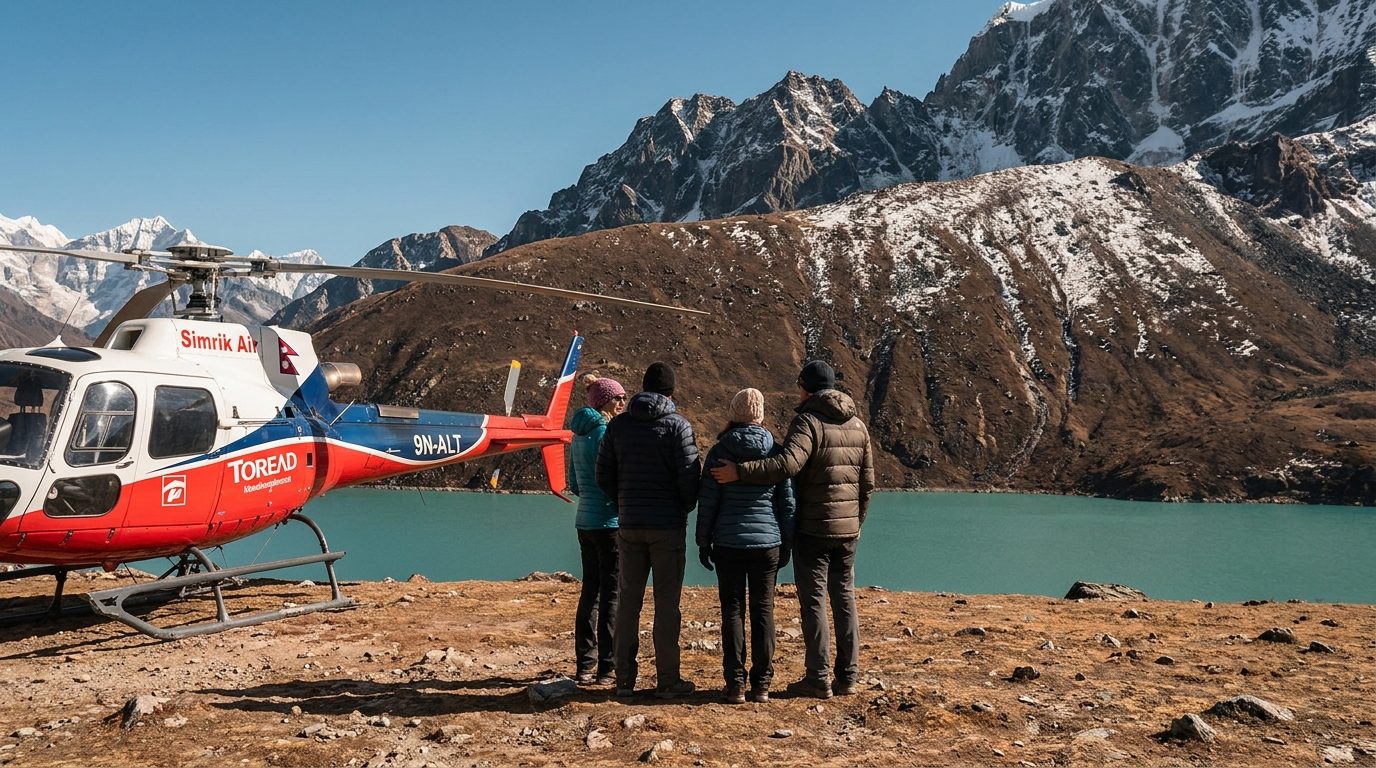
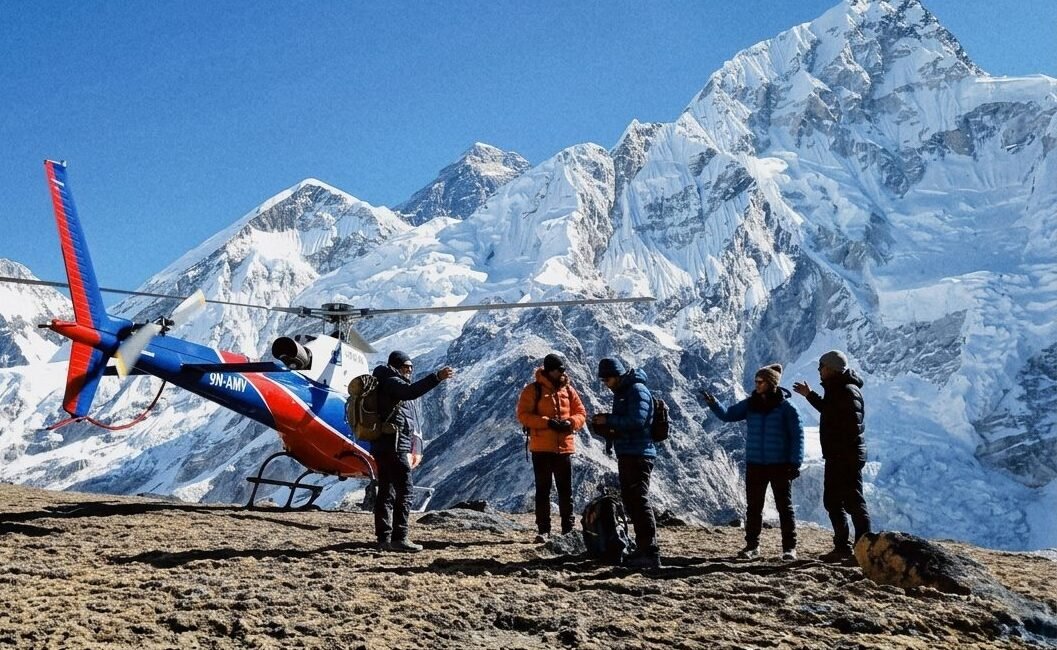
By helicopter (the fast-track route). For travelers short on time, unable to trek at altitude, or simply looking for a more comfortable experience, a helicopter tour is a popular alternative. Charter flights can run direct from Kathmandu to Syangboche, or connect via Lukla to keep costs down. Some tours combine a scenic flyover of Everest Base Camp and a touchdown at Kala Patthar (5,644 meters) with breakfast or lunch at the hotel afterward — effectively compressing what would be a two-week trek into a single unforgettable day, with an overnight stay layered on top for those who want to linger.
A hybrid approach is also common: trek in through the Khumbu at a comfortable pace, then fly out from Syangboche or Lukla to skip the return walk.
A Typical Overnight Tour Itinerary
While operators tailor the specifics, most Hotel Everest View overnight packages, including those run by Adventure Master Treks, follow a rhythm close to this:
Day 1 — Arrival in Kathmandu. Fly into Tribhuvan International Airport, transfer to your hotel, and use the afternoon for a briefing and last-minute gear checks. Many travelers combine this with a short city tour of Kathmandu Durbar Square, one of the valley’s UNESCO-listed heritage sites.
Day 2 — Fly to Lukla, trek to Phakding. An early flight takes you into the mountains proper. The approach into Lukla’s short, angled runway is itself a highlight for many first-timers. From here, a gentle three-to-four-hour walk follows the Dudh Koshi River down to the village of Phakding, where you spend the night.
Day 3 — Phakding to Namche Bazaar. This is the longest and most demanding walking day of the trip, six to seven hours through pine forest, past multiple suspension bridges, and finishing with a steep climb into Namche Bazaar, the horseshoe-shaped Sherpa trading town that serves as the gateway to the high Khumbu.
Day 4 — Namche to Hotel Everest View. After breakfast, and often a stop at the Sagarmatha National Park museum along the way, you make the two-to-three-hour climb up to Syangboche. Many itineraries build in a detour to Khumjung village, home to the Edmund Hillary School and Khumjung Monastery, before continuing to the hotel for check-in, lunch, and an afternoon of pure mountain-gazing. This is the night you’ve been building toward — sunset drinks on the terrace, an early dinner, and an early bedtime so you don’t miss sunrise.
Day 5 — Sunrise and return. Most guests wake before dawn to watch first light strike Everest, Lhotse, and Ama Dablam from the terrace or their room window. After a leisurely breakfast, the group retraces the route back down to Namche, and either continues the return trek to Lukla or connects with a helicopter transfer.
Shorter four-day versions of this itinerary exist for those tight on time, and longer versions extend further into the Khumbu — toward Tengboche Monastery, Dingboche, or even Everest Base Camp itself — before looping back through Syangboche on the way out.
What to Expect at the Hotel
Hotel Everest View is deliberately small, with around a dozen rooms, each designed to maximize the view rather than square footage. Don’t expect the scale or amenity list of a five-star hotel in Kathmandu; what you’re paying for is the setting, not marble bathrooms. Rooms are heated, comfortable, and warmly furnished, but this is still a remote mountain lodge at nearly 3,900 meters, supplied largely by porters and the occasional helicopter drop.
The dining room and outdoor terrace are the heart of the experience. Meals are simple but well prepared, and the outdoor seating area is where most guests spend their free hours, coffee or tea in hand, watching cloud patterns shift across the peaks. Because oxygen levels here are meaningfully lower than at sea level, the hotel keeps supplementary oxygen on hand for guests who need it, and staff are experienced in monitoring for altitude-related discomfort.
Given the small room count, this is not a spontaneous stop. Trekking operators consistently note that rooms sell out well in advance during the main spring and autumn seasons, so an overnight stay needs to be booked as part of your itinerary rather than decided on the trail.
Best Time of Year to Go
The Everest region has two prime trekking windows, and they apply just as much to a Hotel Everest View overnight tour as to a full Everest Base Camp trek:
- Spring (March–May): Warming temperatures, blooming rhododendron forests on the lower trails, and generally stable weather make this the most popular season. Rhododendrons in full bloom along the Namche–Syangboche corridor are a particular highlight.
- Autumn (late September–November): Widely considered the clearest and most reliable window for mountain views, with crisp air and minimal cloud cover — ideal conditions for the sunrise-over-Everest moment the hotel is famous for.
Winter (December–February) sees far fewer visitors and colder nights, but clear skies can still deliver spectacular views for those prepared for the cold. Monsoon season (June–August) brings frequent cloud cover and rain, which can obscure the very views you’ve traveled for, and increases the risk of flight delays into Lukla.
Altitude and Acclimatization
At around 3,880 meters, altitude is a genuine consideration, even for a short overnight stay. This is roughly the same elevation as many Everest Base Camp trekkers reach only after several days of gradual ascent, and it’s higher than most first-time visitors will have experienced.
The good news is that the standard trekking itinerary builds in a night in Namche Bazaar (3,440 meters) before the push up to Syangboche, which gives your body a head start on adjusting. If you’re flying in directly by helicopter without this buffer, pay close attention to how you feel: headache, nausea, dizziness, or unusual shortness of breath are signs to mention to your guide or hotel staff immediately. Staying hydrated, avoiding alcohol on the day of ascent, and pacing your walking speed all help. Given the hotel’s remoteness, anyone with underlying heart or lung conditions should consult a doctor before booking, and travel insurance that explicitly covers high-altitude trekking and emergency helicopter evacuation is strongly recommended.
What to Pack
Because temperatures swing sharply between daytime sun and nighttime cold at this elevation, layering is essential:
- A warm down jacket and insulated layers for evenings, which can drop well below freezing outside peak season
- A breathable mid-layer and moisture-wicking base layers for daytime walking
- Sturdy, broken-in trekking boots if you’re arriving on foot
- A sun hat, sunglasses, and high-SPF sunscreen — UV exposure at this altitude is intense even on cool days
- A headlamp for the pre-dawn walk to the viewpoint if sunrise viewing isn’t right outside your window
- A basic first-aid kit including altitude sickness medication such as acetazolamide, discussed with your doctor beforehand
- A camera or phone with a spare battery — cold drains batteries fast, and you will want it charged for sunrise
Costs and Booking Considerations
Pricing varies considerably depending on how you reach the hotel. A trek-based itinerary that includes flights to and from Lukla, guides, porters, teahouse accommodation for the trekking nights, and one night at Hotel Everest View will typically cost less overall than a helicopter-based tour, but takes several additional days. Helicopter tours that combine an Everest Base Camp flyover, a Kala Patthar touchdown, and an overnight at the hotel command a significant premium for the time saved, and pricing is usually quoted per person based on group size, since helicopter charters are more economical when shared.
Because the hotel has so few rooms, most operators recommend booking at least a few months ahead for the spring and autumn seasons. It’s also worth asking your operator directly whether the overnight stay is guaranteed in your package or offered as an optional add-on subject to availability — some itineraries only confirm the room once the trek is underway.
Is the Overnight Tour Worth It?
For travelers who want the visual reward of the Everest region without the physical demands of a full expedition to Base Camp, an overnight at Hotel Everest View delivers something genuinely rare: an unhurried, close-up encounter with the world’s highest peaks, from a warm bed rather than a tent. It suits first-time trekkers easing into high altitude, older travelers or families who want the Himalaya experience without weeks on the trail, and even seasoned trekkers looking for a comfortable capstone to a longer Khumbu itinerary.
It isn’t a shortcut to Everest Base Camp itself, and it won’t replace the sense of achievement that comes with a multi-week expedition. But as a standalone experience — waking up to sunrise on Everest after a good night’s sleep — it’s hard to match anywhere else in the world.
If you’re planning a trip to the Khumbu and want to build in a night at Hotel Everest View, reach out to our team at Adventure Master Treks. With years of experience guiding trekkers and helicopter guests through the Everest region, we can tailor the trekking or helicopter itinerary around your fitness level, timeline, and travel dates, and help lock in a room before the season books out.
Comments (0)
Write a comment- What Makes Hotel Everest View So Special
- Where It Is and Why the Location Matters
- How to Reach the Hotel: Trekking vs. Helicopter
- A Typical Overnight Tour Itinerary
- What to Expect at the Hotel
- Best Time of Year to Go
- Altitude and Acclimatization
- What to Pack
- Costs and Booking Considerations
- Is the Overnight Tour Worth It?
Read the latest Blogs & Insights
Explore our collection of articles and insights to gain in-depth travel knowledge, expert advice, and stay updated on the latest trends and tips.


No comments yet.