








Best Trek for the Everest Region: A Complete Comparison Guide
The Everest region offers a range of treks for different fitness levels, timeframes, and adventure goals. From the classic Everest Base Camp Trek to the challenging Three Passes Trek and scenic Gokyo Valley Trek, this guide compares the best options based on difficulty, duration, altitude, scenery, and overall experience to help you choose the right Everest trek.
-
 Adventure Master Trek
-
9 October, 2026
-
12 mins read
-
4 Views
-
0 Comments


“Everest trek” gets used like it’s one thing, but it isn’t. The Khumbu is a whole mountain kingdom with half a dozen genuinely different routes through it, and which one is “best” really depends on how much time you’ve got, how fit you are, and what you actually want out of the trip — a bucket-list photo at Base Camp, the quietest possible trail, or the hardest thing you’ve ever done on foot.
Here’s an honest breakdown of every major option, so you can pick the right one instead of the first one you saw on Instagram.
Classic Everest Base Camp Trek
Best for: First-time high-altitude trekkers, anyone who wants the iconic, tested route Difficulty: Moderate to challenging Duration: 12–14 days from Kathmandu Max altitude: 5,545m (Kala Patthar)
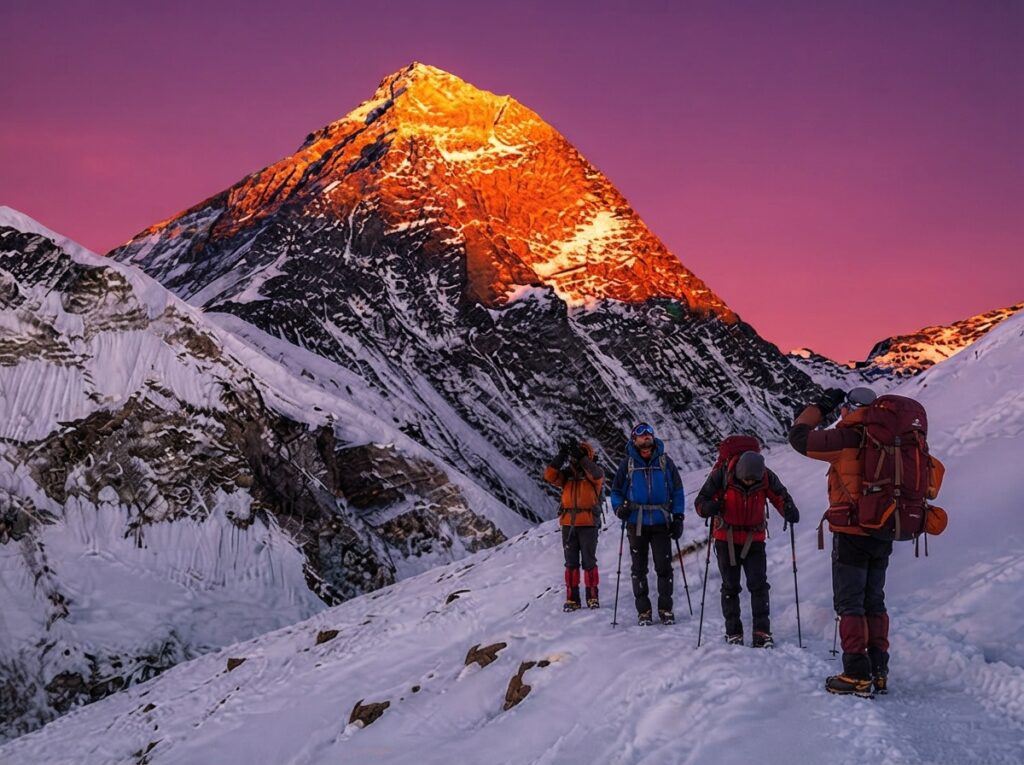
This is the one everyone means when they say “the Everest trek,” and there’s a reason it’s the most popular route in Nepal. You fly into Lukla, follow the Dudh Koshi valley up through Namche Bazaar, Tengboche, Dingboche, and Lobuche, and finish at Everest Base Camp itself before climbing Kala Patthar for the classic Everest panorama — Base Camp doesn’t actually offer a clean view of the summit, which surprises a lot of first-timers, but Kala Patthar does.
What you’re signing up for: well-maintained trails, the most developed teahouse infrastructure in the region (hot showers, wifi, bakeries in places like Namche), and a genuinely gradual ascent that gives your body time to acclimatize properly. The tradeoff is crowds. This is Nepal’s most trekked route by a wide margin, and during peak season you will be sharing the trail, the lodges, and the sunrise view at Kala Patthar with a lot of other people. For some trekkers that’s part of the fun — a shared sense of achievement with people from all over the world. For others, it’s the exact thing they’d rather avoid.
If this is your first time trekking above 4,000 meters, or you just want the most reliable, well-supported version of “I stood at Everest Base Camp,” this is genuinely still the right call. Don’t let the crowds put you off it if it’s the experience you actually want.
Gokyo Lakes Trek
Best for: Trekkers who want Everest-region views without EBC’s crowds, photographers Difficulty: Moderate, leaning demanding Duration: 12–14 days Max altitude: 5,357–5,360m (Gokyo Ri)
If you’ve done a bit of research, you’ve probably seen people say the Gokyo Ri sunrise is actually better than Kala Patthar. That’s not hyperbole — a lot of experienced trekkers genuinely believe it, and the reasoning holds up. From the summit of Gokyo Ri you get four 8,000-meter peaks in a single panorama — Everest, Lhotse, Makalu, and Cho Oyu — set against a chain of turquoise glacial lakes rather than the barren grey moraine that surrounds Kala Patthar.
The trail follows a similar early path to EBC through Namche, then splits off toward the Gokyo valley rather than continuing up the main Khumbu trail, which means it sees a fraction of the traffic. You’ll also pass alongside the Ngozumpa Glacier, the largest in the Nepal Himalaya, and get a genuinely quieter, more contemplative version of a Khumbu trek than the main EBC route offers.
The honest tradeoff: you don’t get to stand at Everest Base Camp itself, which matters to some trekkers more than others. If the actual base camp marker is non-negotiable for you, this isn’t the route. If you care more about the views and the atmosphere than the specific patch of glacial rubble you’re standing on, Gokyo is arguably the better trek, not just the quieter one.
EBC with Gokyo Lakes (via Cho La Pass)
Best for: Experienced trekkers who want both EBC and Gokyo without going all the way to Three Passes
Difficulty: Challenging
Duration: 15–18 days
Max altitude: 5,545m (Kala Patthar), plus Cho La Pass at 5,420m and Gokyo Ri at 5,360m
This is the trek that many seasoned Everest-region guides quietly recommend as the best all-around option, if you’ve got the time and fitness for it. You get both iconic viewpoints — Kala Patthar and Gokyo Ri — connected by a crossing of Cho La Pass, a genuinely demanding stretch involving a steep, boulder-strewn ascent and descent across glacier terrain, sometimes requiring microspikes in peak season.
The appeal is straightforward: you’re not choosing between EBC and Gokyo, you’re doing both, linked by one serious pass crossing rather than the three that the full Three Passes route demands. It’s meaningfully harder than either the standalone EBC or Gokyo route, and it adds real distance and days, but for trekkers who don’t want to leave the Khumbu wondering “what if I’d also seen Gokyo,” this is the trek that removes that question entirely.
This isn’t a beginner’s route. You should have some previous high-altitude experience, or at a minimum, excellent fitness and a realistic understanding of what a 5,400m glacier pass actually demands. But if you’re already leaning toward “I want to see everything,” this is often the better-value option than jumping straight to Three Passes.
Everest Three Passes Trek
Best for: Fit, experienced trekkers wanting the ultimate Khumbu challenge
Difficulty: Very strenuous
Duration: 17–21 days
Max altitude: 5,545m (Kala Patthar), with three passes above 5,300m — Kongma La (5,535m), Cho La (5,420m), and Renjo La (5,360m)
This is the big one, and it’s not for everyone, deliberately. The Three Passes route links together nearly everything the Khumbu has to offer — Base Camp, Kala Patthar, the full Gokyo valley and Gokyo Ri, and the remote Bhote Koshi valley — by crossing three separate high passes, each one above 5,300 meters. You’re not just reaching altitude once; you’re doing it three separate times, on rugged, occasionally icy terrain, with real exposure to fast-changing weather at each crossing.
Renjo La in particular gets singled out by a lot of veteran trekkers as maybe the single best viewpoint in all of Nepal — looking back over the Gokyo lakes toward Everest and Lhotse from above 5,300 meters is a genuinely different experience than any single-pass trek offers.
What this route demands in return: serious cumulative fatigue, real technical caution on the passes (nothing requiring ropes or climbing gear, but enough exposure and loose rock that inexperienced trekkers can get into trouble), and a strategic itinerary with proper buffer and acclimatization days built in around villages like Namche and Chhukung. This is not a trek to underestimate or rush. If you’re genuinely experienced at altitude, physically prepared, and you want the full, unfiltered version of the Khumbu rather than the highlight reel, this is the route that delivers it. If you’re newer to high-altitude trekking, it’s worth doing EBC or the Gokyo/Cho La combination first and coming back for this one once you know how your body handles serious altitude.
Jiri to Everest Base Camp (the classic overland route)
Best for: History lovers, trekkers avoiding Lukla flights, those wanting the deepest cultural experience
Difficulty: Moderate, long but not technically difficult
Duration: 18–20+ days
Max altitude: 5,545m (Kala Patthar)
Before Lukla airport existed, this was the only way in. Edmund Hillary and Tenzing Norgay’s 1953 expedition, along with every Everest attempt before the airport was built, started on foot from Jiri, a small hill town reachable by a long bus or jeep ride from Kathmandu. This route retraces that same approach — about a week of walking through the lower Solu region before joining the standard EBC trail near Lukla.
The appeal here isn’t speed, obviously — it’s everything the fly-in route skips. You pass through Rai and Sherpa villages that see a fraction of the EBC route’s tourist traffic, cross real mid-hill terrain and passes like Lamjura La (3,530m), and get a full, gradual transition from Nepal’s lower hills into proper high-altitude Khumbu terrain, rather than jumping straight to 2,860 meters off a 40-minute flight. It’s also the cheapest way to reach Base Camp in one meaningful sense: you skip the Lukla flight entirely, along with its cost and its very real chance of weather delay.
The honest tradeoff is time and physical demand. You’re adding roughly a week of walking, much of it through repeated steep ascents and descents in the mid-hills, before you’re anywhere near the “classic” part of the trek. It’s not technically harder than the standard EBC route once you’re on the main trail, but the cumulative distance and days make it a genuinely bigger undertaking. If you’ve got three-plus weeks and you’d rather earn your way into the Khumbu than fly into it, this is one of the most rewarding versions of the whole Everest experience — not a longer version of the same trip, but a different one entirely.
EBC Trek by Road (via Salleri or Phaplu)
Best for: Budget-conscious trekkers, anyone nervous about the Lukla flight
Difficulty: Moderate to challenging
Duration: 15 days from Kathmandu
A middle-ground option between flying straight to Lukla and walking the full Jiri classic route. You drive further in than Jiri — typically to Salleri or Phaplu — cutting several days of walking off the full overland approach while still avoiding the Lukla flight altogether, along with its cost and its notorious weather-cancellation record.
This route tends to fly under the radar compared to the fly-in and full-Jiri options, but it’s worth strong consideration if either the Lukla flight lottery makes you nervous, or you’d simply rather see more of rural Nepal’s hill country than a plane window allows, without committing to the full week-plus of extra walking that the classic Jiri route demands.
EBC with Helicopter Return
Best for: Travelers with limited time who still want the full uphill trekking experience
Difficulty: Moderate to challenging
Duration: 9–10 days
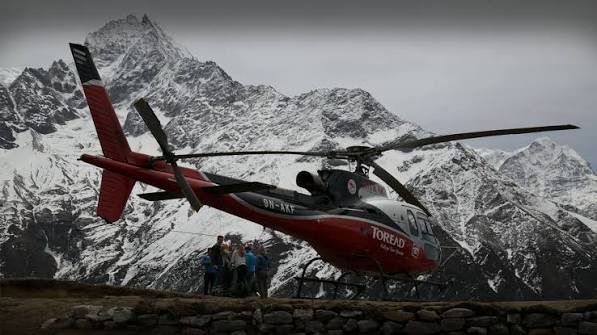
This one solves a specific, common problem: you want the real trek — the days of walking, the acclimatization, the villages, the sense of earning the destination — but you don’t have the two-plus weeks that a full round-trip on foot requires. The solution is straightforward: trek up the classic route exactly as normal, reach Base Camp and Kala Patthar the traditional way, then skip the multi-day walk back down by taking a helicopter from Gorak Shep to Lukla or straight to Kathmandu.
You don’t lose anything meaningful in terms of the actual experience — the descent is largely the same trail in reverse, so you’re not missing new scenery by skipping it. What you gain is days back, and by most accounts, an extraordinary aerial view of the Khumbu Icefall and the wider valley on the flight out that you simply don’t get any other way. For trekkers with a hard time constraint who still want the genuine trekking experience going up, this is consistently rated as one of the smartest options in the region.
Everest View Trek (the short option)
Best for: Travelers with very limited time, families, older trekkers, or anyone wanting a taste of the Khumbu without serious altitude commitment
Difficulty: Easy to moderate
Duration: 6–7 days
Max altitude: Around 3,880m (Everest View Hotel viewpoint)
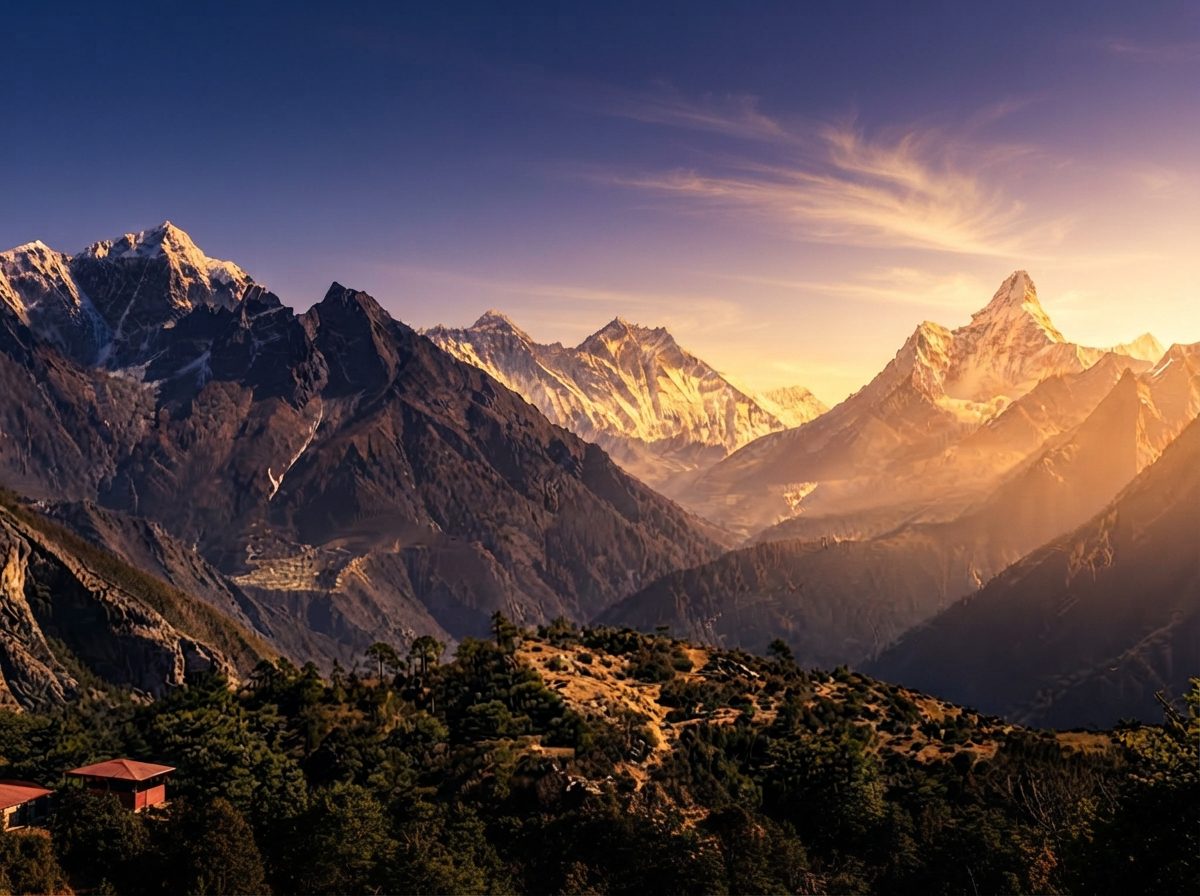
If two weeks simply isn’t in the cards, this shorter route gets you into the Khumbu, up to Namche Bazaar (3,440m), and on to the Everest View Hotel viewpoint (3,880m), where you get genuine views of Everest, Ama Dablam, and the surrounding peaks — all without going above 4,000 meters or committing to the full multi-week itinerary.
It’s not the full Everest Base Camp experience, and it doesn’t pretend to be. But for travelers with real time constraints, older trekkers, or families wanting a real taste of the Khumbu’s culture and scenery without the physical and time demands of the longer routes, this is a genuinely solid way to see the region rather than skipping it entirely.
Everest Base Camp Helicopter Tour (no trekking)
Best for: Families, older travelers, anyone with limited time or physical limitations
Duration: 1 day (roughly 4–5 hours of flying time)
For travelers who want to see Everest and the Khumbu without any trekking at all, a helicopter day tour flies from Kathmandu to Base Camp, lands at Kala Patthar for photos, and returns the same morning. You see Everest, Lhotse, Nuptse, and Ama Dablam from the air and, briefly, from the ground — all before lunch. It’s not a substitute for the trekking experience in any meaningful sense, but for people who genuinely can’t or don’t want to trek, it’s a legitimate way to still stand in the shadow of the world’s highest mountain.
So, Which One Is Actually Best?
Honestly, there isn’t a single right answer, and anyone who tells you there is hasn’t accounted for how differently people want to experience this region. That said, here’s a reasonable way to think it through:
If this is your first serious high-altitude trek and you want the most tested, well-supported version of the Everest experience, Classic EBC remains the right call, crowds and all.
If you care more about scenery and solitude than standing at the specific Base Camp marker, Gokyo Lakes is genuinely underrated and, by a lot of experienced trekkers’ accounts, delivers better views.
If you want both without going to full extremes, EBC with Gokyo via Cho La Pass is the trek a lot of veteran Khumbu guides quietly recommend as the best overall route for trekkers with the time and fitness to handle it.
If you’re an experienced, fit trekker who wants the complete, unfiltered Khumbu and doesn’t mind three weeks of real physical challenge, Three Passes is the ultimate version of this region, full stop.
If you’d rather walk into Everest country the way climbers did before the airport existed, and you’ve got three-plus weeks, Jiri to EBC offers something genuinely different, not just longer.
And if time, budget, fitness, or nerves about flying into Lukla are the real constraint, there’s a legitimate option built for exactly that — the road route, the helicopter return, the short Everest View trek, or the day-tour by air — and none of them are a lesser way to experience this part of the world. They’re just a different door into the same mountains.
Comments (0)
Write a comment- Classic Everest Base Camp Trek
- Gokyo Lakes Trek
- EBC with Gokyo Lakes (via Cho La Pass)
- Everest Three Passes Trek
- Jiri to Everest Base Camp (the classic overland route)
- EBC Trek by Road (via Salleri or Phaplu)
- EBC with Helicopter Return
- Everest View Trek (the short option)
- Everest Base Camp Helicopter Tour (no trekking)
- So, Which One Is Actually Best?
Read the latest Blogs & Insights
Explore our collection of articles and insights to gain in-depth travel knowledge, expert advice, and stay updated on the latest trends and tips.


No comments yet.