









How Much Does an Everest Base Camp to Lukla Helicopter Cost in 2026? Complete Price and Booking Guide
Planning to skip the long trek back from Everest Base Camp? This 2026 guide explains Everest Base Camp to Lukla helicopter prices, shared vs private flights, booking tips, baggage policies, flight duration, and how to secure the best value for your Himalayan return journey.
-
 Adventure Master Trek
-
30 July, 2026
-
10 mins read
-
486 Views
-
0 Comments


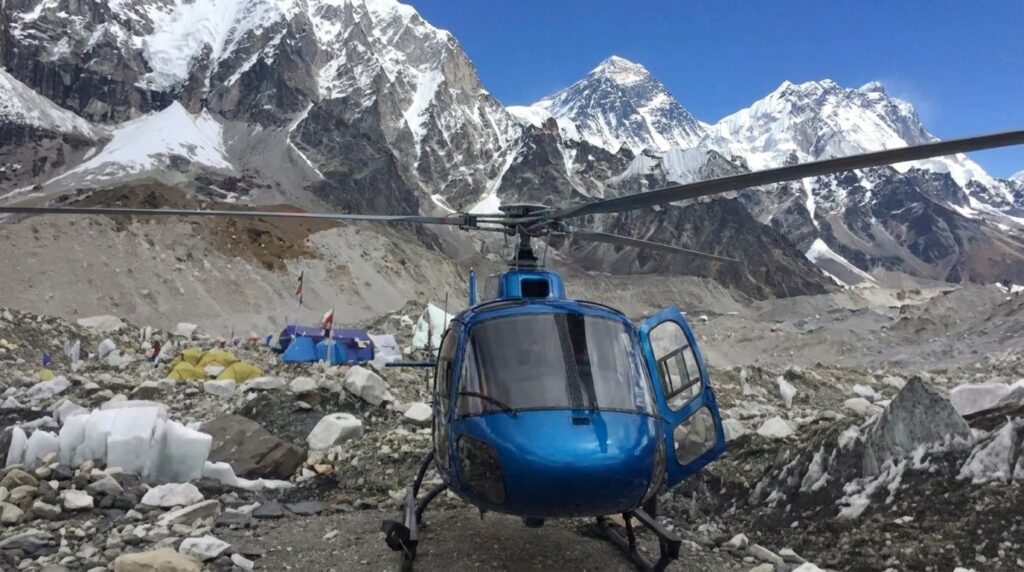
If you’ve been searching for “Everest Base Camp to Lukla helicopter cost,” there’s a small technicality worth clearing up before we get into numbers. There’s no airport, no helipad, nothing at Everest Base Camp itself. Base camp is a seasonal tent city on a glacier — nobody’s landing an aircraft there in any regular, bookable way. What people actually mean when they ask this question is the helicopter flight from Gorakshep, the last proper settlement on the trail, back down to Lukla. That’s the real transfer, and that’s what this guide is about.
It’s a small distinction, but it matters, because it explains a lot about how this whole system works — why prices are quoted the way they are, why weight limits show up constantly in the fine print, and why the flight itself feels so different from a normal domestic hop in Nepal.
So let’s get into it: what this actually costs in 2026, how the booking process works, what affects the price, and what to watch for before you hand over a deposit.
What You’re Actually Paying For
Every quote you’ll see for this route falls into one of two categories — shared seating or private charter — and the gap between them is significant.
Shared helicopter seats are the more affordable route, and they’re what most independent trekkers end up booking. You’re essentially buying one seat on a helicopter that’s making the Gorakshep-to-Lukla run anyway, splitting the total cost with other passengers. Current rates for this option generally fall between 590 and 750 dollars per person, with some operators pushing closer to 800 during the busiest weeks of spring and autumn.
Private charters give you the whole aircraft to yourself, on your own schedule, without waiting for other passengers to show up. For this route, that typically runs somewhere between 1,400 and 2,200 dollars total, depending on the operator, the exact aircraft, and how many people are in your own party.
Neither of these numbers is fixed in stone. Ask five different agencies for a quote on the same week and you’ll likely get five slightly different answers, because pricing here depends on a mix of factors that shift constantly — fuel costs, aircraft availability, demand, and weather all play a part.
Why the Weight Limit Keeps Coming Up
If you read enough about this route, you’ll notice almost every operator mentions weight restrictions, and it’s not just fine print — it genuinely shapes how your flight will go.
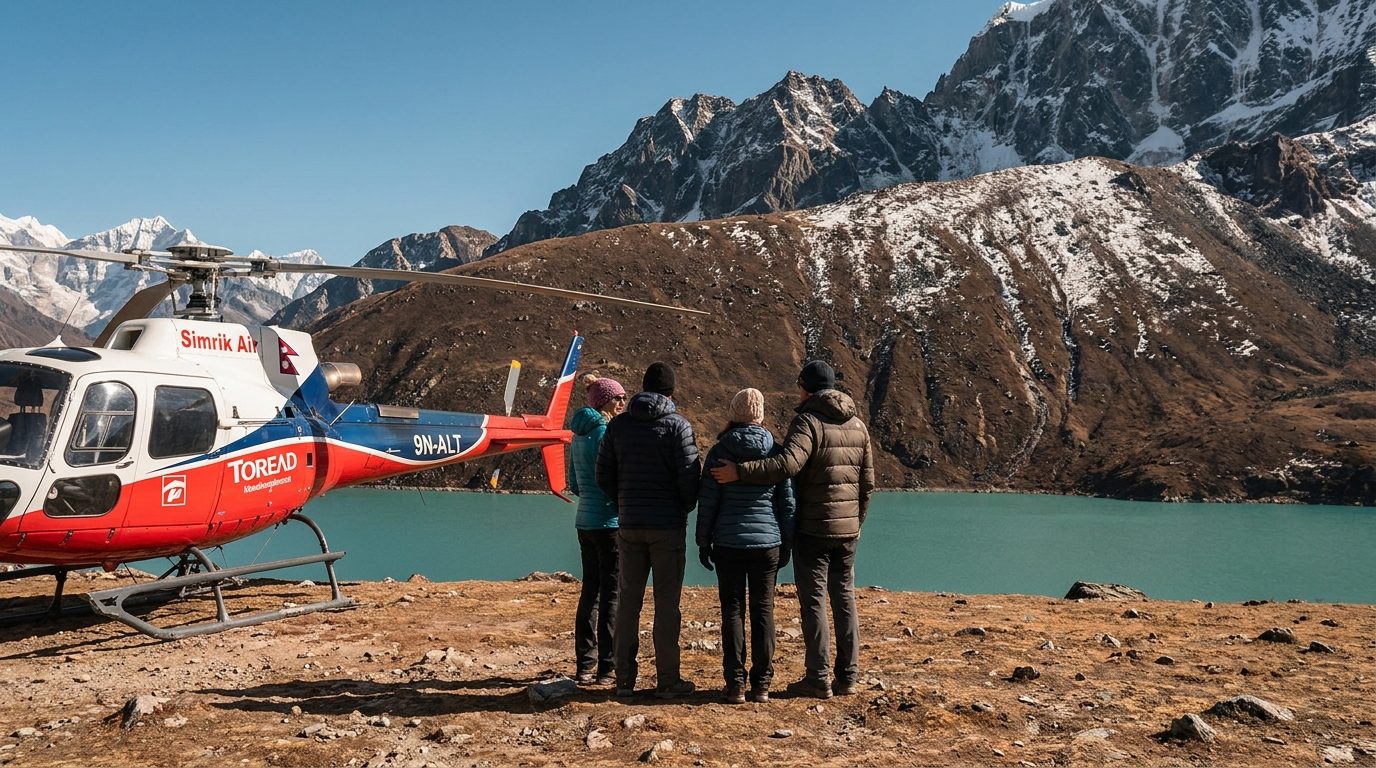
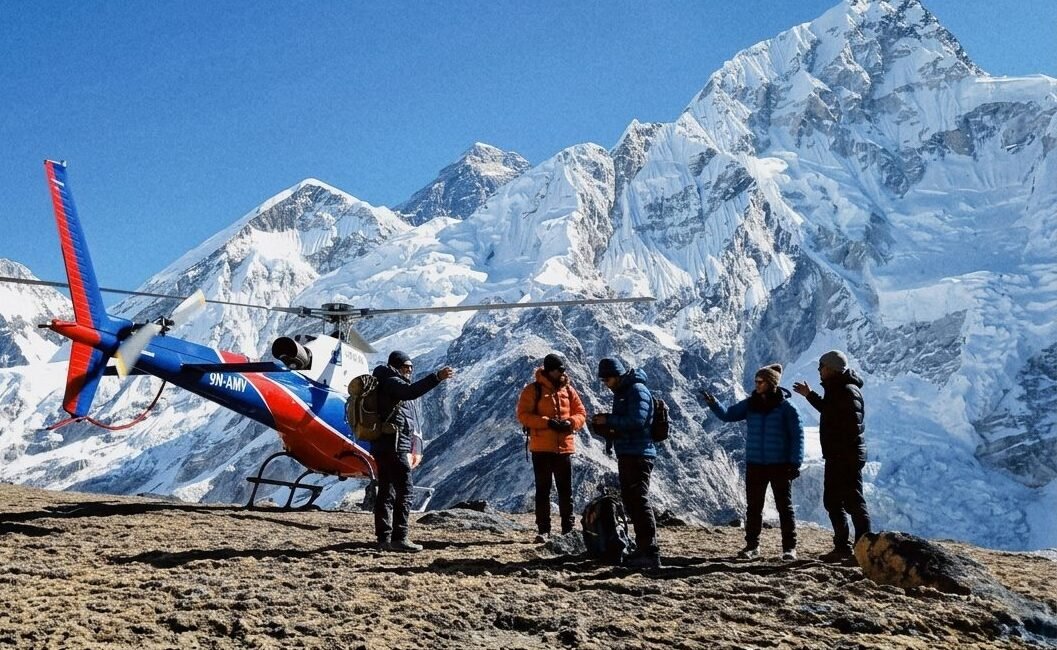
At Gorakshep’s altitude, above 5,000 meters, the air is thin enough that helicopters simply can’t lift the payload they’d manage at sea level. Most aircraft used on this route, commonly AS350-series helicopters, are technically rated for five passengers. In practice, from Gorakshep, they can usually only carry about two to three passengers plus luggage — somewhere around 220 kilograms combined — per single lift.
So what happens if your group has four or five people? The operator runs a shuttle. The helicopter takes the first two or three passengers from Gorakshep down to Pheriche, a lower village around 4,200 to 4,500 meters, where denser air makes lifting weight much less of a constraint. It then returns to Gorakshep for the rest of the group, brings them down to the same point, and finally carries everyone onward to Lukla together.
This isn’t a workaround some operators use and others don’t — it’s described as standard, non-negotiable practice across the industry, driven by basic physics rather than company policy. If you’re booking as a group of four or five, expect this shuttle pattern rather than a single, straight-through flight.
What Actually Moves the Price Up or Down
A few variables consistently show up across the operators offering this route, and understanding them helps explain why quotes vary as much as they do.
Season is probably the biggest factor. Spring (March through May) and autumn (September through November) are peak trekking months in the Khumbu, and demand for helicopters rises right alongside trekker numbers. Booking during these windows generally means higher prices and less flexibility on timing.
Group size matters just as much. A full shared flight of five passengers divides the total cost five ways; a private charter for two people splits the same total between just two, which is why solo travelers or couples often end up paying noticeably more per head than larger groups.
Fuel logistics also play a bigger role in this region than people expect. Lukla has no large-scale fuel production or refining infrastructure of its own, which pushes operating costs up across the board and gets reflected in ticket prices, particularly during periods when fuel supply is tighter.
And then there’s the one variable nobody can control: weather. Flights only go when visibility and wind conditions are considered safe, and delays or last-minute cancellations are a normal part of operating in this terrain — something worth planning around rather than being surprised by.
Booking: What the Process Actually Looks Like
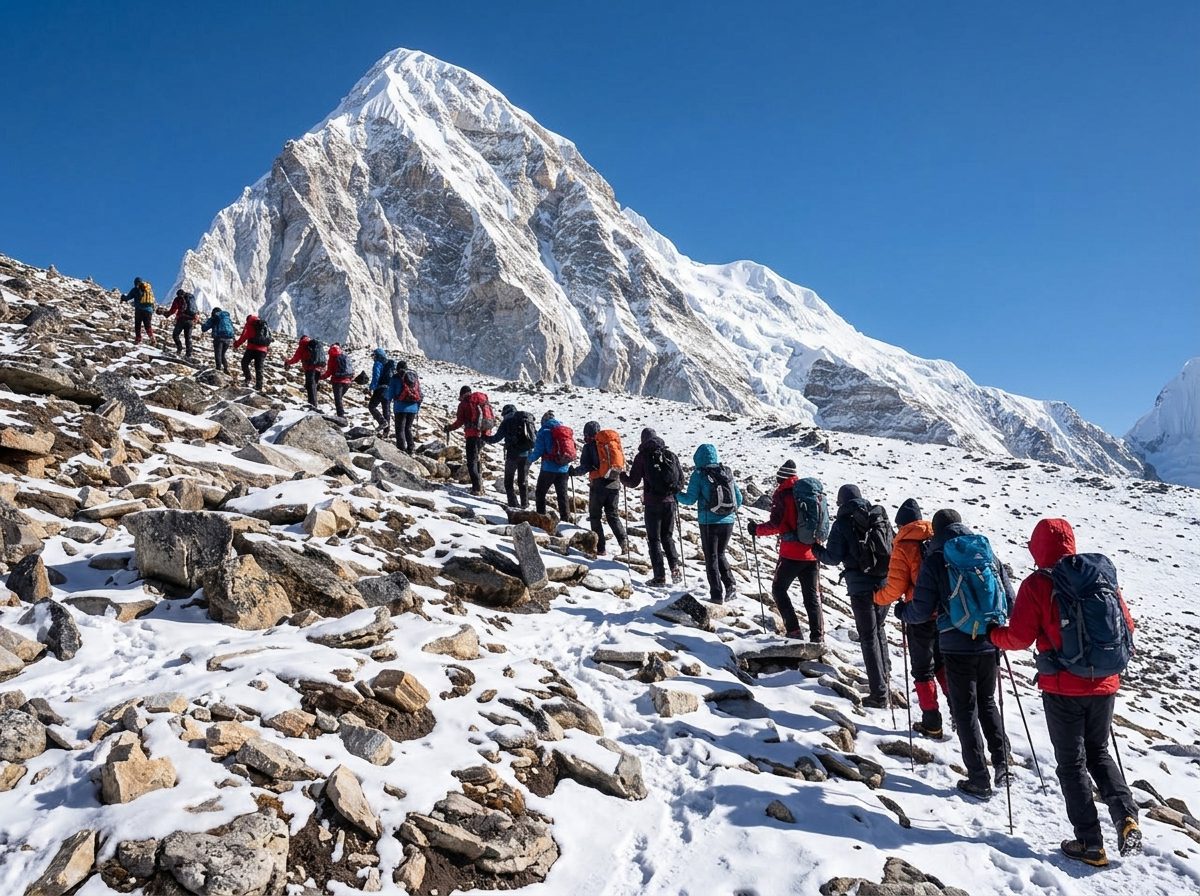
There are really two ways this gets arranged. The first is booking ahead of time, either directly with a helicopter operator or through a trekking agency handling your full Everest itinerary. Many agencies now build a “trek up, fly down” option directly into their EBC packages, where you complete the standard walk to base camp and Kala Patthar, then fly out from Gorakshep instead of retracing the trail.
The second way is deciding once you’re already in the region — at Gorakshep, or even a day or two before you arrive there. This is more common than you’d think, and it works reasonably well if you’re hoping to fill a shared seat rather than pay for a private charter. Your guide, or the lodge you’re staying at, will usually know which operators are flying that day and can help you get in touch. The tradeoff is that you might need to wait a day for enough passengers to fill a shared flight, so build in some slack if you’re going this route.
Whichever way you book, get the price confirmed in writing, and ask specifically what’s included. Some quotes cover only the flight itself; others bundle in things like a short scenic pass over Everest Base Camp before continuing to Lukla, usually for a modest extra charge.
Deposits, Cancellations, and the Insurance Question
This is the part people tend to skip past, and then regret skipping. Most operators and agencies working in this space ask for a deposit to hold your booking, with the balance due closer to the flight date, and cancellation policies generally scale with how much notice you give. Cancelling well in advance — commonly more than a month out — usually means a full or near-full refund minus a small administrative fee. Cancelling closer to the date, particularly within a week or two, often means losing a significant portion of what you’ve paid, since the operator may have already committed the aircraft and made non-refundable arrangements.
Weather-related cancellations are treated differently in most cases. If the operator cancels or delays your flight due to unsafe conditions, you’re generally looking at a reschedule rather than a lost payment, though the exact terms vary by company, so it’s worth reading the fine print before booking.
On the insurance side, this is genuinely not optional if you’re doing the EBC trek and considering a helicopter transfer, whether it’s a planned return flight or an emergency evacuation. Kala Patthar sits at 5,555 meters, and a standard travel insurance policy capped at 4,000 or 5,000 meters simply won’t cover you at that altitude. Emergency helicopter evacuations from the upper Khumbu, when they’re not pre-booked and instead happen due to illness or injury, typically cost somewhere between 3,000 and 6,000 dollars, and operators generally expect payment or a payment guarantee before they’ll dispatch. A policy that specifically covers high-altitude trekking up to at least 6,000 meters, including helicopter evacuation, is the baseline you should be arranging before you even leave home — not something to sort out once you’re already on the trail.
What the Flight Itself Is Like
Once you’re actually airborne, the technical side of things fades into the background pretty quickly. The Gorakshep-to-Lukla leg takes roughly 15 to 20 minutes in the air, following the same valley you walked through on your way up, just from a completely different angle. You’ll get close views of the Khumbu glacier, and depending on the exact route and conditions that day, sightings of Ama Dablam and Everest itself.
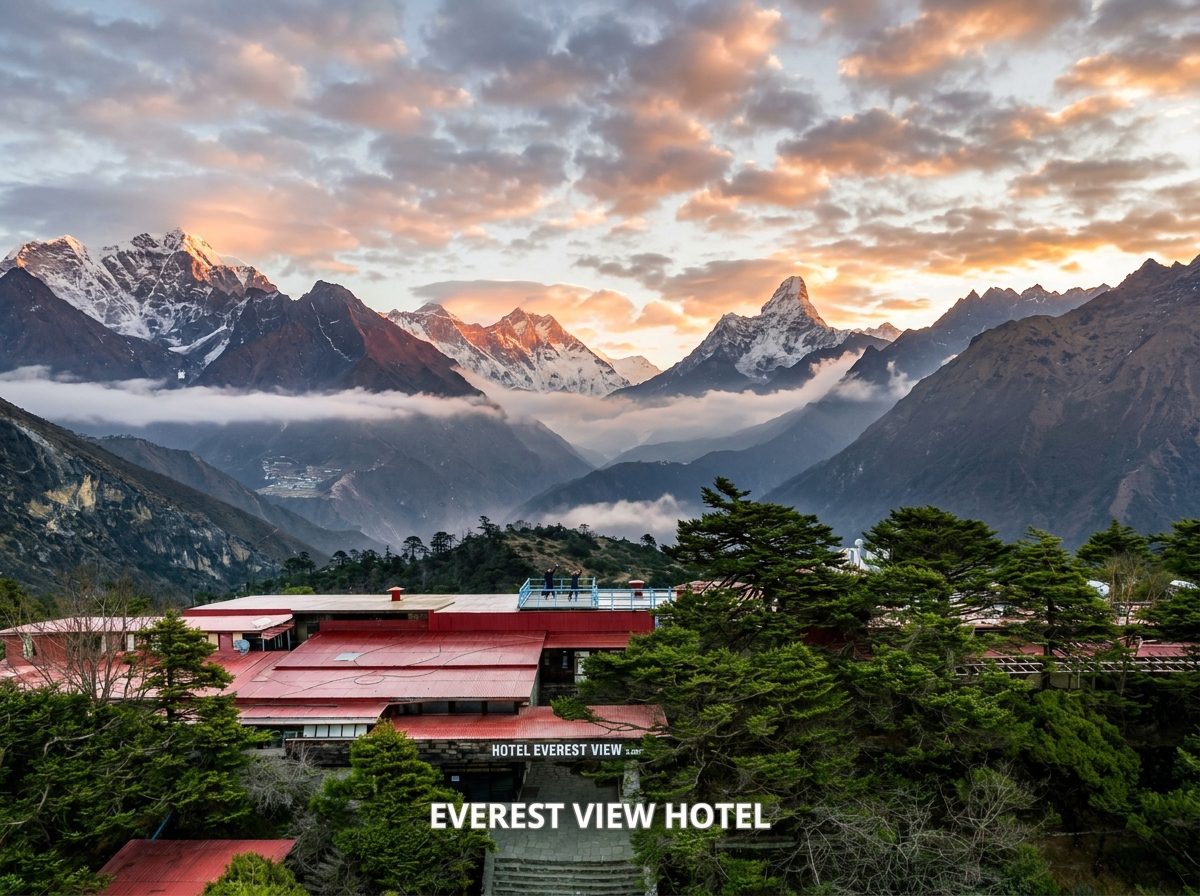
Mornings tend to offer the calmest winds and clearest visibility, which is why most flights are scheduled early. If you’re combining this with a longer helicopter tour — say, a full day trip from Kathmandu that includes a landing at Everest View Hotel for breakfast before continuing on — expect refueling stops at Lukla along the way, since the region’s helicopters typically can’t complete the full Kathmandu-to-Everest-and-back route on a single tank.
A Few Things People Usually Ask
Do prices differ if I’m flying in high season versus a quieter month? Yes, noticeably. Spring and autumn bring the heaviest trekking traffic, and helicopter demand rises with it, so expect quotes at the upper end of the ranges above during those windows. Booking in quieter months, like December through February or the summer monsoon period, sometimes opens up lower rates, though flight frequency and weather reliability drop too, so it’s a genuine tradeoff rather than a clear win.
Can I add a detour over Everest Base Camp itself, rather than just flying straight to Lukla? Often, yes. Several operators offer this as an add-on, flying a short loop near or over base camp before continuing on, usually for a modest extra fee on top of the base transfer price. It’s worth asking about specifically when you request a quote, since it isn’t always mentioned upfront.
What happens if the helicopter can’t fly on the day I’ve booked? This is genuinely common in the Khumbu, given how quickly weather changes at altitude. Most operators will simply reschedule you for the next available window rather than cancelling outright, though this depends on their specific policy and how flexible your own schedule is. It’s one more reason to avoid booking your flight out on the same day as an international departure from Kathmandu.
Is it cheaper to arrange the flight through my trekking agency or directly with a helicopter company? It can go either way. Agencies sometimes get bulk rates from operators they work with regularly, which occasionally gets passed on as a discount, but they may also add a coordination fee. Direct booking with the operator cuts out the middleman but means you’re handling logistics yourself, which is more manageable if you’re already fluent in how the region works or have a guide helping coordinate on the ground.
Is the Cost Worth It?
That’s really a personal calculation, but here’s the honest framing. If you’re comparing it to a scheduled Lukla-Kathmandu plane ticket, which runs somewhere around 170 to 200 dollars one-way, the Gorakshep-to-Lukla helicopter transfer is clearly a premium option, not a budget one. But it’s not really competing with that plane ticket — it’s competing with three or four extra days of walking back down a trail you’ve already covered once, at a point in your trip when most people are running low on both time and energy.
For trekkers with tight schedules, health concerns, or simply no interest in repeating the descent, the cost tends to feel justified fairly quickly, especially once the helicopter lifts off and the whole Khumbu valley opens up below. For those with more time and a tighter budget, walking back down remains completely free beyond the usual costs of food and lodging along the way, and it’s still a legitimate, rewarding way to end the trek.
Whichever way you decide, book through an operator or agency with a solid track record in the region, confirm your total cost and cancellation terms in writing, arrange proper high-altitude insurance well before you leave, and build at least one buffer day into your schedule around the flight. Mountain weather doesn’t negotiate, and in this part of the world, patience tends to be the most valuable thing you can pack.
Comments (0)
Write a commentRead the latest Blogs & Insights
Explore our collection of articles and insights to gain in-depth travel knowledge, expert advice, and stay updated on the latest trends and tips.


No comments yet.