









Kala Patthar Landing Helicopter Tour in Nepal: The Complete 2026 Guide
Discover the breathtaking Himalayas with a Kala Patthar landing helicopter tour in Nepal. Learn about prices, flight routes, landing experiences, and the best time to visit in 2026.
-
 Adventure Master Trek
-
22 October, 2026
-
12 mins read
-
6 Views
-
0 Comments


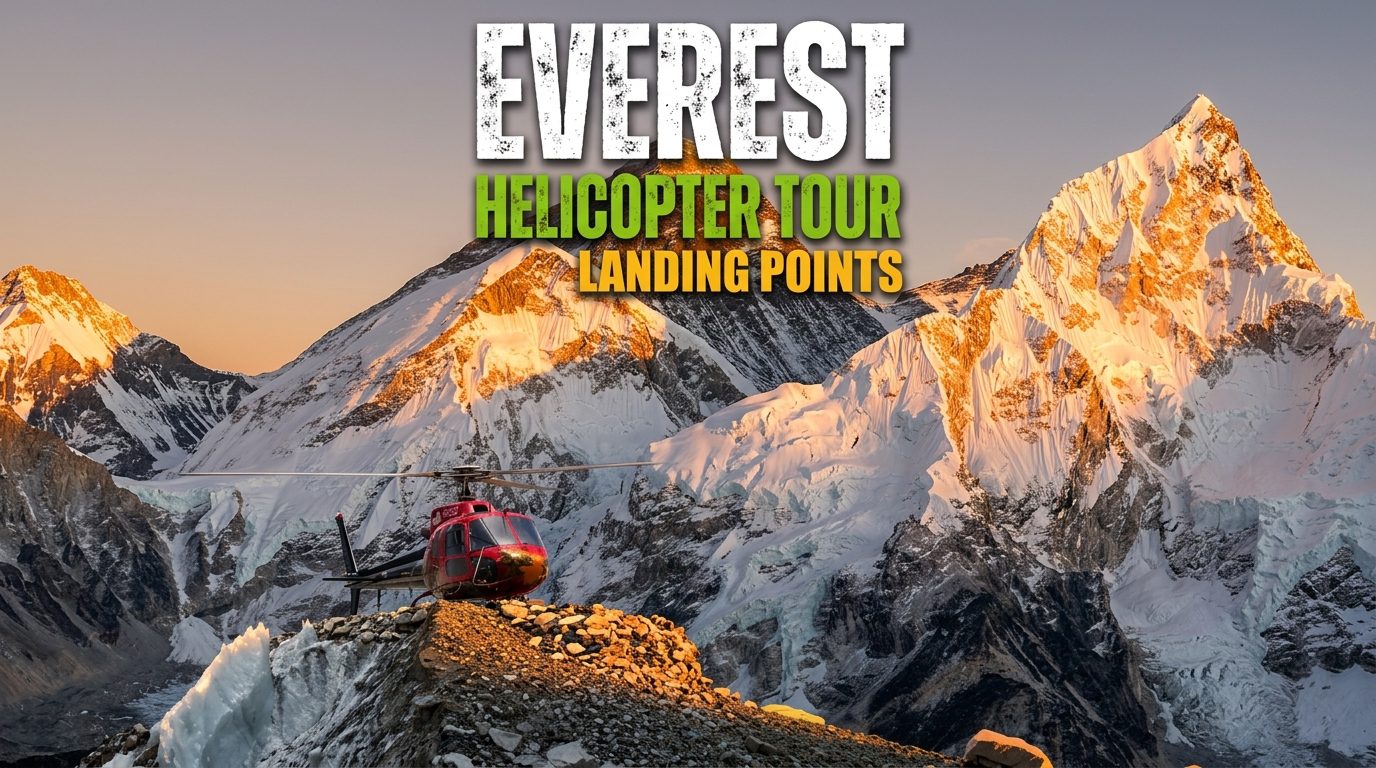
A Kala Patthar landing helicopter tour flies you from Kathmandu to 5,545 metres — the single best ground-level view of Everest on the planet — and returns you the same day, with no trekking, no permits beyond what the operator handles, and no two weeks out of your life.
- Tour duration: 4–5 hours total from Kathmandu
- Shared seat cost: 1,200–1,500 per person (2026)
- Private charter: 5,000–6,000 for up to 5 passengers
- Best season: October–November and March–May
- Minimum age: varies by operator; most accept 5+ years
Most people who want to see Everest assume it takes two weeks, a good pair of boots, and a body willing to spend several days at altitude before it stops complaining. That’s the trek. It’s worth it — but it isn’t the only way.
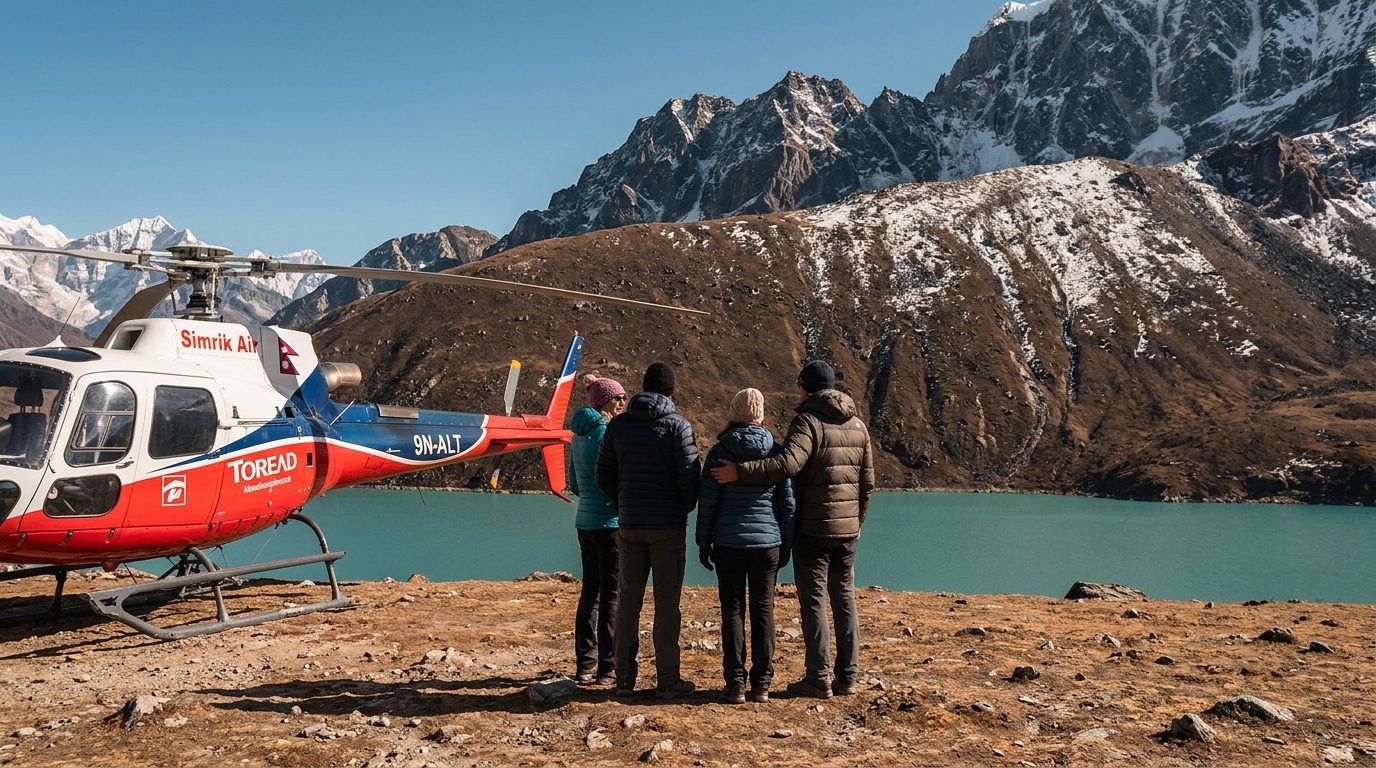
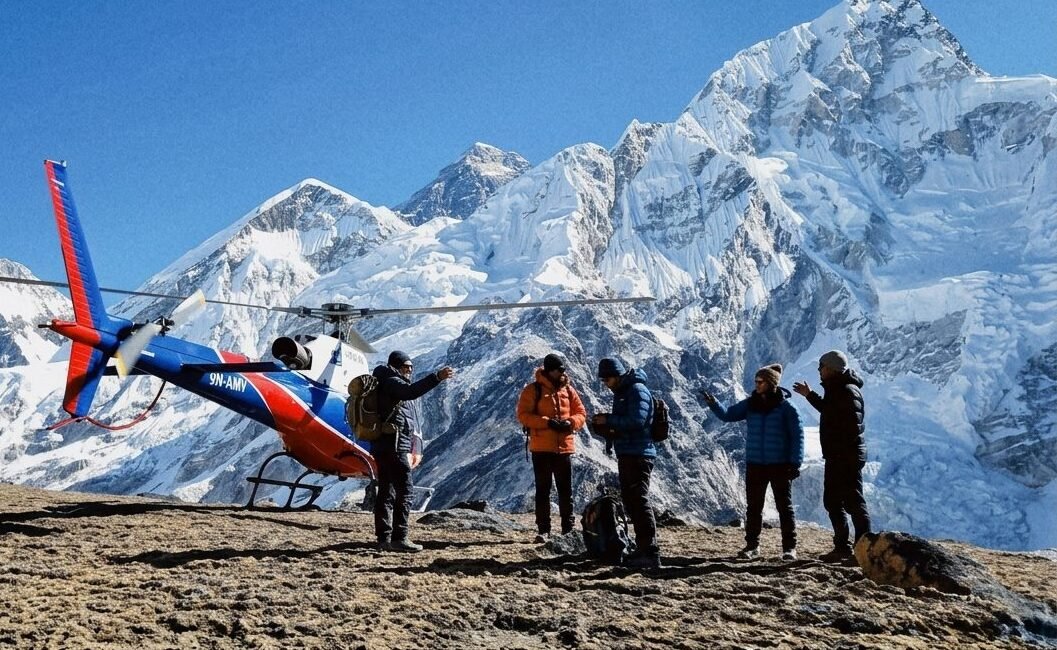
The Kala Patthar landing helicopter tour puts you on that same famous ridge at 5,545 metres — the one where every iconic photograph of Everest’s south face was taken — by breakfast. You land, you stand in front of the mountain, you take in what is genuinely one of the most arresting views on earth. Then you fly back.
No acclimatization schedule. No blisters. No comparing lodge food for ten days straight.
This guide covers everything you need to know before booking: what the tour actually involves, what it costs in 2026, what separates a safe operator from a risky one, and why the agency you choose matters more than almost any other decision you’ll make for this trip.
What Is the Kala Patthar Landing Helicopter Tour?
Kala Patthar — the name means “black rock” in Nepali — is a rocky peak at 5,545 metres on the ridge of Pumori, sitting directly across from Everest Base Camp. It is, without serious competition, the best accessible viewpoint of Everest’s southwest face in existence. The mountain fills the skyline. Lhotse rises to the right. The Khumbu Icefall pours down from the Western Cwm below the summit pyramid. On a clear morning, you can see all of it.
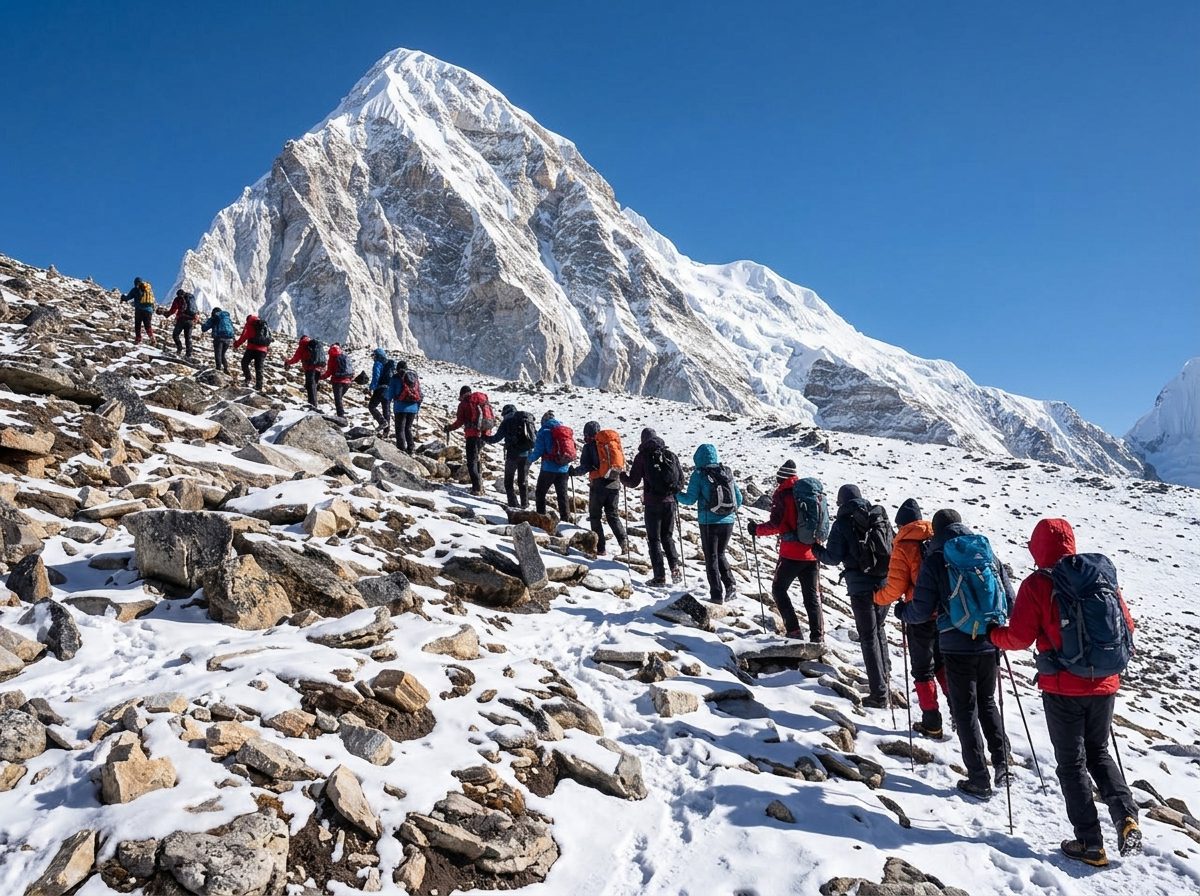
Trekkers who walk the full Everest Base Camp route typically reach Kala Patthar on day eleven or twelve, after careful acclimatization through the Khumbu valley. The helicopter tour compresses that journey into a single morning flight, trading the gradual climb for a fast ascent directly to the ridge.
The standard itinerary looks like this:
- Early morning departure from Kathmandu (usually 6–7am) — mornings offer the clearest air and the calmest winds over the Khumbu
- Refuelling stop at Lukla — most aircraft can’t complete the full Kathmandu–Khumbu–Kathmandu route on one tank
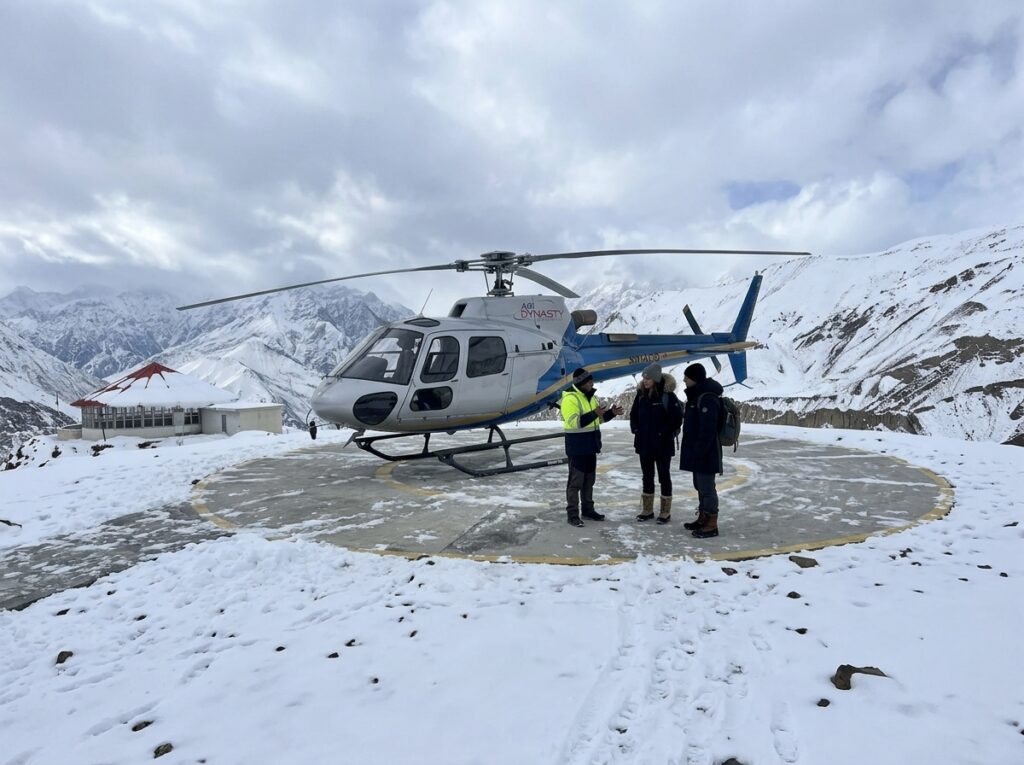
- Brief landing at Kala Patthar — typically 10 to 15 minutes on the ground; the helicopter engine stays running because it cannot be safely shut down and restarted at that altitude
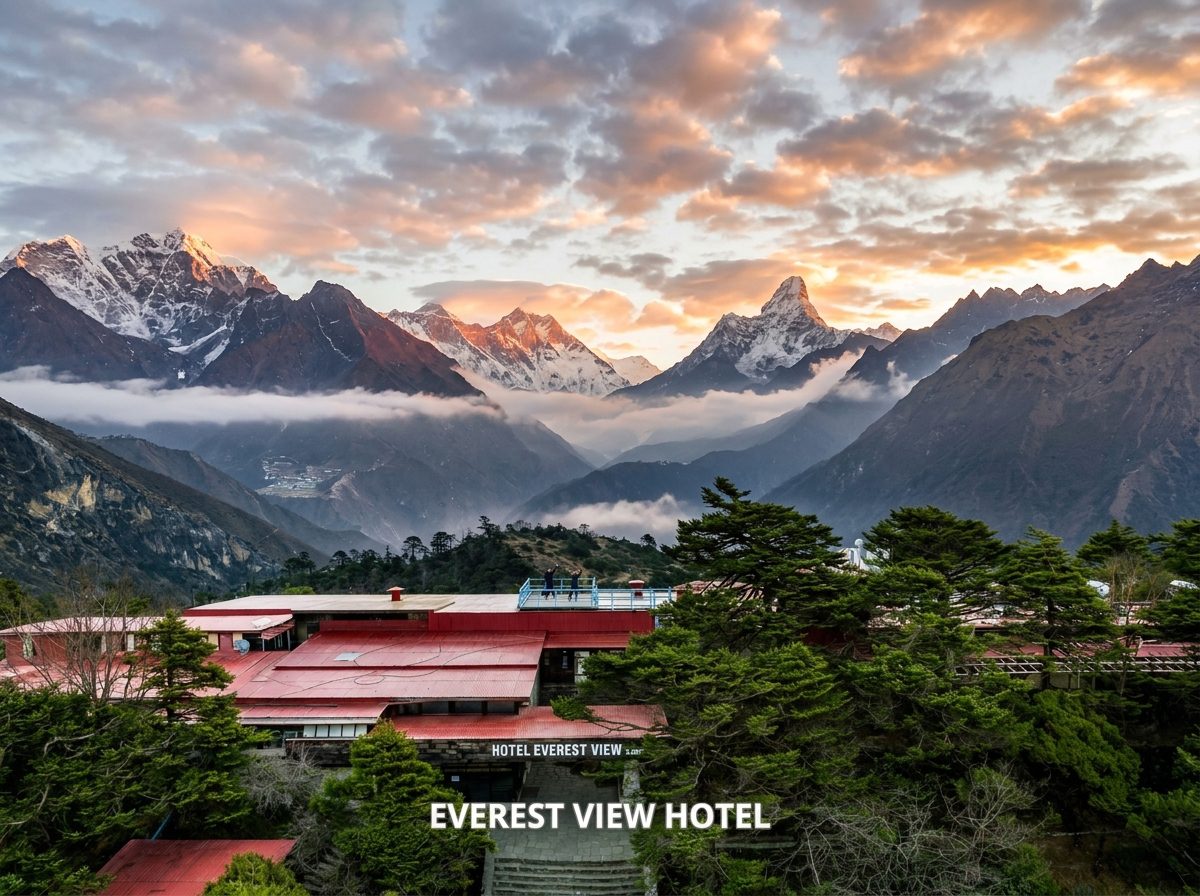
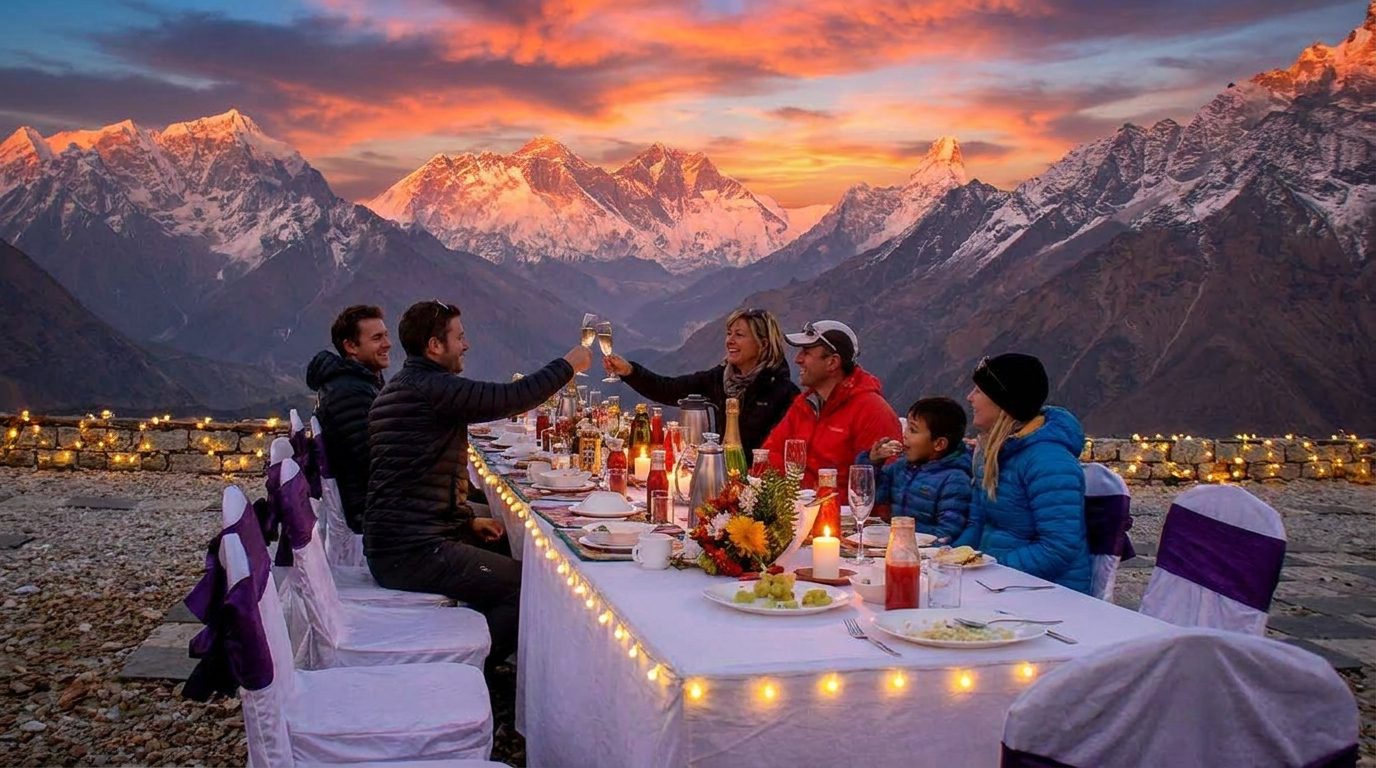
- Breakfast stop at Hotel Everest View, Syangboche (3,880m) — a longer stop, usually 45 minutes to an hour, for the meal and a gentler altitude experience
- Return flight to Kathmandu
Some operators offer a variation that includes a low pass over Everest Base Camp itself before landing at Kala Patthar — worth asking about when you request a quote, since it isn’t always mentioned upfront.
How Much Does a Kala Patthar Helicopter Tour Cost in 2026?
This is where most people start, so let’s be direct about it.
- Shared seat (group joining): 1,200–1,500 per person
- Private charter (full aircraft): 5,000–6,000 for up to 5 passengers
The shared rate is what you pay when the operator sells individual seats and combines you with other travelers on the same morning flight. It looks expensive compared to, say, a domestic flight to Pokhara. But compare it to the actual alternative — 12 to 14 days of trekking, flights to and from Lukla, permits, a licensed guide, teahouse accommodation, and meals — and the math looks different quickly.
Here’s something most booking sites won’t say clearly: for a group of four or five, a private charter can cost less per person than shared seats.
A 5,500 private charter split five ways is 1,100 per person. That’s below the shared seat floor. You get the same route, the same landing, the same views — and full control over your departure time, with no strangers to coordinate around.
For solo travelers or couples, shared is almost always the right call. For families or friend groups of four or five, run the math on private before you assume shared is cheaper.
What moves the price up or down:
- Season — Spring (March–May) and Autumn (October–November) are peak trekking periods; shared seats fill faster and some operators price higher during these windows. Book early.
- Fuel costs — Khumbu aviation fuel is flown or carried in; operating costs in this region are genuinely higher than standard domestic routes, and that’s reflected in every honest quote
- Add–ons — an Everest Base Camp flyover, extended Hotel Everest View stop, or custom route variations all affect the final price
- Operator type — the cheapest operator is not the same as the most affordable. The distinction matters here more than almost anywhere else in Nepal travel.
What Makes a Helicopter Tour Operator Actually Safe — and Why It Matters at This Altitude
Kala Patthar sits at 5,545 metres. That is above the summit of many of the world’s prominent peaks. The air is thin enough that helicopters cannot land, idle, and take off again repeatedly without serious consideration for weight limits, engine performance, and pilot judgment.
At Gorakshep and Kala Patthar — the staging and landing points for this route — rotor efficiency drops sharply compared to sea level. Most operators use AS350 B3 or B3e aircraft, one of the few helicopters with the power margin to operate reliably at this altitude. But even these aircraft have hard payload limits at 5,500 metres that simply don’t apply lower down.
A responsible operator treats these limits as physics, not policy. If your group of five is too heavy for a single lift from Kala Patthar, a good operator runs a shuttle rather than loading everyone aboard anyway. If morning weather is unflyable, a good operator waits rather than pushing through. If a passenger shows early signs of altitude distress during the Kala Patthar stop, a good crew cuts the ground time and descends.
None of this is dramatic. It’s just what the safest helicopter tour agencies in Nepal do as a matter of routine — and what separates them from operators who treat safety decisions as commercial inconveniences.
When you’re comparing operators, ask these questions directly:
- What aircraft type do you operate on this route, and what is its certified high-altitude service ceiling?
- How do you handle a group that exceeds payload limits at Kala Patthar?
- What is your weather cancellation and rescheduling policy?
- Are your pilots current on high-altitude mountain flying hours?
- Are your operations licensed and flight-plan filed with CAAN (Civil Aviation Authority of Nepal)?
A reputable operator answers all of these without hesitation. Vague answers, or answers that redirect to price, are worth noting.
Adventure Master Treks operates as one of the best heli tour agencies in Nepal specifically because our pilots have logged thousands of hours on Khumbu routes — not weekend mountain flying hours, but years of daily operations in this specific terrain, in every weather condition this valley produces.
Is the Kala Patthar Helicopter Tour Worth It Compared to the Full Trek?
Honestly? They’re not really competing.
The trek to Kala Patthar is one of the great walks on earth. Twelve days through the Khumbu, watching the landscape change from rhododendron forest to boulder and ice, spending time in Namche Bazaar, earning the altitude slowly. If you have the time and the body for it, the trek is irreplaceable.
The helicopter tour is something else. It’s not a lesser version of the trek. It’s a completely different relationship with the same mountain.
You are not earning Kala Patthar the way trekkers do. But you are standing in front of Everest, on the same ridge, at the same altitude, looking at the same southwest face. The view doesn’t change because of how you arrived.
For a retired traveler who spent thirty years telling themselves they’d see Everest one day. For a family where the children are too young for a twelve-day altitude trek. For someone rebuilding after illness can squeeze into a five-day Everest Trek between two other trips — the helicopter tour doesn’t make a compromise. It makes a different kind of experience possible.
That’s worth something. In many cases, it’s worth exactly 1,200 to 1,500.
How to Book the Most Affordable Helicopter Tour to Kala Patthar Without Cutting Corners
Most affordable does not mean cheapest. On this route — at this altitude, with these stakes — it means best value for what you actually get: a properly maintained aircraft, an experienced pilot, a smooth booking and rescheduling process, and an operator who answers your questions before and during the tour.
Here’s how to book well:
- Book through a registered Nepali operator, not an aggregator site. The operators actually running these flights have direct control over aircraft allocation and rescheduling. Aggregators add a middleman and often lack the flexibility to respond quickly when weather delays your flight.
- Confirm what’s included before paying a deposit. Standard inclusions should be: helicopter seat, fuel surcharge, hotel pickup, airport taxes, and Everest View Hotel breakfast. Non-inclusions: travel insurance, personal altitude medication, tips, souvenirs.
- Get the cancellation and rescheduling policy in writing. Mountain weather delays are normal, not exceptional. A good operator reschedules you without penalty if the flight is grounded by weather. Confirm this before you book, not after.
- Arrange travel insurance that covers high-altitude helicopter operations. Standard travel insurance often caps at 4,000 or 5,000 metres. Kala Patthar is 5,545 metres. An emergency medical evacuation from the upper Khumbu costs
- 3,000–6,000 and operators require payment confirmation before dispatching. A policy that covers helicopter evacuation to at least 6,000m is the baseline — arrange it before you leave home.
- Build in a buffer day. If your international departure is the morning after your tour, you’re one weather delay away from a serious problem. Khumbu weather doesn’t negotiate. Give yourself a day.
What to Expect on the Day: A Timeline
- 5:30am — Hotel pickup from Kathmandu (Thamel). Most tours depart early to catch the clearest morning air over the Khumbu.
- 6:00–6:30am — Arrival at Kathmandu domestic terminal. Final weight check — bring your gear but expect to be weighed with your bags. This is standard and important at this altitude.
- 6:30–7:00am — Departure from Kathmandu. The flight northeast toward Lukla takes approximately 35–45 minutes.
- 7:15–7:30am — Refuelling stop at Lukla. Brief on the ground.
- 8:00–8:15am — Arrival and landing at Kala Patthar (5,545m). Ground time is 10–15 minutes. Dress in full layers before you land — the wind at altitude is immediate and cold, even in October. The helicopter engine runs throughout.
What happens in those fifteen minutes is hard to describe without sounding like a brochure. So, the mountain is very large. Larger than photographs suggest. The silence between wind gusts is complete. Most people take a few seconds to register the scale before they start taking photos.
- 8:30–9:30am — Descent to Syangboche. Breakfast at Hotel Everest View (3,880m). The longer stop, lower altitude, and warm food after the Kala Patthar cold is a combination most people find deeply satisfying.
- 10:30–11:00am — Return flight to Kathmandu via Lukla. Back at your hotel by late morning.
FAQ — Kala Patthar Helicopter Tour
Do I need any trekking experience for this tour?
None. The only physical activity is boarding and stepping off the helicopter. If you can manage stairs comfortably, you can manage this tour.
Is altitude sickness a risk if I’m only there for 15 minutes?
Mild symptoms — light headedness, a slight headache — are possible during the Kala Patthar stop for some travelers. Serious altitude sickness requires prolonged exposure at altitude; fifteen minutes is far too short for that. The Everest View Hotel stop is at 3,880m, which is gentler. If you have known cardiovascular or respiratory conditions, consult your doctor before booking.
Can I book a private charter and choose my own departure time?
Yes. Private charters give you full control over the schedule within the operator’s operating hours. Most pilots prefer early morning departures for weather reasons, but a private booking lets you discuss options directly.
What should I wear?
Full winter layers. Even in May or October, Kala Patthar is cold and the wind is real. Thermal base layer, insulating mid-layer, windproof outer shell, gloves, and a warm hat. Sunglasses are essential — UV exposure at 5,500m is serious. You’ll be warm enough on the helicopter; the cold hits when the door opens.
What if weather cancels my flight?
The operator reschedules you to the next available clear-weather slot. Most reputable operators do not charge for weather cancellations. This is why a buffer day in your itinerary matters.
Is this the same view as Everest Base Camp?
Different — and in most people’s opinion, better. Everest Base Camp sits on a glacier and the mountain is not actually visible from base camp itself due to the terrain. Kala Patthar is the ridge where you stand above the glacier and face the southwest face of Everest directly. It is the view.
Final Word
The Kala Patthar landing helicopter tour is one of those experiences that sounds like a shortcut until you’re standing there at 5,545 metres with Everest filling your entire field of view. Then it just sounds like a good decision.
Choose your operator carefully. Run the shared-vs-private math if you’re traveling in a group. Arrange your insurance before you leave home. Build in a buffer day.
Everything else — the cold, the altitude, the fifteen minutes on that ridge — takes care of itself.
Adventure Master Treks runs this tour throughout the spring and autumn seasons, with licensed pilots, AS350 aircraft, CAAN-approved flight plans, and a rescheduling policy that treats weather delays as a fact of mountain flying — not a fine-print problem. If you’re planning the Kala Patthar helicopter tour and want to book through one of the most affordable and safest helicopter tour agencies in Nepal, reach out to our team for a 2026 quote and availability.
Comments (0)
Write a comment- What Is the Kala Patthar Landing Helicopter Tour?
- How Much Does a Kala Patthar Helicopter Tour Cost in 2026?
- What Makes a Helicopter Tour Operator Actually Safe — and Why It Matters at This Altitude
- Is the Kala Patthar Helicopter Tour Worth It Compared to the Full Trek?
- How to Book the Most Affordable Helicopter Tour to Kala Patthar Without Cutting Corners
- What to Expect on the Day: A Timeline
- FAQ — Kala Patthar Helicopter Tour
- Final Word
Read the latest Blogs & Insights
Explore our collection of articles and insights to gain in-depth travel knowledge, expert advice, and stay updated on the latest trends and tips.


No comments yet.