








What Can You Do at Everest View Hotel? Best Views, Short Hikes and Activities
Everest View Hotel is one of the best places in the Everest region to enjoy spectacular Himalayan scenery without committing to a long trek. This guide covers the best mountain views, short hikes, photography spots, nearby attractions, and activities you can enjoy around the hotel, along with practical tips for making the most of your visit.
-
 Adventure Master Trek
-
8 October, 2026
-
10 mins read
-
14 Views
-
0 Comments


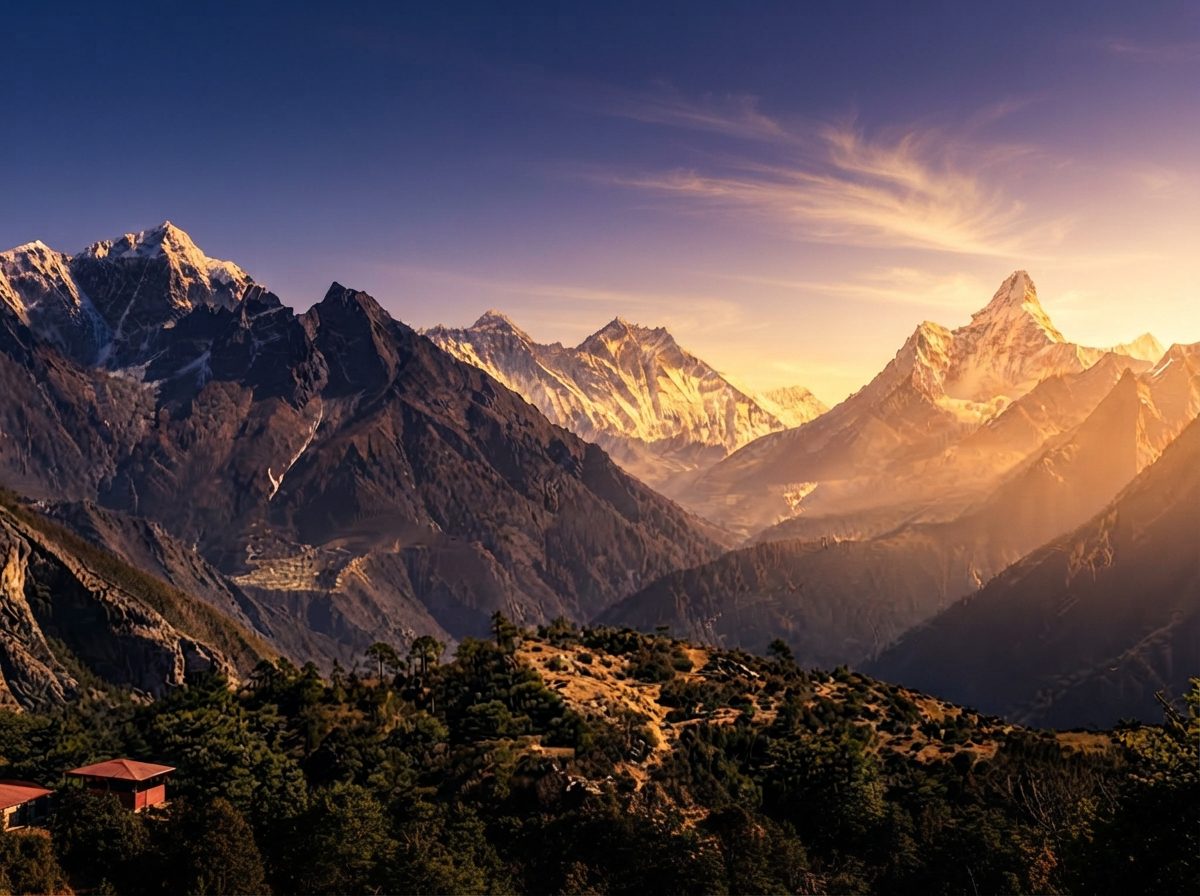
Perched at 3,880 meters above sea level on a ridge above Syangboche, Hotel Everest View has spent more than five decades quietly proving that you don’t need to reach Everest Base Camp to look Mount Everest in the eye. Built in the early 1970s by a Japanese hospitality group with the specific goal of giving travelers who couldn’t or wouldn’t commit to a multi-week trek a genuine sight of the world’s highest mountain, it remains one of the highest-placed hotels on the planet. Every room faces the same direction, and that direction happens to include Everest, Lhotse, Nuptse, and Ama Dablam.
But the hotel is not just a viewpoint with beds attached. Its location in the heart of the Khumbu, a short walk from Namche Bazaar and the Sherpa villages of Khumjung and Khunde, means guests have a genuine menu of things to do beyond sipping tea on the terrace. Some of it requires nothing more than stepping outside your room. Some of it means lacing up boots for a half-day ridge walk. Here’s a full rundown of what there actually is to do once you arrive.
Soak In the Views the Hotel Was Built For
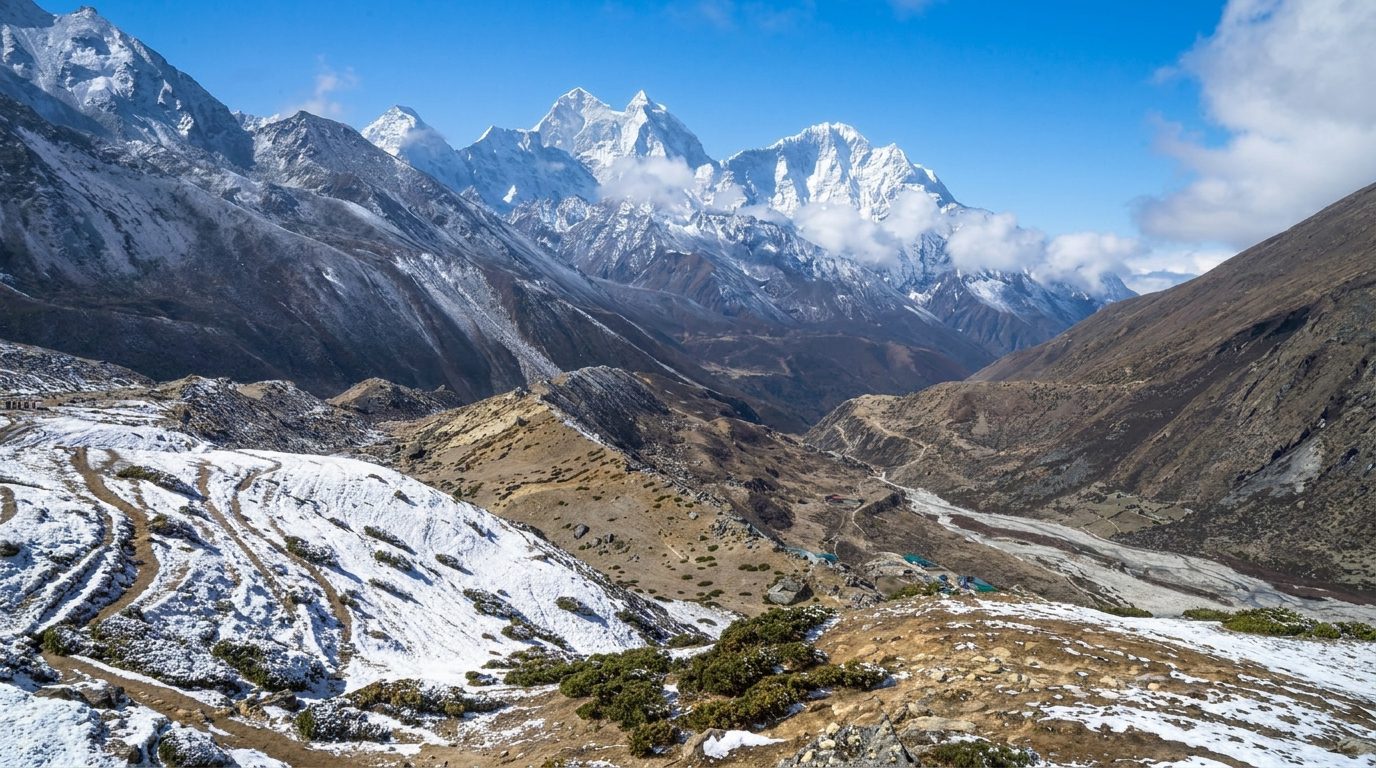
Start with the obvious, because it really is the main event. Hotel Everest View was purpose-built so that the panorama from its dining room, terrace, and guest rooms would include Everest without anyone needing to move. On a clear morning, the summit sits framed between Nuptse and Lhotse, with Ama Dablam’s distinctive fishtail spire dominating the middle distance and Thamserku and Kwangde rounding out the horizon.
The best light for photography comes early. Clouds tend to build through the Khumbu valleys as the day warms, so mountain views are typically sharpest before mid-morning and can vanish entirely by early afternoon. Guests who want the classic postcard shot generally set an alarm rather than count on an after-lunch stroll to the terrace. Sunrise and sunset both transform the peaks with alpenglow, turning the snow briefly gold and pink, and many guests rate this half hour as the single best moment of their stay.
Because the hotel sits at high altitude and above the treeline, there’s little to obstruct the view in any direction. Even the walk from your room to the dining hall offers a rotating slideshow of some of the most photographed peaks in the world.
Play the Piano at 3,880 Meters
One of the more unusual claims to fame is the hotel’s grand piano, reportedly transported up through the Khumbu by porter relay decades ago and now sitting in the lounge as one of the highest pianos in the world. Guests are generally welcome to sit down and play a few bars while looking out at Everest, which makes for one of the stranger and more memorable photo opportunities on any Himalayan itinerary. It’s a small thing, but it captures the slightly eccentric ambition behind the whole property: build something genuinely comfortable in a place where comfort has no business existing.
Hike to Khumjung and Khunde
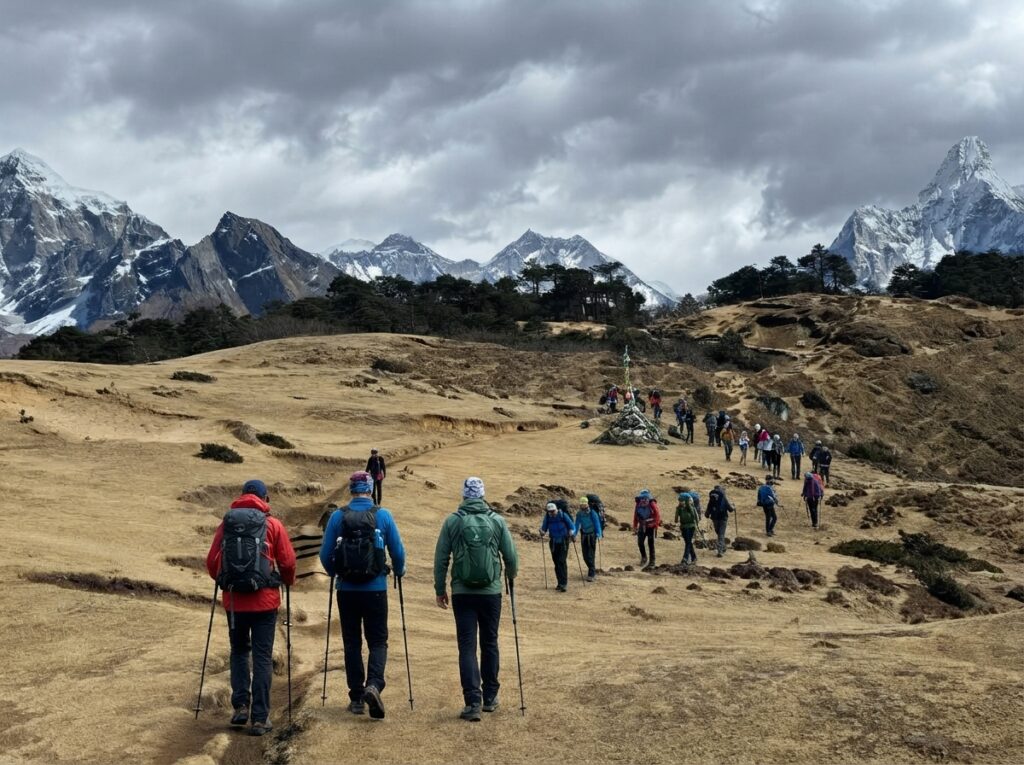
The single most popular activity from the hotel is the walk down to the twin villages of Khumjung and Khunde, roughly forty minutes to an hour apart on foot and connected by an easy trail across the ridge. This is a moderate half-day outing rather than a serious trek, and it’s usually done as an out-and-back or looped back through Syangboche.
Khumjung is the larger and more visited of the two. Its centerpiece is the Khumjung Monastery, a small gompa that has become locally famous for a relic locals describe as a yeti scalp, kept in a glass case inside the temple and shown to visitors for a modest donation. Whatever your view on cryptozoology, the monastery interior is worth the stop on its own, with its faded murals, prayer wheels, and unhurried resident caretakers happy to talk through the village’s history.
Just next door is Khumjung Secondary School, founded by Sir Edmund Hillary through the Himalayan Trust in 1961 and still educating local children today. A short walk further is Khunde, home to Khunde Hospital, another Hillary-founded institution that has served as the primary medical facility for the entire Khumbu region since 1966. Neither building is a formal tourist attraction, but walking past them gives a sense of how deeply Hillary’s post-Everest legacy is woven into daily life here, well beyond the mountaineering history most visitors come expecting.
Beyond the historical stops, this walk is simply a pleasant way to see how a working Sherpa village functions: stone-walled potato fields, prayer flags strung between chortens, yak trains moving supplies, and views of Ama Dablam that rival anything from the hotel itself.
Take the Ridge Walk to Mong or Khumjung Ri
For travelers with an extra day and a bit more appetite for altitude, the ridge above the hotel leads toward Mong La, a viewpoint at roughly 3,950 meters often used by trekkers heading toward the Gokyo valley. The trail climbs gradually along open ridgeline with essentially unbroken views the entire way, making it one of the more rewarding short hikes in the region relative to the effort involved.
A shorter alternative is the climb up Khumjung Ri, a hill directly behind Khumjung village that adds only a modest elevation gain but delivers a wraparound view of the Khumbu that includes Everest, Ama Dablam, and the entire Khumjung-Khunde basin below. Neither of these hikes requires technical skill, just reasonably fit legs and some acclimatization, since anything above 3,800 meters deserves respect even on an easy gradient.
Walk the Ridge to Syangboche and Its Airstrip
Syangboche itself, just below the hotel, is home to one of the highest airstrips in the world, a short gravel strip mostly used now by helicopters rather than the fixed-wing planes that once landed there. It’s a five-minute stroll from the hotel and worth the detour if only to appreciate the engineering absurdity of building a runway on a ridge at 3,750 meters. Trekkers doing the classic Everest Base Camp route often pass through here on the way up from Namche, so there’s a decent chance of crossing paths with a broader mix of travelers than you’ll see at the hotel itself.
Spot Wildlife in the Surrounding Forest
The forest between Namche and Syangboche, part of Sagarmatha National Park, is one of the better places in the region to see the Impeyan pheasant, or danphe, Nepal’s vividly colored national bird, generally most active early in the morning or in the last light of the afternoon. The same forest is also home to Himalayan tahr, a wild goat species often seen grazing on steep slopes, and occasionally the elusive musk deer, though sightings of the latter are rare and mostly a matter of luck. Birders in particular tend to find the walk between the hotel and more rewarding than they expected, since the trail passes through several distinct habitat zones as it changes elevation.
Explore Namche Bazaar
Namche sits about two to three hours below the hotel by trail and functions as the unofficial capital of the Khumbu. Even a short visit is worthwhile: it’s the last real town before the trail climbs into higher, sparser terrain, and it has grown into a strange hybrid of traditional Sherpa trading post and modern trekking hub, with bakeries, gear shops, a small museum, and internet cafes tucked into its amphitheater-shaped bowl. If your visit lines up with a Saturday, the weekly market draws traders from Tibet and lower Khumbu villages selling everything from yak cheese to secondhand mountaineering gear, and it’s one of the more colorful, least touristy things happening in the region on any given week.
Because the hotel-to-Namche walk is downhill on the way there and a sustained climb on the way back, most guests treat this as a full excursion rather than a quick errand, often pairing it with lunch in Namche before making the return climb in the afternoon.
Try a Helicopter Add-On
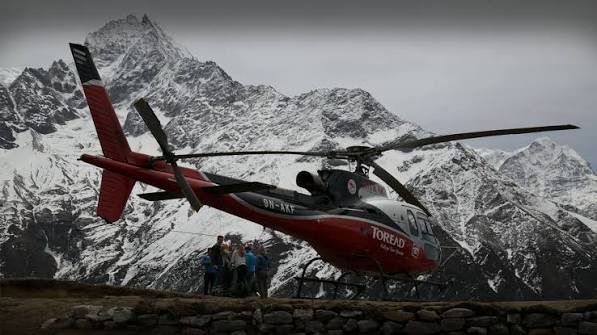
For guests who arrived by helicopter rather than on foot, many operators build in a short detour toward Kala Patthar or Everest Base Camp itself on the way to or from the hotel, weather permitting. This typically involves a brief touchdown near Kala Patthar, a few minutes to take photographs and feel the thin air at close to 5,500 meters, before continuing on to Syangboche for breakfast or lunch at the hotel with Everest as a backdrop. It’s an efficient way to see the classic Base Camp vantage points without committing to the two-week trek, though it comes at a steep price relative to the walking itinerary, and flights are frequently rescheduled or cancelled due to weather.
Rest and Acclimatize
It’s worth saying plainly that doing very little is also a legitimate activity here, and for many guests it’s the point. At nearly 3,900 meters, altitude is a real factor, and a night at the hotel is frequently used by trekkers heading toward Everest Base Camp or Gokyo as a comfortable, well-oxygenated (relatively speaking) stop for acclimatization before pushing higher. Sitting on the terrace with a hot drink, reading in a warm common room, or simply going to bed early are all reasonable ways to spend an afternoon here, and they serve a real physiological purpose beyond comfort.
Sample the Sherpa and International Menu
Dining at the hotel mixes international dishes with Nepali and Sherpa staples, and the restaurant leans into its views as much as its food, with large windows positioned so that meals come with a mountain backdrop regardless of the time of day. Many guests make a point of visiting Khumjung specifically to try Sherpa stew or other home-style dishes served in a village household or teahouse, a small but worthwhile contrast to the hotel’s more polished dining room.
Practical Notes for Planning Your Visit
Best time to visit: October through December and March through May offer the clearest skies and the best odds of an unobstructed Everest view, since these periods fall outside the summer monsoon and the heaviest winter snow. Visiting outside these windows is possible, but cloud cover can obscure the main event for days at a stretch.
Getting there: Almost everyone reaches the hotel either by trekking in from Lukla through Phakding and Namche Bazaar, a journey of three to four days on foot, or by helicopter directly from Kathmandu, which can be done as a day trip or with an overnight stay. Some itineraries combine both, flying one direction and trekking the other.
Altitude considerations: At 3,880 meters, mild altitude symptoms like headache or shortness of breath are common even for guests arriving primarily by helicopter, since the change in elevation from Kathmandu is sudden. Trekkers who walk up gradually through Namche generally acclimatize better than those flying in directly, and either way, a slow first day and plenty of water are worth the discipline.
How long to stay: One night is enough to see the highlights and do the Khumjung-Khunde walk, but two nights leaves room for a rest day, the longer ridge walk toward Mong, or simply a second sunrise in case clouds spoil the first one.
Hotel Everest View isn’t trying to replace the Everest Base Camp trek, and it doesn’t pretend to. What it offers instead is a rare kind of efficiency: genuine, close-range views of the world’s highest mountain, a cluster of some of the most historically significant Sherpa villages in the Khumbu, and a handful of satisfying short hikes, all reachable without the physical commitment of a full expedition-style trek.
For travelers short on time, altitude tolerance, or simply the desire to spend two weeks walking, it’s one of the more efficient ways in the world to stand in front of Everest and actually see it.
Comments (0)
Write a comment- Soak In the Views the Hotel Was Built For
- Play the Piano at 3,880 Meters
- Hike to Khumjung and Khunde
- Take the Ridge Walk to Mong or Khumjung Ri
- Walk the Ridge to Syangboche and Its Airstrip
- Spot Wildlife in the Surrounding Forest
- Explore Namche Bazaar
- Try a Helicopter Add-On
- Rest and Acclimatize
- Sample the Sherpa and International Menu
- Practical Notes for Planning Your Visit
Read the latest Blogs & Insights
Explore our collection of articles and insights to gain in-depth travel knowledge, expert advice, and stay updated on the latest trends and tips.


No comments yet.