








Everest Base Camp Helicopter Tour in Winter: Cost, Weather & What to Expect
Ask anyone who’s flown over the Khumbu in late December and they’ll tell you the same thing: the mountains never look sharper than they do in winter. No haze, no afternoon cloud build-up, no dust drifting up from the valleys below — just hard blue sky and snow that hasn’t melted in weeks. It’s also, […]
-
 Adventure Master Trek
-
18 June, 2026
-
10 mins read
-
715 Views
-
0 Comments


Ask anyone who’s flown over the Khumbu in late December and they’ll tell you the same thing: the mountains never look sharper than they do in winter. No haze, no afternoon cloud build-up, no dust drifting up from the valleys below — just hard blue sky and snow that hasn’t melted in weeks. It’s also, almost every single time, the cheapest part of the year to book an Everest Base Camp helicopter tour. Those two facts aren’t a coincidence, and understanding why is the key to deciding whether a winter flight is worth it for you.
This guide walks through what winter weather actually does to the route between Kathmandu and Kala Patthar, how operators handle the cold and the shorter flying windows, and where the discounted pricing comes from — along with what a group booking can knock off the price during these quieter months.
What Winter in the Everest Region Actually Feels Like
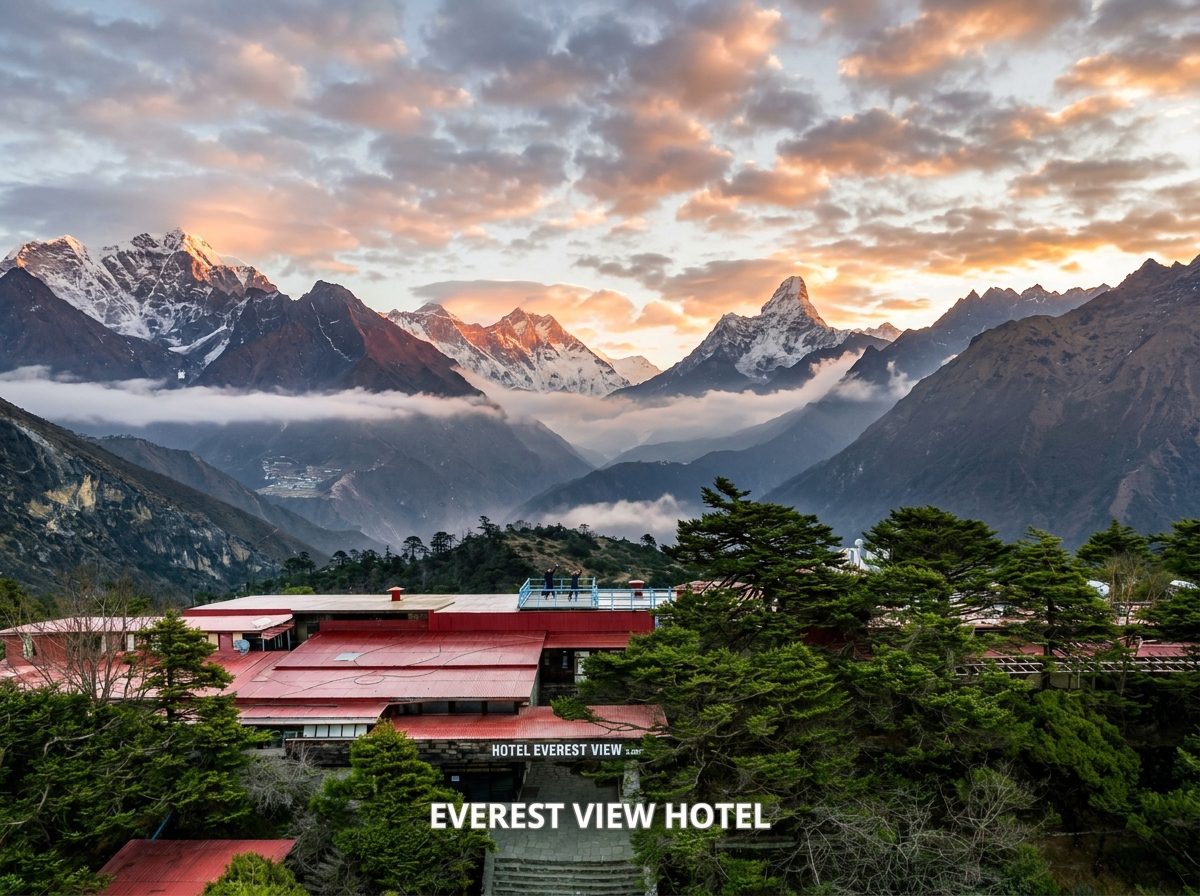
Nepal’s winter runs roughly from mid-December through February, and at altitude it behaves nothing like winter at sea level. Daytime temperatures around the Everest View Hotel and Kala Patthar typically sit somewhere between 10°C and 16°C in direct sun, which feels almost mild when you’re standing out of the wind. The moment the sun dips or a cloud passes overhead, though, that same air can drop close to freezing within minutes. Overnight and early-morning temperatures at higher elevations regularly fall to between -10°C and -18°C, and wind chill on an exposed ridge like Kala Patthar can make it feel considerably colder than the thermometer suggests.
What makes winter distinctive isn’t the cold so much as the clarity. Once the post-monsoon haze clears and before pre-monsoon dust starts building up again in late February, the Khumbu sits under some of the driest, calmest air of the entire year. Snowfall does happen, but it tends to arrive in short, intense bursts followed by long stretches of completely clear sky — which is exactly the kind of weather a helicopter pilot wants. The trade-off is daylight: with shorter winter days, the usable flying window each morning is tighter, and most operators push departures as early as possible to take advantage of the calmest air before any afternoon wind picks up.
Can Helicopters Actually Land at Kala Patthar in Winter?
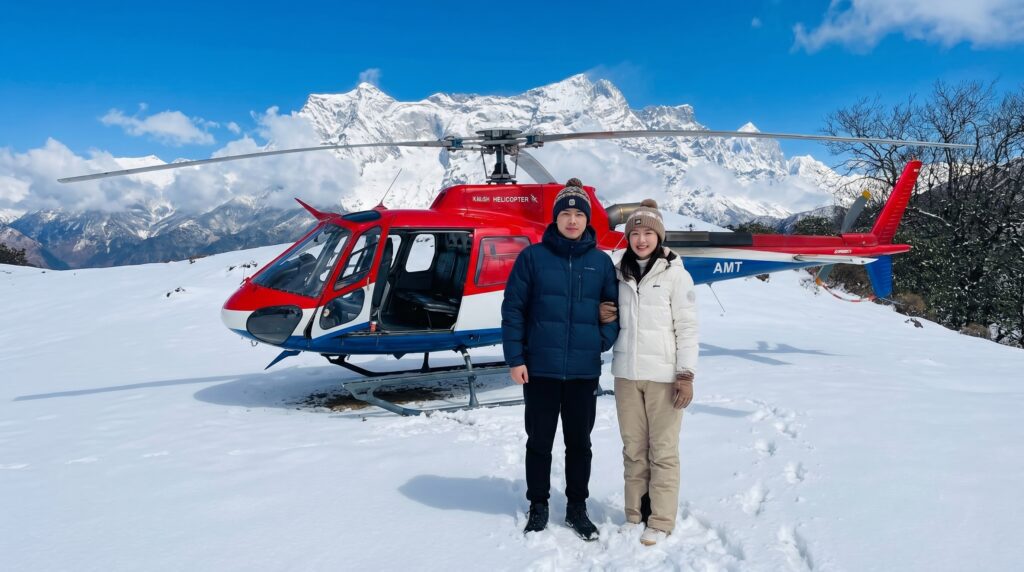
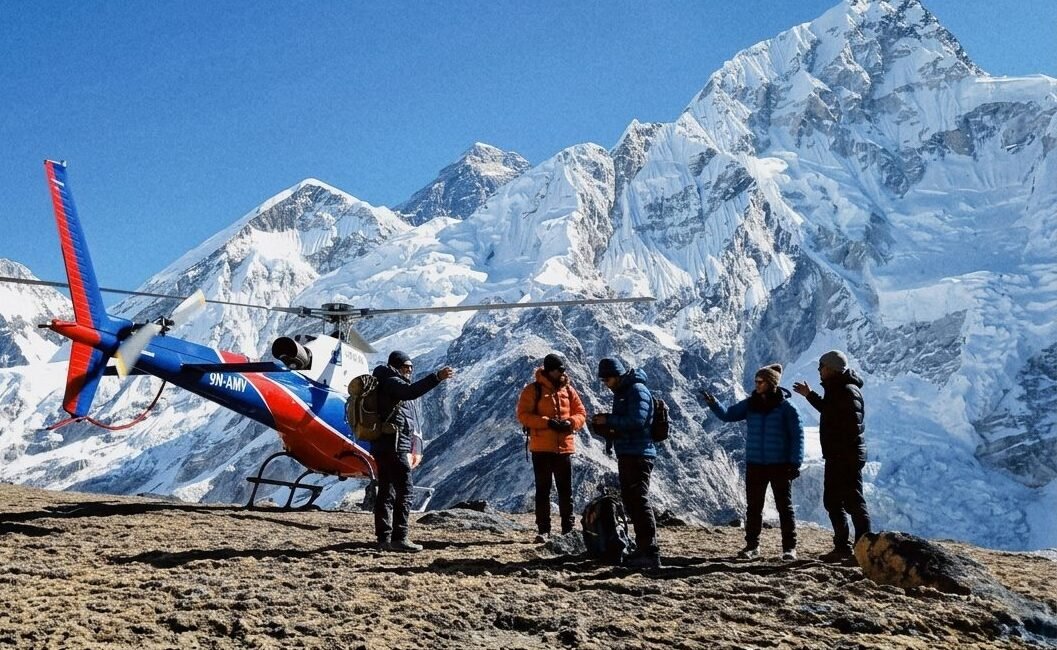
Yes, and they do it regularly — but with a few adjustments compared to spring or autumn. Cold, dense air is actually good for helicopter performance, which is part of why winter mornings can deliver some of the smoothest flights of the year. The bigger variable is wind and the occasional snow system moving through, which can ground flights for a day or two at a time without much warning.
Because of this, most operators don’t run a fixed daily winter schedule the way they do in peak season. Instead, departures are confirmed closer to the day, based on a real-time read of the weather rather than a set calendar. Landing time at Kala Patthar itself is also typically kept shorter in winter — often five to ten minutes rather than the fifteen to twenty you might get in October — partly because of the cold and partly because pilots prefer to keep the engine running rather than shutting down at extreme altitude in freezing conditions. None of this makes the flight less spectacular; if anything, the view tends to be cleaner. It just means winter trips run with a bit more built-in flexibility around dates than a spring or autumn booking would.
Why Winter Is the Cheapest Season to Fly
The core cost of running a helicopter — fuel, maintenance, pilot hours, permits — doesn’t change much between January and April. What changes is demand. Spring and autumn are when the vast majority of trekkers and climbers are in the region, which means tour operators can fill every seat on a shared flight without much effort, and pricing reflects that. Winter is the opposite: fewer travelers are in Nepal at all, base camp itself sits empty of expedition teams, and lodges across the Khumbu sit half-full. Operators respond to that quieter season the way most travel businesses do — by lowering prices to keep helicopters flying rather than sitting idle on the tarmac.
This is also one of the only times of year you’ll see meaningful discounts on a product that’s normally priced quite rigidly. A typical pattern looks like this: shared group joining rates that might run $1,700 to $1,950 per person in peak season often get discounted by roughly 10 to 20 percent in December and January, simply to attract enough bookings to make a shared departure viable. If you’re already planning a winter trip to Nepal for other reasons — Tihar just ended, you’re chasing fewer crowds on the trail, or you simply prefer cold-weather travel — that discount can make the helicopter option significantly more attainable than it looks during the high season.
Winter Discounted Pricing: What Group Size Actually Saves You
As with any shared helicopter departure, the math comes down to how many seats get filled. A helicopter on this route typically carries up to five paying passengers, and the fixed costs of fuel and permits get divided across however many people are on board. In winter, operators are often more willing to negotiate on top of the standard off-season rate if you can bring a group of three or more together, since filling those seats is the difference between the flight running at all and being cancelled for lack of numbers.
The table below shows a representative winter pricing structure for the standard Everest Base Camp and Kala Patthar landing route. These are planning figures based on typical winter discounting patterns across operators — always confirm the live rate, fuel surcharge, and any seasonal adjustment directly before booking, since individual companies set their own winter rates.
| Group Size | Peak Season Rate (Per Person) | Winter Discounted Cost (Per Person) | Group Discounted Price (Total) |
| 2 Passengers | USD 1,950 | USD 1,650 | USD 3,300 |
| 3 Passengers | USD 1,800 | USD 1,500 | USD 4,500 |
| 4 Passengers | USD 1,650 | USD 1,380 | USD 5,520 |
| 5 Passengers (Private Charter) | USD 1,550 | USD 1,300 | USD 6,500 |
A couple of things worth knowing about how this plays out in practice. Solo travelers benefit the most, proportionally, from winter discounting, since shared-group rates are the main lever operators pull to fill seats during slow months. Families or small groups locking in four or five seats together tend to get offered the steepest per-person reduction, occasionally with extras like a complimentary breakfast at the Everest View Hotel thrown in to sweeten a winter booking. And because winter departures aren’t run on a fixed daily timetable the way peak-season ones are, it’s common for operators to wait until they have enough interest for a date before confirming it — so booking a little further ahead, and staying flexible by a day or two, generally gets you a better rate than trying to book a winter flight at the last minute.
What You Actually Gain by Flying in Winter
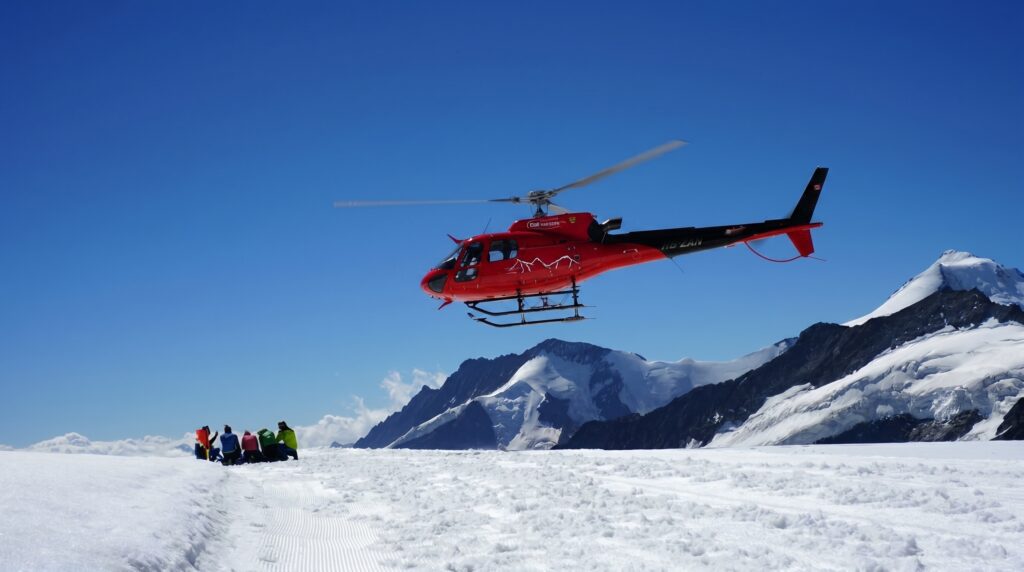
Beyond the price, there’s a real case for choosing this season on its own merits. Visibility is typically at its best of the entire year, since the dust and haze that build up by late spring haven’t had time to accumulate. Photographers in particular tend to prefer winter for exactly this reason — the contrast between dark rock, white snow, and a deep blue sky comes through far more cleanly than in the slightly softer light of October or April. Everest Base Camp itself, normally a cluster of expedition tents in spring, is completely empty in winter, leaving Kala Patthar and the glacier basin below it looking close to how they would have a century ago. And with far fewer flights competing for the same airspace and landing slots, there’s less congestion around Lukla and the high-altitude landing zones than during the busiest weeks of peak season.
What to Prepare For
Cold is the main thing to plan around, and it’s more serious than it sounds from inside a warm hotel room in Kathmandu. Dress in proper insulating layers rather than just a single heavy coat — base layer, mid layer, and a windproof outer shell will serve you far better than one thick jacket once you’re standing in the open air at 5,545 meters with the helicopter blades still turning. Gloves, a hat that covers your ears, and a buff or scarf for your face make a noticeable difference during the few minutes you’re outside at Kala Patthar. Most operators provide a loaner down jacket if you don’t have appropriate winter gear, but it’s worth confirming this before you fly rather than assuming it’s included.
Because winter departures depend more heavily on a clear weather window, building two or three flexible days into your Kathmandu itinerary is genuinely useful rather than just cautious advice. A flight that gets postponed a day in winter is common; losing the trip entirely because you only had one possible date in your schedule is the avoidable mistake. It’s also worth asking your operator directly whether winter pricing includes a confirmed seat or a “weather-permitting” booking that shifts automatically if conditions don’t cooperate — the difference matters when you’re working around flights home.
Frequently Asked Questions
Is winter actually a good time to do an Everest Base Camp helicopter tour, or just a cheap one? Both. The discounted price is real, but winter also tends to deliver some of the clearest, least hazy views of the mountains available at any point in the year — the savings aren’t a trade-off against quality, they’re mostly a reflection of lower passenger demand.
How cold does it actually get at Kala Patthar in winter? Daytime temperatures in direct sun often sit between 10°C and 16°C, but with wind chill and any cloud cover, it can feel close to freezing or colder during the short time you’re standing outside the helicopter.
Do flights get cancelled more often in winter? Short weather delays of a day or two are more common than in spring or autumn, mainly due to wind systems or occasional snowfall, which is why winter flights typically aren’t booked on a fixed daily schedule the way peak-season departures are.
Is the winter discount only available for groups? No, but groups of three to five sharing a single helicopter typically see the largest per-person reduction, since filling those seats is what makes a winter departure financially viable for the operator in the first place.
What’s the cheapest month within winter to book? December and January tend to carry the deepest discounts, since visitor numbers in Nepal are at their lowest; by late February, demand starts climbing again ahead of the spring season, and pricing tends to firm back up.
Final Thoughts
Winter doesn’t get nearly the attention that spring and autumn do when people plan an Everest Base Camp helicopter tour, and that’s exactly what makes it worth a second look. The skies are arguably at their clearest, the crowds at Kala Patthar and around Lukla thin out almost completely, and the discounted pricing — especially with three or more people sharing a flight — brings the experience within reach in a way the peak season rarely does. The only real cost is flexibility: build in a buffer day or two for weather, dress like you mean it, and the coldest season in the Khumbu might end up giving you the clearest view of Everest you could have asked for.
Comments (0)
Write a comment- What Winter in the Everest Region Actually Feels Like
- Can Helicopters Actually Land at Kala Patthar in Winter?
- Why Winter Is the Cheapest Season to Fly
- Winter Discounted Pricing: What Group Size Actually Saves You
- What You Actually Gain by Flying in Winter
- What to Prepare For
- Frequently Asked Questions
- Final Thoughts
Read the latest Blogs & Insights
Explore our collection of articles and insights to gain in-depth travel knowledge, expert advice, and stay updated on the latest trends and tips.



No comments yet.