









Nims Dai: He Refused to Quit
From the Nepalese mountains to the world's highest peaks, Nims Dai built a reputation through extraordinary endurance and determination. Explore his journey, record-breaking climbs, setbacks, and the mindset that helped him keep pushing when others would have stopped.
-
 Adventure Master Trek
-
14 August, 2026
-
9 mins read
-
304 Views
-
0 Comments


He Died the Way He Lived — Moving Toward the Summit
On July 30, 2026, an avalanche tore down Broad Peak in Pakistan, taking Nirmal Purja with it, along with nine other climbers he led. He was 43. He did not die retreating. He died leading. This is not a farewell. It is a record of how one man dragged the limits of human endurance somewhere new — and how he kept dragging them until the very last day.
He Started With Nothing Special
Purja entered the world on July 25, 1983, in Dana, a village clinging to the slopes of Nepal’s Myagdi district, 1,600 meters up in the shadow of the Dhaulagiri range. He grew up the youngest of four children born to Nanda Bahadur Pun, a Gurkha soldier, and Purna Kumari, his wife. His family later moved to the lowlands of Chitwan, and he spent his boyhood nowhere near the high peaks that would eventually make him famous. Nothing about his childhood predicted a record-breaker. He built that himself.
He chased discipline before he ever chased mountains. He watched the Gurkha tradition shape the men around him — soldiers respected the world over — and he set his sights on that path. He trained hard, competed against thousands of other young Nepali men for a handful of spots, and won his place in the British Army’s Brigade of Gurkhas. That alone put him ahead of nearly everyone who tried.
He Broke Into the Special Forces
He didn’t stop there. He pushed for more and set his eyes on Britain’s most elite unit. He became the first Gurkha in history to pass selection for the United Kingdom’s Special Boat Service — one of the most brutal, most secretive special forces programs on Earth. Most people who attempt that selection fail. He passed it, then deployed on missions that demanded total physical endurance and total mental control under extreme stress.
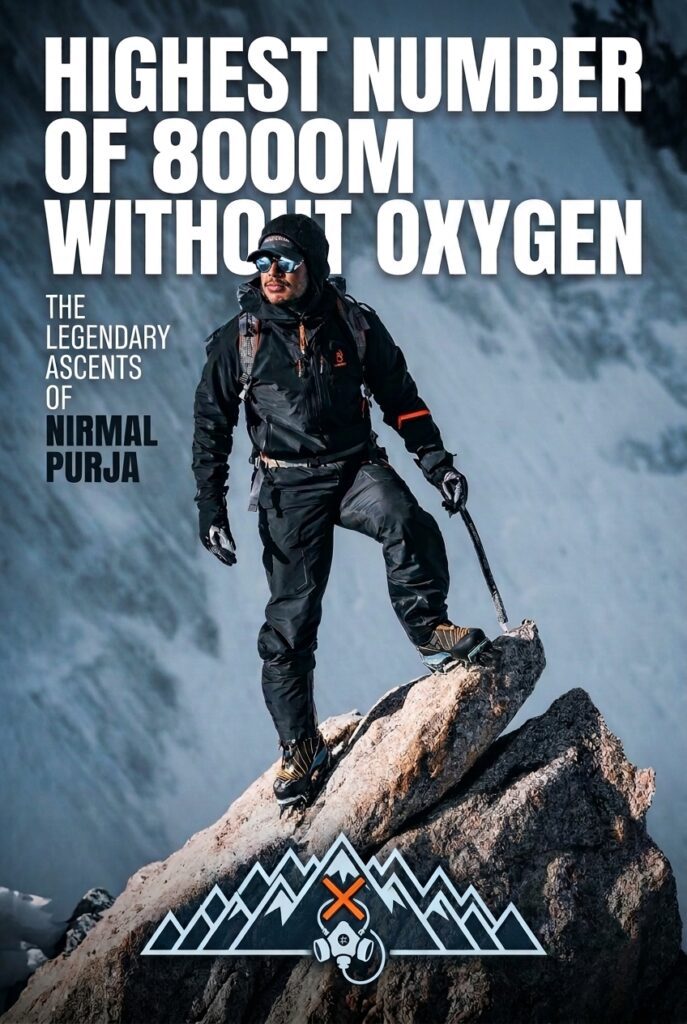
Those years built more than a soldier. They built a mindset. He learned to silence his body when it screamed to stop. He learned to plan with precision and then execute without hesitation. He learned to treat “impossible” as a starting line, not a verdict. When he turned to the mountains, he carried every lesson with him — and it showed immediately.
He Came Late to Climbing and Closed the Gap Anyway
Most elite mountaineers start climbing as teenagers. Purja didn’t summit his first major peak until his early thirties, already deep into a military career. He should have been decades behind. Instead, he closed that gap in record time. He attacked mountaineering exactly like he’d attacked SBS selection: total commitment, relentless preparation, zero patience for convention. He built a reputation fast — for speed, for composure at extreme altitude, for refusing to accept the limits everyone else took for granted.
He Rewrote the Record Books: Project Possible
In 2019, Purja launched Project Possible — a plan to climb all fourteen of the world’s 8,000-meter peaks in under seven months. The existing record for completing all fourteen stood at nearly eight years. People called his goal absurd.
He crushed it. He summited all fourteen peaks — Annapurna, K2, Everest, Kangchenjunga, Lhotse, Makalu, Nanga Parbat, Dhaulagiri, Manaslu, Cho Oyu, Gasherbrum I and II, Broad Peak, and Shishapangma — in six months and six days, 189 days total. Along the way, he linked Everest, Lhotse, and Makalu — three separate 8,000-meter summits — in under 48 hours, a feat that stunned veteran climbers worldwide.
He didn’t stop at breaking records. He used the achievement to force a reckoning. For decades, Sherpa and Nepali climbers had done the most dangerous work on the world’s highest mountains — fixing ropes, breaking trail, hauling loads, guiding foreign clients to the summit — while the world barely learned their names. Purja stood in the global spotlight and pointed it straight at his own community. He demanded the world start crediting Nepali climbers by name, and he didn’t stop demanding it.
He Became a Global Symbol of Perseverance
In 2021, Netflix released 14 Peaks: Nothing Is Impossible, and the film carried Purja’s story far beyond mountaineering circles. It showed the financial collapses, the near-failures, the grit that pulled Project Possible back from the edge again and again. His signature line — that giving up simply was not in his blood — spread everywhere. People facing entirely different mountains started repeating it: cancer patients, addicts in recovery, people drowning in grief or poverty or self-doubt. Fans who had never held an ice axe cited his story as the reason they finally applied for the job, started training for the marathon, or refused to accept a doctor’s grim prognosis without a fight.
He Conquered K2 in Winter — and Gave the Credit Away
In January 2021, Purja joined nine other Nepali climbers on an assault on K2 in winter — a feat that had defeated every previous attempt for decades. Winter on K2 brings temperatures and winds that turn back even elite teams. Purja’s team didn’t turn back. They summited, and he did it without supplemental oxygen.
Then he did something else remarkable: he gave the glory away. He insisted, over and over, that the climb wasn’t about him. It was ten Nepali climbers achieving one of mountaineering’s last unsolved winter challenges — together. The ascent became a landmark for Nepali mountaineering, proof that the men who had spent generations supporting other people’s expeditions could lead history-making climbs of their own.
He Built a Legacy Beyond the Summits
Purja never treated fame as a finish line. He used it as fuel. He founded the Nimsdai Foundation in 2022 to support mountain communities, protect the fragile Himalayan environment, and inspire young people to pursue their own impossible goals. He built a trust to help climbers, porters, and grieving families who lost loved ones in the mountains. He personally led rescue and body-recovery missions on some of the world’s deadliest peaks — and he refused to charge families a single rupee for that work.
He went back for the fourteen 8,000-meter peaks a second time, this attempt without supplemental oxygen — a challenge only a handful of climbers in history have ever completed. Through his company, Elite Exped, he continued to lead expeditions, mentor younger climbers, and fight for better pay and real recognition for Nepali guides.
He was not a saint, and he never claimed to be one. Controversy followed him. Critics debated his methods as fiercely as fans celebrated his records. He stayed relentless anyway, and that relentlessness produced both extraordinary achievement and genuine controversy in equal measure.
He Died Leading
On July 30, 2026, Purja led a ten-member international expedition up Broad Peak, the world’s twelfth-highest mountain, in Pakistan’s Karakoram range. Before the climb, he asked the mountain for one thing: safe passage up and back down. Around midday, an avalanche ripped down the main gulley and swept the entire team down nearly a vertical mile.
Rescue crews fought brutal, remote conditions for days. On August 1, Elite Exped confirmed the worst: Purja had died alongside his longtime climbing partner Pur Bahadur “Yukta” Gurung, fellow guide Nima Sherpa, and the rest of the team — climbers from Oman, the United States, China, and Pakistan. All ten members of the expedition perished. Nepali media called it a single avalanche wiping out a generation of the country’s greatest climbers.
The world responded immediately. Nepal’s Prime Minister, Balendra Shah, called Purja’s courage and dedication an enduring inspiration. Students at his old school in Chitwan lit candles for him. His brother Kamal said losing Nirmal felt like losing his entire world. The Nimsdai Foundation posted that his legacy would live on in every life he changed and every person he pushed to climb their own mountain.
Why He Still Matters
Nirmal Purja lived several lives in one. A village boy became an elite soldier. A soldier became history’s fastest mountaineer. A mountaineer became a global voice for the guides and porters the world kept overlooking. In six months and six days on the world’s most unforgiving terrain, he proved that timelines built on old assumptions can be broken by anyone willing to prepare relentlessly and refuse the easy exit.
His achievements, at a glance:
- First Gurkha ever to pass selection for the UK Special Boat Service
- Climbed all fourteen 8,000-meter peaks in 189 days — six months and six days, shattering a record that had stood at nearly eight years
- Linked three separate 8,000-meter summits (Everest, Lhotse, Makalu) in under 48 hours
- Completed the first winter ascent of K2, without supplemental oxygen, as part of an all-Nepali team
- Founded the Nimsdai Foundation and a trust supporting climbers, porters, and their families
- Led free rescue and body-recovery missions on some of the world’s most dangerous mountains
- Subject of the Netflix documentary 14 Peaks: Nothing Is Impossible, which carried his story to a global audience
- Attempted all fourteen 8,000-meter peaks a second time, without supplemental oxygen
He redefined what a life can hold. He didn’t wait for the “right” background, the “right” age, or the “right” training window — he built the qualifications himself, one impossible selection at a time, and then he went further. He turned individual glory into collective credit for the Nepali climbers the world had ignored for generations. He turned fame into free rescue missions. He turned a documentary into a rallying cry for people who would never touch a mountain.
He said giving up was not in his blood, and he proved it on every peak, in every deployment, in every rescue he refused to bill. He lived by that line until his final day — on a mountain he had asked, with rare humility, only to let him pass. The mountain didn’t grant it. But the standard he set stands untouched: for endurance, for generosity, for treating “impossible” as a word that exists to be argued with. Every climber who now looks at an eight-thousander and believes they can reach the top faster, safer, or with more purpose than the record books suggest is standing on the path Nims Dai cut first.
Comments (0)
Write a comment- He Died the Way He Lived — Moving Toward the Summit
- He Started With Nothing Special
- He Broke Into the Special Forces
- He Came Late to Climbing and Closed the Gap Anyway
- He Rewrote the Record Books: Project Possible
- He Became a Global Symbol of Perseverance
- He Conquered K2 in Winter — and Gave the Credit Away
- He Built a Legacy Beyond the Summits
- He Died Leading
- Why He Still Matters
Read the latest Blogs & Insights
Explore our collection of articles and insights to gain in-depth travel knowledge, expert advice, and stay updated on the latest trends and tips.


No comments yet.