









Annapurna Base Camp vs Ghorepani Poon Hill: Which Trek Should You Choose?
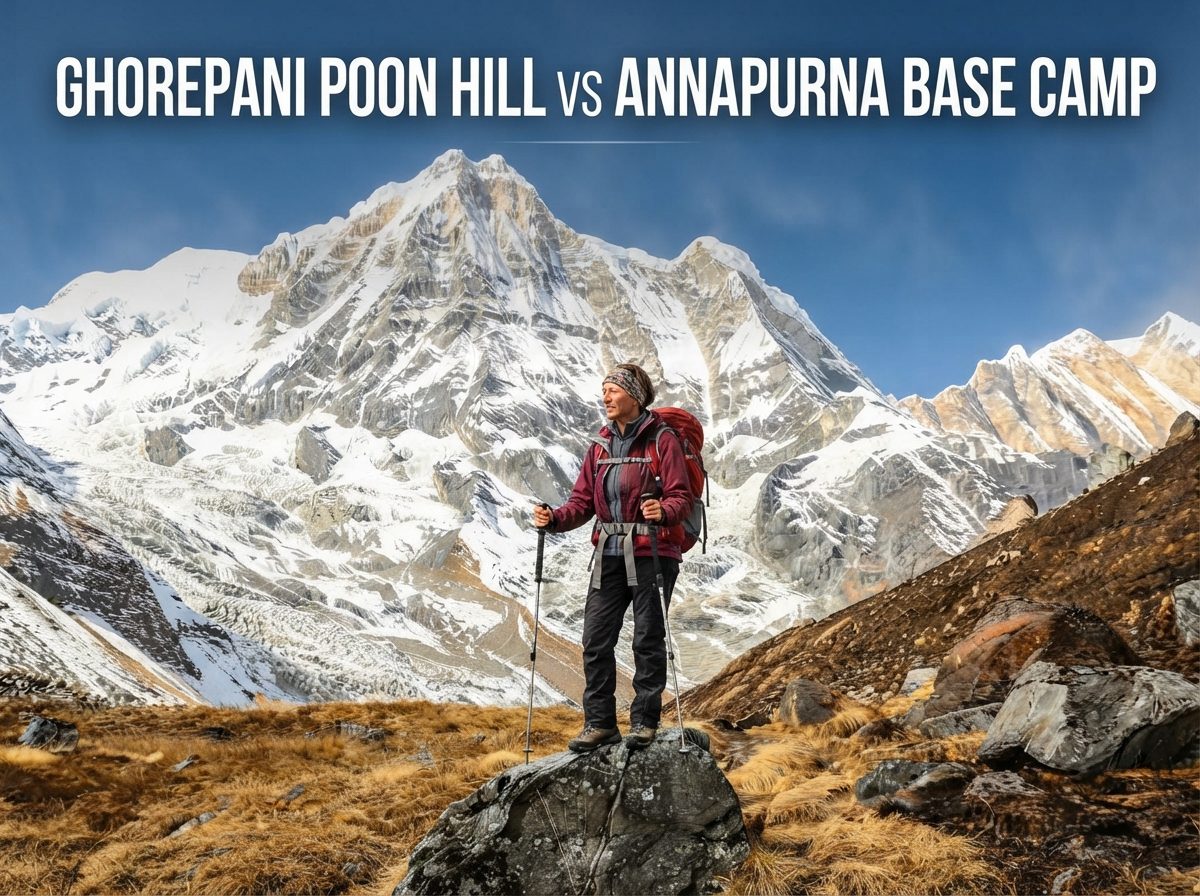
Trying to decide between Annapurna base camp vs Ghorepani Poon Hill for your Nepal trip? You’re not the only one stuck on this. Both treks sit in the same corner of the Annapurna region and even share a stretch of trail. But that’s roughly where the overlap stops. Pick the wrong one, and you’ll either […]
-
 Adventure Master Trek
-
17 September, 2026
-
12 mins read
-
161 Views
-
0 Comments


Trying to decide between Annapurna base camp vs Ghorepani Poon Hill for your Nepal trip? You’re not the only one stuck on this. Both treks sit in the same corner of the Annapurna region and even share a stretch of trail. But that’s roughly where the overlap stops. Pick the wrong one, and you’ll either walk away underwhelmed or find yourself gasping up staircases you weren’t ready for.
We get this question constantly at Adventure Master Treks, usually from first-time visitors who found both names in the same search and got confused. So here’s the real breakdown: what each trek involves, where they differ in detail, and which one fits your trip.
Annapurna Base Camp vs Ghorepani Poon Hill: An Overview
Both start near Pokhara. Both sit inside the Annapurna Conservation Area. Honestly, that’s most of what they have in common.
What Is the Annapurna Base Camp Trek?
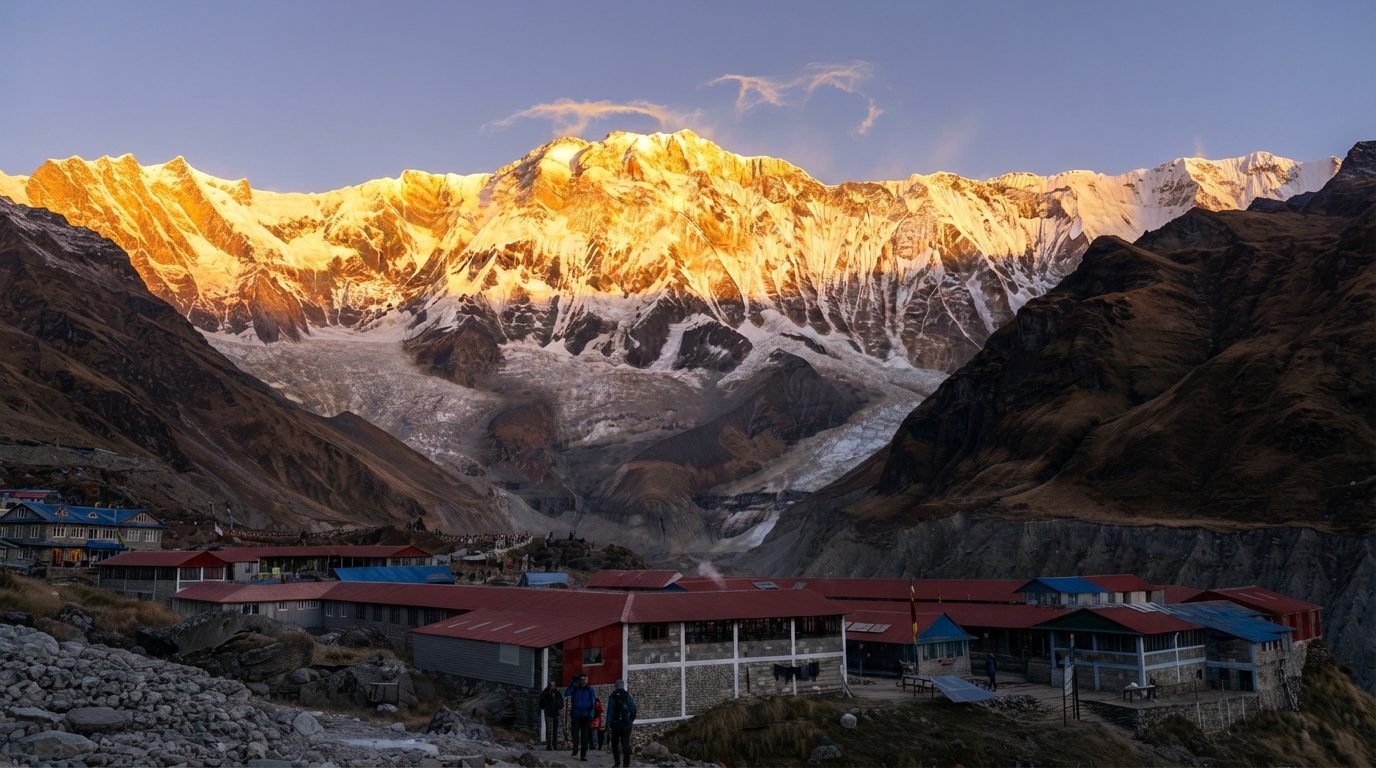
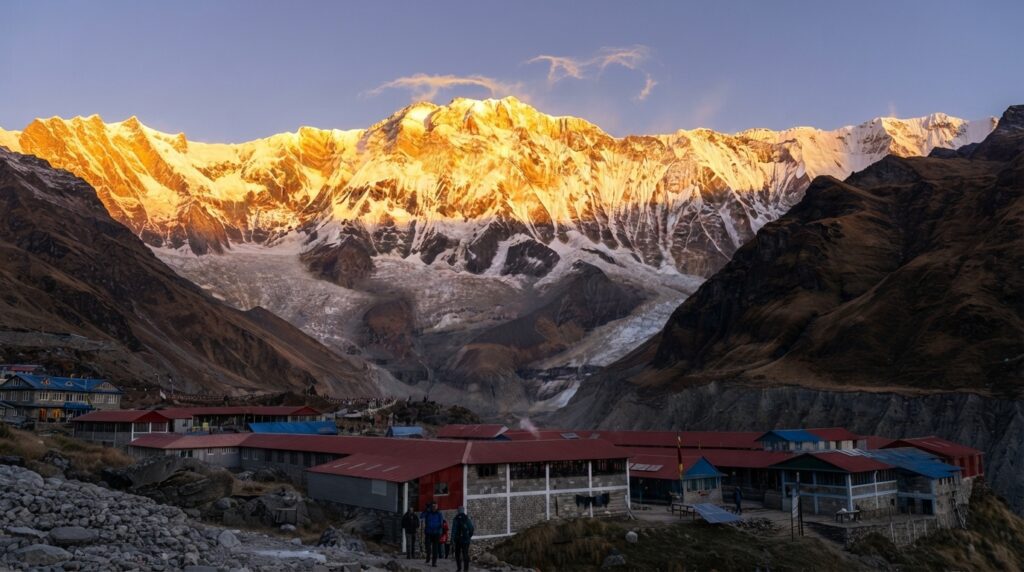
ABC takes you right into the Annapurna Sanctuary, a bowl of a valley ringed by some of the tallest peaks on the planet. You pass through Gurung and Magar villages, climb through rhododendron forest that turns pink and red in spring, and land at base camp itself, 4,130 meters up, close enough to Annapurna I, Machapuchare, and Hiunchuli that it feels almost unreal. Most people budget 7 to 12 days for it. No technical climbing skills needed, but expect long days on your feet and a real chance of altitude sickness past 3,500 meters.
The trail itself has a rhythm to it. Lower down, you’re walking through warm, humid forest and past terraced rice fields. By the time you reach Chhomrong and push further in, the valley narrows and the vegetation thins out fast. There’s something almost cinematic about the last stretch into base camp, where the trail opens up and the full amphitheater of peaks appears all at once.
What Is the Ghorepani Poon Hill Trek?
Poon Hill is a different animal. Shorter, gentler, and a lot more forgiving. The loop runs through Birethanti, Ulleri, and Ghorepani village before topping out at Poon Hill itself, around 3,210 meters. Everyone’s really there for one thing: sunrise from the viewpoint, with Dhaulagiri and Annapurna South catching the first light. No high altitude required. Most trekkers wrap it up in 3 to 5 days, part of why it’s become one of the go-to short treks in the region.
What surprises a lot of first-timers is how much climbing is packed into those few days. The stretch from Tikhedhunga up to Ulleri alone involves thousands of stone steps, and it’s often the toughest single section of the whole trip. Once you’re in Ghorepani, though, the hard part is basically done, and the pre-dawn walk up to Poon Hill is short by comparison.
In-Depth Differences Between Annapurna Base Camp and Ghorepani Poon Hill
Once you’ve got the basic shape of each trek in your head, the real decision comes down to a handful of practical things. Let’s go through them one by one.
Route and Duration
Poon Hill starts and ends near Nayapul, looping through Ulleri and Ghorepani before dropping back down. 3 to 5 days covers it for most people, and you can even squeeze it into a 2-night, 3-day trip if you’re pressed for time. Some trekkers stretch it out with a night at Tadapani for better views of Annapurna South and Machapuchare before heading back down.
ABC keeps going well past Ghorepani, deep into the Sanctuary, and that extra distance shows up on the calendar. Plan on 7 to 12 days, though jeep transfers can trim some itineraries to 5 or 9 days. Quite a few trekkers do both at once, tacking the Poon Hill detour onto a longer ABC trip since it doubles as acclimatization and adds one of the best sunrise views in the region along the way.
Altitude and Difficulty
This is where the two treks really part ways. Poon Hill tops out at 3,210 meters, well under where altitude sickness usually becomes a concern. For most reasonably fit travelers, it’s low-risk, full stop. That doesn’t mean it’s effortless, though. Those stone staircases add up, and your calves will know about it the next morning.
ABC is a different story. You’re climbing to 4,130 meters, and while that’s nowhere near Everest Base Camp territory, it’s high enough that acclimatization matters. There are hours of walking every day, endless stone staircases, and noticeably thinner air as you close in on base camp. Most itineraries build in a rest day or a slower pace through the higher sections, and skipping that isn’t a great idea.
Accommodation and Facilities
You won’t need camping gear on either trek, since both run on teahouse lodges. Ghorepani, though, is genuinely well set up: a decent range of lodges, hot showers, and menus with more than just dal bhat, largely thanks to all the short-stay tourists passing through. Some of the bigger lodges even have bakeries these days, which feels almost out of place given how remote the setting looks.
Higher up on ABC, things get simpler. Machhapuchhre Base Camp and Annapurna Base Camp itself have more basic setups, and hot water usually costs extra. Rooms are small, walls are thin, and you’ll likely share a dining hall with trekkers from a dozen different countries. Still comfortable by trekking standards, just rougher around the edges than what you’ll find near Ghorepani.
Trail Conditions and Terrain
Poon Hill’s trail is well maintained and heavily used, which means it’s easy to follow even without a guide, though most people still hire one for logistics and local knowledge. Expect stone-paved paths for long stretches, since the route sees a lot of local traffic too, not just trekkers.
ABC’s trail gets rougher the higher you go. Suspension bridges, narrow ledges above the Modi Khola river, and sections prone to landslides during the monsoon season all come into play. It’s not technical trekking, but it does demand more attention to footing, especially after rain.
Scenery and Highlights
Poon Hill comes down to one moment. Sunrise, Dhaulagiri and Annapurna I caught the first light, Machapuchare glowing pink. Short, sharp, unforgettable, and over in about an hour. On a clear morning, you can pick out more than a dozen named peaks from the viewpoint, which is a big part of why it’s stayed popular for decades.
ABC plays a longer game. You spend days walking straight into the Sanctuary, ringed on every side by 7,000 and 8,000-meter peaks, and by the time you wake at base camp, Annapurna I is basically hanging over your tent. If one perfect sunrise isn’t enough, ABC wins this one easily.
Best Time to Trek
Both treks share the same two prime windows: spring, from March to May, and autumn, from September to November. Spring brings the rhododendron blooms, which turn entire hillsides shades of red and pink on both routes. Autumn tends to have the clearest skies and the best mountain visibility, though it’s also the busiest season on both trails.
Poon Hill is doable in winter too, since the altitude stays low enough that snow rarely causes real problems. ABC gets trickier in winter, with snow sometimes closing sections near base camp, so it’s worth checking conditions before booking a winter trip.
Sample Itinerary at a Glance
Seeing the day-by-day shape of each trek makes the difference easier to picture.
A typical Ghorepani Poon Hill itinerary looks something like this:
- Day 1: Drive from Pokhara to Nayapul, trek to Tikhedhunga
- Day 2: Tikhedhunga to Ghorepani, via the long stone staircase through Ulleri
- Day 3: Pre-dawn hike to Poon Hill for sunrise, then descend to Tadapani
- Day 4: Tadapani to Ghandruk, exploring the village along the way
- Day 5: Ghandruk back to Nayapul, then drive to Pokhara
A typical Annapurna Base Camp itinerary runs longer:
- Days 1-2: Pokhara to Nayapul, trek to Ghandruk or Chhomrong
- Days 3-4: Chhomrong to Himalaya or Deurali, gaining altitude gradually
- Day 5: Deurali to Annapurna Base Camp via Machhapuchhre Base Camp
- Day 6: Sunrise at Annapurna Base Camp, then descend to Bamboo or Jhinu Danda
- Days 7-8: Jhinu Danda to Nayapul, with a stop at the hot springs, then drive to Pokhara
Both itineraries can be shorter or longer depending on your pace, rest days, and whether you use jeep transfers to skip the lowest sections.
Food and Water Along the Way
Teahouse menus look fairly similar on both treks: dal bhat, noodles, fried rice, momos, and basic pasta dishes, with prices climbing gradually the higher you go. Dal bhat remains the smart choice on longer days since most lodges offer free refills, and it’s the meal best suited to fueling hours of walking.
Bottled water is available throughout both routes, though buying it adds up in cost and plastic waste. Most trekkers carry a filter or purification tablets and refill from taps or boiled water instead, which works fine on either trek and is generally the better habit to build.
What to Pack
Packing lists for the two treks overlap heavily, though ABC’s extra altitude and longer duration call for a slightly warmer setup. For Poon Hill, comfortable broken-in boots, layers for variable weather, a headlamp for the pre-dawn summit push, and a light rain jacket cover most of what you’ll need.
ABC calls for the same basics plus a warmer sleeping bag, gloves, a warm hat, and extra layers for the colder nights near base camp. A trekking pole or two helps on both routes, especially on the steep stone staircases, but it earns its keep more on ABC’s longer descents.
Safety and Altitude Sickness
Because Poon Hill stays under 3,500 meters, altitude sickness is rarely a serious concern, though staying hydrated and pacing yourself on the steeper climbs still matters. Anyone with existing heart or lung conditions should still check with a doctor before a high-elevation trip, even a modest one.
ABC carries a higher, though still manageable, risk of altitude-related symptoms once you’re above 3,000 meters. Walking at a steady pace, drinking plenty of water, and telling your guide immediately if you feel unwell go a long way toward preventing anything serious. Most itineraries are paced with this in mind, which is one more reason not to rush the schedule.
Cost
Fewer days out means fewer guide fees, permits, and lodge nights, so Poon Hill usually costs less overall. ABC adds up simply because you’re out there longer, though day-to-day costs are pretty similar once you’re actually trekking. Budget travelers can trim ABC costs by going without a porter, but that’s a real trade-off given how many days you’ll be carrying your own pack.
Permits Required
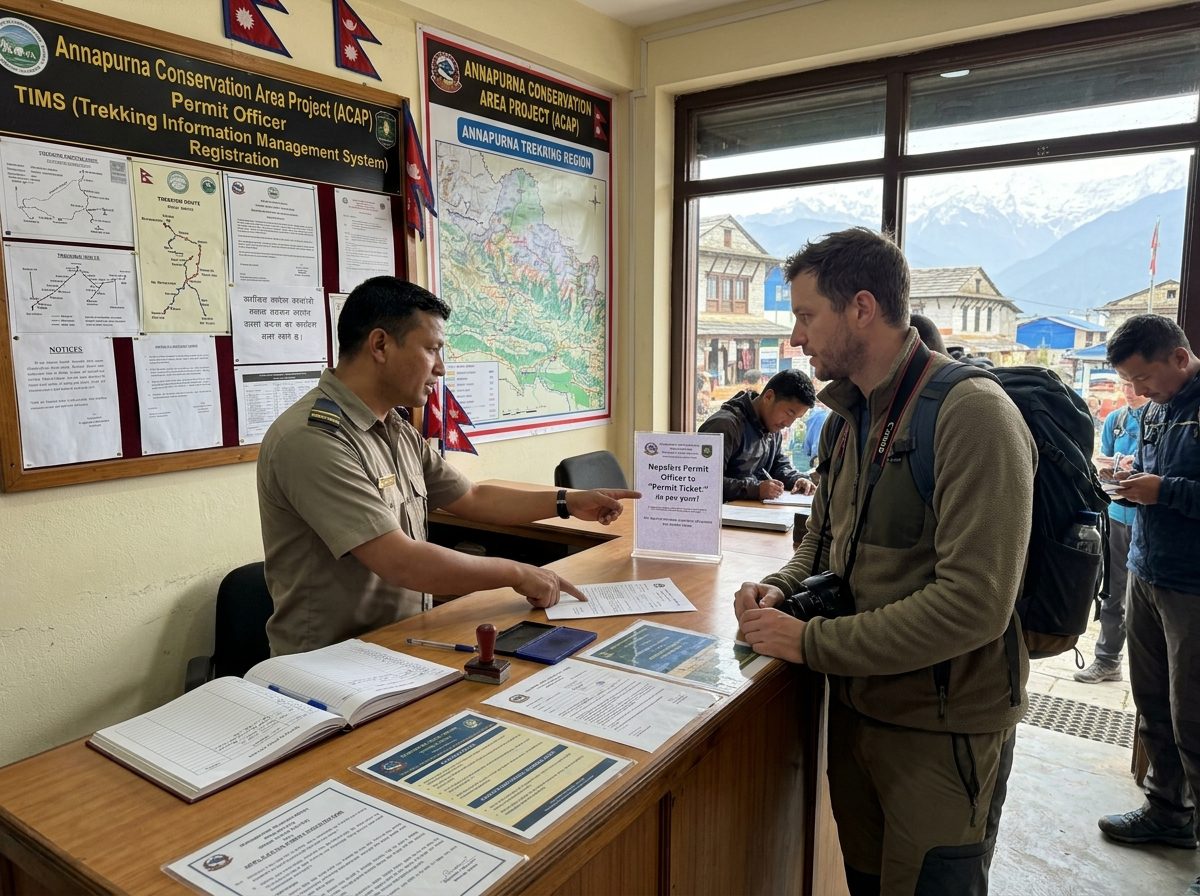
Both treks fall inside the Annapurna Conservation Area, so you’ll need an ACAP permit either way. ABC additionally requires a TIMS card, since it’s a longer trek further from the road. Poon Hill sometimes gets away with just the ACAP permit on very short itineraries, but it’s worth checking current rules before you go, as requirements do shift.
Guides and Porters
Neither trek legally requires a guide for foreign trekkers trekking with a registered agency, though solo independent trekking rules have tightened in recent years across the Annapurna region. A guide makes a real difference on ABC, especially given the longer distance and higher stakes if altitude symptoms show up. On Poon Hill, a guide is more about convenience and local insight than safety, since the trail is short and well-marked.
Porters are optional on both, but genuinely worth it on ABC if you’re carrying much gear, since multi-day treks at altitude are a lot more enjoyable without a heavy pack grinding you down by day four.
Fitness Level Needed
Poon Hill suits a wide range of fitness levels. If you can handle a few hours of stair climbing spread across a few days, you’ll be fine. It’s genuinely one of the more approachable multi-day treks in Nepal.
ABC asks more of you. Not extreme fitness, but a solid baseline, comfort with multiple consecutive days of walking, and ideally some hiking experience beforehand. Trekkers who show up undertrained tend to have a much harder time in the final stretch toward base camp.
Who Each Trek Suits Best
Families often gravitate toward Poon Hill. Kids, grandparents, and first-timers unsure how their bodies will handle altitude, it works for all of them. ABC asks a bit more, and suits adventurous beginners or intermediate trekkers with decent fitness, more time to spare, and a real appetite for the full base camp experience.
Annapurna Base Camp vs Ghorepani Poon Hill: Which One Should You Choose?
Short on time, traveling with family, or just want to keep the altitude low? Go with Ghorepani Poon Hill. You still get a genuinely spectacular sunrise and solid mountain views, without needing much fitness or a huge chunk of your holiday.
Got a week or more, reasonably fit, and want to actually stand at the foot of Annapurna I? Then it’s the Annapurna Base Camp trek for you. It costs more time and effort, sure, but waking up inside the Sanctuary with 7,000 and 8,000-meter peaks all around you is worth it.
Can’t pick? You don’t really have to. A lot of trekkers combine both, walking up through Ghorepani and Poon Hill on the way to Annapurna Base Camp. At Adventure Master Treks, this combined route is one of our most requested trips, and it’s easy to see why: you get the iconic sunrise plus days of close-up mountain views, all in one itinerary.
Final Thoughts
At the end of the day, Annapurna Base Camp vs Ghorepani Poon Hill isn’t really a question of which trek is “better.” It’s about matching the trek to your time, your fitness, and how much altitude you’re up for. Poon Hill gets you an efficient, low-risk taste of the Himalayas. ABC pulls you further in for a longer, more demanding journey through the heart of the mountains.
Still not sure which one’s right for you? Get in touch with Adventure Master Treks, and we’ll walk you through realistic timelines, current trail conditions, and permit costs, so you end up on the trek that actually fits your dates and your fitness level.
Comments (0)
Write a comment- Annapurna Base Camp vs Ghorepani Poon Hill: An Overview
- What Is the Annapurna Base Camp Trek?
- What Is the Ghorepani Poon Hill Trek?
- In-Depth Differences Between Annapurna Base Camp and Ghorepani Poon Hill
- Route and Duration
- Altitude and Difficulty
- Accommodation and Facilities
- Trail Conditions and Terrain
- Scenery and Highlights
- Best Time to Trek
- Sample Itinerary at a Glance
- Food and Water Along the Way
- What to Pack
- Safety and Altitude Sickness
- Cost
- Permits Required
- Guides and Porters
- Fitness Level Needed
- Who Each Trek Suits Best
- Annapurna Base Camp vs Ghorepani Poon Hill: Which One Should You Choose?
- Final Thoughts
Read the latest Blogs & Insights
Explore our collection of articles and insights to gain in-depth travel knowledge, expert advice, and stay updated on the latest trends and tips.


No comments yet.