









Can Children and Seniors Join the Everest Base Camp Helicopter Tour?
Wondering if an Everest Base Camp helicopter tour is suitable for children or seniors? Learn about age considerations, high-altitude landings, flight conditions, physical requirements, safety precautions, and practical tips for making the experience comfortable for the whole family.
-
 Adventure Master Trek
-
20 August, 2026
-
9 mins read
-
6 Views
-
0 Comments


One of the most common questions travel agencies in Kathmandu field, whether over WhatsApp, email, or in person at a Thamel travel desk, is whether a helicopter trip to Everest Base Camp is actually realistic for a grandparent, a young child, or anyone who isn’t in trekking shape. It’s an understandable question. The Everest Base Camp trek itself has a well-earned reputation for being physically demanding, so it’s natural to wonder whether the helicopter version carries the same restrictions.
The short answer is yes, both children and seniors can generally join, and this is actually one of the biggest selling points of the helicopter tour over the trek. But “generally” is doing some work in that sentence, and there are real health and logistical considerations worth understanding before booking, especially for very young children, infants, and older travelers with existing medical conditions.
Why the Helicopter Tour Is Different From the Trek
It helps to understand why age and fitness matter so much less here than they do for the walking route. The classic Everest Base Camp trek takes 12 to 14 days on average, involves days of sustained walking at altitude, and requires a gradual acclimatization schedule precisely because rapid altitude gain on foot is what triggers most cases of altitude sickness. The trek’s length and physical demands exclude those with significant mobility issues, severe respiratory conditions, or cardiovascular problems, and most operators recommend trekkers be at least 10 to 12 years old given the endurance required.
The helicopter tour sidesteps almost all of that. The tour requires no physical fitness, no altitude acclimatization, and no trekking experience whatsoever, which is exactly what opens it up to a much wider range of travelers. You’re not walking for two weeks and gradually adjusting to thinner air along the way. You’re sitting in a pressurized-cabin-adjacent environment for a few hours, with only brief stops on the ground at altitude.
That last point matters a lot for both children and seniors. Total time spent above 3,500 meters is usually under 1.5 hours, and most of that is a single stop, either at Hotel Everest View for breakfast or a brief landing near Kala Patthar. Altitude sickness risk is a function of both elevation and duration of exposure, and a short stop measured in minutes carries meaningfully less risk than days of sustained trekking at similar or higher elevations.
Can Children Join?
Yes — this is one of the questions almost every Everest heli operator gets asked, and it shows up near the top of most of their FAQ pages. The exact policy differs a bit from one company to the next, though.
Some operators set the practical minimum around 5 years old, while others put the age where a child is treated as a full paying passenger at 2.5 years. A few operators explicitly state there’s no minimum age requirement at all, since the flight itself doesn’t involve any physical exertion and the child never leaves the enclosed cabin except during the ground stop.
For infants specifically, the guidance is more cautious. Parents traveling with infants below 2 years old are generally advised to consult a doctor before booking, and very young infants may need to sit on a parent’s lap rather than in an individual seat, subject to the operator’s safety approval. This is worth confirming directly with your chosen operator, since policies on lap infants versus a required individual seat vary.
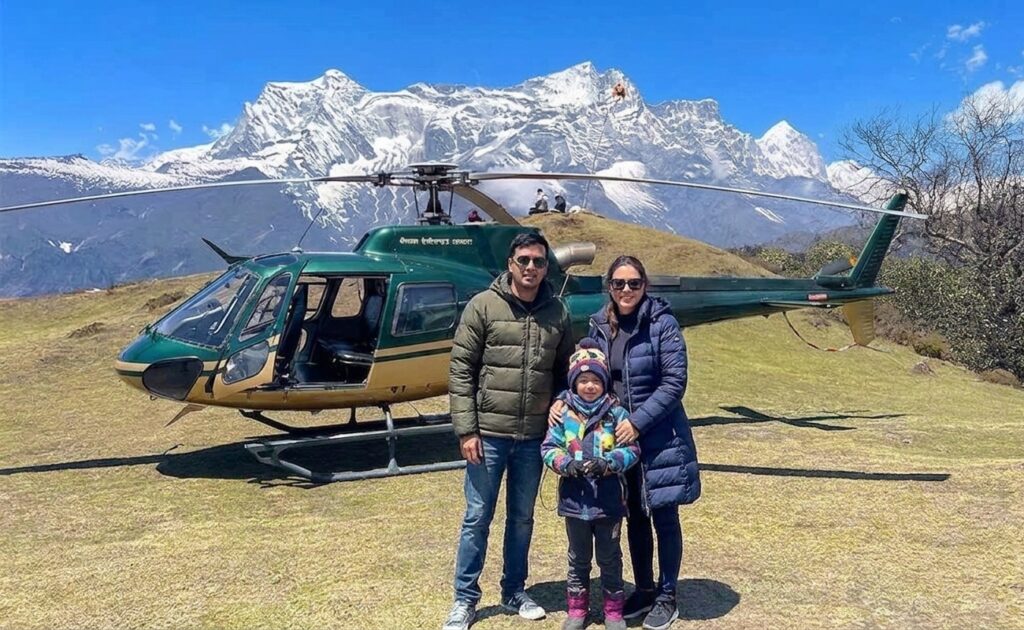
One practical detail that surprises a lot of parents: helicopters have a strict weight limit and only seat up to five passengers total, so children aged 2 and above typically need their own booked seat at the standard adult fare, rather than a discounted child rate. This is different from how many airlines price young children, and it’s worth budgeting for accordingly.
The one thing every operator agrees on is that any landing at higher elevations, particularly Kala Patthar at over 5,500 meters, should be approached cautiously for young children. Children below roughly 3 years of age are generally flagged as higher risk for the tour given their lower tolerance for rapid elevation changes, and some operators will suggest a flyover-only itinerary (skipping the ground landing) for younger kids, which still delivers the aerial views without the higher-altitude stop.
Can Seniors Join?
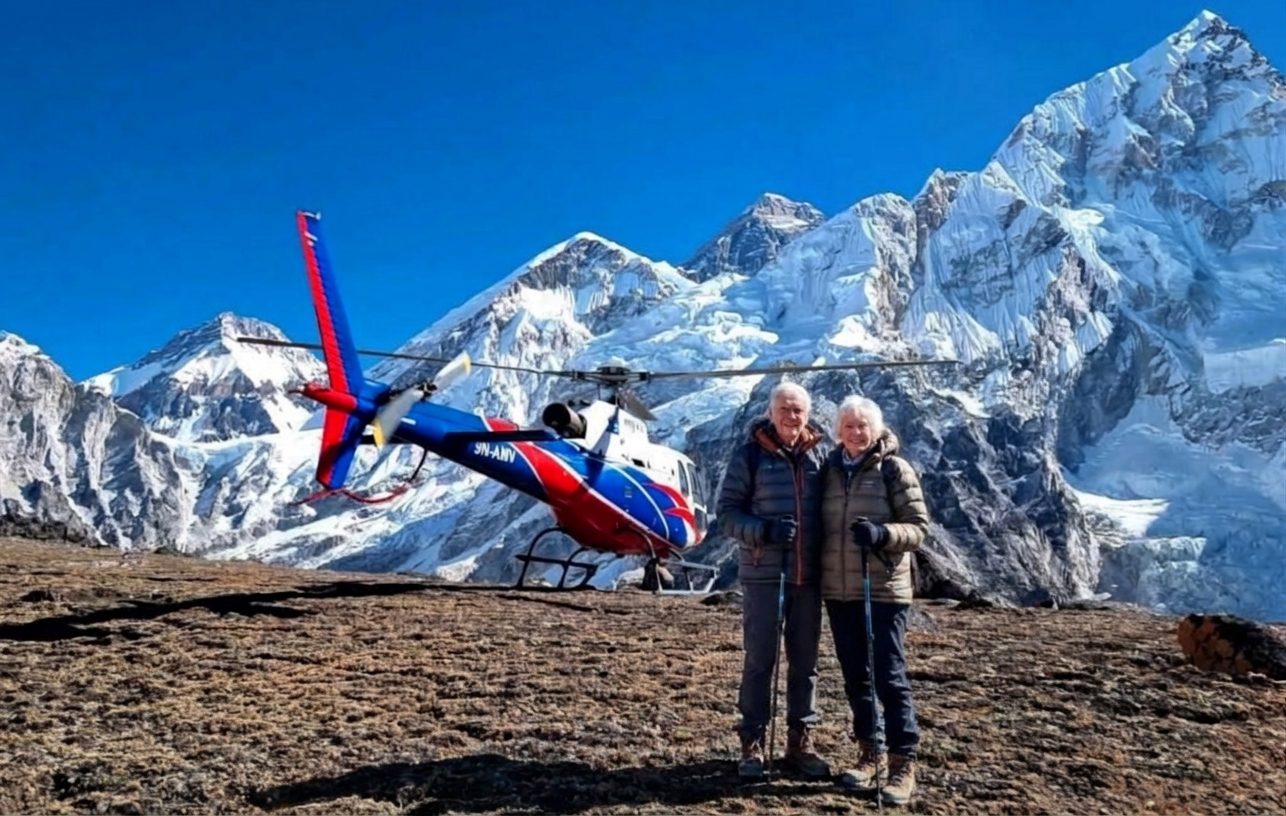
This is probably where the helicopter tour makes the biggest difference compared to trekking. Plenty of people who’ve always wanted to see Everest up close, but either can’t or don’t want to spend two weeks trekking at altitude, book the helicopter tour for exactly that reason: it takes the physical demands off the table.
The helicopter tour accommodates a broader age range than the trek, including elderly visitors, though altitude sensitivity remains a concern regardless of age. Most operators describe the tour as suitable for seniors with reasonably good general health, and several note that pilots and ground staff are experienced in helping older passengers board comfortably and manage the brief high-altitude stop.
The caution here is really about underlying health conditions, not age itself. Elderly travelers should confirm they don’t have severe respiratory or heart conditions before flying to high altitude, since rapid elevation gain, even briefly, puts additional strain on the cardiovascular and respiratory systems regardless of how fit or unfit someone otherwise is. Medical clearance is generally advisable for travelers above 65, and this is common, sensible advice rather than a strict rule enforced by any single operator or the Nepali government.
For most healthy seniors without cardiovascular or respiratory conditions, operators describe the tour as comfortable and low-risk. Boarding and stepping off the helicopter is really the only physical activity involved, and there’s supplemental oxygen on board for anyone who needs it during the flight or the ground stop.
Who Should Actually Avoid the Tour
A few groups show up again and again in operator guidance as poor candidates for this tour, no matter how much they might want to go.
Pregnant travelers, particularly in later stages of pregnancy, are advised against the tour by nearly every operator, since rapid altitude changes can pose real risk to both mother and unborn child.
Anyone with severe cardiovascular or respiratory conditions. Critical heart issues, severe respiratory conditions, or other significant chronic ailments make the rapid altitude gain risky even with onboard oxygen available, and this applies at any age, not just to seniors.
Travelers who are currently unwell or intoxicated at departure time. Pilots reserve the right to deny boarding if a passenger appears unwell or intoxicated, which is standard practice across the industry rather than something specific to any one company.
Outside of these categories, most operators are perfectly comfortable flying a wide range of ages and fitness levels — the physical demands are so much lower than trekking that age alone rarely rules someone out.
What Actually Happens at Altitude During the Tour
It helps to know the actual mechanics of the flight, since a lot of the anxiety around bringing a child or an older relative comes from not knowing what the on-the-ground experience actually involves.
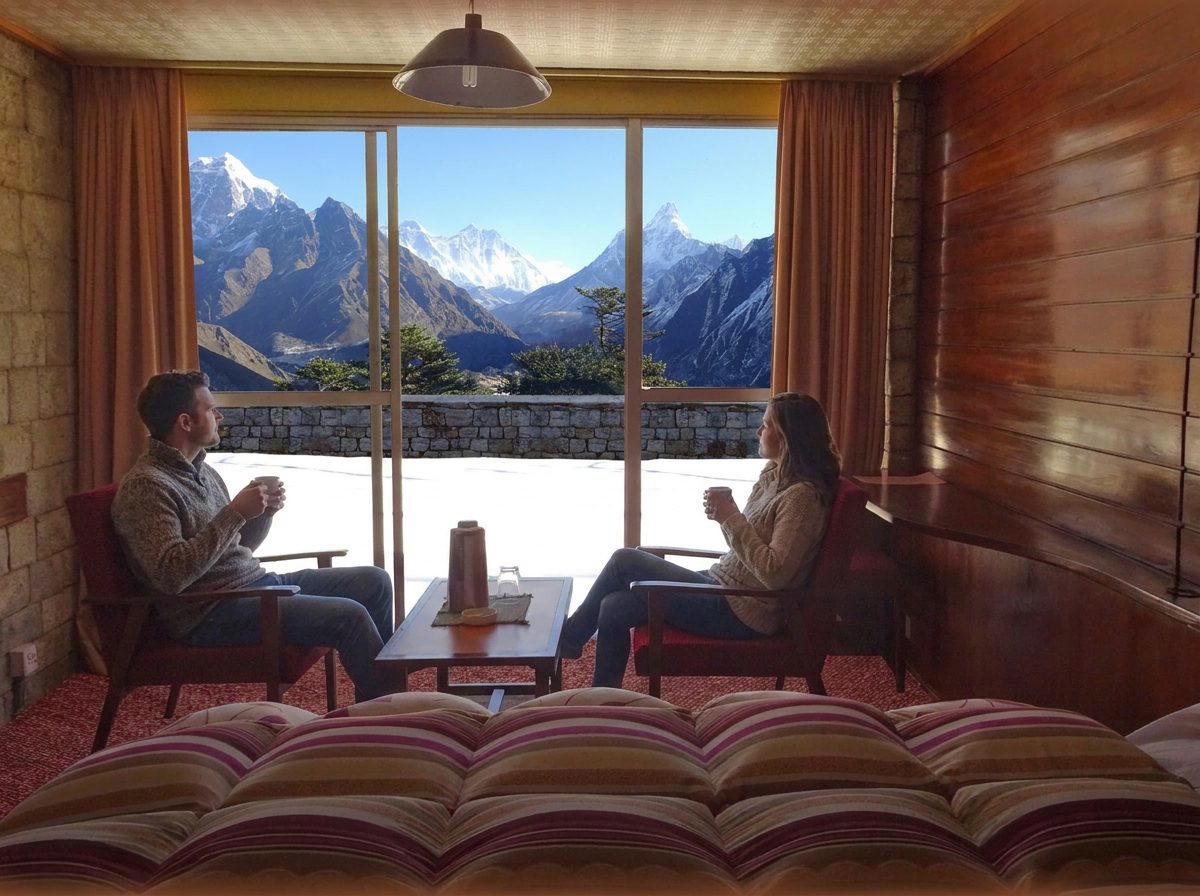
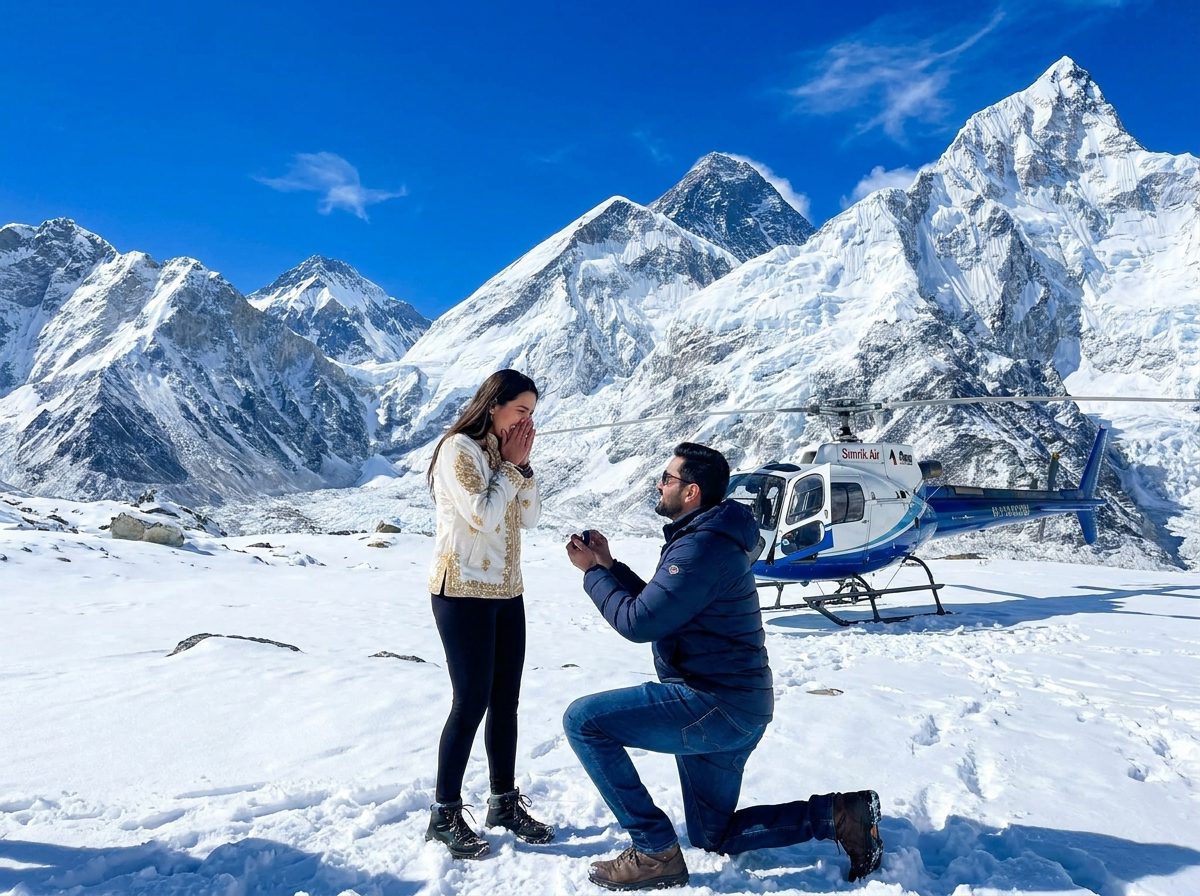
Most itineraries fly from Kathmandu to Lukla for a refueling stop, then continue toward the Everest region, often including a brief landing near Kala Patthar (typically just 5 to 10 minutes, since the helicopter’s engine can’t be shut down at that altitude and temperature) before heading to Syangboche for a longer stop, usually around an hour, for breakfast at Hotel Everest View. Some tour structures skip the Kala Patthar landing entirely and stick to a flyover plus the Everest View Hotel stop, which keeps the whole itinerary at a lower, gentler altitude throughout.
During the brief high-altitude landing, passengers typically stay close to the helicopter rather than wandering far, both because of the short window and the thinner air. The longer stop at Hotel Everest View, at just under 4,000 meters, is where most families and older travelers actually spend their time on the ground, and it’s generally regarded as manageable for a healthy person of almost any age.
The Bottom Line
For most families and older travelers, the Everest Base Camp helicopter tour is one of the more accessible ways to see the Himalayas up close — it strips away the physical demands that rule so many people out of the trek. Children as young as two or three can typically join with a parent, and seniors well into their seventies routinely complete the tour without trouble, as long as there’s no serious underlying heart or respiratory condition involved.
The sensible approach is the same regardless of age: check with a doctor beforehand if there’s anything worth flagging, tell the operator honestly when booking, and consider a flyover-only itinerary if a very young child or a less mobile relative would be better off skipping the brief high-altitude landing. Handled that way, it’s a trip that can put grandparents and grandchildren on the same flight — something the trekking version of this bucket-list destination simply can’t offer.
FAQ
Will my 6-year-old actually enjoy this, or will they be scared?
Most parents who’ve done this report their kids find the flight thrilling rather than frightening, especially since it’s a relatively short, scenic ride rather than a long or turbulent one. Morning departures, when winds are calmer, tend to make for the smoothest experience for nervous flyers of any age.
My mother is 72 and has mild high blood pressure that’s well managed with medication. Can she still go?
This is exactly the kind of case where getting a quick sign-off from her doctor beforehand is worth the extra step, both for peace of mind and because most operators will ask about pre-existing conditions during booking anyway. Well-managed, stable conditions are treated very differently from acute or severe ones.
Is the landing at Kala Patthar worth it for an older relative, or should we just do the flyover?
If the ground time and cold aren’t a concern, most people find the brief Kala Patthar stop to be one of the highlights of the whole trip. But it’s completely fine to skip it and stick to a flyover-only itinerary — you still get a close aerial view of Everest without any high-altitude ground exposure at all.
Do I need to disclose my child’s or parent’s medical history when booking?
Yes, and reputable operators will generally ask directly, since it helps them plan appropriately and, in rare cases, decide whether a flyover-only version makes more sense than the full landing itinerary.
What if someone starts feeling unwell during the stop at altitude?
Every reputable operator carries onboard oxygen and a first-aid kit specifically for this scenario, and pilots are trained to recognize early signs of altitude discomfort. Because the ground stops are so brief, symptoms are almost always mild and resolve once the helicopter descends.
Comments (0)
Write a commentRead the latest Blogs & Insights
Explore our collection of articles and insights to gain in-depth travel knowledge, expert advice, and stay updated on the latest trends and tips.


No comments yet.