









10 Reasons Trekkers Choose the Manaslu Circuit Over Other Routes
Why choose the Manaslu Circuit over Nepal's more famous trekking routes? Explore 10 reasons trekkers are drawn to its dramatic mountain scenery, quieter trails, Tibetan-influenced culture, remote villages, challenging passes, and authentic Himalayan experience.
-
 Adventure Master Trek
-
15 August, 2026
-
11 mins read
-
404 Views
-
0 Comments


There’s a specific moment that keeps coming up when I talk to people who’ve done the Manaslu Circuit: somewhere around day four or five, standing in a village that doesn’t show up in most trekking conversations, they turn to whoever they’re with and say some version of “why doesn’t everyone do this instead?”
That question is worth actually answering, because it’s not a small one. Nepal has no shortage of famous treks — Everest Base Camp and the Annapurna Circuit have been the default answer to “which trek should I do” for decades, and for good reason. They’re beautiful, well-established, and deliver exactly what they promise. But something has shifted over the last several years. Manaslu has quietly gone from “the trek serious trekkers whisper about” to a route that regularly gets chosen over its two much more famous siblings, and not by accident.
Most articles comparing these routes stick to the obvious stuff — Manaslu is quieter, Manaslu is remote, Manaslu isn’t as commercialized. All true, all a bit tired at this point. What’s more interesting is why those surface-level differences actually matter to the people making the choice, and what they trade off — and gain — by picking Manaslu over the two routes everyone already knows by name.
Here are ten reasons, and the actual reasoning behind each one.
1. It Restricts Itself Just Enough to Stay Special
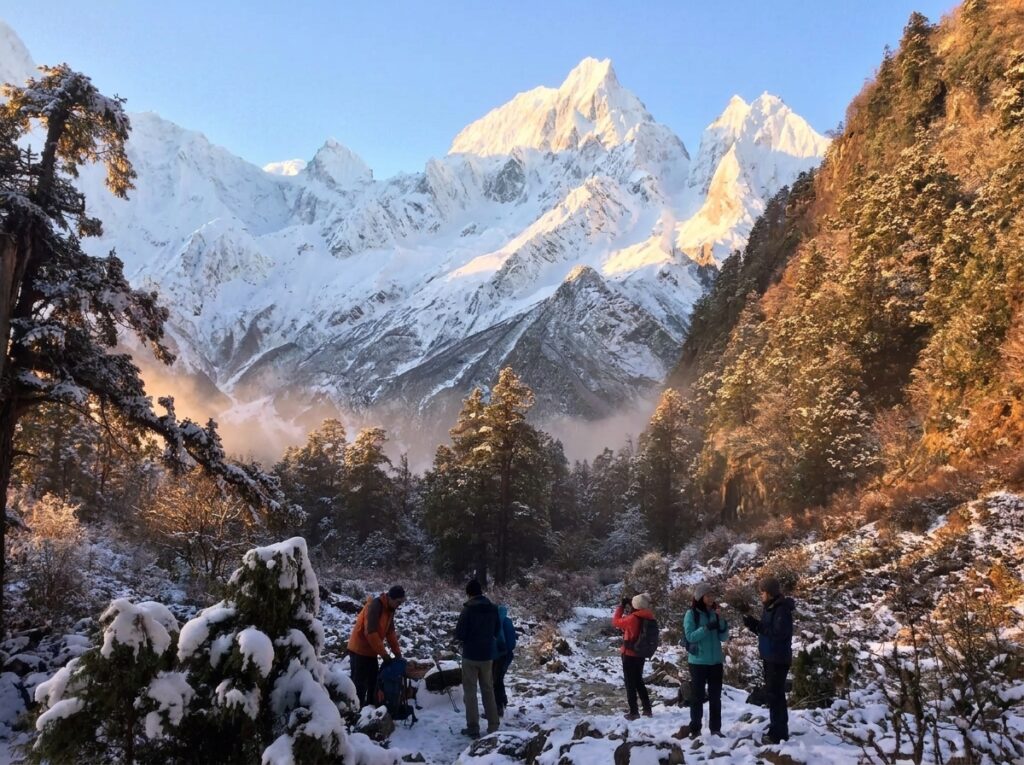
Manaslu requires a restricted area permit, issued only to trekkers going through a registered agency, and you’re required to trek with at least one other person and a licensed guide. On paper, that sounds like a bureaucratic downside — more paperwork, less spontaneity, higher minimum cost than a route you could theoretically walk solo.
In practice, this restriction is exactly what keeps Manaslu from turning into the next Annapurna Circuit, which — and this needs saying plainly — got a road built partway through it in the 2000s, permanently changing what used to be one of the most celebrated trekking routes on Earth. Trekkers who’ve researched this thoroughly aren’t choosing Manaslu despite the permit system. They’re choosing it partly because of it. The restriction acts as a natural cap on numbers, which means the trail infrastructure, the villages, and the pace of tourism development haven’t had to absorb the volume that reshaped Annapurna and, more recently, has started reshaping the Everest region too.
2. You Get Everest-Level Scale Without Everest-Level Logistics
Manaslu is the eighth-highest mountain in the world, and the circuit around it delivers genuinely high-altitude, high-drama Himalayan scenery — Larkya La pass sits at 5,106 meters, which is comparable in altitude challenge to crossing Thorong La on the Annapurna Circuit or reaching Kala Patthar near Everest Base Camp.
But getting there doesn’t require the flight-dependent logistics that Everest Base Camp does. There’s no Lukla airstrip with its notoriously weather-sensitive flight schedule, no multi-day buffer built into your itinerary in case flights get cancelled for a week during monsoon shoulder season. You start the trek by road from the Kathmandu valley, which means your trip start date is far more reliable and far less at the mercy of mountain weather before you’ve even begun walking.
3. The Landscape Changes Faster Than Almost Any Other Route in Nepal
This is the reason that surprises people most once they’ve actually done it. The Annapurna Circuit is loved for its landscape diversity, and rightly so — but Manaslu compresses an arguably wider range of terrain into a shorter trek. You start in lush, terraced lowland villages with rice paddies and subtropical forest, climb through pine and rhododendron forest, pass through high alpine yak pasture, and finish crossing a genuine glacial high pass flanked by some of the most dramatic peaks in the Himalayas — Manaslu itself, along with Himlung Himal and Cheo Himal visible from different points along the route.
Because the trek follows the Budhi Gandaki river valley for much of its length, you’re constantly moving through dramatically different microclimates and ecosystems in a relatively compressed number of trekking days, rather than the more gradual, extended climb you get on longer circuits.
4. Tibetan Buddhist Culture That Hasn’t Been Built Around Tourism
Everest Base Camp trekkers pass through Sherpa villages that have spent decades adapting — sensibly and often quite beautifully — to a massive, sustained tourist economy. Namche Bazaar has bakeries, espresso machines, and bars with imported beer. That’s not a criticism; it’s just a reality of a region that’s hosted foreign trekkers in serious numbers since the 1960s.
The upper Manaslu region, by contrast, is home to ethnic Tibetan and Gurung communities whose Buddhist culture — monasteries, mani walls, prayer flags, chortens — feels considerably less curated for outside visitors, largely because it hasn’t had the same decades-long tourism volume to adapt around. Villages like Samagaon and Samdo sit close to the Tibet border and carry a cultural texture that trekkers frequently describe as feeling less like a trekking route through a culture and more like walking through a place that simply happens to have a trekking route running through it.
5. Teahouses Without the Overbuild
One of the quieter frustrations trekkers have started voicing about both Everest Base Camp and the Annapurna Circuit is the sheer density of teahouses competing for the same trekkers on the same nights in the same villages — sometimes a genuinely jarring number of near-identical guesthouses lined up along a single stretch of trail, each with the same menu, the same solar-heated shower, the same WiFi router charging by the hour.
Manaslu’s teahouse infrastructure has grown, but far more modestly, and it still tends to reflect what a smaller trekking volume actually needs rather than what a route anticipating mass tourism has been built to handle. The result is fewer choices per village, sure, but also less of that strange feeling of trekking through an outdoor food court that some more built-up routes can produce during peak season.
6. The Crowd You’re Walking With Is Genuinely Different
This one is more social than scenic, but it matters more than people expect. Because of the restricted permit requirement and the higher minimum organizational bar to get on the trail at all, Manaslu tends to attract a trekking population that skews toward people who’ve done real research and often already have at least one other significant trek behind them. It’s rarely anyone’s very first Nepal trek.
That changes the texture of the trail itself. Conversations in teahouse dining rooms in the evening tend to run deeper and more specific — people comparing notes on other regions, other countries, other passes — rather than the more general “is this your first time trekking” conversations that dominate a first-timer-heavy route. It’s a subtle difference, but it’s one of the most frequently mentioned reasons repeat trekkers specifically seek Manaslu out.
7. Fewer People Means the Silence Actually Registers
This sounds like a soft, almost throwaway point until you’ve actually experienced the contrast directly. On Everest Base Camp during peak October season, or the more accessible sections of the Annapurna Circuit, trail traffic can be dense enough that you’re rarely walking in true silence for extended stretches — other trekkers, porters, mule trains, and increasingly, low-flying helicopters doing scenic tours or emergency evacuations, all contribute a fairly constant low hum of human activity.
Manaslu’s lower overall numbers mean you get long stretches — sometimes hours — of walking with only the sound of the river, wind, and your own footsteps. Trekkers who’ve done both routes back-to-back consistently point to this as one of the most immediately noticeable differences, and for people specifically trekking to get away from noise and crowding rather than just to bag a summit view, it’s often the deciding factor.
8. A Genuine Sense of Discovery That’s Getting Harder to Find Elsewhere
There’s a specific kind of satisfaction that comes from doing something that still feels slightly under-the-radar, and Manaslu still delivers that in a way Everest Base Camp — arguably the single most famous trek on the planet — simply cannot anymore, no matter how spectacular the scenery still is. Telling someone you trekked to Everest Base Camp gets an immediate, familiar nod of recognition. Telling someone you did the Manaslu Circuit usually gets a genuine question: “wait, where’s that?”
For a certain kind of trekker, that distinction matters. It’s not about being contrarian for its own sake — it’s that discovery is part of what makes trekking rewarding in the first place, and a route that most people haven’t heard of yet still delivers a version of that feeling that’s become much harder to access on the more famous circuits.
9. It Rewards Acclimatization Better Than Some Faster Alternatives
Altitude sickness is a real risk on any trek crossing 5,000 meters, and one underappreciated advantage of the Manaslu Circuit is how its standard itinerary is structured. The gradual elevation gain along the Budhi Gandaki valley, combined with built-in acclimatization stops around Samagaon before the push toward Larkya La, tends to give trekkers a more forgiving, better-paced acclimatization schedule than some compressed Everest Base Camp itineraries that fly in and out of Lukla on a tight schedule and push altitude gain faster than ideal in exchange for a shorter overall trip.
This isn’t universally true of every operator’s itinerary on either route — pacing varies — but the standard Manaslu itinerary as most agencies run it tends to build in a rhythm that’s genuinely kinder to your body, which matters enormously for anyone who’s had a rough time with altitude on a previous trek.
10. It’s Often Cheaper Than People Assume, Despite the Permit Costs
This is the reason that surprises people most when they actually run the numbers. Yes, Manaslu requires a Restricted Area Permit, a Manaslu Conservation Area Permit, and an Annapurna Conservation Area Permit for the final stretch — three separate permit costs stacked on top of each other, which sounds expensive compared to the single permit most other treks require.
But once you factor in what you’re not paying for — no domestic flight to and from Lukla, which is one of the more expensive and least predictable costs of an Everest Base Camp trip, and no accumulating cost from the kind of built-up teahouse tourism economy that’s pushed prices up steadily on both Everest Base Camp and Annapurna Circuit over the past decade — the total cost often lands surprisingly close to, and sometimes below, what trekkers end up spending on the more famous routes once flights, gear rental inflation, and inflated teahouse pricing during peak season are added in.
So, Is Manaslu Actually “Better”?
Better isn’t quite the right word, and it’s worth being honest about that rather than overselling the comparison. Everest Base Camp delivers something Manaslu genuinely cannot — the specific, singular experience of standing near the base of the tallest mountain on the planet, surrounded by a trekking and mountaineering culture that’s built up around that exact fact for over sixty years. The Annapurna Circuit, even with its road-altered sections, still offers some of the most genuinely diverse terrain of any trek in Nepal, and its teahouse infrastructure — for all the crowding complaints — makes it dramatically more accessible for first-time trekkers or anyone without a huge amount of high-altitude experience.
What Manaslu offers instead is a different set of trade-offs, and for a specific and growing type of trekker, those trade-offs land in exactly the right place: real remoteness without extreme logistical risk, cultural depth that hasn’t been reshaped by decades of mass tourism, a genuinely varied landscape compressed into a shorter overall trip, and a level of quiet that’s become increasingly rare anywhere in Nepal’s more famous trekking regions.
The honest answer to why trekkers increasingly choose Manaslu isn’t that it’s objectively superior to Everest Base Camp or the Annapurna Circuit. It’s that those two routes have become victims of their own success in specific, measurable ways — road development, tourism density, teahouse overbuild, a certain loss of discovery that comes with global fame — and Manaslu currently sits in the sweet spot where you get comparable altitude, comparable drama, and comparable cultural richness, without most of those specific downsides having fully caught up with it yet.
Whether that stays true in another decade is genuinely an open question. Manaslu’s popularity has grown noticeably even in the last few years, and there’s a real conversation happening among guides and trekking agencies about whether it’s on the same trajectory Annapurna was on thirty years ago, before the road changed everything. For now, though, it remains one of the very few treks in Nepal where you can get genuinely world-class Himalayan scenery without also signing up for the crowds, infrastructure, and predictability that now come standard with the routes everyone already knows by name — and that combination, more than any single scenic viewpoint along the way, is the real reason trekkers keep choosing it over the more famous alternatives.
Comments (0)
Write a comment- 1. It Restricts Itself Just Enough to Stay Special
- 2. You Get Everest-Level Scale Without Everest-Level Logistics
- 3. The Landscape Changes Faster Than Almost Any Other Route in Nepal
- 4. Tibetan Buddhist Culture That Hasn’t Been Built Around Tourism
- 5. Teahouses Without the Overbuild
- 6. The Crowd You’re Walking With Is Genuinely Different
- 7. Fewer People Means the Silence Actually Registers
- 8. A Genuine Sense of Discovery That’s Getting Harder to Find Elsewhere
- 9. It Rewards Acclimatization Better Than Some Faster Alternatives
- 10. It’s Often Cheaper Than People Assume, Despite the Permit Costs
- So, Is Manaslu Actually “Better”?
Read the latest Blogs & Insights
Explore our collection of articles and insights to gain in-depth travel knowledge, expert advice, and stay updated on the latest trends and tips.


No comments yet.