









Cheapest Way to Travel From Kathmandu to Pokhara in 2026
Looking for the cheapest way to travel from Kathmandu to Pokhara? Compare buses, tourist buses, and flights in 2026 based on price, travel time, comfort, and convenience to find the best option for your budget.
-
 Adventure Master Trek
-
18 September, 2026
-
10 mins read
-
16 Views
-
0 Comments


Anyone planning a trip to the Annapurna region eventually runs into the same question: how do you actually get from Kathmandu to Pokhara without blowing the budget? The distance is only about 200 kilometers, but the options range widely in both price and comfort, and most travel sites throw numbers at you without explaining what you’re really choosing between.
At Adventure Master Treks, this is one of the first questions our trekkers ask, since Pokhara is the launch point for Annapurna Base Camp, Poon Hill, and most other routes in the region. This guide breaks down every realistic option, what it costs in 2026, exactly which operators and airlines run it, and which choice actually makes sense for your specific trip.
The Short Answer
- Local bus: $6–$7, 8–10 hours — the rock-bottom option
- Standard tourist bus: $8–$16, 6–8 hours — the default for most travelers
- VIP sofa bus: $18–$25, 6–7 hours — extra comfort, still road travel
- Domestic flight: $75–$130 (higher near NPR 18,000 in peak season), 25–35 minutes
- Private car/jeep: $120–$180 total, 5–7 hours — best split among a group
The right choice depends less on your total budget and more on how much time you have, how many people you’re traveling with, and how you feel about winding mountain roads. Here’s the depth on each.
Tourist Bus: The Budget Traveler’s Default
Standard tourist buses leave from Sorhakhutte, just northwest of Thamel, every morning around 7 AM, arriving in Pokhara’s Lakeside district by early-to-mid afternoon. A handful of operators also run an evening departure from Balaju, arriving around 2-3 AM, if you’d rather sleep through the ride than watch scenery.
Ticket prices vary by comfort tier, not just by operator:
- Standard tourist bus: roughly $8–$16, with 2×2 semi-reclining seats, air conditioning, and bottled water included
- VIP sofa bus: roughly $18–$25, with wider individual sofa-style seats (often 21 seats instead of the usual 35–40), more legroom, and sometimes onboard wifi
- Deluxe coaster (17-seater): a smaller, more intimate option some operators run, priced closer to the VIP tier
Swift Holiday has largely become the go-to premium operator on this route in recent years, running VIP sofa buses after some older “luxury” brands scaled back service. Jagadamba is another established name, departing from Durbar Marg and including wifi and steward service in its fare. For the standard tier, dozens of smaller operators run daily from Sorhakhutte at similar prices — the difference between them usually comes down to seat comfort and punctuality rather than route or duration.
The journey follows the Prithvi Highway through Naubise, Malekhu, and Mugling, with one breakfast stop and one lunch stop along the way (Malekhu is a popular breakfast spot; Mugling’s riverside restaurants, known for fresh fish from the Trishuli River, are a common lunch stop). Meals aren’t included in the ticket price except on a few premium services — budget roughly NPR 250–400 per meal.
A few practical notes before booking:
- Book through a registered agency, your hotel, or directly with the operator — unlicensed street vendors near Thamel are where most ticket scams happen
- Arrive at the departure point at least 30 minutes early; boarding is first-come for unassigned seats on some operators
- The Prithvi Highway has been under phased renovation through 2024–2026, so expect some smooth new sections and some rough, construction-slowed stretches
- Motion sickness is less common than people expect, since buses average only 30–40 km/h on the winding sections
For most independent travelers on a flexible schedule, the standard tourist bus remains the best balance of price and reliability.
Local Buses: The Absolute Cheapest Option
If shaving every rupee matters more than comfort, local and express buses undercut even the standard tourist bus, running around NPR 800–1,000 (roughly $6–$7) for the same route. These are the buses Nepali commuters and domestic travelers actually use.
The tradeoffs are real. Local buses stop frequently — sometimes every few minutes near towns — to pick up and drop off passengers, which stretches the journey to 8, 9, or occasionally 10 hours. Air conditioning isn’t guaranteed, legroom is tight, and buses can get genuinely crowded during festival periods when domestic travel spikes.
This option suits travelers who are deeply budget-conscious, comfortable with some chaos, and in no rush at all. For most first-time visitors, the $2–$8 saved over a standard tourist bus rarely justifies the extra two-plus hours and reduced comfort.
Flights: Fast, and Cheaper Than Most Assume
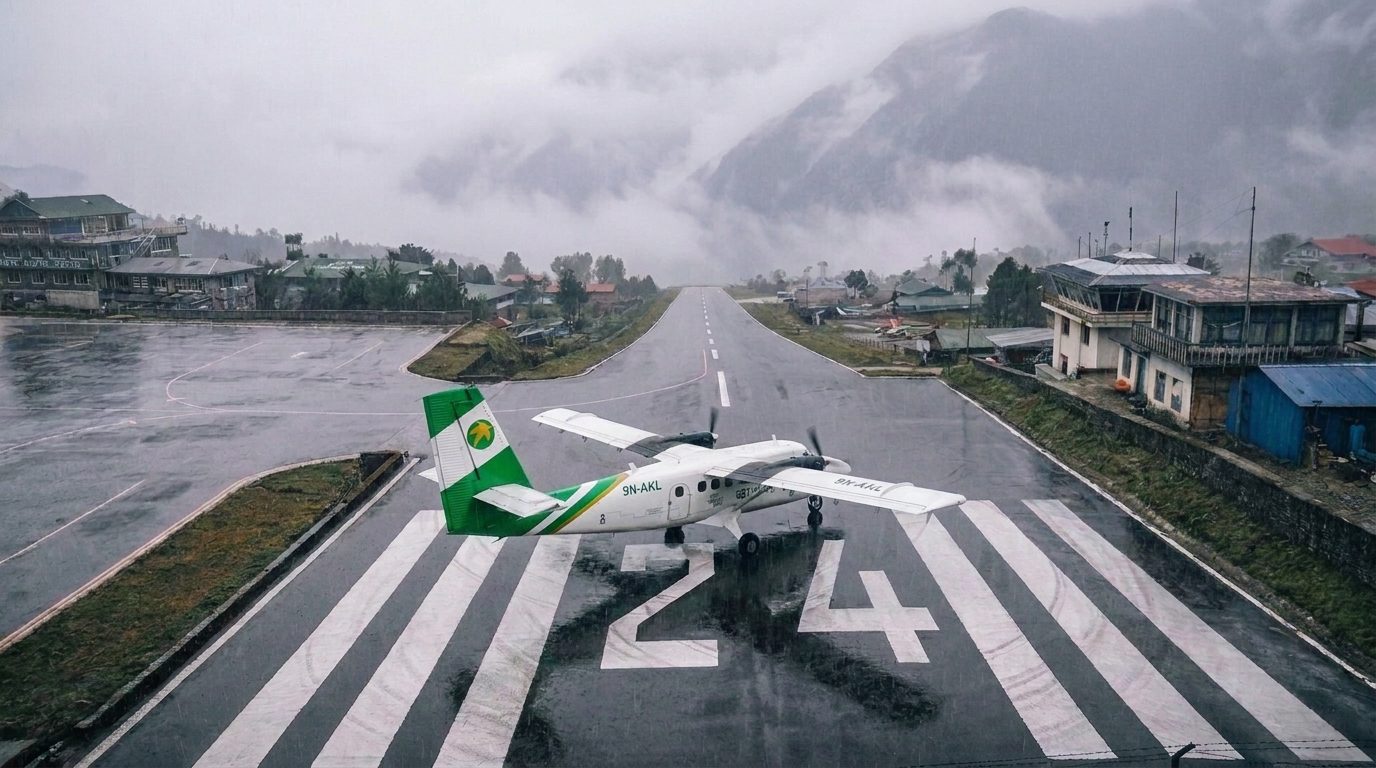
A cheap flight from KTM to Pokhara is more within reach than a lot of travelers assume. Three carriers operate the route daily: Buddha Air, Yeti Airlines, and Shree Airlines, which fly small propeller aircraft (Buddha Air also operates larger jets during peak periods). Flight time is just 25–35 minutes, compared to a full day by road.
One-way fares typically run NPR 8,000 to 18,000 (roughly $75–$130), with the lower end available through advance booking during off-peak months and the upper end showing up during October–November and March–April peak season. Note that airlines charge different rates for Nepali citizens, foreign residents, and tourists — tourists pay the highest tier, in US dollars.
Three habits actually move the price down meaningfully:
- Book two to three weeks ahead. Fares climb steadily as the departure date approaches, especially in peak trekking months, and seats on popular morning slots sell out first.
- Fly outside peak season. Monsoon months (June–September) and quieter winter weeks see noticeably lower demand and often lower fares, even though flights run on the same schedule.
- Compare all three carriers for your date. Buddha Air, Yeti Airlines, and Shree Airlines don’t price the same day and time slot identically, so a quick comparison across all three before booking is worth the five extra minutes.
Flights on this route are genuinely weather-dependent — delays and cancellations are common in the monsoon season and during winter morning fog. Check-in is one hour before departure from the TIA domestic terminal. If you have an onward international flight or a fixed trek start date, never book a same-day connection, and build in at least one buffer day.
Private Car or Jeep: Best for Groups, Not Solo Budgets
Hiring a private car or jeep typically runs $120–$180 for the whole vehicle, making it the most expensive option per solo traveler but a genuinely smart choice for groups.
Split four ways, a $160 car works out to $40 per person — more than a bus, but with door-to-door hotel pickup, a departure time you control, and the freedom to stop wherever you want along the highway. The drive itself takes roughly 5–7 hours, slightly faster than the scheduled tourist bus since there’s no fixed boarding process or group meal stop to work around.
This option is worth it for trekking groups heading straight to a trailhead, families with young kids who’d struggle with a long scheduled bus ride, or anyone who simply wants a private, flexible ride without paying full per-person flight prices.
A Quick Cost-Versus-Time Comparison
Seeing every option side by side makes the real tradeoff clearer:
- Local bus — cheapest by far, but the slowest and least comfortable
- Standard tourist bus — the balanced default: modest cost, decent comfort, scenic route
- VIP sofa bus — same duration as the standard bus, meaningfully more comfortable, costs roughly double
- Domestic flight — 10x the price of a standard bus, but saves nearly a full day
- Private car/jeep — expensive solo, competitive per-person once split among three or more travelers
The standard tourist bus and the flight aren’t really competing on the same axis — one optimizes for price, the other for time. Once you know which of those two matters more for your specific trip, the decision usually settles itself.
Timing Your Travel Around the Seasons
October–November and March–April are peak trekking season, and both bus tickets and flights should be booked one to three weeks ahead during these windows, since seats fill fast and prices climb as departure dates approach.
Monsoon season (June–September) increases landslide risk along sections of the Prithvi Highway, which can delay bus and car travelers, while flights face a higher risk of weather-related delays or cancellations. Winter months tend to bring calmer road conditions and occasionally lower flight fares, making them a reasonable window for travelers with flexible dates.
Whichever season you’re traveling in, build a buffer day into your plan before any trek start date. A short delay on either end of the Kathmandu–Pokhara leg can throw off permit arrangements and guide or porter bookings that were scheduled around your arrival.
How to Actually Book Each Option
Knowing the price is only half the picture — how you book affects both the price you end up paying and how smoothly the trip goes.
For tourist buses: Book through your hotel or guesthouse in Thamel, a registered travel agency, or directly with the operator’s office near Sorhakhutte. Same-day walk-up booking is possible in the off-season but is risky during October–November and March–April, when popular morning departures sell out a day or two in advance. Confirm your exact seat number at booking — some operators sell more tickets than they have assigned seats on lower-priced services, and getting this in writing avoids an awkward argument at boarding.
For flights: Book directly through the airline’s website or app rather than a third-party aggregator where possible, since some aggregators add a booking fee on top of the base fare. Buddha Air, Yeti Airlines, and Shree Airlines all support online booking with instant confirmation. Have your passport details ready, as tourist fares are billed differently from resident fares and the system checks nationality at the time of booking.
For private cars: Arrange through a trekking agency or a licensed car-hire service rather than negotiating with a random driver outside your hotel. A licensed service guarantees insurance coverage and a driver experienced on mountain roads, which matters more on this route than it might on a flatter highway. Get the total price confirmed in writing before departure, including whether it covers the driver’s meals — a small but common source of confusion.
Final Thoughts
There’s no single “best” way to get from Kathmandu to Pokhara — only the option that fits your budget, your timeline, and how many people you’re traveling with. For most independent travelers, the standard tourist bus remains the sensible default. Anyone tight on time will find that a cheap flight from KTM to Pokhara pays for itself in convenience, and groups often do best splitting a private car.
If you’re already mapping out an Annapurna route and want help lining up transport with your trek dates, that’s exactly the kind of planning our team at Adventure Master Treks handles for trekkers heading into the region every season.
FAQ
Is the road safe?
Yes, for both buses and private cars, provided you’re using a licensed operator. The Prithvi Highway sees heavy daily traffic and experienced drivers, though sections under renovation can be slow and bumpy rather than dangerous.
Should I fly one way and bus the other?
This is a genuinely good middle-ground strategy many of our trekkers use — fly to Pokhara to save the first day for trekking prep, then take the bus back to Kathmandu at a more relaxed pace once the trek is over, when there’s no schedule pressure.
Can I combine this with other destinations?
Yes — several tourist bus operators run connecting routes to Chitwan and Lumbini from Pokhara, which is worth knowing if your itinerary includes wildlife or pilgrimage stops beyond the Annapurna region.
Comments (0)
Write a comment- The Short Answer
- Tourist Bus: The Budget Traveler’s Default
- Local Buses: The Absolute Cheapest Option
- Flights: Fast, and Cheaper Than Most Assume
- Private Car or Jeep: Best for Groups, Not Solo Budgets
- A Quick Cost-Versus-Time Comparison
- Timing Your Travel Around the Seasons
- How to Actually Book Each Option
- Final Thoughts
- FAQ
Read the latest Blogs & Insights
Explore our collection of articles and insights to gain in-depth travel knowledge, expert advice, and stay updated on the latest trends and tips.




No comments yet.