









Can You Stay Overnight at Everest View Hotel? Cost, Itinerary and What to Expect
Wondering what it’s like to spend a night at Hotel Everest View? This guide covers the overnight itinerary, accommodation cost, transportation options, Everest and Himalayan views, altitude, meals, and what to expect from staying at one of the world’s highest luxury hotels.
-
 Adventure Master Trek
-
11 September, 2026
-
12 mins read
-
259 Views
-
0 Comments


Yes, you can stay overnight at Hotel Everest View, and for most visitors it’s the whole point of getting there. A night in one of its 12 rooms typically runs from roughly US$300 to $500+ per person on a twin-sharing basis, including meals, though full trekking or helicopter packages built around the stay commonly run into the thousands once flights, permits, and guides are factored in. Here’s what an overnight stay actually costs, how people get there, and — based on both the marketing copy and years of honest guest reviews — what you can realistically expect once you arrive.
How Much Does an Overnight Stay Actually Cost?
Room rates at Hotel Everest View aren’t published in a fixed, transparent tariff the way a city hotel’s would be, so prices you’ll see quoted online vary more than you might expect. Based on current travel-industry listings, here’s a realistic range for 2026:
- Twin-sharing room: roughly US$300–500 per person per night, including breakfast and often other meals
- Single occupancy: typically above US$500 per person per night, since the hotel’s limited 12-room inventory makes solo travelers a costly booking to offer at a discount
- Peak season premium: spring (March–May) and autumn (October–November) dates often push toward the higher end of these ranges or beyond, simply because demand for 12 rooms during the two best trekking seasons vastly outstrips supply
A few sources quote figures well above $500, even into the $800+ range for certain packages, and it’s worth treating any single number you find online with some skepticism, since the hotel doesn’t maintain a public real-time rate sheet the way a global hotel chain would. What’s consistent across nearly every source is the underlying logic: this is one of the most expensive rooms in Nepal by a wide margin, and the price reflects genuine logistics rather than pure markup — everything from food to fuel to spare parts arrives here by porter, yak train, or helicopter, since there’s no road.
If you’re trekking in independently and just want the room and meals, budget for that per-person nightly rate above, plus your existing trekking costs (Lukla flights, permits, guide and porter fees) on the days you’re not staying there.
If you’re booking a package, prices scale dramatically based on how you’re getting there:
- A multi-day trekking itinerary that includes one or two nights at Hotel Everest View alongside standard teahouse stays elsewhere typically runs US$1,800–2,100 per person for a week-long trip with flights, permits, guide, and porter included.
- A helicopter-based overnight package — flying in, spending a night, and flying back out — spans an unusually wide range, from around US$2,300 per person in a shared group booking up to US$4,000–7,500 per person for smaller private charters, depending on group size, whether the itinerary includes a Kala Patthar or Everest Base Camp touchdown, and how many people split the helicopter cost.
- A simple breakfast-only helicopter day trip that touches down at Hotel Everest View without an overnight stay is considerably cheaper, often US$1,000–1,500 per person in a shared group, since it avoids the room cost and an extra flight day entirely.
The takeaway: the room itself is a few hundred dollars a night, but the transportation wrapped around it is usually the bigger line item in your total budget, especially if you fly rather than trek.
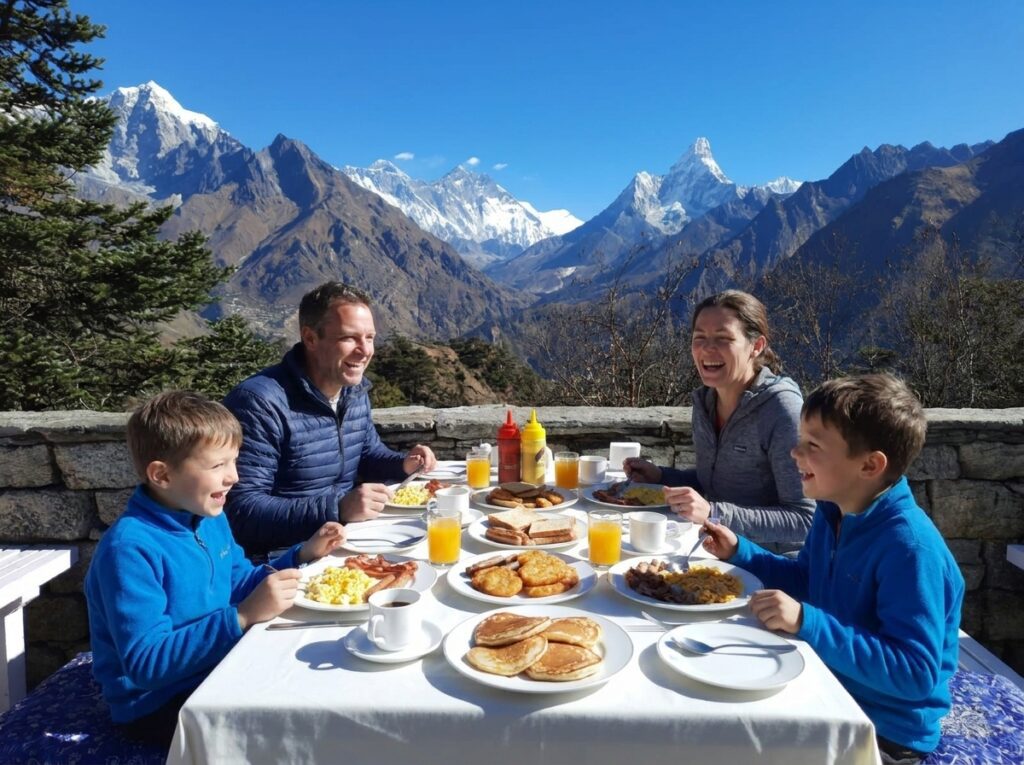
Two Ways to Get There: Trekking or Helicopter
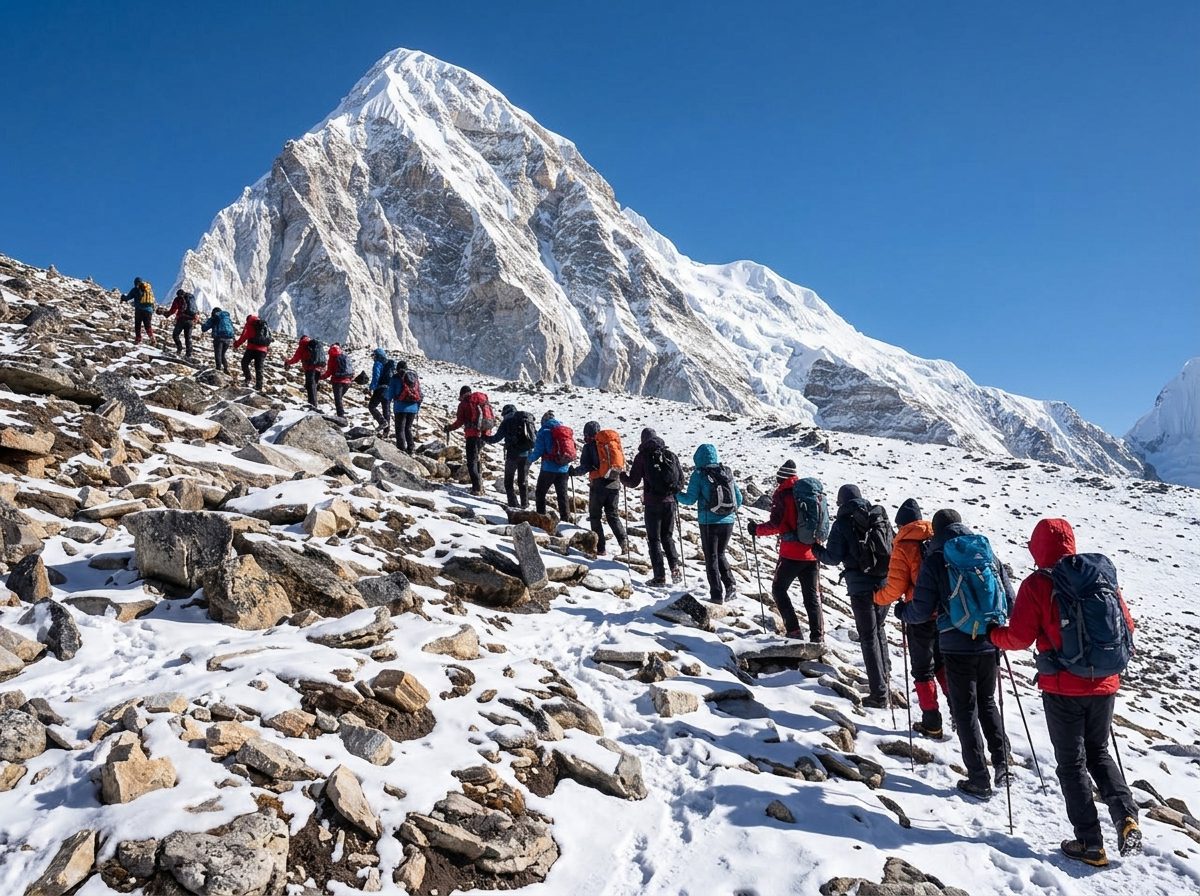
Trekking in is the traditional and far more common route. Most itineraries fly from Kathmandu to Lukla, then walk up through Phakding and Namche Bazaar before reaching Hotel Everest View, typically on day three or four of the trip. This is the same corridor used by every Everest Base Camp trekker, so you’ll be sharing the trail with a much larger crowd than you will the hotel itself.
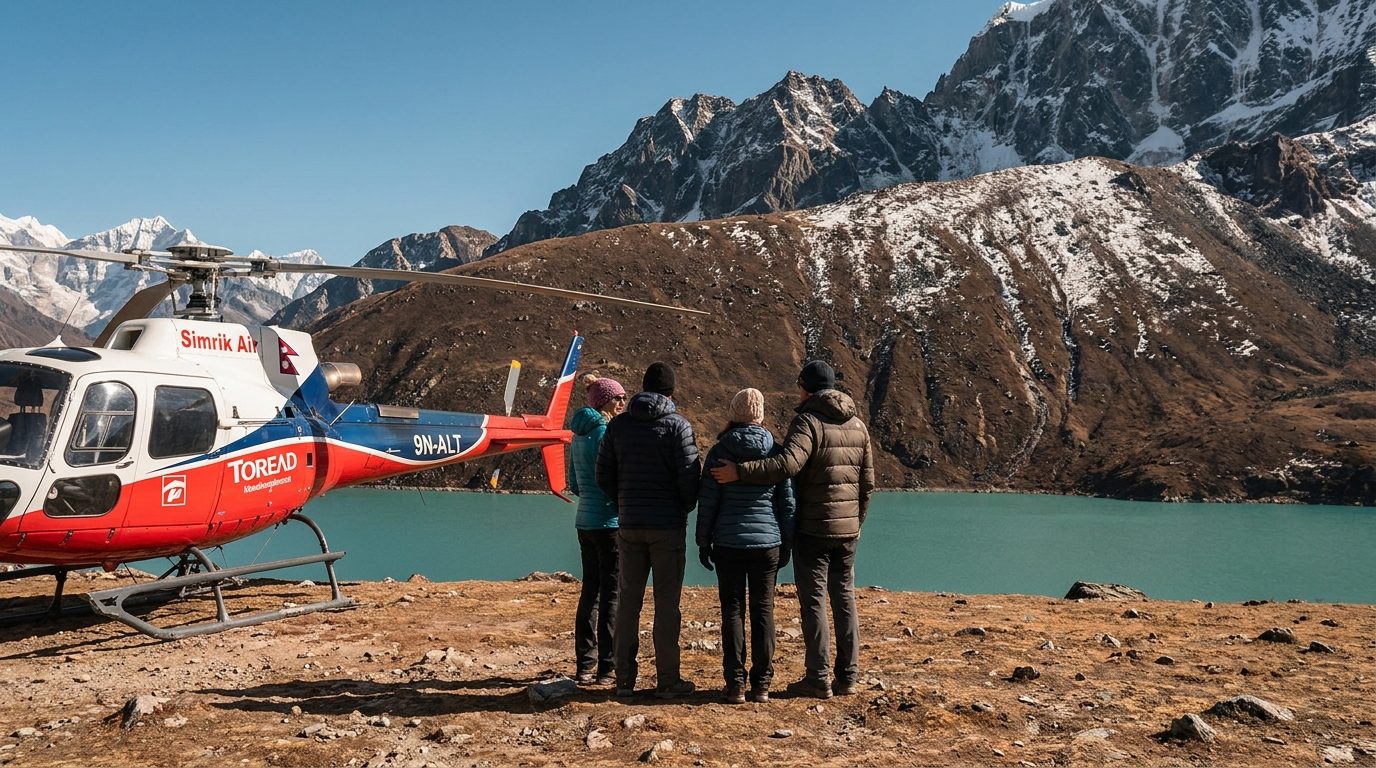
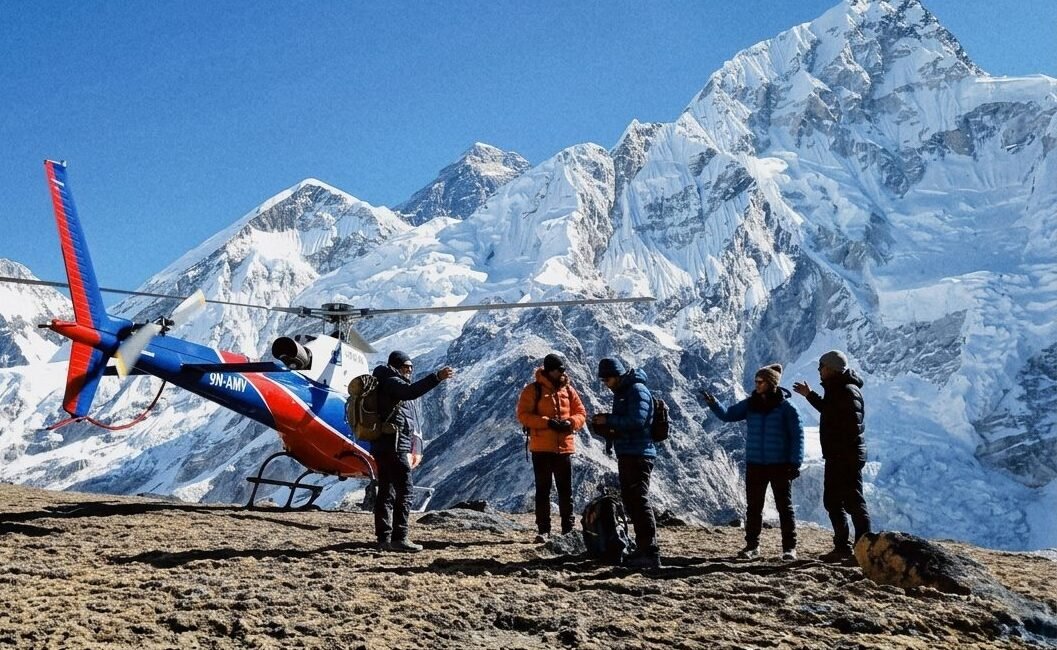
Flying in by helicopter compresses the whole trip into a day or two. A shared or private helicopter lifts off from Kathmandu, often with a scenic detour toward Kala Patthar or Everest Base Camp on a clear-weather day, before landing at the dirt helipad in Syangboche, a short walk or shuttle below the hotel. This suits travelers with very limited time, older travelers or anyone who’d rather skip the physical demands of trekking, and those celebrating a special occasion who want the experience without the multi-day commitment.
Sample Overnight Itinerary (Trekking Version)
A typical trekking itinerary built around an overnight stay looks like this:
Day 1: Fly Kathmandu to Lukla, trek to Phakding (2,610 m), roughly 3-4 hours.
Day 2: Trek to Namche Bazaar (3,440 m), 5-6 hours, your first acclimatization stop.
Day 3: Trek from Namche to Hotel Everest View (3,880 m), a relatively short 2-3 hour climb. Many itineraries build in a stop or side visit to Khumjung village on the way, and arrive at the hotel in time for lunch or afternoon tea with mountain views.
Day 4 (optional extension): Guided day hike to Khumjung and Khunde, or the ridge walk toward Mong, before a second night at the hotel or a descent back toward Namche.
Final days: Retrace the route back down to Lukla and fly to Kathmandu, or, on some packages, exit by helicopter instead of walking back down.
This is also frequently built into a longer Everest Base Camp itinerary as a comfortable final or near-final night, since it sits close enough to Lukla to make for an easy exit day, unlike Gorak Shep or Dingboche.
Sample Overnight Itinerary (Helicopter Version)
Day 1: Early morning helicopter departure from Kathmandu, often with a brief touchdown near Kala Patthar or Everest Base Camp on clear-weather days for photos. Land at Syangboche, transfer up to the hotel for lunch. Afternoon free to explore Khumjung village or simply take in the views from the terrace. Overnight at Hotel Everest View.
Day 2: Sunrise viewing from the hotel or terrace, breakfast, then helicopter flight back to Kathmandu, typically arriving before midday.
Weather is the biggest variable in this version. Helicopter flights in the Khumbu are frequently delayed or rescheduled due to cloud cover, particularly in the afternoon, so operators build morning departures into these itineraries whenever possible and recommend a flexible return date if your schedule allows it.
What to Actually Expect: Rooms and Amenities
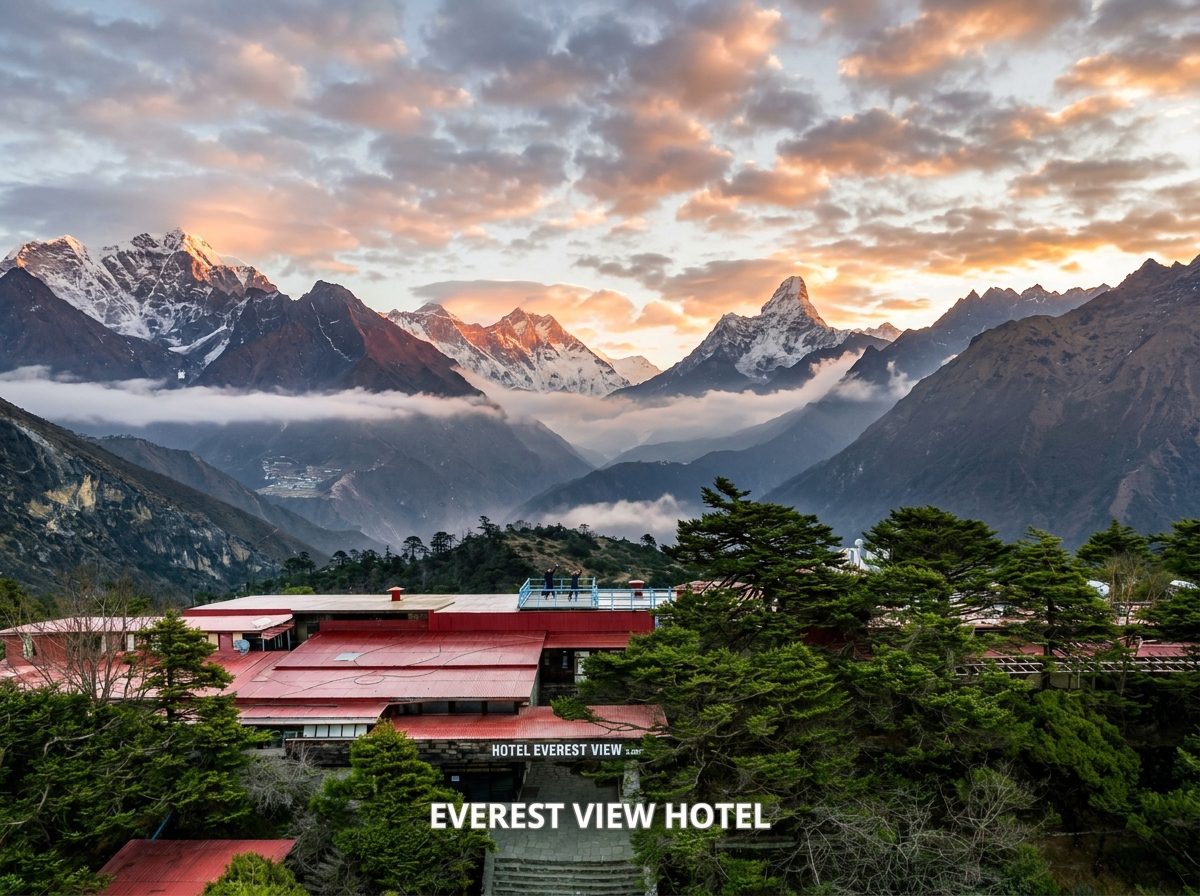
Marketing copy for Hotel Everest View describes heated rooms, electric blankets, en-suite bathrooms with hot showers, supplemental oxygen piped to each room, free Wi-Fi, and a dining room with panoramic windows. Much of this is accurate on paper, and current listings describe room heaters, thermos flasks, electric blankets, and 24-hour hot water as standard.
That said, it’s worth reading between the lines of years of guest reviews, which paint a more variable picture than the brochure copy suggests. Several recurring themes show up repeatedly:
- Heating can be inconsistent. Multiple reviewers over the years have described rooms that were colder than advertised, heaters that ran only during limited overnight hours (or not at all), and having to rely on hot water bottles or warming pans instead. Given the hotel’s remote location and reliance on solar power, generators, and kerosene, some variability in heating reliability shouldn’t come as a total surprise, even if it’s not what a $300-500/night price tag implies.
- Hot water isn’t always guaranteed in-room. Some guests have needed to use a shared solar-heated shower near the lobby rather than an en-suite one, particularly during periods when in-room plumbing or solar systems needed repair. More recent listings describe hot showers as standard, so this has likely improved, but it’s a known point of past inconsistency worth going in aware of.
- Electricity can be intermittent. Given the hotel runs on solar power supplemented by other sources, and everything from spare parts to fuel has to be flown or carried in, occasional power limitations are a function of the location rather than poor management.
- The oxygen system is a real feature, but a precaution rather than a necessity for most guests. At 3,880 meters, healthy, reasonably acclimatized trekkers typically don’t need supplemental oxygen; it’s there primarily for guests experiencing altitude discomfort, arriving quickly by helicopter without acclimatization, or simply wanting reassurance.
- Wi-Fi “exists on paper,” as one detailed writeup put it. Expect it to work adequately for messaging and light browsing when it works, and don’t rely on it for anything mission-critical.
None of this means the hotel isn’t worth it — the setting, the views, and the sheer novelty of a proper bed and hot meal at nearly 3,900 meters are still genuinely remarkable, especially compared to basic teahouse lodges elsewhere on the trek. But it’s worth adjusting your expectations from “luxury hotel by international standards” to “the most comfortable option available in an extremely remote, high-altitude location,” which is a different, more accurate promise.
Altitude and Health Considerations for an Overnight Stay
At 3,880 meters, Hotel Everest View sits above the altitude where acute mountain sickness (AMS) symptoms can begin, though it’s a manageable altitude for most people who’ve had at least one prior night at Namche Bazaar (3,440 m) to acclimatize. A few practical points:
- If you’re trekking in gradually via Namche, your body has already had a night or two to adjust to reduced oxygen, which meaningfully lowers your AMS risk by the time you reach the hotel.
- If you’re flying in directly by helicopter, you’re gaining significant altitude in under an hour with no acclimatization at all. Mild symptoms like headache or shortness of breath are common in this scenario, even for fit, healthy travelers, and it’s worth discussing with a doctor beforehand if you have any underlying health concerns.
- Know the early warning signs: headache, nausea, loss of appetite, and disturbed sleep. The hotel’s on-site oxygen system and staff experience with altitude-related discomfort are genuine safety nets, but they’re not a substitute for descending if symptoms don’t improve.
- Nighttime temperatures regularly drop below freezing, commonly cited around -10°C (14°F) in the cooler months, so pack proper cold-weather layers regardless of how “luxurious” the accommodation sounds.
Booking: What You Need to Know
With only 12 rooms, Hotel Everest View sells out well in advance during the two peak trekking seasons — spring and autumn. If your trip dates fall in March through May or October through November, book weeks or ideally months ahead rather than assuming you can arrange a room once you’re already in the Khumbu. Outside peak season, availability is typically far more flexible, though weather and views are also less reliable during the monsoon and deep winter months.
Most travelers book their stay as part of a package through a trekking agency rather than contacting the hotel directly, since the agency also handles Lukla flights, permits (Sagarmatha National Park entry and the Khumbu Pasang Lhamu Rural Municipality permit), and, where required, your guide. This is generally the simpler route and avoids any confusion about what’s included in the quoted room rate versus what needs to be arranged separately.
Who This Is Actually Right For
A good fit for:
- Trekkers heading to or from Everest Base Camp who want one genuinely comfortable night partway through the trip
- Travelers with limited time who’d rather fly in and out than commit to a multi-day trek
- Special-occasion travelers (anniversaries, milestone birthdays) looking for a singular, memorable experience rather than pure luxury
- Anyone prioritizing the view and the novelty over five-star hotel consistency
Worth reconsidering for:
- Budget travelers, given that a single night here can cost more than a week of standard teahouse accommodation elsewhere in the Khumbu
- Guests expecting a fully reliable international luxury-hotel experience with guaranteed hot water, heating, and connectivity every time
- Anyone with significant altitude sensitivity planning to fly in directly without any prior acclimatization
The Bottom Line
An overnight stay at Hotel Everest View is genuinely one of the more unusual and memorable nights you can spend in Nepal — a heated room, a hot meal, and Mount Everest outside your window at nearly 3,900 meters, after either a scenic multi-day trek or a dramatic helicopter flight. It isn’t cheap, and it isn’t quite the flawless five-star experience the marketing sometimes implies, but weighed against the alternative of a basic unheated teahouse at the same altitude, it remains one of the most sought-after nights on the entire Everest Base Camp route. Book early if you’re traveling in peak season, keep your expectations calibrated to the location rather than international hotel standards, and you’re likely to come away considering it one of the highlights of the trip.
Planning a Stay at Hotel Everest View?
Whether you’d rather trek in through Namche and Khumjung or fly in by helicopter for a quicker overnight experience, Adventure Master Treks can build the itinerary, handle your permits and flights, and lock in your room during peak season before those 12 spots fill up.
Get in touch with Adventure Master Treks to start planning your stay.
Frequently Asked Questions
- How many rooms does Hotel Everest View have?
Just 12, which is a major factor in both its exclusivity and its tendency to sell out during peak trekking seasons.
- Is Wi-Fi available?
Yes, though multiple accounts describe it as inconsistent. Treat it as a nice-to-have for light use rather than something to depend on.
- Do all rooms have an Everest view?
Reviewers commonly recommend requesting rooms in the lower-numbered range (often cited as rooms 1 through 5) for the most direct views, suggesting that not every room’s outlook is identical, even though the hotel is generally positioned to maximize mountain views throughout.
- Is one night enough?
One night is enough to experience the views, the setting, and a short walk to Khumjung or Khunde. Two nights allows for a rest day, the longer ridge walk toward Mong, or simply a second sunrise in case weather obscures the first.
- Can I book just the hotel without a full package?
It’s possible if you’re already trekking independently in the region, but most travelers book through an agency alongside flights, permits, and guiding services, since these are typically required for the broader Khumbu trek regardless of where you spend the night.
- Is it safe to fly directly here without any trekking?
It’s done routinely and is generally safe for healthy travelers, though gaining nearly 4,000 meters of altitude in under an hour by helicopter carries a real, if usually mild, AMS risk. Anyone with underlying heart or lung conditions should get medical advice before booking a direct helicopter itinerary.
Comments (0)
Write a comment- How Much Does an Overnight Stay Actually Cost?
- Two Ways to Get There: Trekking or Helicopter
- Sample Overnight Itinerary (Trekking Version)
- Sample Overnight Itinerary (Helicopter Version)
- What to Actually Expect: Rooms and Amenities
- Altitude and Health Considerations for an Overnight Stay
- Booking: What You Need to Know
- Who This Is Actually Right For
- The Bottom Line
- Frequently Asked Questions
Read the latest Blogs & Insights
Explore our collection of articles and insights to gain in-depth travel knowledge, expert advice, and stay updated on the latest trends and tips.


No comments yet.