









Lukla Flight Cancelled? What to Do Next
Learn what to do when your Lukla flight is cancelled, including rebooking, helicopter alternatives, road routes, and tips for avoiding trekking delays.
-
 Adventure Master Trek
-
5 November, 2026
-
10 mins read
-
18 Views
-
0 Comments


If your Lukla flight gets cancelled due to weather, you do not lose your money. Your ticket is automatically rebooked for the next available flight — usually the following morning — at no additional cost. You don’t pay twice. You don’t buy a new ticket. You just wait.
That is the financial answer. But the logistical reality of a Lukla cancellation is messier, more stressful, and more common than most trekkers expect. Understanding how the system actually works — before you are standing in a crowded terminal at 7:00 AM watching your itinerary collapse — is the difference between handling it calmly and having a full-blown meltdown at 2,846 meters.
How Common Are Lukla Flight Cancellations?
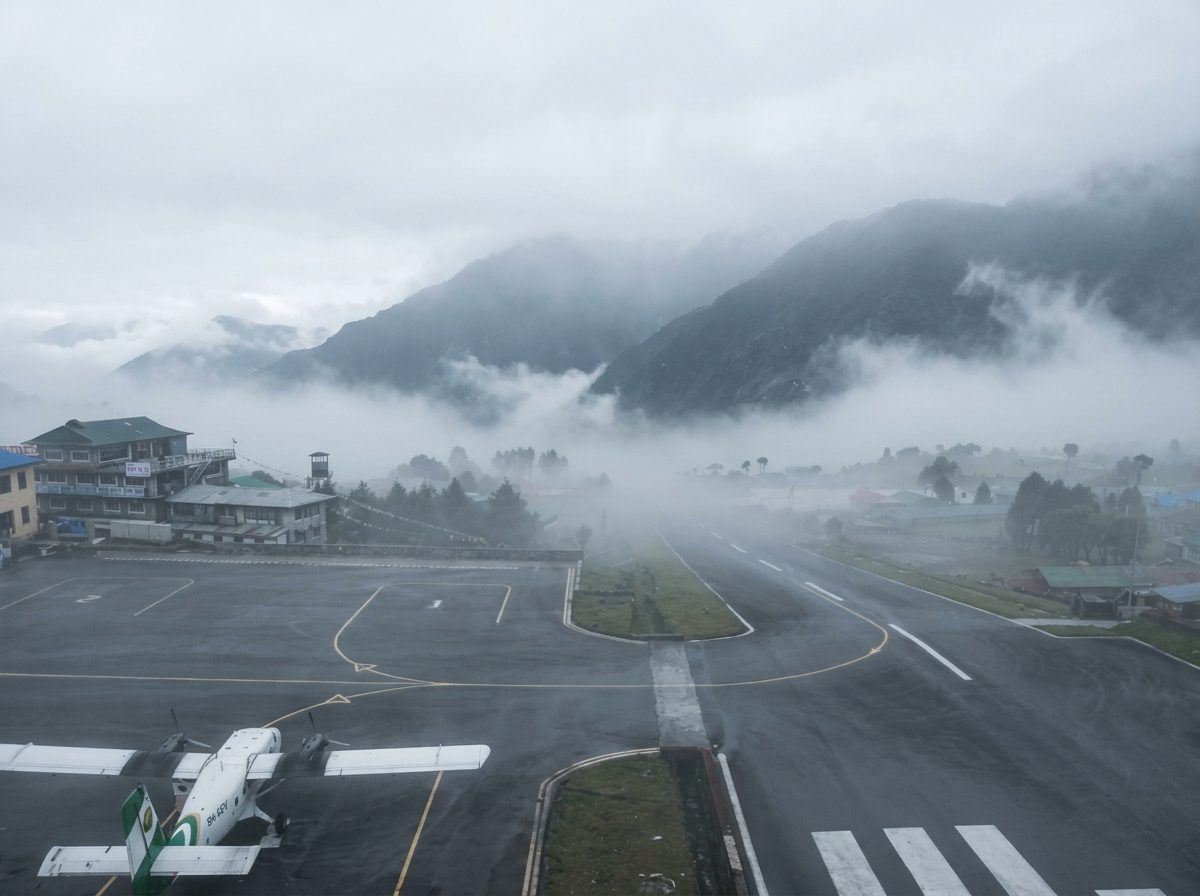
Extremely common. This is not a rare, unlucky event. It is a built-in feature of flying to one of the most weather-sensitive airports on the planet.
Tenzing-Hillary Airport at Lukla has no instrument landing system. Pilots fly the approach entirely by visual reference. If the cloud ceiling drops below a specific threshold, or if crosswinds exceed the aircraft’s certified limits, every single flight is grounded. No exceptions. No negotiations. No amount of money or shouting at the airline counter changes the physics of mountain weather.
During peak trekking season (October and November), flights are cancelled for at least 1 to 3 consecutive days roughly two to three times per month. During the monsoon and winter, cancellation rates are significantly higher. In bad years, trekkers have been stranded in Lukla for up to a week waiting for a weather window.
This is normal. The system is designed to absorb it. The problem is that most trekkers are not.
What Actually Happens When Your Flight Is Cancelled
Here is the exact sequence of events, step by step.
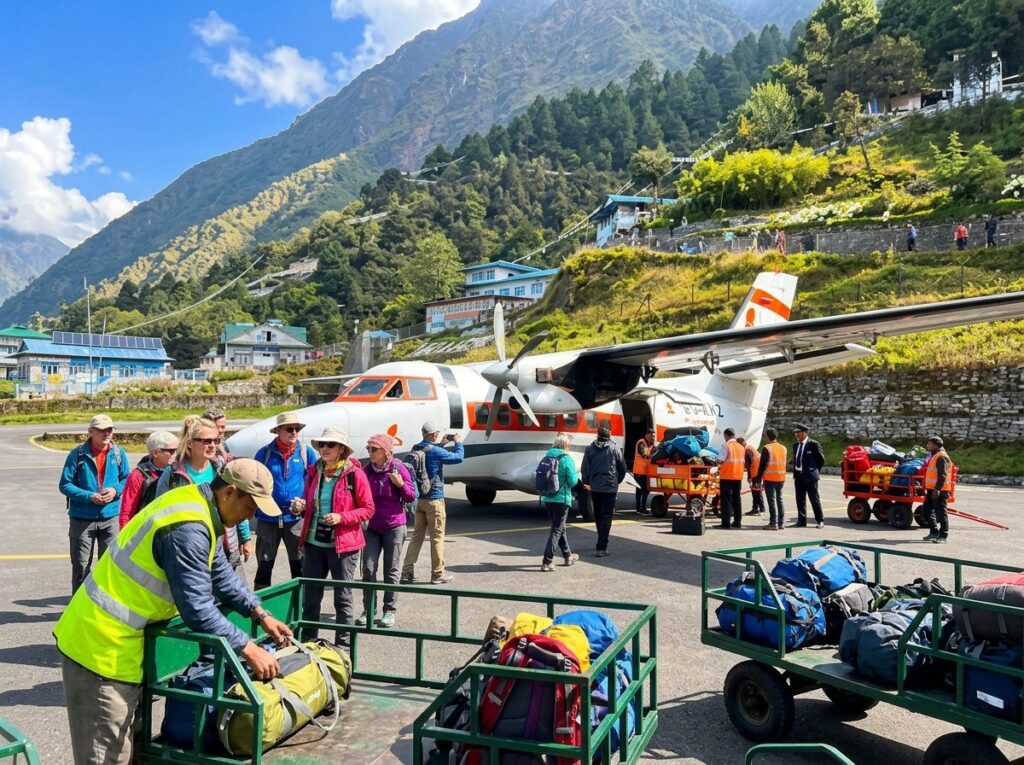
- 6:00 AM — You Are at the Airport You woke up at 3:30 AM. You made it to the domestic terminal (or Ramechhap) in the dark. You checked in. You are sitting on a plastic chair with your backpack between your legs, watching the departure board.
- 6:30 AM — The Delay Announcement The airline announces that flights are delayed due to weather conditions at Lukla. This doesn’t mean cancelled yet. It means the airline is waiting for a weather update from the Lukla tower. Sometimes the fog lifts by 8:00 AM and flights resume. Sometimes it doesn’t.
- 8:00 to 9:00 AM — The Cancellation If conditions haven’t improved by mid-morning, the airline cancels all remaining Lukla flights for the day. The afternoon weather window is almost never usable because clouds and winds build as the day progresses.
What Happens to Your Ticket Your ticket is automatically rolled over to the next morning’s flight manifest. You keep the same booking reference. You do not pay any rebooking fee. You do not pay for a new ticket. The airline treats it as a weather delay, not a voluntary change.
What Happens to Your Trek This is where things get complicated. If you had a 14-day EBC itinerary starting today, you have now lost day one. Your trekking agency will adjust the schedule — usually by shortening an easier walking day or combining two shorter days into one longer push. If the delay stretches to 2 or 3 days, the agency may restructure the entire itinerary or offer a helicopter charter as an alternative to get you back on schedule.
What Happens to You You go back to your hotel in Kathmandu (or find a guesthouse near Ramechhap airport), eat lunch, and set your alarm for 3:30 AM again. That is the reality. There is nothing else to do.
The Backup Plan: Helicopter Charter
This is the single most important piece of information in this entire article.
When fixed-wing flights to Lukla are grounded for multiple days, hundreds of trekkers pile up in the system. The airline rebooking queue becomes a mess. Even when the weather clears, it can take 2 to 3 days to work through the backlog because the airline prioritizes previously delayed passengers before new departures.
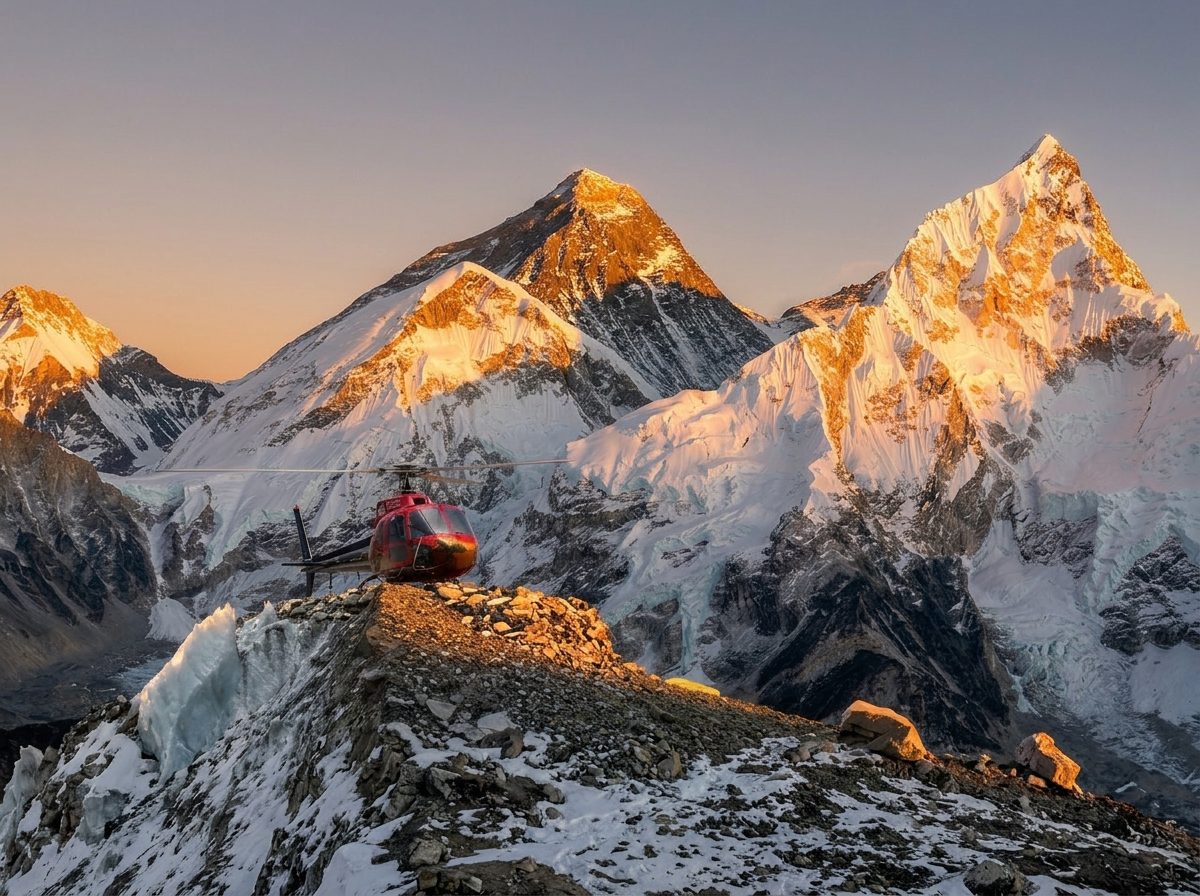
A helicopter charter bypasses the entire queue. Because helicopters operate on a separate flight manifest and can sometimes fly in conditions that ground fixed-wing planes, a charter can get you to Lukla on a day when every plane is still parked on the tarmac.
This is not a luxury decision — it is a tactical one. If you have already lost two days to weather and your international flight home is in 16 days, spending an extra USD 500 to 700 on a shared helicopter seat is infinitely cheaper than missing your return flight or losing the final days of a trek you spent months planning.
Local Tip: Don’t wait until day three of cancellations to start looking for a helicopter. By then, every other stranded trekker has the same idea and the charter prices spike. If your flight is cancelled on day one and the weather forecast shows no improvement for the next 24 hours, call your agency immediately and ask them to hold a helicopter seat for the following morning.
Monsoon and Winter Operations
Lukla flights don’t shut down completely outside of peak season, but the operational reality changes dramatically. If you are trekking in the off-season, you need to understand exactly what you are walking into.
Monsoon Season (June – August)
The monsoon dumps massive amounts of moisture onto the Khumbu region. The valleys fill with thick, persistent cloud cover that can sit below the Lukla runway threshold for days without breaking.
- Fixed-wing flights: Operate on a heavily reduced schedule. Airlines may only run flights 3 to 4 days per week instead of daily. Cancellation rates can hit 40 to 60% of scheduled departures.
- Helicopters: Slightly more reliable because they can navigate below the cloud layer in some conditions, but still heavily impacted. Monsoon helicopter flights are possible — just far less predictable.
- The trail itself: Wet, leech-infested below 3,000 meters, and frequently obscured by cloud above. You will likely not see Everest clearly from Kala Patthar during monsoon. The views are not guaranteed.
Winter Season (December – February)
Winter in the Khumbu is brutally cold but often brilliantly clear. The air is dry, the skies are blue, and the mountain views are arguably the best of the entire year.
- Fixed-wing flights: Operate on a reduced schedule. Fewer airlines fly during winter because trekker demand drops significantly. Expect 3 to 5 flights per morning on good days.
- Helicopters: More reliable in winter than monsoon because the air is drier and clearer. Cold air is also denser, which actually improves helicopter performance.
- The catch: While the flying conditions are often good, the trekking conditions above 4,500 meters are severe. Temperatures at Gorakshep and Kala Patthar drop to minus 20 to minus 30°C at night. Many teahouses above Namche close for the winter, and the few that remain open have minimal heating.
The Seasonal Flight Reliability Table
| Season | Months | Cancellation Risk | Flight Frequency | Overall Reliability |
| Spring (Peak) | March – May | Moderate (15–25%) | High (15–20 flights/day) | Good |
| Summer (Monsoon) | June – August | Very High (40–60%) | Low (3–5 flights/day) | Poor |
| Autumn (Peak) | September – November | Moderate (15–25%) | High (15–20 flights/day) | Good |
| Winter | December – February | Low to Moderate (10–20%) | Low (3–5 flights/day) | Fair to Good |
Peak Season Demand: The Hidden Problem
Weather is not the only thing that can disrupt your Lukla flight. During October and November — the absolute busiest weeks of the Nepali trekking calendar — pure demand becomes a bottleneck.
Every trekking group heading to Everest Base Camp, Gokyo Lakes, Island Peak, or the Three Passes route funnels through Lukla. The airport handles roughly 50,000 to 60,000 passenger movements during peak season. The daily flight capacity — even when every scheduled flight operates — can only move about 300 to 400 passengers per morning.
When 2 to 3 days of weather cancellations create a backlog during peak season, the math breaks. You have 600 to 1,200 stranded passengers competing for 300 daily seats. The queue stretches. Tempers fray. Trekkers who booked through well-connected agencies get rebooked faster than independent travelers who bought tickets directly from the airline counter.
This is exactly why booking through a registered trekking agency matters. When the cancellation chaos hits, your agency’s ground team in Kathmandu is physically at the airline office, fighting for your seats, coordinating helicopter alternatives, and restructuring your itinerary in real time. A solo traveler standing at the Ramechhap counter with a printout of their e-ticket has none of that leverage.
How to Protect Yourself Before You Leave Home
The Lukla cancellation problem is entirely manageable if you plan for it in advance. Here is your pre-trip insurance policy:
- Build Buffer Days Into Your Itinerary. This is the single most important thing you can do. Never — under any circumstances — schedule your Lukla flight on the same day you fly internationally out of Kathmandu. Always keep a minimum of 2 buffer days between your planned return from Lukla and your international departure. If your flight home is on November 15th, your Lukla return flight should be booked for November 12th or 13th at the latest.
- Buy Comprehensive Travel Insurance. Your insurance policy must explicitly cover trip delays and interruptions caused by weather. It should also cover emergency helicopter evacuation from the trail. Read the fine print before you leave home. A policy that excludes “acts of nature” or “weather-related delays” is worthless for Nepal.
- Keep Cash Available for a Helicopter Backup. If you are trekking during peak season, mentally earmark USD 500 to 700 as your emergency helicopter fund. You may never need it. But if you are stranded on day three of cancellations and your agency calls to say they have a shared helicopter seat available in 2 hours, you need to be able to say yes immediately.
- Stay in Contact With Your Agency. If your flight is cancelled, call your trekking agency immediately. Don’t sit at the airport hoping the situation resolves itself. Your agency has contacts at the airlines, access to helicopter charter networks, and the local language skills to navigate the rebooking chaos. Let them work the problem.
Frequently Asked Questions
Will the airline pay for my hotel if my flight is cancelled?
No. Domestic airlines in Nepal do not provide accommodation, meals, or transport compensation for weather-related cancellations. Your hotel cost during the delay is entirely your responsibility. This is standard practice — not a sign of a bad airline.
Can I get a refund instead of a rebooking?
Yes, but the process is slow. If you decide to abandon your trek entirely due to a prolonged cancellation, you can request a refund from the airline. Expect the process to take several weeks, and the refund may be issued in Nepali Rupees regardless of your original payment currency.
What if I am stuck in Lukla trying to fly back to Kathmandu?
The same rules apply in reverse. Return flights from Lukla to Kathmandu are equally weather-dependent. If you are stuck in Lukla, your agency can arrange a helicopter extraction, or you can walk down to the lower airstrip at Phaplu (a 2-day walk from Lukla) which has a slightly lower cancellation rate due to its lower altitude and wider approach corridor.
Has anyone ever been stuck in Lukla for more than a week?
Yes. In extreme weather years, particularly during late monsoon transitions (September) or unseasonable snowstorms, trekkers have been stranded for 7 to 10 days. These situations are rare — perhaps once every 2 to 3 years — but they happen. This is why buffer days and helicopter backup funds are not optional extras. They are essential trip planning.
The Bottom Line
A Lukla flight cancellation is not a disaster. It is a Tuesday.
It happens regularly, the financial system handles it cleanly (no extra cost, automatic rebooking), and the trekking industry has decades of experience absorbing and adjusting around weather delays.
Your only job is to plan for it before you leave home. Build the buffer days. Keep the helicopter fund ready. Trust your agency to work the logistics. If you do those three things, a cancelled
Lukla flight becomes a minor inconvenience — an extra day of dal bhat in Kathmandu — instead of a trip-ending catastrophe.
If you want your Lukla logistics handled by a team that has managed thousands of weather delays and knows exactly when to switch from waiting to chartering, check our Everest Region Trek Packages. We build the buffer days and backup plans directly into every itinerary so you never have to panic at the departure board.
Comments (0)
Write a comment- How Common Are Lukla Flight Cancellations?
- What Actually Happens When Your Flight Is Cancelled
- The Backup Plan: Helicopter Charter
- Monsoon and Winter Operations
- Monsoon Season (June – August)
- Winter Season (December – February)
- The Seasonal Flight Reliability Table
- Peak Season Demand: The Hidden Problem
- How to Protect Yourself Before You Leave Home
- Frequently Asked Questions
- The Bottom Line
Read the latest Blogs & Insights
Explore our collection of articles and insights to gain in-depth travel knowledge, expert advice, and stay updated on the latest trends and tips.


No comments yet.