








Monsoon Trek to Everest Base Camp: The Version Nobody Puts on a Poster
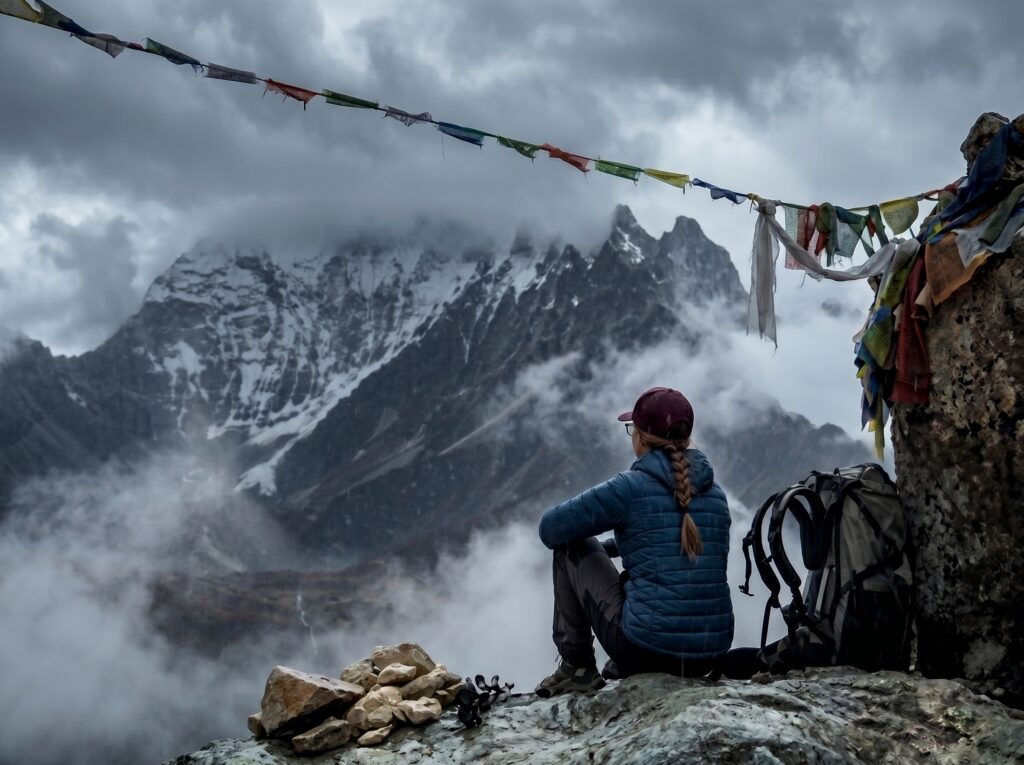
Most photographs of the Everest Base Camp trek look the same. Sharp blue sky. Golden light catching the ridgelines. A trekker in a red jacket standing in front of prayer flags. Clean, dramatic, and completely dry. The monsoon version of that same trail looks nothing like this. The sky in June is a low grey […]
-
 Adventure Master Trek
-
27 June, 2026
-
11 mins read
-
692 Views
-
0 Comments


Most photographs of the Everest Base Camp trek look the same. Sharp blue sky. Golden light catching the ridgelines. A trekker in a red jacket standing in front of prayer flags. Clean, dramatic, and completely dry.
The monsoon version of that same trail looks nothing like this. The sky in June is a low grey sheet that moves and shifts and occasionally breaks open. The prayer flags are soaked and heavy. The rhododendron forests below Namche are so intensely green they look almost unreal. The path between Phakding and Namche is slick with mud, the kind of mud that grabs your boot and holds it for a second before letting go with a sound that becomes very familiar over the next two weeks. And somewhere in that forest, before you even realise it, a leech has found your ankle.
This is the Everest Base Camp trek in monsoon season, roughly June through August, and it is one of the least chosen and most misunderstood ways to do one of the world’s most famous walks. It is harder than spring. The views are less reliable. The logistics are more complicated. And for people who walk into it with open eyes and decent waterproofs, it is genuinely extraordinary.
Why the Monsoon Gets Such Bad Press
The South Asian monsoon arrives in Nepal around the first week of June and stays through most of August. During those months, the lower sections of the EBC route, from Lukla up through the forests and river valleys to Namche Bazaar, receive regular and sometimes heavy rainfall. Trails become slippery. Rivers run faster and louder. Waterfalls appear on cliff faces that were dry in October. And leeches, which live in the leaf litter and grass along the lower forested trail, become a genuine presence below about 3,000 meters.
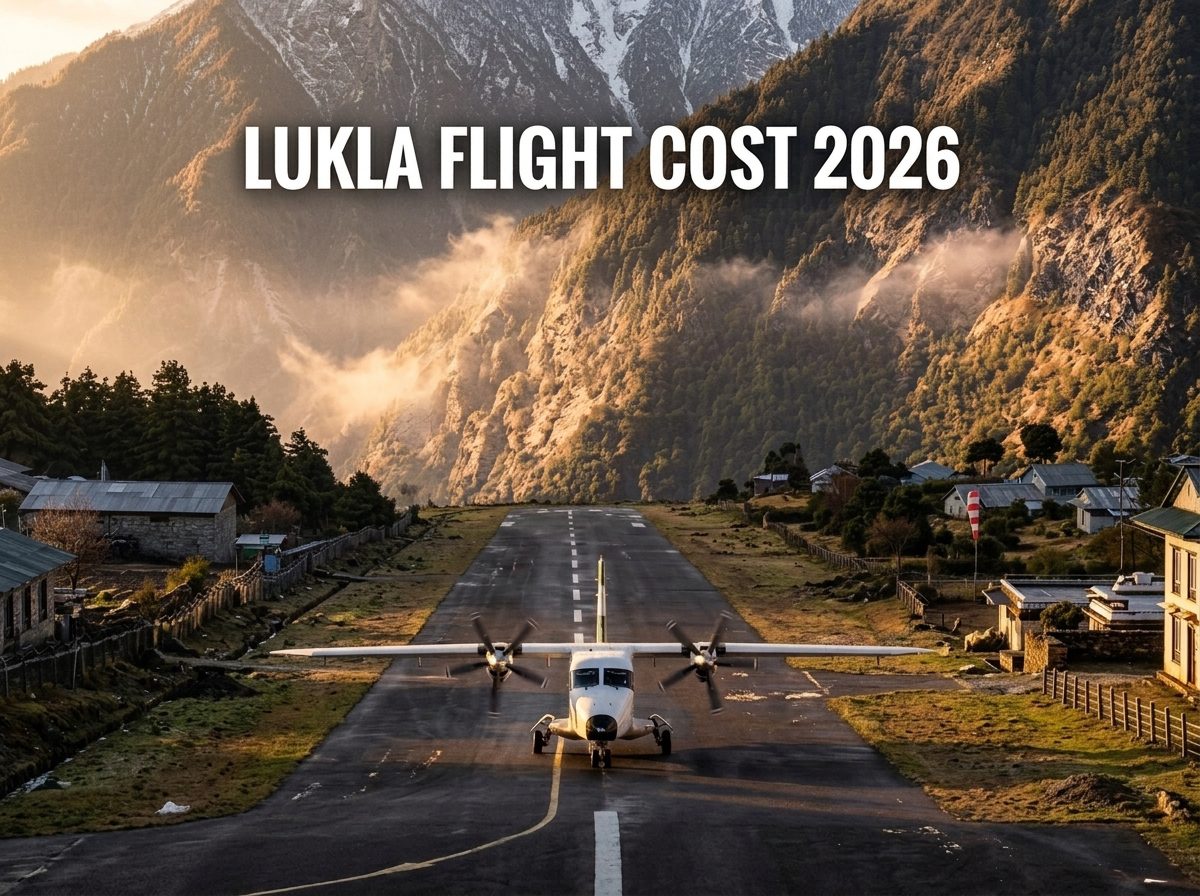
All of this is real and none of it is exaggerated. The monsoon does make the lower trail messier and slower. Lukla flights are more frequently delayed or cancelled because the airstrip at 2,860 meters sits inside cloud cover that commercial turboprop aircraft cannot safely navigate. The standard advice from most trekking agencies is to build at least two to three extra days into the itinerary at either end specifically to absorb weather-related flight delays. This is not overcaution. It is what actually happens.
But the press around the monsoon EBC trek misses something important, which is what happens to the weather above 3,500 meters.
The Khumbu Valley sits in what geographers call a rain shadow zone. Once a trekker climbs above roughly 3,500 to 4,000 meters, the rainfall decreases significantly. The great ridgelines of the Himalaya block the monsoon moisture coming up from the Bay of Bengal. What this means in practice is that the upper sections of the route, from above Tengboche through Dingboche, Lobuche, and Gorak Shep to base camp itself, are often drier and clearer than the lower trail would suggest. The mornings at these elevations frequently begin clear. Cloud typically builds through the afternoon. Rain, if it comes, often arrives in the early evening and passes overnight, leaving the trail washed and fresh by morning.
This is not a secret. Experienced guides and long-term trekkers in the Khumbu know it well. But it tends not to make it into the standard seasonal advice, which focuses on the difficulties of the lower trail without acknowledging that the destination itself operates by different weather rules.
What the Trail Actually Looks Like
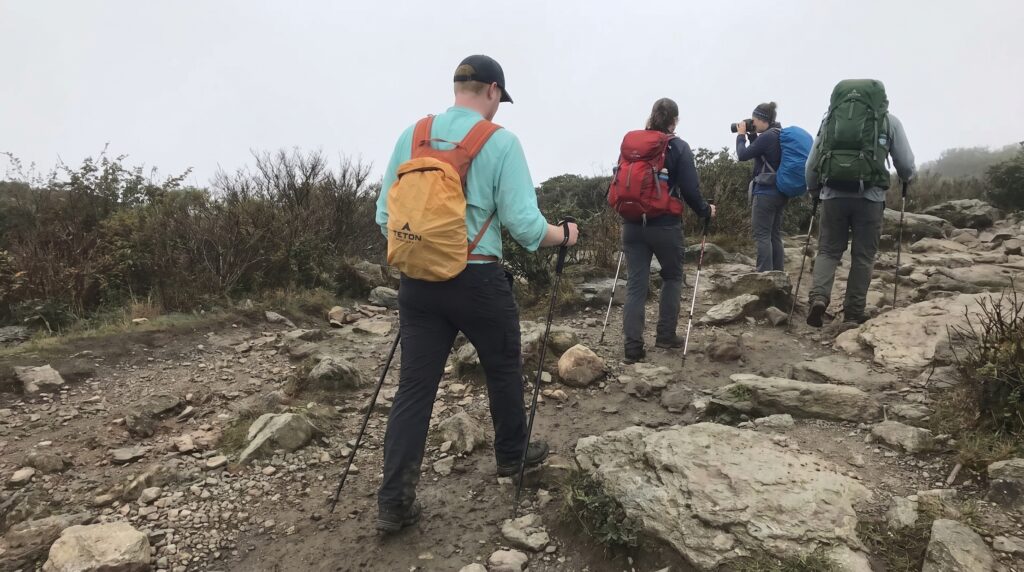
The walk from Lukla to Phakding on day one in monsoon season is visually unlike anything the spring season offers. The forest on either side of the trail is so dense and green it presses in close. Ferns cover the steep banks above the Dudh Koshi River. Mosses coat every stone and root. The sound of the river is louder than usual because the snowmelt and monsoon rain have together pushed the water higher, and the suspension bridges over it feel more dramatic for that reason.
The leeches are real and deserve a straight conversation. They live in the wet undergrowth and grass below about 2,800 meters and they are small and surprisingly fast. They do not hurt when they attach, which is the whole problem, because you only notice them when you stop for a break and look down. Long trousers tucked into socks, gaiters if you have them, and insect repellent applied to the lower legs and boot laces all reduce contact significantly. Salt carried in a small container deals with the ones that do get through. They are an inconvenience rather than a genuine danger, but ignoring them entirely and then finding a blood-soaked sock at Namche is a memorable and preventable experience.
Above Namche, the mood of the trek shifts. The forests are thin. The ground opens. And the combination of monsoon moisture and altitude produces something that spring trekkers rarely see: the upper Khumbu in deep green, wildflowers covering the moraine fields that in October are bare and grey, and waterfalls running full off the faces of ridges that are normally dry rock. Tengboche Monastery sitting above the treeline in July has a different quality than in peak season. The clouds move around the peak of Ama Dablam rather than sitting still. The light changes every twenty minutes. The monastery courtyard is quiet, and the monks going about their work are not navigating around groups of photographers.
Dingboche at 4,360 meters is usually clear in the mornings. Walking up from the village toward the viewpoint ridge in the early light, with the valley below holding cloud and the peaks of Lhotse, Nuptse, and Island Peak catching the first sun above it, is the kind of view that people in peak season also see, but surrounded by many other people. In July or August, this moment is often entirely yours.
The Temperature Reality
One thing that surprises many monsoon trekkers is how cold the upper sections remain despite the season being nominally summer. Below Namche, daytime temperatures can reach 18 to 25 degrees Celsius, which with humidity and exertion makes walking feel warm and occasionally sweaty. This is not what the EBC trek feels like in October and it catches people unprepared if they pack only for warmth.
But above Namche the temperature drops steadily. At Gorak Shep, the last village before base camp at 5,164 meters, nights in July still fall below zero. At base camp itself, at 5,364 meters, even summer nights can be genuinely cold. The monsoon does not warm the high Khumbu the way it warms the lower valleys. Layers are still necessary, a proper sleeping bag rated for low temperatures is still necessary, and the assumption that summer means warmth at altitude is one worth testing very carefully against the actual numbers before packing.
The clothing challenge in monsoon is layering for a wider temperature range than other seasons require. Lower sections need light, moisture-wicking, quick-drying fabrics because walking in warm humid air in heavy wool generates misery. Upper sections need the same insulation layers that autumn trekkers carry. And throughout the whole route, waterproofing is not optional. A waterproof jacket and waterproof trousers, a pack cover, and dry bags for electronics and sleeping bag insulation are baseline equipment, not bonuses.
Flights, Flexibility, and the Real Logistics
The Lukla flight situation during monsoon is the single biggest logistical variable of the whole trek and it deserves honest treatment. Tribhuvan International Airport in Kathmandu operates the Lukla route on small aircraft that require visual flight conditions. When a cloud sits on the Lukla airstrip, flights do not happen. During monsoon months, this occurs regularly.
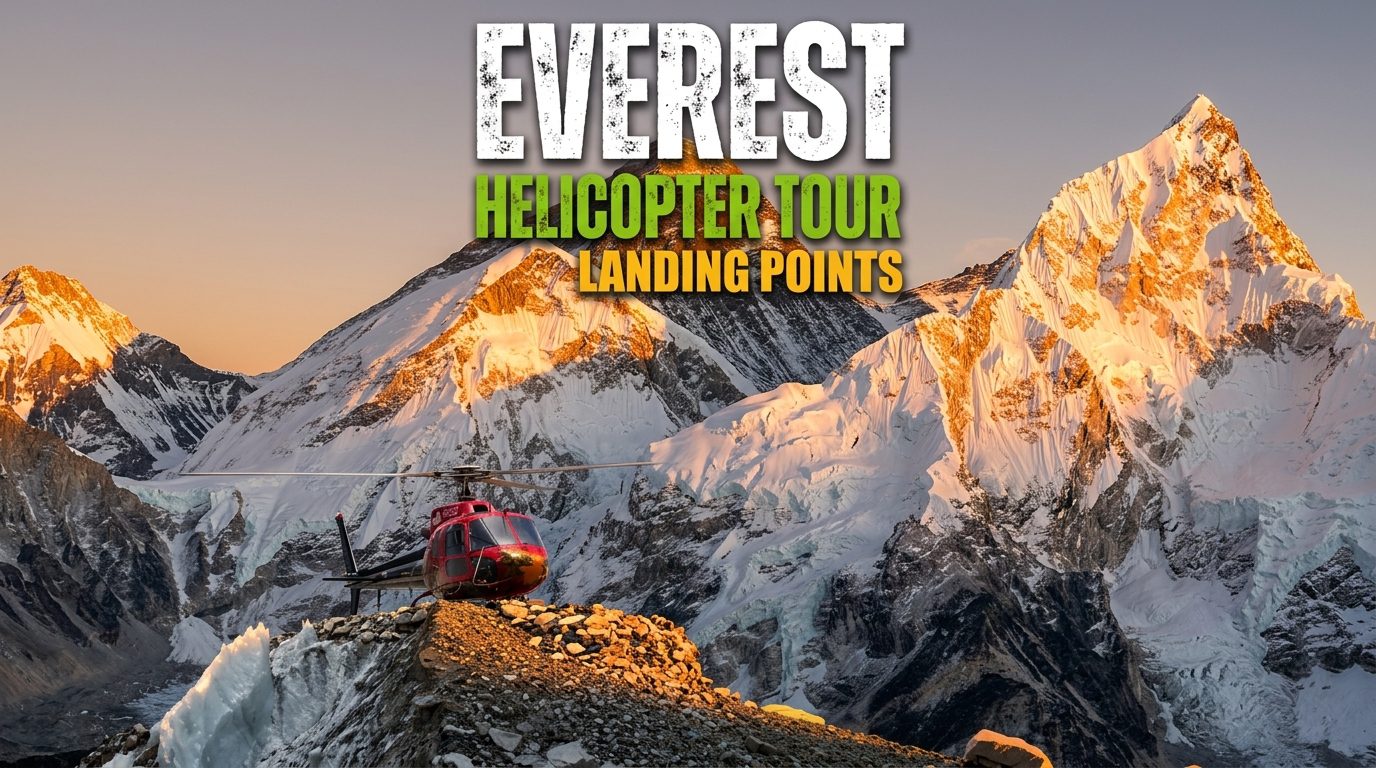
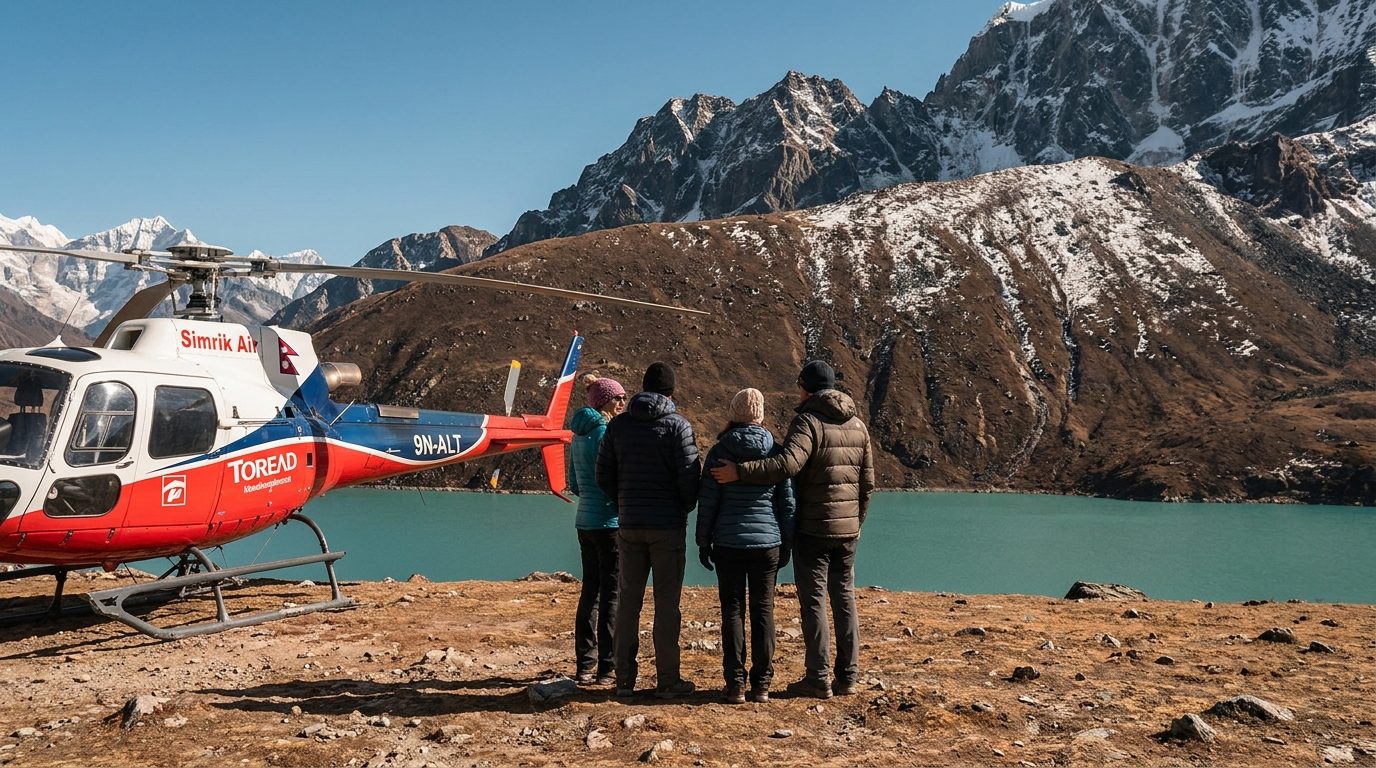
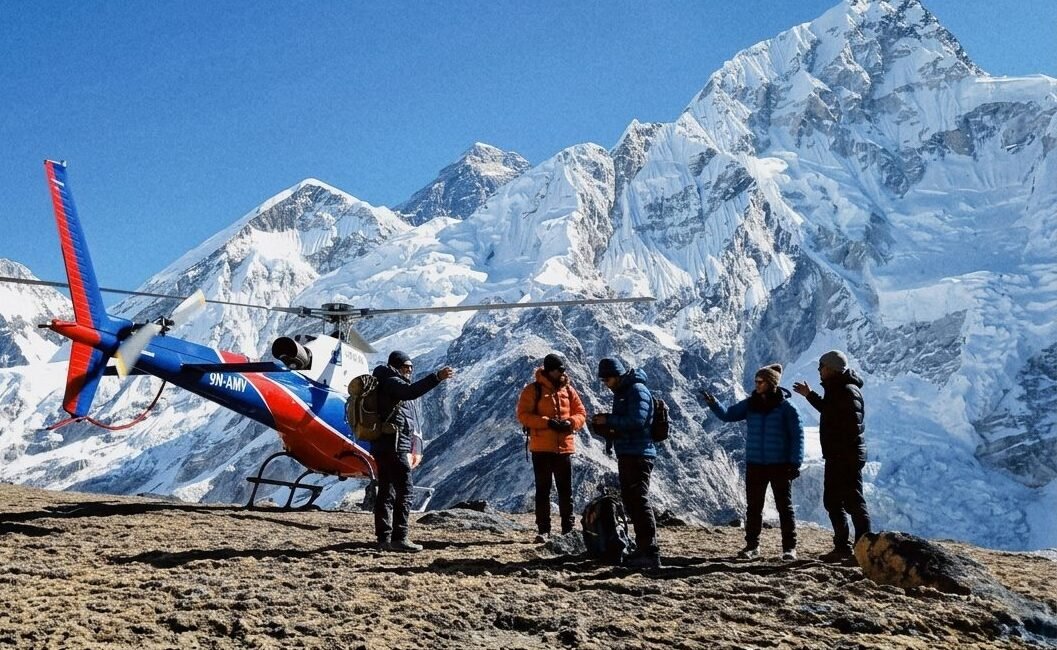
Most trekkers who do monsoon EBC either build extra days in Kathmandu before and after, or explore the helicopter option. Helicopters have a better operational rate than commercial flights during the monsoon because they can fly at lower altitude and find gaps in the weather more flexibly. The cost is substantially higher than a commercial flight, but for trekkers whose return schedule is fixed, it is worth pricing out before departure rather than discovering it as an emergency option at Lukla.
Road access via Ramechhap airport, about 150 kilometres from Kathmandu, has also been used during high-traffic periods, and the road and shorter flight combination from there can sometimes work better during monsoon weather windows. Any reputable guide or agency operating during this season will have working knowledge of the current options.
The broader lesson is that monsoon EBC rewards flexibility and punishes rigid schedules. Trekkers who have a flight home booked for the morning after their planned return to Kathmandu from Lukla are taking a risk that is disproportionate to the cost of one extra hotel night as a buffer.
What You Gain by Going in Monsoon
The trail is quiet in a way that is genuinely difficult to describe if you have only experienced the Khumbu in October. In the peak autumn season, Namche Bazaar is a small city. Teahouses above Dingboche fill completely. The trail between Lobuche and Gorak Shep is a line of people. The logistical texture of the trek in peak season is similar to a busy hiking destination anywhere in the world.
In July, the trail is largely empty. Trekking communities consistently describe walking for hours above Namche without seeing another trekker, the only company being the occasional porter or yak herder moving supplies. Teahouses remain open through the monsoon on the main route, though menus may be simpler and fewer choices exist, because the lodges continue to serve the local community and the small trickle of off-season visitors. The lodge owners have more time to talk. The relationship between trekker and teahouse that gets lost in the rush of peak season reappears.
The landscape argument for monsoon is also real and underappreciated. Spring trekkers see the rhododendrons blooming on the lower trail. Autumn trekkers see the bare high Khumbu in its most photogenic state. Monsoon trekkers see the entire route in its most biologically alive condition. The trail below Namche runs through forest that is layered and complex and deeply green in a way that no other season produces. Above 4,000 meters, where the rain shadow reduces precipitation, the high meadows fill with wildflowers that autumn visitors never see. The combination of mist on the valley floors and clear light above it produces a dramatic quality to the mountain views, when they come, that the stable skies of autumn do not replicate.
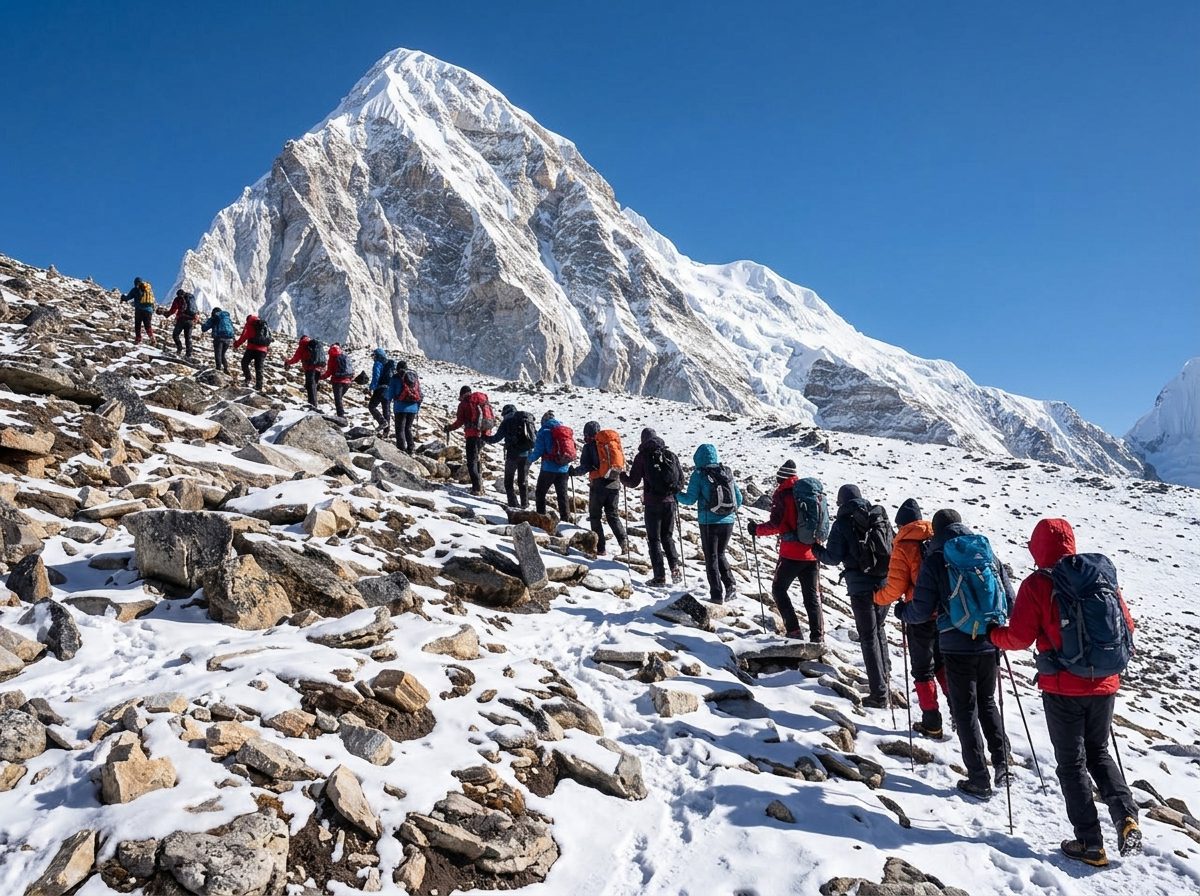
The morning view from Kala Patthar after a clear monsoon night, with the valley below holding low clouds and Everest’s summit catching early light above it, is not the same as the same view in October. It is stranger, lonelier, and in its own way more beautiful.
Altitude Sickness Behaves the Same Way
The monsoon does not change the rules of altitude. The oxygen content at 5,000 meters in July is identical to the oxygen content in October. Acclimatization cannot be rushed because the weather is different. Rest days at Namche and Dingboche are necessary, the climb-high, sleep-low principle applies fully, and acute mountain sickness can strike any trekker who ascends too quickly regardless of the season.
The warm, slightly humid air at lower elevations during monsoon can mask early dehydration because the sensation of thirst is dulled by the warmth. Drinking consistently throughout the day, choosing warm liquids at higher elevations, and not mistaking the warmth of the lower trail for a sign that the body is managing altitude well are all important habits. A pulse oximeter is a small and inexpensive tool worth carrying at any time of year and monsoon is no exception.
Travel insurance that covers high-altitude trekking and helicopter evacuation is essential in all seasons, and in monsoon, when flight delays already make Lukla a complicated exit point, having that insurance confirmed and accessible is even more important.
The Version Few People Choose
The EBC trek in monsoon is not for everyone and it does not pretend to be. People whose primary goal is clear daily views of Everest’s summit should go in October or April and they will be rewarded. People whose trip has a fixed return window that cannot absorb a flight delay should plan for a season with more reliable weather.
But for trekkers who have flexibility, who want the trail to themselves, who are genuinely curious about the Khumbu as a living landscape rather than a backdrop for summit photographs, and who are prepared to deal with mud and leeches and the particular charm of a teahouse owner who is genuinely surprised and delighted to have a guest, the monsoon version of this trek offers something that the popular seasons cannot.
The mist moves differently in July. The waterfalls are full. The forests are alive. And above 4,000 meters, when the morning clears and the great peaks appear without warning through breaking cloud, the feeling is one of having earned a view that most people simply never waited long enough to see.
Comments (0)
Write a commentRead the latest Blogs & Insights
Explore our collection of articles and insights to gain in-depth travel knowledge, expert advice, and stay updated on the latest trends and tips.


No comments yet.