









7 Least Riskiest Treks in Nepal for Beginners (2025–2026 Guide)
Looking for an easy Himalayan adventure? Discover the safest and most beginner-friendly treks in Nepal, featuring well-established trails, comfortable teahouses, moderate difficulty, and breathtaking mountain scenery for first-time trekkers.
-
 Adventure Master Trek
-
2 July, 2026
-
13 mins read
-
657 Views
-
0 Comments


So you want to trek in Nepal — but you don’t want to end up on a helicopter evacuation. Smart thinking.
Nepal is home to eight of the world’s fourteen highest peaks, and while that sounds thrilling, it also means altitude sickness, glacier crossings, and multi-week slogs on technically demanding routes are very real hazards for unprepared trekkers. But here’s the good news: not every trail in Nepal requires the endurance of a seasoned mountaineer.
This guide is for first-timers, casual hikers, families, and anyone who wants those jaw-dropping Himalayan views without the jaw-dropping risk. We’ve dug through trekking databases, cross-referenced guide association data, and scoured Reddit threads — where real trekkers share what no agency brochure ever will — to bring you the 7 least risky treks in Nepal.
What Makes a Trek “Low Risk” in Nepal?
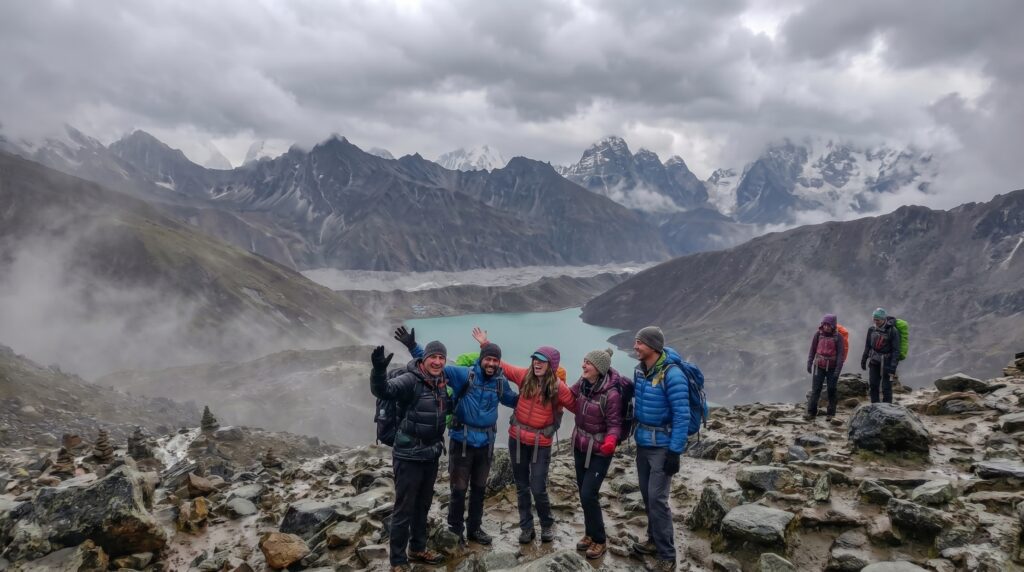
Before we dive in, let’s define the criteria. Risk on a Nepali trek comes from a few key sources:
- Altitude sickness (AMS): Above 3,500m, your body starts struggling. Risks are much higher at altitudes over 4000m.
- Trail conditions: Unmarked, eroded, or remote trails do raise the risk of getting lost or injured.
- Access to rescue: In isolated areas, it may take days to get to rescue.
- Trail conditions: Unmarked, eroded or remote trails carry an added risk of becoming lost or injured.
- Access to rescue: In isolated areas, it may take days to get to rescue.
- Trails: Unmarked, eroded or faraway trails have the possibility of causing disorientation or injury.
- Rescue: Persons in isolated areas could be up to days away from rescue..
The treks below score well on all of these factors. Most stay under 3,500m, follow well-marked paths, have teahouse accommodation every hour or two, and can be done in under a week.
Reddit reality check: On r/Nepal and r/solotravel, the most consistent advice from experienced trekkers is this: “Book the Poon Hill trek for your first time, no question. If you’re nervous about altitude, even ABC is fine if you take it slow. Just don’t skip acclimatization days.” The other recurring theme? Always hire a licensed guide — not just for safety, but because the 2024 solo trekking ban now requires one in national parks and conservation areas.
Quick Comparison: At a Glance
| Trek | Days | Max Altitude | Difficulty | Best For |
| Poon Hill | 4–5 | 3,210m | Easy | First-timers, iconic views |
| Langtang Valley | 7–8 | 3,870m | Easy–Moderate | Culture + mountains |
| Mardi Himal | 4–6 | 4,500m* | Easy–Moderate | Off-the-beaten-path |
| Ghandruk Loop | 3–4 | 1,940m | Very Easy | Families, weekend trips |
| Nagarkot–Chisapani | 2–3 | 2,300m | Very Easy | Short on time |
| Helambu | 6–7 | 3,660m | Easy | Cultural immersion |
| Khopra Danda | 6–8 | 3,660m | Easy–Moderate | Sustainable, uncrowded |
1. Ghorepani Poon Hill Trek — Nepal’s #1 Beginner Trek
- Duration: 4–5 days
- Max Altitude: 3,210m (Poon Hill viewpoint)
- Difficulty: Easy
- Best Season: March–April (rhododendrons in bloom), October–November
- Starting Point: Nayapul (1.5-hour drive from Pokhara)
If there is one trek that every trekking guide, every Reddit thread, and every local teahouse owner will agree on, it’s Poon Hill. It is consistently rated Nepal’s most beginner-friendly trek—and for good reason.
The trail starts from Nayapul, just outside Pokhara, and winds through dense rhododendron forests, traditional Gurung and Magar villages, terraced rice fields, and mule-traffic trails.
The best way is to reach Poon Hill at dawn to enjoy the sweeping panorama of Annapurna South, Dhaulagiri, Machhapuchhre (Fishtail) and some other Himalayas bathed in the golden morning light.
It is not a high risk as it does not reach a high elevation (3,210m) and is not considered dangerous for most healthy adults.
Why it is low risk: It does not reach very high altitudes, 3210m, which is low enough to be safe for most healthy adults.The trail is stone-paved in most sections, clearly signposted, and lined with teahouses every 1–2 hours. Even if you were to twist an ankle, you’re never far from help or a road. It’s also one of the most trafficked trails in Nepal, meaning you’re rarely truly alone.
What Redditors actually say: Users on r/solotravel frequently describe this as “achievable for anyone who does regular walks” and “zero altitude issues at this height.” The main complaint? It can get crowded at the Poon Hill viewpoint at sunrise — but that’s a trade-off worth making.
Permit required: ACAP (Annapurna Conservation Area Permit) + TIMS card
Rough cost (self-guided with guide): USD $400–$600 all-in for a guided package
2. Langtang Valley Trek — Culture & Mountains Without the Crowds
- Duration: 7–8 days
- Max Altitude: 3,870m (Kyanjin Gompa)
- Difficulty: Easy to Moderate
- Best Season: March–May, September–November
- Starting Point: Syabrubesi (7–8 hours from Kathmandu by bus)
The Langtang Valley Trek is often called “the valley closest to Kathmandu,” and that accessibility is a huge safety asset. The trail is also one of the most accessible routes in the Himalayas of Nepal and is situated in Langtang National Park, just north of the capital.
The journey follows the Langtang River, gradually climbing through dense bamboo and oak forests into the alpine. Pass through Sherpa and Tamang villages, visit the ancient Kyanjin Gompa monastery, and enjoy close-up views of Langtang Lirung (7234m). The base route in the valley is comfortably below 4,000m with optional side trips to Kyanjin Ri and Tsergo Ri, providing the opportunity to climb higher.
Why it’s low risk: This is a slow ascent, so your body gets used to the altitude. The trail is well-maintained, and the valley acts almost like a corridor — it’s hard to get truly lost. Kyanjin Gompa at the end has good teahouses, a cheese factory (yes, really), and reliable communication.
What Redditors say: Many on r/Nepal recommend Langtang specifically for those who want to avoid the “tourist highway” feel of Poon Hill. One common refrain: “Langtang is underrated. You get genuine mountain immersion without the crowds, and the Tamang culture is incredible.” Following the 2015 earthquake, the valley has been fully rebuilt and is safe to visit.
Pro tip: If you add an acclimatization day at Kyanjin Gompa, you can safely attempt Kyanjin Ri (4,773m) — a stunning hike with almost zero risk when done gradually.
Permit required: Langtang National Park entry fee + TIMS card
Rough cost: USD $500–$800 for a guided package
3. Mardi Himal Trek — The Hidden Gem of the Annapurna Region
- Duration: 4–6 days
- Max Altitude: 4,500m (Mardi Himal Base Camp)
- Difficulty: Easy to Moderate
- Best Season: March–June, September–November
- Starting Point: Kande (30 minutes from Pokhara)
Opened officially to trekking tourists only in 2021, the Mardi Himal Trek is what old-school Nepal trekking used to feel like before the masses arrived. It runs parallel to the famous Annapurna Base Camp route but branches off into far quieter territory.
The trail ascends through forests of rhododendron and oak, past small ridges with increasingly dramatic views of Machhapuchhre (Fishtail), Annapurna South, and Hiunchuli. The highest accommodation sits at 3,500m, and the top of Mardi Himal Base Camp at 4,500m is reached as a day hike.
Why it’s low risk: Although you are at 4,500m at the base camp, you’re not climbing much above 3,500m, so you are able to recover well each night. The ascension process is scientific and gradual, drastically reducing the risk of AMS. The trail is less crowded, which actually improves safety — teahouse owners are attentive, and guides are less rushed.
Why Redditors love it: It’s consistently described as the “ABC alternative” that feels more authentic. Trekkers report it as significantly less commercial than the Poon Hill circuit, with better chances of clear mountain views. Budget trekkers also appreciate that it’s cheaper than Poon Hill packages.
- Permit required: ACAP + TIMS card
- Rough cost: USD $150–$400, depending on guide arrangement
4. Ghandruk Loop Trek — 3 Days of Pure Gurung Culture
- Duration: 3–4 days
- Max Altitude: 1,940m (Ghandruk Village)
- Difficulty: Very Easy
- Best Season: Year-round (best March–May, Sep–Nov)
- Starting Point: Nayapul or Kimche (near Pokhara)
If you only have a long weekend, or if someone in your group is anxious about altitude, the Ghandruk Loop Trek is perfect. The maximum altitude is just 1,940m — comparable to a moderate hill walk in Europe — and the trail is one of the most comfortable and well-maintained in Nepal.
Ghandruk is a large, traditional Gurung village, home to the families of many Gurkha soldiers who have served in British and Indian armies. The village has a Gurung cultural museum, stone-paved pathways, and some of the best views of Annapurna South and Machhapuchhre you’ll find from any easy-access route.
Why it’s low risk: Altitude sickness at 1,940m is practically impossible for any healthy person. The trail is short, clearly marked, and passes through populated villages continuously. Teahouses are excellent here — often family-run guesthouses with warm dal bhat and cozy rooms. Emergency vehicle access is also far closer than most Himalayan treks.
Who it’s best for: Families with children, older trekkers, anyone doing their first Himalayan experience, or travellers who simply want a beautiful cultural immersion without any altitude anxiety.
- Permit required: ACAP
- Rough cost: USD $100–$250 (budget-friendly, can be done independently)
5. Nagarkot–Chisapani Trek — The Perfect Kathmandu Escape
- Duration: 2–3 days
- Max Altitude: 2,300 m (Chisapani)
- Difficulty: Very Easy
- Best Season: Year-round
- Starting Point: Nagarkot (1.5-hour drive from Kathmandu)
Don’t underestimate this one. The Nagarkot–Chisapani Trek is the ideal option for travellers who have only 2–3 days between connections in Kathmandu or who want to test their legs before committing to a longer route.
Well-trodden and well-monitored, the trail is popular with Kathmandu dwellers as a weekend getaway. The part of Shivapuri National Park is well managed, safe, and offers opportunities to see deer, monkeys, and birds. The route passes through Tamang villages, pine and rhododendron forests, and finishes at Chisapani, a ridge-top outpost with sweeping views of the Himalayan range, including Mount Everest, Langtang, Ganesh Himal, and Dorje Lakpa.
Why it is low risk: The maximum altitude of 2,300m is really no risk for any altitude-related illness. The trail is highly used and well patrolled by Kathmandu people on weekends. The trail is a popular weekend escape for Kathmandu locals, making it well-trodden and well-monitored. The Shivapuri National Park section is well managed, safe, and offers opportunities to see deer, monkeys, and birds.
Bonus: This trail connects to Helambu and Langtang for those who want to extend. It’s also ideal for solo female travellers — multiple Redditors on r/solotravel note it as one of the most accessible and safe routes in the region.
- Permit required: Shivapuri National Park entry
- Rough cost: USD $50–$150 (extremely budget-friendly)
6. Helambu Trek — 6 Days Through Sherpa Heartland Near Kathmandu
- Duration: 6–7 days
- Max Altitude: 3,660m (Tharepati)
- Difficulty: Easy
- Best Season: March–May, September–November
- Starting Point: Sundarijal (30 minutes from Kathmandu)
Helambu trek is amongst the underrated easy trek in Nepal. The walk from Sundarijal, at the outskirts of Kathmandu, goes through Helambu where one can experience Sherpa culture, villages, Buddhist gompas, and views of Gaurishankar, Shishapangma, Langtang Lirung and Ganesh Himal.
Helambu is very different from many treks that all converge on the same teahouse trails. Among the more well-known Sherpa communities of the Everest region, there are a number of villages that are home to a Sherpa population with strong Tibetan Buddhist connections, such as Melamchi Gaun and Tarkeghyang.
Why it’s low risk: This is a 6-day trip that gradually ascends to 3,660m, which is easily handled. The trail passes through populated areas continuously, and the proximity to Kathmandu means evacuation (if ever needed) is far faster than on remote Himalayan treks. The 73km walking distance is spread across 6 days — comfortable daily stages of around 4–6 hours.
For culture lovers: This is arguably Nepal’s best easy trek for those prioritizing cultural experience over high-altitude drama.
- Permit required: TIMS card
- Rough cost: USD $200–$400
7. Khopra Danda (Ridge) Trek — Views Without the Altitude
- Duration: 6–8 days
- Max Altitude: 3,660m (Khopra Ridge)
- Difficulty: Easy to Moderate
- Best Season: March–May, September–November
- Starting Point: Nayapul (near Pokhara)
The Khopra Danda Trek is still a relative secret compared to the Poon Hill and Annapurna Base Camp giants — and that’s precisely what makes it special. The trail branches south from the main Annapurna trails into far quieter territory, running along a forested ridge to the stunning Khopra viewpoint.
What can be seen from Khopra Ridge is one of the most spectacular in the Annapurna region, with a view of Dhaulagiri, Annapurna South, and Tukuche Peak. This is a responsible and sustainable trek as community lodges are operated by the local Magar and Gurung communities.
Why it is low risk: It is not high risk; the maximum elevation is 3660m, which is within beginner’s range with the right itinerary. Trails run through dense rhododendron forests and open ridges — moderate terrain with no technical sections. Community lodges are cozy and attentive, and the route is clear enough that even less experienced hikers rarely report getting lost.
The sustainability angle: A portion of your lodge fees goes directly to local conservation projects. Redditors on r/NepaliTrekkers frequently mention Khopra as the top pick for travellers who want to give back while trekking.
- Permit required: ACAP + TIMS card
- Rough cost: USD $300–$500
Universal Safety Tips for Trekking in Nepal
No matter which trail you choose, these rules apply across the board — and Redditors who’ve done multiple Nepal trips echo them consistently:
- Hire a licensed guide. As of April 2023, solo trekking is officially banned in Nepal’s national parks and conservation areas. Beyond the legal requirement, a licensed guide knows the terrain, can spot early signs of altitude sickness, and can coordinate emergency response. The Trekking Agencies’ Association of Nepal reports that the vast majority of trekking incidents involve unguided solo travellers.
- Get travel insurance with emergency evacuation cover. Helicopter evacuations happen, and they cost thousands of dollars. This is non-negotiable.
- Walk slowly. Seriously. The number one mistake beginners make is moving too fast. “Slow is safe” is a Nepali trekking mantra for good reason. If you feel pressure from a guide to move faster, push back.
- Symptoms of AMS: headaches, nausea, dizziness, and fatigue at altitude are warning signs. Stay off the stairs if you have symptoms. Go down if they get worse.
- The best times to visit are in the spring (March – May) or autumn (September – November) when you can find the best weather and visibility, and when teahouses are open. Monsoon (June–August) brings landslide risk and leeches. Winter (December–February) works for lower-altitude treks like Ghandruk and Nagarkot–Chisapani.
- Pack right: Waterproof layers, good trekking boots (broken in before you leave), a basic first-aid kit, sunscreen, and a water purification method. Over-packing is a rookie mistake — your porter and guide will thank you for travelling light.
Final Word
Nepal’s reputation for epic, dangerous trekking is well-earned — but that’s only half the story. The country has an extraordinary network of low-altitude, well-supported trails that give first-timers and casual hikers access to some of the most beautiful mountain scenery on Earth, without requiring peak-bagger fitness or mountaineering experience.
Whether you have three days or three weeks, there’s a route on this list that will leave you wondering why you waited so long to come.
Start with Poon Hill. Thank us later.
Comments (0)
Write a comment- What Makes a Trek “Low Risk” in Nepal?
- Quick Comparison: At a Glance
- 1. Ghorepani Poon Hill Trek — Nepal’s #1 Beginner Trek
- 2. Langtang Valley Trek — Culture & Mountains Without the Crowds
- 3. Mardi Himal Trek — The Hidden Gem of the Annapurna Region
- 4. Ghandruk Loop Trek — 3 Days of Pure Gurung Culture
- 5. Nagarkot–Chisapani Trek — The Perfect Kathmandu Escape
- 6. Helambu Trek — 6 Days Through Sherpa Heartland Near Kathmandu
- 7. Khopra Danda (Ridge) Trek — Views Without the Altitude
- Universal Safety Tips for Trekking in Nepal
- Final Word
Read the latest Blogs & Insights
Explore our collection of articles and insights to gain in-depth travel knowledge, expert advice, and stay updated on the latest trends and tips.




No comments yet.