









Best Transportation Options for Annapurna Base Camp
Getting to Annapurna Base Camp involves several transportation choices depending on your itinerary and budget. Compare private jeeps, shared jeeps, tourist buses, and flights to understand the easiest and most practical ways to reach the trailhead and return from the trek.
-
 Adventure Master Trek
-
29 August, 2026
-
10 mins read
-
333 Views
-
0 Comments


Getting to Annapurna Base Camp isn’t a single journey — it’s actually three separate legs, each with its own set of transportation choices. Most trekkers focus all their planning on the trek itself and treat the transport as an afterthought, then end up scrambling to figure out how to get from Kathmandu to the trailhead once they’ve already landed in Nepal.
At Adventure Master Treks, we walk through this exact logistics chain with every trekker heading toward Annapurna. This guide breaks down each leg — Kathmandu to Pokhara, Pokhara to the trailhead, and the return journey once your trek is finished — along with what each option actually costs and who it makes sense for.
The Three Legs of the Journey
Before booking anything, it helps to see the full route laid out. Getting to Annapurna Base Camp involves:
- Kathmandu to Pokhara — by bus, jeep, or short domestic flight
- Pokhara to the trailhead (usually Nayapul, sometimes Kande, Phedi, or Ghandruk) — by local bus, shared jeep, or private taxi
- The trek itself — on foot, from the trailhead to Annapurna Base Camp and back down to a road-accessible point like Jhinu Danda or Nayapul
- Return transport — jeep, bus, or occasionally a helicopter, back to Pokhara
Each leg has a budget option and a faster, more comfortable option. Here’s how to think through all four.
Leg One: Kathmandu to Pokhara
This is the longest transfer of the trip, covering roughly 200 kilometers, and it’s where most of your transportation budget decisions get made.
Local or standard tourist bus ($6–$16, 6–8 hours) is the most common choice for independent trekkers. Buses depart from Sorhakhutte near Thamel every morning around 7 AM, following the Prithvi Highway with a breakfast and lunch stop along the way. It’s the budget-friendly default, and most organized trek packages — including ours — build this leg into the itinerary at no extra cost.
Luxury or VIP sofa bus ($15–$25, 6–7 hours) covers the same route with wider seats and extra comfort, useful if you’d rather not spend eight hours on a standard bench seat.
Private jeep ($70–$100, 5–6 hours) works well for small groups wanting more flexibility and a slightly faster transfer, without paying full flight prices per person.
Domestic flight ($100–$130 one way, 25–30 minutes) is the fastest option by far. Buddha Air, Yeti Airlines, and Shree Airlines all run this route daily. It’s worth the extra cost if your schedule is tight, though prices have seen some fluctuation recently tied to regional fuel costs.
If you’re flexible on time, the tourist bus alone saves you somewhere between $85 and $115 compared to flying — money that goes a lot further spent on gear, a guide, or extra days in Pokhara.
Leg Two: Pokhara to the Trailhead
Once you’ve reached Pokhara, the second transfer takes you to wherever your specific ABC itinerary begins. Most routes start at Nayapul, though some itineraries start further along the trail at Kande, Phedi, or Ghandruk to shave a day off the hike.
Local bus ($2–$5) is the cheapest way to reach Nayapul, taking roughly 2 hours. It’s a viable option if you’re comfortable with a slower, more crowded ride and don’t mind carrying your own pack on and off.
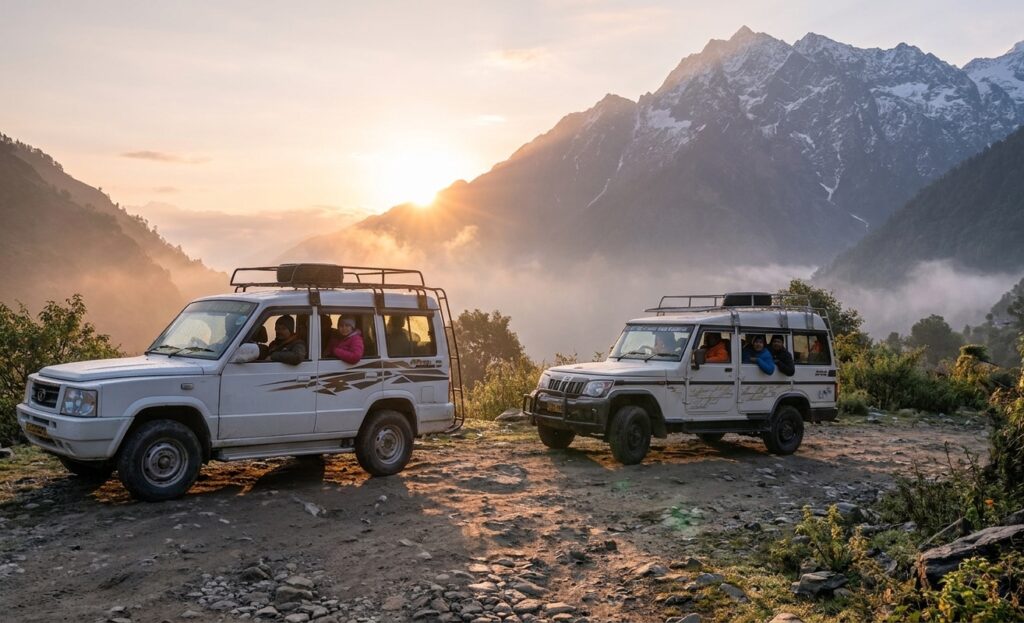
Shared or private jeep ($8–$10 per person shared, or $80–$100 for a private vehicle) is by far the most popular choice among trekkers. Jeeps depart from Hari Chowk near Bindhyabasini Temple in Pokhara and reach Nayapul or further trailheads in under two hours. Sharing a jeep with other trekkers is an easy way to cut the cost while still getting a faster, more comfortable ride than the local bus.
Private taxi ($10–$15) covers the same route with door-to-door convenience, a reasonable middle ground if you’re traveling as a pair and want flexibility without the group-booking hassle of a jeep.
A quick note if your itinerary starts at Ghandruk rather than Nayapul: jeep fares run closer to NPR 6,000 for the vehicle, and the drive takes about 3 hours each way, since the road climbs higher into the hills before the trekking even begins.
Leg Three: On the Trail Itself
There’s no vehicle transport once you leave the roadhead — Annapurna Base Camp is reached entirely on foot, typically over 7 to 10 days depending on your itinerary and pace. The trail is well-marked and passes through villages like Tikhedhunga, Ghorepani, Chhomrong, and Dovan before reaching the base camp itself at 4,130 meters.
While this leg has no transportation cost, it does shape your other transport decisions. Trekkers doing a shorter itinerary sometimes drive further than Nayapul on the way in — to Kimche or Ghandruk — specifically to shorten the first day’s walking distance. If you’re short on time, this is worth discussing with your guide or trekking agency before you book any transport, since it changes both your starting point and your jeep fare.
Leg Four: Getting Back to Pokhara
The return journey usually ends at Jhinu Danda, a popular stop for its natural hot springs along the Modi River, though some itineraries loop back out through Nayapul instead.
Shared or pre-arranged jeep ($8–$10 per person, roughly 2.5–3 hours) is the standard option, and most trekking agencies — including ours — arrange this pickup in advance so there’s no scrambling for transport after a long trek. The road from Jhinu Danda back to Pokhara is mostly paved with some bumpy sections, running alongside the Seti River for part of the drive.
Local bus is available for a cheaper return, though it’s slower and less predictable in terms of timing, which can be frustrating after a demanding multi-day trek when you’re mainly looking forward to a hot shower.
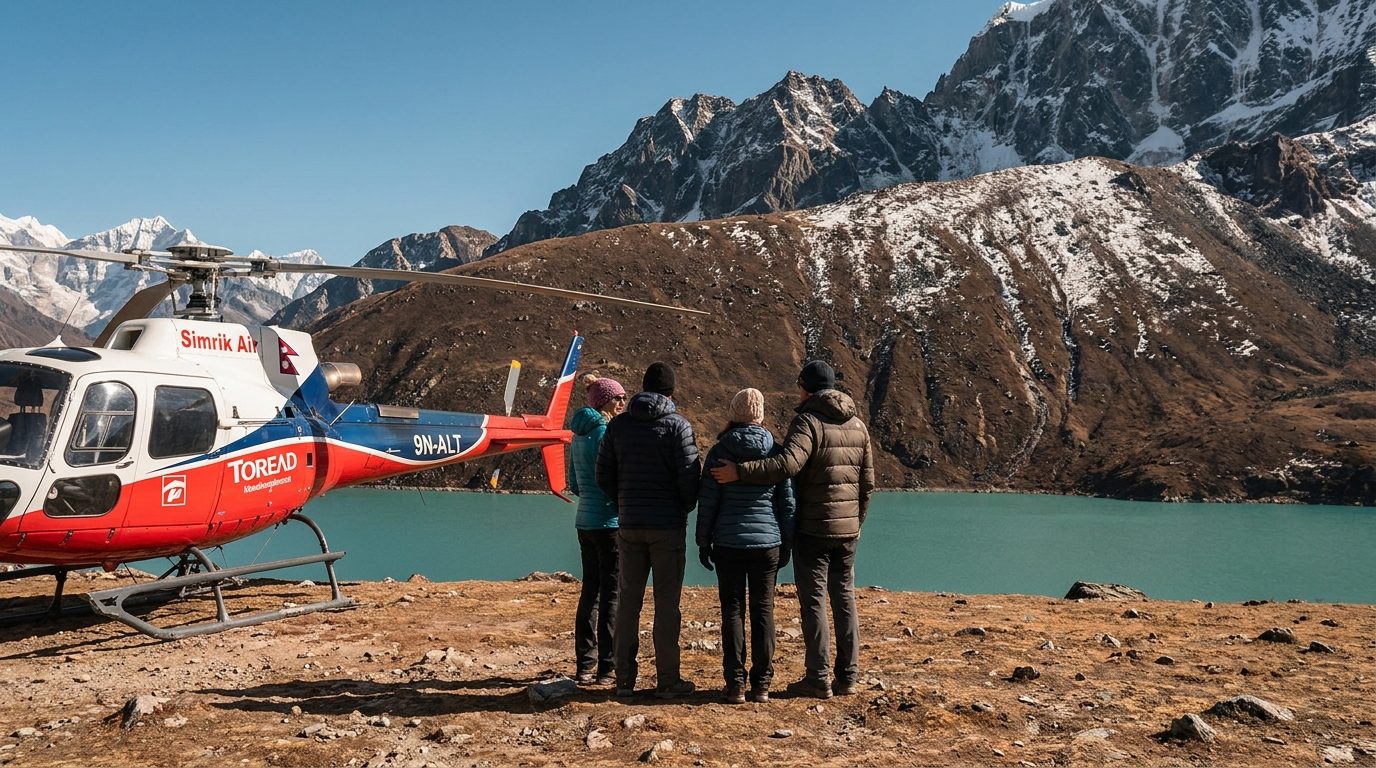
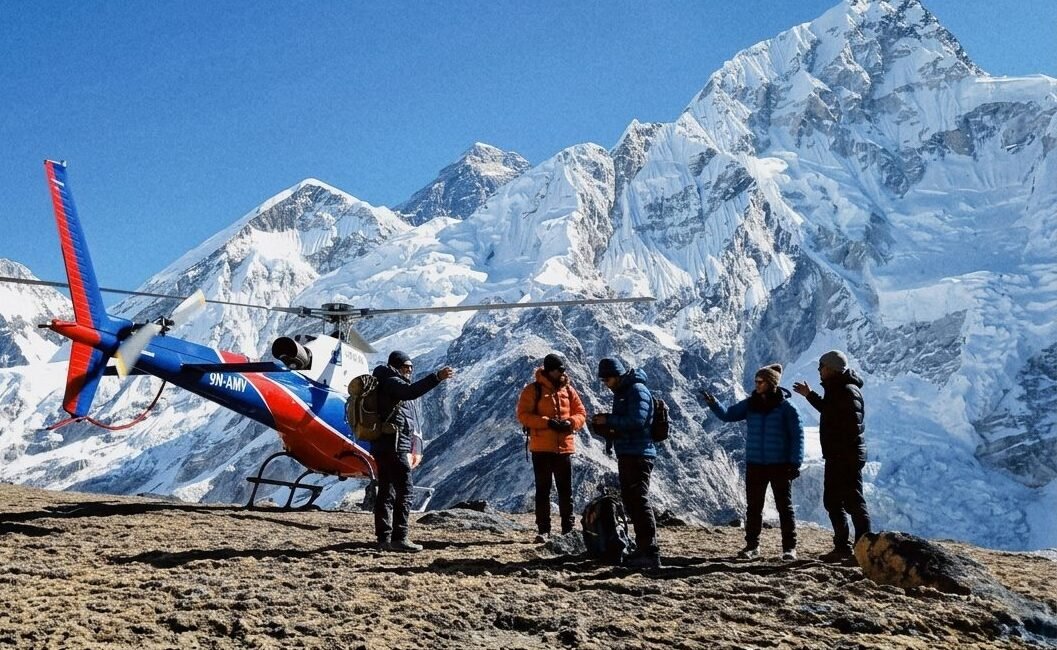
Helicopter return ($450–$650 per person) is the standout option for trekkers short on time or dealing with fatigue, injury, or altitude symptoms. Flying directly from near Annapurna Base Camp back to Pokhara saves roughly three days of walking, turning a return trek into a same-day trip. It’s a significant expense, but for trekkers on a tight schedule or those who’d rather not repeat the descent on tired legs, it’s a popular splurge.
Total Transportation Budget
Putting all four legs together, most trekkers spend somewhere between $15 and $150 on transportation for a standard round-trip ABC itinerary, not counting a helicopter return. The wide range comes down almost entirely to how many legs you choose to upgrade:
- Budget approach: local buses for both Kathmandu-Pokhara and Pokhara-trailhead legs, lands near the bottom of that range
- Mid-range approach: tourist bus to Pokhara, shared jeep to the trailhead and back — the most common combination among independent trekkers
- Comfort-focused approach: flight to Pokhara, private jeep both ways to the trailhead, sits toward the top of the range
- Luxury approach: flight to Pokhara plus a helicopter return from near base camp, which can push total transport costs well past $500
Most organized trek packages, including ours, bundle the Kathmandu-Pokhara and trailhead transfers into the overall trek cost, so you’re not piecing together separate bookings for each leg.
Getting the Booking Details Right
A few habits make the whole logistics chain smoother, regardless of which combination of options you choose.
Book through your trekking agency or a registered operator, not an unfamiliar street vendor. This applies especially in Thamel, where ticket scams around bus bookings are a known issue for first-time visitors.
- Negotiate jeep fares upfront, especially in peak season. Prices on shared jeeps can shift depending on demand, and agreeing on a fare before boarding avoids a dispute at the other end.
- Start early in the day for any road transfer. Roads on this route can be rough and delay-prone in the afternoon, and starting early gives you a buffer if traffic or weather slows things down.
- Arrange your return pickup before you start trekking, not after. Cell coverage is patchy or nonexistent for much of the trail, and showing up at Jhinu Danda hoping to flag down a jeep is far less reliable than having one already booked.
- Build in a buffer day around the monsoon season. Landslides can temporarily disrupt bus and jeep service on the Prithvi Highway and the road to Nayapul between June and August, so avoid scheduling a tight connection during these months if you can help it.
How Transport Fits Around Guides and Porters
If you’re trekking with a guide or porter, transportation logistics work a little differently than they would for a fully independent trek, and it’s worth understanding the difference before you book anything yourself.
A guide typically arranges the Pokhara-to-trailhead jeep as part of the trek package, coordinating the pickup time around your actual departure rather than a fixed public schedule. This matters more than it sounds — public buses and shared jeeps run on their own timetable, which can mean waiting around or, worse, missing your slot during peak season when demand is high. A pre-arranged private or agency-coordinated jeep removes that uncertainty entirely.
Porters, meanwhile, don’t typically ride the same vehicle as trekkers on these transfers. Many porters live in villages along the route and join the group at or near the trailhead itself, rather than traveling from Pokhara. This is worth knowing if you’re budgeting transport costs for your whole team, since it can mean your porter’s transport cost is minimal or nonexistent compared to your own.
For trekkers going independently without a guide, all of this coordination falls on you. It’s entirely doable — the route is well-marked, and jeeps are easy to find at both ends — but it does mean building in a little more flexibility around your own schedule, since you won’t have someone managing pickup times on your behalf.
Choosing Your Starting Trailhead
Not every ABC itinerary starts at the same point, and the trailhead you choose changes both your transport cost and how much walking you’ll do on day one.
Nayapul is the classic starting point and the one most first-time trekkers use. It’s the cheapest and most straightforward jeep or bus ride from Pokhara, at roughly 1.5 to 2 hours.
Kande or Phedi are common alternatives for trekkers combining the Annapurna Base Camp route with a Poon Hill detour, since these trailheads connect more directly to that section of the trail.
Ghandruk is a popular choice for shorter itineraries, since driving directly there cuts a full day of walking off the standard route. The tradeoff is a longer, higher-elevation jeep ride and a correspondingly higher fare.
Discussing your preferred pace and timeline with your trekking agency before booking transport is worth doing, since the “best” trailhead really depends on how many days you have and how much walking you want to do versus driving.
Practical Tips for Booking Transport
There’s no single right way to get to Annapurna Base Camp — the best combination depends on your budget, your timeline, and how much comfort you want on the road sections of the trip. Most independent trekkers do well with a tourist bus to Pokhara and a shared jeep to the trailhead, saving their splurge, if any, for a helicopter return after the trek is done.
If you’re still working out the logistics for your own ABC itinerary, that’s exactly the kind of planning our team at Adventure Master Treks handles for trekkers heading into the Annapurna region every season — from the first bus out of Kathmandu to the jeep waiting for you at the trailhead when you’re done.
Comments (0)
Write a comment- The Three Legs of the Journey
- Leg One: Kathmandu to Pokhara
- Leg Two: Pokhara to the Trailhead
- Leg Three: On the Trail Itself
- Leg Four: Getting Back to Pokhara
- Total Transportation Budget
- Getting the Booking Details Right
- How Transport Fits Around Guides and Porters
- Choosing Your Starting Trailhead
- Practical Tips for Booking Transport
Read the latest Blogs & Insights
Explore our collection of articles and insights to gain in-depth travel knowledge, expert advice, and stay updated on the latest trends and tips.



No comments yet.