









Are Shared Helicopter Tours in Nepal Safe? What You Should Know
Considering a shared helicopter tour in Nepal? Learn how shared flights work, what safety standards apply, how weather affects operations, and what passengers should check before booking an Everest, Annapurna, or other Himalayan helicopter tour.
-
 Adventure Master Trek
-
30 August, 2026
-
10 mins read
-
325 Views
-
0 Comments


If you’re weighing a helicopter tour over Everest or Annapurna, safety is probably the first question on your mind, right after the price. And if a shared flight is on the table instead of a private charter, that question gets a second layer: does splitting the helicopter with strangers change the risk at all?
It’s a fair thing to ask. Nepal’s mountain aviation has a mixed reputation, shaped by a small number of high-profile crashes that get outsized attention relative to how many flights actually operate safely every season. At Adventure Master Treks, we get this question from nearly every traveler considering a heli tour, so let’s walk through what actually determines safety, how shared flights compare to private ones, and what to look for when booking.
The Short Answer
Shared helicopter tours are generally as safe as private ones, because the safety factors that matter most — the operator’s maintenance record, the pilot’s experience, and how conservatively decisions get made about weather and weight — apply identically whether you’re the only passenger or one of five. What actually affects your risk isn’t the “shared” part of the booking; it’s which operator you fly with and how seriously that operator takes weight limits, weather calls, and pilot training.
Nepal’s mountain terrain and thin high-altitude air do make helicopter operations here more demanding than flying at sea level, and the country’s aviation safety record reflects that reality. But the risk is manageable, and it’s largely the same risk whether your flight is shared or private.
Why People Worry About Shared Flights Specifically
The concern usually comes down to weight. Helicopters operating at high altitude have far less lift capacity than the same aircraft would have near sea level, since thinner air reduces rotor efficiency. A shared flight means more total passenger weight distributed across more people, which raises a reasonable question: does adding passengers push the aircraft closer to its limits?
The honest answer is that it can, which is exactly why reputable operators treat weight and balance as a non-negotiable safety calculation rather than a commercial decision. Every seat on a shared flight is factored into a real-time weight assessment specific to that day’s altitude, temperature, and route. If conditions don’t support the full passenger load safely, a responsible operator will split the group across two flights or reduce the load — not push through with everyone aboard anyway.
This is worth knowing before you book: a delay, a split flight, or a request to weigh your bags isn’t the operator being difficult. It’s usually the safety system working as intended.
What Actually Determines Helicopter Safety in Nepal
A handful of factors matter far more than whether your seat is shared or private.
Operator reputation and maintenance history. Nepal has more than a dozen active helicopter operators, and their safety records vary meaningfully. Established operators with years of mountain-flying experience and transparent maintenance practices are a meaningfully safer bet than newer or lesser-known companies advertising rock-bottom prices.
Pilot experience with mountain terrain. Flying in the Himalayas isn’t like flying anywhere else — sudden weather shifts, thin air, and unpredictable winds around peaks demand a different skill set than standard commercial flying. Pilots with extensive specific experience on Everest or Annapurna routes make judgment calls that matter, particularly around when to turn back.
Weather-based decision-making. Mountain weather changes fast, and the biggest factor in flight safety is often a pilot’s willingness to delay, reroute, or cancel rather than push through marginal conditions. Reputable operators build flexibility into their schedules specifically for this reason.
Regulatory oversight. The Civil Aviation Authority of Nepal (CAAN) regulates all helicopter operations in the country, including licensing, maintenance standards, and flight-following requirements. Following a serious helicopter accident in 2023, CAAN tightened its rules further — centralizing flight permissions, restricting takeoff and landing to approved aerodromes rather than informal helipads, and adding daily oversight of helicopter operations. These changes were a direct response to safety gaps regulators identified, and they apply to every operator flying in Nepal, shared or private.
What Nepal’s Safety Record Actually Shows
It’s worth being straightforward here rather than glossing over the topic. Nepal has recorded helicopter accidents over the years, including fatal incidents that made international news. Mountain flying in this region carries inherent risk that flying in flatter, lower-altitude countries doesn’t.
That said, a few things provide useful context. The vast majority of flights, including thousands of shared tourist flights each season, complete without incident. Regulatory oversight has tightened meaningfully in recent years, specifically targeting the operational gaps that contributed to past accidents. And the operators handling most tourist helicopter traffic — the companies running daily shared flights to Everest and Annapurna base camps — are generally the more established, better-resourced operators in the country, precisely because building a reliable tourist business requires exactly that reputation.
It also helps to know that Nepal’s aviation regulator now requires standardized occurrence reporting across all operators, meaning near-misses and minor incidents get logged and reviewed, not just major accidents. This kind of systematic tracking is a relatively recent development for the industry, and it’s part of the same push toward tighter oversight that followed the more serious incidents of the past few years.
None of this eliminates risk entirely — no form of mountain aviation is risk-free — but it does mean the picture is more nuanced than “Nepal helicopters are dangerous” headlines sometimes suggest.
Shared vs. Private: What Actually Changes
Beyond the weight consideration already covered, a few other differences are worth knowing, though none of them meaningfully shift the safety equation.
Flight timing. Shared flights run on a schedule set by group bookings, meaning less flexibility on departure time than a private charter. This isn’t a safety issue, but it does mean less control over which weather window you fly in.
Landing time at altitude. On tours that include a landing at base camp, shared flights sometimes split time at the landing site among more passengers, since group weight and altitude limits affect how long a helicopter can safely idle at extreme elevation. Again, a comfort and experience difference, not a safety one.
Cost. Shared flights cost meaningfully less per person than chartering the whole aircraft, which is the main reason most travelers choose them. The safety standards applied by the operator don’t change based on which pricing tier you book.
How to Choose an Operator You Can Trust
A few practical steps go a long way toward booking a genuinely safe flight, regardless of whether it’s shared or private.
- Book through an established operator with a track record, rather than the cheapest option you find advertised online. A significant price gap between operators is often a signal worth investigating rather than ignoring.
- Ask directly about weight policies. A reputable operator will explain their weight and balance process without hesitation — if you get vague answers, that’s worth noting.
- Check that flights are CAAN-licensed and follow current regulations, including departing from approved aerodromes rather than informal locations.
- Build flexibility into your travel schedule. Weather delays and cancellations happen, especially during monsoon season and unstable shoulder periods in spring and autumn. An operator willing to delay or reschedule rather than fly in marginal conditions is doing exactly what it should.
- Read recent reviews, not just star ratings. Specific mentions of pre-flight safety briefings, clear weight procedures, and professional pilots are a better signal than a generic five-star average.
Travel Insurance Still Matters
Regardless of how safe the flight is, travel insurance with helicopter coverage is worth having for any Nepal trip involving aviation, whether that’s a scenic tour or an emergency evacuation from a trek. A solid policy should cover high-altitude medical needs, flight disruptions, and emergency helicopter costs specifically, since standard travel insurance sometimes excludes aviation activities by default. It’s a detail worth confirming before you book anything, not after.
What Happens During a Typical Shared Flight
Understanding the actual sequence of a shared helicopter tour helps put a lot of the safety questions in context. Most tours start with a pre-flight briefing, where staff walk passengers through the route, expected weather, and what to do in the unlikely event of an emergency. This is also typically when final weight checks happen, so don’t be surprised if you’re asked to step on a scale along with your bags right before boarding.
Once airborne, pilots on established routes like Everest or Annapurna fly with constant awareness of alternate landing sites and escape routes, given how quickly mountain weather can shift. If conditions deteriorate mid-flight, a good pilot will reroute or turn back well before things become genuinely risky — this is a normal, expected part of mountain flying, not a sign that something’s gone wrong.
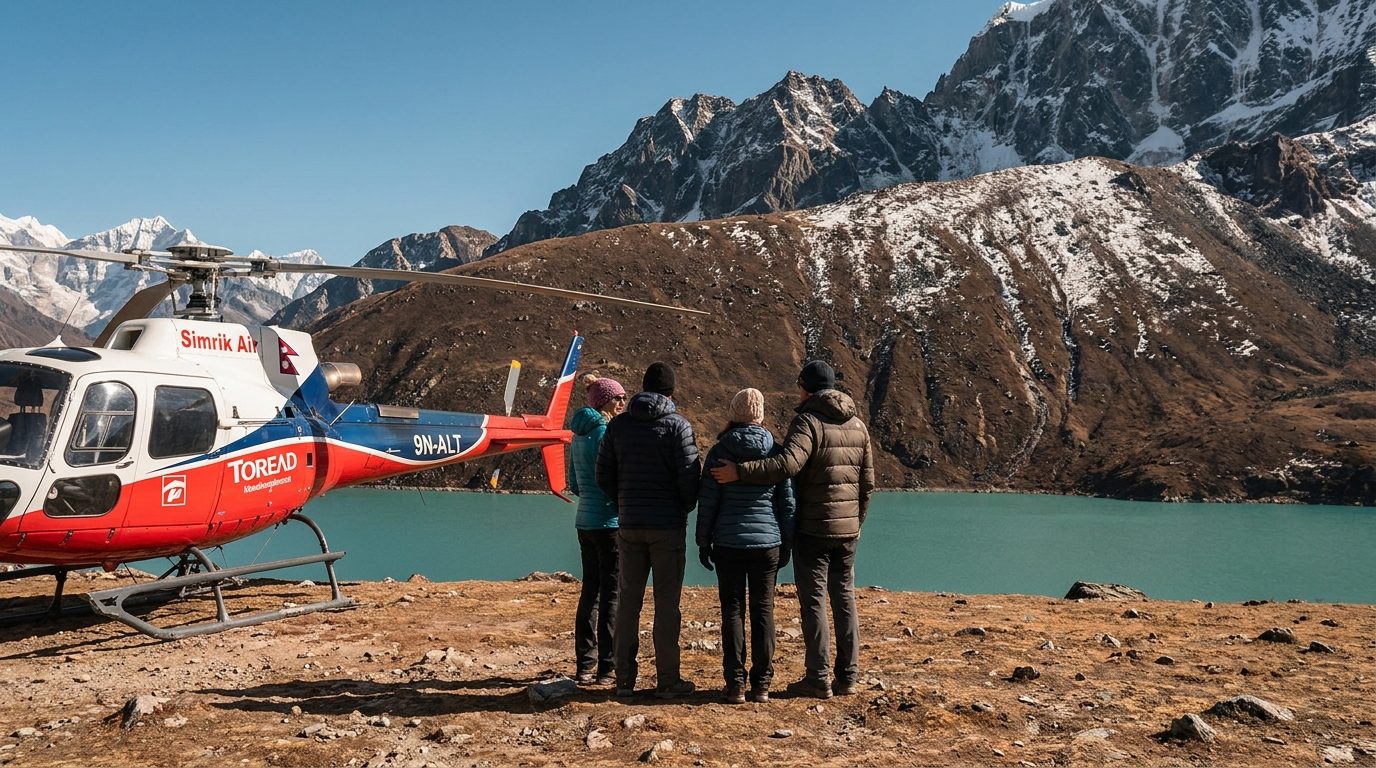
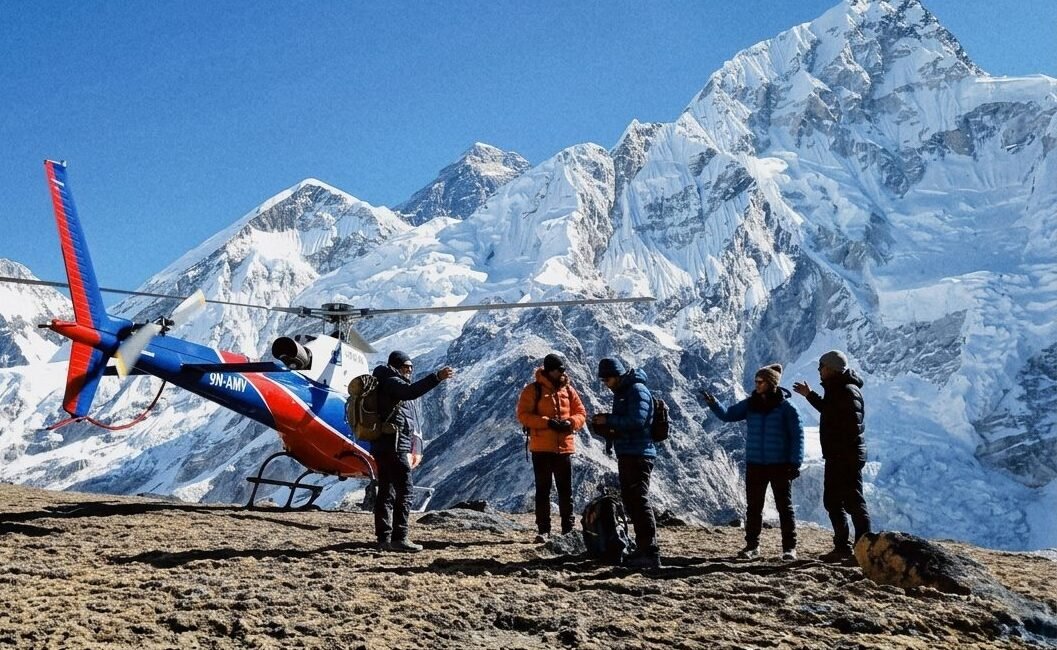
Landings at extreme altitude, such as near Everest Base Camp, are kept intentionally brief. This isn’t a cost-cutting measure; helicopters lose lift capacity the longer they idle at altitude, so operators limit ground time as a standard safety practice regardless of how much passengers might want to linger for photos.
Common Misconceptions Worth Clearing Up
A few beliefs about helicopter safety in Nepal circulate among travelers that don’t hold up well under scrutiny.
“Private charters are automatically safer than shared flights.” As covered above, the aircraft, pilot, and operator are typically identical whether you book a private or shared seat. Price and flexibility differ; the underlying safety standards generally don’t.
“Cheaper operators cut corners on safety.” This isn’t a universal rule, but a significant price gap compared to established operators is worth investigating rather than dismissing. Fuel, maintenance, and experienced pilots cost roughly the same across the industry, so a dramatically lower price sometimes reflects cut corners elsewhere.
“Bad weather means the flight gets cancelled outright.” More often, bad weather means delays or rerouting rather than outright cancellation. Mountain weather in Nepal can clear within hours, and experienced operators build that flexibility into their scheduling rather than treating a cloudy morning as an automatic no-go.
“Helicopter tours are riskier than trekking.” This one’s genuinely hard to compare directly, since the risks are different in kind — altitude sickness and physical exhaustion on a trek versus aviation risk on a flight. Both activities carry manageable risk when done through reputable, experienced operators.
Final Thoughts
Shared helicopter tours in Nepal aren’t inherently riskier than private ones — the “shared” part of the booking has far less bearing on safety than the operator you choose and how seriously that operator treats weight limits, weather calls, and pilot training. Nepal’s mountain terrain does add real complexity to helicopter operations, and the country’s safety record reflects that reality, but tightened regulation and established, reputable operators have made shared tourist flights a genuinely viable option for most travelers.
If you’re weighing a helicopter tour as part of your Nepal itinerary and want help choosing a reputable operator and the right timing for your trip, that’s exactly the kind of planning our team at Adventure Master Treks handles for travelers heading into the Everest and Annapurna regions every season.
Comments (0)
Write a comment- The Short Answer
- Why People Worry About Shared Flights Specifically
- What Actually Determines Helicopter Safety in Nepal
- What Nepal’s Safety Record Actually Shows
- Shared vs. Private: What Actually Changes
- How to Choose an Operator You Can Trust
- Travel Insurance Still Matters
- What Happens During a Typical Shared Flight
- Common Misconceptions Worth Clearing Up
- Final Thoughts
Read the latest Blogs & Insights
Explore our collection of articles and insights to gain in-depth travel knowledge, expert advice, and stay updated on the latest trends and tips.


No comments yet.