









Lukla Airport Flight Schedule and What Happens When Flights Are Delayed
Flying to Lukla for an Everest trek? This guide explains how Lukla flight schedules work, why flights are often delayed or cancelled, what happens when weather disrupts your journey, and what you should do next. Learn about early-morning departures, backup options, and how many buffer days to keep in your itinerary.
-
 Adventure Master Trek
-
4 September, 2026
-
8 mins read
-
307 Views
-
0 Comments


Somewhere in Kathmandu right now, a trekker is sitting in a domestic terminal, bag packed, boots on, staring at a departure board that just won’t move. That’s not a rare scene. It’s practically part of the Everest Base Camp experience at this point. Understanding the Lukla airport flight schedule before you ever book a ticket saves a lot of that stress, and it makes the inevitable delay feel like something you planned for, not something that ruins the trip.
Lukla’s Tenzing-Hillary Airport is the gateway to the Khumbu region and one of the most weather-dependent airports on Earth. Flights run early, seats fill fast in peak season, and delays happen often enough that treating them as a possibility, not an exception, is the smartest thing a trekker can do. This guide breaks down how the schedule actually works and what to do when it doesn’t.
Understanding the Lukla Airport Flight Schedule
Flights to Lukla run almost entirely in the early morning, and there’s a real reason for that. Flights departing between 6 AM and 9 AM tend to have the best chance of taking off on time, since mountain weather in the Khumbu tends to stay calmer before the sun heats up the valleys and stirs up cloud cover and wind later in the day.
Kathmandu to Lukla Flights
The flight takes around 30 to 35 minutes, with Tara Air, Summit Air, and Sita Air operating the route. Departures typically cluster in that early-morning window, and airlines often run multiple flights back-to-back as weather allows, trying to move as many trekkers through as possible before conditions shift.
The Ramechhap Detour During Peak Season
Here’s something a lot of first-time trekkers don’t expect. Between roughly April 1 and May 15, and again from October 1 to November 15, Lukla flights typically shift from Kathmandu to Ramechhap’s Manthali Airport instead. That means a 4 to 5 hour road journey from Kathmandu in the middle of the night, usually leaving well before dawn, before a much shorter flight actually gets you to Lukla.
It sounds inconvenient, and honestly, it is a long night. But there’s a practical reason behind it. Ramechhap sits at a much lower elevation than Kathmandu and avoids the cloud and wind patterns that build up around the capital, giving airlines a longer, cleaner weather window to run flights with fewer disruptions overall.
Why Lukla Flights Get Delayed So Often
Lukla’s runway isn’t like a typical airport strip, and that’s the root of almost every delay story you’ll hear from other trekkers.
The Runway Itself Is the Challenge
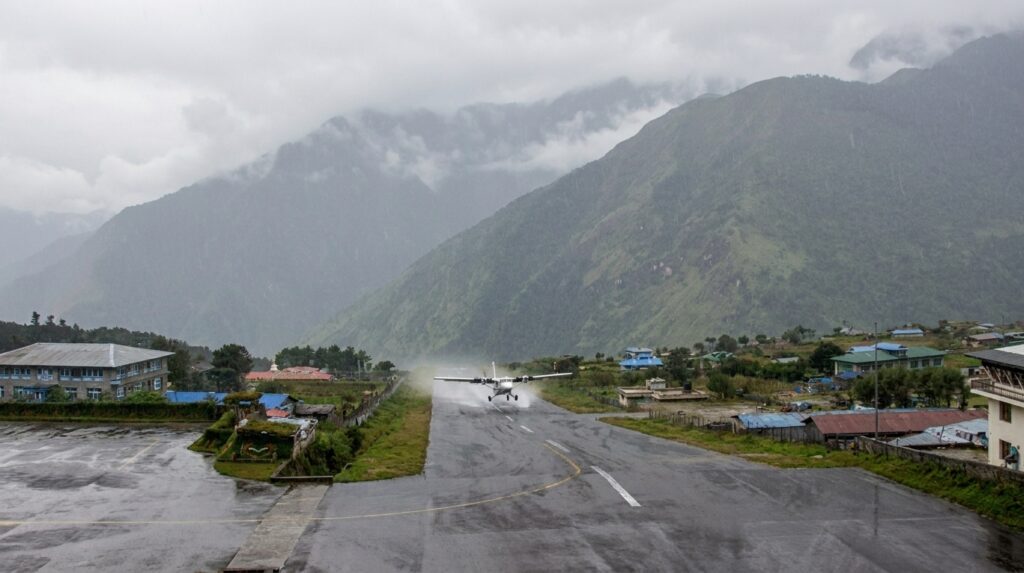
The runway sits at 2,845 meters, runs just 527 meters long, and climbs at roughly a 12% gradient. Pilots land uphill and take off downhill, which requires specialized training and leaves little margin for poor visibility or gusty crosswinds. There’s no instrument landing system to fall back on either, so pilots need to see the runway clearly before committing to landing.
Weather Is the Real Culprit
Mountain weather in the Khumbu changes fast, sometimes within the space of an hour. Because of the airport’s short runway and unpredictable mountain conditions, flights are often delayed or cancelled, particularly outside that early-morning window. A clear sky at 6 AM in Kathmandu doesn’t guarantee clear skies in Lukla, and pilots simply won’t fly if visibility drops below safe minimums.
A few common causes worth knowing about ahead of time:
- Low cloud cover or fog sits over the Lukla valley, even when Kathmandu looks perfectly clear
- Strong crosswinds, which matter enormously given how short and angled the runway is
- Heavy air traffic congestion in Kathmandu during peak trekking season, spring and autumn, especially
- Aircraft repositioning delays, where a plane needed for your flight is still stuck somewhere else in the schedule
Airlines take a cautious approach on purpose. If weather conditions at Lukla become unsafe, airlines will simply divert a flight back to Kathmandu rather than attempt a risky landing. That caution is exactly what’s kept the safety record improving over recent years, even if it means a frustrating wait on the ground.
What Actually Happens When Your Flight Gets Delayed
Delays follow a fairly predictable pattern once you’ve seen it a couple of times, even if it feels chaotic the first time around.
The Waiting Game at the Airport
Most delays get announced in short increments, thirty minutes, then another thirty, rather than one clear “flight cancelled for the day” notice right away. Airlines usually wait for real-time weather updates from Lukla itself, and conditions can shift enough within an hour to open a brief window for flying. That’s why being patient early in the morning often pays off more than immediately trying to rebook onto another flight or airline.
When a Flight Gets Cancelled Outright
If conditions don’t improve, flights typically get rescheduled for the next available slot, sometimes the same day if a window opens later in the morning, sometimes pushed to the following day entirely. During peak season, when every seat on every flight is already booked, a cancellation can create a backlog that takes a day or two to clear, since new arrivals keep adding to an already full schedule.
Why Buying a Little Buffer Time Matters
Building at least one, ideally two, extra days into a trip itinerary before and after the Lukla flights isn’t overly cautious, it’s just realistic. Trekkers who build in a buffer day rarely miss an international flight home because of a Lukla delay, while those cutting it close often do. A trek itself might run exactly on schedule, but the flights bookending it are the part most likely to shift.
Helicopter Options When Time Is Tight
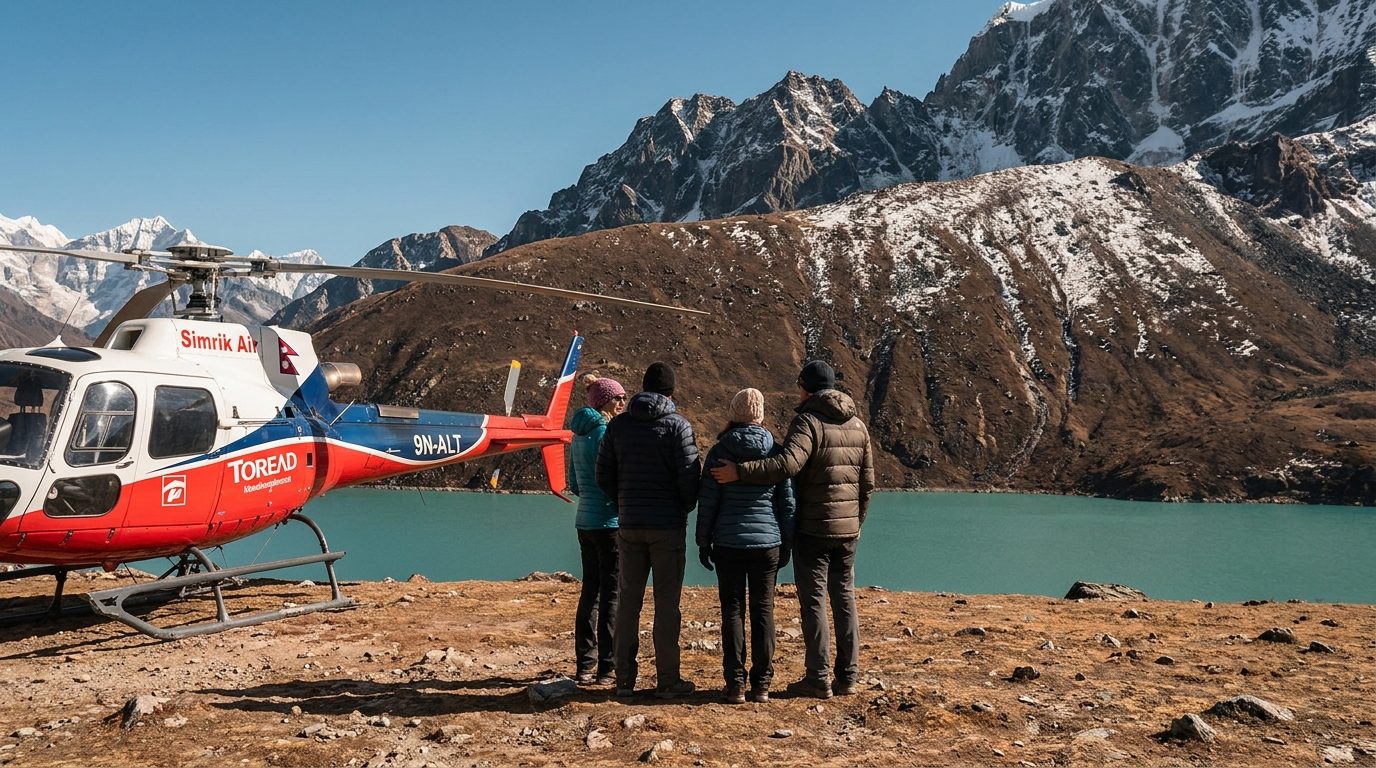
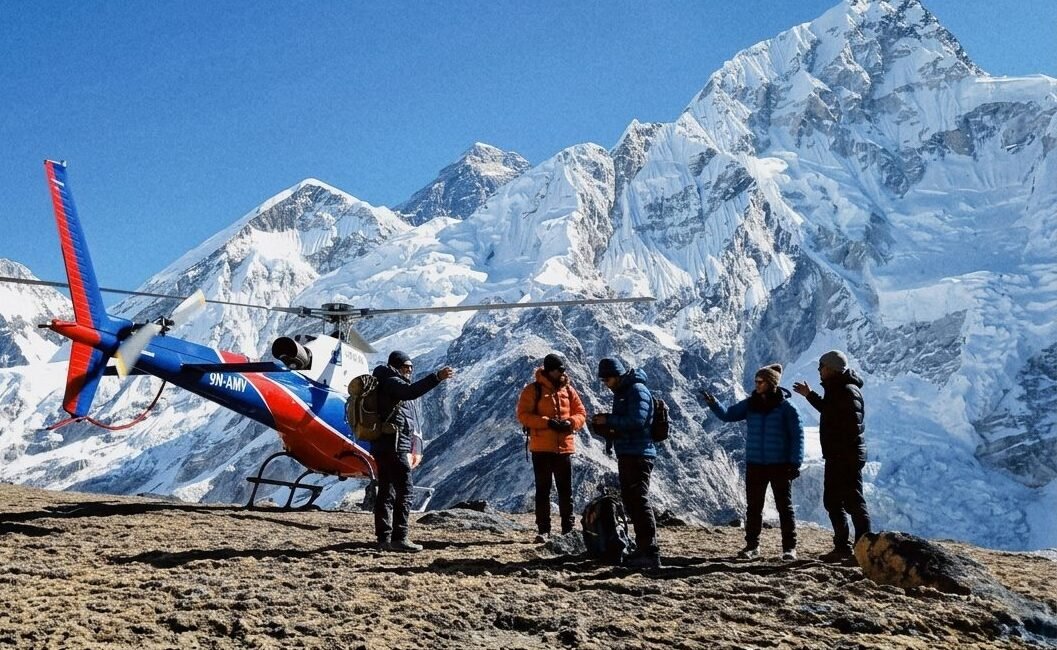
When a delay threatens to derail a return flight home, a helicopter often becomes the fastest way out of Lukla.
A one-way helicopter flight between Kathmandu and Lukla typically runs somewhere between $400 and $500 per person, depending on the season and seat availability. Shared helicopter flights bring that cost down for solo travelers or small groups willing to split a seat with other stranded trekkers heading the same direction.
Helicopters can often fly in conditions that fixed-wing planes can’t, since they don’t need the same length of clear runway or approach path. That doesn’t mean they’re entirely immune to weather delays; heavy cloud or storms will still ground a helicopter, too, but they do open up a window that a fixed-wing flight simply can’t use.
How to Plan Around the Lukla Flight Schedule
A little planning ahead of time turns a stressful, unpredictable part of the trip into something manageable, even expected.
A few practical habits worth building into a trip:
- Book morning flights whenever possible, since they carry the best odds of departing on time
- Add buffer days on both ends of the trek, before flying in and especially before flying home
- Travel with a guide or operator who has direct contact with airline staff and real-time updates, rather than relying only on airport announcements
- Keep travel insurance that covers weather-related delays and helicopter evacuation costs
- Avoid booking an international flight home for the same day as your Lukla return flight
Traveling with an experienced operator matters more here than in most other parts of a trek. At Adventure Master Treks, our team tracks weather and flight status directly with airline contacts each morning, so trekkers aren’t just waiting on a generic airport announcement board wondering what’s actually happening behind the scenes.
Best Time of Year for a Smoother Lukla Flight Experience
Season plays a bigger role in flight reliability than most first-time trekkers expect.
Spring, roughly March through May, and autumn, September through November, bring the clearest, most stable mountain weather overall, which is exactly why they’re peak trekking season in the first place. Ironically, that popularity also means Kathmandu’s airport gets congested, which is part of why flights shift over to Ramechhap during the busiest stretches of those windows.
Winter and monsoon season bring their own trade-offs. Winter mornings are often clear and cold, sometimes producing very reliable early flights, but afternoon weather can turn quickly. Monsoon season, roughly June through September, brings the least predictable flying conditions of the year, with heavy cloud cover that can ground flights for days at a stretch.
Final Thoughts
The Lukla airport flight schedule isn’t something to fight against; it’s something to plan around. Morning departures, a realistic buffer built into the itinerary, and a trekking partner who actually tracks conditions in real time turn an unpredictable flight into a manageable part of the adventure instead of a source of panic.
At Adventure Master Treks, we build that flexibility into every Everest region itinerary from the start, because a delayed flight shouldn’t be the thing trekkers remember most about a trip they planned for months. Plan for the delay, and the mountain views end up being the story instead.
Comments (0)
Write a comment- Understanding the Lukla Airport Flight Schedule
- Kathmandu to Lukla Flights
- The Ramechhap Detour During Peak Season
- Why Lukla Flights Get Delayed So Often
- The Runway Itself Is the Challenge
- Weather Is the Real Culprit
- What Actually Happens When Your Flight Gets Delayed
- The Waiting Game at the Airport
- When a Flight Gets Cancelled Outright
- Why Buying a Little Buffer Time Matters
- Helicopter Options When Time Is Tight
- How to Plan Around the Lukla Flight Schedule
- Best Time of Year for a Smoother Lukla Flight Experience
- Final Thoughts
Read the latest Blogs & Insights
Explore our collection of articles and insights to gain in-depth travel knowledge, expert advice, and stay updated on the latest trends and tips.




No comments yet.