









How to Avoid Leeches on the Annapurna Base Camp Trek (And What Actually Works)
Discover practical ways to prevent leech bites on the Annapurna Base Camp Trek, including the best clothing, repellents, and safe removal techniques.
-
 Adventure Master Trek
-
26 November, 2026
-
11 mins read
-
14 Views
-
0 Comments


If you are planning the Annapurna Base Camp (ABC) trek and traveling anywhere near the edges of the monsoon — late August, September, early October, or late May — you have probably heard horror stories about Himalayan land leeches.
Trekkers describe looking down at their boots to find a dozen small black worms inching up their socks, or taking off their gaiters at a teahouse in Bamboo only to discover their ankles covered in bloody streaks.
Here is the immediate reality: Himalayan leeches (Haemadipsa) are harmless from a medical standpoint. They do not transmit blood-borne diseases, their bites do not hurt because they inject an anesthetic enzyme before piercing the skin, and they exist only in damp subtropical forest below 3,000 meters. Once you climb above the village of Dovan into the high alpine canyon, they vanish completely.
That said, discovering leeches inside your boots is unsettling, and the anticoagulant they inject (hirudin) causes bites to bleed for hours, staining your socks and creating itchy sores that can become infected in humid conditions.
Below is the field-tested guide to dealing with leeches on the Annapurna Base Camp trek: where they live, which months are completely leech-free, what repellents actually work, and how to remove them safely without scarring your skin.
Where and When Do Leeches Exist on the ABC Route?
Leeches are not scattered randomly across the Himalayas. They require three specific environmental conditions to survive: high humidity, warm temperatures, and dense vegetation with leaf litter.
The Altitude Barrier: 1,000m to 3,000m Only
On the Annapurna Base Camp trail, leeches thrive in the lower river valleys and damp subtropical forests:
- The Hotspots: The stone stairs between Tikhedhunga and Ulleri, the forested ravines around Chhomrong, the dense bamboo groves between Bamboo and Dovan, and the wet trail sections crossing the Modi Khola river.
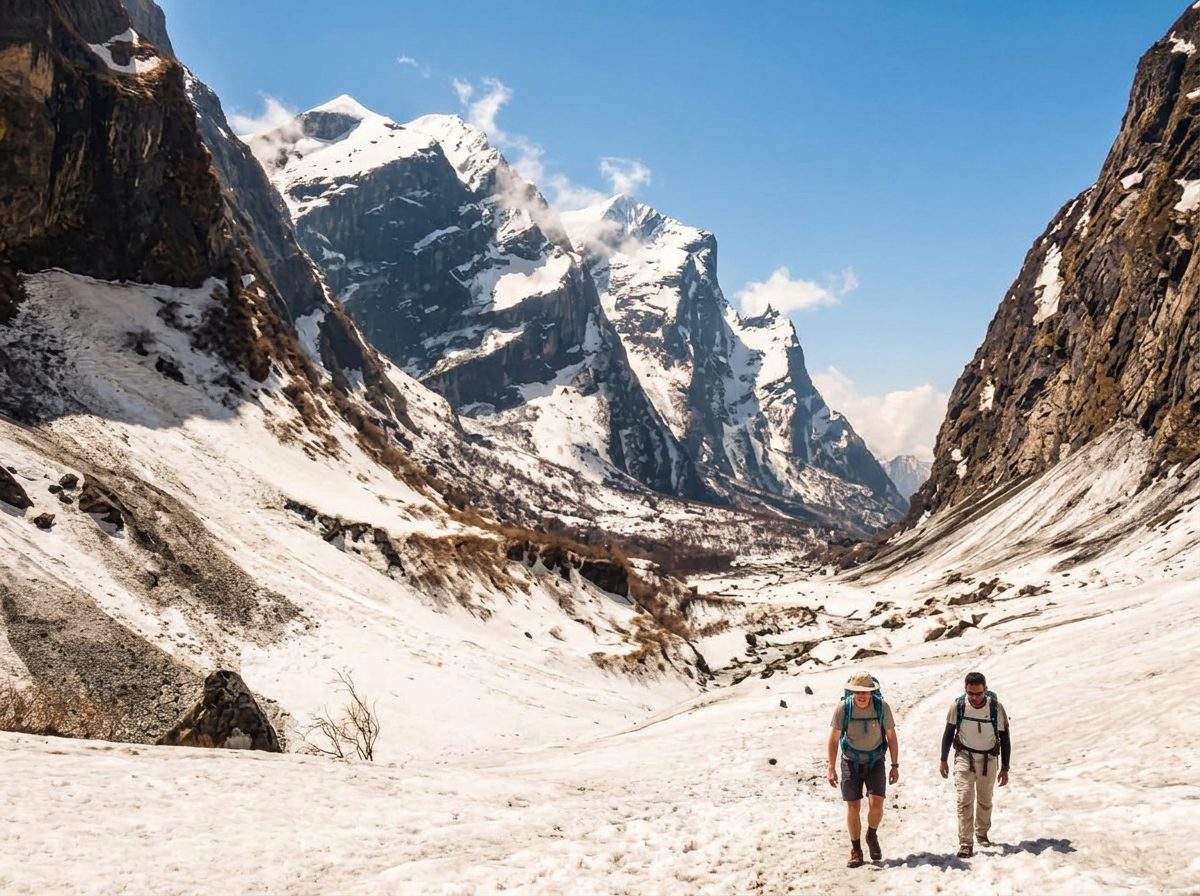
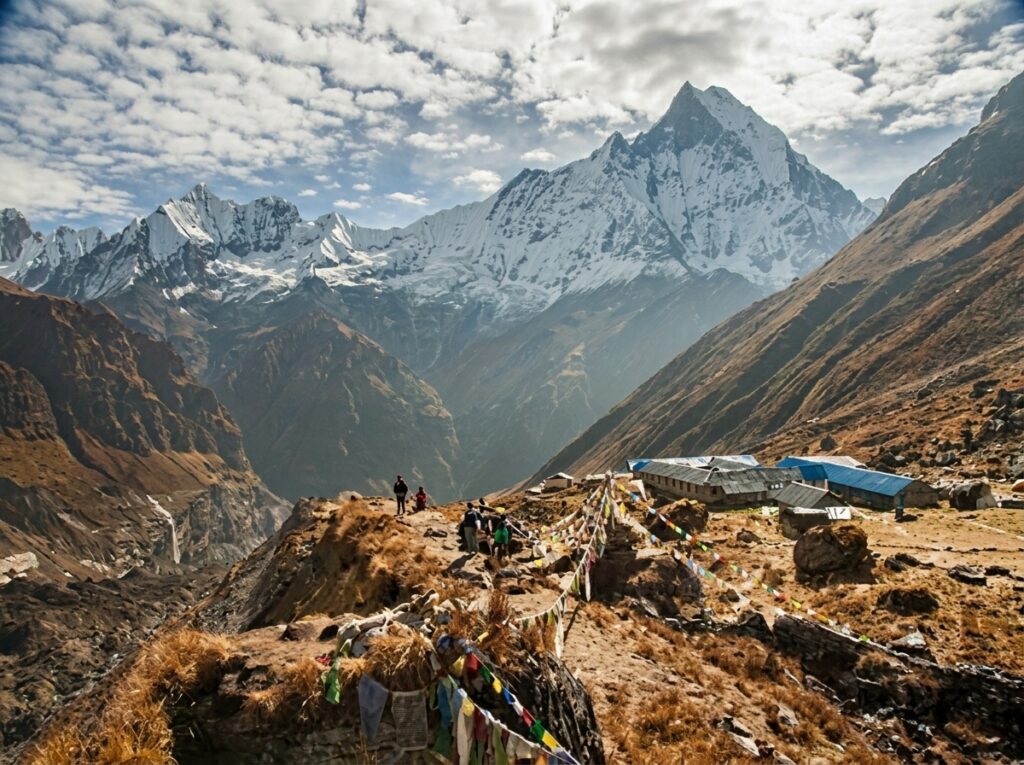
- The Clear Zone: Once you climb past Dovan (2,600m) and reach Himalaya (2,920m) and Deurali (3,200m), the forest thins, temperatures drop, and the trail enters an open alpine canyon. There are zero leeches at Machhapuchhre Base Camp (3,700m) or Annapurna Base Camp (4,130m). The air is too cold and the rocky moraine contains no soil for them to breed.
The Leech Season Calendar for Annapurna
| Month | Leech Activity Level | Trail Reality |
| June – August | Extreme | Peak monsoon. Heavy daily rain. The forest trails between Nayapul and Dovan are crawling with leeches. Avoid trekking ABC unless you are comfortable with constant leech management. |
| September (Early to Mid) | High to Moderate | The monsoon begins retreating, but forests remain soaked. Expect active leeches on wet stone stairs and grass edges below Chhomrong. |
| Late September to Early October | Low to Moderate | The transition window. A few lingering leeches on damp mornings, mostly in shady bamboo groves between Sinuwa and Dovan. |
| Mid-October through November | Zero | Peak trekking season. Skies are clear, daytime air is crisp and dry, and soil moisture drops. Leeches become dormant or die off. You can hike in shorts without seeing a single leech. |
| December – February | Zero | Winter freezing temperatures completely eliminate all leech activity across the entire trail. |
| March – April | Zero | Spring trekking season. Trails are dry and dusty; rhododendrons bloom; leeches are absent. |
| May (Late) | Very Low to Emerging | Pre-monsoon afternoon thunderstorms can re-moisten the forest floor in late May, bringing out the first seasonal leeches in low valleys. |
If you trek between October 15 and May 15, leeches are essentially a non-issue. You will not need special socks or sprays. But if your vacation falls in September or early October, you need a defense system.
5 Field-Tested Defenses: What Actually Works on the Trail
Mountain guides in Nepal have tested every commercial product and home remedy on the market. Here are the five tactics that genuinely prevent leech bites:
1. Dedicated Leech Socks (The Gold Standard)
If you trek in September, buy a pair of leech socks in Kathmandu (Thamel) or Pokhara (Lakeside) for roughly $4 to $6 USD.
- Leech socks are made of tightly woven, lightweight cotton canvas.
- You pull them over your regular hiking socks and your trousers, cinching them tightly with drawstrings just below your knees before stepping into your boots.
- Because the weave is microscopic, leeches cannot bite through the fabric. They crawl harmlessly up the outside of the white canvas, where you can easily spot and flick them off with a finger or trekking pole.
2. The Traditional Nepali “Chuna” (Salt) Pouch
This is what local Gurung porters and guides have used for generations.
- Take an old cotton sock or handkerchief, fill it with two tablespoons of coarse table salt, and tie it tightly with a rubber band to create a small dabber pouch.
- Keep the pouch in an accessible pocket of your daypack.
- When you walk through wet forest or stop for tea, dab the salty pouch across your boots, laces, and gaiters.
- Leeches cannot tolerate sodium; the salt draws moisture out of their porous skin instantly. The moment a leech touches a salted boot or sock, it curls up and drops off immediately.
3. Tobacco Oil or Soaked Tobacco Water
In mountain villages around Ghandruk, lodge owners will soak dried tobacco leaves in water overnight to create a dark, concentrated brown liquid.
- Applying this liquid to your lower boot cuffs and sock rims acts as a natural, highly potent deterrent.
- Leeches are repelled by nicotine alkaloids and will avoid crossing fabric soaked in tobacco residue.
4. High-Concentration DEET or Dettol Spray
Standard chemical bug sprays designed for mosquitoes do not stop Himalayan leeches.
- You need a DEET concentration of 40% to 50%, or a travel spray bottle filled with diluted Dettol or Savlon antiseptic liquid.
- Spray your boots, ankles, and lower pant legs before leaving your teahouse in the morning, and reapply after crossing wet streams or walking through wet ferns.
- Note: Avoid spraying high-concentration DEET directly onto synthetic GORE-TEX membranes or plastic watch faces, as it can degrade technical fabrics over time.
5. Smart Trail Habits: How to Walk
Where you step matters just as much as what you wear:
- Stay in the middle of the trail: Leeches do not drop from trees like paratroopers (that is a common myth). They sit on damp grass blades, wet ferns, and mossy stones at ankle height, extending their bodies into the air to detect body heat, carbon dioxide, and footsteps.
- Do not brush against roadside bushes: Walking on the cleared stone path keeps you out of their strike zone.
- Do not sit on mossy logs or damp stone walls: When you take a rest break between Chhomrong and Bamboo, sit on dry wooden benches inside teahouses or on dry gravel clearings.
- Keep moving on wet stretches: Leeches need roughly ten to twenty seconds to crawl onto a boot and find purchase. If you maintain a steady walking pace through damp forest sections, they cannot latch on easily.
What Doesn’t Work: 4 Leech Myths to Ignore
Before packing your bags, save your money and skip these commonly shared internet tips:
- Myth 1: Wearing thick woolen hiking socks stops them. Himalayan leeches are flexible, soft-bodied invertebrates that can flatten their bodies and squeeze directly through the knit loops of standard wool or synthetic hiking socks.
- Myth 2: Tucking pants into regular socks is enough. While this prevents them from crawling directly onto your bare calf, they will simply crawl through the sock material or climb higher toward your waistband.
- Myth 3: Citronella and natural herbal oils. Essential oils like eucalyptus, lavender, and citronella smell pleasant, but aggressive monsoon leeches will crawl straight over them on a wet trail.
- Myth 4: Running fast through wet sections. Scurrying downhill on slick, wet stone stairs between Tikhedhunga and Ulleri to avoid leeches is the fastest way to blow out a knee or break an ankle. Maintain your normal, deliberate pace and check your boots at the next village.
The Safe Removal Protocol: What to Do When Bitten
If you feel an itch or spot a swollen leech attached to your ankle, do not panic, and do not violently yank it off.
Why You Shouldn’t Rip It Off Forcefully
A feeding leech secures itself using two muscular suckers equipped with microscopic chitinous teeth. If you grab the leech and rip it backward while its teeth are locked into your skin:
- The mouthparts can tear off and remain embedded beneath your skin, leading to bacterial infection and a localized sore that can itch for three to four weeks.
- The sudden trauma can cause the leech to regurgitate the contents of its digestive tract into your open wound, increasing infection risk.
The 4-Step Removal Technique
- Use Salt or Heat: Sprinkle a pinch of table salt onto the leech, dab it with your salt pouch, or squeeze a drop of fresh lemon juice over its body. Within five to ten seconds, the leech will let go voluntarily and drop to the ground. If you do not have salt, slip your fingernail or the flat edge of an ATM card under the suction end to break the vacuum seal.
- Do Not Worry About the Blood: Leeches secrete hirudin, a powerful anticoagulant that prevents blood from clotting so they can feed smoothly. After the leech drops off, the puncture wound will continue bleeding freely for 30 minutes to an hour. This is completely normal and looks far worse than it actually is.
- Clean the Wound: Wash the bite site thoroughly with clean bottled water and soap or an antiseptic alcohol wipe (Betadine, Dettol, or Savlon).
- Apply Direct Pressure and a Bandage: Press a clean tissue or cotton pad over the bite for three to five minutes until the bleeding slows, then secure it with a firm plaster. Avoid scratching the bite site over the coming days, as dirty fingernails are the primary cause of secondary skin infections on mountain treks.
Frequently Asked Questions
Do leeches in Nepal carry diseases?
No, Himalayan land leeches (Haemadipsa) do not transmit dangerous diseases, viruses, or blood parasites to humans. The only medical risk associated with leech bites is secondary bacterial infection, which occurs if you scratch the itchy bite site with unwashed hands on the trail.
Are there leeches at Annapurna Base Camp itself?
No, there are zero leeches at Annapurna Base Camp (4,130m) or Machhapuchhre Base Camp (3,700m). Leeches cannot survive above roughly 3,000 meters due to freezing night temperatures, dry alpine air, and the lack of soil and leaf litter. All leech activity is confined to the lower forests below Dovan.
Can leeches bite through clothing?
Leeches cannot bite through technical canvas leech socks, GORE-TEX gaiters, or hard leather hiking boots. However, they can easily squeeze through the weave of regular wool hiking socks, thin leggings, and loose cotton trousers.
What are leech socks and where can I buy them in Nepal?
Leech socks are specialized over-socks made from tightly woven cotton canvas that pull over your trousers and cinch tightly below the knee with a drawcord. They cost between $4 and $6 USD per pair and are readily available at gear shops in Thamel (Kathmandu) and along Lakeside in Pokhara.
Which month has the most leeches on the Annapurna trek?
July and August have the highest leech activity, coinciding with the peak monsoon rainfall. Early to mid-September also sees moderate leech presence in wet forest clearings. By mid-October, cooler and drier autumn conditions cause leeches to disappear completely for the rest of the trekking season.
Does salt kill leeches instantly?
Yes, applying dry table salt or concentrated salt water causes rapid dehydration in leeches due to osmosis. The salt pulls moisture out of their body within seconds, causing them to detach their suckers immediately and drop off your skin without leaving their mouthparts behind.
Do I need to worry about leeches if trekking ABC in November or April?
No, you do not need to worry about leeches in November or April. Both months fall during dry trekking seasons with low humidity, meaning leeches are completely dormant or absent. You can hike in standard trekking socks and shorts without encountering leeches.
Planning an Annapurna Base Camp trek and want clear advice on seasons, trail conditions, and packing?
When you book with us, our licensed mountain guides monitor weather patterns daily, choose the safest trail alignments, and provide full medical and safety support every step of the way. Contact our team to design your seamless Annapurna trek.
Comments (0)
Write a comment- Where and When Do Leeches Exist on the ABC Route?
- The Altitude Barrier: 1,000m to 3,000m Only
- The Leech Season Calendar for Annapurna
- 5 Field-Tested Defenses: What Actually Works on the Trail
- 1. Dedicated Leech Socks (The Gold Standard)
- 2. The Traditional Nepali “Chuna” (Salt) Pouch
- 3. Tobacco Oil or Soaked Tobacco Water
- 4. High-Concentration DEET or Dettol Spray
- 5. Smart Trail Habits: How to Walk
- What Doesn’t Work: 4 Leech Myths to Ignore
- The Safe Removal Protocol: What to Do When Bitten
- Why You Shouldn’t Rip It Off Forcefully
- The 4-Step Removal Technique
- Frequently Asked Questions
- Do leeches in Nepal carry diseases?
- Are there leeches at Annapurna Base Camp itself?
- Can leeches bite through clothing?
- What are leech socks and where can I buy them in Nepal?
- Which month has the most leeches on the Annapurna trek?
- Does salt kill leeches instantly?
- Do I need to worry about leeches if trekking ABC in November or April?
Read the latest Blogs & Insights
Explore our collection of articles and insights to gain in-depth travel knowledge, expert advice, and stay updated on the latest trends and tips.



No comments yet.