









Panch Pokhari Trek: Nepal’s Hidden Five Lakes — Cost, Itinerary & 2026 Guide
Discover Panch Pokhari, one of Nepal's lesser-known Himalayan trekking destinations, on a 5 or 6-day adventure. This 2026 guide covers the complete itinerary, trekking cost, permits, accommodation, difficulty, best season, and what makes its five sacred lakes worth the journey.
-
 Adventure Master Trek
-
23 August, 2026
-
9 mins read
-
398 Views
-
0 Comments


Ask ten people who’ve trekked in Nepal about Panch Pokhara and maybe one will know what you’re talking about. That’s part of the appeal, honestly. While everyone’s queuing for tea house rooms in Namche or fighting for window seats on the Annapurna Circuit bus, this little route through Sindhupalchowk and Kavre quietly does its own thing — five glacial lakes sitting above 4,100 meters, ringed by rhododendron forest and a view of the Jugal Himal that most foreign trekkers have never even heard of.
“Panch Pokhara” just means five lakes in Nepali. No marketing spin needed. You climb, the forest thins out, and then there they are — five still pools of water that locals have considered holy for generations.
This guide is for anyone weighing up whether to spend their precious 5 or 6 days in Nepal here instead of somewhere more famous. Short answer: yes, especially if you want something less crowded. Long answer below.
So Where Exactly Is It?
Panch Pokhara sits in the hills northeast of Kathmandu, straddling Sindhupalchowk and Kavrepalanchok districts. You’re looking at roughly a half-day drive to reach the trailhead area, depending on which village you start from — Chautara, Melamchi, and Bhotang are the usual entry points, and which one your guide picks often comes down to road conditions that season more than anything else.
Unlike Everest or Annapurna, this isn’t high-altitude mountaineering territory. It’s mid-hill trekking that pushes up into alpine terrain for the final stretch. That distinction matters because it means you don’t need weeks of acclimatization days built in — five or six days is genuinely enough.
There’s also a religious layer here that a lot of trekking blogs skip over. Hindu pilgrims and local communities visit the lakes during certain festival periods to bathe — a ritual believed to wash away sin. I’ve spoken with guides who grew up in nearby villages and they treat the lakes with a kind of quiet respect you don’t always see on more touristy routes, where the sacred sites can feel a bit like photo stops.
5 Days or 6? Here’s the Difference
People ask this a lot, and the honest answer is: it depends how badly you want to linger.
The 5-day version is for people who are already reasonably fit, possibly somewhat acclimatized, and just want to get up, see the lakes, and come back down efficiently. It’s doable. It’s just a bit rushed once you’re actually standing at the lakes — you’ll want more than twenty minutes there, trust me.
The 6-day version throws in one extra day, usually for rest near the lakes or a slower descent. If your schedule has any flexibility at all, take the extra day. You didn’t drive five hours and climb three days just to turn around immediately.
Day-by-Day Breakdown
Day 1 — Kathmandu to Chautara/Melamchi, then a short walk
Most itineraries start with a drive of around 4 to 6 hours out of Kathmandu, depending on traffic and road conditions (and Nepal road conditions are… variable, let’s say). From the drop-off point, you walk another 2-3 hours to your first overnight stop — usually a Tamang village teahouse. Nothing strenuous yet. This day is really about shaking off the city and getting your legs moving.
Day 2 — Into the forest
Now the actual climbing starts. You’re walking through oak, pine, and rhododendron forest for somewhere around 5-6 hours, gaining elevation the whole way. If you’ve timed it for spring, the rhododendrons might be in full bloom, which turns whole hillsides red — genuinely one of the better forest walks in this part of Nepal.
Day 3 — Up to High Camp
This is the day people remember as hard. The trail steepens noticeably, you’re feeling the thinner air, and High Camp usually sits somewhere between 3,500 and 3,800 meters. On a clear day you’ll start catching glimpses of the Jugal range poking through gaps in the trees. The forest starts giving way to open slope here too.
Day 4 — High Camp to the lakes
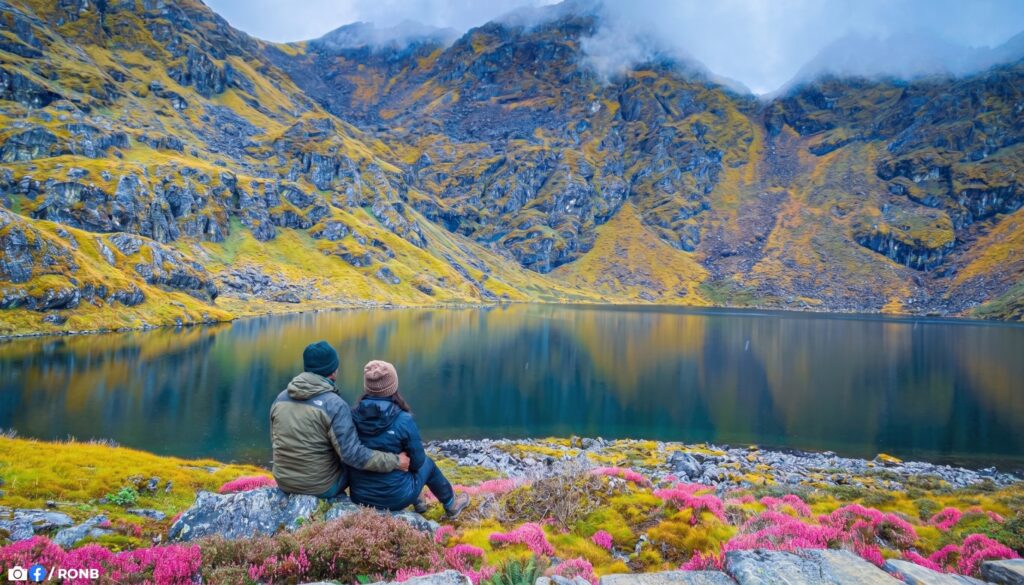
The day everyone’s there for. It’s a 3-5 hour climb up to the five lakes themselves, around 4,100 meters. You come over a ridge and they’re just… there. Still water, no wind disturbing the surface most mornings, rock and sky reflected back at you. People who’ve done this trek tend to go quiet when they talk about this moment. Spend the afternoon walking the shoreline, take more photos than you think you need, and if you happen to be there during a festival, you might catch pilgrims performing rituals at the water’s edge.
Day 5 — Descent (or rest day, if you went with 6 days)
5-day trekkers start heading back down here, either retracing the route or dropping via an alternate trail toward a lower village. 6-day trekkers get to stay near the lakes another day — maybe a short side hike to a viewpoint, maybe just sitting with a flask of tea watching the light change.
Day 6 (6-day itinerary only) — Back to the roadhead, drive to Kathmandu
The last day is a long one. Combined walking and driving can stretch to 6-7 hours total, so an early start helps. By evening you’re back in Kathmandu’s traffic and noise, which feels jarring after four or five days of near-silence in the hills.
When Should You Go?
Spring — March through May — is the favorite for most guides, and it’s not hard to see why. Rhododendrons bloom, the air’s mild, and you generally get decent visibility for mountain views.
Autumn, September through November, runs a close second. The monsoon clears out the dust and haze, skies tend to stay sharper, and the cooler temperatures make the climbing days less of a slog.
Monsoon (June-August) is one to skip if you can help it — slippery trails, leeches lower down in the forest, clouds rolling in and blocking views just when you’d want them most. Winter is technically possible, but cold, and snow can close off the high section near the lakes entirely some years, so it’s really only for trekkers who know what they’re doing in winter conditions.
How Hard Is This Trek, Really?
Moderate. Not technical — no ropes, no crampons, no mountaineering skills required. But don’t mistake “moderate” for “easy.” There’s sustained uphill walking, some genuinely steep stretches, and altitude high enough that mild symptoms (headache, a bit of breathlessness) are possible for some people.
If you can comfortably walk 5-6 hours a day on rough terrain carrying a daypack, you’ll be fine. Previous trekking experience isn’t required, though it does make the climbing days feel less punishing.
Take acclimatization seriously even on a short trek like this — the altitude gain happens fast over a small number of days. Drink more water than feels necessary, pace yourself going up, and don’t push through symptoms that feel off.
What to Pack
You’ll move through several climate zones in just a few days, so layering is everything here.
- Base layer that wicks moisture, a warm mid layer, and a waterproof/windproof shell on top
- Trekking boots that are already broken in — do not bring new boots
- A sleeping bag rated for near-freezing nights, since teahouses or camps up high get genuinely cold after dark
- Trekking poles — your knees will thank you on the way down
- Sun hat, sunglasses, sunscreen, and a headlamp for the exposed alpine stretch near the lakes
- A small first-aid kit plus whatever personal medication you need
- Reusable water bottle plus purification tablets or a filter
- A power bank — charging gets harder to find the higher you go
Permits and What It’ll Cost You
You’ll need a local entry permit, and depending on the exact route and which districts you cross, possibly a conservation or rural municipality fee on top. Agencies usually handle this, or you can sort it at checkpoint towns along the way. Either way, it’s nowhere near as expensive as permits for Everest or Annapurna.
Costs overall swing a lot depending on how you do this. Going independent and staying in local teahouses is noticeably cheaper than booking a full guided package. That said, I’d still recommend hiring a local guide — the trail here isn’t signposted the way the big-name routes are, and getting lost in this terrain isn’t something you want to find out about the hard way.
Why This Trek Is Worth Your Time
Most people land in Nepal and head straight for Everest or Annapurna — fair enough, they’re stunning. But that fame comes with a cost: packed teahouses, crowded trails, and a trekking experience that can start feeling like standing in line.
Panch Pokhara is the opposite of that. You might pass a handful of other trekkers in an entire day. The villages haven’t been reshaped by tourism the way some of the bigger trekking corridors have. And when you finally reach the lakes, it doesn’t feel like checking a box off a list — it feels earned, partly because so few people make the effort.
It’s also just practical for anyone short on time. Five or six days versus the two-plus weeks Everest Base Camp or the Annapurna Circuit demand. You still get the remoteness, the climb, the payoff — just compressed into a window that actually fits a normal vacation.
A Few Things Worth Knowing Before You Go
Get a local guide or porter if you can manage it. This trail isn’t marked the way the famous routes are, and someone who knows the weather patterns and river crossings locally is worth far more than any guidebook.
Bring cash — Nepali rupees, plenty of it. ATMs vanish once you’re outside Kathmandu, and teahouses along this route don’t take cards.
Treat the lakes with respect. They’re sacred to local Hindu and indigenous communities, so no swimming, no washing up, and definitely pack out anything you bring in.
If your schedule has any wiggle room, build in a buffer day. Mountain weather changes fast here, and one flexible day saves you from a transport delay turning into a missed flight.
Get travel insurance that actually covers high-altitude trekking before you leave home. This route is remote enough that you don’t want to find out your policy has a gap.
Last Word
Five or six days isn’t long, but Panch Pokhara packs a lot into that window — forest trails, hill villages that still feel untouched, a real climb, and a reward at the top that very few short treks in Nepal can match. Five sacred lakes, dead still, set against a wall of Himalayan peaks, with almost nobody else around to share the view.
If you want the feeling of trekking in Nepal without committing two or three weeks to it, and without the crowds that come with the famous names, this is about as close as it gets. Go with a guide who knows the route, go with some respect for the local culture, and you’ll come home with a story that hardly anyone else you know will have.
Comments (0)
Write a comment- So Where Exactly Is It?
- 5 Days or 6? Here’s the Difference
- Day-by-Day Breakdown
- Day 1 — Kathmandu to Chautara/Melamchi, then a short walk
- Day 2 — Into the forest
- Day 3 — Up to High Camp
- Day 4 — High Camp to the lakes
- Day 5 — Descent (or rest day, if you went with 6 days)
- Day 6 (6-day itinerary only) — Back to the roadhead, drive to Kathmandu
- When Should You Go?
- How Hard Is This Trek, Really?
- What to Pack
- Permits and What It’ll Cost You
- Why This Trek Is Worth Your Time
- A Few Things Worth Knowing Before You Go
- Last Word
Read the latest Blogs & Insights
Explore our collection of articles and insights to gain in-depth travel knowledge, expert advice, and stay updated on the latest trends and tips.


No comments yet.