









Annapurna Base Camp Trek 2026: Complete Guide for Beginners
Discover everything beginners need to know about the Annapurna Base Camp Trek 2026, including the route, cost, best season, difficulty, permits, and essential trekking tips.
-
 Adventure Master Trek
-
15 October, 2026
-
13 mins read
-
49 Views
-
0 Comments


Annapurna Base Camp has been pulling trekkers from every corner of the world for decades, and that pull has only grown stronger. There is something about this particular route that works for people who have never set foot on a Himalayan trail before. The path is well walked, the teahouses are reliable through most of the route, the landscape shifts from rice paddies and rhododendron jungle to a glacial bowl ringed by some of the tallest peaks on earth, and the whole thing happens over just under two weeks. For anyone who has been sitting on this ambition for a while, 2026 is as good a year as any to stop sitting on it.
What the Annapurna Base Camp Trek Actually Involves
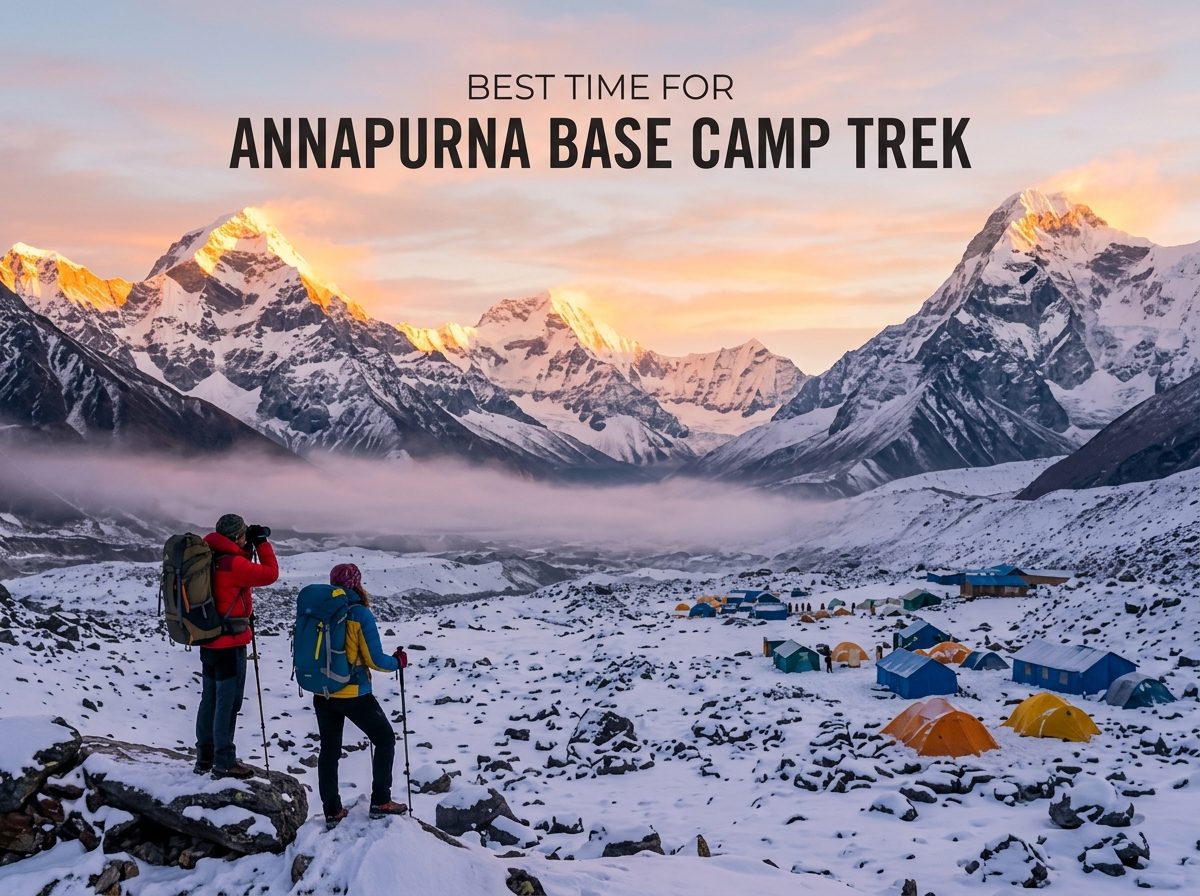
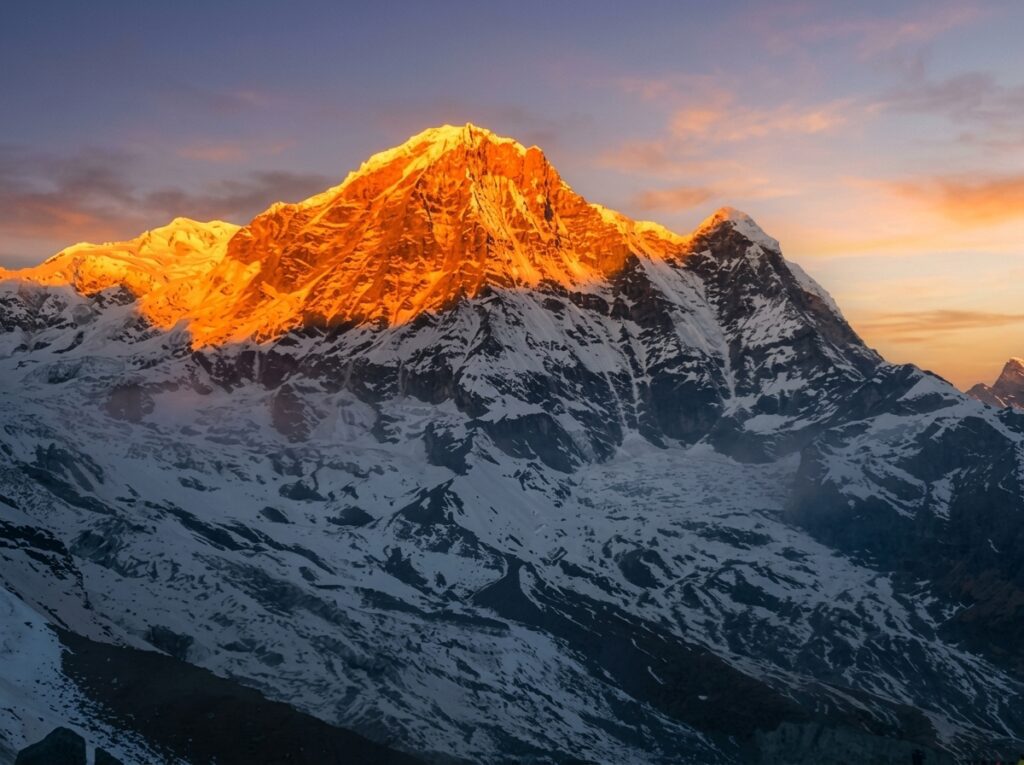
The Annapurna Sanctuary is a natural amphitheatre carved by glaciers into the southern flank of the Annapurna massif. Getting there means walking the Modi Khola gorge from the lowlands around Nayapul all the way to the glacial basin at 4,130 meters where base camp sits. The peaks surrounding that basin, Annapurna South, Hiunchuli, Machhapuchhre, Gangapurna, and the main summit at 8,091 meters, form a complete circle above the camp. Standing there on a clear morning with that light on those faces is the kind of thing that takes a while to process.
The round trip distance runs roughly 110 to 115 kilometers depending on the exact route variation and any side trips taken along the way. A standard itinerary takes 10 to 14 days to complete. That range matters because the difference between rushing it and taking it properly is often the difference between reaching base camp and turning around sick somewhere below Deurali.
Is This Trek Realistic for a Complete Beginner?
Genuinely, yes, with the right preparation. ABC sits in the moderate band of Himalayan treks. The altitude reaches 4,130 meters at base camp, which is meaningful but considerably below Everest Base Camp at 5,364 meters. There are no high passes, no glacier crossings, and no technical sections requiring specialist skills or equipment. The trail is clearly marked and teahouses run the full length of the route below the upper gorge.
What catches beginners out is not the altitude on its own. The sustained consecutive days of walking, the brutal stone staircase climb on the second day above Tikhedhunga, the cold that arrives sharply above 3,500 meters, and the steepness of the gorge section between Sinuwa and Deurali are where undertrained trekkers begin to struggle. None of those challenges are beyond a beginner who has prepared honestly. All of them will punish someone who showed up assuming fitness from everyday life would be enough.
What Has Changed for 2026
The permit situation remains consistent with recent years. The Annapurna Conservation Area Permit and the TIMS card are both required before starting the trek. ACAP fees for foreign nationals run around 3,000 Nepalese Rupees and the TIMS fee sits on top of that. Both are obtained either in Kathmandu at the Nepal Tourism Board office or in Pokhara. Fee structures get reviewed periodically, so checking current figures with a registered agency before departure is the sensible approach.
Teahouse quality has continued to improve through the mid-route sections around Chhomrong and Sinuwa, particularly. Above Deurali, the situation becomes more basic, and that gap widens as elevation increases. Expecting hot showers or reliable charging facilities above 3,700 meters is optimistic, regardless of what any individual teahouse might advertise to incoming trekkers.
Trail work on the lower sections between Tikhedhunga and Ghorepani was carried out following damage from the 2024 monsoon. The stone staircase sections are in reasonable shape heading into the 2026 season, which matters because those lower sections see the heaviest foot traffic and deteriorate faster than the upper trail.
October and November remain the peak crowd months. The trail between Chhomrong and Himalaya village in the first two weeks of October can feel genuinely busy. Trekkers who want a quieter experience should look at March and April when the rhododendron forests below Ghorepani are flowering, and the trail carries a fraction of the autumn volume.
The Altitude Profile and What the Body Goes Through
The trek starts at Nayapul at around 1,070 meters and spends the first two to three days below 2,900 meters, moving through Tikhedhunga and up to Ghorepani. This lower section functions as natural acclimatization time even though most trekkers do not think of it that way. The body is already responding to the gradual elevation increase through the forest sections before the route turns seriously upward.
Chhomrong at 2,170 meters feels manageable for almost everyone. The forest climb through Sinuwa, Bamboo, and Dovan moves through the 2,300 to 2,600 meter band, which is physically demanding but sits below the altitude threshold where symptoms typically begin appearing in most trekkers.
Deurali at 3,230 meters is where the nature of the trek changes. Above here the gorge narrows, vegetation drops away, the sky opens up, and the mountains suddenly seem genuinely close. Machhapuchhre Base Camp at 3,700 meters and then the final push to ABC at 4,130 meters are where altitude awareness becomes something to take seriously rather than monitor casually.
Total cumulative elevation gain across the full round trip sits around 6,000 to 7,000 meters when every ascent and descent is counted. That number sounds large on paper. Spread across 10 to 14 days of walking, it becomes manageable within a sensible schedule that does not try to compress the acclimatization arc.
How Difficult Is the Annapurna Base Camp Trek: The Real Fitness Picture
The fitness required for ABC is above what most people carry from everyday urban life, and below what anyone would call elite athletic conditioning. The body needs to walk moderate distances on consecutive days over roughly two weeks, with a loaded pack, at increasing altitude, without accumulating enough damage to slow everything down by the second half of the trek.
Building a weekly walking distance is the foundation. Starting four to five months before departure at a comfortable baseline and building progressively toward 45 to 55 kilometers per week by the final month is the target. Four to five sessions per week spread across the week builds connective tissue and joint resilience far more effectively than compressing all the distance into weekend efforts.
Back-to-back days are the most important training tool available, and the most consistently skipped. Two consecutive days of 12 to 15 kilometers with a loaded pack of 6 to 8 kilograms trains recovery patterns that the trek will demand every single night. One long day followed by a rest day prepares the body for one long day, not for 12 consecutive ones.
The Ulleri staircase on the second day of the trek is approximately 3,000 stone steps of sustained uphill climbing with a loaded pack. This section surprises even fit trekkers who have not specifically trained for sustained stair climbing. For anyone without access to real hills, 45 to 60 minutes of loaded stair climbing three times per week through the preparation period is the most direct preparation available.
Descent conditioning is the element most beginners skip entirely because training for downhill feels counterintuitive. The return journey involves long stone staircase sections that load the knees and hips in a way that deteriorates quickly in undertrained legs. Walking lunges, box step-downs, and deliberate downhill running build the eccentric quad strength that absorbs that load across multiple consecutive descent days. Knee problems on the lower return trail are among the most common reasons trekkers need assistance on the ABC route.
Cardiovascular base training running alongside hiking work matters above 3,500 meters when the engine efficiency of the aerobic system becomes a genuine limiting factor. Swimming, cycling, and running all contribute. Two to three dedicated sessions per week, alongside the walking program builds the aerobic base that the altitude will draw heavily on.
Altitude Sickness: The Basics Every Beginner Needs to Understand
Altitude sickness is not a sign of weakness or poor fitness. Competitive athletes and sedentary trekkers get it in roughly equal measure above certain thresholds because susceptibility is largely genetic and cannot be trained away. Understanding what to watch for and how to respond matters far more than hoping the problem will not arise.
Mild symptoms include headache, nausea, broken sleep, reduced appetite, and fatigue that feels out of proportion to the day’s effort. These are normal responses to altitude and are manageable with rest, consistent hydration, and a conservative pace. The body generally adapts given enough time at each elevation band.
The symptoms requiring immediate descent without waiting to see if things improve are loss of coordination or balance, confusion or disorientation, a wet, persistent cough, frothy or discolored mucus, and extreme fatigue that rest does not touch. Any combination of these symptoms means going down, regardless of how close base camp is or what time of day it happens to be. Altitude emergencies do not resolve with rest at the same elevation, and they worsen faster than most people expect.
Three to four liters of water per day above 2,500 meters is the hydration target. Alcohol above 3,000 meters, particularly in the first nights at any new elevation, suppresses the breathing response that drives acclimatization and consistently makes symptoms worse the following morning. The temptation to celebrate in teahouses with local rakshi is understandable. The consequences the next morning are predictable.
Gear That Actually Matters for Beginners
Boots are the most consequential gear decision for the entire trek. Waterproof hiking boots with ankle support that have been walked in across at least 150 to 200 kilometers before departure are the standard. New boots on Day 1 of a 12-day trek through wet forest and stone staircase terrain is a mistake with painful and lasting consequences. The trail conditions in the lower sections between Nayapul and Ghorepani can be extremely muddy, and the gorge sections above Dovan receive moisture at almost any time of year.
A sleeping bag rated to negative 10 degrees Celsius covers the temperature range encountered above Deurali. Teahouse blankets exist across the route, but above the upper gorge, they are often thin and damp and insufficient on cold nights, particularly in shoulder season months.
Trekking poles make a real difference on both the Ulleri ascent and the descent sections on the return journey. Training with the actual poles intended for the trek, rather than renting unfamiliar ones at the trailhead, makes the movement natural rather than awkward during the harder sections of the route.
A layering system covers the thermal strategy more effectively than any single heavy garment. A moisture-wicking base layer, a fleece mid-layer, a waterproof shell, and a down jacket for high-elevation evenings handle the full temperature range from Nayapul at 1,070 meters to base camp at 4,130 meters. That range can span 25 degrees Celsius across a single day of walking.
Rain gear is non-negotiable regardless of the season chosen. The lower forest sections get wet. The gorge gets wet. Arriving cold and soaked at a high-elevation teahouse drains physical and mental reserves in ways that compound over multiple consecutive days.
Water purification tablets or a small filter are worth the minimal pack weight, even though bottled water is sold along the route. Above the Himalaya village, the price per bottle climbs significantly, and the plastic waste accumulation on the trail is a genuine environmental problem that responsible trekkers increasingly work to avoid contributing to.
Best Season for Annapurna Base Camp Trek in 2026
October and November are the most popular months and the most reliable for clear skies and settled weather. October particularly sees extended high-pressure periods across the Himalayas that produce the visibility at base camp that most photographs of ABC are taken during. The trade-off is a busy trail through peak weeks, particularly the first half of October.
March and April offer rhododendron forests in peak bloom between Ghorepani and Tadapani that are genuinely extraordinary. The trail carries far fewer trekkers than in autumn, the weather is generally stable, and afternoon cloud buildup at base camp is more common but not prohibitive. Spring is an underrated season for beginners who want quality mountain time without the October crowds.
December through February brings snow on the upper sections, teahouse closures above Deurali in the coldest months, and conditions that are genuinely not appropriate for first-time Himalayan trekkers regardless of cold-weather fitness.
The monsoon months from June through early September make the lower forest sections extremely slippery, bring leeches through the lower elevation terrain, and produce cloud cover that frequently obscures the Sanctuary entirely. The ABC trek during the active monsoon season is not the right choice for a first Himalayan experience.
Logistics Every Beginner Should Sort Before Arriving
Pokhara is the base for the trek and is reached from Kathmandu either by a 25–minute domestic flight or a seven to eight-hour road journey. Flying one direction and traveling overland the other is a popular arrangement that many trekkers find satisfying as a way to see more of the country.
Hiring a licensed local guide is strongly recommended even though guides are not legally required on the ABC route. A good guide handles navigation, communicates with teahouse owners, monitors acclimatization responses, and provides genuine cultural context about the villages and communities encountered along the trail. Guide rates run roughly 25 to 35 US dollars per day, depending on experience and the season.
Hiring a local porter is also strongly encouraged. A standard porter carries up to 25 kilograms and costs around 20 to 25 US dollars per day. Attempting the Ulleri staircase on the second day, carrying a heavy main pack, is a reliable way to exhaust the body before the real trekking has started.
Travel insurance covering high-altitude trekking to at least 5,000 meters and helicopter evacuation needs to be verified specifically in the policy document rather than assumed. Helicopter evacuation from the Sanctuary is available but expensive without coverage, and the cost without insurance catches unprepared trekkers badly.
Final Thoughts
Annapurna Base Camp is one of the most honest treks in Nepal. The effort required to reach the Sanctuary is proportional to the experience waiting there, and the route does not particularly reward those who underestimate it or overestimate themselves going in.
Four to five months of genuine preparation, back-to-back hiking days with a loaded pack, respect for the acclimatization schedule, a licensed guide, a porter, and a buffer day built into the end of the itinerary. That combination gets beginners to the Sanctuary in far greater numbers than raw enthusiasm combined with rushed preparation.
The Annapurna Base Camp will be there in 2026. The Sanctuary has been forming over millions of years of geological time. A few months of proper preparation is a reasonable investment for the privilege of standing inside it.
Comments (0)
Write a comment- What the Annapurna Base Camp Trek Actually Involves
- Is This Trek Realistic for a Complete Beginner?
- What Has Changed for 2026
- The Altitude Profile and What the Body Goes Through
- How Difficult Is the Annapurna Base Camp Trek: The Real Fitness Picture
- Altitude Sickness: The Basics Every Beginner Needs to Understand
- Gear That Actually Matters for Beginners
- Best Season for Annapurna Base Camp Trek in 2026
- Logistics Every Beginner Should Sort Before Arriving
- Final Thoughts
Read the latest Blogs & Insights
Explore our collection of articles and insights to gain in-depth travel knowledge, expert advice, and stay updated on the latest trends and tips.



No comments yet.